
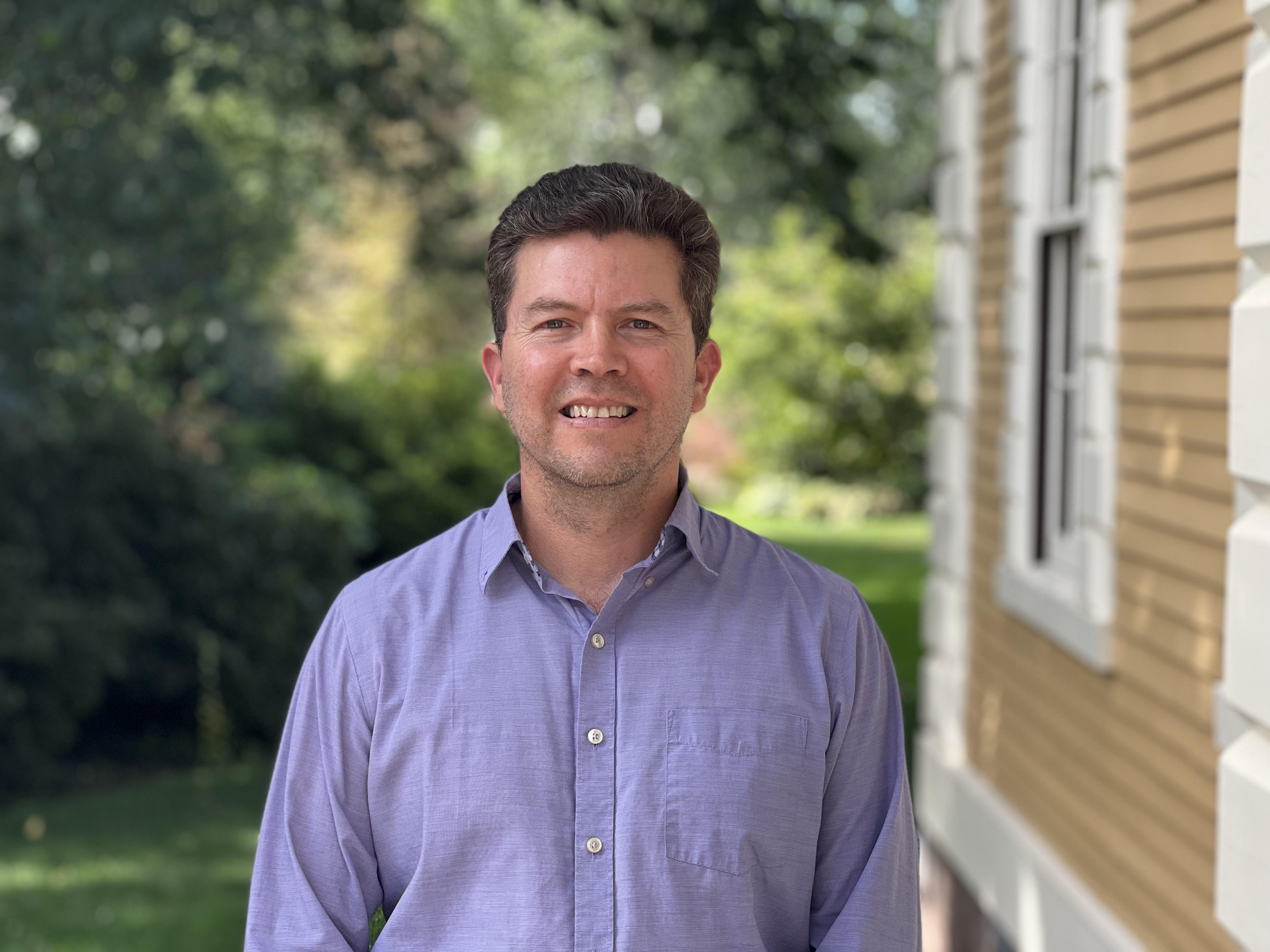
Johnny Guzmán is a Professor of Applied Mathematics at Brown University, specializing in numerical analysis of partial differential equations and scientific computing. He holds a Ph.D. in Applied Mathematics from Cornell University (2005) and a B.S. in Mathematics from California State University, Long Beach (1999). His research focuses on numerical methods for PDEs, including discontinuous Galerkin methods, mixed finite element methods, and fluid-structure interaction problems. Key contributions include work on hybridizable and mixed finite element methods, discontinuous Galerkin discretizations, and stability analysis of numerical schemes. He has been funded by multiple NSF grants, including a Postdoctoral Fellowship (2005–2008) and awards totaling over $1M in research support. Notable recognitions include the Comfort and Urry Family Fund Prize (2013). Guzmán collaborates with institutions globally and serves on editorial boards for journals like Journal of Numerical Mathematics and Calcolo . His teaching spans computational linear algebra, numerical methods for differential equations, and finite element analysis.
جستوجوی استاد و پژوهشگر
استاد راهنما، استاد دانشگاه یا پژوهشگر مناسب برای مسیر پژوهشیتان را پیدا کنید و با او ارتباط بگیرید.
نمایش ۱-۱۵ از ۸۲۸ استاد راهنما
اطلاعات این پروفایلها از صفحات عمومی دانشگاهها جمعآوری شده و ممکن است بهروز نباشد.
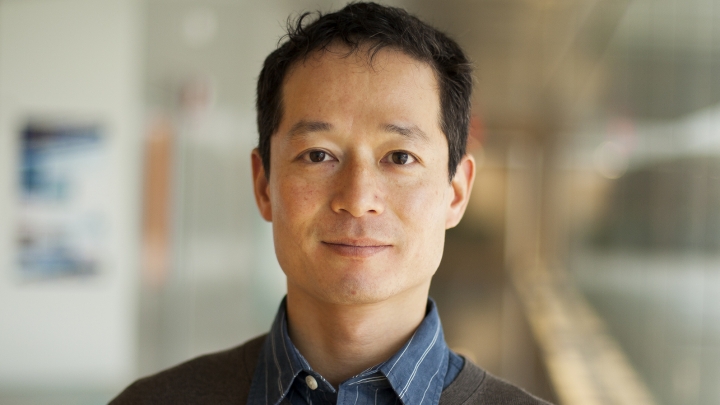
Kazuhiro Saitou is a Professor of Mechanical Engineering at the University of Michigan, affiliated with the College of Engineering. His research focuses on computational design synthesis, topology optimization, and manufacturing process integration. He leads the Algorithmic Synthesis Laboratory (ASL), advancing algorithms for automated design and optimization of mechanical systems. Education: Ph.D. (1996), MIT; M.S. (1992), MIT; B.Eng. (1990), University of Tokyo. He has held tenured positions since 1997, including roles as Founding CEO of Comnext, Inc. (2007–2012) and visiting professorships at École Centrale Paris and Donghua University. Research interests include multi-material topology optimization (M^3 TO), AI-driven design, and sustainable manufacturing. Key projects address additive manufacturing, composite structures, and energy-efficient production systems. He has pioneered methods for manufacturability-driven design and assembly optimization. Notable awards include IEEE Fellow (2018), ASME Kos-Ishii Award (2015), and NSF CAREER Award (1999). He serves as Editor-in-Chief for IEEE Transactions on Automation Science and Engineering and holds leadership roles in ASME and IEEE societies. Teaching includes courses on design optimization, CAD, and global product development. His lab has advised over 30 students, with alumni in academia and industry. Current research explores biomechanical modeling, traffic flow optimization, and medical image registration algorithms.
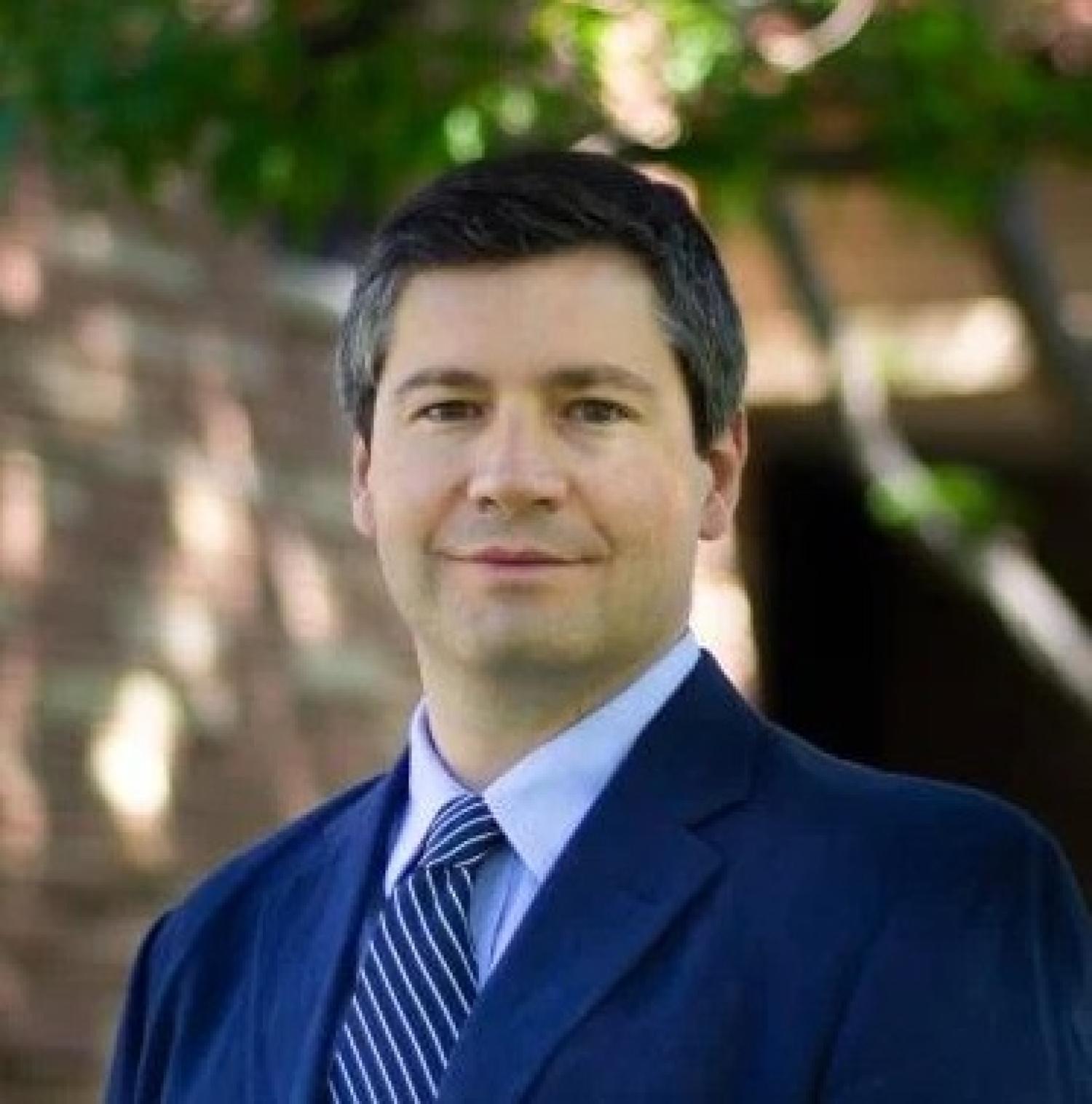
Robert MacCurdyمشاهده پروفایل
استادیار
Robert MacCurdy is an Assistant Professor at the Department of Mechanical Engineering, University of Colorado Boulder . He leads the Matter Assembly Computation Lab (MACLab) focused on automating robot design and fabrication. His research bridges computational design and advanced manufacturing to create "robots that walk out of the printer." The lab develops tools like OpenVCAD , an open-source volumetric multi-material geometry compiler.
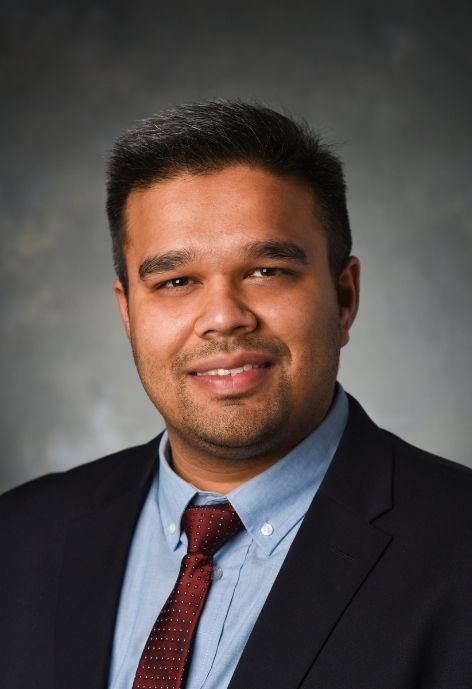
Ankit Saxenaمشاهده پروفایل
استادیار
Ankit Saxena serves as Assistant Professor in the Department of Mechanical Engineering at the University of Wyoming since 2024, focusing on innovative applications of additive manufacturing in structural engineering and materials science. His work bridges theoretical design with practical implementations in energy, aerospace, and robotics systems. Education: Ph.D. in Mechanical Engineering, Penn State University (2024) M.S. in Mechanical Engineering, Penn State University (2020) B.S. in Mechanical and Automotive Engineering, Delhi Technological University (2016) Dr. Saxena's research centers on developing adaptive stiffness structures , meta-materials , and functionally graded systems through advanced additive manufacturing techniques. His work specifically targets energy applications (nuclear, wind, hydrogen, oil/gas) and aerospace challenges, with emphasis on structural health monitoring and vibration damping. The SUMMIT Lab under his direction creates multi-functional materials enabling shape morphing and self-strengthening properties for next-generation engineering solutions. His publication record (2020-2024) reveals a consistent trajectory toward multi-physics meta-material design , with dominant themes in TPMS lattice optimization, fluid-structure interaction systems, and medical robotics applications. Key methodological contributions include novel fluid accumulator integration, laser powder bed fusion parameterization, and non-pneumatic tire architectures. Scientific Recognition: ASME Graduate Teaching Fellow (2022-2024) Harold F. Martin Graduate Assistant Outstanding Teaching Assistant Award (Penn State, 2023) Dr. Saxena teaches core materials courses (ME 3450: Properties of Materials; ME 4150: Mechanical Behavior of Materials) while expanding his research group through active recruitment of PhD candidates for 2026. His teaching philosophy emphasizes practical applications of theoretical concepts, recognized through multiple Penn State teaching fellowships. The SUMMIT Lab operates at the intersection of Wyoming's energy priorities and cutting-edge manufacturing research, maintaining strategic focus on renewable energy infrastructure and aerospace applications through metal additive manufacturing innovations.
Rajesh Beraمشاهده پروفایل
پژوهشگر ارشد
Dr. Rajesh Bera is a Research Fellow at ICFO's Functional Optoelectronic Nanomaterials group specializing in quantum-confined nanostructures. His research examines ultrafast carrier dynamics, excitonic properties, and optoelectronic applications of nanomaterials including quantum dots, nanoplatelets, and hybrid nanostructures. Current investigations focus on intraband transitions in doped nanocrystals, orientation-dependent excitonic behavior in 2D materials, and charge transfer mechanisms in heterostructure devices. Work bridges fundamental photophysics with applications in photodetection, sensing, and energy conversion. Recent publications demonstrate expertise in time-resolved spectroscopy of quantum materials, nanomaterial synthesis via colloidal chemistry, and rational design of optoelectronic devices. Continually develops novel characterization methods to probe ultrafast processes at nanoscale interfaces.
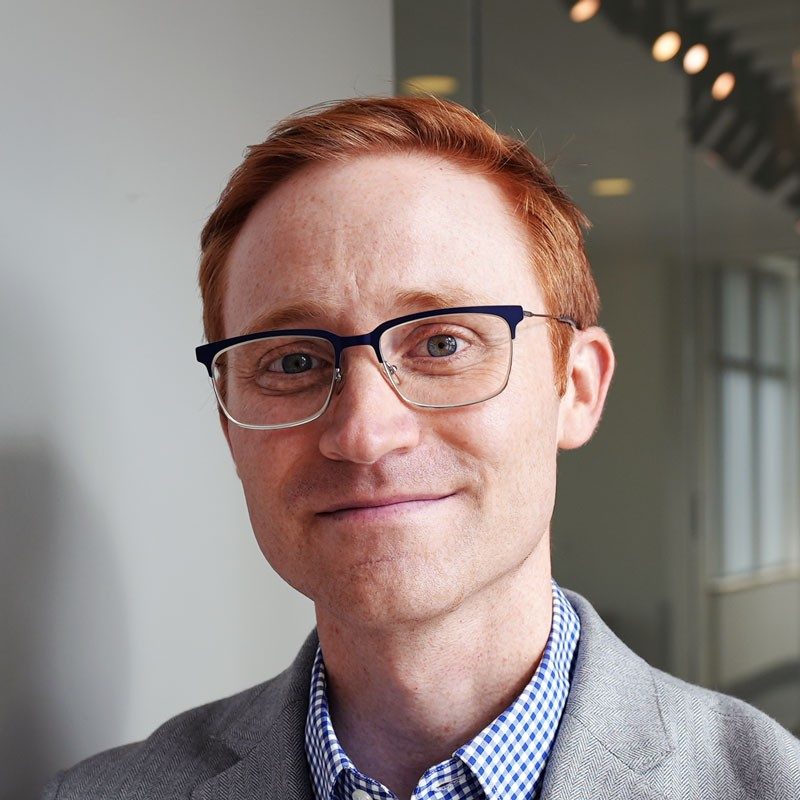
Michael Bartlett is an Associate Professor in the Department of Mechanical Engineering at Virginia Tech , leading the Soft Materials and Structures Lab within the College of Engineering. His research focuses on bio-inspired materials , soft robotics , and multifunctional composites with applications in adaptive adhesives , stretchable electronics , and self-healing systems . Education: Ph.D., Polymer Science & Engineering, University of Massachusetts Amherst (2013) B.S.E., Materials Science & Engineering, University of Michigan (2008) His work explores the intersection of soft materials , morphing structures , and functional composites , leveraging techniques like kirigami and liquid metal integration to create innovations such as octopus-inspired underwater gloves and shape-shifting drones . His recent articles highlight advancements in programmable adhesion , liquid metal conductors , and multiscale material design . Scientific Awards: National Academy of Inventors Senior Member (2024) NSF CAREER Award (2023) Office of Naval Research Young Investigator Award (2021) Soft Matter Emerging Investigator (2021) DARPA Director’s Fellowship (2020) Adhesion Society Early Career Scientist (2020) DARPA Young Faculty Award (2018) 3M Non-Tenured Faculty Award (2017) Bartlett has mentored over 40 undergraduate students and numerous graduate researchers, resulting in 12 peer-reviewed articles with student co-authors. His lab receives funding from federal agencies like NSF , ONR , and DARPA , as well as industry partnerships. The group also engages in K-12 outreach programs and collaborates with institutions such as University of Nebraska-Lincoln and Iowa State University .

Ying Chenمشاهده پروفایل
دانشیار
Assoc Prof Ying Chen is an Associate Professor at the National University of Singapore , affiliated with the Department of Mathematics, Asian Institute of Digital Finance (as Academic Director of PhD Program in Digital FinTech 2022–2024), Risk Management Institute (2019–2023), Department of Statistics and Data Science (2019–2023), and Department of Economics (2018–2023). She also contributes to NUS Graduate School for Integrative Sciences and Engineering since 2016. Research Interests include: AI forecasting and quantum computing for finance Nonstationary time series and functional data analysis Energy data analytics and precision medicine Network autoregression and spatial-temporal modeling Explainable AI and citation metrics Portfolio liquidation and market-making algorithms Article Trends demonstrate expertise in: Adaptive forecasting for gas flows and electricity prices Blockchain network influence detection Quantum computing applications in finance Functional autoregression with mixed predictors Credit rating fairness and explainability High-resolution implied volatility modeling Scientific Awards include: ISI Elected Member (2016–) International Statistical Institute Council (2023–2027) IASC Scientific Secretary (2017–2019, 2023–2025) Advisory roles for EU FIN-TECH and xAIM projects
Mine Uysalمشاهده پروفایل
پژوهشگر
Mine Uysal is a Researcher at Yıldız Technical University, Faculty of Mechanical Engineering, Department of Mechanical Engineering. Her academic journey includes a BSc (2005), MSc (2010), and PhD (2015) in Mechanical Engineering from Pamukkale University and Yıldız Technical University, respectively. She began postdoctoral research at the University of Kentucky (College of Engineering) in 2017. PhD, Mechanical Engineering (2015, Yıldız Technical University) MSc, Mechanical Engineering (2010, Pamukkale University) BSc, Mechanical Engineering (2005, Pamukkale University) Her research focuses on advanced materials behaviors, including functionally graded materials, polymers, adhesively bonded joints, and finite element modeling for engineering systems. Key areas include composite structures, thermal/mechanical loading effects, and sustainable manufacturing techniques like nanofluid-assisted machining. Scientific contributions include 15 recent articles spanning topics such as delamination analysis in bonded beams, sustainable machining optimization, buckling behavior of graded polymers, and fracture mechanics in composite materials. Her work integrates finite element methods with experimental validation for adhesive joints and sandwich structures. Collaborative projects include research funded by The Scientific and Technological Research Council of Turkey (TUBITAK) and international postdoctoral work at the University of Kentucky.
Matthias Parey is a Professor in the Department of Economics at the University of Surrey. He holds additional roles as a Research Fellow at the Institute for Fiscal Studies (IFS) and the Institute for the Study of Labor (IZA), a Researcher at the ESRC Research Centre on Micro-Social Change (MiSoC), and a Research Associate at ZEW. His research spans Labour economics Economics of education Micro-econometrics Inequality Economics of innovation . His recent publications analyze high-skilled migration selection, trade shocks, cannabis market size estimation, and gasoline demand elasticity. He has contributed to journals like Review of Economics and Statistics , Economica , and Journal of the European Economic Association . Scientific awards include fellowships at IFS and IZA. His work on trade shocks examines gender-specific labor supply responses to Chinese import competition, while his cannabis market research introduces a forensic economics approach using legal inputs. Earlier studies focus on maternal education impacts on child development and the long-term labor market effects of Erasmus student exchanges.

Jianqi Liuمشاهده پروفایل
پژوهشگر ارشد
Jianqi Liu is a Hans Rademacher Research Fellow in the Department of Mathematics at the University of Pennsylvania, affiliated with the School of Arts and Sciences. His research focuses on vertex operator algebras (VOAs) and 2D conformal field theory (CFT), with an emphasis on algebraic structures such as fusion rules, Zhu’s algebras, Borel-type subalgebras, and connections to the classical Yang-Baxter equation. He also explores geometric aspects of VOAs and their physical interpretations. He earned his Ph.D. in Mathematics from the University of California, Santa Cruz (2018–2023), under the supervision of Chongying Dong. Prior to his current role, he held teaching roles at both UPenn and UCSC, instructing courses ranging from advanced linear algebra to complex analysis and number theory. His research publications address topics such as twisted conformal blocks, Rota-Baxter operators, and the interplay between algebraic structures and integrable systems. Liu collaborates with researchers like Angela Gibney and Daniel Krashen, focusing on advancing theoretical frameworks in mathematical physics and algebraic geometry.

Thomas Lam is a professor of mathematics at the University of Michigan , specializing in algebraic combinatorics, total positivity, and connections to mathematical physics. His work bridges cluster algebras, positive geometry, and integrable systems, with applications to scattering amplitudes in quantum field theory. Lam has collaborated extensively with physicists such as Nima Arkani-Hamed and mathematicians like Pavlo Pylyavskyy and Mark Shimozono. Key research areas: Cluster algebras, total positivity, electrical networks, positroid varieties, and quantum cohomology. Notable contributions: Defining polypositroids, proving regularity theorems for totally nonnegative flag varieties, and establishing cluster structures in braid varieties. Recent work focuses on positive geometries , including the amplituhedron and moduli spaces of points on projective lines, with implications for particle physics. His articles often explore dual graded graphs, K-theoretic Schubert calculus, and the interplay between combinatorics and algebraic structures. Lam's research has been supported by NSF grants, including DMS-0748636 and DMS-1249708 .
Sami H. Assaf is a Gabilan Distinguished Professor of Science and Engineering and Professor of Mathematics at the University of Southern California. He currently serves as Director of Graduate Studies for the Department of Mathematics and was named a Dean's Leadership Fellow for Physical Sciences and Mathematics in 2024. His academic career spans from CLE Moore Instructor at MIT (2008-2011) through Assistant Professor (2012-2019), Associate Professor (2019-2022), to his current position as Professor (2022-present). Dr. Assaf earned his Ph.D. in Mathematics from the University of California, Berkeley in 2007 under Mark Haiman, with his dissertation titled "Dual equivalence graphs, ribbon tableaux and Macdonald polynomials." He completed his undergraduate studies at the University of Notre Dame in 2001, graduating summa cum laude with Honors in Mathematics and Philosophy. His research primarily focuses on symmetric function theory and its rich interplay with algebraic combinatorics, representation theory, and algebraic geometry. Dr. Assaf's recent publications center on polynomial generalizations of symmetric functions, including Schubert polynomials, Demazure characters, and nonsymmetric Macdonald polynomials. His work has established important connections between combinatorial structures and representation-theoretic objects, particularly through the development of dual equivalence and weak dual equivalence frameworks. Dr. Assaf's research has been consistently supported by multiple National Science Foundation grants (most recently DMS-2246785) and Simons Foundation Collaboration Grants (most recently Award 953878). His publication record shows remarkable productivity with over 40 papers in top mathematics journals since 2005, including numerous collaborations with graduate students and postdoctoral scholars. Among his honors are the Gabilan Distinguished Professorship (2023), multiple USC Mentoring Awards (2017, 2024), the Herb Alexander Prize for outstanding dissertation (2007), and both the National Science Foundation and National Defense Science and Engineering Graduate Research Fellowships. As an educator and mentor, Dr. Assaf has successfully guided numerous Ph.D. students to completion, including Henry Ehrhard, Grant Bowles, and Peter Kagey. He also founded and directs the Venice Math Circle, an innovative early math education program that uses creative approaches like dinosaur sorting and building blocks to teach deep mathematical concepts to children from Pre-K through 8th grade, emphasizing discovery and analytical thinking over rote memorization.
Vasu Tewariمشاهده پروفایل
استادیار
Vasu Tewari is an Assistant Professor (CLTA) at the University of Toronto, working across both the Downtown Toronto (St. George) and Mississauga (UTM) campuses. Their office is located at HU1015 (215 Huron), and they can be reached at vasu.tewari@utoronto.ca. As a member of the Department of Mathematics within the Faculty of Arts and Science, Professor Tewari contributes to both teaching and research activities at the university. Professor Tewari's research focuses on advanced topics in algebraic combinatorics, with particular expertise in: Quasisymmetric functions and their geometric interpretations Schubert polynomial theory and related structures Representation theory of symmetric groups and related algebras Combinatorial aspects of algebraic geometry Enumerative combinatorics with connections to symmetric functions Algebraic structures arising from combinatorial objects Analysis of Professor Tewari's recent publications reveals a consistent focus on the interplay between combinatorial structures and algebraic frameworks. Their work often explores generalizations of classical symmetric function theory through the lens of quasisymmetric functions, providing new insights into Schubert calculus, permutation statistics, and geometric combinatorics. A notable trend in their research is the investigation of stability phenomena in combinatorial structures and the development of new algebraic tools for studying these phenomena. Professor Tewari has made significant contributions to understanding the geometry of combinatorial objects through algebraic methods, particularly in the areas of permutahedral varieties, zonotopal algebras, and quiver representations. Their work bridges pure mathematics with potential applications in theoretical physics and computer science.

Dr. Jacques Archambault is a Professor in the Department of Microbiology and Immunology at McGill University , and an associate member of the Division of Experimental Medicine since 2016. His research focuses on the molecular biology and pathogenesis of human papillomaviruses (HPVs) and polyomaviruses (HPyVs), with an emphasis on their replication mechanisms as episomes in host cells. The Archambault laboratory employs functional genomics, proteomics, and chemical biology approaches to identify cellular pathways exploited by these viruses and develop high-throughput assays for screening small molecule inhibitors of viral replication. Analysis of his recent publications reveals a strong focus on HPV and HPyV replication machinery, including studies on the E1 helicase, UAF1-USP1 interactions, and structural characterization of viral proteins involved in DNA replication. His work bridges virology, oncology, and drug discovery, particularly targeting oncogenic HPV types implicated in anogenital and oropharyngeal cancers, as well as HPyVs like BKPyV and JCPyV that cause pathologies in immunosuppressed patients. Current efforts in the lab aim to elucidate the molecular mechanisms by which HPVs and HPyVs replicate their genomes and to develop antiviral therapies targeting these processes. Techniques such as fluorescence anisotropy, NMR spectroscopy, and crystallography are frequently employed to study protein-DNA and protein-protein interactions critical to viral replication.
.jpg)
Maxim Kontsevich is a permanent professor at the Institut des Hautes Études Scientifiques (IHÉS), holding the AXA Chair for Mathematics since 1995 and a visiting chair at Rutgers University (one month annually since 1997). Born in 1964 in Khimki, USSR, he earned his PhD from Bonn University in 1992. His career includes visiting positions at Harvard, the Institute for Advanced Study, and Berkeley, where he was a professor from 1993 to 1995. His research spans mathematical physics, algebraic geometry, and non-commutative geometry. Notable contributions include deformation quantization, mirror symmetry, and motivic integration. His work bridges algebraic structures with geometric and physical concepts, influencing areas like topological field theories, string theory, and integrable systems. Awardees of Fields Medal (1998), Crafoord Prize (2008), and Breakthrough Prize (2014), he also holds editorial roles at Compositio Mathematica and Publications Mathématiques IHÉS. His over 50 publications explore advanced topics such as quantum cohomology, Hodge theory, and categorical structures in geometry.
فقط ۷۵۰ نتیجه اول نمایش داده میشود. برای رسیدن به نتایج دقیقتر، جستوجو را با فیلترها محدودتر کنید.