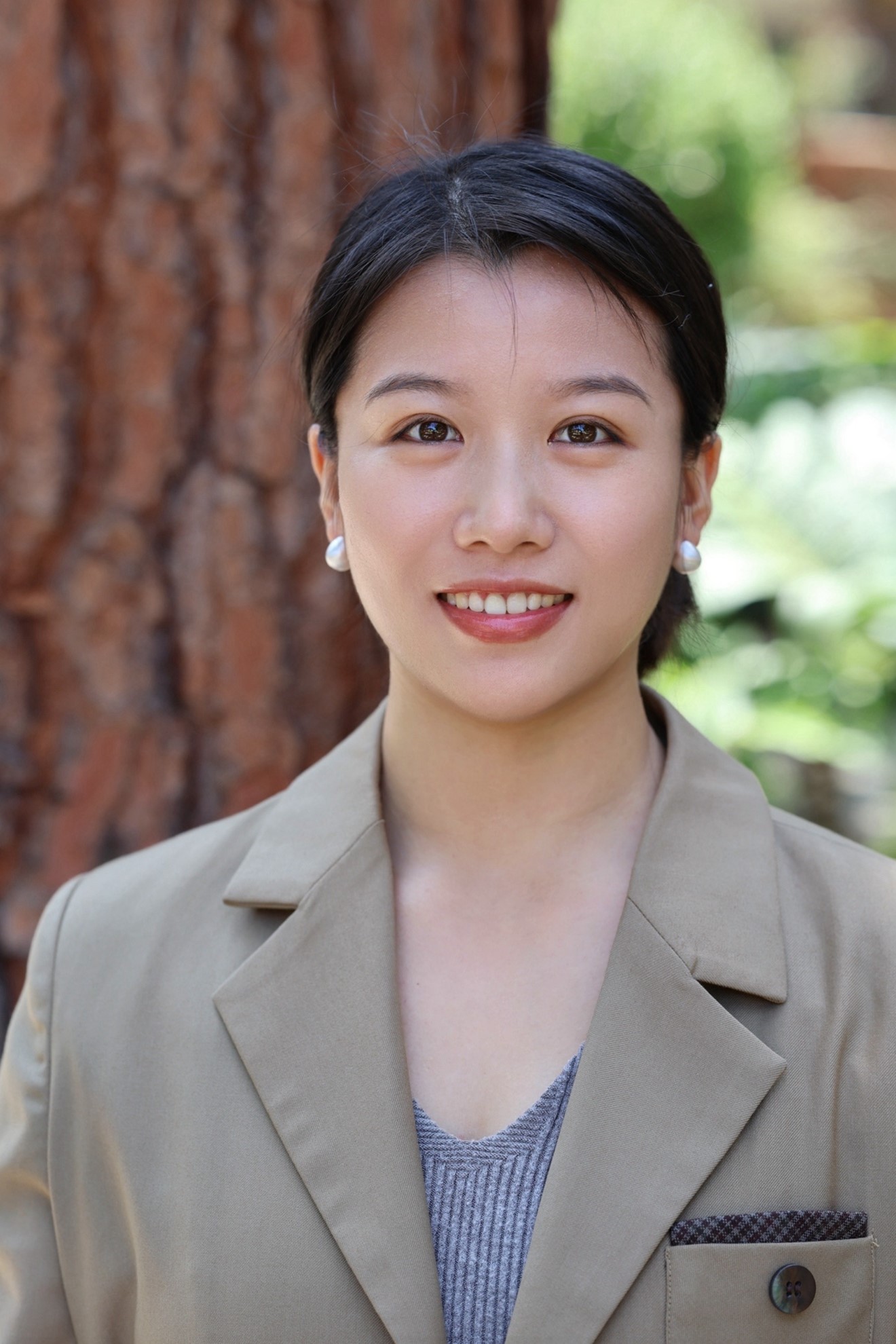
Dr. Li Shen is an Associate Professor at the Copernicus Institute of Sustainable Development , Utrecht University since 2015. She holds the Energy & Resources group and has been active in sustainability assessment of materials and energy systems since completing her PhD in 2011. Education: BEng (Mechanical Engineering, cum laude 1999, Shanghai) MSc (Sustainable Development, track Energy and Resources 2006, Utrecht University) PhD (2011, Utrecht University, thesis: Bio-based and Recycled Polymers for Cleaner Production – an Assessment of Plastics and Fibres ) Research Interests: Dr. Shen specializes in Life Cycle Assessment and Technological Sustainability Evaluation of Bio-based Plastics , Plastics Recycling , Waste Management , and Nanomaterials . Her work bridges Environmental Science , Chemical Engineering , and Sustainable Development through rigorous system analysis. Scientific Publications: Leading expert in Circular Economy applications for plastics Developed Ex-ante LCA frameworks for emerging materials Key contributor to PEF Bio-based Bottle sustainability analysis Active in Telescope Energy Systems sustainability Published in Nature Communications , Science of the Total Environment , and Journal of Cleaner Production Teaching: Responsible instructor for Advanced Energy Analysis in the Master Energy Science program. Also teaches Life Cycle Assessment and Sustainable Resources Use in the Global Sustainability Science bachelor program. Supervises numerous master thesis projects from Energy Science (ES), Sustainable Development (SD-EM), and Science for Energy Innovation (SBI) programs.
Dr Nga Wun (Doris) Li is a Senior Lecturer at the University of Technology Sydney (UTS) within the Faculty of Design, Architecture and Building, Department of Fashion and Textiles. She leads research in seamless knitting technology, smart textiles, and sustainable fashion innovation. PhD in Fashion & Textile Design (HK PolyU, 2021) BA (Hons) in Fashion & Textiles (HK PolyU, 2012) Certifications in Wholegarment Machine (Shima Seiki, Japan) and Higher Education Pedagogy (UTS) Her research focuses on functional garments, knitting technology, and bio-informed textile design. Key projects include smart socks for DVT prevention , one-size sports bras , and buoyant swimwear for children . She combines knitting with machine learning and 3D printing for material innovation. Recent publications highlight her work on compression textiles (2025), wearable glucose sensors (2025), and knitted metasurfaces for acoustic comfort (2024). She has secured AU$52,000+ in grants across 5 funded projects. Fashion Design Award (Jeanswest, China) Outstanding Presentation & Research Paper Awards (2024) Dr Li supervises PhD and MPhil students in smart textiles and sustainable design while coordinating machine knitting courses. She collaborates with AiDLab (Hong Kong) and Powerhouse Museum (Australia).
Dr. Alex Black is an Associate Professor in the School of Optometry & Vision Science at Queensland University of Technology (QUT), Faculty of Health. He serves as Course Coordinator for the Master of Optometry program and leads the Vision and Everyday Function research group within QUT's Centre for Vision and Eye Research. His expertise spans vision science, ageing-related vision decline, falls prevention, and driving safety. Dr. Black holds dual qualifications: a PhD in Vision Science (QUT, 2010) and a Masters of Public Health (University of Queensland, 2012). Teaching roles: Coordinates OP85 Master of Optometry program Research focus: Vision impairment impacts on mobility, driving safety, and academic performance Awards: FAAO (Fellow of American Academy of Optometry), FHEA (Fellow of Higher Education Academy) Research highlights include AUD $3.2 million in grants, over 100 publications, and contributions to international journals like Clinical & Experimental Optometry . His work bridges clinical practice and research, addressing real-world issues through innovative studies such as night-time pedestrian safety clothing design and advanced driver assistance system (ADAS) usability for older adults. Key collaborations include NHMRC-funded projects on injury prevention and Vision and Driving research laboratory studies. Dr. Black also serves editorial roles for Clinical & Experimental Optometry and peer review activities.
Asst. Prof. Zehra Evrim Kanat serves as an Assistant Professor in the Textile and Fashion Design Department at Canakkale Onsekiz Mart University's Faculty of Fine Arts since 2020, following research assistant roles at Tekirdağ Namik Kemal University (2014-2020) and Ege University (2009-2014). Her expertise bridges academic research and industry applications in textile engineering. Her educational foundation includes: Doctorate in Textile Engineering from Ege University (2008-2013) Postgraduate in Textile Engineering from Ege University (2005-2007) Undergraduate in Textile Engineering from Ege University (1997-2002) Dr. Kanat's research centers on textile engineering and design, with specialized focus on thermal and moisture management properties of fabrics. She investigates yarn technology, cloth construction, and smart textile applications to enhance comfort in sportswear and technical garments. Her methodological approach integrates artificial neural networks and statistical modeling for predictive analysis of fabric behavior under varying humidity conditions, contributing significantly to thermophysiological comfort research. Publication trends reveal consistent advancement in thermal resistance modeling of knitted and woven fabrics, with recent expansion into smart textiles for sports applications and biomimetic design principles. Her work demonstrates strong interdisciplinary connections between textile science, materials engineering, and functional apparel design. Her research leadership includes: EU-supported project on Textile Insights and Future Aspects (2023-2024) Study on Hatay Silk's fiber properties versus Chinese-Japanese hybrid silk (2022-2023) TUBITAK-funded expert system for woven fabric defect diagnosis (2017-2018) Multiple projects on moisture management properties of technical textiles Dr. Kanat actively contributes to academic discourse through peer review for leading textile journals and participates in interdisciplinary art exhibitions that explore cultural and historical textile narratives.
Helder Carvalho is an Associate Professor at the University of Minho's School of Engineering, Campus de Azurém, where he also serves as Director of the Department of Textile Engineering and Director of the Master's program in Textile and Accessories Product Design and Innovation. His academic career spans over three decades, with a focus on textile engineering and its intersection with electronics and automation systems. His educational background includes: PhD in Textile Engineering (2004) from University of Minho, School of Engineering MSc in Textile Engineering (1998) from University of Minho, School of Engineering BSc in Electrotechnical and Computer Engineering (1992) from University of Porto, Faculty of Engineering Professor Carvalho's research primarily focuses on smart textiles, textile sensors, and instrumentation systems for industrial sewing machines. His work bridges the gap between traditional textile manufacturing and modern electronics, creating innovative solutions for interactive textiles and wearable technology. He has particular expertise in developing flexible sensors that can be integrated into fabrics for applications ranging from sports performance monitoring to healthcare. His recent publications demonstrate a strong trend toward sports applications of smart textiles, with numerous papers on fencing apparel, karate body protectors, and general athletic performance monitoring. The research spans material science, sensor development, and user experience design, showing a comprehensive approach to creating functional and attractive smart textile products. Professor Carvalho has received recognition through research funding from major institutions: BE@T Bioeconomy Textile and Clothing (current) Greenauto - Green Innovation for the Automotive Industry (current) Factor ST+ (2021-2023) FAMEST (2017-2020) TSSIPRO (2016-2019) He has directed multiple academic programs including the Master's in Textile and Accessories Product Design and Innovation, and coordinated educational initiatives like the CET 'Fashion Commerce' program. His work at the Textile Science and Technology Centre demonstrates a commitment to translating research into practical applications across sports, healthcare, and industrial manufacturing sectors.
Dr. Yali Ling serves as an Assistant Professor in the Fashion Merchandising and Design program within the Department of Family and Consumer Sciences at California State University, Long Beach's College of Health and Human Services. Her research bridges traditional textile engineering with cutting-edge sustainable material innovation. Education: Ph.D. in Textile Technology Management, North Carolina State University (2021-2024) M.S. in Fashion Design and Engineering, Wuhan Textile University (2018-2021) B.S. in Fashion Design, Wuhan Textile University (2014-2018) Research Focus: Dr. Ling's work pioneers sustainable textile production through hemp/cotton blends and recycled materials, while advancing digital fashion technologies via 3D body scanning applications. Her expertise spans yarn engineering for performance textiles and functional apparel design addressing ergonomic challenges in diverse populations. This dual focus creates synergies between eco-conscious manufacturing and precision garment engineering. Publication Trends: Her 15 most recent publications (2019-2025) reveal three converging trajectories: (1) Sustainable material innovation (hemp textiles, eco-spinning), (2) Triboelectric wearable technology development, and (3) Anthropometric-driven apparel design. These strands collectively address industry demands for environmentally responsible production while enhancing human-technology interfaces in textile applications. Scientific Recognition: 2024 Best Poster Presentation at Textile Research Open House (NCSU) 2022 VF Graduate Student Impact Award ($5,000) 2021 Wuhan Textile University Special Graduate Scholarship ($1,500) 2020 Chinese Ministry of Education National Scholarship ($3,000) 2020 CNTAC "Maker China" Innovation Excellence Award 2019 China Natural Dialectics Research Association Symposium Prize Professional Engagement: Dr. Ling maintains active industry partnerships through her sustainable textile research while mentoring undergraduate students in the Fashion Merchandising and Design program. Her current work focuses on scaling hemp-based textile production and developing AI-integrated pattern generation systems. Research Infrastructure: While specific laboratory facilities aren't detailed in available materials, her publications indicate collaborations with Wilson College of Textiles' advanced manufacturing facilities and access to 3D body scanning technologies for anthropometric research.
Dr. Nebahat Aral is a Lecturer in the Department of Materials Science and Nanotechnology Engineering at Yeditepe University's Faculty of Engineering. Her research focuses on Textile Science and Engineering, Nanotechnology, and Radiation Shielding Materials. She has contributed to advancements in coated fabrics for X-ray protection, nanofiber development, and sustainable composites. Education: PhD (2016) in Textile Engineering, Istanbul Technical University - Thesis: Design of an Alternative Textile Material to Lead Aprons Master's (2009) in Textile Engineering, Istanbul Technical University - Thesis: Investigation of Performance Properties of Composites Made from Textile Waste BSc (2006) in Textile Engineering, Uludağ University Research Trends: Recent publications highlight her work on essential oil-infused coaxial nanofibers, biodegradable food packaging films, and ionizing radiation protection using bismuth oxide and pomegranate peel powder. Her studies bridge Textile Engineering with Nanotechnology and Environmental Sustainability. Grants and Projects: She has secured funding through TÜBİTAK projects (1004, 3501, 2219) and institutional grants, focusing on radiation shielding, biodegradable composites, and medical textiles. Leadership: Dr. Aral has served as Deputy Head of Department at Yeditepe University and Program Coordinator at Istanbul Kavram Vocational School and Istanbul Gelisim University. Patents: Co-inventor of a patent for X-ray shielding textile materials with nano-powder with Istanbul Technical University.
Ina Fichtner is a Professor at the Faculty of Digital Transformation of University of Applied Sciences HTWK Leipzig since 2022. Previously, she led the MINT department at the Institute for Applied Training Science (IAT) in Leipzig for 13 years (2009–2022), focusing on integrating mathematics, informatics, and natural sciences into sports research. Her work bridges computer science , biomechanics , and sports informatics , with extensive projects on athlete movement analysis, data systems (IDA), and digital tools for elite sports. PhD in Computer Science (2007) from TU Dresden and Leipzig University Diplom in Mathematics and Computer Science (2002) from Jena, Dresden, and Sheffield Her research spans data science , sports technology , and applied informatics , particularly in ski jumping , dive analysis , and athlete biomechanics . She has co-authored numerous publications in theoretical computer science and applied sports informatics , including studies on 3D body scanning , inertial sensors , and force-velocity profiling . She served as Alumni Representative and Treasurer of the Friends' Association at HTWK Leipzig, with memberships in German Mathematical Society and German Sports Science Association .
Kerri McBee-Black is Assistant Professor and Helen Allen Faculty Fellow in the Department of Textile and Apparel Management at the University of Missouri, affiliated with the College of Arts & Science. She holds a PhD, MS, and BS from Missouri institutions and is a CLO3D Accredited Instructor. Her research focuses on adaptive apparel design addressing needs of people with disabilities. Education includes: PhD, University of Missouri MS, University of Missouri BS, Columbia College McBee-Black's work pioneers inclusive design innovations through user-centered approaches, examining functional challenges like independent dressing mechanisms and wheelchair-adaptive clothing. She investigates industry certification standards and digital commerce accessibility while integrating historical costume features into contemporary adaptive solutions. Her research employs mixed methodologies including systematic reviews, case studies, and participatory design. Recognitions include: Innovative Excellence Award (University of Missouri System) Multiple Langsam Family Faculty Appreciation Awards Over $74,000 in funded research grants She mentors undergraduate/graduate design projects and integrates industry partnerships into curriculum development.
Dr. Gwendolyn Hustvedt is a Professor in the Fashion Merchandising department at Texas State University’s School of Family & Consumer Sciences. Her research focuses on sustainable textiles, consumer behavior regarding eco-labeling and ethical production, and STEM education through home economics. She leads projects such as a USDA-funded study on eco-labeling for US animal fiber products and collaborates with institutions like Kansas State University and the University of Delaware. Her teaching includes Textile Science and Textile Product Analysis courses, as well as an honors course on sustainable textile supply chains. Dr. Hustvedt has received awards including the 2023 American Association of Family & Consumer Sciences Leader Award and the 2014 Presidential Distinction Award for Scholarship. She serves as President of the International Federation for Home Economics, advocating for holistic sustainability education and underrepresented groups in STEM careers. Her grants total over $750,000, supporting initiatives like climate change adaptation in Hispanic families and integrating sustainability into higher education curricula. Her research spans consumer preferences for sustainable apparel, textile innovation (e.g., UV-protective fabrics), and waste reduction through wool composting. Current projects include in vivo experiments on textiles for skin cancer prevention and collaborations with Texas natural fiber producers. She chairs events like Sustainable Fashion Week and coordinates Fashion Merchandising programs, emphasizing community engagement and industry partnerships.
Dr. Angela Finn is a Senior Lecturer at RMIT University in the Department of Fashion & Textiles , City Campus, Australia. With expertise in sustainable fashion design , fashion manufacturing , and practice-led research , she focuses on design methodology and knowledge transfer in fashion education. Teaching Interests : Fashion Design, Sustainable Fashion & Textiles, Design/Research Methodology Research Emphasis : Sustainable design strategies, technological integration in textiles, historical design adaptation Her 15 most recent publications explore themes like minimization in fashion design , luxury sustainability , and virtual teaching resources . Key subtopics include zero-waste design , regional manufacturing , and UV-protective textiles for health applications. Supervision Availability : Open to mentoring Masters or PhD students in sustainable fashion and textiles research.
Dr. Bai Ziqian is an Assistant Professor in the School of Automation and Intelligent Manufacturing at Southern University of Science and Technology (SUSTech) in Shenzhen, China. Recognized as a Pujiang Scholar and Shenzhen Pengcheng Peacock Talent, she has established herself as a leading researcher at the intersection of wearable technology, textile engineering, and human-computer interaction. Her work bridges technical innovation with practical design applications, focusing on user-centered solutions that enhance human experience through technology integration. Dr. Bai's educational background includes: PhD in Smart Wearable Product Design (2011-2015), Hong Kong Polytechnic University MA in Fashion and Textile Design (2005-2006), Hong Kong Polytechnic University BA in Fashion Design and Engineering (2001-2005), South China Agricultural University Her research spans wearable technology, tangible interactive interfaces, IoTs, ergonomics, functional garments, wearables for healthcare, material innovation, smart home applications, and user-centered design. Dr. Bai has pioneered work in smart wearable fabrics and sensing mechanisms based on flexible materials, with a particular focus on human-computer interaction theory and practice. She has established a research team that has mastered key technologies in smart fabrics, interactive textiles, physiological signal monitoring, and human-computer interaction systems. Her approach consistently emphasizes user-centered design principles, ensuring that technological innovations serve practical human needs while maintaining aesthetic appeal. Dr. Bai's publication record demonstrates a clear evolution from foundational work in photonic textiles toward increasingly sophisticated wearable healthcare and human-computer interaction systems. Her recent publications focus on advanced sensor technologies, energy harvesting for wearables, and sophisticated data analysis for human motion and physiological monitoring. The interdisciplinary nature of her work is evident in publications spanning materials science, biomedical engineering, textile technology, and design methodology, with papers appearing in high-impact journals including Advanced Functional Materials (IF: 19.5), ACS Sensors (IF: 8.9), and Computers in Industry (IF: 10). Dr. Bai has received numerous prestigious awards that highlight both the technical and artistic dimensions of her work: 2024 German Red Dot Design Award for Best Design 2013 Neo-Neon, permanent collection at China Silk Museum (State grade 1 museum) 2019 Finalist, ThermoBlanket, TechStyle for Social Good International Competition 2017 1st Prize Teaching Award, Donghua University 2017 China National Textile and Apparel Council Teaching Award Multiple Service Learning Awards from Hong Kong Polytechnic University She has successfully secured research funding from prestigious sources including the National Natural Science Foundation of China and Guangdong Province's General Project. Her projects include a collaborative effort with the Guangdong Provincial Department of Education and Li Ning Company on a 'flexible wearable lower limb functional electrical stimulation system.' Dr. Bai has extensive teaching experience across multiple institutions and has guided student teams to success in national competitions. She currently leads the Human-Computer Interaction Design Laboratory (HCID) at SUSTech, which focuses on advanced design, engineering, and technology research at the intersection of disciplines, training the next generation of interdisciplinary designers and engineers.
Heeju Terry Park is a Professor in the Department of Human Centered Design at Cornell University's College of Human Ecology. His research integrates engineering, design, and human physiology to advance wearable technology and functional apparel. He applies cutting-edge tools such as motion capture and thermal manikin systems to evaluate personal protective clothing and sports apparel, aiming to enhance mobility, safety, and comfort. Dr. Park’s research interests center on wearable technology, biomechanical and physiological assessment of clothing systems, and sports apparel innovation. With a strong foundation in both industry and academia, he brings practical design knowledge from his time as a sports apparel & footwear manager at PUMA Korea to his scholarly work. His research is highly interdisciplinary, bridging design, ergonomics, materials science, and human performance. His funded research projects reflect consistent excellence and relevance across sectors, drawing support from NASA, USDA, Department of Energy, US Air Force, Environmental Protection Agency, and Combating Terrorism Technical Support Office. These projects have yielded significant technological innovations, including patented wearable sensors and advanced footwear designs. Dr. Park has been recognized with numerous national and international awards, including the 2023 Fulbright U.S. Scholar Award and multiple accolades from the International Textile and Apparel Association (ITAA). His contributions have been celebrated for both scientific rigor and practical impact. He has successfully advised graduate students and continues to mentor emerging scholars. His research team has secured substantial funding—$1.96 million directly awarded to him out of $8.5 million total project funding—and developed six U.S. patents in wearable technologies. He is currently accepting new undergraduate and graduate students for the 2025–2026 academic year. Dr. Park leads an active research lab focused on wearable innovation and human-centered design. His collaborations span Cornell faculty and interdisciplinary teams, fostering a dynamic environment for technological advancement in apparel and protective gear.
Lucy E. Dunne is a Professor in the Department of Design, Housing, and Apparel at the College of Design, University of Minnesota. She serves as Program Director of Apparel Design and Co-Director of the Wearable Technology Lab. Specialties : Apparel Design, Functional Apparel, Smart Clothing, and Wearable Technology. Her research explores wearability and garment-based wearable technology, focusing on new functionality in apparel, human-device interfaces, production and manufacturing, and human factors in wearable products. She investigates the intersection of fashion, engineering, and technology to create innovative clothing solutions for diverse applications, including sportswear and space suits. Notably, her co-authored book Functional Apparel Design: From Sportswear to Space Suits (2015) highlights her expertise in functional clothing design for extreme environments. The book reflects her interdisciplinary approach to integrating technology into apparel. National Science Foundation CAREER award for groundbreaking work in functional clothing research. NASA Silver Achievement Medal for contributions to wearable technology. Dunne's academic leadership extends to advising students in apparel design and wearable technology. Her research is supported by grants from the National Science Foundation and collaborations with NASA, underscoring her role in advancing functional clothing through interdisciplinary efforts. As Co-Director of the Wearable Technology Lab, she develops clothing with integrated technology to enhance wearability and functionality, addressing challenges in comfort, usability, and technological integration.
Matthew Michael Hanks is an Assistant Professor at the University of Illinois at Urbana-Champaign, affiliated with the College of Applied Health Sciences and the Beckman Institute for Advanced Science and Technology. He also serves as an affiliate at Disability Resources and Educational Services (DRES). Research focuses on biomechanics and adaptive sports medicine Specializes in spinal cord injury rehabilitation and upper extremity joint dynamics Active in analyzing wheelchair athletics and pediatric rehabilitation His work spans biomechanical analysis of wheelchair lacrosse, scapular positioning in postural compression garments, and muscle activation patterns in adaptive sports. Current research includes 3D trunk and upper limb biomechanics in athletes with disabilities and sex-based differences in pediatric wheelchair users. Recent publications emphasize sports injury prevention, mobility enhancement technologies, and comparative physiological studies in wheelchair basketball. Collaborations include clinical researchers in orthopedics and rehabilitation engineering.