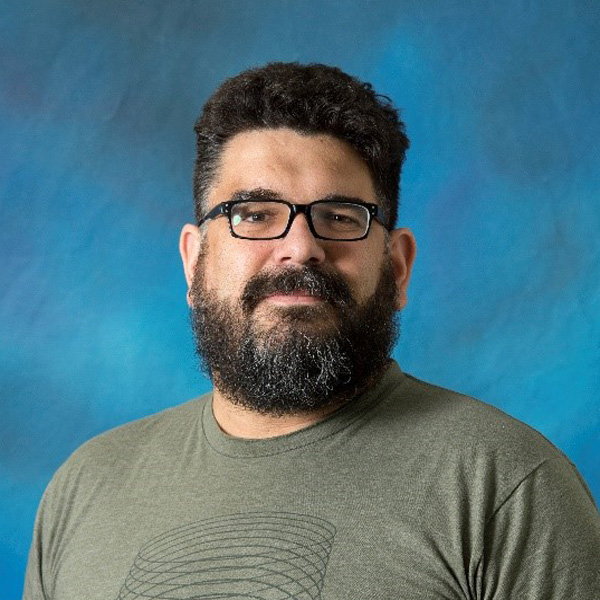
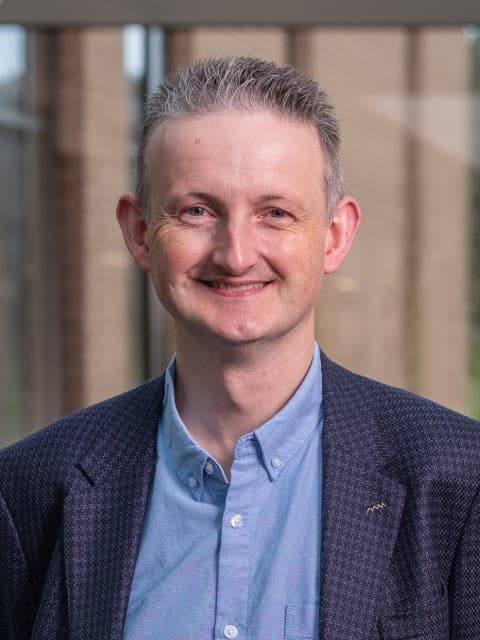
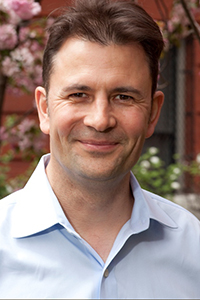
Brent Doiron is a Professor at the University of Chicago, holding appointments in the Departments of Neurobiology and Statistics, and serving on the Committee on Computational and Applied Mathematics (CCAM). His research integrates nonlinear dynamics and statistical mechanics to study neural circuit variability, focusing on mechanisms underlying neural coding and network learning through collaborations with experimentalists in sensory systems. Education: PhD in Physics (University of Ottawa, 2004) Postdoc: Center for Neural Science at New York University (2017) Previous Roles: Mathematics Professor at University of Pittsburgh (2007-2020), Co-Director of Neural Computation Program at Carnegie Mellon Neuroscience Institute Research interests center on neuronal population dynamics, recurrent circuit mechanisms, and computational neuroscience. Current work investigates correlated variability in cortical networks, inter-areal communication, and stochastic spiking models. Recent publications emphasize cortical stability/gain modulation, asynchronous/synchronous activity balance, and Bayesian inference frameworks. Key themes include sensory processing, network plasticity, and dimensionality reduction in neural coding. Scientific Awards Alfred P. Sloan Research Fellowship in Neuroscience Vannevar Bush Faculty Fellowship Chancellor’s Distinguished Research Award (University of Pittsburgh) Active grants include NIH R01 and R90/T90 awards for neuronal dynamics research and computational neuroscience training programs.
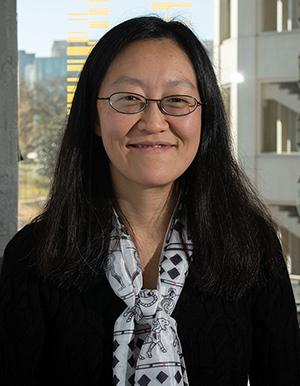
Christopher G. Atkeson is a Professor at the Robotics Institute at Carnegie Mellon University (CMU), where he has been since 2000 after previously holding positions at MIT and Georgia Institute of Technology. His research focuses on fulfilling the science fiction vision of machines achieving human levels of competence in perception, cognition, and action, with particular emphasis on understanding how to get machines to generate and perceive human behavior. Atkeson's work spans two complementary approaches: humanoid robotics and human aware environments. His research interests include nonparametric learning, memory-based learning, reinforcement learning, learning from demonstration, and modeling human behavior. He is particularly known for his work on robot learning of challenging dynamic tasks such as juggling, trajectory-based optimization, and soft robotics (including his contributions to the Baymax character in Disney's Big Hero 6). His recent publications demonstrate a strong focus on tactile sensing (FingerVision), human-in-the-loop optimization for exoskeletons, deep learning for locomotion control, and trajectory-based optimization methods. His work consistently bridges theoretical foundations in machine learning with practical implementations on physical robots. Among his scientific recognitions are an NSF Presidential Young Investigator Award, a Sloan Research Fellowship, and a Teaching Award from the MIT Graduate Student Council. Atkeson has advised numerous students who have gone on to successful careers in academia and industry, including notable researchers like Andrew Moore and Stefan Schaal. His teaching includes courses on dynamic optimization, humanoids, kinematics, dynamics, and control.
Hang Lu is a Professor and holds the Cecil J. "Pete" Silas Chair of Chemical & Biomolecular Engineering at the Georgia Institute of Technology. Dr. Lu also holds a Love Family Professorship and leads the Lµ Fluidics Group, which focuses on engineering microfluidic systems and machine learning tools to address complex questions in neuroscience, developmental biology, and cell biology that are difficult to address with conventional techniques. Dr. Lu's research lies at the intersection of engineering and biology, with primary interests including: Microfluidic systems for high-throughput screens and image-based genetics and genomics Systems biology: large-scale experimentation and data mining Microtechnologies for optical stimulation and optical recording Big data, machine vision, and automation Developmental neurobiology, behavioral neurobiology, and systems neuroscience Cancer biology, immunology, embryonic development, and stem cells Her laboratory engineers microfluidic devices and BioMEMS to study neuroscience, genetics, cancer biology, and biotechnology. These miniaturized Lab-on-a-chip tools operate at scales comparable to biological systems, leveraging unique micro and nano-scale phenomena to gather large-scale quantitative data about complex biological systems. Current projects include Microfluidics for Life Sciences, Optical Neuron Recordings and Manipulations, Machine Learning Tools for Neuroscience, Measuring and Modeling Behavior, and High-throughput, High-content Cell-based Assays. Analysis of Dr. Lu's recent publications (2024-2025) reveals a strong trend toward integrating microfluidics with advanced computational methods: Development of deep learning frameworks for biological image analysis Advanced neuron tracking and functional imaging techniques Non-invasive characterization of 3D organoid cultures Sophisticated neuromechanical modeling of locomotion Microfluidic temperature control systems for in vivo studies Label-free imaging pipelines for neural development Dr. Lu's significant professional honors include: Cecil J. "Pete" Silas Chair of Chemical & Biomolecular Engineering Love Family Professorship The Lµ Fluidics Group actively mentors students and postdocs, currently accepting new postdoctoral researchers. The lab receives substantial funding for interdisciplinary projects at the engineering-biology interface, with research implications spanning fundamental biological understanding to therapeutic development. The group operates within Georgia Tech's School of Chemical & Biomolecular Engineering, with specialized facilities for microfluidic device fabrication, biological experimentation, and advanced imaging, maintaining strong collaborative ties across engineering, neuroscience, and biological disciplines.
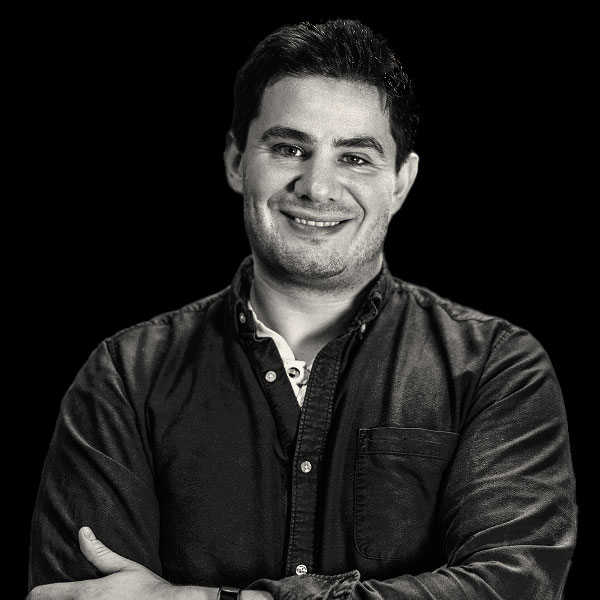
Megan Valentine is a Professor of Mechanical Engineering at the University of California, Santa Barbara (UCSB), affiliated with the College of Engineering. She leads an interdisciplinary research group focused on biological and bioinspired materials, investigating how forces are generated and transmitted in living systems to design responsive synthetic materials. Her work bridges engineering, physics, chemistry, and biology. Education: PhD in Physics from Harvard University, MS in Physics from the University of Pennsylvania, and BS in Physics from Lehigh University. Affiliations include the California NanoSystems Institute (CNSI), Materials Research Laboratory (MRL), Neuroscience Research Institute, and the Center for Stem Cell Biology and Engineering. Research interests span soft material mechanics, bioengineering, and systems biology, with applications in marine-inspired materials, mechanobiology, and soft robotics. Her lab employs advanced experimental techniques to study biophysical and biochemical mechanisms in living systems and translate them into engineered materials capable of self-healing, movement, and environmental responsiveness. Notable awards include the NSF Early CAREER Award, Fulbright Scholarship, and election as Fellow of the American Physical Society and American Institute for Medical and Biological Engineering. Her contributions emphasize creativity, collaboration, and diversity, with a focus on addressing societal challenges through interdisciplinary innovation.
Silvestro Micera is a Full Professor at the Swiss Federal Institute of Technology Lausanne (EPFL) and holds the Bertarelli Foundation Chair in Translational Neuroengineering. He directs the Translational Neural Engineering Laboratory and teaches courses including Neural signals and signal processing and Translational neuroengineering . His research bridges neural interfaces, robotics, and neuroprosthetics to restore motor functions in spinal cord injuries, stroke, and amputations. Micera's research integrates implantable neural interfaces, robotic rehabilitation, and hybrid neuro-prosthetic systems. Key focus areas include: Robotic neurorehabilitation for mobility restoration Neural control mechanisms in movement CNS/PNS neural interface development Bioelectronic modulation for sensory feedback His recent publications emphasize machine learning-driven motor recovery prediction, closed-loop sensory feedback systems, and minimally invasive neuroprosthetics. Trends include AI-optimized stimulation protocols, multimodal data fusion for rehabilitation, and clinical translation of neural bypass technologies. Awards: IEEE EMBS Early Career Achievement Award (2009) IEEE EMBS Technical Achievement Award (2021) Micera leads EU-funded projects such as TIME, CLONS, and NeuWalk, focusing on neural prostheses. He advises 8 current and 18 former PhD students in neuroengineering. His lab collaborates with MIT, Harvard, and industry partners (e.g., Plexon) to advance translational neurotechnologies.
Renate Sachse is a Researcher at the Chair of Structural Analysis, Technical University of Munich (TUM), where she has worked since May 2024. Previously, she held postdoctoral positions at Harvard University's Bertoldi Lab (2024) and TUM's Chair of Computational Mechanics (2021-2024), following academic staff roles at the University of Stuttgart (2015-2020). Her interdisciplinary work bridges civil engineering, biomechanics, and computational modeling. Her educational foundation includes a Master's in Civil Engineering from the University of Stuttgart (2014; thesis: 'Isogeometric contact analysis of thin-walled structures') and a Bachelor's from the same institution (2011; thesis: 'A Primary School Pavilion for Magagula in South Africa - Structural Analysis'). She also completed ERASMUS studies at ESTP Paris and internships at Foster + Partners and Werner Sobek AG. Dr. Sachse's research centers on biomechanics and biomimetics, with pioneering work on plant-inspired structures. She investigates snapping mechanisms in carnivorous plants (Venus flytrap, waterwheel plant) to develop bio-inspired adaptive systems, soft robotics, and metamaterials. Her expertise spans motion design for large-deformation structures, isogeometric analysis, and hygroscopic actuation in 4D-printed materials, emphasizing computational modeling of contact mechanics and structural stability. Analysis of her 15 most recent publications reveals a dominant focus on biomechanics (60% of articles), particularly plant movement mechanics translated into engineering solutions. Her work consistently integrates computational structural analysis with biological principles, showing increasing emphasis on motion design (25% of recent output) and additive manufacturing applications (15%). Key trends include translating snap-buckling phenomena into robotics and developing material design spaces for responsive structures. Her distinguished awards include the Bertha Benz Prize (2022), Klaus Tschira Boost Fund Fellowship (2022-2024), and University of Stuttgart Publication Award (2022). Additional recognition comprises GAMM Juniors Fellowship (2020-2022), AVK Innovation Award (2017), and Emil Mörsch Study Prize (2014). She has secured independent funding through the Klaus Tschira Boost Fund for high-risk interdisciplinary projects and participates in collaborative initiatives including CoDA, MistralWind, WINSENT, and FlexWing. While teaching advanced courses at TUM (Advanced Finite Element Methods, Theory of Plates), her mentorship focuses on computational mechanics and biomimetic design principles. Currently based at TUM's Chair of Structural Analysis under Prof. Bletzinger, she maintains active collaboration with Harvard University's Bertoldi Lab in developing next-generation adaptive structures.
Antonio Rangel is the Bing Professor of Neuroscience, Behavioral Biology, and Economics at the California Institute of Technology (Caltech), where he also serves as Head Faculty in Residence. He is a faculty member in the Division of Humanities and Social Sciences (HSS) with research focusing on the computational and neurobiological basis of value-based decision-making. Dr. Rangel received his educational training at prestigious institutions: B.Sc. from Caltech in 1993 M.S. from Harvard University in 1996 Ph.D. in 1998 Professor Rangel's research lies at the intersection of neuroscience, economics, and psychology, with a focus on understanding how the brain makes decisions. His work investigates the neural mechanisms underlying value computation, choice processes, self-control, and social decision-making. Using a multidisciplinary approach that combines functional magnetic resonance imaging (fMRI), eye-tracking, computational modeling, and behavioral experiments, his lab has made significant contributions to the field of neuroeconomics. His research has revealed how value signals are represented in the brain, how attention influences choice, and the neural basis of self-control failures. Professor Rangel has pioneered methods for studying decision processes with high temporal resolution using eye-tracking data, demonstrating how fixation patterns relate to value computations and choice outcomes. His work spans from theoretical frameworks of value-based decision-making to practical applications in behavioral public economics. Professor Rangel's work has been recognized with prestigious awards: 2019 NOMIS Distinguished Scientist Award 2018 Fellow of the Association for Psychological Science As an academic leader, Professor Rangel has mentored numerous students and researchers who have gone on to make their own contributions to neuroscience and economics. His lab, the Rangel Neuroeconomics Laboratory at Caltech, serves as a hub for interdisciplinary research, bringing together students and scholars from neuroscience, economics, psychology, and computer science. The lab has received significant funding to support its research on the neural basis of decision-making, including support from the NOMIS Foundation. The Rangel Neuroeconomics Laboratory is equipped with state-of-the-art facilities including fMRI analysis capabilities, eye-tracking systems, and computational resources for modeling decision processes. The lab fosters a collaborative environment where researchers apply methods from experimental economics and cognitive neuroscience to unravel the complexities of human decision-making.
Georges Kostakiotis is a Senior Lecturer at the National Institute for Oriental Languages and Civilisations (INALCO) in Paris, France, specializing in Modern Greek language and literature. His academic appointment falls under CNU Section 15, covering Arabic, Chinese, Japanese, Hebrew and other languages and literature. He serves as Head of the TEMPO course for Modern Greek and teaches across multiple levels from L1 through L3, including text study, written and oral practice of Greek, Modern Greek thematic courses, specialized Greek text corpora, and technical translation at M1 and M2 levels. Dr. Kostakiotis's research focuses on the intersection of language pedagogy and literary studies. He investigates teaching oral communication from both practical and theoretical perspectives, examining how literary texts function as effective pedagogical tools in foreign language classrooms. His work develops specialized strategies for teaching Greek to Latin-speaking audiences, leveraging linguistic connections while addressing acquisition challenges. Additionally, he explores literary representations of politics and urban worlds, situating Greek literature within broader European and Balkan contexts through the CREE (Centre de Recherches Euro-Méditerranéennes et Euro-asiatiques) research center. Analysis of Dr. Kostakiotis's publication record from 2009-2024 reveals consistent scholarly engagement with Greek literature's relationship to Balkan cultures and historical contexts. His work demonstrates particular interest in how Greek literature addresses themes of foreignness, crisis, and identity through comparative analysis with other Balkan literary traditions. His research spans pedagogical approaches to language teaching, literary analysis of Greek texts, historical examinations of Greek literature, and cultural studies of Greek communities in the Balkans. Dr. Kostakiotis has been instrumental in organizing numerous academic events that bridge language pedagogy and literary scholarship. He has coordinated multiple conferences and study days focused on language teaching methodology, including sessions on oral communication techniques, vocabulary acquisition strategies, and assessment approaches. In the realm of literature and cultural studies, he has organized scholarly gatherings examining Greek-Romanian relations, Phanariote history, women's perspectives in Greek literature, and urban studies with particular attention to cities like Thessaloniki and Alexandria. His collaborative work, including co-edited volumes on Greek-Romanian relations, demonstrates his commitment to fostering academic dialogue across national and disciplinary boundaries.
Ilham Khuri-Makdisi serves as Associate Professor of History at Northeastern University's College of Social Sciences and Humanities, specializing in Middle Eastern history with emphasis on Ottoman Eastern Mediterranean cities during the late 19th and early 20th centuries. Her research examines global and intra-imperial connections, movements of people and ideas, and transnational radical networks across the Ottoman Empire and Mediterranean world. Her educational background includes a PhD in History and Middle Eastern Studies from Harvard University (2004). This foundational training informs her interdisciplinary approach to Ottoman studies within global historical frameworks. Professor Khuri-Makdisi's research interests center on Ottoman Eastern Mediterranean urban history, global radical movements, intellectual history, and translation studies. She investigates socialism and anarchism in Beirut, Cairo, and Alexandria through diverse social groups including intellectuals, dramatists, and workers. Current projects explore Arabic-Ottoman Turkish translations and position the nahda (Arab Renaissance) within broader Ottoman and global contexts, revealing intricate cultural exchanges that shaped modern Middle Eastern thought. Her publications demonstrate consistent engagement with transnational intellectual and social currents, particularly examining how concepts of 'the social' evolved in Arabic thought and how fin de siècle Egypt functioned as a nexus for radical networks. These works collectively emphasize the interconnectedness of Ottoman territories with global movements, challenging nationalist historiographies through meticulous analysis of cross-border ideological flows. As an educator, she teaches foundational courses including Introduction to Middle Eastern History (HIST 1185), Modern Middle East (HIST 1290), and Capstone (HIST 4701), employing diverse sources from architectural records to political speeches to examine Europe-Middle East relations, imperialism, state formation, and social movements since the 19th century.
Professor Carlo Harvey is a creative technologist at the School of Digital Arts (SODA), Manchester Metropolitan University. His interdisciplinary research merges games , machine learning , virtual production , and cultural heritage reinterpretation . He leads industry collaborations with entities like Jaguar Land Rover and Epic Games, focusing on AI-driven interactive audio, real-time visualization, and accessibility solutions. Award-winning projects : TIGA, Innovate UK, and Epic Games MegaGrant for Accession Industry partnerships : Automotive sector, cultural institutions His research spans human-computer interaction , multisensory virtual environments , and acoustic-visual cross-modal perception . Recent publications address robotic simulations, motion alignment, and haptic feedback systems. Scientific recognition : TIGA Award, Innovate UK Funding, Epic Games MegaGrant Advocacy : Digital inclusion, creative collaboration, social impact of technology
Belkis Ezgi Arikan is a researcher at Justus Liebig University Giessen , affiliated with the Department of Psychology and Sports Science . Her work focuses on sensorimotor integration, tactile suppression, and neural mechanisms underlying action-outcome monitoring. She collaborates with Prof. Dr. Fiehler and Dr. Voudouris on project A4 (Predictive somatosensory processing during voluntary movements). Department: Psychology and Sports Science Collaborators: Dr. Dimitris Voudouris, Prof. Dr. Katja Fiehler Her research investigates: How the brain processes self-generated vs. externally generated sensory feedback Neural correlates of tactile suppression networks Role of cerebellum and angular gyrus in temporal recalibration Modulation of BOLD responses during action monitoring Recent publications reveal trends in predictive coding , sensorimotor recalibration , and neural suppression mechanisms across tactile, visual, and multisensory domains. Her work employs neuroimaging techniques like fMRI and behavioral paradigms to study self-motion perception and feedback processing. She contributes to understanding how the brain distinguishes self-initiated from external sensory events, with implications for motor learning and perceptual timing mechanisms.
Prof. Dr. Kenan Aycan is a Professor of Anatomy at Ahi Evran University's Faculty of Medicine, Department of Basic Medical Sciences, where he has served since 2019. He also holds the position of Department Head since 2020. Previously, he worked at Erciyes University as a School Director from 2011-2016. His academic career spans over four decades with significant contributions to anatomical sciences. Dr. Aycan earned his PhD in Basic Medical Sciences from Ege University's Faculty of Medicine (1983-1986) following his Bachelor's degree in Science from Ege University's Faculty of Science (1970-1975). He also holds a Certificate of Use of Experimental Animals from Erciyes University (2008). His research focuses on anatomical morphology, vascular structures, and developmental processes. Dr. Aycan has pioneered anatomical techniques including the 'Aycan's method' for corrosion preparations. His work spans comparative anatomy across various species, morphometric analyses of anatomical structures, and investigations into teratogenic effects and protective agents. He has extensively studied the foramen magnum using golden ratio principles, vascular anatomy of reproductive organs in ruminants, and auditory ossicles in sheep. Analysis of his recent publications (2021-2025) reveals consistent focus on anatomical methodology development, morphometric studies of key anatomical structures, vascular anatomy investigations, and research on developmental processes and teratology. His work often employs plastic injection and corrosion techniques, CT imaging, and comparative approaches across human and animal models. Dr. Aycan has mentored numerous graduate students, serving as primary advisor for over 20 Master's and PhD theses covering diverse anatomical topics from vascular variations to developmental studies. His collaborative network includes researchers like Tufan Ulcay, Burcu Kamaşak, and others across Turkish institutions.
Professor Mark King is a leading academic in Sports Biomechanics at Loughborough University, affiliated with the School of Sport, Exercise and Health Sciences, where he serves as Lead for the Sport Performance Research Theme. He holds a BSc (1993) and PhD (1998) in Mathematics and Sports Science from Loughborough, with career progression from Lecturer (1999) to Senior Lecturer (2006), Reader (2012), and Professor (2019). He is also Warden of Royce Hall since 1999, overseeing 375 students' welfare. Education: BSc in Mathematics and Sports Science (1993), PhD in subject-specific computer simulation of dynamic jumping (1998). Affiliations: England and Wales Cricket Board (ECB), International Cricket Council (ICC), Badminton World Federation, Lawn Tennis Association. His research focuses on optimizing elite sport performance through biomechanical analysis, particularly in cricket and badminton. Key areas include injury prevention (e.g., ACL risks in badminton, lumbar stress injuries in cricket bowlers) and technique optimization. He has pioneered ICC-accredited testing for illegal bowling actions and explored machine learning applications in data collection. His work highlights trends in cricket fast bowling kinematics, racket sports smash mechanics, and gender-specific performance metrics. He actively collaborates with national and international sports organizations to translate research into practical guidelines for athletes and coaches. Awards: None explicitly mentioned in the text. Grants/Advising: No listed advisees, but extensive industry partnerships support his research. Labs/Teams: National Centre for Sport and Exercise Medicine (NCSEM), part of his research infrastructure.
Andy Pavlo is an Associate Professor with Indefinite Tenure in the Computer Science Department at Carnegie Mellon University's School of Computer Science. He is an active member of the CMU Database Group and the Parallel Data Laboratory, where he leads research in database management systems with a focus on self-driving architectures, transaction processing, and large-scale analytics. His work bridges academic research and industry applications through projects like NoisePage, OtterTune (which he co-founded and served as CEO before it ceased operations), and Peloton. Dr. Pavlo's research interests span database management systems with particular emphasis on autonomous database architectures that can self-tune and optimize without human intervention. His work explores transaction processing systems that can handle high-throughput workloads while maintaining consistency, and large-scale data analytics techniques that efficiently process massive datasets. He has made significant contributions to query optimization, database extensibility, and automatic database tuning using machine learning techniques. His recent work on database extensibility revealed critical issues in PostgreSQL's extension ecosystem, showing that approximately 16% of extensions are incompatible with at least one other extension due to API violations and memory errors. His research output demonstrates a consistent focus on practical database systems challenges, with recent publications examining database extensibility, user-defined function optimization, and the cyclical nature of database research. The articles show a strong trend toward making database systems more autonomous, with increasing integration of machine learning techniques for automatic tuning and optimization. His work often combines deep theoretical analysis with practical implementation in open-source systems. Dijkstra Award 2024 for contributions to database systems research Dr. Pavlo actively mentors graduate students, with current advisees including Wan Shen Lim, William Zhang, and Sam Arch (co-advised with Todd Mowry). His former students have gone on to successful careers in both industry and academia. He has secured significant research funding through CMU's affiliate program with major database companies including ClickHouse, DataStax, dbt, Firebolt, MotherDuck, RelationalAI, SingleStore, Spiral, PingCAP/TiDB, Yellowbrick, and Yugabyte. His research is supported by these industry partnerships and likely includes NSF funding given his active participation in the database research community. At CMU, Dr. Pavlo leads the Database Group and organizes several seminar series including "SQL or Death," "Database Building Blocks," and "ML⇄DB Technical Talks." These seminars bring together researchers and practitioners to discuss cutting-edge developments in database systems. He also runs a summer research internship program that has attracted students for multiple consecutive years, indicating a strong research group with ongoing projects and funding.
Paul R Moorcroft is a Professor of Organismic and Evolutionary Biology at Harvard University and an Affiliate in the School of Engineering and Applied Sciences (SEAS). His research focuses on ecological dynamics of terrestrial plant communities, biosphere-atmosphere interactions, and mechanistic models of animal movement. He collaborates with institutions like NASA JPL on projects such as the ECOSTRESS mission, which investigates environmental processes using satellite data. His lab, the Moorcroft Lab, emphasizes fieldwork and interdisciplinary approaches, as seen in recent collaborations in Italy and Southeast Asia. Key research areas include tropical forest ecology, carbon cycling in peatlands, and the application of remote sensing technologies to environmental monitoring. His work bridges theoretical models with empirical data, addressing global challenges like climate change and biodiversity loss. Recent publications highlight contributions to quantifying carbon emissions from peatland drainage and improving satellite-based mapping of forest functional traits. His advising activities include mentoring graduate students like Rhemi Toth. Collaborations with NASA and academic partners underscore his role in advancing Earth systems science through interdisciplinary research.