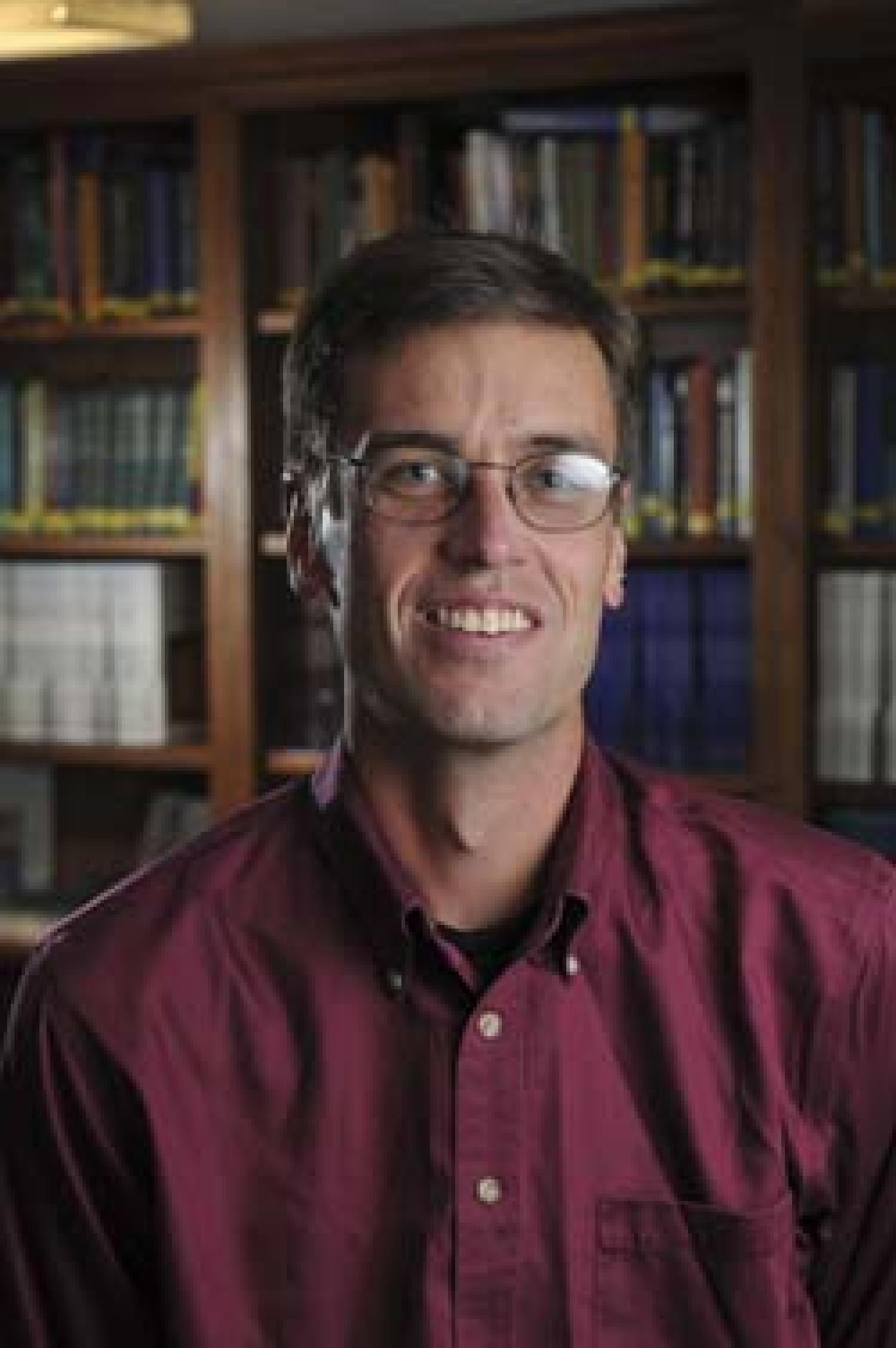
Erik Willcutt is a Professor in the Department of Psychology and Neuroscience at the University of Colorado Boulder. His research focuses on the genetic and neurobehavioral underpinnings of ADHD, learning disabilities, and developmental psychopathologies. He holds positions at the Institute for Behavioral Genetics and the Center for Neuroscience. Education: PhD in Psychology from the University of Denver (1998). Research Interests: Etiology and assessment of ADHD, reading disabilities, and developmental psychopathologies. His work integrates behavioral genetics, neuroimaging, and longitudinal twin studies to understand cognitive and psychiatric disorders. Key topics include neuroanatomical correlates of ADHD, genetic influences on dyslexia, and comorbidity between learning disabilities and psychiatric conditions. Publications highlight advanced methods like genome-wide association studies (GWAS) and phenotype harmonization (e.g., Rosetta method). His work bridges molecular genetics with clinical psychology, emphasizing translational research. Lab/Affiliations: Active in the Institute for Behavioral Genetics and collaborates with interdisciplinary teams studying neurodevelopmental disorders. Office located at Muenzinger D451B.
Karoline Faust is an Associate Professor at KU Leuven, affiliated with the Laboratory of Molecular Bacteriology (Rega Institute) and the Faculty of Medicine . She contributes to the iSi Health and Leuven One Health institutes, and serves on senior academic councils. Her research spans microbial systems biology, focusing on community dynamics and network analysis. Education: PhD in bioinformatics (2010, KU Leuven) Affiliations: KU Leuven, ISME Journal editorial board, Belgian Society for Microbiology Her research investigates microbial community dynamics , systems biology approaches to microbiomes, and bioinformatics tool development . She specializes in modeling human gut microbiota , synthetic microbial communities , and environmental microbiomes (e.g., microplastic impacts on Daphnia microbiomes). Her work integrates metabolic modeling , network analysis , and experimental systems to understand microbial interactions. Recent publications highlight her contributions to microbial network inference , 16S rRNA sequencing protocols , microfluidics , and ecological modeling of microbiomes. She develops tools like manta , miaSim , and CoNet to analyze community structures. Teaching: Karoline co-teaches courses in microbiology, bioinformatics, and network analysis at KU Leuven, and has contributed to international workshops on microbial network inference. Scientific Engagement: She serves as Senior Editor at ISME Journal and Secretary of the Belgian Society for Microbiology .
Chris Darimont is a Professor and Raincoast Research Chair in Applied Conservation Science within the Department of Geography at the University of Victoria's Faculty of Social Sciences. His work bridges natural and social sciences to address urgent conservation challenges, with a geographic focus on British Columbia's Central Coast (Great Bear Rainforest) but designed for global relevance. His research spans three primary domains: landscape ecology at the marine-terrestrial interface, conservation biology of harvest management, and conservation ethics. Darimont maintains deep collaborations with First Nations communities and conservation organizations like the Raincoast Conservation Foundation (where he previously served as Science Director) and Hakai Institute. His work frequently integrates Indigenous Knowledge with scientific methods, exemplified by projects like the Nuxalk Sputc (Eulachon) initiative and Heiltsuk bear monitoring. Darimont's publication record shows consistent focus on human-wildlife interactions, particularly bear-salmon ecosystems, trophy hunting ethics, and Indigenous-led conservation. His highly cited 2009 PNAS paper "Human predators outpace other agents of trait change in the wild" and 2015 Science paper "The unique ecology of human predators" established foundational frameworks in conservation science. Recent work increasingly emphasizes decolonial approaches and Two-Eyed Seeing methodologies. As an educator, he teaches GEOG 391 (Contemporary Topics in Coastal Conservation) and GEOG 353 (Coastal and Marine Resources), prioritizing student mentorship as his "favourite form of outreach." His research is regularly featured in high-profile media including National Geographic and The New York Times, reflecting his commitment to science communication and public engagement.
Dr. Yunfei Jiang is an Assistant Professor in the Department of Plant, Food, and Environmental Sciences at Dalhousie University's Faculty of Agriculture. Her research focuses on improving crop resilience to climate change and sustainable agronomic practices in Atlantic Canada, with expertise in agronomy, crop physiology, and environmental stress responses. She holds a Ph.D. in Plant Science from the University of Saskatchewan (2017), an M.Sc. from Dalhousie University (2013), and a B.Sc. in Horticulture from Fujian Agriculture and Forestry University (2010). Her research includes evaluating enhanced efficiency fertilizers, biochar, and intercropping systems to enhance soil health and crop yields. She teaches courses such as AGRN2001 (Cereal-Based Cropping Systems) and PLSC2001 (Plant Propagation Techniques). Funding and awards details, along with her graduate students' projects, are available on her lab website at jiangdal.ca . Dr. Jiang is affiliated with professional organizations including the Nova Scotia Institute of Agrologists and the American Society of Agronomy. Her lab, the Agronomy and Crop Physiology (ACP) Lab, emphasizes sustainable agriculture and crop adaptation to environmental challenges. Contact her via email at yunfei.jiang@dal.ca or visit her lab's address: PO Box 550, Truro, NS B2N 5E3.
Susan Hughes, Ph.D., is a Professor of Psychology and Director of the Evolutionary Studies Program at Albright College. She holds a B.S. in Psychobiology from Binghamton University and a Ph.D. in Biopsychology from the University at Albany, SUNY. Her work bridges evolutionary psychology, biopsychology, and the study of human mating strategies. She explores how voice characteristics convey social, biological, and behavioral information, including attractiveness, mate selection, and sexual behavior. Her research also examines facial/body measures in attraction, female preferences for resources, and sexual orientation from an evolutionary lens. Education: B.S. Psychobiology, Binghamton University, SUNY Ph.D. Biopsychology, University at Albany, SUNY Research Interests: Evolutionary Psychology: Human mating strategies, sex differences, and ancestral adaptations Voice Analysis: Vocal attractiveness, manipulation, and its role in social perception Mating/Sexual Behaviors: Post-coital behaviors, jealousy, and physical markers of fitness Labs/Teams: Directs the Evolutionary Studies Program, fostering interdisciplinary research on evolutionary principles. Collaborates with colleagues on studies of vocal perception and behavioral ecology. Grants/Awards: None explicitly listed. Teaching: Teaches courses including Evolutionary Psychology, Human Sexuality, and Psychobiology. Engages students in research labs and fieldwork.
Dr. Kelsey A. Bonfils is a Nina Bell Suggs Endowed Professor and Assistant Professor in the School of Psychology at the University of Southern Mississippi, where she directs the Social Cognition & Recovery in Schizophrenia (SCORS) Lab. Her academic journey includes a PhD and MS in Clinical Psychology from Indiana University-Purdue University Indianapolis, and a BS from the same institution. Dr. Bonfils' research focuses on social cognition mechanisms in schizophrenia-spectrum disorders, examining contributing factors like sleep disturbance and developing interventions to improve recovery outcomes. Her work spans clinical psychology applications for adults with serious mental illness, psychosis risk, and emotion regulation processes. She maintains active professional affiliations with the American Psychological Association, Society for Research in Psychopathology, and International Society of Interpersonal Psychotherapy. Her publication portfolio demonstrates strong research trends in: Social cognition and metacognition in psychotic disorders Sleep-psychopathology relationships Innovative psychotherapies for serious mental illness Mental health disparities and treatment accessibility Veterans' mental health services Dr. Bonfils has received the distinguished Nina Bell Suggs Endowed Professorship recognizing her contributions to clinical psychology research. She teaches graduate and undergraduate courses including Abnormal Psychology, Clinical Psychology Practicum, and Adult Psychotherapy. At the SCORS Lab, Dr. Bonfils leads research on social cognitive processes and recovery-oriented interventions for individuals with schizophrenia-spectrum disorders, with current projects investigating sleep-social cognition interactions and metacognitive therapies.
Nathan W. Hudson is an Associate Professor in the Department of Psychology at Southern Methodist University (SMU) in Dallas, Texas. Previously, he received his Ph.D. in Psychology from the University of Illinois at Urbana-Champaign in 2016. His research focuses on personality psychology, particularly how people's personalities change across time and how individuals function in romantic relationships. He leads the Δ Lab at SMU, which investigates individual differences in human personality. Education: 2016 – Ph.D., Psychology, University of Illinois at Urbana-Champaign 2011 – M.A., Psychology, University of Illinois at Urbana-Champaign 2009 – B.A., Purdue University Nathan Hudson's primary research area is volitional personality change—people's desires and attempts to change their own personality traits. His groundbreaking research has shown that approximately 90% of people want to change aspects of their personality traits, and moreover, they may be able to find some degree of success in doing so. He also studies adult attachment styles and how people function in close relationships. Hudson's work suggests that attachment anxiety is linked to false memories, and that people's attachment styles can change over time. His research integrates both theoretical and applied perspectives, with implications for therapeutic interventions and personal development. Hudson's recent publications demonstrate a clear trajectory toward understanding the mechanisms of personality change and developing effective interventions. His work spans across multiple domains of personality psychology, with a particular emphasis on the Big Five personality traits, attachment theory, and well-being. A consistent theme throughout his research is examining how people's desires for change translate into actual personality growth. His work has increasingly focused on the practical applications of personality science, including developing measures and interventions that can help people achieve their desired personality changes. Scientific Awards: Goss-Lucas Award for Excellence in Teaching James Davis Fellowship Foundation for Personality and Social Psychology Heritage Dissertation Award Hudson actively mentors students in the Δ Lab at SMU, where they conduct research on personality change, attachment, and well-being. He has secured multiple grants to support his research on volitional personality change and the development of personality assessment tools. His lab has developed several psychological measures, including the Change Goals Big Five Inventory (C-BFI2) and its variants, which are freely available for academic research. Hudson also engages with the public through his TEDx talk "You Can Change Your Personality" and has been featured in Olga Khazan's book "Me, But Better," which applies his research to real-life settings. The Δ Lab, led by Hudson, is dedicated to understanding individual differences in personality and how people can intentionally change aspects of themselves. The lab values all individual differences among humans, recognizing that variance in human thoughts, feelings, and behaviors is adaptive and makes humanity resilient. The lab wholeheartedly supports the LGBTQ+ community and emphasizes that individual differences between humans are what personality science is all about.
Dr. Ryan Carney is an Associate Professor of Digital Science at the University of South Florida's Department of Integrative Biology (College of Arts and Sciences). His research bridges paleontology and epidemiology, using cutting-edge technologies like 3D imaging, AI, and VR/AR. He studies dinosaur biomechanics (e.g., Archaeopteryx flight mechanics) and mosquito-borne diseases (e.g., malaria, Zika) through NSF/NIH-funded collaborations with agencies like NASA and the CDC. His work integrates citizen science platforms (iNaturalist, Mosquito Alert) for disease surveillance and develops AI tools for mosquito classification. Education: PhD (Brown), MPH/MBA (Yale), B.A.'s in Biology & Art (UC Berkeley) Lab: SCA 107 (focuses on digital paleontology and disease modeling) Research interests span dinosaur functional morphology, epidemiological modeling using GIS/remote sensing, and translating science through immersive technologies. He received awards like the National Geographic Emerging Explorer and multiple USF teaching/research accolades. Awards: CAS Liberal Arts Teaching Award, Outstanding Research Achievement, etc. Grants include NSF funding for AI-driven mosquito surveillance and NIH support for disease control. His lab's innovations include the Global Mosquito Observations Dashboard (GMOD) and VR reconstructions of prehistoric species.
Elly Konijn is a Full Professor at the Faculty of Social Sciences and Humanities and Network Institute of Vrije Universiteit Amsterdam, holding the Fenna Diemer-Lindeboom Endowed Chair. As chair of the Media Psychology Amsterdam program, her work bridges media psychology, social robots, affective processing, and adolescent media use . Research Pillars : Relating to media figures, virtual humans, and social robots Media-based reality perceptions and moral standards Adolescent media effects (cyberbullying, video games, body image) Recent Publications explore emotional bonding with robots, narrative complexity in film, and media's impact on adolescent cognition. Her 2025 Communication Theory article introduces a framework for human-artificial others relationships. Scientific Recognition : KNAW/NWO Eurekaprijs (2015) Computable Award (2021) Network Institute Competitive Research Funding (2025) She supervises 16 PhD students and leads projects like ROBOT-BOND (ERC Advanced Grant 2025-2029) and Communicating with Social Robots (2020-2025). Her documentaries (e.g., Alice Cares ) translate research into public discourse.
Johan Eklöf is a Professor at Stockholm University within the Department of Ecology, Environment and Plant Sciences . His research emphasizes marine ecology , focusing on interactions between marine biodiversity, environmental conditions (including climate), and societal impacts . He teaches courses such as Management of Aquatic Resources in the Tropics , Marine Ecology for the Biogeo Program , and Ecology II . Research Focus: Causal relationships between biodiversity and ecosystem resilience Foundation species as drivers of ecosystem services Optimizing resource management under climate change Projects: Principal Investigator for FORCE (2023-present), a transdisciplinary Baltic Sea recovery project Contributor to NordSalt (climate impacts on Nordic salt marshes) and PlantFish (Baltic Sea vegetation-fish interactions) Scientific Leadership : Supervises 2 current PhD students and co-supervises 6 additional PhD/postdocs Formerly mentored 4 PhD graduates and >40 MSc students Environmental Context: His work spans Baltic Sea and Western Indian Ocean ecosystems, using seagrass beds , mussel beds , and coastal benthic systems as primary models. Recent publications highlight climate change impacts on trophic cascades , habitat connectivity , and policy frameworks for marine conservation .
Steve S. Lee is a Professor and Area Chair of Clinical Psychology at the University of California, Los Angeles (UCLA), conducting research on developmental psychopathology with emphasis on ADHD and disruptive behavior disorders through longitudinal methodologies to identify risk factors and causal mechanisms. Education: Ph.D. in Psychology from the University of California, Berkeley His research investigates how trait negative emotionality, family dynamics, peer interactions, and neuropsychological factors contribute to child behavior problems, with specialized focus on sex differences in conduct disorder outcomes and long-term developmental trajectories of psychopathology. Analysis of his 2016-2020 publications reveals consistent exploration of parenting influences (negative parenting, maternal health), environmental factors (childhood maltreatment, digital media exposure), and demographic variables (gender-specific comorbidity patterns) affecting externalizing behaviors, utilizing longitudinal and meta-analytic approaches across diverse developmental stages. Information regarding student advising and research grants was not provided in the source material. Dr. Lee directs the Lee Lab at UCLA, which maintains an active research program in developmental psychopathology as evidenced by ongoing publications in high-impact journals including JAMA and Developmental Psychobiology.
Dr. Jonathan Lenoir is a CNRS Researcher at the Ecology and Dynamics of Anthropized Systems (EDYSAN) laboratory, University of Picardie Jules Verne , France. His work bridges Ecology and Biostatistics , focusing on ecological dynamics under spatial and temporal global changes, particularly biotic responses to climate change. His research spans broad-scale biodiversity patterns, species distribution modeling, and microclimate ecology, with special attention to forest systems. Dr. Lenoir leads and contributes to multiple research projects including MaCCMic (Impact of forest Management and Climate Change on understory Microclimate) and IMPRINT (Impacts of Microclimatic Processes on forest Biodiversity redistribution under macroclimaTe warming). These projects utilize advanced technologies like LiDAR and microclimate sensors to model understory temperature dynamics and predict biodiversity responses to climate change. His recent publications analyze microclimate buffering in forests ( 2024 ), species thermophilization ( 2024 ), and the application of deep learning to habitat identification ( 2024 ). His work also explores interdisciplinary connections like eco-oncology , comparing invasion dynamics in ecology and medicine. Dr. Lenoir actively mentors researchers and supervises fieldwork campaigns, emphasizing rigorous data collection ( 180 monitoring plots across French forests ) and advanced statistical analyses in R . He collaborates with European institutions and participates in large-scale initiatives like ReSurveyEurope , a database of resurveyed vegetation plots.
Simone Fior is a Lecturer at the Department of Environmental Systems Science , ETH Zürich , focusing on ecological genetics and plant adaptation. Their research integrates genomic, quantitative genetics, and ecological field experiments, particularly on Dianthus (Caryophyllaceae) along altitudinal and climatic gradients. Recent work explores climate-induced range shifts, local adaptation, and genomic responses to environmental changes. Professional experience includes roles at ETH Zürich since 2013 (Senior Assistant, Postdoc) and prior positions at the Edmund Mach Foundation (2009-2012) and University of Insubria (2007-2008). Education spans a PhD in Plant Biology (University of Milan, 2007) and an MSc in Natural Sciences (University of Milan, 2003). Simone co-organizes the Bioinformatics for Adaptation Genomics Winter School . Key research areas include adaptive divergence , polygenic adaptation , climate change biology , and phylogenomics . Articles emphasize genomic selection signatures, functional-structural modeling, and ecological-genetic interactions. Notable collaborations involve Jake Alexander, Alex Widmer, and interdisciplinary teams at ETH Zurich.
Dr. Ian Wilson is a researcher at Newcastle University with a focus on medical genetics, nephrology, and genomic analysis. His work spans genetic determinants of kidney diseases, mitochondrial disorders, and biomarker development. Notable contributions include studies on uromodulin genetics in African populations, copy-number variations in rare diseases, and kidney ciliopathies. He has collaborated extensively on projects involving genome sequencing, mitochondrial replacement therapy, and muscular dystrophy biomarkers. Wilson's research integrates computational tools like machine learning for predictive modeling in urolithiasis and employs advanced imaging techniques for disease progression monitoring. Key areas: Genetic epidemiology, renal genomics, mitochondrial DNA analysis Focus on translational applications: Biomarker development for kidney stones and muscular dystrophies Interdisciplinary collaborations in ophthalmology and orthopedics His publications reflect a commitment to advancing diagnostic accuracy and understanding complex genetic disorders through multi-omics approaches.
Han Joo Lee is a Professor and Director of Graduate Studies in the Department of Psychology at the University of Wisconsin-Milwaukee (UWM). He holds appointments in both the College of Letters & Science and the Clinical Psychology program. Lee earned his Ph.D. from the University of Texas at Austin in 2009. His research focuses on adult psychopathology, particularly anxiety disorders (e.g., OCD, social anxiety, PTSD), cognitive-perceptual processing abnormalities, and web-based psychological interventions. He has developed online assessment systems for anxiety disorders and conducted experimental studies on attentional biases and error-monitoring processes in clinical populations. Key research themes include: (1) maladaptive cognitive-perceptual mechanisms underlying anxiety disorders, (2) digital tools for mental health assessment, and (3) behavioral interventions targeting compulsive behaviors. His work integrates experimental, clinical, and neuroscientific approaches to understand symptom maintenance and treatment development. Lee's recent studies explore functional connectivity in skin-picking disorders, predictive factors for OCD treatment outcomes, and dual-hormone stress reactivity in PTSD. He collaborates with institutions like the UWM Psychology Clinic and maintains active grant-funded research projects. No specific awards are listed, but his extensive publication record reflects sustained contributions to clinical psychology. He advises the graduate program at UWM, overseeing training for clinical psychology doctoral students. His lab develops innovative interventions, including computerized response inhibition training for trichotillomania and interpretation-based treatments for thought-action fusion.