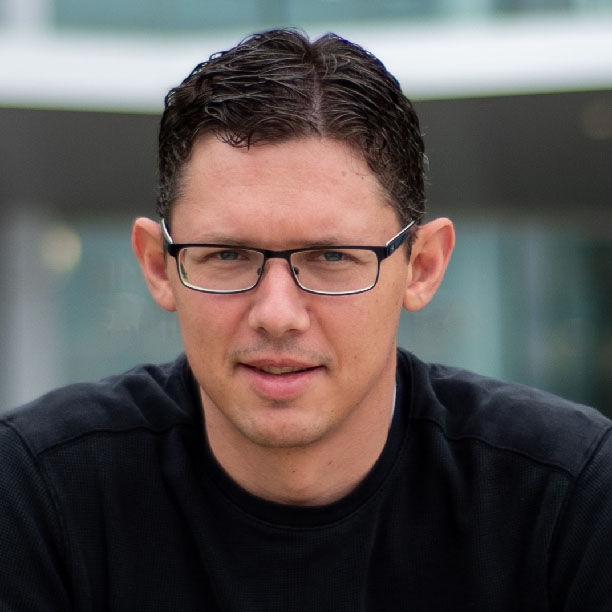
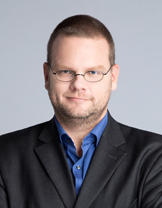
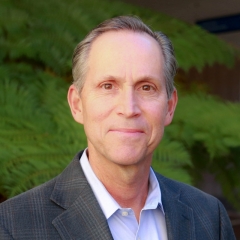
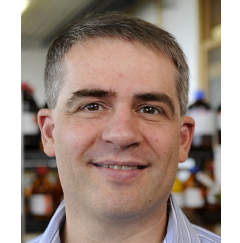
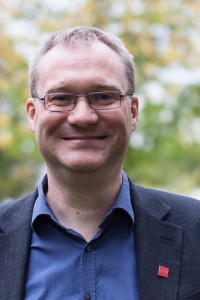
Jason R. Green is a Professor in the Department of Chemistry at the University of Massachusetts Boston. With a PhD from Purdue University (2007) and postdoctoral experience at the Universities of Chicago, Cambridge, and Northwestern University, his research bridges theoretical chemistry, physics, and data science to explore nonequilibrium systems. His work focuses on transforming chemical energy into dynamically functional materials through interdisciplinary approaches. Education: B.S., Case Western Reserve University (cum laude, 2002) Ph.D., Purdue University (2007) with NASA Graduate Fellowship NSF Postdoctoral Fellow at University of Chicago and University of Cambridge Research Interests: Theoretical chemical physics Nonequilibrium statistical mechanics Data science applications in chemical systems His recent publications analyze electrochemical material dynamics (ACS Nano 2024), chemically driven self-assembly (Chemical Science 2024), and thermodynamic speed limits across disciplines (Nature Physics 2020, Physical Review X 2022). He has received prestigious fellowships including NASA's Graduate Student Researchers Program and NSF Postdoctoral Fellowship. The Green Research Group at UMB applies theory, computation, and data science to understand energy transformation in synthetic and biological materials.
Juewen Liu is a Professor and Canada Research Chair in Biosensors and Bionanotechnology in the Department of Chemistry at the University of Waterloo, affiliated with the Faculty of Science. His research program employs principles of chemistry, physics, and biology to develop innovative nanoscale materials and systems with applications in sensing, diagnostics, and therapeutics. Research encompasses: DNA aptamer development and applications Nanoparticle engineering for biomedical use Biointerface chemistry innovations Nanozyme design and catalytic applications Liu maintains an extensive publication record in high-impact journals, with recent work emphasizing advanced biosensing platforms, targeted drug delivery systems, and nanomaterial-based solutions for environmental and health challenges. His research integrates fundamental science with practical applications in diagnostics and therapy. Teaching responsibilities include courses on nano-biomaterials and nano-instrumentation. Professor Liu collaborates extensively through the Waterloo Institute for Nanotechnology, Water Institute, and Centre for Bioengineering and Biotechnology.
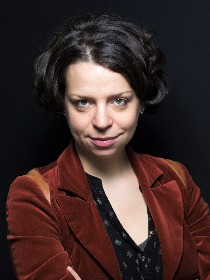
Nathalie Katsonis is a Professor of Chemistry at the University of Groningen, affiliated with the Faculty of Science and Engineering and the Molecular Active Systems department within the Stratingh Institute of Chemistry. Her research focuses on understanding and designing active molecular systems inspired by biological mechanisms, emphasizing the transmission of movement across molecular to macroscopic scales, particularly in liquid crystals, supramolecular chemistry, and molecular machines. She holds a Ph.D. in Chemistry from Sorbonne Université (2004), followed by postdoctoral research at the University of Groningen (2004–2007) and a Veni Fellowship (2009–2011). Prior to her current position, she held academic roles at the University of Twente, including Professor, Associate Professor, and Assistant Professor from 2011–2020. Her research explores molecular motion mechanisms, chirality control, and the creation of functional materials like light-responsive polymers and self-actuating systems. Key contributions include studies on rotaxane-based liquid crystal switches and macroscopic motion driven by molecular dynamics. She leads an international research group and chairs committees such as the Binding Study Advice Commission (FSE) and the Van't Hoff Foundation. Notable awards include the Professor-Werdelmann Award (2022), Koninklijke Hollandsche Maatschappij der Wetenschappen membership (2021), and an ERC Consolidator Grant (2017). Her work bridges fundamental science and applications in soft robotics, smart materials, and origins-of-life research.
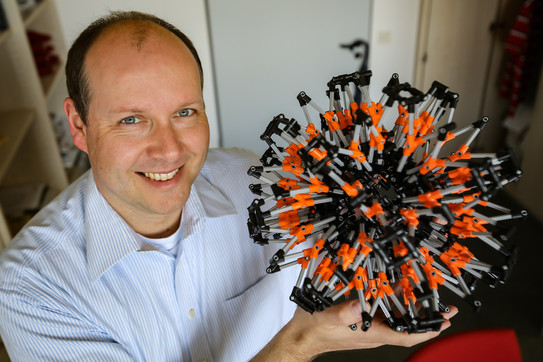
Guido Clever is a Professor (W3) for Bioinorganic Chemistry at the Technical University Dortmund, Faculty of Chemistry and Chemical Biology, Department of Inorganic Chemistry. His office is located at Otto-Hahn-Str. 6, Room C1-05-734 in Dortmund, Germany. Prof. Clever's research focuses on supramolecular chemistry, particularly the design and construction of artificial nanoscale devices and complex systems inspired by nature's biochemical machinery. His work spans chemistry inside molecular cages, DNA nano-architecture, and molecular machines. The Clever Lab creates functional molecules and supramolecular assemblies for applications as diagnostic tools, selective reagents, and stimuli-responsive materials. His research group has access to state-of-the-art equipment including a 500 MHz NMR spectrometer, high-resolution Ion Mobility-ESI mass spectrometer, single crystal X-ray diffractometer, and various spectroscopy and chromatography systems that enable sophisticated analysis of supramolecular structures. Prof. Clever has received numerous awards including an ERC Consolidator Grant in 2016 and several young investigator awards from the German Chemical Society and Fonds der Chemischen Industrie. ERC Consolidator Grant 2016 Otto Hofmann Foundation prize for pre-diploma Dr. Sophie Bernthsen Fonds prize for diploma Dr. Klaus Römer Foundation prize for PhD thesis ADUC Prize 2012 (Young Investigator Award) FCI Dozentenpreis 2014 (Young Investigator Award) Prof. Clever has successfully supervised PhD students including Laura Neukirch, who recently defended her thesis on photoinduced charge separation in coordination cages. His academic career includes previous positions as Professor (W2) at Georg-August-University Göttingen (2013-2015), Junior Professor at the same institution (2010-2013), and postdoctoral work at Tokyo University. The Clever Lab maintains active international collaborations, including serving as International Advisor of the Japanese 'Asymmetallic' Collaborative Research Consortium, and has participated in various symposia including Alexander von Humboldt Foundation events in China and Germany.
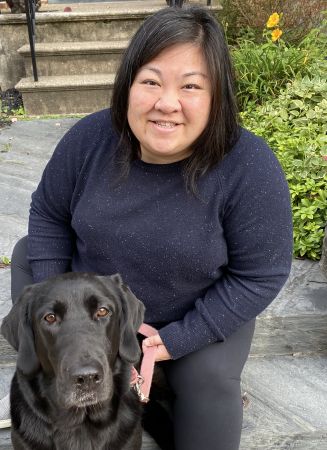
Lesley W. Chow is an Associate Professor in Bioengineering and Materials Science & Engineering at Lehigh University. She leads the Chow Lab, focusing on designing biomaterials for regenerative medicine and tissue engineering, particularly musculoskeletal interfaces like the osteochondral junction. Her work integrates 3D printing, peptide-polymer conjugates, and self-assembly techniques to create hierarchical scaffolds mimicking native tissues. Chow holds a Ph.D. in Materials Science and Engineering from Northwestern University and a B.S. in Materials Science and Engineering from the University of Florida. Her research emphasizes understanding how tissue organization influences cell behavior and improving clinical translation of biomaterials. Key areas include osteochondral interface regeneration, immunomodulatory biomaterials, and spatially functionalized scaffolds using additive manufacturing. Her lab’s innovations address challenges in musculoskeletal repair, such as creating gradient scaffolds to replicate native tissue properties. Collaborations span biomaterials science, engineering, and clinical translation. She also advocates for diversity in engineering through frameworks promoting institutional accountability. Major grants include the NSF CAREER Award for spatially organized biomaterials. Her work is published in journals across biomaterials science and tissue engineering, with a focus on interdisciplinary solutions for complex tissue regeneration.
Prof. Christoph A. Schalley is a Professor of Organic Chemistry at Freie Universität Berlin, leading the Schalley Lab in the Department of Chemistry and Biochemistry. His research focuses on supramolecular chemistry, including gas-phase chemistry of non-covalent complexes, self-assembly, multivalent binding, and systems chemistry. He has held academic positions since 2005 and has been recognized with multiple teaching awards, including the Central Teaching Award of FU Berlin (2017). He holds adjunct and visiting professorships in China and Japan. Education & Career: PhD (1997) and Habilitation (2003) in Organic Chemistry Postdoc at Scripps Research Institute (1998-1999) Professor at Freie Universität Berlin since 2005 Adjunct Professor, Northwestern Polytechnical University (2017-2019) Research Interests: Supramolecular chemistry, gas-phase ion chemistry, self-sorting, molecular diversity, and emergent properties in chemical systems. Key projects include studies on anion-pi interactions, pseudorotaxanes, and stimuli-responsive gels. Awards: Mattauch-Herzog Award (2006) Fellow of the Royal Society of Chemistry (2016) Excellence in Teaching Awards (multiple years) Teaching: Leads courses such as 'Systems Chemistry' and 'Molecular Diversity'. Developed innovative teaching methods, including interactive seminars and video-based learning. Labs/Teams: Active in collaborative research initiatives like SFB 1349 (BioSupraMol) and SFB 765. His lab members include PhD candidates and postdocs working on cutting-edge supramolecular systems.
Glenn H. Fredrickson is the Mitsubishi Chemical Professor of Functional Materials in the Department of Chemical Engineering at the University of California, Santa Barbara, with additional appointments in the Materials Department. He directs the Mitsubishi Chemical Center for Advanced Materials (MC-CAM) and the Complex Fluids Design Consortium (CFDC), and previously chaired the Chemical Engineering department (1998-2001). He is an elected member of both the National Academy of Engineering and the National Academy of Sciences. Education Ph.D. Chemical Engineering, Stanford University (1984) M.S. Chemical Engineering, Stanford University (1981) B.S. Chemical Engineering, University of Florida (1980) Research Interests Fredrickson leads an internationally recognized program in theoretical and computational polymer science , focusing on self-assembly of block copolymers , complex fluids , and field-theoretic simulation methods . His group pioneered field-theoretic simulations (FTS) —numerical techniques to solve statistical field theories of polymers—enabling predictive design of advanced materials including high-performance plastics, ion-conducting electrolytes, and nanostructured membranes. Current themes include quantum-fluid analogs, machine-learning-accelerated discovery, and sustainable polymer formulations. Recent Publication Trends Between 2022 and 2025, Fredrickson’s group published extensively on block copolymer morphology control , polymer electrolytes for energy storage , phase-separation kinetics , and quantum many-body analogs in soft matter . Notable advances include machine-learning-enhanced self-consistent field theory, molecularly informed models for surfactant and polyelectrolyte systems, and the application of polymer field theory to spin-orbit-coupled Bose-Einstein condensates. Scientific Awards & Honors Election to National Academy of Sciences (2021) Materials Theory Award, Materials Research Society (2017) William H. Walker Award, AIChE (2016) Polymer Physics Prize, American Physical Society (2007) Election to National Academy of Engineering (2003) Alfred P. Sloan Fellow (1992) Camille and Henry Dreyfus Teacher-Scholar Award (1991) Presidential Young Investigator Award, NSF (1991) Research Group & Funding The Fredrickson Research Group comprises ~15 graduate students and several post-doctoral researchers. The group is supported by multi-agency grants including NSF, DOE, and industry partnerships through the Mitsubishi Chemical Center for Advanced Materials and the Complex Fluids Design Consortium. Laboratory & Collaborative Networks State-of-the-art computational facilities are housed in the Materials Research Laboratory (MRL) at UCSB. Collaborative projects extend to leading experimental groups worldwide, integrating theory with synthesis, characterization, and device testing to accelerate materials innovation.
Dr. Norbert Jux is an Adjunct Professor at the Department of Chemistry and Pharmacy, Friedrich-Alexander-University Erlangen-Nürnberg (FAU), associated with Prof. Dr. Hirsch's Chair of Organic Chemistry II. His research focuses on advanced molecular architectures involving nanographenes, porphyrins, and their conjugates for applications in materials science and photophysics. Research Highlights: Specializes in π-extended conjugates, supramolecular complexation, and regiocontrolled synthesis of polycyclic aromatic systems. Recent Work: Explores helical nanographenes, panchromatic absorption materials, and electron transfer mechanisms in hybrid systems. Collaborations: Works with teams in synthetic chemistry, photophysical characterization, and surface science. Email: norbert.jux@fau.de | Lab Website
Professor Nicholas Warren is a Chair in Sustainable Materials at the School of Chemical, Materials and Biological Engineering at the University of Sheffield. With a PhD from Sheffield and academic experience at Leeds University (2016-2024), his research integrates polymer chemistry with automation technologies. Education: University of Bristol (2005), University of Sheffield (PhD) Academic Positions: Postdoc at Sheffield (2005-2016), University Academic Fellow at Leeds (2016-2024), Associate Professor (2021-2024) Current Role: Chair in Sustainable Materials (2024-present) Research focuses on polymer science with flow chemistry , online monitoring , and artificial intelligence to advance sustainable materials. Key article trends include self-driving laboratories , multi-objective optimization , and nanostructured polymer systems . Scientific recognitions include: 2022 Macro Group UK Young Researchers Medal 2023 RSC Reaction Chemistry & Engineering Outstanding Early Career Paper Award Advisees span current and alumni PhD students like Dr Stephen Knox , Anna Morrell , and Dr Charlotte Pugsley . His team employs self-driving lab platforms that combine robotics, AI, and online analytics for accelerated materials discovery.
Xiaocun Lu is an Assistant Professor in the Department of Chemistry & Biochemistry at Clarkson University's Coulter School of Engineering & Applied Sciences and Director of the SmartPASS Lab. His research focuses on mechanoresponsive materials, supramolecular self-assembly, and micro/nanocapsule-based smart delivery systems for applications in sensing, self-healing, and controlled release. Education includes: Chemistry and MatSE Postdoctorate - University of Illinois at Urbana-Champaign (2015) PhD in Polymer Science - The University of Akron (2013) BS in Chemistry - Peking University (2005) His research integrates contact-initiated polymerization (CIP) and aggregation-induced emission (AIE) to develop next-generation stimuli-responsive materials. Current projects aim to create autonomous materials for chemical sensing, structural health monitoring, and controlled payload release, with emphasis on designing mesoscale structures like functionalized colloids and metallosupramolecular architectures. Publications demonstrate expertise in mechanochromic materials, encapsulation technologies, and self-assembly. Recent articles explore force-induced chromism, self-reporting coatings, and ion-triggered release systems. Trends highlight innovation in polymer chemistry, material responsiveness, and nanoscale engineering. No awards are listed in the provided information. No specific advising or grant information is explicitly mentioned in the text. Leads the SmartPASS Lab focusing on stimuli-responsive materials. Research involves interdisciplinary collaboration across chemistry and materials engineering.
Dr. Yu Liu is a Professor in the Department of Chemistry at Northern Michigan University (NMU). Their research focuses on supramolecular chemistry, catalysis, and organic synthesis, particularly leveraging aromatic donor-acceptor interactions for asymmetric catalytic reactions and the construction of 2D/3D nanostructures. They actively contribute to advancing chemical methodologies and materials science. Ph.D. in Organic Chemistry, New York University M.S. in Inorganic Chemistry, Tongji University B.S. in Applied Chemistry, Tongji University Yu Liu's research explores supramolecular catalyst assemblies for asymmetric reactions, with applications in hydrolytic kinetic resolution and DNA-based nanotechnology. Their work bridges organic synthesis, catalysis, and nanostructure design. Recent publications highlight trends in aromatic donor-acceptor interactions for catalytic systems, asymmetric synthesis, and wastewater analysis. Notable awards include ChemCatChem Hot Paper designation (2023), Chemeurope.com highlight (2011), and being the most downloaded paper in Chirality (2005–2006). Selected by Editor-in-chief as 'Hot Paper' and Cover Featured (2023) Highlighted at Chemeurope.com (2011) Most downloaded paper of Chirality (2005–2006)
Daniel W Armstrong is a Professor at the University of Texas at Arlington in the Department of Chemistry and Biochemistry. With over 35 years of experience, he is a pioneering figure in chiral recognition, enantiomeric separations, and the biological relevance of D-amino acids. His work has led to over 740 publications, 35 patents, and 560 invited seminars worldwide. Developed first chiral recognition mechanism by cyclodextrins First to use macrocyclic antibiotics as chiral selectors Synthesized most new ionic liquids (ILs) globally Created ultra-fast separation techniques now standard in analytical chemistry Contributed to FDA 1992 guidelines on chiral drug separation His research focuses on chiral separations, ionic liquids, and the role of D-amino acids in biological systems. He has commercialized over 30 HPLC and GC columns, transforming analytical chemistry and pharmaceutical analysis. Recent publications demonstrate continued innovation in chiral chromatography, biomarker analysis, and AI-driven separation optimization. His grants include industry collaborations with Merck, Alcon, and Sigma-Aldrich, emphasizing practical applications of his work. Scientific honors include multiple lifetime achievement awards, fellowships in the Royal Society of Chemistry and American Chemical Society, the Chirality Medal, and induction into the National Academy of Inventors. He has mentored over 100 PhD students, many from first-generation college backgrounds.
Prof. Dirk Schneider is a Full Professor (W3) of Biochemistry at Johannes Gutenberg University Mainz since 2010, with previous appointments at the University of Freiburg (2003-2009) and postdoctoral training at Yale University. His research spans membrane biochemistry, biophysics, and transmembrane protein folding/assembly, focusing on thylakoid membrane biogenesis and protein-lipid interactions in cyanobacteria and chloroplasts. Current roles: Full Professor, University Mainz Previous roles: Assistant Professor (W1), University of Freiburg Education: PhD (summa cum laude) from Ruhr-University Bochum His research interests include: Membrane protein folding and stability ESCRT-III/Vipp1/PspA family structural dynamics ABC transporter activity regulation (e.g., BmrA) Protein-lipid interaction mechanisms Thylakoid membrane remodeling Comparative membrane biology between prokaryotes and eukaryotes Development of spectroscopic and computational methods Recent publications reveal trends in bacterial membrane remodeling (SynDLP, PspA), lipid effects on transporter activity (BmrA), and IM30/Vipp1-mediated membrane fusion. His work combines structural biology, biophysics, and functional assays to elucidate membrane dynamics. Awarded the Dr. Heinrich Kost Award (2001) and Leopoldina Fellowship (2001) , he has held leadership roles including Study Section Speaker (2010-2014) , Director of Institute of Pharmacy and Biochemistry (2013-2015) , and Dean of Faculty of Chemistry (2015-2020) . His scientific advisory roles include editorial board memberships and study section leadership.
Albert P.H.J. Schenning is a Full Professor of Stimuli-responsive Functional Materials and Devices at Eindhoven University of Technology (TU/e), affiliated with the Institute for Complex Molecular Systems (ICMS). His work focuses on developing smart materials for sustainable energy, healthcare, and environmental applications. He holds roles in the TU/e’s Eindhoven Polymer Laboratories (EPL) and the Advanced Research Center Chemical Building Blocks Consortium (ARC CBBC). Education: M.Sc. (1992) and Ph.D. (1996) in Chemistry from Radboud University Nijmegen. Postdoctoral research at TU/e (1996) and ETH Zurich (1997). Became a KNAW fellow (1998–2003) before advancing through academic ranks at TU/e: Assistant Professor (2003), Associate Professor (2005), and Full Professor (2014). Research interests include stimuli-responsive polymers, self-healing materials, and liquid crystal actuators. Notable projects involve smart materials for food packaging, greenhouses, and photonic coatings. Awards include the Alfred Saupe Prize (2024) and Golden Medal from the Royal Dutch Chemical Society (2005). Teaching: Courses include Molecules and Materials, Experimental Soft Matter, and Nanomaterials. Supervised over 128 students. Collaborations span industries like DSM and Merck. Labs/Teams: Leads the Stimuli-responsive Functional Materials & Devices (SFD) group, engaged in multidisciplinary projects from molecule-to-device development.
Ngoc T. Bui is an Assistant Professor in the Department of Sustainable Chemical, Biological and Materials Engineering at the University of Oklahoma. He holds a Ph.D. in Chemical Engineering from the University of Connecticut (2014), an M.S. in Textile Engineering from Chonnam National University (2007), and a B.S. in Chemical Engineering with a minor in Organic Chemistry from HoChiMinh City University of Technology (Vietnam). His research focuses on the water-energy-environment nexus, developing advanced functional materials and membranes for sustainable separations, environmental remediation, and renewable energy applications. Dr. Bui's work integrates physics, chemistry, and engineering to study nanomaterials' physicochemical properties and their transport behaviors. His lab designs membranes and adsorbents from nanoscale building blocks, focusing on energy-efficient wastewater treatment from oil and gas industries and converting pollutants into valuable commodities. Key projects include bioinspired supramolecular complexes for heavy metal removal, carbon nanotube-based breathable protective fabrics, and adsorptive membranes for precision ion separation. His research outputs span over 30 peer-reviewed articles, patents on nanoporous membranes and adsorptive technologies, and contributions to textbooks like Desalination: Water from Water and Desalination 2nd Edition . Collaborations with Lawrence Berkeley and Livermore National Laboratories highlight his expertise in applied nanotechnology and sustainable engineering. Dr. Bui's lab emphasizes translational research through systems-level assessments, aiming to transform water, energy, and environmental landscapes. Current efforts include granulation technologies for nutrient recovery and fluidized-bed systems for industrial wastewater treatment.