Yuehua Cui is a Professor in the BioMolecular Science Gateway at Michigan State University, affiliated with the Molecular Plant Sciences Program and the Genetics & Genome Sciences Program. Her research focuses on statistical genetics, bioinformatics, longitudinal data analysis, genomics, plant sciences, and computational biology. Research Trends: Her recent work emphasizes spatial transcriptomics (e.g., STANCE, Rotation-invariance), gene-environment interactions (e.g., Functional Varying-Index Coefficients), and multi-omics data integration (e.g., wMKL, Similarity Network Fusion). Key applications include cancer subtyping, soil microbiota resilience, and Mendelian randomization for causal analysis. Technical Contributions: She develops advanced statistical models for high-dimensional data, including methods for variable selection, network analysis, and uncertainty quantification in genetic studies.
Prof. Dr. Oliver Gailing is a Full Professor (W3) at the Georg-August-University Göttingen , holding the Chair of Forest Genetics and Forest Tree Breeding since 2017. He previously served as a Professor at Michigan Tech University (2016-2017), Associate Professor (2012-2016), and Assistant Professor (2009-2012). Education: M.Sc. in Botany, University of Bochum (1994) Ph.D. in Genetics, University of Halle (2000) Habilitation in Forest Genetics, University of Göttingen (2008) His research focuses on ecological genetics and genomics of trees, particularly oaks and poplars , investigating hybridization, adaptive divergence, and gene flow mechanisms. Recent work includes phylogeographic pattern analysis in European beech, drought adaptation studies in oak species, and genetic mapping in non-model tree species. His publications reveal expertise in population genetics , molecular ecology , and evolutionary biology , with applications in conservation genetics and forest tree breeding . Research spans both temperate and tropical environments, including collaborations on teak and Hagenia abyssinica conservation. Scientific Awards: Honorary Professor, Transilvania University of Brasov (2018) Manierre Publication Award, Huron Mountain Wildlife Foundation (2014) Gailing actively contributes to academic governance as an editorial board member for Frontiers in Genetics , Forstarchiv , and Annals of Forest Research (since 2014). He has served as session chair in international conferences like the AOX symposium (2009) and Fagaceae Genomic Conference (2011).
Associate Professor Tim Curran specializes in plant ecology within the Department of Pest-Management and Conservation at Lincoln University, New Zealand. His research focuses on plant responses to extreme disturbances through functional trait analysis, particularly pioneering work on plant flammability using innovative 'plant BBQ' methodologies. Current research addresses fire ecology, climate impacts, and restoration strategies across diverse ecosystems from alpine zones to tropical forests. Research interests span plant flammability mechanisms , drought-fire interactions , phylogenetic conservation of traits , and practical fire mitigation including green firebreak development. His work bridges fundamental ecology with applied solutions for wildfire management, contributing significantly to UN Sustainable Development Goals 13 (Climate Action), 15 (Life on Land), and 11 (Sustainable Cities). Recent publication trends reveal three dominant research streams: (1) Quantifying shoot/leaf flammability relationships across 66+ publications, (2) Investigating disturbance responses to cyclones, droughts and fires, and (3) Developing scalable methodologies for agricultural and wildland fire risk assessment. His 2022-2025 work shows increasing international collaboration and policy relevance, with high-impact studies in New Phytologist and Science . Professional Leadership : President of New Zealand Ecological Society (2019-present) Service Roles : Vice President (2017-2019), Councillor (2015-2017) Active in graduate supervision with completed projects on farm flammability measurement, drought-flammability physiology, and phylogenetic flammability patterns. Current teaching includes Field Ecology Methods (ECOL 293) and Research Methods for Ecology (ECOL 608). His 'plant BBQ' laboratory serves as the central experimental facility for flammability research, supporting both fundamental studies and practical fire management applications.
Richard Field is a Professor in the Department of Geography within the School of Geography at the University of Nottingham. His research spans biogeography, plant ecology, and conservation science with particular focus on geodiversity-biodiversity relationships and island ecosystems. Field maintains active collaborations across European and tropical research networks, frequently publishing in high-impact journals including Nature Communications and Proceedings of the Royal Society B. His research program investigates fundamental patterns in biodiversity distribution through multiple lenses: Geodiversity as a driver of species richness and functional diversity Climate change impacts on island flora, particularly Canary Islands ecosystems Trait-based approaches to understanding community assembly Spatial modeling of species distributions across environmental gradients Field's work demonstrates consistent methodological innovation, integrating remote sensing, trait databases, and field observations to address conservation challenges. His publication record shows strong emphasis on global synthesis, with recent articles examining Caribbean reef fish communities, biodiversity credit systems, and pan-European plant trait-geodiversity relationships. The research demonstrates increasing integration of geodiversity metrics into conservation planning frameworks. Field actively supervises doctoral researchers including Dagmar Hanz, Vanessa Cutts, and Grant Vernham. His projects frequently involve major research grants from UKRI and European funding bodies, supporting fieldwork across multiple continents and development of novel analytical frameworks. He contributes to major collaborative initiatives including the sPlot vegetation database and essential geodiversity variables framework. His laboratory group employs interdisciplinary approaches combining spatial analysis, trait ecology, and conservation policy evaluation to address pressing environmental challenges.
Yadvinder Malhi is a Professor at the University of Oxford, affiliated with the School of Geography and the Oxford University Centre for the Environment . He is also associated with Oriel College. His position as a Fellow of the Royal Society since 2017 highlights his significant contributions to environmental science. Professor Malhi's research focuses on tropical forest ecology , climate change impacts , and carbon cycling across ecosystems. His work spans multiple continents including South America (particularly the Amazon basin), Africa (Ghana), and Europe. He investigates how forests respond to climate change, with particular attention to functional traits, carbon dynamics, and ecosystem resilience. His research integrates field measurements with modeling approaches to understand large-scale ecological patterns. His publication record reveals a strong focus on global forest dynamics, with recent work examining wood density variation across elevational gradients, forest responses to climate warming, and the functional composition of tree communities. His research shows how forests are changing in response to climate change, often at rates insufficient to track changing climate conditions. Fellow of the Royal Society (2017) Professor Malhi actively collaborates with researchers worldwide, contributing to major studies on tropical forest ecology and climate change. His work bridges fundamental ecological research with practical applications for conservation and climate adaptation. He has served as a reviewer for prestigious journals including Nature Communications and Nature Ecology & Evolution, demonstrating his standing in the scientific community.
Dr. Paula Moolhuijzen is an Adjunct Research Fellow at Curtin University's Centre for Crop Disease Management (CCDM), affiliated with the School of Molecular and Life Sciences within the Faculty of Science and Engineering. Her research focuses on plant-pathogen interactions, emphasizing genomic approaches to combat crop diseases. She specializes in fungal pathogens affecting wheat and barley, leveraging cutting-edge technologies like nanopore sequencing and transcriptomics to decipher virulence mechanisms. Her research interests span Plant Pathology , Fungal Genomics , and Molecular Plant-Microbe Interactions , with significant work in: Genome assembly of fungal pathogens like Pyrenophora tritici-repentis Effector protein characterization and pangenome analysis Disease resistance mechanisms in cereals Bioinformatics tool development for genomic studies Analysis of her 15 most recent publications (2020-2025) reveals dominant themes: 68% focus on fungal genomics of wheat/barley pathogens, 20% on bioinformatics tool development (e.g., CoreDetector), and 12% on tick immunology. Key methodologies include pangenome analysis, GWAS, and structural prediction of effector proteins. Dr. Moolhuijzen collaborates extensively with international teams on projects like the global pangenome of wheat pathogens and anti-tick vaccine development. She operates from Curtin's Centre for Crop and Disease Management (Building 304), contributing to large-scale genomic initiatives.
Teja Kattenborn serves as Professor for Sensor-based Geoinformatics (geosense) at the University of Freiburg, Germany. With 118 publications, over 95,000 reads, and 7,103 citations, he has established himself as a leading researcher in remote sensing applications for ecological monitoring and environmental assessment. His work bridges advanced technological approaches with fundamental ecological questions, making significant contributions to understanding vegetation dynamics and forest health through innovative remote sensing methodologies. Professor Kattenborn's research focuses on integrating cutting-edge remote sensing technologies with ecological science to monitor plant species distributions, forest health, and ecosystem dynamics. His expertise spans UAV/drone imagery analysis, satellite data interpretation, and deep learning applications for vegetation mapping. He has pioneered methods to extract plant functional traits from spectral data, enabling new approaches to understanding biodiversity patterns and ecosystem responses to climate change. His work demonstrates how advanced computational techniques can transform raw remote sensing data into meaningful ecological insights about plant functioning and community composition. His recent publications reveal a strong emphasis on advancing remote sensing methodologies for ecological applications, particularly using deep learning for fine-grained plant species mapping, monitoring forest dieback and tree mortality at unprecedented scales, and retrieving plant functional traits from diverse remote sensing platforms. His research spans from centimeter-scale UAV applications to global analyses using satellite data, demonstrating both technical innovation and ecological relevance. Notably, his work increasingly addresses climate change impacts on forest ecosystems, particularly drought-induced forest dieback and its cascading effects on ecosystem services. Scientific recognition includes: Best oral presentation at the IAVS Annual Symposium 2019 Best oral presentation at the EARSel SIG Imaging Spectroscopy Workshop 2019 ARCADIS price for Geo- and environmental research Fellowship for UAV-Based beach-profile monitoring system Karl-Steinbuch-fellowship 2013 As principal investigator of the Sensor-based Geoinformatics (geosense) research group, Professor Kattenborn leads multiple collaborative projects, including participation in the ECOSENSE Collaborative Research Centre funded by the German Research Foundation (DFG). His extensive publication record with numerous co-authors across institutions indicates active mentorship of graduate students and postdoctoral researchers, though specific advisees aren't listed in the provided information. His research program appears well-funded through various national and international grants supporting innovative environmental monitoring approaches. The geosense research group develops and applies novel remote sensing techniques for environmental monitoring, with particular strengths in UAV-based systems, deep learning applications, and multi-sensor data fusion. Professor Kattenborn maintains extensive collaborations across Germany and internationally, as evidenced by his diverse publication record spanning European institutions and global research initiatives focused on forest ecology, biodiversity monitoring, and climate change impacts.
Jenny Wilkerson, PhD, serves as an Assistant Professor at the School of Pharmacy, Texas Tech University Health Sciences Center (TTUHSC), where her research bridges pharmacological neuroscience and pain therapeutics. Her academic journey includes a PhD in Pharmacology from the University of New Mexico (2012) and a BS from Northwest Missouri State University (2004), establishing a foundation for her current investigations into neuromodulatory systems. Her educational background is highlighted by advanced training in pharmacological methodologies: PhD: University of New Mexico (2012) BS: Northwest Missouri State University (2004) Dr. Wilkerson's research program centers on neuropathic pain mechanisms , with particular emphasis on cannabinoid-opioid interactions, kratom pharmacology, and sex-specific responses. Her laboratory employs in vivo rodent models to dissect molecular pathways involving CB 2 receptors, TRPV1 channels, and nicotinic systems, revealing novel targets for analgesic development. Key discoveries include differential effects of mitragynine metabolites on opioid receptors and sex-dependent endocannabinoid modulation of pain pathways. Analysis of her 2020-2023 publications demonstrates a cohesive trajectory toward translational pain pharmacology , integrating behavioral, molecular, and pharmacokinetic approaches. Her work consistently addresses chemotherapy-induced neuropathy, kratom's therapeutic potential, and receptor-specific mechanisms—revealing critical insights for developing non-addictive analgesics while characterizing abuse liabilities of emerging substances. Her scholarly impact is recognized through prestigious awards: Graduate Mentor of the Year (School of Pharmacy, 2024) Teacher Award by Student Senate (2024) President's Young Investigator Award (TTUHSC, 2023) As an active mentor, Dr. Wilkerson chairs dissertation committees and supervises graduate research, fostering the next generation of pharmacologists. Her collaborative network—spanning TTUHSC, University of Florida, and international institutions—drives innovative studies on substance pharmacology, supported by institutional recognition of her research excellence. Current projects focus on mitragynine's respiratory effects and novel cannabinoid-inspired therapeutics. She maintains a robust presence in the scientific community through presentations at ASPET, ICRS, and SRNT conferences, where she addresses critical topics like 'Pharmacology in Color' and kratom's clinical implications. Her laboratory's interdisciplinary approach combines behavioral pharmacology with molecular techniques to tackle unmet needs in pain management.
Rachel Spicer is an Associate Professor of Botany and Chair of the Botany Department at Connecticut College, where she has been a faculty member since 2010. Her research focuses on woody plant biology, specifically studying how trees, shrubs, and lianas adapt, evolve, and survive in different environments. Her educational background includes: B.S. from University of Massachusetts at Amherst M.S. from Oregon State University Ph.D. from Harvard University Dr. Spicer's research examines the structure and function of wood, vascular development in trees, and how these processes interact with environmental factors. She combines molecular biology, physiology, and classical plant development techniques in her work, with a particular focus on the model species Populus . Her lab frequently develops innovative techniques to measure previously unmeasurable plant processes. Analysis of her recent publications reveals a consistent focus on vascular development, auxin transport mechanisms, and the physiological adaptations of woody plants. Her work bridges molecular biology with whole-plant physiology, creating a comprehensive understanding of tree growth and development. Scientific recognition includes: A three-year, $395,000 NSF grant for research on auxin dynamics during vascular development in Populus Dr. Spicer actively mentors undergraduate researchers, with her lab supporting numerous student projects. Her NSF grant specifically provided summer stipends for up to ten students conducting independent research toward senior theses. She encourages students who enjoy tinkering, building equipment, and learning new experimental techniques to join her lab. She directs the Spicer Lab - Woody Plant Biology, which utilizes Connecticut College's 750-acre Arboretum as a living laboratory for research on forest development and plant adaptation.
Kristin Judd is a Professor in the Department of Biology at Eastern Michigan University, with affiliations in the Environmental Science and Society (ENVI) Interdisciplinary Program. Her research bridges terrestrial and aquatic ecosystems, focusing on biogeochemical cycles and anthropogenic impacts on natural systems. Her educational background includes: BA, Dartmouth College, 1995 MS, University of Michigan, 1998 PhD, University of Michigan, 2004 Professor Judd's research centers on ecosystem ecology and biogeochemistry , with emphasis on: Organic matter dynamics and nutrient cycling in watersheds Linkages between land and water systems Impacts of invasive species (e.g., Phragmites), road salt, microplastics, and pharmaceuticals Carbon/nitrogen budgets in freshwater and coastal ecosystems Her work employs field and laboratory approaches to understand environmental change effects on ecosystem structure. Analysis of her publications reveals consistent focus on anthropogenic stressors in freshwater ecosystems, including invasive species management in Great Lakes wetlands, pollution impacts (road salt, microplastics, pharmaceuticals), and biofilm dynamics. Research spans local Michigan watersheds to arctic tundra systems, highlighting terrestrial-aquatic interconnections. Professor Judd leads the Judd Lab, conducting ecosystem dynamics research and training students. She teaches courses including Ecology, Limnology, and Wetland Ecosystems at undergraduate and graduate levels.
Professor Ilka Maria Axmann serves as a Research Professor at the Institute for Synthetic Microbiology, Heinrich Heine University Düsseldorf, leading cutting-edge research at the intersection of synthetic biology and microbial metabolism. Her work focuses on engineering cyanobacteria for sustainable biotechnology applications through RNA-based regulatory systems. Her research spans Synthetic Biology , Microbial Metabolism , and RNA Engineering , with particular emphasis on: Developing synthetic RNA-devices for dynamic control of metabolic pathways Engineering cyanobacteria as sustainable bioproduction platforms Mapping plant-microbe metabolic interfaces Integrating data science approaches in plant biology The publication portfolio reveals a consistent focus on cyanobacterial systems (particularly Synechocystis sp. PCC 6803), terpenoid biosynthesis, and circadian regulation, demonstrating strong interdisciplinary integration between molecular biology and computational approaches. Her laboratory operates key facilities including the Plant Metabolism and Metabolomics Facility and Imaging Platform, supporting research in edaphic adaptation and plant-microbiota networks.
Juan C. Alvarez-Yepiz serves as an Associate Professor at the Sonora Institute of Technology in Ciudad Obregón, Mexico, where he leads the Terrestrial Ecology and Macrosystems (TEAM) Lab. His academic career focuses on ecological research across multiple scales with particular emphasis on tropical dry forest ecosystems, which represent the northernmost distribution limit of this biome in the Americas. His work bridges theoretical ecology with practical conservation applications in the face of global environmental changes. Alvarez-Yepiz's research program centers on three interconnected pillars: understanding mechanisms controlling terrestrial ecosystem structure and functioning, improving predictive capabilities regarding ecological responses to extreme climatic and anthropogenic disturbances, and developing science-based strategies for biodiversity conservation and ecosystem restoration. His expertise spans ecosystem ecology, forest ecology, climate change impacts, plant-plant interactions, and carbon cycling dynamics, with particular focus on tropical dry forests that are highly threatened by land conversion and climate change. His work integrates field observations, remote sensing, biophysical modeling, and community ecology approaches to address pressing environmental challenges. Analysis of his recent publication record reveals consistent thematic focus on tropical dry forest ecology, with particular attention to climate change impacts, carbon dynamics, and restoration strategies. His research demonstrates increasing integration of remote sensing technologies with traditional field ecology, and growing emphasis on socio-ecological dimensions of environmental change. The geographic focus remains centered on northwestern Mexico, particularly the Sonoran region that represents the northern distribution limit of tropical dry forests. Alvarez-Yepiz maintains active research collaborations across multiple institutions, with notable partnerships at the Smithsonian Environmental Research Center, Tecnologico Nacional de Mexico, and various Mexican universities. His work has contributed significantly to understanding ecosystem responses to extreme events like hurricanes, droughts, and frosts in tropical dry forests. While specific grant information isn't detailed in the provided materials, his research program appears well-established with consistent publication output across high-impact ecological journals. The Terrestrial Ecology and Macrosystems (TEAM) Lab serves as the primary research hub for Alvarez-Yepiz's work, focusing on large-scale ecological patterns and processes. The lab appears to integrate multiple methodological approaches including field measurements, remote sensing, and biophysical modeling to address complex ecological questions. Current research directions emphasize climate change impacts on ecosystem functioning, restoration ecology informed by plant interaction theory, and the development of practical conservation strategies for threatened ecosystems in northwestern Mexico.
Kacper Maciszewski is a researcher at the Faculty of Biology, University of Warsaw, specializing in the evolution of eukaryotic microorganisms, particularly focusing on plastid and mitochondrial genomes. His work emphasizes endosymbiosis, horizontal gene transfer, and genome structure dynamics in algae and protists. He leads projects funded by the National Science Centre (NCN), including a PLN 210,000 grant on inverted repeats in Euglenophyta plastid genomes (2019–2022), and has conducted research at the University of Alberta through the Iwanowska Programme. Key research interests include the evolutionary mechanisms behind plastid genome conservation/variability, the role of inverted repeats in mutation repair, and the genomic adaptations of non-photosynthetic lineages. He has published on topics such as reduced plastid genomes in Prototheca, maturase gene complexity in euglenophytes, and spatio-temporal microbial community dynamics in lakes. Grants: NCN Preludium 16 (2019–2022), Faculty of Biology UW grants (2018–2020), NAWA internship (2021–2022) Awards: Holz-Conner Travel Grant (2019) Publications: Over 15 peer-reviewed articles in journals like Molecular Biology and Evolution , BMC Biology , and Frontiers in Plant Science Maciszewski is an active member of the International Society of Protistologists (ISOP) and has presented at conferences such as the European Congress of Protistology and the Jirovec’s Protozoological Days. His work bridges genomics, evolutionary biology, and microbial ecology, contributing to understanding plastid genome evolution across diverse eukaryotic lineages.
Kari Tvete Inngjerdingen is a Professor in the Department of Pharmaceutical Chemistry at the University of Oslo's School of Pharmacy. Her research focuses on pharmacognosy and biological active polysaccharides from medicinal plants, particularly investigating their roles in treating gastric ulcers and preserving biodiversity in Mali. She completed her PhD in 2007 on bioactive pectic polymers from Malian plants and has held roles as a pharmacist and advisor. Her work integrates ethnobotanical knowledge with modern analytical techniques, collaborating internationally on projects like the Malian Medicinal Plant Project. Key areas include immunomodulation, anti-inflammatory agents, and plant-derived therapies. Recently, her group has explored polysaccharides from Ulex gallii, Daphne mezereum, and Hygrophila ringens, advancing understanding of their antitumor and anti-inflammatory activities. She leads the BioNatH research group and the Glyconor Consortium, emphasizing interdisciplinary research in natural products and health effects. Education: Cand.pharm. (2000), PhD (2007) from University of Oslo. Employment History: Pharmacist at Alliance apotek Svanen (2007-2009), Advisor at RELIS (2007). Research Projects: Cultivated Vernonia kotschyana and Cochlospermum tinctorium as sustainable gastric ulcer treatments; international collaboration on plant biodiversity and pharmacological properties. Publications highlight polysaccharide structures, anti-inflammatory mechanisms, and ethnopharmacological applications, with a focus on Mali's traditional medicine. Her work bridges chemical analysis and clinical relevance, contributing to both fundamental and applied research in natural product sciences.
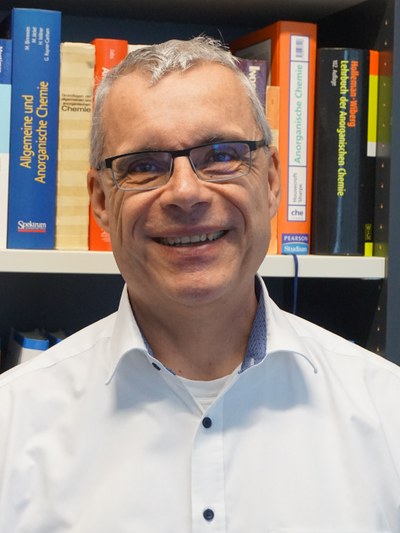
Prof. Dr. Wolfgang Imhof is a full Professor of Organic Chemistry at the Department of Chemistry, Universität Koblenz-Landau. He currently serves as Dean of Fachbereich 3: Mathematik/Naturwissenschaften and Head of the Organic Chemistry Group. His academic journey includes a diploma in Chemistry (1989) and a PhD (1992) from Ruprecht-Karls-University of Heidelberg, followed by a habilitation (2000) at Friedrich-Schiller-Universität Jena. He has held roles such as apl. Prof., Wissenschaftlicher Oberassistent, and leadership in research committees and editorial boards (e.g., Co-Editor of Acta Crystallographica Sect. E). Education: 1983–1989: Diplom in Chemistry (Ruprecht-Karls-Universität Heidelberg) 1992: PhD (Ruprecht-Karls-Universität Heidelberg) 1995: Business Administration (Fernuniversität Hagen) 2000: Habilitation (Friedrich-Schiller-Universität Jena) Research Interests: Focus areas include: - Catalytic synthesis of heterocycles via transition metal-catalyzed reactions - Quantitative NMR spectroscopy for microplastic analysis - Isotope-labeled compounds for studying plant polyesters (cutin/suberin) - Modification of diamond-like carbon (DLC) layers with photoactive ruthenium complexes His work integrates organic chemistry with environmental applications and materials science. Recent Articles: Recent studies emphasize advancements in microplastic quantification via NMR, catalytic reaction mechanisms, and surface functionalization of DLC layers. Key projects include: - Development of robust methods for environmental microplastic detection - Structural elucidation of heterocyclic compounds and transition metal complexes - Collaborations on bio-mineralization pathways of dicarboxylic acids in soil. Awards/Affiliations: His contributions are recognized through editorial roles, committee memberships (e.g., FBR 3, Energy Management Audit Committee), and leadership in academic governance. Grants/Teams: Active in securing funding for microplastic analysis and catalytic research. Leads interdisciplinary projects, including collaborations with Physics departments for DLC modification. Supervises research on applied organic chemistry and student advising in chemistry programs. Labs/Teams: Directs the Organic Chemistry Group at Universität Koblenz, involving staff like Dr. Carina Schink and Marcel Günther. Hosts international students and collaborates with institutions worldwide (e.g., Ohio State University, Université Pierre et Marie Curie).