Jacob S. Francisمشاهده پروفایل
استادیار
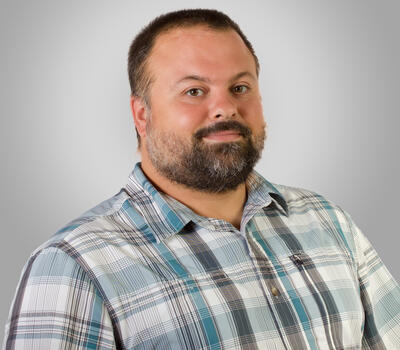
Dr. Jacob S. Francis serves as Assistant Professor in the Department of Biology at Florida Atlantic University (FAU), Davie campus, conducting interdisciplinary research at the intersection of plant, pollinator, and microbial ecology. His work examines how floral traits modulate ecological interactions and community structure through experimental, modeling, and field approaches. Educational background: Ph.D. in Ecology, University of Nevada Reno (2020) Research focuses on functional, behavioral, and community ecology of mutualisms, particularly plant-pollinator-microbe systems. His program investigates how pollen/nectar chemistry influences pollinator behavior and community competition, while revealing pollinator foraging's critical role in floral microbiome assembly through dispersal limitation. Current projects analyze plant-pollinator network structures and environmental change impacts on microbiomes in South Florida ecosystems. Methodologies span laboratory behavior experiments to landscape-scale ecological studies, grounded in natural community interactions. Publication analysis (2017-2023) shows consistent exploration of floral trait-mediated ecological networks. Key trends include neonicotinoid impacts on pollinator cognition, nectar microbiome assembly mechanisms, and cost-benefit dynamics in plant-pollinator-microbe tripartite systems. Work bridges molecular-level interactions (e.g., pesticide neurotoxicity) with community-scale patterns (e.g., network structure effects on microbiomes). No scientific awards are listed in available materials. Dr. Francis actively recruits lab members across academic levels, operating under core values emphasizing collaborative science, diverse perspectives, and multiple approaches to understanding natural systems. While specific grants aren't detailed, his research disclaimer references National Science Foundation support. Student advising occurs through his lab, though no advisee names are provided. The Francis Lab integrates plant, pollinator, and microbial perspectives to study how floral traits shape ecological interactions. It maintains strong ties to FAU's Biology Department and employs methodologies ranging from controlled behavior experiments to regional ecosystem analyses, focusing on natural community dynamics in South Florida.