Börje Rehn is an Associate Professor at the Department of Community Medicine and Rehabilitation, Umeå University , specializing in physiotherapy and ergonomics. His research focuses on preventing musculoskeletal disorders through biomechanical analysis of physically demanding tasks, particularly in occupational settings involving whole-body vibration and repetitive hand work. Education: PhD in Occupational and Environmental Medicine (Umeå University), Master's in Caring Sciences (mobility orientation), Postdoctoral Researcher at the Human Neuroscience Group, University of Queensland. Key research themes include ergonomics , postural control , occupational health , and tailored physical activity interventions . His work spans laboratory and field studies, often involving interdisciplinary collaborations. Recent publications analyze hand-intensive work risks , WBV exposure , and physical therapy for intellectual disability populations . He actively contributes to Swedish ergonomic standards via the Swedish Institute for Standards (SIS) and the Ergonomics and Human Factors Society (EHSS). Awards: Recognised university teacher Teaching responsibilities include human body function , clinical diagnostics , and scientific methodology for physiotherapy students. He also supervises research and organizes courses at all academic levels.
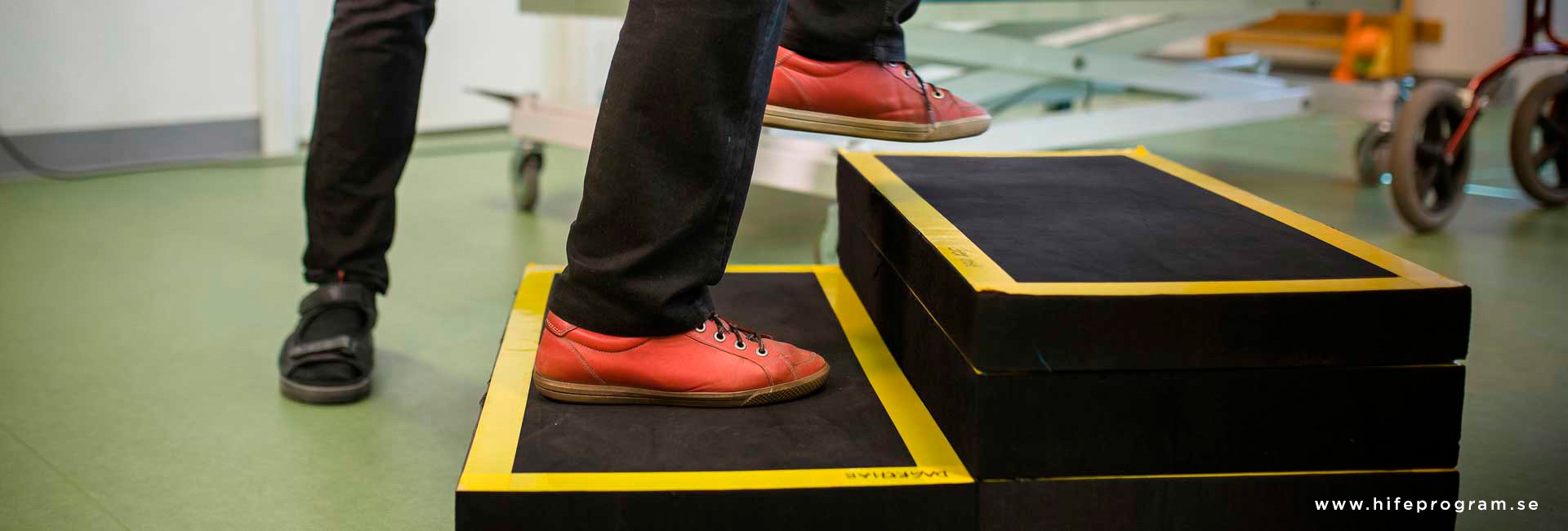
Erik Rosendahl is a Professor of Physiotherapy at the Department of Community Medicine and Rehabilitation , Umeå University, Sweden. His work focuses on physical activity and exercise for older adults , particularly those with dementia or residing in nursing homes . Research Interests: High-intensity functional training (HIFE Program), fall prevention, postural stability, strength training for frail elderly, and dementia rehabilitation. Awards: Honorary award by the Section for the Health of the Elderly, Swedish Association of Physiotherapists (2023) Research stipend for the UMDEX Study by SKPF Pensionärerna (2017) Recognition of his 2006 paper as one of the 15 most significant trials in Physiotherapy (2014) Leadership: Commissioned by the Swedish government as a member of the Research Council within Ageing (2020-), Chairperson of U-CHEC (2017-2021), and expert advisor for national and international rehabilitation guidelines. The HIFE Program , co-developed by Rosendahl, evaluates high-intensity functional exercises targeting lower-limb strength, balance, and mobility . It has been implemented globally, with studies demonstrating benefits in ADL preservation , fall reduction , and cognitive-behavioral improvements for dementia patients. His clinical service includes 15 years as a Specialist Physiotherapist in Older People’s Health at Umeå University Hospital.
Martin Björklund is an Associate Professor at Umeå University's Department of Community Medicine and Rehabilitation (Physiotherapy section), Faculty of Medicine. He is responsible for doctoral education and represents the department on the Council for Doctoral Education. Collaborator with Center for Musculoskeletal Research (University of Gävle) Member of Charlotte Häger's research group Part of U-Motion Laboratory research group His research focuses on two primary areas: work-related musculoskeletal disorders (particularly neck-shoulder sensorimotor dysfunctions) and children/adolescents with cerebral palsy (physical activity, quality of life, and social determinants). He has developed a patented neck movement control training method and validated assessment tools for musculoskeletal pain. Current projects include studying movement-related fear using EEG and investigating equity in physical activity participation for CP patients. Recent publications span cerebral palsy health disparities (2025), movement-related fear biomarkers (2024), and neck pain rehabilitation (2023-2017). Collaborative work includes ACL injury studies and registry analyses for CP patients. Teaching responsibilities include the Master's program in Physiotherapy, with course development in musculoskeletal rehabilitation and pain physiology (2013-2023). He supervises students at all academic levels and serves as examiner for doctoral students in sports medicine, physiotherapy, and rehabilitation medicine. Research collaborations include U-Motion Laboratory and interdisciplinary partnerships across Sweden.
Jonna Nilsson Horre is an Associate Professor in the Department of Physical Activity and Health at the Swedish School of Sport and Health Sciences (GIH). She holds a Docent (Associate Professor) title and specializes in research at the intersection of physical activity, neuroscience, and aging. Her work focuses on neurotrophic factors, cognitive aging, and the impact of exercise on neurodegenerative processes. She is affiliated with GIH's Master's and Doctoral Education programs and is reachable at jonna.nilsson@gih.se . Her research integrates methodologies from exercise physiology, cognitive science, and clinical trials, with a particular emphasis on translating findings into public health interventions. Her recent publications explore topics such as BDNF isoform dynamics post-exercise, plasma biomarkers of neurodegeneration in aging populations, and movement behavior optimization in office workers. These studies highlight her commitment to advancing understanding of how physical activity mitigates cognitive decline and enhances workplace health.
Adrian Hosford-Donovan is a Lecturer in exercise physiology at Örebro University's Department of Sport Sciences, affiliated with the School of Health Sciences. He holds a Master’s in Sports Science and a Licentiate of Medicine in Exercise Science from Örebro University (2016). His research focuses on inflammation, cardiovascular health, and muscle function in aging populations, particularly investigating C-reactive protein (CRP) mechanisms in elderly women. Teaching focuses on anatomy, exercise physiology, training methodologies, and physiological assessment methods across undergraduate and master's programs. He actively contributes to pedagogical innovation, including digital learning frameworks like SportEd, enhancing Blackboard integration and anatomy education. He led the TWH 65-70 project, a randomized trial on training and dietary interventions in elderly women. Pedagogical efforts include curriculum development via HPK grants and improving digital distance learning. His work emphasizes student experience optimization through standardized digital resources and anatomy learning environments.
Sofia Somajo is a Senior Lecturer in Biomedical Laboratory Science at Linnaeus University, affiliated with the Faculty of Health and Life Sciences and the Department of Chemistry and Biomedical Sciences. She has been licensed as a biomedical laboratory scientist since 2003, with expertise in clinical chemistry and antimicrobial resistance research. Her work focuses on improving laboratory diagnostics for infectious diseases through advanced methodologies like flow cytometry. Education: Master's in Biomedical Laboratory Science PhD studies focused on blood coagulation regulation Research Interests: Her research centers on rapid antimicrobial susceptibility testing, bacterial pathogen diagnostics, and developing personalized medicine platforms (e.g., AMPMeD project). She collaborates on plant-based antimicrobial solutions and explores factors influencing in vitro resistance testing outcomes. Her work is part of the Linnaeus University Centre for Biomaterials Chemistry. Publications: Recent work includes studies on Neisseria gonorrhoeae resistance detection via flow cytometry, bacterial keratitis epidemiology, and SARS-CoV-2 immunoassay comparisons. These highlight her focus on accelerating diagnostic accuracy and clinical relevance. Teaching: Course coordinator and examiner for biomedical laboratory science programs, including courses on laboratory methodology, hematology, and transfusion medicine. Supervises undergraduate thesis projects.
Jonas Persson is a Professor at the Department of Behavioral, Social and Legal Sciences, School of Behavioural, Social and Legal Sciences, Örebro University. He leads research in cognitive neuroscience with a focus on aging, working memory, and brain plasticity. His work includes studies on developmental dyslexia, probiotics' neural effects, and the interplay between insomnia, pain, and mood in adolescents. Persson is affiliated with the LEADER Center for Lifespan Developmental Research and contributes to projects like the IDA program on brain aging mechanisms. Research environments: LEADER Center, Cognitive Medicine Biomarkers group Key projects: Probiotic efficacy on brain function, predictors of cognitive aging, implicit sequence learning in dyslexia His research integrates neuroimaging (fMRI, MRI), genetics, and behavioral studies to explore age-related cognitive changes. Recent findings highlight hippocampal GABA/glutamate roles in working memory and structural brain changes linked to probiotic interventions. Persson collaborates internationally across psychology, neuroscience, and clinical domains. Publications emphasize longitudinal studies on memory mechanisms, neural correlates of interference control, and the impact of iron deposition on aging brains. His work bridges basic research and clinical applications, particularly in aging populations and neurodevelopmental disorders.
Henrik Smith is a Professor at Lund University, serving as Chair of the Centre for Environmental and Climate Science (CEC) and Principal Investigator. He also coordinates the LU Profile Area: Nature-based Future Solutions and is involved in Biodiversity and Evolution research. His work focuses on behavioral ecology, conservation ecology, and the impacts of anthropogenic environmental changes on biodiversity and ecosystem services. Smith has held leadership roles in initiatives like BECC (2010-2024) and collaborates with stakeholders to integrate science into policy. His research explores how agricultural intensification and climate change affect meta-communities of organisms, particularly pollination and biological control services. He emphasizes interdisciplinary approaches, combining ecological research with policy development and valuation of ecosystem services. Smith has secured funding for 69 projects, including Horizon Europe initiatives like AGRI4POL and VALOR, focusing on sustainable agriculture and pollinator conservation. Smith has received awards including the Lund University Pedagogic Prize (2002) and the Roséns Linnépris i Zoologi (2023). He actively engages in public outreach through seminars, media participation, and publications. His educational contributions include developing cross-disciplinary programs like the Environmental Science PhD program and courses addressing environmental issues. Key grants include analysis of synergies between Swedish agricultural policies and EU regulations, quantifying ecosystem services in forests, and biodiversity science for financial strategies. His work addresses SDGs related to climate action, life on land, and sustainable cities. Smith's activities span international collaborations, policy advising, and supervising 22 doctoral works.
Helene Alexanderson is an Associate Professor at Karolinska Institutet's Department of Medicine, Solna, leading her own research team focused on physical activity, exercise interventions, and patient-reported outcomes in inflammatory myopathies and rheumatic diseases. She holds key positions in international collaborations including the OMERACT myositis working group, MYONET registry, and MIHRA psychological impact and exercise rehabilitation scientific working groups. Karolinska Institutet, Department of Medicine, Solna (current) OMERACT Myositis Working Group (active member) MYONET International Network (collaborator) MIHRA Psychological Impact Scientific Working Group (co-leader) MIHRA Exercise and Rehabilitation Scientific Working Group (co-leader) Her research program investigates the physiological, physical, and psychological effects of exercise and physical activity in patients with idiopathic inflammatory myopathies. She specializes in developing and validating patient-reported outcome measures, particularly the PROMIS system for pain, fatigue, and physical function assessment in myositis patients. Her work bridges rehabilitation science, rheumatology, and patient-centered outcomes research, with strong emphasis on evidence-based non-pharmacological interventions. Analysis of her recent publications reveals a consistent focus on exercise physiology in autoimmune conditions, with particular attention to high-intensity interval training, muscle function, and the psychological impact of chronic disease. Her research employs both clinical trial methodologies and large-scale registry analyses to generate evidence for clinical practice. 2024 EULAR recommendations for non-pharmacological management of SLE and SSc 2024 Construct validity of PROMIS measures in myositis 2024 Impact of pain on daily activities in myositis 2024 MIHRA psychological impact working group publications Dr. Alexanderson actively supervises doctoral students including K. Andreasson (2025 thesis on physical activity in myositis) and collaborates extensively with leading researchers in the field, particularly Ingrid Lundberg at Karolinska Institutet. Her work has contributed significantly to understanding the role of exercise in inflammatory myopathies and developing standardized assessment tools for patient-centered outcomes.
Professors Juleen Zierath and Anna Krook co-lead the Integrative Physiology research group at Karolinska Institutet, spanning the Department of Physiology and Pharmacology and the Department of Molecular Medicine and Surgery. Their research focuses on identifying the underlying mechanisms governing metabolic diseases, particularly insulin resistance in skeletal muscle and type 2 diabetes mellitus. They have developed unique methods for studying human muscle and were the first to identify molecular steps downregulated in the insulin signaling chain in muscle from people with type 2 diabetes. Their research interests center on metabolic diseases with particular emphasis on: Insulin resistance mechanisms in skeletal muscle Effects of physical activity and exercise on glucose metabolism Circadian rhythms and their impact on metabolic regulation Molecular mechanisms of type 2 diabetes Epigenetic modifications induced by exercise Cross-organ communication in metabolic regulation Analysis of their recent publications reveals a strong focus on circadian regulation of metabolism, exercise timing effects, mitochondrial function in metabolic diseases, and tissue-specific metabolic adaptations. Their work increasingly incorporates multi-omics approaches to understand the complex interplay between different organ systems in metabolic regulation, with particular attention to how the timing of exercise affects metabolic outcomes in type 2 diabetes. Among their notable recognitions, Juleen Zierath is a Wallenberg Scholar, a prestigious award supporting outstanding researchers in Sweden. Their research has been published in top journals including Cell Metabolism, Nature Metabolism, and Science Advances. Their research group includes numerous doctoral students and postdoctoral fellows, reflecting their commitment to training the next generation of scientists. They lead the Strategic Research Program in Diabetes at Karolinska Institutet, coordinating extensive collaborative research efforts across multiple disciplines. Their work has practical implications for diabetes management, particularly regarding exercise timing recommendations for patients. Their laboratory at Biomedicum in Solna utilizes advanced techniques including proteomics, metabolomics, and molecular biology approaches to study human muscle physiology in both healthy and diabetic conditions. Their unique methodology for studying human muscle has positioned them as leaders in the field of metabolic research, with findings that could inform both clinical practice and future drug development.
Terese Stenfors is a Professor of Medical Education at Karolinska Institutet's Department of Learning, Informatics, Management and Ethics (LIME), where she leads the Lifelong Learning in Healthcare research group and serves as head of the Teaching and Learning unit. With over 20 years of experience in pedagogical work and teaching development alongside her research, Professor Stenfors has made significant contributions to medical education research and practice at Karolinska Institutet, developing comprehensive evaluation frameworks that track student experiences across time and between different educational programs. Associate Professor, Medical Pedagogy, Karolinska Institutet (2017) Medicine Doctoral degree, Department of Learning, Informatics, Management and Ethics, Karolinska Institutet (2011) Professor Stenfors' research focuses on improving healthcare education through rigorous assessment systems, quality improvement methodologies, and feedback mechanisms. Her work emphasizes lifelong learning in healthcare contexts, with particular attention to student experiences, clinical supervision, and educational innovation. She has developed the comprehensive course and program evaluation system now used for all undergraduate and advanced level courses at Karolinska Institutet, enabling the tracking of student experiences over time and across different programs. Her research bridges qualitative inquiry with practical educational interventions, focusing on how healthcare professionals learn and develop throughout their careers. Professor Stenfors' recent publications reveal a strong focus on innovative educational approaches in healthcare settings, spanning multiple domains including virtual patient simulations for intimate partner violence education, peer teaching methodologies, and resilience training during crises like the COVID-19 pandemic. A recurring theme is the development of assessment tools and feedback systems that enhance learning while respecting the complex realities of healthcare education. Her work increasingly incorporates patient perspectives and co-creation in educational design, reflecting a shift toward more participatory and person-centered approaches in medical education. She has published extensively on qualitative research methods in medical education, contributing to methodological development in the field. KI's Pedagogical Prize 2023 - awarded for her pedagogical leadership, development of course and program evaluation systems used across all undergraduate and advanced level courses and programs at Karolinska Institutet, and contributions to doctoral education programs Professor Stenfors serves as a research group leader with multiple doctoral students under her supervision. She has secured significant research funding from various sources including the Swedish Research Council. Current projects include 'ADHD in medical education – strategies for inclusive practices' (2025), 'Patients in the clinic: what role do they play in student learning?' (2024-2027), and 'Identifying intimate partner violence: an intervention study in health care' (2023-2025). She also coordinates the Health Professions Education Graduate School, an integrative research school funded by the Swedish Research Council (2022-2027), developed in collaboration with Stockholm University and Linköping University. Her leadership extends to coordinating the KI network for research in medical education, which facilitates knowledge exchange among pedagogical researchers across the institution. Professor Stenfors leads the 'Lifelong Learning in Healthcare' research group within the Department of Learning, Informatics, Management and Ethics, which includes educational developers, researchers, and doctoral students working collaboratively on projects related to healthcare education. The group has developed systems and methods for assessment, quality improvement and feedback in healthcare education settings. She also serves on multiple committees including as Scientific Secretary of the Karolinska Institutet Prize for Research in Medical Education (KIPRIME), member of the Recruitment Committee, and Deputy Department Chair of LIME. Her work has established her as a leading figure in medical education research in Sweden and internationally.
Erik Hedman is a Researcher at the Department of Clinical Neuroscience , Karolinska Institutet . His work focuses on health anxiety , exposure-based cognitive behavioral therapy (CBT) , and internet-delivered psychological treatments for anxiety, depression, and stress-related disorders. Developed exposure therapy protocols for health anxiety, validated through randomized trials showing 80% remission rates Co-founder of the Internet Psychiatry Unit in Stockholm Investigated CBT mechanisms, cost-effectiveness, and scalability in primary care His research spans digital interventions , stress management , and chronic pain conditions like fibromyalgia. Recent studies explore AI-generated psychological advice and predictive modeling for stress disorder outcomes. Collaborators include Brjánn Ljótsson , Mats Lekander , and Lars-Göran Öst . Students such as Erland Axelsson and Fredrik Santoft have conducted doctoral work under his guidance.
Jiri Bartek is a Senior Professor at Karolinska Institutet's Department of Medical Biochemistry and Biophysics, where he leads a research group focused on DNA damage response (DDR) mechanisms and genome integrity. His work bridges basic molecular biology with translational cancer research, investigating how cells maintain genomic stability under genotoxic stress and how dysregulation of these processes contributes to cancer development and treatment resistance. His research interests span DNA repair pathways, replication stress, chromosomal instability, cellular senescence, and ribosome biogenesis. Bartek's laboratory has made significant contributions to understanding how the cell cycle checkpoints, particularly those involving p53 and related pathways, respond to DNA damage. His work has revealed novel mechanisms connecting ribosome biogenesis stress to p53 activation and cancer vulnerability, with implications for developing new therapeutic strategies. Analysis of his recent publications (2023-2025) reveals a strong focus on the intersection of DNA damage response, chromosomal instability, and cancer therapy. His group is particularly investigating how ribosomal DNA damage triggers specific cellular responses, the role of replication stress in tumor evolution, and identifying novel therapeutic targets based on DNA repair deficiencies in cancer cells. A notable theme is the exploration of drug repurposing opportunities, particularly with compounds like disulfiram that target specific vulnerabilities in cancer cells. Fernström Foundation's Great Nordic Prize (2016) Silver Medal of Merits from the Czech Senate (2013) Elected member of the Danish Royal Academy of Sciences and Arts (2012) Novo Nordisk Prize (2003) Elected member of EMBO (2000) Bartek has mentored numerous researchers who have gone on to establish independent careers, including Jirina Bartkova, Bennie Lemmens, and Mikael Lindstrom. His group has secured substantial funding for research on DNA damage response mechanisms and their implications for cancer therapy, including several clinical trials investigating repurposed drugs like disulfiram for glioblastoma treatment. The DIRECT trial (Disulfiram Repurposing In Combination with copper for recurrent glioblastoma Treatment) represents a significant translational effort from his laboratory. His research group maintains strong collaborations with clinical departments at Karolinska University Hospital and international research institutions, facilitating the translation of basic discoveries into clinical applications. The laboratory combines advanced molecular biology techniques with high-throughput screening approaches to identify novel targets and therapeutic strategies for cancer treatment.
Johan Nööjd serves as an Investigator and Deputy Head of Department for Educational Support at Halmstad University. His institutional email (johan.noojd@hh.se) and active mobile contact (072-210 75 95) indicate current employment status. His professional focus centers on educational support systems within higher education institutions. Dr. Nööjd's work likely involves developing frameworks for academic assistance, implementing pedagogical innovations, and managing educational resources across departments. His position suggests expertise in bridging administrative functions with teaching excellence. As Deputy Head of Department, he plays a strategic role in shaping the university's educational infrastructure. His responsibilities probably include coordinating support services for faculty development, overseeing academic resource allocation, and implementing quality assurance measures for educational programs across the institution.
Olle Björneholm is a Professor at Uppsala University's Department of Physics and Astronomy, leading research in the Chemical and Bio-Molecular Physics program under the Division for X-ray Photon Science. His work focuses on the electronic and geometric structure of liquids, clusters, and nanoparticles, utilizing synchrotron radiation-based spectroscopic techniques to study ultra-fast dynamics, radiation damage, nanoscience, and environmental molecular phenomena. Research Leadership: Director of the Uppsala University Center for Photon Science, Chair of the MAX IV University Reference Group, and Chair of the VR RÅG-C advisory group. Research Themes: His studies explore X-ray-induced dynamics in aqueous solutions, interfacial chemistry of organic and inorganic ions, solvation shells, radiation damage mechanisms, and electronic structures of nanoscale systems. Recent articles highlight pH-dependent surface composition, heavy-atom radiosensitizers, and intermolecular Coulombic decay. Collaborative Impact: Active in international collaborations, particularly in synchrotron-based experiments and space science instrument development (e.g., RPWI for JUICE mission).