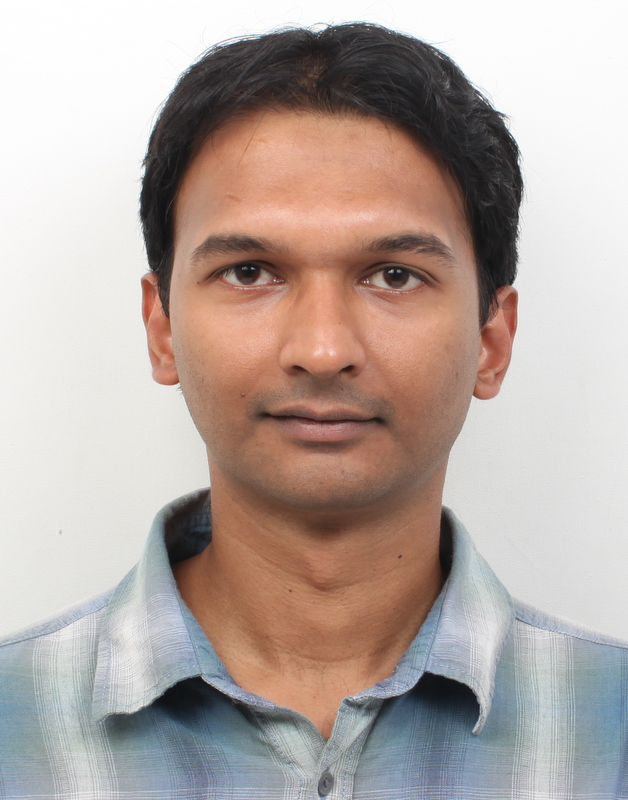
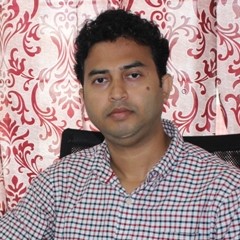
Shivaram Kalyanakrishnan is an Associate Professor at the Department of Computer Science and Engineering , Indian Institute of Technology Bombay , specialising in Artificial Intelligence and Machine Learning . His research spans sequential decision making , multiagent learning , multi-armed bandits , and humanoid robotics , with applications in robot soccer , computer games , and online advertising . He teaches advanced courses like CS 747: Foundations of Intelligent and Learning Agents and CS 748: Advances in Intelligent and Learning Agents , focusing on end-to-end system design and theoretical analysis. His scientific awards include the Best Student Paper Award at RoboCup International Symposium 2006 and nomination for Best Student Paper Award at AAMAS 2007 . His work on reinforcement learning and policy iteration has been published in leading venues such as IJCAI , ICML , and COLT , with recent contributions to railway scheduling and bandit algorithms. While no explicit list of advisees is provided, his research projects and publications suggest mentorship of students in collaborative efforts. Contact : shivaram@cse.iitb.ac.in .
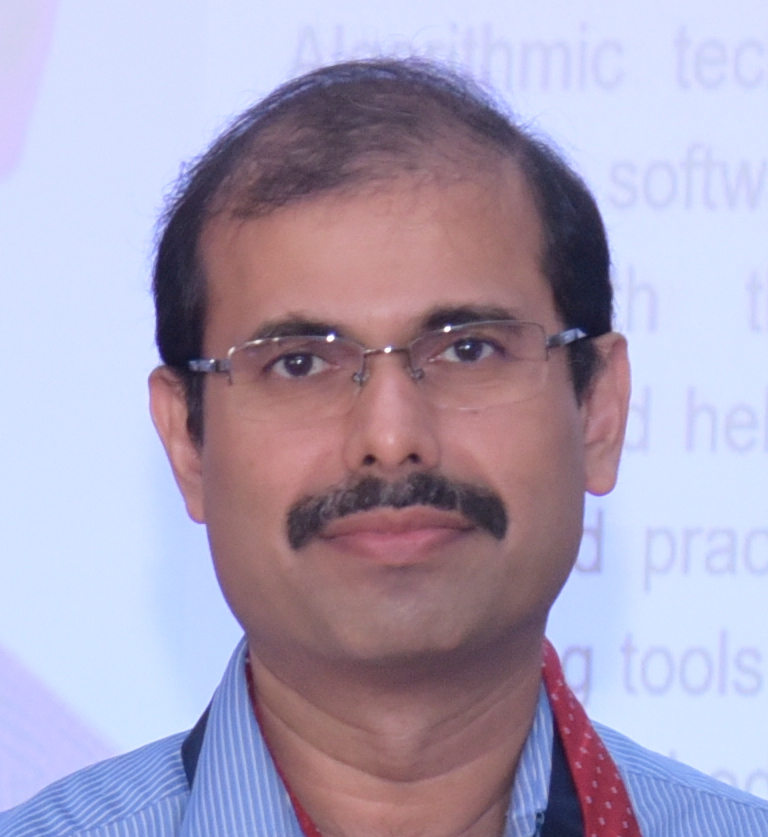
Supratik Chakraborty serves as the Bajaj Group Chair Professor in the Department of Computer Science and Engineering at Indian Institute of Technology Bombay. He maintains dual affiliations with the Centre for Formal Design and Verification of Software and the Centre for Liberal Education at IIT Bombay, demonstrating his cross-disciplinary engagement. Professor Chakraborty's research spans formal methods with focus on formal verification, rigorous analysis of system models, and automated synthesis of systems from specifications. His work bridges theoretical foundations with practical applications, particularly in developing mathematically provable guarantees for increasingly complex hardware, software, and intelligent systems. Current research interests include constrained counting and sampling, scalable formal verification of software and hardware systems, automated synthesis of programs and circuits, and applications of automata, logic and finite model theory to practical verification challenges. His publication trajectory shows a significant evolution from traditional hardware and software verification toward addressing verification challenges in machine learning and AI systems. Recent work increasingly focuses on interpretability of black-box models, verification of neural networks, and synthesis techniques applicable to intelligent systems. The research demonstrates strong interdisciplinary connections between formal methods, programming languages, and artificial intelligence. IIT Bombay Excellence in Thesis (CSE) Award 2011 (for Bhargav Gulavani's thesis) IIT Bombay Excellence in Thesis (CSE) Award 2017 (for Abhisekh Sankaran's thesis) Best Paper in Algorithms and Architecture track at IEEE International Conference on Computer Design: VLSI in Computers and Processors, 1998 Professor Chakraborty has successfully supervised 11 doctoral students, with research spanning formal verification techniques, Boolean functional synthesis, constrained counting, and applications to hardware and software systems. His students have gone on to positions at major institutions including Microsoft Research, TCS Research, Georgia Tech, and BARC, reflecting the strong industry and academic impact of his mentorship. Current research directions show increasing emphasis on verification challenges posed by machine learning systems and AI. His research group at IIT Bombay, while not explicitly named in the materials, appears to focus on formal methods with strong connections to the Centre for Formal Design and Verification of Software. The group maintains active collaborations with international researchers including Moshe Y. Vardi at Rice University, and has made significant contributions to verification tools like VeriAbs that bridge theoretical advances with practical applications.
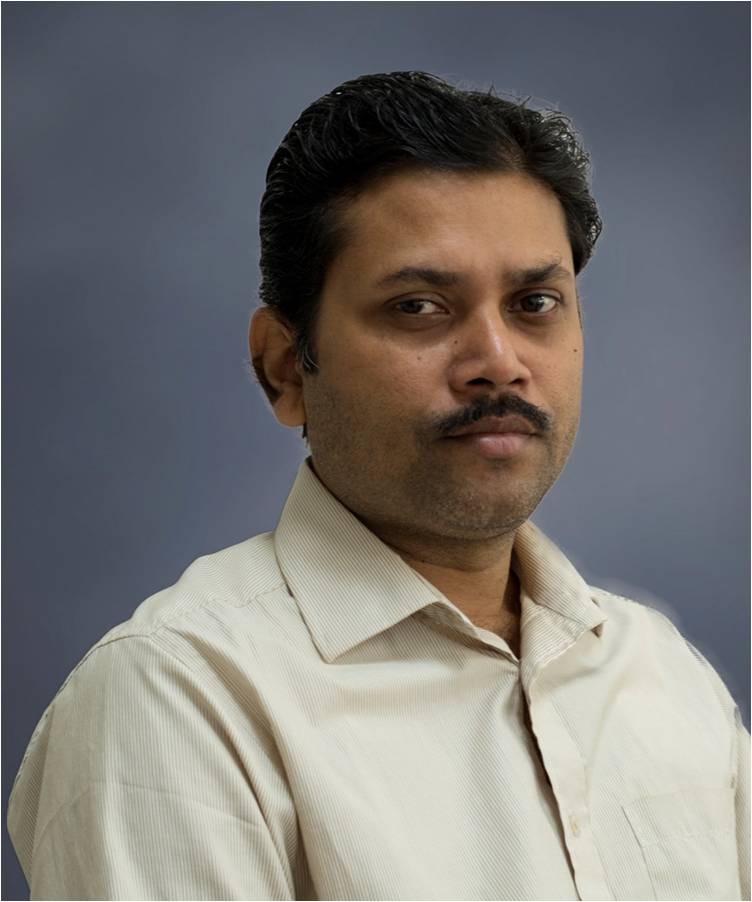
Smrutiranjan Parida is a Professor in the Department of Metallurgical Engineering and Materials Science at the Indian Institute of Technology Bombay (IIT Bombay), where he has been serving since May 2021, previously as an Associate Professor from 2016 to 2021. He leads the Corrosion and Advanced Materials Laboratory (CAML), a multidisciplinary research group focused on corrosion science and advanced materials development. Education: Ph.D., University of Saarlandes, Saarbruecken, Germany, 2007 M.Tech, IIT Kharagpur, 2002 His research is centered on corrosion science, electrochemical energy storage, and functional nanomaterials . Key interests include supercapacitors, electrocatalysts, smart multifunctional coatings, corrosion-resistant alloys, and the application of nanotechnology in corrosion mitigation. His work bridges fundamental electrochemistry with practical industrial applications. The recent publications highlight a strong focus on nanomaterials for energy and corrosion protection , including carbon nano-onions, nanoporous metals, graphene composites, and smart inhibitor delivery systems. Themes such as binder-free electrodes, green synthesis, and in-situ characterization are prominent, reflecting a commitment to sustainable and high-performance materials. Scientific Awards: German Academic Exchange Service (DAAD) fellowship, IFW Dresden, Germany, 2002 Prof. Parida has secured significant research funding as Principal Investigator (PI) from agencies like SERB-DST, ONGC, and IIT Bombay's IRCC. He has also contributed as Co-PI in large projects such as the Centre of Excellence in Steel Technology (Ministry of Steel) and the DST-FIST 'Materials for Energy and Sensors' program. His grants span corrosion inhibition in oil pipelines, nanostructured alloys, biomaterials, and advanced laboratory infrastructure development. The Corrosion and Advanced Materials Laboratory (CAML) serves as the primary hub for his research team, fostering innovation in surface engineering and electrochemical devices.
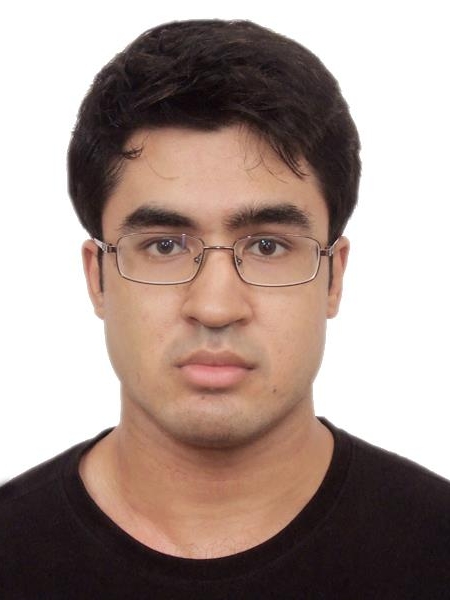
Roop Aparajita Subhra Purushottam is an Associate Professor in the Department of Computer Science and Engineering at the Indian Institute of Technology Kanpur. His research focuses on machine learning foundations and applications, particularly in extreme classification, optimization techniques, robust learning, and educational technology. He has developed scalable algorithms for web-scale applications and innovative teaching tools for programming education. His research interests span: Design and analysis of machine learning algorithms Statistical learning theory and online optimization Non-convex optimization for large-scale problems Robust learning against adversarial corruptions Applications in information retrieval, education, and environmental monitoring Recent publications demonstrate a strong focus on extreme classification techniques, efficient deep learning architectures, and educational technologies. His work consistently appears in top-tier conferences including KDD, ICML, NeurIPS, and CVPR, with innovations in scaling machine learning systems to handle millions of labels and users. Significant Awards: Gopal Das Bhandari Distinguished Teacher Award (2024) PK Kelkar Faculty Fellowship (2024-2027) Microsoft Bing Ads Greatness Award (2021) Computer Society of India Faculty Award (2018) Multiple best paper awards and nominations at major conferences He leads several research grants and consults for industry partners including Microsoft Research and Tower Research. His team develops open-source tools like Prutor for programming education and DEFRAG for efficient feature agglomeration in extreme classification. He has advised numerous PhD and Master's students who have received prestigious awards for their research contributions.
Indranil Chowdhury is an Assistant Professor in the Department of Mathematics and Statistics at the Indian Institute of Technology Kanpur. He holds a Ph.D. from Tata Institute of Fundamental Research, Centre for Applicable Mathematics in Bengaluru (2017) and has previously served as a Postdoctoral Researcher at University of Zagreb, Croatia (2020-2022) and Norwegian University of Science and Technology, Trondheim, Norway (2018-2020). Ph.D: Tata Institute of Fundamental Research, Centre for Applicable Mathematics, Bengaluru, India (2017) PG: Tata Institute of Fundamental Research, Centre for Applicable Mathematics, Bengaluru, India (2012) UG: St. Xavier's College, Kolkata, India (2010) Dr. Chowdhury's research focuses on the theory and numerical analysis of partial differential equations, with particular expertise in nonlocal and fractional order problems and fully nonlinear equations. His work bridges theoretical mathematics with practical applications in areas such as mean field games, optimal control, and mathematical modeling. His research program demonstrates a consistent trajectory of advancing the mathematical understanding of complex nonlocal phenomena through rigorous analytical techniques and innovative numerical methods. His publication record reveals a strong focus on fractional calculus, nonlocal diffusion processes, and mean field games. The research shows progression from foundational work on fractional Poincaré inequalities to increasingly sophisticated studies of fully nonlinear mean field games with both local and nonlocal diffusions. His recent work (2023-2025) demonstrates continued innovation in the field, particularly in addressing strongly degenerate cases and establishing precise error bounds for numerical approximations. Dr. Chowdhury maintains an active research program with consistent publication output in high-impact journals such as Foundations of Computational Mathematics, SIAM Journal on Numerical Analysis, and Discrete and Continuous Dynamical Systems. His collaborative work with researchers across international institutions reflects the global significance of his contributions to the field of nonlocal partial differential equations.
Naren Naik is a Professor in the Department of Electrical Engineering at the Indian Institute of Technology (IIT) Kanpur, specializing in computational tomographic reconstructions and analysis for subsurface imaging and shape/target tracking. His educational background includes: PhD from the Indian Institute of Science (IISc) Bangalore in 2000 M.E. in Electronics and Communication Engineering from IISc Bangalore in 1992 B.Sc. from Bangalore in 1988 Professor Naik's research focuses on development and analysis of reconstruction algorithms for nonlinear tomography , with particular emphasis on shape-based and dynamic tomography, tracking and battlefield surveillance, and numerical solutions to partial differential equations in electromagnetics. His work spans multiple imaging modalities including subsurface imaging with Ground Penetrating Radar (GPR), fluorescence optics, electrical impedance tomography, and photoacoustic tomography. His research bridges theoretical mathematics with practical applications in electromagnetic imaging and target tracking systems, addressing complex inverse problems in computational imaging. His publication record shows a clear progression from electromagnetic tomography to advanced Kalman filtering techniques for target tracking applications. The most recent works focus on wireless sensor networks and maneuvering target tracking, demonstrating his ability to adapt theoretical frameworks to evolving technological contexts while maintaining mathematical rigor in solving inverse problems. His professional recognition includes: Invited presentation at the special session on advances in model based inversion at the 2011 IEEE AP-S International Symposium on Antennas and Propagation Professor Naik maintains an active research program with consistent publication output in high-impact journals and conferences. His work demonstrates strong interdisciplinary collaboration, particularly with researchers in electromagnetics, signal processing, and imaging sciences. His research has significant applications in defense technology (battlefield surveillance), medical imaging, and subsurface exploration systems, contributing to both theoretical advances and practical implementations in these fields. He is based in Office 303A ACES (Advanced Centre for Electronic Systems) at the Department of Electrical Engineering, IIT Kanpur, where he leads research activities in computational imaging and tomographic reconstruction.
Namrata Singh, Ph.D. (Indian Institute of Science), is an Assistant Professor in the Department of Chemistry at Indian Institute of Technology Kanpur. Her research integrates material chemistry and biology to develop therapeutic nanomaterials for high-mortality diseases and resilient infections, alongside innovative diagnostic tools. Education and Training: Ph.D. in Chemistry, Indian Institute of Science Postdoctoral Fellow, Karolinska Institute, Stockholm (2022-2023) Postdoctoral Fellow, Imperial College London (2020-2022) Scientist, CSIR-Central Drug Research Institute, Lucknow (2023-2024) Research Interests: Dr. Singh’s laboratory focuses on therapeutic nanomaterials targeting drug-resistant bacterial infections and precise cancer therapy . Her group designs bioinspired, stimuli-responsive nanomaterials that act as antibiotic carriers and standalone bactericidal agents against biofilms and multidrug-resistant pathogens. In oncology, she develops nanomedicines that modulate the tumor microenvironment and control programmed cell death pathways (ferroptosis, apoptosis) to enhance therapeutic selectivity and minimize off-target toxicity. Scientific Awards & Fellowships: Karolinska Institute Research Foundation Grant (2023) MSCA Vinnova Postdoctoral Fellowship, Swedish Innovation Agency (2022) IUPAC-Solvay International Award for Young Chemists (2020) Alexander von Humboldt & ETH Zürich Postdoctoral Fellowships (2020, not availed) Metrohm Young Chemist Award (2019) Indian Academy of Sciences Summer Research Fellowship (2011) Contact: Office FB 437, Faculty Building, Department of Chemistry, IIT Kanpur, Kanpur 208016 Phone: +91-512-259-2527 | Email: namrata@iitk.ac.in
Faiz Hamid serves as an Associate Professor in the Department of Management Sciences at Indian Institute of Technology Kanpur. With a Ph.D. in Decision Sciences & Information Systems from IIM Lucknow (2012) and a B.Tech. in Computer Science and Engineering from Institute of Engineering & Management (2007), he brings strong technical and analytical expertise to his academic position. His research interests span Operations Research, Combinatorial Optimization, Network Optimization, and Data Science, with particular focus on transportation systems, pandemic response modeling, and revenue management applications. Dr. Hamid's scholarly work demonstrates consistent publication in high-impact journals including European Journal of Operational Research, Omega, Transportation Research, and IEEE Transactions on Signal Processing. His recent publications reveal a strong trend toward applying optimization techniques to real-world problems, particularly addressing pandemic-related challenges in transportation systems and developing sophisticated mathematical models for railway operations. His 2024 edited volume 'Optimization Essentials: Theory, Tools, and Applications' demonstrates his leadership in the field. Ph.D. Thesis recognized as runner-up for 2014 Best Dissertation Award by The INFORMS Technical Section in Telecommunications Best Paper Award at COSMAR 2010 Doctoral Conference, Indian Institute of Science, Bangalore Professor Dipak C Jain Best Paper Award at IMR Doctoral Conference 2010, IIM Bangalore Silver Medal, National Mathematics Olympiad 2002 Dr. Hamid has advised numerous students and collaborated extensively with researchers globally, particularly in transportation optimization problems. His professional journey includes industry experience as Associate Functional Architect at JDA Software and post-doctoral research at Telecom SudParis, France, before joining IIT Kanpur's faculty.
Mohammad Arshad Rahman is an Associate Professor in the Department of Economic Sciences at IIT Kanpur. His research spans Bayesian econometrics, quantile regression, machine learning, and applied econometrics. He has held positions at Zayed University and University of California, Irvine, and currently teaches econometrics and finance courses. Education: Ph.D. Economics, University of California, Irvine (2013) M.S. Statistics, UC Irvine (2011) M.A. Economics, UC Irvine (2009) M.A. Economics, Delhi School of Economics (2006) B.Sc. Economics Hons., St. Xavier's College, Kolkata (2004) Research focuses on developing Bayesian methods for econometric problems, with applications in energy economics, finance, and social policy. Research areas include: Bayesian inference techniques, quantile regression models, machine learning applications in economics, discrete choice modeling, and time series analysis. Awards and Honors: Social Science Merit Fellowship Multiple Summer Research Fellowships All India Post-Graduate Scholarship Analyst Accolade Award
Dr Arabinda Haldar is Associate Professor of Physics at Indian Institute of Technology Hyderabad. His group pursues experimental and theoretical research in magnonics, microwave magnetics and nanomagnetism, with an emphasis on spintronic and post-CMOS information-processing technologies. Education Ph.D. – Indian Institute of Technology Bombay Research Interests The group operates at the intersection of condensed-matter physics , nanotechnology and microwave engineering . Core themes include: Magnonics & Spin-Wave Computing: Propagation and control of magnons in ultra-thin magnetic multilayers, magnonic waveguides and reconfigurable metamaterials for low-power logic and memory. Microwave Magnetics: Self-biased nanomagnets and ferrite-free thin-film devices for on-chip RF components, radars and wireless communication systems. Nanomagnetism & Spin Dynamics: Spin-orbit phenomena (spin Hall effect, spin pumping, spin-orbit torque), skyrmionics, and ultrafast magnetization dynamics probed by FMR, BLS and ST-FMR techniques. Scientific Awards & Recognition Research Excellence Award – IIT Hyderabad (2024) DAE Young Scientist Research Award (2021) IEEE Senior Member recognition (2022) Ramanujan Fellowship – DST, Government of India (2017) Outstanding Reviewer 2019 – IOP Publishing Early Career Research Award – SERB (2017) Advising & Funding Dr Haldar has mentored 15+ PhD students and numerous Masters and project interns. He is principal investigator on SERB-CRG grants for Brillouin light scattering microscopy and sputtering system for skyrmion research , and co-PI on additional CRG-SERB and NIMS-ICGP programs. Recent graduates include Sudeep (DRDO-MoE), Brahmaranjan, Mahathi and Bibekananda Paikaray. Laboratory & Collaborative Networks The Magnonics & Nanomagnetism Laboratory at IITH houses state-of-the-art facilities: broadband FMR (2–18 GHz), micro-focused Brillouin light scattering, spin-torque ferromagnetic resonance (ST-FMR) and nanofabrication clean-room tools. International collaborations span Durham University (Prof A O Adeyeye), NIMS Japan, IISc Bangalore, DMRL Hyderabad and IIT Bombay.
Prakash Chandra Mondal is an Associate Professor in the Department of Chemistry at the Indian Institute of Technology Kanpur (IIT Kanpur), specializing in molecular electronics, surface chemistry, and spintronics. Education Ph.D. (2013), University of Delhi M.Sc. (2008), Indian Institute of Technology Kharagpur Research Focus His group investigates charge-transport phenomena in molecular-scale devices by integrating organic, inorganic, and biomolecular systems. A central theme is the replacement of conventional metal electrodes with carbon-based electrodes to create robust carbon–molecule–carbon junctions. These architectures enable unprecedented control over opto-electronic and spintronic properties through molecular design, electrochemical grafting, and thickness modulation. Current thrusts include: • Stimuli-responsive molecular junctions • Spin-dependent transport across chiral molecular layers • Photo-spintronics in hybrid peptide–nanoparticle structures • Integration of 2D inorganic materials for next-generation logic circuits Publications Snapshot Mondal’s recent articles (2015-2018) chart a clear trajectory from fundamental studies of chirality-driven spin selectivity to functional device demonstrations, spanning journals such as ACS Nano , Advanced Materials , Nano Letters , and J. Am. Chem. Soc. Collectively, these works advance the understanding of spin–orbit coupling in molecular systems and open pathways toward low-dimensional, carbon-compatible spintronic and optoelectronic technologies. Awards & Honors National Scholarship, Govt. of West Bengal (1999) Bharat Sevashram Sangha Scholarship (2003) Chief Minister’s Relief Funds Scholarship (2008) CSIR Junior Research Fellowship (2009) Weizmann Institute of Science Post-doctoral Fellowship (2013) ACS Author Rewards (2015) Alberta Innovates Post-doctoral Fellowship (2016) Marie-Curie International Incoming Fellowship, European Union (2017) Teaching & Mentorship At IIT Kanpur he offers undergraduate and postgraduate courses in Basic Inorganic Chemistry, Advanced Main Group Chemistry, and Coordination Chemistry. While specific advisees are not listed, his active research program and post-doctoral mentoring indicate a vibrant training environment for graduate students and post-docs.
S. Akshay is a Professor in the Department of Computer Science and Engineering at the Indian Institute of Technology Bombay . He is affiliated with the IITB Trust Lab , the Ashank Desai Centre for Policy Studies , and the Centre for Formal Design and Verification of Software Systems . His academic background includes a joint PhD from École Normale Supérieure de Cachan and Chennai Mathematical Institute (2010), postdoctoral work at IRISA/ENS Cachan Bretagne (2012) and National University of Singapore (2011), and earlier degrees from ÉNS-Cachan (2006) and Chennai Mathematical Institute (2004). Research interests focus on formal methods , particularly verification of timed, recursive, and distributed systems; automated functional synthesis; formal modeling of probabilistic and dynamical systems; and trust certification in AI models. Applications span systems biology , cyber-physical systems , and artificial intelligence . His recent publications emphasize verification techniques for Markov chains, timed automata, and Boolean functional synthesis, with algorithmic advancements in probabilistic inference, quantifier elimination, and robustness analysis. Professional activities include serving as Treasurer and Council Member of the Indian Association for Research in Computer Science (IARCS). He has co-chaired FSTTCS 2016 and ATVA 2024, and participated in program committees for major conferences like AAAI, CAV, and LICS. Teaching roles at IIT Bombay include courses on Discrete Structures , Formal Models of Concurrent Systems , and Quantitative Verification . Collaborative projects involve institutions such as University of Waterloo, IIT Delhi, and IRISA, Rennes.
Professor Satish Kumar Adiga serves as Professor & Head of the Department of Reproductive Science at Kasturba Medical College, Manipal Academy of Higher Education. He also coordinates the Centre for Fertility Preservation and heads the ART Laboratory. With over three decades of academic and clinical experience, he is a leading figure in reproductive medicine in India. His primary research interests focus on Infertility, Assisted Reproductive Technology, Fertility preservation, and cryopreservation . His work in preimplantation biology and non-invasive gamete and embryo selection has significantly advanced clinical embryology practices. Adiga's research integrates molecular biology with clinical applications to improve reproductive outcomes, particularly in fertility preservation for cancer patients and other high-risk groups. Analysis of his recent publications reveals a strong emphasis on oocyte quality assessment, cryopreservation techniques, and the impact of pharmacological agents on reproductive tissues . His work spans basic science using mouse models to clinical studies involving human patients, demonstrating translational research that bridges laboratory findings with clinical applications in reproductive medicine. Major Awards and Recognitions: Dr Subhash Mukherjee Award, ICMR, Government of India (2022) Indian Society for Assisted Reproduction, Lifetime Achievement Award (2020) Sir CV Raman Young Scientist Award (medical science), Karnataka Government (2014) Best Research Award, VGST-Karnataka Government (2012) Research Ambassador, DAAD, German Academic Exchange Service (2016-2020) Fellow of Humboldt Foundation, Germany Fellow of JSPS, Japan Fellow of UICC, Switzerland As coordinator for IVF-Embryology training programs, Professor Adiga has mentored numerous embryologists and reproductive specialists. His leadership extends to directing the Centre for Fertility Preservation since 2015 and heading the Centre of Excellence in Clinical Embryology since 2021. His research has secured substantial international funding, evidenced by his prestigious fellowships from German, Japanese, and Swiss organizations that supported extended research periods abroad. Professor Adiga leads the ART Laboratory and Centre for Fertility Preservation teams, which include embryologists, andrologists, and research scientists working collaboratively on cutting-edge reproductive technologies. His department maintains strong international collaborations with research institutions across Europe and Asia, facilitating knowledge exchange and joint research initiatives in reproductive science.
Suyash P. Awate serves as the Asha and Keshav Bhide Chair Professor in the Department of Computer Science and Engineering at the Indian Institute of Technology (IIT) Bombay, Mumbai, India. His research spans medical image computing, machine learning, image analysis, computer vision, and statistical modeling and inference. His work focuses on developing novel computational methods for medical image analysis, reconstruction, and quality enhancement. Prof. Awate's research interests center on medical image computing, where he develops advanced machine learning techniques for medical image reconstruction, segmentation, and quality enhancement. His work addresses critical challenges in medical imaging such as low-dose PET/CT imaging, uncertainty quantification in segmentation, robustness to out-of-distribution data, and accelerated MRI/fMRI acquisition. He has pioneered methods combining variational inference, expectation maximization, and deep learning to improve medical image quality while reducing radiation exposure and scan times. His research has significant clinical applications in neuroimaging, tumor analysis, and brain function mapping. His recent publications demonstrate a strong trend toward integrating deep learning with classical statistical methods, particularly focusing on uncertainty-aware models for medical image analysis. His work consistently addresses the challenge of robustness in medical imaging, developing methods that maintain performance even with degraded input data or distribution shifts. A significant portion of his research targets clinical applications, particularly in neuroimaging and oncology, with emphasis on practical implementation for real-world medical settings. Prof. Awate actively mentors PhD, MTech, and BTech students at IIT Bombay. His current PhD students include Vatsala Sharma (awarded Microsoft Research India PhD Award), Jimut Bahan Pal (CMInDS Fellow, Prime Minister's Research Fellow), Tejomay Padole (TCS Research Fellow), Subhankar Nag, and Koustav Pal. He also guides MTech/MS students Soumya Mukherjee, Jay Gorakhiya, and Russel Abreo, along with BTech student Varshith Anumalasetty. He teaches several courses including CS 736: Medical Image Computing (inaugurated in 2014), CS 663: Fundamentals of Digital Image Processing, CS 215: Data Analysis and Interpretation, CS 740: Mathematics for Visual Computing, and CS 101: Computer Programming and Utilization. His laboratory focuses on developing computational methods for medical image analysis, with particular emphasis on uncertainty quantification, robust deep learning for medical imaging, and accelerated acquisition techniques. The research group maintains strong collaborations with medical institutions to ensure clinical relevance of their computational methods.
R. R. K. Sharma is a Professor in the Department of Management Sciences at the Indian Institute of Technology Kanpur , with a career spanning over three decades since joining in 1989. His work bridges Operations Research , Supply Chain Management , and Strategic Management . Specialization in Operations Research and Strategic Alignment Education: Fellow in Management (IIM Ahmedabad, 1988), BE in Mechanical Engineering (VNIT Nagpur, 1980) Research focuses on mathematical formulations for warehouse location, lot sizing, and supply chain optimization, with empirical studies comparing algorithmic approaches. His work extends to organizational culture-strategy alignment , ERP implementation , and technology management in manufacturing and retail contexts. Recent publications (2018-2023) emphasize sustainable supply chains , horizontal strategy in conglomerates, and IOT integration in retail formats. Earlier works (1991-2018) developed foundational methods in MRP performance , Benders' decomposition , and genetic algorithm applications . Key collaborations include work with researchers in Germany, Thailand, China, and India on manufacturing-flexibility interplay , TQM implementation , and retail analytics . His extensive 781 working papers cover diverse topics in management science, though no formal awards or student advisement details are listed in the provided text.