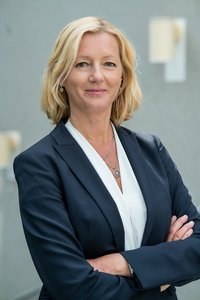
Simone Irmer is a Feldenkrais Practitioner and Lecturer at Mozarteum University Salzburg, focusing on Feldenkrais Method applications for musicians. Affiliated with the Institute for Coaching & Career, she supports the Career Centre, International Mozart Competition, and International Summer Academy. Since 2008, she has lectured at the university, offering functional bodywork to address posture, movement, and performance techniques for instrumentalists, singers, orchestras, and ensembles. Trained by Mia Segal, a direct disciple of Moshe Feldenkrais, Irmer specializes in integrating somatic practices with musical training. Her work emphasizes technical precision, interpretation authenticity, and injury prevention. She has developed tailored programs for musicians through international advanced training courses since 1995. Active since 2014 as a Feldenkrais coach for competition participants and jurors, and since 2017 at the Summer Academy, she bridges body awareness and artistic expression in music.
Lara Sophie Bieler is a Researcher at the University Institute for Experimental Neuroregeneration, focusing on neuroinflammation, spinal cord injury repair, and nanomaterials in medicine. She holds a PhD and has authored/co-authored 77 publications and led/contributed to 7 research projects since 2011. Her work integrates pharmacology, stem cell therapy, and biomaterials for neural regeneration. Research Interests: Microglia dynamics, galanin receptors, graphene oxide nanocomposites, and neurogenic plant extracts. Key Projects: Includes Spinal Cord Injury Repair (2024), Combinatorial Neuronal Circuit Restoration (2021–2024), and Neuroactive Indirubines Identification (2020). Bieler has received 9 awards, including Best Poster Awards in 2015, 2021, and 2023, and an Erasmus+ fellowship in 2024. She actively participates in conferences (e.g., FENS Forum 2024) and collaborates internationally, including a visiting researcher position at Aarhus University Hospital (2024). Grants/Activities: Sub-investigator on stem cell therapy projects and co-organized workshops like the Basic Lab teaching program (2024).
Friedrich Slivovsky is a researcher at the Institute of Logic and Computation within the Faculty of Informatics at Technische Universität Wien (Vienna University of Technology). His work focuses on theoretical and practical aspects of computational logic, with particular expertise in Quantified Boolean Formulas (QBFs), Propositional Model Counting (#SAT), and Knowledge Compilation. His research interests span the theoretical foundations and practical applications of computational logic. Slivovsky investigates the complexity of logical reasoning problems, develops efficient algorithms for solving them, and creates practical tools that implement these theoretical advances. His work bridges the gap between theoretical computer science and practical applications in areas like hardware verification, artificial intelligence, and electronic design automation. Analysis of his publication trends reveals a consistent focus on QBF solving techniques, with increasing emphasis on circuit minimization, proof complexity, and practical solver engineering. His recent work (2023-2024) shows a strong focus on circuit minimization techniques, combining QBF and SAT approaches to solve complex optimization problems in hardware design. Earlier work (2019-2021) emphasized dependency schemes, certification methods, and theoretical foundations of QBF solving. Slivovsky leads several significant software projects that have become important tools in the computational logic community: Qute : A dependency learning QBF solver with GitHub repository showing active development (latest commit December 2024) Unique : A preprocessor for (D)QBF that computes unique Skolem and Herbrand functions Pedant : A certifying DQBF solver These projects demonstrate his commitment to translating theoretical advances into practical tools that benefit the broader research community.
Alexey Ignatiev is an Associate Professor in the Optimisation research group at Monash University's Faculty of Information Technology. Previously, he was a postdoctoral researcher and researcher at the University of Lisbon's Faculty of Sciences, focusing on SAT/SMT-based decision procedures. He holds a Ph.D. from the Matrosov Institute for System Dynamics and Control Theory (Russian Academy of Sciences), where his thesis explored parallel CDCL-BDD integration. His research emphasizes formal methods in AI, including explainable AI (XAI), SAT-based reasoning, and optimization for applications like software upgradability, model-based diagnosis, and fault localization. His work spans over 100 publications, with notable contributions to MaxSAT solving (RC2 solver), neuro-symbolic frameworks (NEUSIS), and rigorous explanations for machine learning models. He has collaborated extensively with institutions like the University of Lisbon and Monash University, contributing to advancements in formal verification and interpretable machine learning.
Dr. Monika Angerer is a Senior Scientist in the Department of Psychology at the University of Salzburg, affiliated with the Laboratory for Sleep, Cognition & Consciousness Research within the Faculty of Natural Sciences. She holds a PhD in Natural Sciences (Dr. rer. nat.) and is concurrently completing clinical psychology training at the Austrian Academy for Psychology. Since March 2024, she has also served as a Psychologist at the Hospital 'Barmherzige Brüder' in Salzburg, integrating clinical and research expertise. Her educational background includes a Master’s in Psychology (cognitive neuroscience), a Bachelor’s in Educational Science, and dual Bachelor’s degrees in Psychology and Nursery Education. She has been continuously involved in research at the University of Salzburg since 2016, progressing from Research Assistant to Senior Scientist. Dr. Angerer’s research focuses on disorders of consciousness, chronobiology, circadian rhythms in brain-injured patients, prenatal and postnatal influences on infant development, early dyadic interactions, and attachment . Her work combines neurophysiological measurements (e.g., actigraphy, HRV) with behavioral and developmental assessments. She has led and co-led significant research projects, including an FWF-funded study on prenatal programming and cognitive development. Her 15 most recent publications reveal a strong trajectory in sleep science, neurorehabilitation, infant development, and pandemic-related mental health . Key themes include circadian rhythm entrainment through daylight exposure, neural speech tracking in newborns, maternal mental health, and parent-infant interaction. Her work spans high-impact journals such as Sleep , BMC Medicine , and European Journal of Neurology . Dissertation Prize for Natural Sciences 2023 (University of Salzburg) Wilhelm Strubreither Prize 2022 (Austrian Association for Neuropsychology) Christian-Doppler-Award 2021 (Land Salzburg) Multiple merit scholarships and presentation awards Dr. Angerer has been actively involved in academic service, including serving as Early Career Researcher Representative for the Austrian Association for Psychology (2020–2023). She regularly presents at international conferences such as ESRS, SLTBR, and ASSC. While no formal advisees are listed, she collaborates extensively with researchers and students in the Sleep Lab. She is a member of several professional societies and serves as a reviewer for journals including Clocks & Sleep , Clinical Neurophysiology , and Sleep .
Dr. Gianpaolo Chiriacò is a Senior Post-doc Researcher at the Institut für Romanistik, Universität Innsbruck, specializing in Ethnomusicology, Cultural Studies, and Postcolonial Studies. His work bridges music, race, and performance, focusing on African diasporic vocal traditions in Italy and colonial legacies. He holds a PhD in Cultural Heritage from the University of Salento (2010) and has held fellowships at institutions like Columbia College Chicago and the University of Salento. Research Interests: Voice Studies and Ethnomusicology Sound Archives & Social Justice Critical Race Theory African Diasporas in Italian Music Key Projects: Marie Skłodowska-Curie Global Fellowship (2023–2026): Investigates Italian colonialism through sound ethnographies. FWF-Arts Based Research Program (2022–2024): Explores African presence in Neapolitan music. Awards: Marie Skłodowska-Curie Fellowships (2012–2015, 2023–2026) Lise Meitner Program Grant (2019–2021) Teaching: Designs courses on Ethnomusicology and Popular Music, emphasizing performative learning and public engagement. Recent collaborations include student publications and multimedia projects.
Luca Ferrari is a Researcher at the Department of Biochemistry and Cell Biology, University of Vienna, affiliated with the Max Perutz Labs. He leads the Vienna International Postdoctoral Program - Fellowship project (2020-2024) focused on autophagy mechanisms in neurodegeneration. His research integrates synthetic biology, proteomics, and cellular models to study ubiquitin systems, protein aggregation, and selective autophagy pathways. Education: PhD from Max Perutz Labs, dual Dottore di Ricerca (Dott. mag.). Research Focus: Selective autophagy receptors, ubiquitin chain engineering, aggrephagy mechanisms in neurodegeneration, and proteostasis networks. Key topics include TAX1BP1/p62/NBR1 cargo receptors, ubiquitin chain synthesis, and evasion strategies of pathological proteins like Tau. Grants: Principal investigator of the Vienna International Postdoctoral Program funded project exploring autophagy's role in neurodegenerative diseases. Activities: Presented 4 poster sessions on ubiquitin chain engineering at international conferences (2024). Collaborates with institutions like Medizinische Universität Wien and Österreichische Akademie der Wissenschaften. Labs: Works within the Max Perutz Labs, a joint research center between the University of Vienna and the Medical University of Vienna.
Sebastian Schrittwieser is a Researcher in the Research Group Security and Privacy, part of the Faculty of Computer Science. His work focuses on cybersecurity, code obfuscation, malware analysis, and machine learning applications in security. He leads and contributes to projects like INODES (Cyber Defense Strategies) and EMRESS (Resilience Evaluation Models). His research bridges theoretical foundations and practical applications, addressing challenges in software protection and threat detection. Key research interests include: Code Obfuscation Techniques and Resistance Adversarial Machine Learning and Risk Assessment Malware Analysis and Program Simulation User Behavior in Cybersecurity Contexts Recent publications emphasize empirical studies on IT/OT infrastructure security, graph neural network vulnerabilities, and quantum-inspired machine learning. He actively collaborates with institutions like SBA Research and presents at international conferences. Grants include Research Funding for projects on optimal cyber defense strategies (INODES) and software resilience evaluation (EMRESS). His work aligns with interdisciplinary efforts in security engineering and privacy-preserving technologies.
Franz Berthiller is an Associate Professor at the University of Natural Resources and Life Sciences, Vienna (BOKU), affiliated with the Department of Agricultural Sciences and the Institute of Bioanalytics and Agro-Metabolomics in Tulln an der Donau. His research specializes in mycotoxin analysis, mass spectrometry, and metabolomics, with a focus on developing advanced detection methods and understanding toxin metabolism in food/feed systems. He leads significant projects like the EU-funded BIOTOXDoc (2023–2027) and FWF-supported studies on modified fumonisins. Research interests include: Development of LC-MS/MS methods for mycotoxin quantification Metabolic pathways of trichothecenes and fumonisins Plant-fungal interactions affecting toxin production Biomarker discovery for contaminant exposure Multi-omics approaches in food safety Berthiller's recent publications emphasize metabolomics method optimization, environmental impacts on mycotoxin biosynthesis, and enzymatic modification of toxins. His work integrates analytical chemistry, molecular biology, and agricultural science to address food safety challenges. He directs a research group at the Institute of Bioanalytics and Agro-Metabolomics, collaborating internationally on projects related to mycotoxin management. No awards or supervised students are documented.
Karin Schwaiger serves as Professor and Head of the Department of Food Hygiene and Technology at the University of Veterinary Medicine Vienna's Faculty of Veterinary Medicine. With her leadership position and extensive research portfolio, she represents a prominent figure in veterinary public health and food safety sciences within Austria's premier veterinary institution. Professor Schwaiger's research program focuses on critical intersections between animal health, food safety, and public health. Her work examines pathogenic and antibiotic-resistant bacteria throughout the food chain from farm to fork, employing both phenotypic and genotypic approaches. She investigates zoonotic diseases of economic significance, develops diagnostic and prevention strategies, and analyzes microbial communities impacting animal health. Her department reconstructs microbiological quality in processed foods and establishes science-based animal welfare parameters, with particular interest in symbiotic grazing systems. Analysis of her recent publication record reveals consistent focus on foodborne pathogens, particularly cold-tolerant Clostridium species causing meat spoilage, Campylobacter contamination routes, and novel decontamination methods like cold atmospheric plasma. Her work spans analytical methodology development, microbial ecology studies, and practical interventions for improving food safety throughout production chains. This research demonstrates strong translational potential for both industry applications and public health protection. As department head, Professor Schwaiger oversees research initiatives and educational programs within Food Hygiene and Technology. Her leadership role encompasses strategic direction for the department's scientific activities, resource allocation, and representation within the university's administrative structure. While specific grant details aren't provided in available materials, her extensive publication record suggests successful acquisition of competitive research funding. The Department of Food Hygiene and Technology operates within the University of Veterinary Medicine Vienna's infrastructure, conducting laboratory-based research on food safety issues with particular relevance to veterinary public health. The department maintains connections with Austrian agricultural sectors, food industry stakeholders, and public health authorities to address contemporary food safety challenges.
Paul Georg Furtmüller is an Associate Professor of Biochemistry at the University of Natural Resources and Life Sciences, Vienna (BOKU), where he serves as Head of the Institute of Biochemistry since 2022. His academic career at BOKU spans over two decades, beginning with his Promotion (PhD equivalent) in 2000 and Habilitation in Biochemistry in 2006. He maintains an active research program with extensive international collaborations across Europe, North America, and Australia. Dr. Furtmüller's research focuses on the structure, function, and evolution of heme-containing enzymes, particularly peroxidases and related proteins. His work spans molecular biology, structural biology, and enzyme kinetics, with special emphasis on heme peroxidases, coproheme decarboxylases, and ferrochelatases. He employs a multidisciplinary approach combining X-ray crystallography, spectroscopy, molecular dynamics simulations, and biochemical characterization to understand enzyme mechanisms at the molecular level. Analysis of his recent publications reveals a consistent focus on heme enzyme mechanisms, protein structure-function relationships, and evolutionary aspects of peroxidase superfamily. His work bridges fundamental biochemistry with potential biomedical applications, particularly in understanding oxidative processes in human physiology and disease. Dr. Furtmüller has secured substantial research funding through multiple projects with the Austrian Science Fund (FWF), demonstrating the significance and impact of his research. His work has resulted in over 440 publications, reflecting his productivity and influence in the field of heme biochemistry. He actively mentors students and collaborates with researchers worldwide, as evidenced by his extensive list of conference presentations across numerous countries including Austria, Germany, the United States, and Australia. His research has significant implications for understanding oxidative processes in biological systems and potential therapeutic applications.
Harald Plank is an Associate Professor at the Institute of Electron Microscopy and Nanoanalytics within Graz University of Technology (Austria). His professional activities focus on functional nanofabrication and related applications in advanced materials analysis. With teaching authorization in Applied Physics , he contributes to academic programs in technical sciences. His work likely intersects with nanotechnology , electron microscopy , and materials engineering . Contact: harald.plank@tugraz.at Phone: +43 316 873 - 8821 / Mobile: +4369911165443 Postal Address: Steyrergasse 17/III, 8010 Graz, Austria
Raimundo Saona is a Research Fellow in the Department of Mathematics at the London School of Economics and Political Science (LSE), where he joined in 2025. His work bridges theoretical mathematics with practical applications in computer science and decision theory. His research focuses on Game Theory, Probability Theory, Algorithmic Game Theory, Stochastic Analysis, Optimal Control, and Imprecise Probability Theory. He develops mathematical tools to provide new insights on situations involving uncertainty, working with both continuous and discrete models, proving theoretical existence theorems, coding efficient algorithms, and analyzing both dynamic online and static offline settings. His publication record shows a strong focus on stochastic games, Markov decision processes, and prophet inequalities. His recent work (2022-2024) has centered on ergodic unobservable MDPs, marginal values in stochastic games, and zero-sum random games on directed graphs, demonstrating his continued contribution to advancing theoretical frameworks in game theory and decision processes. His earlier work established foundational results in POMDPs and prophet inequalities.
Dirk Schmidt-Arras serves as an Associate Professor in the Faculty of Life Sciences and Medical Biology at the University of Salzburg, Austria. His research program focuses on molecular signaling pathways in cancer development and progression, with particular emphasis on metalloproteases and cytokine signaling networks. He maintains an active research laboratory with multiple ongoing projects funded through 2029, including significant contributions to the Cancer Cluster Salzburg III initiative. Dr. Schmidt-Arras's research interests span several interconnected domains in molecular oncology. His primary focus involves the ADAM family of metalloproteases, particularly ADAM17, and their critical roles in cancer progression through regulation of cytokine signaling. His work extensively investigates IL-6/gp130 signaling pathways in liver and breast cancer contexts, examining how these pathways influence tumor microenvironment, DNA damage response, and metastasis. His laboratory also explores therapeutic targeting of these pathways, with recent work on NLRP3 inhibition in leukemia and spatial cross-talk in immuno-oncology. The publication record of Dr. Schmidt-Arras reveals a strong thematic continuity in cancer signaling research spanning two decades, with increasing focus on translational applications in recent years. His most recent work demonstrates sophisticated integration of multiple signaling pathways (IL-6, EGFR, gp130) in cancer contexts, with particular attention to tumor microenvironment and therapeutic targeting. The research demonstrates methodological diversity across cell biology, molecular signaling, and in vivo models, with growing emphasis on clinical translation as evidenced by multiple therapeutic targeting studies in the past five years. Dr. Schmidt-Arras has secured significant research funding, including leadership roles in multiple multi-year projects: the SAA axis project investigating IL-6 signaling in hepatic tumors (2024-2028), the spaXio project on spatial cross-talk in immuno-oncology (2025-2029), and the Micro-environmental ADAM17 project focused on breast cancer (2025-2029). He also serves as a key staff member in the Cancer Cluster Salzburg III initiative, which has received millions in funding as highlighted in press coverage from April 2025. His research activities extend to active participation in the scientific community through numerous guest lectures on paracrine signaling mechanisms, contributions to major conferences like the ÖGMBT Annual Meeting, and service on appointment committees including chairing the committee for Biochemistry and Metabolism professorship. His laboratory appears to be part of a larger collaborative network focused on cancer research at the University of Salzburg, with particular emphasis on molecular mechanisms of tumor development and potential therapeutic interventions.
Manuel Schabus is a University Professor of Psychology at the University of Salzburg, specializing in sleep research, consciousness studies, and cognitive neuroscience. With over 403 publications and numerous ongoing research projects through 2027, he leads significant work in understanding sleep mechanisms and developing innovative sleep interventions. His research spans from fundamental neuroscience to practical applications for sleep disorders. Professor Schabus's work focuses on the intersection of sleep, brain activity, and cognitive functions, with particular expertise in EEG analysis and sleep architecture. His research explores how sleep affects memory consolidation, emotional regulation, and overall mental health. He has pioneered digital approaches to sleep assessment and intervention, including mobile applications and online therapy platforms that make evidence-based sleep treatments accessible to broader populations. His recent publications reveal a strong trend toward digital sleep medicine, with multiple studies on AI-enhanced wearables, mobile CBT-I applications, and personalized sleep optimization strategies. The research spans from fundamental neuroscience (examining prediction-related signals during sleep) to applied interventions (including specialized programs for Ukrainian refugees and shift workers). Franz Gerstenbrand Wachkoma Award 2020 Kurt-Zopf-Förderpreis 2018 START-Preis 2014 Professor Schabus manages numerous research grants totaling millions in funding, with current projects including the Virtual Sleep Laboratory (2024-2027), Sleep2Optimize, and specialized interventions for shift workers and Ukrainian refugees. He actively mentors junior researchers and collaborates internationally across multiple institutions. His work bridges laboratory research with real-world applications, as evidenced by his frequent media appearances discussing practical sleep optimization strategies for the general public. He leads the Center for Cognitive Neuroscience at the University of Salzburg, where his team operates both traditional sleep laboratories and develops digital sleep assessment tools. The research group combines expertise in neuroscience, psychology, computer science, and clinical medicine to tackle sleep-related challenges from multiple angles, with a strong emphasis on translating research findings into practical interventions that improve sleep health in diverse populations.