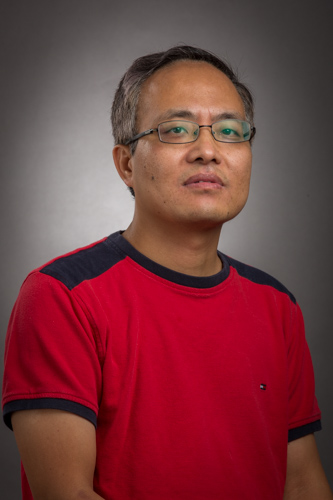
Brian Schmit, PhD is a Professor and Hammes Family Endowed Chair in the Department of Biomedical Engineering at Marquette University, with a joint appointment at Medical College of Wisconsin. He serves as Associate Dean for Research in the OPUS College of Engineering and is an active researcher in neurological rehabilitation. Dr. Schmit's research focuses on neurophysiology of movement control following neurological injury, particularly spinal cord injury and stroke. His work encompasses biomechanics of gait and balance, diffusion tensor imaging applications in spinal cord disorders, and development of novel rehabilitation interventions including virtual reality and electrical stimulation approaches. With over 200 publications, his research has significantly contributed to understanding motor control mechanisms and developing evidence-based rehabilitation strategies. Analysis of his recent publications (2023-2025) reveals continued focus on advanced neuroimaging techniques, particularly diffusion MRI applications in spinal cord injury and stroke. His work increasingly integrates virtual reality approaches with traditional rehabilitation methods, and explores the relationship between cerebral oxygenation, hemodialysis, and cognitive function. His research maintains strong clinical relevance while applying sophisticated engineering principles to complex neurological problems. Outstanding Researcher Award, Marquette University College of Engineering (2005, 2017) Way-Klingler Science Fellowship (2008) College of Fellows, American Institute for Medical and Biological Engineering (2018) Outstanding Graduate Educator, Medical College of Wisconsin (2019) Hammes Family Endowed Chair in Biomedical Engineering (2020) Dr. Schmit currently leads or collaborates on multiple NIH-funded projects totaling several million dollars, focusing on locomotor recovery post-stroke, advanced MRI of spinal cord injury, and ischemic conditioning approaches to improve motor function. His research group includes collaborators from multiple institutions and disciplines, reflecting the interdisciplinary nature of his work. As Associate Dean for Research, he also plays a key role in shaping the research direction of Marquette's engineering college while maintaining an active laboratory focused on neurological rehabilitation.