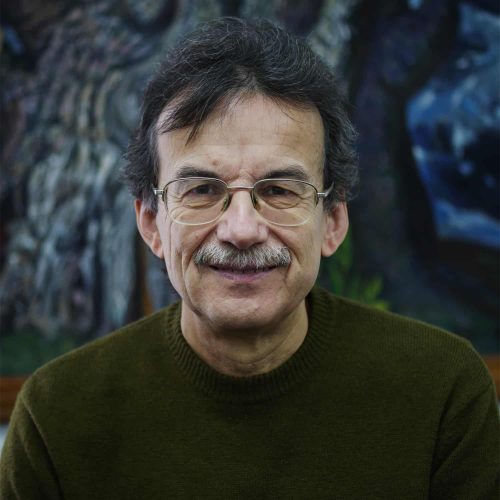
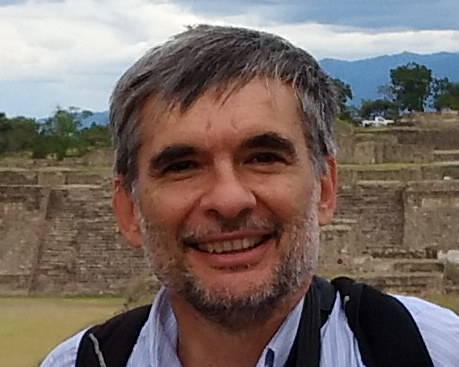
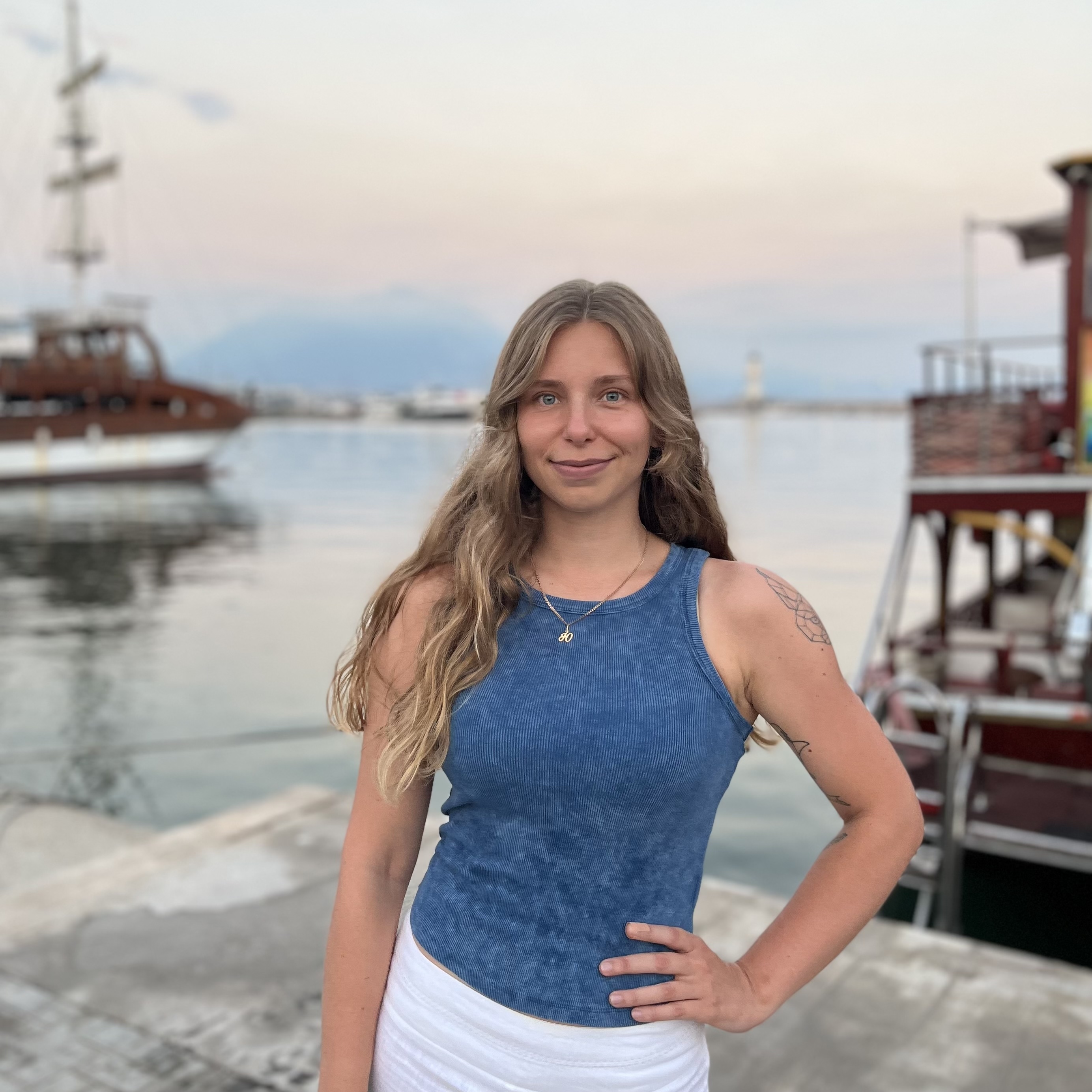
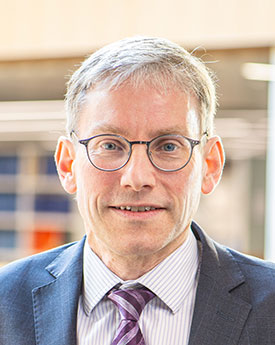
Krister Larsson is a Professor of Practice and Docent at the Department of Technical Acoustics, Chalmers University of Technology. He also serves as a senior consultant at Efterklang (AFRY) and has held previous roles at SP and RISE, where he managed acoustics labs and conducted senior research. His expertise spans building acoustics , community noise , and machine noise , with significant contributions to noise reduction in urban environments and lightweight structures. Research Interests : Larsson focuses on acoustic modeling , vibroacoustic systems , thermoacoustic devices , and noise control in transportation infrastructure . His work bridges theoretical acoustics and practical applications, including sound classification standards, noise barriers, and sustainable urban planning. Scientific Awards : While no awards are explicitly listed, his extensive publication record and leadership roles in acoustics research groups underscore his professional impact. Teaching & Affiliations : He teaches foundational and advanced courses in the ACE program and Master's program in Sound and Vibration . His career includes collaborations with research institutions (SP, RISE) and industry (AFRY).
Hiromichi Nakazato is a Professor at the School of Advanced Science and Engineering , Waseda University , specializing in theoretical studies spanning particle physics , nuclear physics , cosmic ray physics , and quantum information theory . His research focuses on quantum dynamics , entanglement generation , decoherence control , and exact solutions for quantum systems with time-dependent Hamiltonians or reservoir interactions. Education : PhD in Physics from Waseda University (1985), MSc in Science and Engineering (1980) Research trends reveal a consistent exploration of quantum Zeno dynamics , state purification via measurements , multipartite entanglement in Josephson qubit arrays, and nonlinear quantum functionals like purity estimation without tomography. His work bridges quantum optics , condensed matter , and quantum field theory , with applications in quantum computing architectures and spin-based quantum devices .
Louk Rademaker is an Assistant Professor and SNSF Professor at the University of Geneva, affiliated with the Ecole de physique. His research focuses on theoretical quantum matter, especially strongly correlated systems, topological materials, and moiré systems such as twisted bilayer graphene and monolayer FeSe. He leads the Theory of Flat and Strange Quantum Matter group, integrating fundamental theoretical concepts with material science. His research interests include: Strong electron correlations and Mottness Strange metals and non-Fermi liquid behavior Topological quantum phenomena Spontaneous symmetry breaking Quantum transport and topological insulators Moiré superlattices in 2D materials The recent publications reflect a strong focus on symmetry-breaking physics, topological phases, and computational methods in condensed matter. His work bridges high-energy concepts with solid-state systems, particularly in low-dimensional and twisted materials. Notably, his pedagogical contributions include widely cited lecture notes on spontaneous symmetry breaking and density functional theory. His scientific awards include: SNSF Professor Ambizione Fellow Louk Rademaker has advised and collaborated with several researchers and has been involved in teaching advanced topics such as quantum transport and topological insulators at the Master’s level. He has also developed practical computational courses using Quantum ESPRESSO. His group organizes the Flat Club seminar series, fostering academic exchange in the field of flatband physics. He leads a research group focused on theoretical modeling of quantum materials, with ongoing work in correlated moiré systems and topological phases.
John R. Dutcher is a Professor and Research Chair in Novel Sustainable Nanomaterials at the University of Guelph's Department of Physics. His work bridges soft matter physics, biophysics, and sustainable nanotechnology through experimental studies of polymers, biopolymers, and bacterial systems at surfaces and interfaces. PhD in Condensed Matter Physics (Simon Fraser University, 1989) NSERC Postdoctoral Fellow (University of Arizona, 1989-1990) Director of University of Guelph’s B.Sc. Nanoscience program Research focuses on: Phytoglycogen nanoparticles from sweet corn for biomedical/personal care applications Machine learning analysis of polymer degradation in cross-linked pipes Bacterial motility and biofilm formation via optical microscopy Hydration forces and mechanical properties of nanomaterials His lab employs state-of-the-art equipment including AFMs, SPRi, and rheometers, with industrial partnerships like HeatLink. Recent publications analyze β-VAE applications in IR spectroscopy, acid hydrolysis effects on nanomaterials, and bacterial colony dynamics. Scientific honors include: Tier 1 Canada Research Chair in Soft Matter and Biological Physics (2006) Fellow, American Physical Society (2007) University of Guelph Innovation of the Year (2017) He has co-founded spin-off company Mirexus Biotechnologies and mentored over 50 graduate/undergraduate researchers, with alumni holding faculty positions at Waterloo, McMaster, and Lakehead University. Lab facilities include: Custom self-nulling ellipsometer TA Instruments DHR-3 rheometer Brookhaven BI200-SM light scattering system Thermo/Nicolet Continuum infrared microscope Wyatt SEC-MALS system Advanced microbiology/Biophysics equipment
Yurij Holovatch is a Professor and Chief Researcher at the Institute for Condensed Matter Physics (ICMP) of the National Academy of Sciences of Ukraine in Lviv, where he founded the Laboratory for Statistical Physics of Complex Systems. He is a co-founder and co-director of the L4 collaboration and the International Doctoral College in Statistical Physics of Complex Systems, linking ICMP with the Universities of Leipzig (Germany), Coventry (UK), and Lorraine (France). He is also a full member of the National Academy of Sciences of Ukraine. Research Interests: His work focuses on phase transitions and critical phenomena in structurally disordered magnets, scaling of macromolecules and conformational properties of complex polymers, complex networks (ordering, stability, spreading), and increasingly extends into digital humanities and human migration . His research bridges theoretical physics with data-driven modeling of social and urban systems. Publication Trends: His recent publications (2023–2024) reveal a sustained focus on critical behavior in disordered systems using Monte Carlo simulations, exact and asymptotic analysis of models like the Potts and Blume-Capel models, and innovative applications of statistical physics to collective decision-making, transportation networks, and migration. These works reflect a strong interdisciplinary trend, integrating physics-based modeling with data analytics and social science questions. Davydov Prize for studies in theoretical and biological physics (2020) Honorary Ambassador of Lviv (2020) Visiting Professor (Honorary), Coventry University (since 2018) Advising and Grants: As co-director of the International Doctoral College, he plays a central role in training PhD students in statistical physics across Ukraine, Germany, UK, and France. He organizes the annual Ising Lectures workshop in Lviv since 1997, fostering international collaboration. He serves as editor of the book series Order, Disorder and Criticality (World Scientific), with Volume 7 published in 2023. Labs and Teams: He founded and leads the Laboratory for Statistical Physics of Complex Systems at ICMP Lviv. He co-directs the L4 collaboration and the International Doctoral College, which function as cross-institutional research and educational networks integrating theoretical and computational physics across Europe.
Alberto Marcone is a Full Professor of Mathematical Logic at the University of Udine, where he serves as the Director of the Department of Mathematical, Computer and Physical Sciences (DMIF) since October 1, 2024. His academic home is within the Department of Mathematical, Computer and Physical Sciences at the University of Udine, located at Via delle Scienze, 208 -- Loc. Rizzi, 33100 Udine, Italy. Professor Marcone's research spans several interconnected areas within mathematical logic. His primary interests include reverse mathematics, descriptive set theory, well-quasi-order and better-quasi-order theory, and computable analysis with particular emphasis on the Weihrauch lattice. His work explores the logical strength of mathematical theorems, classification problems in continuum theory, and the computational content of mathematical principles. He has made significant contributions to understanding the relationships between different mathematical principles and their proof-theoretic strength. Analysis of his recent publications reveals a consistent focus on the intricate connections between order theory, reverse mathematics, and descriptive set theory. His work often examines the logical strength of combinatorial principles related to well-quasi-orders and better-quasi-orders, while increasingly exploring connections to computable analysis through the Weihrauch lattice framework. Recent publications demonstrate growing international collaboration, particularly with researchers across Europe, and an expanding application of logical methods to topological and metric space problems, including connections to knot theory and fractal geometry. Member of editorial board of the journal Computability Member of the board of the PhD program in Mathematics and Physics Organizer of Logic Colloquium 2018 (Udine) Organizer of Special Session on Computability Theory at AMS-UMI International Joint Meeting (Palermo, July 2024) Organizer of XXVIII Incontro di Logica AILA (Udine, September 2024) Professor Marcone teaches Mathematical Logic for both undergraduate and graduate mathematics programs at the University of Udine. His office is located on the 2nd floor, room A2 90, where he holds student reception hours either in person or via Microsoft Teams by appointment. As department director, he oversees the academic and administrative functions of the Department of Mathematical, Computer and Physical Sciences.
Yulia Alexandr is a Hedrick Assistant Adjunct Professor (Adjunct Assistant Professor) in the Department of Mathematics at the University of California, Los Angeles (UCLA) and a Postdoctoral Fellow in Applied Mathematics at Harvard University. Her research centers on algebraic statistics, applied algebraic geometry, and mathematical machine learning, with current focus on geometric structures in statistical models and neural networks. She is actively on the academic job market for the 2025-26 cycle. Education: Ph.D. in Mathematics, University of California, Berkeley (2023). Advisors: Bernd Sturmfels and Serkan Hoşten. Thesis: From Voronoi Cells to Algebraic Statistics . B.A. in Mathematics (high honors), Wesleyan University (2019). Advisor: Karen Collins. Thesis: Combinatorial Nullstellensatz: Various Proofs, Extensions and Applications . Dr. Alexandr's research develops algebraic and geometric frameworks for statistical modeling and machine learning. She pioneers methods for analyzing logarithmic Voronoi cells in Gaussian and discrete models, investigates structural properties of graphical models and mixture distributions, and establishes algebraic constraints in neural network architectures. Her work bridges abstract algebra with practical machine learning applications, particularly in understanding geometric constraints of ReLU networks and information divergence in statistical models. Analysis of her 15 most recent publications (2018-2025) reveals three dominant research thrusts: (1) geometric foundations of statistical models through Voronoi structures and moment varieties, (2) algebraic analysis of graphical models including decomposable and context-specific variants, and (3) mathematical theory of neural networks with emphasis on ReLU constraints. Her publications demonstrate consistent progression from combinatorial foundations to advanced applications in machine learning, with increasing focus on computational implementations using tools like HomotopyContinuation.jl. Scientific Awards: No scientific awards were documented in the provided materials. Dr. Alexandr has mentored undergraduate researchers through Berkeley's Directed Reading Program (Spring 2020), focusing on algebraic combinatorics and graph theory. Her teaching portfolio includes instructing programming courses (PIC 10A/B, PIC 16A) at UCLA and serving as Graduate Student Instructor for mathematics courses at UC Berkeley. While no specific grants are listed, her participation in workshops at IMSI, AIM, and MPI MIS indicates collaborative research funding support. She co-organizes the Berkeley Nonlinear Algebra Seminar and maintains active research collaborations with Guido Montúfar (UCLA), Anna Seigal (Harvard), and her doctoral advisors. Her work is regularly presented at premier venues including SIAM AG, ISSAC, and JMM. Additionally, Dr. Alexandr is a published Russian-language poet with a 2017 collection Лирическое Наступление and contributions to The Birch journal, reflecting her interdisciplinary engagement beyond mathematics.
Prof. Dr. André Uschmajew is a full professor and holds the Chair of Mathematical Data Science at the Institute of Mathematics, Faculty of Mathematics, Natural Sciences, and Materials Engineering, University of Augsburg, Germany. He has held prominent research and academic positions at institutions including the Max Planck Institute for Mathematics in the Sciences (Leipzig), University of Bonn, and EPF Lausanne. 2022–present: Chair of Mathematical Data Science, University of Augsburg 2017–2022: Research Group Leader, Max Planck Institute MiS Leipzig 2014–2017: Bonn Junior Fellow Professorship, University of Bonn 2013: Ph.D. in Mathematics, TU Berlin His research centers on the theoretical and computational aspects of low-rank tensor and matrix approximations, with deep connections to Riemannian optimization, functional analysis, and high-dimensional scientific computing. He investigates the geometry of low-rank varieties, convergence of alternating algorithms, and applications in data science and dynamical systems. His work combines rigorous mathematical analysis with algorithmic innovation. The recent publications (2023–2025) reflect a strong focus on optimization methods for low-rank structures, dynamical low-rank approximation for PDEs like the Vlasov-Poisson equation, randomized SVD, Sinkhorn-type algorithms with overrelaxation, and Kronecker product operator approximation. Key themes include convergence analysis, algorithmic acceleration, and applications in scientific computing and signal processing. Although no specific awards are listed, his publication record in top-tier journals such as Numerische Mathematik , SIAM Journal on Optimization , and Foundations of Computational Mathematics indicates significant recognition in applied mathematics and numerical analysis. He advises students and researchers in mathematical data science and numerical analysis, though specific advisees are not named. He teaches courses such as Kernel Methods and Linear Algebra II. He has collaborated with leading researchers including Bart Vandereycken, Daniel Kressner, and Wolfgang Hackbusch. His work is supported through institutional affiliations and likely research grants, though specific grants are not listed. He is actively involved in the development of numerical methods for high-dimensional problems, particularly using tensor networks and manifold optimization. He is affiliated with research teams at the University of Augsburg and previously led a group at the Max Planck Institute MiS Leipzig, focusing on mathematical aspects of data science and tensor methods.
Gerhard Kammerer is an Assistant Professor at the Institute of Soil Physics and Rural Water Management , part of the Department of Agricultural Sciences at the University of Natural Resources and Life Sciences, Vienna (BOKU) . His research focuses on soil physics and hydrology, particularly in agricultural contexts. BOKU organizational units: Institute of Soil Physics and Rural Water Management, Institute of Soil Research, Experimental Farm Groß-Enzersdorf Research Interests include soil hydraulic properties, vadose zone dynamics, groundwater recharge, irrigation systems, root-soil interactions, and sustainable land use. His work addresses both theoretical and applied aspects of soil-water management. Article Trends show expertise in Soil hydraulic property modeling Groundwater vulnerability assessment Agricultural water balance studies Root-induced hydrological changes Lysimeter data analysis Stony soil hydrology Scientific Awards : Hochschuljubiläumsstiftung der Stadt Wien (2007) Advising & Grants : Supervised numerous theses on soil-water systems and participated in 25+ projects funded by Austrian Science Fund (FWF), Austrian Research Promotion Agency (FFG), and federal ministries. Notable projects include "Vadose zone characterization for groundwater vulnerability" and "Hydraulic effects of root-soil interactions". Labs & Teams : Works with BOKU's hydrology and soil physics teams, contributing to lysimeter networks and soil-vegetation-atmosphere research. Collaborates with international institutions in Slovenia, Italy, and the U.S.
Professor Andy Schofield serves as Vice-Chancellor and Professor of Physics at Lancaster University, leading theoretical research in strongly correlated electron systems. His work investigates quantum phenomena where electron interactions cannot be treated classically, spanning superconductivity, magnetism, and emergent quantum particles through close collaboration with experimental groups. His research focuses on quantum criticality , spin-charge separation , and non-Fermi liquid behavior in low-dimensional systems. Key areas include Luttinger liquids in quantum wires, nematic phases in iron-based superconductors, and metamagnetic transitions in ruthenates. His theoretical frameworks explain emergent behaviors in materials where traditional mean-field approaches fail. Analysis of his publications reveals consistent focus on one-dimensional quantum conductors , strongly correlated metals , and quantum phase transitions . Recent work examines Fermi surface reconstruction in FeSe compounds and spectral signatures of fractionalized excitations. His research bridges condensed matter theory with experimental probes like tunneling spectroscopy and quantum oscillation measurements. As Vice-Chancellor, he oversees institutional research strategy while maintaining active theoretical contributions. His leadership includes the project Reimagining research practices: towards a sustainable, ethical and inclusive future (2024-2026), reflecting commitment to research integrity. He leads the Condensed Matter Theory research group within Physics, fostering collaborations between theoretical and experimental physicists. Current work explores quantum critical endpoints and topological aspects of Fermi surface instabilities, with implications for quantum computing materials.
Kamil Hassan is a Doctoral student and Researcher at KTH Royal Institute of Technology, affiliated with the Division of Decision and Control Systems. His work focuses on securing cyber-physical infrastructure through advanced control methodologies. His research spans Control Systems , Cyber-Physical Security , and Power Systems Resilience , with emphasis on mitigating attacks in time-critical networks. Key contributions include finite-time control barrier functions for power inverters and randomized detector tuning for attack impact reduction. His methodologies integrate hardware-in-the-loop validation with theoretical guarantees. Recent publications (2021–2025) reveal a trajectory toward resilient control architectures for energy systems, blending multiagent consensus theory with security-aware design. Work on power inverter networks dominates his output, addressing grid stability under cyber threats through novel barrier function frameworks and simulation-validated approaches. Hassan serves as course assistant for Cyber-Physical Security in Time-Critical Systems (EL2850) and operates within KTH's Decision and Control Systems division, contributing to hardware-in-the-loop testing environments for critical infrastructure protection.
Nathan Haut is a Fixed Term Assistant Professor in the Department of Computational Mathematics, Science and Engineering at Michigan State University. His research focuses on symbolic regression, genetic programming, and active learning techniques for optimizing computational models. Academic Rank: Assistant Professor Department: Computational Mathematics, Science and Engineering Email: hautnath@msu.edu Haut's work explores model complexity assessment, sharpness-aware minimization, and multi-objective optimization in genetic programming. He applies these methods to biomedical data analysis, quantum systems, and environmental modeling, emphasizing algorithm efficiency and robustness. Recent publications highlight his contributions to symbolic regression tasks using active learning strategies, differential equations for tile drainage modeling, and benchmarking loss functions like correlation versus RMSE. His research bridges theoretical advancements with practical applications in computational mathematics.
James R. Lee is a Professor in the Department of Computer Science at the University of Washington, with a focus on algorithms, complexity, and the theory of computation. He is affiliated with the UW Theory Group and currently on leave at Microsoft Research, which may delay responses to UW emails. Research Interests: Algorithms, complexity, geometry/discrete-continuous interfaces, probability, stochastic processes, metric embeddings, spectral graph theory, convex optimization. Recent Work Trends: Sparsification of generalized linear models and norms, spectral hypergraph methods, entropic regularization for metrical task systems, and analysis of scaling exponents in random graphs. His papers address sparsifier existence, lower bounds for SDP/LP relaxations, and geometric random walk properties. Scientific Awards: Best Paper Award at STOC 2015. Students: Farzam Ebrahimnejad, Ewin Tang, Yichuan Deng (co-advised with Shayan Oveis-Gharan, Shirshendu Ganguly, and others). Email: jrl@cs.washington.edu
Alexandru Andrei is a Professor of Physics at George Washington University, affiliated with the Department of Physics within the Columbian College of Arts and Sciences. His expertise lies in theoretical nuclear and particle physics, with a focus on lattice quantum chromodynamics (QCD), quantum computing applications to gauge theories, and non-perturbative methods in high-energy physics. Research interests include the study of QCD dynamics at finite temperature, hadron structure (polarizabilities, form factors), and numerical techniques to address challenges in lattice simulations such as the sign problem. He explores novel approaches for quantum algorithms targeting bosonic and fermionic field theories, including qubitization strategies and complex path integration methods. Recent work emphasizes infrared QCD phenomena, pion electromagnetic properties, and the development of efficient computational frameworks for lattice gauge theory and quantum computing. His contributions address fundamental questions in particle physics, such as the nature of the QCD vacuum, quark-gluon dynamics, and the implementation of gauge theories on quantum hardware. Publications since 2023-2024 highlight advancements in polarizability calculations, solutions to variance issues in fermionic systems, and innovative methods for simulating frustrated quantum systems. His research bridges theoretical innovation with computational breakthroughs, aiming to resolve longstanding challenges in both lattice field theory and quantum information science.
Steven Boxer is the Camille Dreyfus Professor of Chemistry at Stanford University. His research focuses on the physical aspects of biological systems, with particular emphasis on protein electrostatics, membrane biophysics, and photosynthesis. He has made significant contributions to understanding the role of electric fields in enzyme catalysis and the photophysics of fluorescent proteins. Dr. Boxer received his PhD in Physical and Physical-Organic Chemistry from the University of Chicago in 1976 and his BS with Honors in Chemistry from Tufts University in 1969. His research program investigates several interconnected themes: Excited State Dynamics in GFP & Split GFP Electrostatics and Dynamics in Proteins Model Membranes Energy and Electron Transfer in Photosynthesis His lab develops innovative experimental methods including Stark spectroscopy to measure electric fields in proteins and has pioneered the use of vibrational probes to map electrostatic environments in biological systems. Recent publications demonstrate his continued leadership in applying physical chemistry approaches to biological problems, with particular focus on quantifying electric fields in enzyme active sites and their role in catalysis. His work bridges chemistry, physics, and biology to provide fundamental insights into biomolecular function. As the Camille Dreyfus Professor of Chemistry, Dr. Boxer has received significant recognition for his contributions to chemical research and education. Dr. Boxer leads an active research group that combines experimental and computational approaches to study biological systems with a strong physical perspective. His lab has developed numerous innovative techniques and continues to train the next generation of scientists at the interface of chemistry and biology. The Boxer Lab maintains a strong research presence with multiple ongoing projects exploring the physical basis of biological phenomena, including advanced instrumentation for measuring electric fields in proteins and developing novel membrane models.