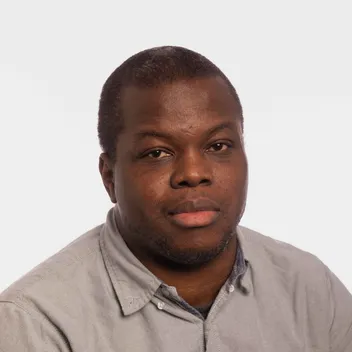
Nini Pryds is a Professor and Head of the research section 'Functional Oxide Materials' at the Department of Energy Conversion and Storage, Technical University of Denmark (DTU). He leads a team of 25+ researchers focusing on memristors, piezoelectricity, thermoelectricity, electrostriction, and functional oxide thin films. His work bridges physics and chemistry to design novel electronic states in oxide interfaces. Education: UDTU (likely Technical University of Denmark, potential typo). External roles include Editor of Applied Surface Science and Editorial Board Member of APL-Materials . Research interests revolve around quantum phenomena in oxide interfaces, stability enhancement of ionic conductors via coherent interface design, and mechanically tunable magnetism. Key contributions include modulation-doping at oxide interfaces, high mobility 2DEG discovery, and stabilizing δ-Bismuth oxide through multilayer structures. Recent publications emphasize oxide metamaterials, strain-mediated properties, and defect dynamics. Supervises active PhD projects on oxide heterostructures, thermoelectrics, and piezoelectricity. His work aligns with UN Sustainable Development Goals related to clean energy and innovation.
David John Procter is a Professor of Organic Chemistry and Head of the Department of Chemistry at the University of Manchester. His career includes academic roles at the University of Glasgow (Lecturer, Senior Lecturer) and a Readership at the University of Manchester, where he became a Professor in 2008. His research focuses on developing new synthetic methods, catalysis, and materials chemistry, with applications in drug discovery, biocatalysis, and organic electronics. Education: BSc Chemistry (University of Leeds, 1992), PhD (1995, supervised by Prof. Christopher Rayner). Postdoctoral work: Florida State University (Prof. Robert Holton, Taxol analog synthesis). Research interests include samarium diiodide-mediated reactions, metal-free coupling processes, and sustainable synthesis methods. He leads projects funded by EPSRC, Industry (30 grants), and international collaborations. Awards include the EPSRC Established Career Fellowship (2015–2020), Bader Prize (2014), and Young Heterocyclic Chemist Award (2015). Key contributions: Total synthesis of natural products (e.g., pleuromutilin), development of copper-catalyzed multicomponent couplings, and innovative methods for organic materials. His work aligns with UN Sustainable Development Goals related to affordable and clean energy and responsible consumption. Collaborations span academic and industrial partnerships in chemistry, physics, and biology. He supervises 60+ students and contributes to the Organic Materials Innovation Centre (OMIC). His group’s research is detailed at proctergroupresearch.com .
Dr. Simon Beaumont is an Associate Professor in the Department of Chemistry at Durham University , with additional responsibilities as Associate Dean (PGR) in the Faculty of Science. His research program integrates heterogeneous catalysis , nanomaterials , and in situ spectroscopic techniques to develop sustainable chemical processes. BA & MSci Natural Sciences, University of Cambridge (2003-2007) PhD in Heterogeneous Catalysis, University of Cambridge (2010) Postdoctoral Fellowship at UC Berkeley (2010-2012) Research foci include mechanistic studies of catalytic processes, nanoparticle synthesis , and in situ characterization via X-ray absorption (NEXAFS), DRIFTS, and Raman. His work addresses challenges in CO2 hydrogenation , biomass conversion , and environmental remediation , supported by national/EU/industrial funding. Recent publications highlight trends in selective hydrogenation (furfural), multi-functional catalysts (acid-base systems), and nanoparticle stability under reactive conditions. All studies emphasize molecular-level understanding for practical catalyst design. Scientific awards include Leverhulme Trust and Addison Wheeler fellowships. Teaching portfolio spans first-year laboratories , organic chemistry tutorials , and advanced catalysis lectures . Supervision of five research postgraduates and leadership of industry-funded projects further demonstrate his academic impact.
Judith Driscoll is Professor of Materials Science at the University of Cambridge in the Department of Materials Science & Metallurgy. She holds the prestigious Royal Academy of Engineering Chair in Emerging Technologies and serves as a Visiting Staff Member at Los Alamos National Laboratory. As the founding Editor-in-Chief of APL Materials, she has significantly contributed to the materials science community. Dr. Driscoll's research focuses on Energy Efficient Oxide Materials for Information and Communications Technologies and energy devices. Her work spans the development of non-volatile memory, resistive switching devices, and ferroelectric materials for neuromorphic computing applications. She investigates oxide thin films for applications ranging from data storage to energy generation and conversion, with particular emphasis on creating more energy-efficient device technologies to handle the exponential growth of data-centric applications. Her recent publications demonstrate strong trends in developing novel oxide-based memory devices with improved energy efficiency, particularly for AI applications. The work shows significant progress in hafnium-zirconium oxide ferroelectrics, resistive switching mechanisms, and vertically aligned nanocomposite structures for enhanced device performance. These innovations address critical challenges in reducing the unsustainable energy demands of modern computing, particularly for artificial intelligence systems. Fellow of the Royal Academy of Engineering Fellow of the Materials Research Society Fellow of the American Physical Society Fellow of IOM3, IOP, and Women Engineers Society Fellow of the American Academy of Arts and Sciences Recipient of ERC Advanced Grant Editor-in-Chief of APL Materials Dr. Driscoll leads a vibrant research group that has secured significant funding including her Royal Academy of Engineering Research Chair, an ERC Advanced Grant, and an ECCS-EPSRC grant in collaboration with researchers from the USA. She has founded the Cambridge Centre for Neuromorphic Computing (Neucam) in 2023. Her group operates world-leading growth equipment including pulsed laser deposition with RHEED control, high temperature oxide sputtering, and spatial ALD systems. She collaborates extensively across the University of Cambridge and with international partners to solve complex materials challenges, with her group's role often being to identify optimal materials for functional goals, predict fabrication methods, and then create and characterize these materials.
Colin J Akerman is Professor of Neuroscience and Group Leader in the Department of Pharmacology at the University of Oxford, concurrently serving as Corange Fellow and Medical Tutor at Corpus Christi College. His research investigates fundamental mechanisms of synaptic circuit formation and plasticity, with direct implications for epilepsy, dementia, and schizophrenia through multidisciplinary approaches integrating electrophysiology, optical imaging, and computational modeling. His primary research interests encompass Synaptic Plasticity, Neural Circuit Formation, and Excitatory-Inhibitory Balance, with specific focus on neuronal progenitor influences on connectivity, chloride dynamics in inhibitory transmission, and learning mechanisms in disease contexts. The lab employs custom-built equipment and molecular tools to probe synaptic function across in vivo , in vitro , and in silico platforms, emphasizing how activity-dependent processes shape neural networks during development and disease. Recent publications (2023-2025) reveal strong thematic convergence on intracellular chloride regulation in sleep-wake cycles, cortical circuit assembly from embryonic progenitors, and innovative optical tools for neural monitoring. This work bridges molecular neuroscience with systems-level understanding of synaptic plasticity, particularly regarding ionic mechanisms in epilepsy and sleep homeostasis. No scientific awards or fellowships are explicitly documented in the source materials. Professor Akerman currently mentors four PhD students (Vourvoukelis, Selfe, Wang, Gemayel) and multiple postdoctoral researchers, having previously trained scientists now leading independent groups in Toronto, Edinburgh, Cape Town, Oxford, and London. His research is funded by the European Research Council, Innovative Medicines Initiative, and Wellcome Trust, supporting investigations into synaptic mechanisms underlying neurological disorders. The Akerman Group, established in 2008, operates as an integrative neuroscience hub within Oxford's Pharmacology Department. The 10-member team combines expertise in patch-clamp electrophysiology, optogenetics, multiphoton imaging, and computational modeling, with current projects spanning neuronal progenitor biology, inhibitory synaptic plasticity, and learning rule implementation in neural networks. The lab emphasizes technical innovation, regularly developing custom instrumentation and molecular tools for neural observation and manipulation.
Professor Stephen Beeby is a leading academic at the University of Southampton in the Electronics and Computer Science department. His research spans Electronic Textiles , Flexible Electronics , and Energy Harvesting technologies. Research Focus: His work emphasizes the integration of smart printable materials into fabrics, enabling invisible wearable technologies . Projects include energy-harvesting insoles , skin hydration sensors , and thermoelectric devices for sustainable power. Recent Publications highlight advancements in zinc oxide nanoparticle films , flexible antennas , and gold-tooled e-textile circuits , reflecting his interdisciplinary approach to biomedical monitoring and smart clothing . Scientific Honors: Royal Academy of Engineering Chair in Emerging Technologies Fellow of IEEE (FIEEE) Fellow of Institute of Physics (FInstP) Fellow of Institution of Engineering and Technology (FIET) PhD Students: Supervising 10 active PhD candidates in areas like flexible sensors , smart garments , and energy-harvesting systems . Labs & Collaborations: Core member of the Centre for Flexible Electronics and E-Textiles (C-FLEET) and collaborates with European Union-funded initiatives like EnABLES and TEAM-NANO .
Professor George Britovsek (FRSC) is a leading figure in catalysis and sustainable carbon management at Imperial College London . As Director of the MRes in Catalysis & Engineering and Head of Teaching in Inorganic Chemistry, he bridges academic leadership with cutting-edge research. His work focuses on transition metal complexes for converting ethylene , alkanes , biomass , and CO₂ into valuable chemicals and fuels through industrial collaborations. Education : M.Sc. (Technical University of Aachen, 1990), Ph.D. (Aachen, 1993) under Prof. W. Keim Postdoctoral Training : University of Tasmania (1994-1996), Imperial College London (1996-2000) His research interests span: Selective oxidation of alkanes using bio-inspired iron complexes Alkene conversions to functional polymers via novel catalysts CO₂ valorization into polymers and cyclic carbonates Biomass-derived feedstocks for chemical synthesis Recent catalysis trends highlight his work on: Designing Fe-N/C catalysts for epoxidation Developing PN3P pincer ligands for H₂ activation Creating degradable polyethylene via iron-catalyzed chain growth Modeling alternating α-olefin distributions in chromium systems Awards : Fellow of the Royal Society of Chemistry (FRSC) Students & Collaborators actively engage in: Photocatalytic polymer degradation Electrocatalytic CO₂ conversion Functionalized polymeric materials 3D-printed catalytic scaffolds His Britovsek Research Group operates at the Molecular Sciences Research Hub, White City Campus, advancing both homogeneous and heterogeneous catalysis through experimental and computational approaches.
Professor Emilio Artacho is a faculty member in the Department of Physics at the University of Cambridge, based at the Cavendish Laboratory. He transitioned from the Department of Earth Sciences in 2011, where he was granted a Professorship in 2006. His research focuses on computational simulations of non-equilibrium processes in condensed matter, particularly using first-principles molecular dynamics and density-functional theory. He co-developed the SIESTA program for linear-scaling electronic structure calculations, widely utilized in computational materials science. Artacho’s work spans far-from-equilibrium phenomena in irradiated matter, multiferroics, nanoconfined water systems, and surface chemistry. His contributions include studies of electronic stopping power in materials, 2D electron gas formation at ferroelectric interfaces, and the structural dynamics of water under confinement. His academic roles include adjunct positions at Ikerbasque (Nanogune, Spain) and visiting professorships at institutions like the University of California, Berkeley, and École Normale Supérieure de Lyon. Research interests are anchored in theoretical condensed matter physics, with applications to nanomaterials, radiation effects, and interfacial phenomena. His computational methods bridge quantum mechanics and classical dynamics, enabling insights into complex systems like proton-irradiated solar cells and confined water films.
Dr. Gregory Perry is a Lecturer in Organic Chemistry at the University of Southampton (UK), leading an independent research group focused on discovering novel reactivity for molecular synthesis and transformation. His career includes postdoctoral research at Nagoya University and Kyoto University, and previous fixed-term lecturer roles at the University of Manchester. Research Interests: Organic synthesis with a focus on catalysis Carbon and nitrogen isotope labelling techniques Metal-halogen exchange reactions CO2 utilization in synthetic chemistry Transition-metal-free cross-coupling methods Notable Contributions: His recent work explores sulfonium salts for aromatic coupling, sustainable biaryl synthesis, and stomatal-regulating molecule development. Articles span topics like organolithium reagents, bimetallic catalysis, and molecular semiconductor synthesis. Academic Background: MChem in Chemistry (2012), University of Liverpool PhD in Organic Chemistry (2016), University of Manchester Current Collaborations: Affiliated with the ChemLife Network, Institute for Life Sciences, and groups led by Professors Hideki Yorimitsu and David J. Procter.
Darryl Overby is a Professor of Mechanobiology in the Department of Bioengineering at Imperial College London's Faculty of Engineering. His academic affiliations include the CRUK Convergence Science Centre, Cancer Technology Network, and multiple interdisciplinary networks focused on ocular biomechanics, vascular science, and regenerative medicine. He holds an Orcid identifier (0000-0001-9894-7515) and was previously affiliated with Tulane University and Harvard Medical School. Education: Ph.D. in Mechanical Engineering (2002) from MIT under Prof. Roger Kamm, followed by postdoctoral research at Harvard Medical School under Prof. Donald Ingber. His work focuses on cellular biomechanics, mechanotransduction, and the role of mechanical forces in intraocular pressure regulation and glaucoma pathophysiology. Research interests span mechanobiology of Schlemm’s canal endothelial cells, nitric oxide signaling in ocular tissues, and development of organ-on-chip models for studying aqueous humor outflow dynamics. His lab explores how mechanical signals drive transcellular pore formation and how these mechanisms fail in glaucomatous conditions. Key contributions include consensus guidelines for Brillouin microscopy measurements, ex vivo perfusion studies, and the role of TRPV4 channels in mechanosensing. His work integrates engineering techniques with clinical ophthalmology to advance therapies targeting glaucoma and ocular hypertension. Professional activities include leadership roles in the Ocular Biomechanics Network and Wound Healing and Regeneration Network. His research has led to patents for devices enhancing aqueous humor drainage and RNAi-based therapies.
Dr. Oluwasesan Adegoke is a Senior Lecturer in the School of Science and Engineering at the University of Dundee, UK. He holds a PhD in Chemistry from Rhodes University (2014) and has held postdoctoral fellowships in South Africa, Japan, and the UK. His expertise lies in developing advanced nanomaterials-based optical and electrochemical biosensors for environmental, biomedical, and forensic applications. Education: PhD in Chemistry, Rhodes University (2014) MSc in Nanoscience, University of Nottingham (2008) BSc in Chemistry, University of Agriculture, Abeokuta (2006) Research Interests: Synthesis of functional nanomaterials (e.g., quantum dots) Development of aptamer-based and nanozyme biosensors Applications in drug detection, environmental monitoring, and virus diagnostics Awards & Funding: Royal Society Research Grant (2023–2025) EPSRC New Investigator Award (2023–2026) Medical Research Council Future Leaders Fellowship (2024–2028, Co-I) Key Projects: Developing nanobiosensors for illicit drugs and explosives Heavy metal-free quantum dots for SARS-CoV-2 detection Surface-enhanced Raman scattering probes for disease diagnostics Labs & Teams: Leads the research group on optical/electrochemical nanobiosensors within the Leverhulme Research Centre for Forensic Science.
Professor Gideon James Grogan is a distinguished academic at the University of York, holding a position in the Department of Chemistry within the Faculty of Sciences. With expertise spanning structural and applied enzymology, he leads research at the intersection of chemistry and biology, developing novel biocatalysts for sustainable chemical synthesis and pharmaceutical applications. Professor Grogan's research focuses on the identification, characterization, and application of enzymes with biotechnological potential. His work encompasses: Oxygenases including P450s, flavoprotein monooxygenases, and peroxygenases Reductases such as ketoreductases (KREDs), imine reductases (IREDs), and reductive aminases (RedAms) Lyases catalyzing asymmetric hydration of alkenes Ligases for amide bond formation His multidisciplinary approach integrates synthetic chemistry, microbiology, molecular biology, and X-ray crystallography to engineer enzymes using in vitro evolution techniques. Recent research has yielded significant advances in biocatalytic pathways for chiral pharmaceutical precursors and renewable material processing. Professor Grogan's publication record demonstrates consistent innovation in biocatalysis, with recent work focusing on peroxygenase applications, reductive amination technologies, and enzyme engineering for improved catalytic properties. His research shows strong trends in developing sustainable enzymatic routes for pharmaceutical synthesis, with particular emphasis on stereoselective transformations and cascade reactions. Professor Grogan has received significant research funding through major grants from: BBSRC (Biotechnology and Biological Sciences Research Council) EPSRC (Engineering and Physical Sciences Research Council) He actively supervises PhD students and collaborates extensively both within the University of York and internationally. His work bridges the Departments of Chemistry and the York Structural Biology Laboratory (YSBL), leveraging state-of-the-art facilities for organic synthesis, protein expression, and structural analysis. Professor Grogan maintains strong industry connections, translating fundamental research into practical applications for pharmaceutical and chemical manufacturing. His current projects include sustainable production of menthol enantiomers, development of native amine dehydrogenases for chiral amine synthesis, and discovery of securinine alkaloid biosynthesis pathways.
Dr. Mark Bissett is Reader in Nanomaterials at the University of Manchester's Department of Materials Engineering. He holds a PhD in Nanotechnology from Flinders University and was Research Assistant Professor at Kyushu University before joining Manchester. He directs the Advanced Nanomaterials Group focusing on 2D material applications. His research integrates graphene, carbon nanotubes, and transition metal dichalcogenides into electrochemical energy storage devices and polymer nanocomposites. Key areas include: Supercapacitor and battery electrode design Tribological coatings for industrial applications Multifunctional structural composites Publications span electrodeposition techniques, composite reinforcement strategies, and nanomaterial synthesis. Recent work shows strong emphasis on graphene-enhanced composites, MXene applications, and energy storage innovations. He teaches nanotechnology and composites courses, and leads the Nanotechnology unit coordination. Industrial collaborations include his role as CSO at MOLYMEM Limited. Laboratory facilities at the National Graphene Institute support his group's experimental work.
Christopher Parlett is a **Lecturer** in the **CE - Academic & Research** division at the University of Manchester, concurrently serving as a **University of Manchester-Diamond Light Source Research Fellow in Catalysis**. He leads research at the **University of Manchester at Harwell group**, focusing on heterogeneous catalytic systems and operando X-ray spectroscopy to study catalytic active sites. His work emphasizes sustainable chemical conversions, including selective oxidations and biomass upgrading, alongside functional nanomaterials for applications in gas storage and healthcare. **Education**: PhD in Chemistry from Cardiff University (under Professors Adam F. Lee and Karen Wilson), MSc in Green Chemistry from the University of York, and BSc in Chemistry from Anglia Ruskin University. **Research Themes**: Catalyst design, metal-support interactions, porous oxide materials, and operando X-ray absorption spectroscopy. His projects aim to develop nano-engineered materials for industrial applications, replacing costly and environmentally harmful reagents. **Key Activities**: Organized the 25th Annual Green Chemistry & Engineering Conference (2021), co-edits the *Emergent Materials* journal, and chairs the SCI Early Careers Materials Committee. Active in professional organizations like the Institution of Chemical Engineers. **Grants & Projects**: Principal Investigator for the ongoing *UoMaH: The University of Manchester at Harwell* project (since 2018), exploring nanoparticles, catalytic reactions, and advanced materials. **Labs/Teams**: Part of the Manchester at Harwell research hub, collaborating on synchrotron-based studies and catalytic material development.
Charl FJ Faul is a Professor of Materials Chemistry and Associate Pro Vice Chancellor (Global Engagement) at the University of Bristol’s Faculty of Science. He leads the Faul Research Group, focusing on functional materials for sustainable energy and soft robotics, including conjugated microporous polymers (CMPs) for CO2 conversion, electroactive materials, and 3D-printed soft actuators. His roles include academic leadership, global engagement initiatives, and research collaboration across institutions like Kyoto University and Tsinghua University. Education: B.Sc., M.Sc., Ph.D.(Stellenbosch). Research emphasizes scalable CMP synthesis, bio-adhesives, and materials for mobility assistance. Collaborates on projects like the £14M EPSRC-funded VIVO Hub for Enhanced Independent Living. Advises over 15 students, including recent PhD graduates Dr Helal Alharbi and Dr Yubing Wang. Research outputs span 2025-2023, highlighting advancements in hydrogen storage, CO2 capture, and soft robotic actuators. The group actively publishes in journals like Small and Journal of Materials Chemistry A . Grants include EPSRC funding for VIVO Hub and Innovate UK support for conductive composites.