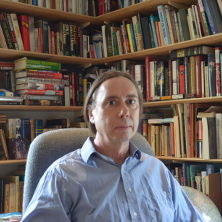
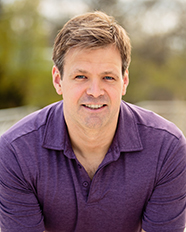
Giovanni Volpe is a Professor at the Department of Physics, University of Gothenburg. His research focuses on nanophotonics, optical tweezers, active matter, and machine learning applications in microscopy and neurodegenerative diseases. He leads the Soft Matter Lab (http://softmatterlab.org/) and collaborates internationally in interdisciplinary projects. His work bridges physics, biology, and AI, addressing challenges in nanoparticle manipulation, biomedical imaging, and neurodegenerative disease modeling. Key research areas include optical trapping of nanoparticles, self-assembly of colloidal systems, and leveraging deep learning for microscopy and sensor technologies. Recent publications span neurodegenerative disease pathways, advanced optical microscopy techniques, and plasmonic sensor development. Volpe's team has pioneered methods in computational neuroscience and nanotechnology. His lab's innovations include novel optical tweezers control algorithms and neural network models for analyzing complex biological systems. Collaborations span materials science, biophysics, and cognitive neuroscience, with applications in healthcare and environmental monitoring.
Kevin Edgar is a Professor of Biomaterials and Bioprocessing and Director of the ICTAS Bio-Based Materials Center at Virginia Tech's College of Natural Resources and Environment, Department of Sustainable Biomaterials. With a Ph.D. in Organic Chemistry from Duke University (1979) and a B.S. in Chemistry from Bucknell University (1975), he has established himself as a leading researcher in polysaccharide chemistry and sustainable biomaterials. Dr. Edgar's research focuses on designing and creating derivatives of natural polysaccharides to address demanding performance requirements, exploring structure-property-performance relationships for applications including drug-delivery systems, tissue engineering, biodegradable plastics, polymer compatibilization, hydrogels, and block copolymers. His work specifically targets novel methods to control and utilize the nanostructure of polysaccharides, with emphasis on regioselective substitution reactions of complex polysaccharides. He investigates how to effectively utilize natural polysaccharides to address societal needs, leveraging their diverse natural functions from structural support to information storage. Analysis of his recent publications reveals a strong focus on hydrogel development, drug delivery systems, and polysaccharide modification techniques. His work spans fundamental chemistry of polysaccharides to applied pharmaceutical and medical applications, with particular emphasis on creating sustainable alternatives to fossil fuel-based materials. The research demonstrates consistent innovation in regioselective synthesis methods and structure-property relationships of polysaccharide derivatives. 2023 Appointed to Virginia Tech Academy of Faculty Leadership 2022 Virginia Tech College of Natural Resources and Environment Outstanding Graduate Student Mentor Award 2016 Anselme Payen Award for outstanding professional contributions to cellulose science 2010 Named Fellow of the ACS Division of Cellulose and Renewable Materials 2009 Named Fellow of ACS (inaugural class of ACS Fellows) Dr. Edgar has mentored numerous graduate students through their Ph.D. and Master's research, with many receiving prestigious awards including multiple Eastman Awards for outstanding graduate students. His research has been supported by significant grants from NSF, USDA NIFA, and other funding agencies. He leads the ICTAS Bio-Based Materials Center and co-directs the Infectious Disease Interdisciplinary Graduate Education Program, demonstrating strong leadership in interdisciplinary research. His lab actively develops sustainable biomaterials with applications in drug delivery, tissue engineering, and environmental health.
Stephen Kelty, Ph.D., is a Professor in the Department of Chemistry and Biochemistry at Seton Hall University, where he leads the Kelty Research Group. His work focuses on computational and physical chemistry, particularly in modeling solid-state and molecular systems using advanced methods like DFT and molecular dynamics. He is affiliated with the Center for Computational Research, leveraging its resources for interdisciplinary projects. Dr. Kelty’s research spans heterogeneous catalysis, defect analysis in oxides (e.g., YSZ, HfO₂), and photoactive materials for energy applications. Education: Ph.D., Chemistry, Harvard University (1993) M.Phil., Chemistry, Columbia University (1991) B.S., Chemistry, University of Cincinnati (1979) Research Interests: Dr. Kelty’s group investigates electronic and structural properties of materials at atomic and molecular scales. Key areas include: Computational modeling of catalytic mechanisms Defect engineering in oxides (e.g., YSZ thin films) Design of photoactive materials for solar energy conversion Ab initio and DFT studies of functionalized molecules Recent Trends in Publications: Recent work emphasizes computational analysis of ferroelectric hafnia, phase transitions in niobium germanate thin films, and enhanced performance in La/SrCoO₃ electrodes. Collaborations include studies at Los Alamos National Lab and presentations at the Organic Reactions Catalysis Society. Advising & Labs: Guided students like Sara Lamcaj (Los Alamos intern) and Frank Hung (APS presenter) Leverages the Center for Computational Research for high-performance simulations
Prof. Dr. Evren EKMEKÇİ is a Professor at the Department of Electrical and Electronics Engineering, Faculty of Engineering and Natural Sciences, Süleyman Demirel University. He holds a licentiate degree from Süleyman Demirel University and a doctorate from Middle East Technical University. His academic career includes roles as Assistant Professor (2011-2017) and Associate Professor (2017-2022) before his current position since 2022. His research focuses on metamaterials, electromagnetic theory, microwave techniques, antenna design, microwave sensors, and dielectric resonators. Notable contributions include high-impact studies on metamaterial-based sensors and terahertz applications, with over 1272 citations and an h-index of 16 (Google Scholar). Key research trends in his articles include metamaterial design for sensing applications, dielectric resonator-based sensors, and electromagnetic absorption mechanisms. He has led projects such as 'Multi-functional metamaterial sensor design' (2014-2017) and 'Chemical liquid sensing with all-dielectric absorbers' (2019-2021). Prof. EKMEKÇİ has authored numerous peer-reviewed articles in journals like IEEE Sensors Journal and Applied Physics A. His work bridges theoretical electromagnetic principles with practical sensor and antenna innovations. He teaches courses on antennas, electromagnetic waves, and microwave techniques, contributing to both academic and applied engineering education.
Ronald Zirbs is a Research Fellow at the Institute of Colloid and Biointerface Science , University of Natural Resources and Life Sciences, Vienna (BOKU). With a PhD in Polymer Chemistry (Martin-Luther-University Halle/Saale, 2007-2009; TU Wien, 2005-2006), his research focuses on nanoparticle synthesis , surface-active ionic liquids , and thermoresponsive polymer architectures .
Hui (Claire) Xiong is a Professor at the Micron School of Materials Science and Engineering, Boise State University , specializing in advanced functional nanomaterials for sustainable energy systems . Prior to Boise, she held postdoctoral positions at Argonne National Laboratory and Harvard University , focusing on energy storage electrodes and micro-solid oxide fuel cells. Education : Ph.D. in Analytical Chemistry and Electrochemistry (University of Pittsburgh), B.E./M.S. in Applied and Inorganic Chemistry (East China University of Science and Technology) Her research interests revolve around sustainable energy materials , particularly lithium/sodium-ion batteries , solid electrolytes , and defect-driven metal oxides . Her work has produced over 134 research outputs, including key contributions to TiO 2 nanotubes , FeSe/FeS heterostructures , and ion irradiation effects on electroceramics. Notable scientific awards include the Andrew Mellon Predoctoral Fellowship (2006) Royal Society of Chemistry Fellowship (2023) She has led multiple NSF-funded projects on topics like mixed ionic/electronic conductivity and defect-engineered metal oxides , while her publications highlight trends in solid-state battery interfaces , heterostructure engineering , and electrochemical characterization .
Andrey Pranovich is a faculty member at the Faculty of Natural Sciences and Engineering, where he leads the Laboratory of Natural Materials Technology focused on "Technologies for a sustainable future." His research spans multiple areas of wood chemistry, biomass utilization, and sustainable materials development. Dr. Pranovich's research interests center around natural materials, particularly focusing on: Lignin chemistry and applications Wood polysaccharides (especially xylan) Biomass fractionation and biorefinery processes Sustainable materials development Wood chemistry and characterization Nanocellulose and nanomaterials from biomass His recent publication record demonstrates significant contributions to the field of sustainable biomaterials, with particular emphasis on lignin-carbohydrate complexes, xylan-based hydrogels, and biobased materials for industrial applications. His work shows a strong trend toward developing environmentally friendly alternatives for industrial products while maximizing the utilization of biomass components. Notable scientific contributions include: Development of lignin-based CO2 capture materials Innovative extraction methods for wood components using green solvents Creation of xylan-based hydrogels for drug delivery applications Sustainable alternatives for road marking paints Advanced characterization of lignin-carbohydrate complexes Dr. Pranovich's research aligns with multiple UN Sustainable Development Goals, particularly those related to sustainable production and consumption, climate action, and responsible resource management. His work bridges fundamental wood chemistry with practical applications in materials science and environmental sustainability.
Duygu Ağaoğulları is an Associate Professor at Istanbul Technical University's Department of Metallurgical and Materials Engineering. With over 15 years of research activity, her work spans composite materials, mechanical alloying, graphene-based nanomaterials, and high entropy ceramics. Research Focus: Graphene-reinforced composites, advanced oxidation processes, rare-earth borides, powder metallurgy techniques Collaborations: Active in international research networks, particularly with projects related to plasma-facing materials for nuclear applications Scientific Recognition: Recipient of 10 prestigious awards including the 2008 Young Researcher Award and 2021 MCM Best Paper Award Supervisor of 21 research projects including TUBITAK-funded initiatives on bio-remediation and plasma-facing materials Her research output trends show increasing focus on graphene composites and nuclear material applications since 2016, with significant contributions to spark plasma sintering and mechanochemical synthesis.
Dr. Yue (Jessica) Wang is an Associate Professor of Chemical and Materials Engineering at the University of California, Merced. She holds additional appointments in the Chemistry and Biochemistry and Bioengineering departments, reflecting her interdisciplinary expertise. Her research focuses on creating biomimetic electronic materials that replicate biological systems' mechanical and physiological properties. Ph.D., Inorganic Chemistry (2014) - University of California, Los Angeles B.S., Chemistry (2008) - University of California, Los Angeles Dr. Wang's laboratory develops advanced materials with four core research areas: (1) dynamically adaptive electronic materials, (2) additive manufacturing of functional metamaterials, (3) organic reconfigurable materials, and (4) slime mold-aided bio-designed networks. These innovations enable patient-specific biomedical devices capable of detection, sensing, and stimulation, while prioritizing environmental and intellectual sustainability. The lab's recent research trends include 3D-printed conductive polymers, strain-invariant electronic foams, and graphene-based nanomaterials. This work intersects soft electronics, biomimicry, and advanced manufacturing techniques to create materials with unprecedented mechanical and electrical properties. Dr. Wang's team combines expertise in polymer synthesis, device fabrication, and mechanical characterization, operating at the intersection of chemistry, engineering, and biotechnology. She can be reached at yuewang@ucmerced.edu or +1 (209) 228-3611.
Kaylena Ehgoetz Martens serves as an Associate Professor in the Department of Kinesiology and Health Sciences at the University of Waterloo, where she directs the Neurocognition and Mobility Lab. Her research program integrates movement kinematics, functional neuroimaging, psychophysiology, and cognitive neuroscience to investigate the neural basis of gait control and its disruption in neurodegenerative conditions, with particular emphasis on Parkinson's disease, dementia with Lewy bodies, and isolated REM sleep behavior disorder. She focuses on the complex interplay between cognition, emotion, and motor function to develop translational approaches for early diagnosis and intervention in mobility disorders. Dr. Martens' academic training includes a BSc in Kinesiology & Physical Education from Wilfrid Laurier University, an MA in Psychology from the University of Waterloo, a PhD in Cognitive Neuroscience from the University of Waterloo, and postdoctoral training at the Medicine, Brain and Mind Centre, University of Sydney, Australia. Her educational background established the foundation for her multidisciplinary approach to movement neuroscience. Her research program centers on three interconnected aims: (1) investigating cognitive-emotional interactions in gait and balance control; (2) leveraging gait complexity to identify subclinical predictors of neurodegeneration; and (3) developing technology-enhanced diagnostic and intervention tools using virtual reality and mobile recording devices. This work addresses critical gaps in understanding how anxiety, threat processing, and autonomic dysfunction contribute to movement impairments in aging and neurodegenerative diseases. Analysis of her recent publications (2023-2025) reveals a strong trajectory in subtype-specific characterization of freezing of gait, identification of sex-specific neurodegeneration patterns, and development of AI-driven detection methods. Her work increasingly incorporates machine learning for gait analysis while maintaining clinical relevance through biomarker discovery and therapeutic innovation, particularly in the prodromal phases of synucleinopathies. Scientific Awards: No specific awards were documented in the provided source material. Dr. Martens actively supervises graduate students across all levels including undergraduate theses, MSc, PhD, and postdoctoral fellows within her Neurocognition and Mobility Lab. She provides research opportunities for volunteers, coursework interns, and research coordinators, with a focus on translating laboratory findings to clinical applications. While specific grant details weren't provided, her extensive use of advanced neuroimaging, wearable sensors, and virtual reality technologies indicates substantial research funding supporting her program. The Neurocognition and Mobility Lab operates as a collaborative hub bridging basic neuroscience with clinical practice, working closely with healthcare providers to develop practical tools for early mobility impairment detection. Current projects emphasize translating gait complexity metrics into clinical biomarkers and developing anxiety-targeted interventions to prevent falls in neurodegenerative populations, with particular attention to preserving functional independence throughout the lifespan.
Associate Professor Christopher Wensrich is a faculty member in the School of Engineering at the University of Newcastle, Australia, specializing in Mechanical Engineering. He has a strong background in applied mechanics from both computational and experimental perspectives, with significant expertise in granular mechanics, neutron diffraction strain measurement, and Bragg-edge transmission strain tomography. Education: PhD, University of Newcastle Bachelor of Mathematics, University of Newcastle Bachelor of Engineering, University of Newcastle Professor Wensrich's research focuses on several interconnected areas within mechanical engineering and materials science. His primary expertise lies in granular mechanics, spanning from micromechanics and homogenization of granular systems to analytical modeling of granular dynamics (particularly the silo quaking problem) and computational modeling using the Discrete Element Method (DEM). He is also a pioneer in applying neutron diffraction strain scanning techniques to granular systems. In the broader field of applied mechanics, he has made significant contributions to neutron diffraction-based strain measurement, including breakthroughs in Bragg-edge Transmission Strain Tomography, where he demonstrated the world's first practical application outside of simple axisymmetric systems. His publication record demonstrates a consistent focus on developing and applying advanced techniques for strain measurement and reconstruction in granular and composite materials. His recent work has centered on tomographic reconstruction methods using neutron diffraction, with particular emphasis on Bragg-edge techniques for 2D and 3D strain field reconstruction. His research bridges theoretical mathematics, computational methods, and experimental validation, creating a robust framework for non-destructive stress measurement in complex materials. Professional Recognition: President of the Australian Neutron Beam User Group (ANBUG) since December 2022 Member of the ACNS Program Advisory Team at ANSTO (Australian Nuclear Science and Technology Organisation) since March 2019 Visiting Fellow at Clare Hall College, Cambridge University (January-June 2023) Visiting Researcher at Isaac Newton Institute for Mathematical Sciences (January-June 2023) Professor Wensrich has secured substantial research funding, with a total of $5,478,793 across 42 grants. His funding portfolio includes projects from the Australian Research Council (ARC), ANSTO, and international partners like Oakridge National Laboratory and Japan Proton Accelerator Research Complex. He has successfully supervised 11 PhD and Masters students to completion, with research topics spanning granular mechanics, conveyor systems, and neutron strain tomography. His current research involves collaborations with institutions worldwide, focusing on advanced strain measurement techniques and their application to complex material systems.
William Dichtel is a Professor in the Department of Chemistry at Northwestern University, holding the Robert L. Letsinger Professorship. His research focuses on synthetic and supramolecular chemistry to develop structurally precise organic materials for water purification, energy storage, and biological interactions. B.S., MIT (2000) Ph.D., UC-Berkeley (2005) Postdoctoral studies at UCLA & Caltech (2005-2008) Key research areas include: Water purification materials (especially PFAS removal) Energy storage polymers Self-healing polymer systems 2D covalent organic frameworks (COFs) Nanomaterial-biological interactions Mechanochemical polymer activation The group's publications demonstrate expertise in 2D materials, polymer chemistry, and environmental applications, with recent innovations in solid-state polymerization and low-energy PFAS destruction methods. Scientific recognitions include: MacArthur 'Genius Grant' (2015) Guggenheim Fellowship (2018) Blavatnik Award for Young Scientists (2020) Clarivate Highly Cited Researcher (2024) Kavli Frontiers Fellow (2015) ACS National Fresenius Award (2014) Current advisees include NSF Graduate Research Fellow Laura Reed and Schmidt Science Fellow Ansuree Natraj. The lab maintains collaborations with institutions including Max-Planck Institute for Solid State Research and Lawrence Berkeley National Laboratory.
Professor Martin Graves is Professor of Magnetic Resonance Physics at the University of Cambridge, holding appointments within the School of Clinical Medicine and Department of Radiology. Since 1996, he has led the MRI Physics group at Addenbrooke's Hospital in Cambridge and serves as Honorary Consultant Clinical Scientist for the NHS. His primary institutional affiliation is with the Cambridge Mathematics of Information in Healthcare (CMIH) Hub at the Centre for Mathematical Sciences. His research focuses on advanced magnetic resonance imaging techniques with particular emphasis on hyperpolarized carbon-13 MRI for metabolic imaging applications. Key research areas include cardiac imaging for myocardial infarction assessment, cancer metabolism studies in renal cell carcinoma and ovarian cancer, neuroimaging of brain metabolism, and development of quantitative MRI methodologies. His work bridges physics, clinical medicine, and computational analysis to address diagnostic challenges in cardiovascular disease, oncology, and neurology. Analysis of his recent publications (2021-2025) reveals strong trends in hyperpolarized pyruvate imaging for cancer treatment monitoring, radiomics for plaque vulnerability assessment, and technical innovations in zero echo-time MRI. His research consistently targets clinical translation of advanced MRI techniques, with substantial focus on quantitative biomarkers for early treatment response assessment. No scientific awards or honors are documented in the provided materials Graves maintains active clinical-academic integration through his NHS consultancy role while leading physics research within Cambridge's imaging infrastructure. His work demonstrates consistent collaboration across medical specialties including cardiology, oncology, and neurology, with emphasis on developing clinically viable quantitative imaging biomarkers. The CMIH Hub serves as his primary research platform for mathematical approaches to healthcare imaging challenges.
Ørjan Grøttem Martinsen is a Professor of Electronics at the Department of Physics, Faculty of Mathematics and Natural Sciences, University of Oslo. He also holds a temporary research position at the Medical Technology Business Area of Oslo University Hospital. With over three decades of experience, he has established himself as a leading expert in bioimpedance research and applications. Education: High-voltage engineer degree (1983) Cand. scient. in electronics/measurement technology (1990) Dr. scient. with thesis on skin's electrical properties (1995) Professor Martinsen's research centers on bioimpedance—the passive electrical properties of biological tissues that vary with anatomy and physiology. His work spans diverse applications including medical diagnostics (skin cancer detection), food quality assessment (fresh vs. thawed fish), skin condition monitoring (moisture levels), and stress level evaluation. His research bridges physics, engineering, and medical applications, creating practical diagnostic tools from fundamental electrical principles. He has pioneered methods to characterize tissue properties through impedance measurements, with particular focus on electrodermal activity and skin impedance. His recent publications (2022-2025) demonstrate a strong interdisciplinary approach combining bioimpedance with machine learning, robotics, and advanced signal processing. The work spans from fundamental biophysics (GABA detection, tissue characterization) to practical applications (dental anxiety assessment, ADHD treatment evaluation). Key trends include integration of AI with bioimpedance measurements, development of novel sensor systems, and expansion into new application areas like optogenetics and micro-robotics. Awards and Recognition: IEEE Senior Member (2006) CLABIO Award (2012) Fellow at Institute of Physics (FInstP) (2015) Dr. Honoris Causa, Tallinn University of Technology (2018) UiO Innovation Award (2019) Member of Norwegian Academy of Technical Sciences (2021) Professor Martinsen has served as Editor-in-Chief of the Journal of Electrical Bioimpedance since 2010 and was President of the International Society for Electrical Bioimpedance (2010-2016). His research has attracted significant funding, enabling collaborations across engineering, medical, and biological disciplines. He has supervised numerous students and researchers in the Bioimpedance Group at UiO, fostering a strong research environment that bridges theoretical and applied work. His work is conducted primarily through the Oslo Bioimpedance Group and Sensorama SmartSense research teams, which focus on developing innovative measurement techniques and applications of bioimpedance technology. These groups maintain strong collaborations with medical institutions and industry partners to translate research findings into practical healthcare solutions.
Leif Asp is a Professor in Lightweight Composite Materials and Structures at Chalmers University of Technology, working within the Division of Materials and Computational Mechanics. His research focuses on developing innovative materials that serve multiple functions, particularly structural batteries that can simultaneously store energy like a battery and carry mechanical load. Professor Asp's primary research interests include: Structural batteries and multifunctional composites Carbon fiber-based energy storage materials Synthesis, characterization, and design of multifunctional materials Mechanical and electrochemical properties of composite materials Computational modeling of structural battery systems Sustainable manufacturing and life cycle analysis of structural power composites His work bridges the gap between traditional structural materials and energy storage systems, creating what's often referred to as "massless energy" solutions. These materials could revolutionize industries like electric vehicles and aerospace by reducing overall weight while maintaining or increasing energy capacity. Analysis of Professor Asp's recent publications reveals a strong focus on practical implementation of structural battery technology. His research spans fundamental material science (characterizing carbon fibers for battery electrodes), engineering design (optimizing structural battery components), and systems integration (assessing viability for electric vehicles and aerospace applications). A notable trend is the increasing emphasis on sustainability, with several recent papers addressing recycling, life cycle analysis, and green synthesis methods for structural battery components. Professor Asp leads multiple significant research projects funded by prestigious organizations including the United States Air Force, Swedish Research Council, European Commission, and Swedish Innovation Agency. These projects focus on advancing structural battery technology from laboratory concepts toward practical applications. His research group appears to be highly collaborative, with numerous publications featuring co-authors from various institutions and disciplines, reflecting the interdisciplinary nature of structural power composites research.