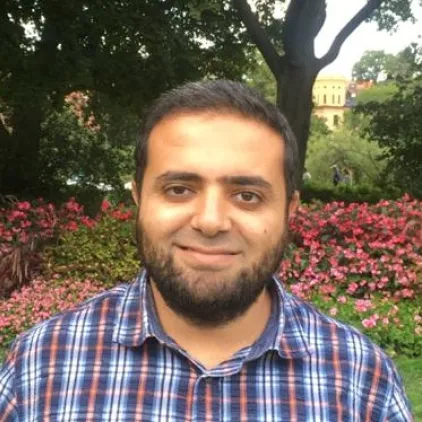
Prof. Dr. Wolfram Koepf is a retired (emeritus) professor in the Department of Mathematics at the University of Kassel, Germany, with a focus on Computer Algebra and Symbolic Computation . His research emphasizes algorithmic approaches to mathematical problems, particularly involving orthogonal polynomials, hypergeometric functions, and power series representations. He has contributed to both theoretical advancements and practical implementations, such as improvements in Maple software for formal power series handling. Key research areas include Algorithmic Integration , Cryptography (e.g., image encryption algorithms), and Algorithmic Summation . He has authored textbooks like Computer Algebra: An Algorithm-Oriented Introduction . His work frequently bridges pure mathematics and computational tools, with publications spanning symbolic computation, dynamical systems analysis, and educational aspects of mathematics.
Andrej Bogdanov is a Professor in the Department of Computer Science at the Weizmann Institute of Science's Faculty of Mathematics and Computer Science. With a prolific publication record spanning over two decades from 2002 to 2025, he has established himself as a leading researcher in theoretical computer science and cryptography. His research interests span multiple areas of theoretical computer science, with a particular focus on cryptography, computational complexity, pseudorandomness, and secret sharing. His work often bridges theoretical foundations with practical cryptographic applications, exploring the mathematical underpinnings of secure computation and cryptographic primitives. His research has evolved to address contemporary challenges in quantum computing security and machine learning evaluation. Bogdanov's publication record shows consistent contributions to top-tier conferences including FOCS, STOC, CRYPTO, TCC, and ITCS. His work demonstrates deep theoretical insights while maintaining relevance to practical cryptographic applications. Recent publications indicate expanding interests into quantum computing security and machine learning evaluation frameworks. Bogdanov has collaborated extensively with leading researchers in theoretical computer science, most notably with Alon Rosen (31 joint publications), as well as Siyao Guo, Yuval Ishai, and Chin Ho Lee. His collaborative work spans multiple institutions and reflects the interdisciplinary nature of modern theoretical computer science research. His academic contributions include foundational work on pseudorandom generators, secret sharing schemes, hardness amplification, and more recently, contributions to post-quantum cryptography and quantum security. His research has been supported by multiple grants that have enabled his team to explore the theoretical boundaries of cryptographic security.
Dr. Sen Zhao is a Professor at Chongqing University of Posts and Telecommunications, School of Computer Science, Department of Network Engineering. His research spans machine learning applications for network security, protocol analysis, and computational fluid dynamics with biomedical applications. His primary research interests include Machine Learning, Network Security, Protocol Analysis, Computational Fluid Dynamics, Fault Diagnosis, Optimization Algorithms, and Biomedical Engineering. Dr. Zhao has developed innovative approaches for binary protocol reversing using deep learning with knowledge-driven augmentation, multi-modal contrastive learning for vulnerability code representation, and reputation incentive schemes for edge tampering detection. Analysis of his recent publications (2021-2025) reveals a strong focus on applying deep learning techniques to network security challenges, with particular emphasis on protocol analysis, device fingerprinting, and secure query processing. His work bridges theoretical machine learning advances with practical security applications in networking and IoT environments. The interdisciplinary nature of his research is evident in his computational fluid dynamics work applied to biomedical problems. Dr. Zhao has mentored numerous students including Jiayuan Li, Zhen Wang, Bo Sun, Yi Zhao, and Haoyu Bin, who appear as first authors on significant publications. His collaborative network includes prominent researchers like Hongsong Zhu, Limin Sun, and Maya R. Gupta across multiple institutions.
Dr. Vladimir Sidorenko is a Senior Researcher at the Institute for Communications Engineering, Technical University of Munich (TUM), since January 2015, on leave from the Institute for Information Transmission Problems (IITP), Russian Academy of Sciences. His academic career includes roles at Ulm University (2003–2014) and the Computer Center of the Russian Health Ministry (1975–1983). He holds an M.S. in Electrical Engineering (1972) and a Ph.D. in Mathematics (1975) from the Moscow Institute for Physics and Technology. Research Interests: Coding theory, telecommunications, signal processing, cryptology, and applications. His work focuses on error correction, network security, quantum computing, and cryptographic protocols. He has authored over 140 papers in these areas. Recent Research Trends: Dr. Sidorenko’s recent work emphasizes quantum stabilizer codes decoding , network coding security , and PUF-based key agreement systems . His publications in 2023–2024 highlight advancements in polymorphic Gabidulin codes , data protection in networks , and minimal trellis structures for quantum codes . Awards: Recipient of the In-centi Award for Best Lecturing (Ulm University, 2003–2014). Collaborations: Invited researcher at institutions including Lund University (Sweden), Darmstadt TU (Germany), and Southwest Jiaotong University (China). Active in projects like Secure Key Agreement with PUFs and Concatenated Convolutional Codes .
Prof. Jan Pelzl is a Professor of Computer Security at Hamm-Lippstadt University of Applied Sciences. His research focuses on cryptography, cyber security, and embedded security, with a strong emphasis on post-quantum cryptography and industrial security solutions. He leads projects addressing long-term data protection under regulations like the NIS2 Directive and explores practical implementations for critical infrastructure. Key research areas include cryptographic algorithms (ECC, RSA, hash functions), key management systems, and security engineering for embedded systems. Collaborations with industry partners such as Robert Bosch GmbH and TÜV Rheinland Akademie highlight his work on industrial security and safety standards. His publications span over two decades, with recent focus on post-quantum cryptography applications, cryptographic protocols, and embedded security architectures. Pelzl’s contributions address both theoretical advancements and real-world implementations, particularly in automotive and IoT security contexts.
Amr Alanwar Abdelhafez is an Adjunct Professor of Computer Science at Constructor University Bremen’s School of Computer Science & Engineering. Previously, he held Assistant Professor roles at Technical University of Munich (Heilbronn Campus) and Jacobs University Bremen. His research focuses on Cyber-Physical Systems (CPS), emphasizing safety, privacy, and formal verification. He earned his Ph.D. from TU Munich’s Cyber-Physical Systems Group (2020), with prior roles including postdoc at KTH Royal Institute of Technology and research positions at UCLA and University of Waterloo. Education: Ph.D. in Cyber-Physical Systems, Technical University of Munich (2015–2020) M.Sc. in Engineering Science (Protection and Detection Hardware Trojan), Ain Shams University (2010–2013) B.Sc. in Computer and Control Systems Engineering, Ain Shams University (2005–2010) Research Interests: His work bridges theoretical foundations and practical applications in CPS, including privacy-preserving state estimation, resilient control systems, reachability analysis, and formal verification for autonomous systems. He develops methods to ensure safety and privacy in distributed systems, leveraging tools like zonotopes and homomorphic encryption. Key Contributions: Developed logical zonotopes for efficient representation of discrete systems. Advanced event-triggered control and diffusion strategies for distributed systems. Pioneered privacy-preserving techniques (e.g., CryptoImg, PrOLoc) using homomorphic encryption. Contributed to safety-critical applications like autonomous vehicle situational awareness and secure sensor networks. Awards & Recognition: Best Demonstration Paper Award at IPSN/CPSWeek 2017 Qualcomm Innovation Fellowship finalist (2017 and 2018) First place in TUM Graduate School Competition (2019) Grants & Industry Links: His work is supported by collaborations with institutions like IBM and JetBrains, and his open-source tools (e.g., Event-Triggered Diffusion Kalman Filters, Logical-Zonotope repository) are widely used in CPS research. Labs & Teams: Leads research on CPS safety and privacy at TU Munich, with active contributions to Constructor University’s CPS initiatives and GitHub repositories showcasing implementations of his methodologies.
Giulio Malavolta is an Assistant Professor in the Department of Computing Sciences at Bocconi University, where he teaches Computer Science II and Theoretical Computer Science. He maintains a part-time affiliation with the Max Planck Institute for Security and Privacy (MPI-SP) and is affiliated with the Bocconi Institute for Data Science and Analytics and CIFRA Lab. His research centers on mathematical cryptography with intersections in quantum computing, computer security, cryptocurrencies, and game theory. Recent work focuses on cryptographic schemes with advanced functionalities and real-world system applications, supported by grants from CASA cluster of excellence, European Research Council, and Lockheed Martin. His research group includes postdocs Damiano Abram, Pedro Branco, Valerio Cini, and PhD students Phillip Gajland, Alexander Kulpe, Tianwei Zhang. Alumni include Noemi Gläser (thesis: Practical Cryptography for Blockchains) and Ahmadreza Rahimi (thesis: Registration-Based Encryption). ERC starting grant Heinz-Maier Leibnitz prize Staedtler-Stiftung dissertation prize He serves on program committees for major conferences (EUROCRYPT, CRYPTO, etc.), co-organized workshops including Kyoto Quantum Cryptography and IACR Summer School on Post-Quantum Cryptography, and recently hosted a seminar on the Sum of Squares method dedicated to Luca Trevisan.
Paarijaat Aditya is a faculty member at the Max Planck Institute for Software Systems (MPI-SWS) , focusing on interdisciplinary research at the intersection of theoretical computer science and applied systems. Their work spans algorithms, programming languages, security, and distributed systems , with a particular emphasis on serverless computing, federated learning, and privacy-preserving urban sensing. Research Areas : Machine Learning Security (e.g., model hijacking, federated learning) Serverless Computing (e.g., GPU sharing, high-performance frameworks) Privacy Engineering (e.g., urban sensing, image capture, mobile compliance) Distributed Systems (e.g., NFV, peer-assisted content delivery) Their publications reflect a trajectory of advancing scalable AI training, secure collaborative systems, and privacy-compliant infrastructures. Recent works address challenges in public cloud adaptability, while earlier contributions explore mobile privacy risks and secure resource management.
Andreas Schmidt is affiliated with the University of Kassel, Germany, and holds a PhD in Computer Science from the University of Koblenz and Landau (2022). His research spans interdisciplinary domains including artificial intelligence, business management, and neuroscience. He has published extensively in journals like NeuroImage, SIAM Journal on Scientific Computing, and Remote Sensing of Environment, demonstrating expertise in computational methods, neural networks, and applied data science. Key research themes include propagation network modeling, home-office productivity analysis, and autonomous driving safety frameworks. His work integrates technical innovation with practical applications, such as optimizing district heating systems and advancing neurovascular coupling studies in primates. While no formal awards are listed, his contributions reflect impactful interdisciplinary collaboration across computer science, environmental science, and medical imaging.
Thien Huynh-The is a Professor in the Department of Electrical Engineering at Chungnam National University's College of Engineering, where they lead research in wireless communications, deep learning applications, and IoT systems. With over 150 publications spanning from 2014 to 2025, their work demonstrates sustained academic productivity with significant contributions to 5G/6G networks, spectrum sensing, and federated learning architectures. Research interests focus on the intersection of deep learning and wireless communications, particularly in automatic modulation classification, semantic segmentation for remote sensing, and energy-efficient communication protocols. Their innovative approaches include developing specialized CNN architectures like SRNet for spectrum sensing and CosPoint Transformer for 3D semantic segmentation, addressing critical challenges in 5G/6G systems and metaverse infrastructure. Recent work explores STAR-RIS-aided networks, waveform classification for integrated radar-communication systems, and privacy-preserving federated learning for healthcare applications. Analysis of publication trends reveals increasing focus on metaverse technologies and 6G communications since 2022, with significant contributions to IEEE Communications Surveys & Tutorials and IEEE Internet of Things Journal. Key research areas include federated learning optimization, channel estimation techniques using attention networks, and semantic communication frameworks for edge-assisted metaverse applications. Collaborative research spans multiple institutions with frequent co-authorship with Dong-Seong Kim, Quoc-Viet Pham, and Won-Joo Hwang. Current projects address critical challenges in wireless power transfer, spectrum efficiency, and computational resource allocation in next-generation networks.
Dr. Xin Lin is a Professor at the School of Computer Science and Technology, University of Science and Technology of China in Hefei. With an extensive publication record spanning computer vision, machine learning, and artificial intelligence, Dr. Lin leads a research group focused on solving challenging problems in image processing, robotics, and wireless communications. His work bridges theoretical advancements with practical applications across healthcare, autonomous systems, and industrial manufacturing. Dr. Lin's research interests encompass computer vision, machine learning, image processing, and artificial intelligence, with particular expertise in image restoration, 3D object detection, and human pose estimation. His laboratory develops innovative approaches to handle multiple image degradations simultaneously and create lightweight, efficient vision systems suitable for real-world deployment. The research demonstrates strong interdisciplinary connections, applying computer vision techniques to medical imaging, satellite communications, and industrial IoT applications. Analysis of Dr. Lin's recent publications reveals a strong focus on multi-task learning approaches that address multiple image degradation problems simultaneously. His work shows increasing sophistication in handling complex real-world scenarios, from low-light conditions to rain interference, while maintaining computational efficiency. The research trajectory demonstrates a clear path from fundamental image processing techniques to practical applications in autonomous driving, healthcare, and industrial systems. Dr. Lin has received recognition for his contributions to the field through numerous publications in top-tier venues including CVPR, IEEE Transactions, and ACL. His work on image restoration, particularly the Dual Degradation Representation framework, has gained significant attention in the computer vision community. Dr. Lin actively supervises graduate students and collaborates with researchers worldwide. His laboratory works on cutting-edge projects involving digital twins for manufacturing, satellite communications, and medical imaging applications. Current research directions include developing more robust and efficient models for real-world deployment scenarios, with particular attention to resource-constrained environments.
Yatish Yatish is a doctoral researcher at the Bio- and Nano-Photonics Lab, University of Freiburg. He holds an Integrated Masters in Physical Sciences from the Indian Institute of Science Education and Research Kolkata (2020). His research focuses on optical physics, particularly the spin-orbit interaction of light and advanced microscopy techniques like Bessel light-sheet microscopy. Currently, he is supported by Germany's excellence cluster CIBSS. Education: Integrated Masters in Physical Sciences, IISER Kolkata (2020) Research Interests: Yatish explores topics such as structured light, optical tweezers, and biophotonics applications. His work bridges fundamental optics with practical imaging and encryption technologies. Lab Affiliation: Bio- and Nano-Photonics Lab, University of Freiburg.
Samuel Kounev is a Professor and Chairholder of the Chair of Software Engineering (Computer Science II) at the University of Würzburg's Department of Computer Science. He has held leadership roles, including Faculty Dean (2019-2021) and Head of the Department of Computer Science (2016-2017). His research focuses on software engineering, performance engineering, and autonomic computing, with contributions to cloud computing, cybersecurity, and machine learning. He actively participates in international conferences, including co-chairing the ACM/SPEC International Conference on Performance Engineering (ICPE) and leading initiatives like the DFG Research Unit SOS and bidt Consortium Project ROOT. His work emphasizes real-time systems, benchmarking, and interdisciplinary applications in earth observation and healthcare. Education: Not explicitly listed in provided text. Research Interests: Software Engineering, Performance Engineering, Autonomic Computing, Cloud Computing, Cybersecurity, Machine Learning, High-Performance Computing. His recent articles explore topics like homomorphic encryption, time series forecasting, and AI in healthcare. He is an editorial board member of journals like Elsevier's Performance Evaluation and co-founder of the ICPE and ACSOS conferences. Awards and recognitions are listed on separate pages, but his leadership roles and extensive conference involvement highlight his academic impact.
Professor Kristina Kelber is a faculty member at HTW Dresden (Hochschule für Technik und Wirtschaft Dresden), holding the Chair of Communications Engineering within the Faculty of Electrical Engineering. She is also a member of the Faculty Council, contributing to academic governance at the institution. Her research focuses on signal processing , digital image processing , and the analysis and design of nonlinear dynamic systems . Her work spans theoretical aspects of communications engineering and practical applications in diverse fields including music technology for accessibility applications, bird song identification, film restoration, and visitor center information systems. Her publication record demonstrates consistent expertise from the 1990s to present, with evolving applications from foundational work in chaos-based encryption systems to more recent applied research with social impact. Professor Kelber has secured research funding for projects such as "sprechAktiv," a child-friendly interactive language learning media initiative developed in cooperation with Linguwerk GmbH, Dresden, and funded by the BMBF's SME innovative program from 2013-2015. Her research methodology combines theoretical analysis with practical implementation, as evidenced by publications ranging from mathematical analysis of chaotic systems to applied projects in music technology and image processing. Member of the Faculty Council at HTW Dresden Associated with the Communication Technology laboratory Active researcher with publications spanning over two decades Professor Kelber teaches courses in systems theory, signals and systems, audio and video technology, signal coding, and digital image processing across multiple degree programs. She offers both traditional classroom instruction and distance learning options through the Bildungsportal Sachsen (OPAL) platform, demonstrating adaptability to different educational delivery methods and commitment to accessible education.
Professor Christof Paar is a Research Professor at Ruhr University Bochum, Faculty of Computer Science, where he leads the Embedded Security group. His work bridges theoretical cryptography with practical implementation security for embedded systems, with a strong emphasis on real-world security challenges. Professor Paar's research focuses on multiple critical areas of security including hardware security, side-channel attacks, hardware trojans, physical-layer security, wireless security, and reverse engineering. His work is characterized by a strong practical orientation, often demonstrating real-world vulnerabilities and developing practical countermeasures. He has made significant contributions to understanding and improving the security of cryptographic implementations in resource-constrained environments. His publication record shows a consistent output of high-quality research, with particular emphasis in recent years on physical-layer security, wireless security, hardware reverse engineering, and hardware trojan detection. His work spans both theoretical contributions to cryptographic engineering and practical demonstrations of security vulnerabilities in real systems. Professor Paar's educational impact is substantial, having co-authored the widely used textbook 'Understanding Cryptography' and offering numerous courses at both undergraduate and graduate levels. His group actively engages students through Bachelor and Master projects, providing hands-on experience with cutting-edge security research topics. His lab, the Embedded Security group, appears to maintain an active research program with multiple ongoing projects in hardware and embedded systems security. The group collaborates internationally and publishes regularly in top security venues, maintaining a strong presence in the cryptographic engineering community.