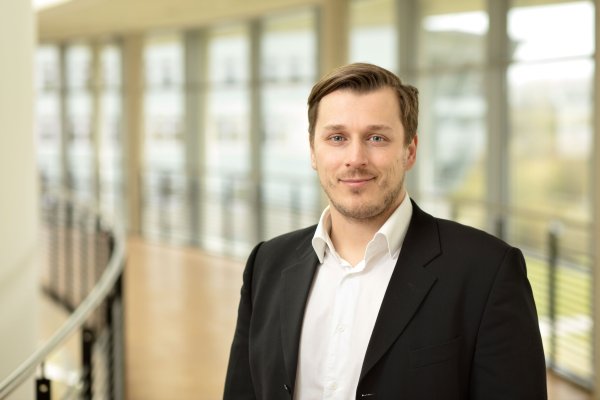
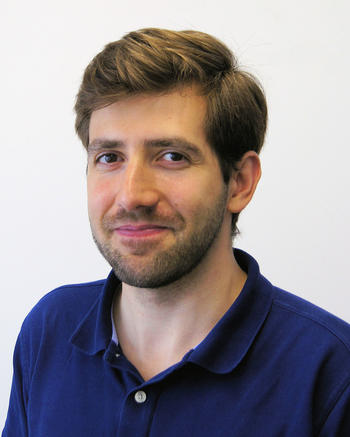
Dr. Giang T. Nguyen is an academic researcher affiliated with Dresden University of Technology (Germany), specializing in advanced networking technologies. His primary affiliation is with the College of Computer Science and the Department of Networking and Communication Systems. He collaborates extensively with Prof. Frank H. P. Fitzek and other researchers on cutting-edge projects. Research Interests: Giang's work focuses on Network Functions Virtualization (NFV) , Edge Computing , Time-Sensitive Networking (TSN) , 5G/6G Technologies , and In-Network Computing (COIN) . He explores applications in industrial automation, tactile internet, and immersive media delivery, with a strong emphasis on latency reduction and network reliability. Publications: His recent work includes advancements in programmable network coding, TSN testbed development, and latency-optimized architectures for XR and IoT systems. Over 100+ publications since 2013 reflect his contributions to edge computing frameworks, network simulation tools (e.g., ns-3, OMNeT++), and collaborative SLAM systems. Key Projects: He leads initiatives like the TSN-FlexTest measurement testbed and the NET Playground heterogeneous network lab. His research bridges theoretical networking concepts with practical implementations in industrial robotics and emergency response systems.
Junaid Shuja is a researcher with significant contributions to Mobile Edge Computing , Cloud Environments , and IoT Systems . Collaborating with scholars like Kashif Bilal , Abdullah Gani , and Ehzaz Mustafa , his work spans computation offloading, resource allocation, and security frameworks. Research Highlights 2017: Analysis of Vector Code Offloading in Heterogeneous Architectures 2021: Survey on Machine Learning for Edge Caching 2023: Reinforcement Learning for Computation Offloading in Vehicular Networks 2024: Blockchain Applications in Land Lease Systems and Employee Transfers 2025: Deep Reinforcement Learning for Resource Optimization His recent work focuses on Deep Learning and Blockchain for latency-sensitive applications in IoT and vehicular networks, published in IEEE Access , Cluster Computing , and Telecommunication Systems . Key co-authors include Faisal Rehman , Abdallah Namoun , and Muhammad Bilal .
Laurent Réveillère is a researcher affiliated with the University of Bordeaux, focusing on distributed systems, blockchain technologies, and middleware. His work explores fault tolerance, secure communication, and protocol design, with significant contributions to peer sampling, network virtualization, and hardware-assisted security mechanisms.
Prof. Dr. Gregor Leander is a Professor and Head of the Symmetric Cryptography chair at Ruhr-University Bochum, Faculty of Computer Science. He is a leading researcher in the field of symmetric cryptography with significant contributions to both theoretical foundations and practical applications of cryptographic primitives. Professor Leander has an extensive background in mathematics with a PhD focused on theoretical aspects of Boolean functions. His research spans the entire spectrum of symmetric cryptography, from fundamental theoretical questions to practical implementations deployed in real-world applications. He has been instrumental in designing ciphers that have seen widespread deployment, as well as analyzing and improving existing cryptographic standards. Created the symmetric cryptography group at Ruhr University Bochum in 2015 Founder and managing editor of the IACR Transaction of Symmetric Cryptography journal Active participant in numerous prestigious conferences as program co-chair, organizer, and invited speaker Professor Leander's research interests primarily focus on symmetric cryptography, including the design and analysis of block ciphers, stream ciphers, and cryptographic hash functions. His work bridges the gap between theoretical cryptography and practical security requirements, with particular emphasis on lightweight cryptography for constrained environments. He has made significant contributions to understanding the mathematical foundations of cryptographic primitives while ensuring their practical applicability in real-world systems. His recent publications demonstrate a continued focus on foundational aspects of symmetric cryptography while expanding into post-quantum cryptography and the intersection of symmetric and asymmetric cryptographic techniques. The research output shows a consistent pattern of addressing both theoretical challenges and practical implementation concerns, with many contributions becoming international standards. Scientific Awards and Recognition 2022: SKINNY is ISO standard (ISO/IEC 18033-7) as a Tweakable Block Cipher 2020: IACR CRYPTO 2020, Best Paper Award and invitation to Journal of Cryptology 2015: Heisenberg Professorship, a prestigious funding line for upcoming leaders by the DFG 2014: IACR FSE 2014, Best Paper Award and invitation to Journal of Cryptology 2010: PRESENT is ISO standard (ISO/IEC 29192-2) for Lightweight Cryptography 2010: German IT Security Award (worth 100kEUR), first place 2011: Erdos Number 2 Professor Leander has successfully advised numerous PhD students who have gone on to make their own contributions to the field of cryptography. His group at Ruhr-University Bochum has received significant research funding, including the prestigious Heisenberg Professorship from the DFG. He has been actively involved in organizing major cryptographic conferences and workshops, contributing to the advancement of the field through community building and knowledge sharing. The symmetric cryptography group at Ruhr-University Bochum, which Professor Leander founded in 2015, has become a renowned center for cryptographic research. The group maintains strong collaborations with other leading research institutions worldwide and regularly hosts visiting researchers. Through the IACR Transaction of Symmetric Cryptography journal, which Professor Leander founded, the group has also established a significant platform for high-quality research publication in the field.
Sebastian Gajek serves as a Professor at Flensburg University of Applied Sciences within the Faculty of Information and Communication. He holds the specific appointment of Professor for Internet Technologies and IT Security, teaching in the Applied Computer Science program while leading critical initiatives including the FENTEC (Functional Encryption Technologies) project as primary contact person. His research spans Internet Technologies and IT Security with concentrated expertise in Functional Encryption through the FENTEC project. He actively develops Confidential AI systems that enable artificial intelligence computations on encrypted data without decryption, while simultaneously advancing applications in Data Science and Artificial Intelligence. These interconnected research domains reflect his commitment to privacy-preserving technologies in networked environments. No scientific awards were documented in the source material. Similarly, no information regarding graduate student advising or external research grants was provided. Professor Gajek maintains active affiliations with the FENTEC research team and Confidential AI development group. Contact is available via email sebastian.gajek@hs-flensburg.de, telephone +49 461 805-1737, or in-person at room D315.
Christian Rathgeb is a professor at Darmstadt University of Applied Sciences , affiliated with the da/sec Biometrics and Internet Security Research Group . His work focuses on biometric security, template protection, face recognition, and synthetic data applications. Research interests include Privacy-Enhancing Technologies 3D-Aware Face Image Quality Assessment Morphing Attack Detection Demographic Bias Mitigation Contactless Biometric Modalities His recent publications emphasize synthetic data generation, multi-biometric fusion, and forensic applications. Collaborations span institutions like TU Darmstadt, École Polytechnique Fédérale de Lausanne, and University of Vigo. Key projects involve FRCSyn (Face Recognition with Synthetic Data) and MCLFIQ (Mobile Contactless Fingerprint Quality). No explicit awards or student advisement details are provided in available data.
Tudor Soroceanu is a Researcher at the Fraunhofer AISEC Institute, affiliated with the Department of Mathematics and Computer Science under the Information Security group. His work focuses on Post-Quantum Cryptography , Physically Unclonable Functions (PUFs) , and Efficient Cryptographic Algorithms , with a particular emphasis on security analysis and hybrid encryption schemes. He earned both his Bachelor's and Master's degrees at the Free University of Berlin , where his theses addressed security analysis of PUFs and computational geometry algorithms. Since 2016, he has contributed to projects like SecureFog and the ID Management group , investigating vulnerabilities in cryptographic hardware and machine learning resistance. 2023: Published a comprehensive survey on public-key multiple encryption schemes, analyzing their security and efficiency in quantum computing contexts. 2019: Co-authored a study in CARDIS breaking Lightweight Secure PUFs through novel ML-based attacks. 2017: Analyzed XOR Arbiter PUF security in PROOFS , demonstrating exponential attacker effort increases through design principles. His teaching includes exercises in Cryptanalysis of Symmetric/Asymmetric Methods at the Free University of Berlin. Current research explores quantum-resistant cryptographic primitives and their integration into practical systems.
Tal Malkin is a Professor at Columbia University's Department of Computer Science, School of Engineering and Applied Science. Her work spans cryptography, secure computation, and data privacy, with a focus on non-malleable codes, topology-hiding communication, and privacy-preserving protocols. 2025: Peony Onion Encryption for asynchronous anonymity 2024: Structural lower bounds for pseudorandom functions 2022: XSPIR for Ring-LWE-based private retrieval Research themes include: Cryptographic Foundations: Non-malleability, garbling circuits, and zero-knowledge protocols Privacy-Preserving Systems: Differential privacy, secure multi-party computation, and database anonymity Applied Security: Biometric encryption, model watermarking, and polymer-based unclonable functions Her 15 most recent publications analyze anonymity in dynamic networks, robust watermarks for AI models, and tamper-resilient encryption. Keywords span computer science, cryptography, and machine learning. Sub-fields include secure computation, lattice-based cryptography, and function-private protocols.
Christoph Frisch is a researcher at the Chair of Information Security at the Technical University of Munich , focusing on Physical Unclonable Functions (PUFs) and their applications in hardware security. His work explores the intersection of coding theory, information theory, and secure implementation of cryptographic primitives. Current research emphasis on entropy-area trade-offs in quantization schemes for PUFs Contributions to reliability enhancement of security primitives and min-entropy estimation Active in hardware reverse engineering and side-channel attack countermeasures His publications reveal a strong focus on IoT security and post-quantum cryptography , with recent work addressing memristor-based PUFs and polar decoder implementations. No scientific awards are mentioned in the provided text. Teaching activities include delivering Lecture Series on System Security and Applied Cryptology courses since 2017, indicating a dual role in research and education.
Thomas Prantl is affiliated with the Chair of Computer Science II (Software Engineering) at the University of Würzburg, located in Würzburg, Germany. He contributes to both research and teaching within the Department of Computer Science, focusing on cybersecurity, homomorphic encryption, IoT security, and machine learning applications. His work integrates technical innovation with educational methodologies, such as designing lectures on advanced cryptographic techniques. Research Interests: His primary research areas include homomorphic encryption schemes, secure group communication, performance evaluation of cryptographic systems, and applying machine learning to remote sensing and medical data. He actively explores interdisciplinary topics like blockchain technology and IoT security challenges. Teaching and Mentorship: Prantl coordinates exercises for the bachelor’s course 'Softwaretechnik' and supervises students in software engineering projects (Softwarepraktikum). He also contributes to curriculum development through seminar topic provision and student mentorship. Recent Contributions: Key publications in 2025 focus on homomorphic encryption pedagogy, privacy-preserving CNN applications in medicine, and CKKS cryptosystem optimizations. Earlier work (2024) addressed earth observation product evaluation using CNNs and security analysis of attribute-based encryption schemes. Professional Engagement: He has served as Web Chair for ACM/SPEC ICPE 2022, PC member for Cyber Resilience and Antifragility (CyRA) 2021, and Publicity Chair for Self-Aware Computing (SEAC) 2020. His academic qualifications include a Master of Computer Science and teaching certification in Physics/Computer Science.
Michael Tempelmeier is a researcher at the Chair of Information Security, Technical University of Munich (TUM), specializing in hardware security and cryptographic implementations. His work focuses on authenticated encryption, lightweight cryptography (NIST LWC/CAESAR), and the development of evaluation frameworks for cryptographic hardware. He actively contributes to teaching, holding the Zertifikat Hochschullehre der Bayerischen Universitäten and leading courses like Angewandte Kryptologie and SmartCard Projektpraktikum . Tempelmeier's research centers on optimizing and securing cryptographic implementations for embedded systems. Key areas include: Design of hardware APIs for lightweight cryptography Side-channel and fault-attack countermeasures Trusted hardware gateways for IoT devices Efficient benchmarking methodologies for cryptographic hardware His publications demonstrate consistent focus on hardware vulnerabilities, cryptographic efficiency, and standardized evaluation frameworks. He maintains active involvement in tool development (e.g., MaskVer for detecting flawed masking implementations) and contributes to major projects like the Hardware API for Lightweight Cryptography. No awards or direct student supervision are mentioned in the provided text.
Thomas Schneider is a Professor at Darmstadt University of Technology (TU Darmstadt) in the Department of Computer Science, with strong affiliations to the European Center for Security and Privacy by Design in Germany. His academic journey began with a PhD from Ruhr-Universität Bochum's Horst Görtz Institute for IT-Security in 2012, establishing his foundation in security research. Dr. Schneider's research spans multiple critical areas in computer security and privacy, with particular emphasis on secure multi-party computation, privacy-preserving technologies, cryptography, and federated learning. His work bridges theoretical cryptographic foundations with practical applications in real-world systems. He has made significant contributions to encrypted search, privacy-preserving machine learning, mobile security, and oblivious database systems. Analysis of his recent publications reveals a strong trend toward practical implementations of privacy-enhancing technologies that maintain both security guarantees and computational efficiency. His research consistently addresses the tension between privacy protection and system performance, developing innovative protocols that minimize overhead while maintaining strong security properties. Key themes include secure computation frameworks, leakage-resilient protocols, and privacy-preserving analytics for sensitive domains like healthcare and government data processing. Dr. Schneider actively collaborates with researchers across multiple institutions, contributing to the advancement of cryptographic techniques that have practical relevance in today's data-driven world. His work demonstrates a consistent focus on developing solutions that are not only theoretically sound but also deployable in real systems.
Dr. Shahram Rasoolzadeh is a researcher in symmetric cryptography at Ruhr University Bochum's Faculty of Computer Science, specifically within the Chair for Symmetric Cryptography. He previously held post-doctoral positions at Radboud University and Ruhr University Bochum, and conducted PhD research at the HGI institute. His expertise spans cryptographic primitive design, Boolean function analysis, and embedded security. Education: PhD in Electrical Engineering (Symmetric Cryptography & Embedded Security), Ruhr University Bochum (2020) M.Sc. in Electrical Engineering (Cryptography), Sharif University of Technology (2015) B.Sc. in Electrical Engineering (Communication Systems), University of Tabriz (2013) His research focuses on cryptanalysis of symmetric ciphers, Boolean function applications in cryptography, and low-latency cryptographic designs. Notable contributions include the cryptanalysis of HALFLOOP and the design of lightweight block ciphers like CRAFT and SPEEDY. He has received the Best Paper Award at FSE/ToSC 2024 and Intel's Outstanding Research Award 2022. His work often emphasizes practical security in constrained environments and collaborative industry partnerships. Dr. Rasoolzadeh co-organizes significant events like the Spring School on Symmetric Cryptography and contributes to program committees for conferences like EuroCrypt and ASIACRYPT. He has taught courses on symmetric cryptanalysis and calculus/probability theory.
Aleksander Slominski is a prominent researcher in distributed systems and cloud computing, with a focus on serverless architectures, grid computing, and workflow management. His work spans over two decades, contributing to foundational frameworks like Apache Airavata and Triggerflow, as well as influential studies on security mechanisms and performance analysis in distributed environments. He has collaborated extensively with institutions like Indiana University and IBM, addressing challenges in multi-tenant cloud services and hybrid computing models. Key contributions include pioneering serverless computing research, defining scalable cloud service architectures, and advancing the integration of machine learning models into serverless platforms. Recent work explores edge computing benchmarking and the application of large language models in scientific knowledge organization. Research interests include: serverless computing, distributed systems, workflow orchestration, API ecosystems, and future computing trends. Collaborations with NFDI initiatives highlight his commitment to open science and FAIR principles, leveraging knowledge graphs for sustainable research practices.
Zhu Han is a Professor at the University of Houston, TX, USA, with a PhD from the University of Maryland, College Park. He is affiliated with the Chinese Academy of Sciences' Aerospace Information Research Institute in Beijing, China. His research spans wireless networks, 6G communication, and machine learning applications in telecommunications. Key areas: Semantic communication, UAV networks, IoT security, quantum networking. Recent publications focus on federated learning, optical IRS for VLC, and resource allocation in LEO satellite systems. His work integrates AI with network security and edge computing. He collaborates extensively on topics like reconfigurable intelligent surfaces, quantum-assisted optimization, and privacy-preserving protocols. No specific awards or student details are provided in the dataset.