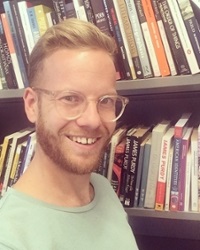
Prof. Dr. Arwen Deuss is a full Professor at the Faculty of Geosciences, Utrecht University , specializing in Seismology . Her research focuses on mapping Earth's deep interior using global seismology, with particular emphasis on mantle discontinuities, core structure, and whole Earth oscillations. She integrates seismological data with mineral physics, geodynamic modeling, and geochemistry to understand planetary evolution. Key research areas: Earth's Deep Interior, Global Seismology, Mantle Discontinuities, Inner Core Anisotropy Teaches courses in Theoretical Seismology, Earth Systems, and Planetary Interior Structure Developed open-source tools like FrosPy for normal mode analysis Her recent work explores 3D mantle attenuation, tilted transverse isotropy in the inner core, and seismic wave coupling. She leads projects connecting seismic tomography with geodynamic processes and maintains active collaborations in international seismological research.
Christian Bick is an Associate Professor at the Department of Mathematics, Vrije Universiteit Amsterdam (VU Amsterdam). He holds visiting roles as a Visiting Research Fellow at the University of Oxford's Mathematical Institute, Honorary Associate Professor at the University of Exeter, and Visiting Fellow at the Institute for Advanced Study (TUM-IAS), Technische Universität München. His research focuses on dynamical systems and applications, particularly in network dynamics, coupled oscillator networks, and higher-order interactions. He has received prestigious awards such as the Marie Curie Intra-European Fellowship (2015) and the Hans Fischer Fellowship (2019). Education and Career: Bick obtained his PhD from Georg-August-Universität Göttingen (2012) and held postdoctoral positions at Rice University and the University of Exeter. His work bridges theoretical and applied mathematics, with interdisciplinary collaborations in neuroscience, physics, and engineering. Research Interests: Bick explores dynamics of coupled oscillator networks, asynchronous networks, and higher-order interactions. His recent work includes studies on heteroclinic networks, chimera states, and synchronization phenomena in complex systems. He leads projects like BeyondTheEdge (Marie Skłodowska–Curie Doctoral Network) and has contributed to grants such as the EPSRC New Investigator Award (2020–2023). Teaching: He teaches Dynamical Systems at VU Amsterdam and has lectured on Stochastic Processes, Mathematical Methods, and Dynamical Systems and Chaos at the University of Exeter and Oxford. Awards and Grants: His honors include the DAAD Doktorandenstipendien (2010, 2012) and Fulbright support (2008). Active grants include projects on higher-order networks and neurodegenerative disease modeling.
Dr. Eiko Fried is an Associate Professor at Leiden University's Faculty of Social and Behavioural Sciences, where he works at the intersection of clinical psychology, psychiatry, epidemiology, methodology, and complexity science. His research focuses on improving psychological science through open science practices and innovative measurement approaches. PhD in clinical psychology, Free University of Berlin Postdoctoral training at KU Leuven and University of Amsterdam Promoted to Associate Professor at Leiden University in 2021 Key research areas include: Psychopathology measurement and classification Network analysis in mental health research Ecological momentary assessment (EMA) methodology Open science advocacy and implementation Dynamic systems modeling in psychology Transdiagnostic approaches to mental disorders Recent publications demonstrate expertise in: Symptom network analysis across disorders Improving depression measurement standards Transdiagnostic assessment protocols Mental health data integration challenges Psychological theory construction Methodological innovations in clinical research
Prof. Douglas Sheil is a Chairholder in Forest Ecology and Forest Management at Wageningen University & Research. He holds a MA in Natural Sciences from Cambridge and an MSc in Forestry from Oxford. His career includes roles at the University of Oxford, CIFOR (Indonesia), the Institute for Tropical Forest Conservation in Uganda, and the Norwegian University of Life Sciences (NMBU). His research focuses on tropical forest ecology, biodiversity conservation, and human-forest interactions, with over 200 publications. He co-authored the influential textbook Tropical Rain Forests: Ecology, Diversity, and Conservation (2010). Awards include the Biotropica Prize (2004) and the Queen’s Award for Forestry (2015). Education: MA (Natural Sciences, Cambridge), MSc (Forestry, Oxford) Key Roles: Director of Institute for Tropical Forest Conservation (2008–2012), Professor at NMBU (2013–2020) Research Interests: Tropical forest dynamics, climate change impacts, conservation strategies, and the socio-ecological dimensions of forest management. His work spans field studies in Africa, Southeast Asia, and Oceania, emphasizing interdisciplinary approaches to address deforestation, biodiversity loss, and sustainable land use. Recent Trends in Articles: Focus on mycorrhizal networks, oil palm impacts, lightning disturbance, and mammal population responses to human activity. He explores mechanisms linking forest structure to ecosystem services, such as carbon sequestration and water regulation, often integrating remote sensing and global datasets. Awards: Biotropica Prize, Queen’s Award for Forestry Grants/Projects: Studies on lightning effects in African forests, camera trap mammal surveys, and policy analyses for vegetable oil sustainability. Labs/Teams: Leads interdisciplinary groups at Wageningen, collaborating with CIFOR and international networks. Active in IUCN committees to translate science into conservation policy.
Nena Lejko serves as a Lecturer in the Department of Social Sciences at University College Groningen, University of Groningen. Her research focuses on neurocognitive mechanisms in psychiatric and neurodegenerative conditions, with particular expertise in neuroimaging techniques. Her primary research interests include Mild Cognitive Impairment , Functional Connectivity analysis, Dissociative Disorders , and application of Electroencephalography and fMRI in clinical populations. Current work examines biomarkers for acute dissociation and planning deficits in cognitive impairment. Lejko's publication portfolio demonstrates strong trends in neuroimaging methodology applied to cognitive decline, with significant emphasis on meta-analytic approaches and translational neuroscience. Her 2020 meta-analysis on alpha power connectivity has garnered substantial attention with 48 Scopus citations and Wikipedia references. Research collaborations span multiple institutions, with notable partnerships at University Medical Center Groningen. Her work shows consistent funding support evidenced by open-access publication status and research metrics indicating significant real-world impact through news coverage and social media engagement.
Dr. Koen Haak is an Associate Professor at Tilburg University's Department of Cognitive Science and Artificial Intelligence within the Tilburg School of Humanities and Digital Sciences. His research focuses on vision science, neuroimaging, and AI applications in healthcare. He leads projects like 'Bridging the gap between visual function and functional vision' (NWO Vidi) and 'Neuroimaging biomarkers for predicting vision training success after stroke' (NWO KIC). He collaborates with institutions such as the Donders Institute and the Lifelong Vision Consortium. His work contributes to UN SDGs related to health and innovation. Research interests include analyzing brain imaging data to predict functional vision outcomes, developing machine learning tools for clinical trials, and studying visual cortex plasticity. He has authored 51+ publications, including papers in Nature Neuroscience and Translational Psychiatry . Awards include NWO Veni (2016) and Vidi (2020) fellowships. He teaches courses on computer vision and AI at Tilburg University. Current projects explore predictive analytics for eye treatments, thalamocortical connectivity, and sleep disruption effects in maritime pilots. His lab develops methods like connectopic mapping and deep learning for MRI analysis, with applications in Alzheimer's, autism, and psychiatric disorders.
Dr. Ben Harvey is an Associate Professor (with Ius Promovendi) in the Perception Group of the Department of Experimental Psychology at Utrecht University, Netherlands, within the Faculty of Social and Behavioural Sciences. He is based at the Helmholtz Institute and can be contacted at b.m.harvey@uu.nl. Harvey completed his DPhil at Oxford University with Professor Oliver Braddick in 2009, followed by postdoctoral work with Professor Serge Dumoulin at Utrecht. In 2015, he moved to Coimbra on a starter grant from the Portuguese Foundation for Science and Technology before returning to Utrecht in 2016 as an Assistant Professor. He was promoted to Associate Professor in 2019 and has led his own research group since 2015. Harvey's research focuses on characterizing sensory and cognitive systems in the human brain, particularly neural responses and computations within these systems. His work combines cutting-edge neuroimaging approaches with computational modeling and behavioral experiments. Initially studying the early visual system as a model of neural processing, he extended invasive animal neurophysiological approaches to non-invasive human neuroimaging. His recent work investigates neural responses underlying cognition in the human association cortex, examining how visual space and number processing differs between cultures and in clinical disorders. His fingerprint reveals expertise in Functional Magnetic Resonance Imaging, Numerosity, Receptive Field, Visual Cortex, Population Receptive Field, Nerve Potential, Early Visual Cortex, and Topographic Maps. His publication record demonstrates significant impact, with works like 'Topographic representation of numerosity in the human parietal cortex' (2013) receiving over 360 citations. His research spans visual neuroscience, with emphasis on how the brain processes visual information, attention mechanisms, and numerical cognition, revealing generalized quantity processing systems in the human brain. Award for highest-rated abstract (2013) Brain Centre Rudolph Magnus Research Award (Best Paper of the Year) (2014) Causal link between cortical organization and conscious perception: human fMRI and electrophysiology (2009, 2010) Harvey has been actively engaged in knowledge dissemination, with multiple invited talks at institutions including INSERM in Paris (2016) and the University of Parma (2015). His research has received significant media attention, with interviews on National Public Radio (NPR) USA, Livescience.com, and Science Magazine in 2013. Beyond academic publications, he writes popular science articles exploring the relationship between visual neuroscience and visual arts. As part of the Helmholtz Institute Experimental Psychology research program, Harvey collaborates widely to investigate visual space and number processing across different populations, contributing to our understanding of how these cognitive functions vary between cultures and in clinical disorders.
Jan Draisma is a full professor of Mathematics at the University of Bern and a part-time full professor of Applied Algebra and Geometry at Eindhoven University of Technology (TU/e), where he is affiliated with the Department of Mathematics and Computer Science, specifically in Discrete Algebra and Geometry and Coding Theory and Cryptology. He obtained his Master's and Ph.D. degrees from TU/e cum laude and held a postdoctoral position at the University of Basel (2002–2005). He returned to TU/e as an assistant professor, later advancing to associate professor (2011–2016), and served as a part-time full professor at VU Amsterdam (2015–2016). His research focuses on the interplay between combinatorics, statistics, and algebraic geometry. Key areas include tropical geometry, algebraic statistics, symmetric systems of polynomial equations in infinitely many variables, and representation stability. His work often explores the structure of infinite-dimensional algebraic objects and their finite approximations. The most recent publications highlight trends in polynomial functors, topological Noetherianity, amoebas of linear spaces, and the geometry of tensor representations. These works reflect a deep integration of algebraic geometry with combinatorics and category theory, emphasizing stabilization phenomena and symmetry in algebraic structures. NWO Vici Award: Stabilisation in Algebra and Geometry (2015) NWO Vidi Award: Finite thanks to symmetry (2010) Draisma has received significant research funding, including the NWO Vidi and Vici grants, and two NWO Free Competition grants (2008, 2012). He has supervised 16 students and is actively involved in the academic community as an associate editor for Experimental Mathematics, SIAM Journal on Applied Algebra and Geometry, and Linear and Multilinear Algebra. He has held leadership roles in major conferences such as MEGA 2015 and SIAM AG 19. He is affiliated with the research groups in Discrete Algebra and Geometry and Coding Theory and Cryptology at TU/e and leads research activities centered on algebraic methods in discrete mathematics and statistics.
Eveline Verhulst is an Associate Professor at the Laboratory of Entomology within Wageningen University & Research, affiliated with the PE&RC (Production Ecology & Resource Conservation) research school. Her work focuses on evolutionary genetics of insects, particularly parasitoid wasps and their interactions with endosymbionts. Her research interests span entomology, evolutionary biology, and genetics with specific focus on parasitoid wasps (particularly Nasonia vitripennis), biological control mechanisms, endosymbiont relationships, CRISPR-Cas9 genome editing applications in insects, polyploidy in animal evolution, and sexual dimorphism. Her work bridges fundamental evolutionary questions with potential agricultural applications. Dr. Verhulst's recent publications demonstrate a strong trend toward applying cutting-edge genomic techniques to understand insect evolution and symbiosis. Her research combines molecular genetics with ecological perspectives, particularly examining how microbial symbionts influence host insect evolution and biological control potential. The work spans from basic mechanisms of gene regulation to applied agricultural contexts. NWO Vidi grant (€ 800.000) for research on 'How do differences between males and females evolve?' Dr. Verhulst actively supervises multiple PhD candidates including Williams, A., Sivaprakasham Murugesan, S., Guerra, F., Beekman, M., and Donner, H. Her research receives funding through various projects examining evolutionary transitions in pheromone communication, neopolyploidization mechanisms, Doublesex interactome, and defensive symbiosis in biocontrol. Her laboratory appears to focus on insect genomics, evolutionary genetics, and symbiosis research, with strong connections to agricultural applications in biological pest control.
Dr. Jun Hu is an Associate Professor in Design Research on Social Computing at the Department of Industrial Design, Eindhoven University of Technology (TU/e). He serves as the Scientific Director for the Engineering Doctorate program in Designing Human-System Interaction and is the chair of the working group "Aesthetics and empowerment" of IFIP TC14. Additionally, he holds positions as a Distinguished Adjunct Professor at Jiangnan University and a Guest Professor at Zhejiang University. Dr. Hu earned his Ph.D. degree in Interaction Design and an Engineering Doctorate degree in User-system Interaction, both from TU/e. He also holds a B.Sc degree in Mathematics and an M.Eng degree in Computer Science. He is a System Analyst and a Senior Programmer with qualifications from the Ministry of Human Resources and Social Security, and the Ministry of Industry and Information Technology of China. His research focuses on the intersection of Human-Computer Interaction, Social Computing, and Design Research, with particular interests in data physicalization, empowering systems, and health informatics. Dr. Hu's work explores how technology can be designed to support human needs in social contexts, with applications in health, stress management, and physical activity motivation. His approach often combines aesthetic considerations with functional design to create systems that empower users. Analysis of Dr. Hu's recent publications reveals a strong focus on data physicalization, social aspects of personal informatics, and health applications of interactive systems. His work spans from theoretical frameworks for understanding user interaction with physicalized data to practical applications in stress management for children and motivation for physical activity. There's a clear trend toward integrating AI capabilities into human-centered design approaches while maintaining a focus on user empowerment. Senior Member of ACM Distinguished Adjunct Professor at Jiangnan University Guest Professor at Zhejiang University Editor-in-chief for EAI Endorsed Transactions on Pervasive Health and Technology Associate editor for Behaviour & Information Technology and Entertainment Computing Editor for the International Journal of Arts and Technology Dr. Hu has supervised numerous students through the Engineering Doctorate program and has been involved in various research grants, particularly in the areas of health technology and human-system interaction. He has served in leadership roles including head of the Designed Intelligence group at ID TU/e from 2015-2017 and currently chairs the working group "Aesthetics and empowerment" of IFIP TC14. He coordinates the TU/e DESIS Lab in the DESIS Network and serves on multiple editorial boards. Dr. Hu is actively involved with the Design Of Empowering Systems research group and the EAISI Health initiative at TU/e. His work often involves interdisciplinary collaboration across computer science, design, and healthcare domains, focusing on creating systems that empower users through thoughtful integration of technology into everyday contexts. He also serves as Chairman of the Foundation for Design Promotion in Europe and China and is a board member of the International Chinese Association of Computer Human Interaction (ICACHI).
Looi van Kessel serves as Assistant Professor in Literary Studies and Gender Studies at Leiden University, affiliated with the Leiden University Centre for the Arts in Society (LUCAS) and the Department of Film and Literary Studies. He coordinates the minor program 'Gender and Sexuality in Society and Culture' and chairs both the Curriculum Committee and the Leiden University LGBT+ Network, where he advocates for equal treatment of LGBTQIA+ staff and students. Van Kessel completed his PhD in 2019 with a dissertation examining melodrama and sexual identity in the works of American author James Purdy. His academic trajectory demonstrates a commitment to exploring literature's role in shaping and challenging societal understandings of gender and sexuality across different historical periods. His research spans three interconnected domains: LGBTQIA+ literary analysis focusing on authors James Purdy and Louis Couperus; AIDS epidemic literature examining how writing from this period functions as pedagogy for future generations; and contemporary drag culture analysis, particularly in response to rising anti-drag sentiment across Europe. His work consistently explores how literature creates space for alternative sexual identities and challenges rigid categorizations of gender and sexuality. As an educator committed to inclusive practices, Van Kessel researches democratizing pedagogies that recognize diverse student backgrounds and learning needs. He co-leads a project assessing the Film and Literary Studies curriculum at Leiden University to develop more inclusive teaching approaches that address not just course materials but also workload, teaching methods, and assessment formats. Van Kessel holds significant editorial positions as co-chief editor for Tijdschrift voor Genderstudies (Dutch Journal for Gender Studies) and editorial board member for Arabesken, the journal of the Louis Couperus Society. His public engagement includes regular contributions to media discussions on LGBTQIA+ issues, addressing topics from substance abuse in queer communities to the political challenges facing drag performers. His recent work demonstrates how academic research can directly inform contemporary social debates and policy discussions regarding LGBTQIA+ rights and representation.
Prof. I. Toni (Ivan) is a Professor of Cognitive Psychology at the Donders Institute for Brain, Cognition and Behaviour, Radboud University Nijmegen. He leads the Intention & Action research group, focusing on the neural mechanisms underlying instrumental and communicative actions. Research Interests: Integration of perceptual, conceptual, and rule-based information into sensorimotor processes Neural substrates of goal-directed movements (object prehension, tool use) Computational models of communicative innovation and shared symbol systems Role of lateral occipito-temporal, inferior parietal, and premotor cortices in action planning Research Grants: 2022-2027: ERC Advanced Grant (€2.5m) for "Human communication as joint epistemic engineering" 2021-2027: NWO-STW Open Competition Grant (€0.75m) on social-emotional regulation 2017-2022: NWO Language in Interaction Consortium Grant (€1.5m) for "Creating a shared cognitive space" 2011-2015: NWO Grant (€500k) on mental simulation 2009-2014: NWO-MAGW VICI Grant (€1.3m) for "Raising glasses and pointing fingers" Editorial Roles: Senior Editor, The Journal of Neuroscience (since 2012)
Dr. Saskia Suijkerbuijk is an Assistant Professor in the Department of Developmental Biology at the Faculty of Science, Utrecht University. Her research focuses on understanding the mechanisms of cancer progression, particularly in colorectal cancer, with an emphasis on cell competition, stem cell dynamics, and metastasis formation. Her research interests include: Developmental Biology and its role in cancer progression Cell competition mechanisms in intestinal and colorectal cancer Stem cell dynamics in normal and cancerous intestinal tissue Metastasis formation and the role of the tumor microenvironment Organoid modeling of cancer progression and metastasis Dr. Suijkerbuijk's work has established important connections between developmental processes and cancer progression. Her recent publications demonstrate a consistent focus on how cell competition drives tumor growth and metastasis, with particular attention to intestinal cancer models. She has developed innovative organoid transplantation approaches to study colorectal cancer progression in vivo, providing valuable insights into the cellular and molecular mechanisms underlying metastasis formation. Her scientific contributions have been recognized through publications in high-impact journals including Nature Communications, Cell Stem Cell, and PNAS.
George Exarchakos is an Assistant Professor in the Department of Electrical Engineering at Eindhoven University of Technology (TU/e), affiliated with the EAISI High Tech Systems and the Center for Wireless Technology. His research focuses on P2P computing, data mining, machine learning, network optimization, and swarm intelligence. He holds an MSc in Advanced Computing from Imperial College London and a PhD in P2P Computing from the University of Surrey (2008). Prior to his current role, he conducted postdoctoral research on autonomous networks at TU/e before becoming an Assistant Professor in 2011. Key projects include HiCONNECTS: Heterogeneous Integration for Connectivity and Sustainability (2023–2025) and RHIADA: Reliable Hybrid Intra Aircraft Datanetwork Architectures (2021–2025). His work contributes to UN Sustainable Development Goals related to innovation and infrastructure (Goal 9). Research interests span predictive networks, gossip protocols, overlay networks, and network complexity. Notable publications include studies on beyond-5G networks, avionics communication protocols, and edge computing resource management.
Peng Wang is a Visiting Professor at the Department of Philosophy of the Sciences within the Faculty of Humanities at Vrije Universiteit Amsterdam. His academic qualifications include a PhD in Language and Emotion from VU University Amsterdam, and advanced studies in Linguistics, Education Research, and Public Health Statistics from Missouri State University, the University of Edinburgh, and the University of Oxford. His research focuses on interdisciplinary topics such as mental health interventions, emotion dynamics in education, neurodiversity advocacy, and healthcare communication. Key areas include transdiagnostic mental health approaches, ecological momentary assessment frameworks, and the integration of AI with neurotechnological research. Recent publications explore innovative methods for mental health monitoring (e.g., trimodal emotion assessment systems), universal school-based interventions for children, and the neuroethical implications of neurodiversity research. His work bridges philosophy of science with applied research in healthcare and education systems. No formal awards are listed, though his research has garnered attention across multiple platforms including Mendeley and Bluesky. Collaborations span global institutions with a focus on child mental health and healthcare professional wellbeing.