Michele Do Nascimento Tomaz is a Research Fellow at the University of Padua, actively engaged in advanced research from April 8, 2024, to October 7, 2025. Her work is supervised by Prof. Fabrizio Mancin, a recognized expert in bioorganic chemistry and nanobiotechnology. Her research interests span interdisciplinary domains at the interface of chemistry and biology, including: Bioorganic Chemistry Nanobiotechnology Molecular Engineering Chemical Biology Supramolecular Chemistry Biointerface Science The research conducted during her fellowship focuses on the design and application of molecular systems for biological and technological innovation, aligning with cutting-edge developments in synthetic biology and nanomedicine. No scientific awards have been mentioned in the available information. Michele Do Nascimento Tomaz is currently advising no students and has not been associated with any grants in the provided text. She is involved in a supervised research program under Prof. Fabrizio Mancin, contributing to a dynamic research team focused on functional molecular systems. The research is conducted within a laboratory environment at the University of Padua, likely integrated into a larger team specializing in bioinspired materials and molecular diagnostics, though specific lab or team names are not provided.
PD Dr. Heike Böhm is a Group Leader in the Department of Cellular Biophysics at the University Heidelberg, specializing in glycosaminoglycan (GAG) interactions and their role in cellular behavior. She leads cross-disciplinary research integrating chemistry, biophysics, and materials science to study hyaluronan-rich cell coats and synthetic hydrogels.
Beth Pruitt is a Professor and Mehrabian Chancellor's Chair in the Department of Bioengineering at the University of California, Santa Barbara, with additional affiliations in Mechanical Engineering. She is a highly recognized researcher in the field of mechanobiology and microfabrication, holding fellowships in multiple prestigious societies including ASME, AIMBE, BMES, and AAAS. Dr. Pruitt's research lies at the intersection of mechanobiology, microfabrication, engineering and science, with her lab specializing in engineering microsystems and biointerfaces for quantitative mechanobiology. Her work focuses on understanding the role of mechanics in biology, force sensitive pathways in cell-to-cell adhesion, subcellular organization, and the mechanical environment's effect on stem cell derived cardiomyocytes as biophysical models of health and disease. She has developed custom microfabricated sensors and systems to answer fundamental questions in physiology, biology, stem cells, neuroscience and cardiology. Her research group has made significant contributions to mechanobiology through techniques like high-throughput single-cell assays, mechanobiology assays, microfabrication of cell culture devices, and biomaterials characterization. The lab has developed innovative tools including PiezoD software for sensor design optimization, microfluidic traps for C. elegans studies, and platforms for evaluating cardiomyocyte responses to mechanical stimuli. Dr. Pruitt has received numerous honors including the NSF CAREER Award, DARPA Young Faculty Award, and Denice Denton Leadership Award. Her lab is supported by extensive funding from NIH, NSF, AHA, and other major agencies. She has mentored numerous students and postdocs who have become co-authors on her extensive publication record spanning mechanobiology, cell adhesion, and cardiac mechanics. Her work bridges engineering and biology to address fundamental questions about how mechanical forces influence cellular behavior, with applications ranging from understanding basic biological processes to developing diagnostic tools and therapeutic approaches for cardiac diseases.
K. H. Aaron Lau is a Senior Lecturer in the Department of Pure and Applied Chemistry at the University of Strathclyde, United Kingdom. He leads the Lau Laboratory for Bioinspired Molecular Interfaces and Nanomaterials, focusing on synthetic polymers and nanostructures that mimic biomolecules. His research bridges biophysical principles with materials chemistry to enable biological interaction control and advanced material functionality. Education: Not explicitly stated in provided text Key Collaborations: Terumo Aortic Limited, Medical Research Scotland, British Council Dr. Lau's research in bioinspired materials and biointerfaces includes: Designing peptoids (poly(N-substituted glycines)) as peptide mimetics Developing polyphenolic coatings from plant tannins for biofunctionalizing synthetic materials Creating nanoporous membranes and waveguide spectroscopy techniques for biophysical studies Engineering antimicrobial and antifouling surfaces for biomedical and environmental applications His recent publications highlight advancements in: Polyphenol-based hydrogels for metal remediation (2025) Interfacial crystallization mechanisms (2025) Peptoid self-assembly rules (2023-2024) Antifouling polymer brushes (2020) Computational modeling of pH-responsive systems (2022) Scientific recognition includes: HFSP Young Investigator Grant (2016) Scottish Crucible delegate (2015) His work contributes to UN Sustainable Development Goals through innovations in water remediation, biomaterials, and sustainable material processing.
Bruce P. Lee is a Professor in the Department of Biomedical Engineering at Michigan Technological University's College of Engineering. He holds a PhD and MS in Biomedical Engineering from Northwestern University and a BS in Chemical Engineering from Cornell University. PhD, Biomedical Engineering, Northwestern University MS, Biomedical Engineering, Northwestern University BS, Chemical Engineering, Cornell University Dr. Lee’s research focuses on biologically-inspired molecular designs using chemistry, polymer engineering, and materials science to develop functional materials for biomedical applications. Key projects include: Tough hydrogels for tissue adhesives and extracellular matrices Antifouling coatings to prevent non-specific protein/cell absorption Biomimetic nanocomposite systems pH-responsive and reversible adhesion mechanisms His recent publications highlight advancements in biomimetic hydrogels and bioadhesive technologies , with applications in tissue repair and antimicrobial systems. Notably, he received the 2016 Young Investigator Award from the Office of Naval Research. Dr. Lee also co-founded Nerites Corporation, which was acquired by Kensey Nash (Royal DSM) in 2011.
Aldo Boccaccini is a Professor of Biomaterials and Head of the Institute of Biomaterials at the University of Erlangen-Nuremberg, Germany, within the Department of Materials Science and Engineering. He previously held a Professorship at Imperial College London (2009) and remains a Visiting Professor there. His affiliations include the Stem Cell Regenerative Medicine Network, American Ceramic Society, and European Society for Biomaterials (ESB). Education: MSc in Nuclear Engineering from Instituto Balseiro (Argentina), PhD (Dr-Ing.) from RWTH Aachen University (Germany), and Habilitation from Ilmenau University of Technology (Germany). He has held roles at the University of Birmingham, UC San Diego, and Ilmenau University. Research focuses on biomaterials, biomedical ceramics, electrophoretic deposition (EPD), and tissue engineering. His group includes 22 PhD students and post-doctoral researchers. Key contributions include pioneering EPD for nanostructured materials and developing bioactive composite scaffolds. Notable awards: FEMS Materials Science Prize (2003), Verulam Medal (2003), Ivor Jenkins Medal (2010), Thomson Reuters Highly Cited Researcher (2014), and DGM Materials Science Award (2015). He is a Fellow of IOM3 and the American Ceramic Society. Leadership roles: Editor-in-Chief of Materials Letters , founder of the International Conferences on Electrophoretic Deposition, and advisor to Argentina’s Ministry of Science. Recognized as an Academician of the World Academy of Ceramics and a member of acatech (German National Academy).
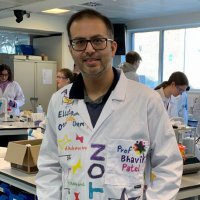
Bhavik Anil Patel is a Professor of Clinical and Bioanalytical Chemistry at the University of Brighton (UK). His research focuses on developing innovative electrochemical sensors using 3D printing technologies, with applications in biomedical diagnostics and material science. Key research areas include the design of conductive 3D-printed materials, MXene-based nanocomposites, and bioanalytical platforms for detecting biomolecules in clinical and environmental contexts. Recent work emphasizes the creation of 3D-printed electrodes for monitoring serotonin, reducing sugars, and miRNA, alongside studies on age-related changes in gastrointestinal signaling. Patel also explores material optimization techniques such as surface patterning, electrochemical activation, and pre-treatment methods to enhance sensor performance. His interdisciplinary approach bridges analytical chemistry, biomedical engineering, and materials science, with publications addressing challenges in drug efficacy assessment (e.g., bladder overactivity studies) and educational methodologies in online learning environments. Patel’s contributions include novel sensor architectures like microwell systems and fiber microelectrodes, as well as sustainability efforts in creating eco-friendly 3D-printed sensors. He collaborates across disciplines, reflecting a commitment to advancing both fundamental and applied research.
Kirsi Mikkonen is a Professor at the Department of Food and Nutrition Research, University of Helsinki, affiliated with the Faculty of Agriculture and Forestry and the Helsinki Institute of Sustainability Science. Her research focuses on valorizing biomass streams, particularly wood-derived hemicelluloses and fungal biomass, exploring their applications in sustainable materials such as food packaging, emulsions, and hydrocolloids. She holds a PhD in Food Technology (2009) and an MSc (2004) from the University of Helsinki, alongside a Docent title in Food Materials Science (2013). Her research integrates biopolymer functionality at interfaces, emphasizing sustainability and biodegradability. Key projects include the ERC-funded 'PARTIFACE' (2020–2025) and 'Novo Nordisk Foundation' grant (2022–2027). She teaches food technology courses and supervises doctoral, master’s, and bachelor’s theses. Notable achievements include the ERC Consolidator Grant and media recognition for her work on wood-based materials in food and cosmetics. Grants and collaborations span organizations like the Academy of Finland, Business Finland, and Jane and Aatos Erkko Foundation. Her work addresses climate-smart food systems and biorefinery innovations.
Kaizheng Zhu is a Postdoctoral Research Fellow in the Department of Engineering at the University College of Southeast Norway (Høgskolen i Østfold). His research focuses on thermoresponsive polymers, block copolymers, self-assembly processes, and their applications in drug delivery and smart materials. He has collaborated extensively with researchers in polymer chemistry, materials science, and nanotechnology. Zhu's work often involves studying the behavior of polymers under varying temperature, ionic conditions, and molecular architectures. Key research interests include the design of stimuli-responsive materials, nanoparticle synthesis for biomedical applications, and the characterization of polymer self-assembly mechanisms. His publications span topics such as solid-state batteries, phase transitions in copolymer systems, and the development of tunable hydrogels. Zhu has contributed to over 50 peer-reviewed articles in journals like Macromolecules , ACS Omega , and Langmuir , reflecting his interdisciplinary approach to materials science. His projects include the SEAD (Tunable and Durable Seawater Adhesives) initiative and collaborations on nanoparticle drug delivery systems. Despite no listed awards, his work demonstrates significant contributions to understanding polymer dynamics and applications in energy storage and biomedical fields.
Suzanne Giasson is a Full Professor at the University of Montreal, affiliated with both the Faculty of Arts and Sciences (Department of Chemistry) and the Faculty of Pharmacy. Her research focuses on polymer chemistry , surface forces , nanotribology , and stimuli-responsive materials , particularly in soft-matter thin films and biomedical applications. Key affiliations: GRUM (Groupe de recherche universitaire sur le médicament), CQMF (Centre québécois sur les matériaux fonctionnels) Techniques: Surface Forces Apparatus (SFA), Langmuir balance, AFM Applications: Drug delivery, prosthetic coatings, colloidal stability Her research spans 2001-2023 , with a focus on polymer brushes, surface adhesion mechanisms, and nanoscale lubrication. She has supervised 11 doctoral/MSc students and secured 15+ research grants from NSERC, FRQNT, and Mitacs. She received the 2004 Québec Science Discoverers of the Year award for her work on ultra-low friction polymer layers published in Nature . Notable projects include: 2016-2024: Development of multi-responsive surfaces for microfluidics 2017-2023: Independent surface texture/chemistry modulation 2002-2017: Long-term polymer surface property control
Núria Oliva Jorge, PhD, is an Assistant Professor at the Department of Bioengineering, IQS School of Engineering, Institut Químic de Sarrià (Universitat Ramon Llull). She is a faculty member in the Master’s Degree in Materials Science and Engineering and contributes to programs in Biotechnology, Biomedical Sciences, and Cosmetics. Her academic role is supported by the prestigious Junior Leader F. La Caixa program, emphasizing her leadership in translational research. Her research interests focus on biomaterials , nanotechnology for cancer therapy , bioadhesives , and cartilage regeneration . She is a key member of the GEMAT – Materials Engineering research group, where she leads projects at the intersection of materials science and regenerative medicine. The recent publications and projects reflect a strong trend in developing injectable, biocompatible, and smart biomaterials for therapeutic applications, particularly in osteoarthritis , diabetic foot ulcers , and drug-free wound healing . Her work integrates nanotechnology-enabled gene therapy and targeted molecular delivery , showcasing a multidisciplinary approach to unmet clinical needs. Her scientific recognition includes the Junior Leader F. La Caixa award, which supports her innovative research program. She actively supervises master’s theses and mentors students in advanced research projects. She is involved in advising and project leadership, particularly in externally funded initiatives such as REJUVEN8, APTADEGRAD, Biomaterials Osteoarthritis, and HYDROMIRNA. These projects involve collaboration with industry and research centers, reflecting her commitment to translational science and technology transfer. The GEMAT research group provides a collaborative environment for developing functional materials, surface engineering, and biomaterials. The lab infrastructure at IQS, with over 8,700 m² of advanced laboratories, enables high-level experimental work in materials synthesis, characterization, and application testing.
Robert Texidó Bartés is an Assistant Professor in the Department of Chemical Engineering and Materials Science at IQS School of Engineering, Universitat Ramon Llull. His research focuses on biomaterials, 3D bioprinting, wearable biosensors, and advanced material development for biomedical applications. Education: PhD in Chemistry and Chemical Engineering, IQS (2017) MSc in Chemistry and Chemical Engineering, IQS (2013) Industrial Engineer, IQS (2011) His research interests span biomaterials, 3D bioprinting, surface engineering, wearable biosensors, and drug delivery systems . He is actively involved in the GEMAT (Materials Engineering Group), contributing to innovations in functional materials for clinical use. His work integrates polymer science, nanotechnology, and biomedical engineering to develop solutions for tissue regeneration, disease monitoring, and surgical planning. The recent articles reflect a strong trend in advanced material fabrication , particularly in silicone-based 3D printing, responsive drug delivery systems, and flexible electronics . His publications emphasize translational research with applications in orthopedics, oncology, infectious diseases, and liver diagnostics . The interdisciplinary nature of his work bridges chemistry, engineering, and medicine. Scientific Contributions: Principal Investigator of PERSAM project on wearable biosensors Key researcher in 3DCartiBone and zwiRNA projects Active member of GEMAT research group CTO and co-founder of Tractivus SL He mentors students across Chemistry, Chemical Engineering, Biotechnology, and Bioengineering programs. His research is supported by grants from AGAUR and involves collaborations with clinical and industrial partners. He leads projects on clinical phantom development, transdermal delivery, and antibacterial nanomaterials . His lab focuses on innovative biomaterials for medical devices and regenerative medicine applications.
Christopher Kemper Ober is the Francis Norwood Bard Professor of Materials Engineering in the Department of Materials Science and Engineering at Cornell University's College of Engineering. He has been a faculty member since 1986, following several years in industry at the Xerox Research Centre of Canada. Ober currently serves as the Director of the Cornell NanoScale Science and Technology Facility (CNF), a leading national resource for nanofabrication. He has held significant leadership roles, including Interim Dean of Engineering from 2009 to 2010. His research is internationally recognized, and he has received numerous prestigious awards and honors. Ober earned his B.Sc. in Chemistry from the University of Waterloo in 1978, followed by an M.S. (1980) and Ph.D. (1982) in Polymer Science & Engineering from the University of Massachusetts-Amherst. His academic journey reflects a strong foundation in chemistry and materials, which he has applied to pioneering work in polymer science and engineering. Ober's research focuses on the design and synthesis of advanced polymers for applications in lithography, nanotechnology, and biologically compatible materials. His work enables high-resolution patterning in microelectronics through the invention of new photoresist families. Key research areas include fundamental studies of self-organization in polymers, development of lithographic materials for microelectronics and biotechnology, and creation of environmentally friendly, fouling-resistant surfaces. His group employs state-of-the-art facilities at Cornell for polymer synthesis and advanced characterization. His recent publications reveal a strong trend toward precision macromolecular engineering, particularly using sequence-defined polypeptoids for extreme ultraviolet (EUV) lithography. Research themes include controlling stochastics in patterning, enhancing EUV sensitivity through heavy atom incorporation, designing non-ionic photo-acid generators, and engineering polymer brushes for adaptive optical and antifouling applications. His work bridges polymer chemistry, materials science, and engineering, with implications for semiconductor manufacturing, biomedical devices, and sustainable technologies. National Academy of Engineering member (2023) SPIE Senior Member (2018) Fellow of the American Association for the Advancement of Science (AAAS) (2015) Fellow of the American Physical Society (APS) (2014) Japan Photopolymer Science and Technology Outstanding Achievement Award (2015) American Chemical Society Award in Applied Polymer Science (2006) Humboldt Research Prize (2007) Ober has mentored numerous graduate students and postdoctoral researchers and leads a highly collaborative research group. His work is supported by major funding agencies including the National Science Foundation (NSF), Office of Naval Research (ONR), Defense Threat Reduction Agency (DTRA), and industry partners such as Intel. As Director of CNF, he oversees a major facility that supports interdisciplinary research across Cornell and beyond. His leadership in materials chemistry is further evidenced by his involvement with IUPAC, including contributions to standardized terminology in advanced lithography. Ober’s laboratory and team focus on pushing the boundaries of polymer science for next-generation technologies. The Cornell NanoScale Facility, under his direction, provides cutting-edge tools for nanofabrication, enabling research in quantum devices, bio-interfaces, and advanced electronics. His group’s work on polymer brushes, liquid crystals, and sequence-controlled polymers exemplifies a holistic approach to materials design, integrating synthesis, characterization, and application.
Giovanni Marletta is a Full Professor of Physical Chemistry at the University of Catania 's Faculty of Mathematical, Physical and Natural Sciences. His career spans over four decades, focusing on Nanotechnology , Radiation-Matter Interactions , and Bio-Surface Interactions . With 4200+ SCOPUS citations (H-index 34), he has coedited 11 international proceedings and delivered 90+ invited lectures globally. Current leadership: President of Master in Chemistry of Materials (2012–2018), Coordinator of Nanotechnology Laboratory (2011–present) Research: Radiation-induced polymer chemistry (1981–2002), Biofunctional surfaces (1996–present), Molecular self-organization (1999–present) His interdisciplinary work combines ion beam surface engineering with biomimetic design , developing nanoscale platforms for cell adhesion studies, biosensors, and organic electronics. He has held editorial roles at Advanced Biomaterials , Langmuir , and Materials Science and Technology , while serving on EU Framework Program advisory groups and multiple international conference steering committees. Scientific Contributions: Developed ion beam methodologies for controlled surface biocompatibility Pioneered curvature-driven protein orientation studies Demonstrated radiation-induced non-thermodynamic polymer phase transitions
Jianxing Sun is an Assistant Professor in the Department of Mechanical Engineering and Mechanics at Lehigh University, joining in July 2025. His research spans experimental thermofluids, phase change heat transfer, interfacial phenomena, and functional polymer coatings. Education Ph.D., Mechanical Engineering, Washington University in St. Louis (2022) M.S., Mechanical Design Theory, Dalian University of Technology (2017) B.E., Mechanical Engineering, Inner Mongolia University of Technology (2014) Dr. Sun’s work focuses on microscale fluid dynamics and energy storage applications, integrating polymer-based materials for advanced heat transfer solutions. He previously held a postdoctoral position at the University of Michigan, Ann Arbor, in Materials Science and Engineering and the Biointerfaces Institute. Notable scientific awards include the Best Poster Award (1st Place) at ASME ICNMM 2019 and the Student Keynote Award at microFIP 2022.