
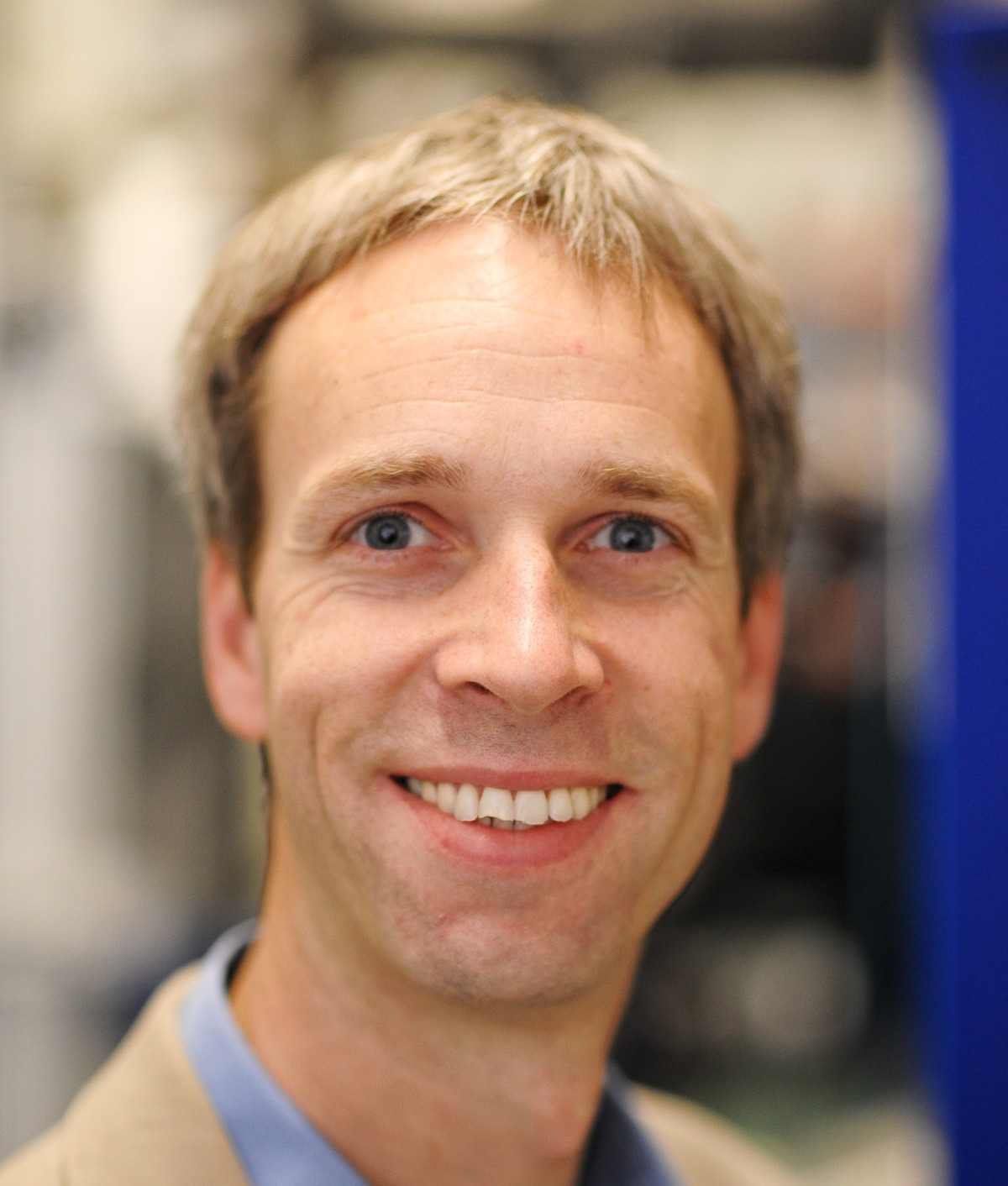
Prof. Sebastian Kaiser is a full professor at the University of Duisburg-Essen's Institute for Combustion and Gas Dynamics, where he leads research on reactive fluid dynamics since 2011. His academic background includes a Bachelor's from Dartmouth College, Diplomingenieur from RWTH Aachen, and PhD from Yale University, followed by postdoctoral work at Sandia National Laboratories. Research Focus: Kaiser specializes in optical diagnostics for reactive systems with emphases on: High-speed imaging of combustion processes Nanoparticle synthesis via spray-flame techniques Tribology and fluid-structure interactions Engine diagnostics using laser-based methods His work bridges experimental techniques and simulation development for energy and propulsion systems. Publication Trends: Recent articles (2023-2025) demonstrate consistent focus on advanced optical diagnostics applied to combustion systems, nanoparticle synthesis, and engine research. Key methodologies include laser-induced fluorescence, high-speed imaging, and machine learning for fluid dynamics analysis. Awards & Honors: Harding-Bliss Prize for Engineering Excellence (Yale, 2005) SAE Excellence in Oral Presentation Award (2008) NRW Returning Scientists Grant (2010) Professional Affiliations: Member of Society of Automotive Engineers (SAE) and The Combustion Institute, with extensive experimental facilities for reactive flow characterization.
جستوجوی استاد و پژوهشگر
استاد راهنما، استاد دانشگاه یا پژوهشگر مناسب برای مسیر پژوهشیتان را پیدا کنید و با او ارتباط بگیرید.
نمایش ۳۱-۴۵ از ۴۲۷ استاد راهنما
اطلاعات این پروفایلها از صفحات عمومی دانشگاهها جمعآوری شده و ممکن است بهروز نباشد.
Dominic Pjontek is an Associate Professor in the Department of Chemical and Biochemical Engineering within the Faculty of Engineering at Western University. He is based in Room 377 of the Thompson Engineering Building and serves as an active researcher and educator in multiphase reactor engineering. His work is conducted both on the Western University campus and at the Institute for Chemicals and Fuels from Alternative Resources (ICFAR), a specialized facility for sustainable technology development. Dr. Pjontek received his Ph.D. and B.A.Sc. in Chemical Engineering from the University of Ottawa, where he earned multiple prestigious scholarships including the NSERC Postgraduate Scholarship for Doctoral Studies and the University of Ottawa Excellence Scholarship for Graduate Studies. His research focuses on the development and optimization of multiphase reactors through experimental studies, process modeling, and scale-up considerations. Key research areas include CO 2 conversion/utilization using gas-liquid-solid reactors, fundamental understanding of interfacial area and flow behavior in multiphase reactors, and innovative sustainable technologies for converting waste streams to value-added products. His work addresses critical technological barriers in developing next-generation reactors for sustainable chemical production. Analysis of Dr. Pjontek's recent publications reveals a strong trend toward carbon dioxide conversion technologies, fluid coker optimization, and sustainable process development. His research group has published extensively on gas-liquid-solid fluidized beds, reactor fouling mechanisms, and CO 2 hydrogenation processes, with increasing focus on sustainable chemical production methods that align with global decarbonization efforts. Scientific Awards and Recognitions: R. Mohan Mathur Award for Excellence in Teaching (2018) Maurice Bergougnou Teaching Award for Heat Transfer Operations (2015-2018) NSERC Postgraduate Scholarship for Doctoral Studies Multiple University of Ottawa Excellence Scholarships NSERC Canada Graduate Scholarship for Master's Studies Dr. Pjontek actively supervises numerous graduate students working on cutting-edge projects related to multiphase reactor engineering. His research group includes multiple Ph.D. and M.E.Sc. students working on projects such as CO 2 conversion to commodity chemicals, biosurfactant production, fluid coker heater modifications, and stripper shed fouling monitoring. He has successfully graduated numerous students who have completed theses on topics including fluid coker cyclone fouling, hydrodeoxygenation processes, and particle agglomeration phenomena. His research is supported through collaborations with industry partners like Syncrude Canada Ltd. and Origin Materials, as well as government funding agencies. Dr. Pjontek's laboratory work is conducted within the Chemical and Biochemical Engineering facilities at Western University, with specialized equipment for studying multiphase reactor systems. His research group maintains collaborations with other faculty members including Cedric Briens, Lars Rehmann, and Jose Herrera, forming a strong research cluster focused on sustainable process engineering and reactor technology development.

Abul Kalam Hossainمشاهده پروفایل
مدرس ارشد
Abul Kalam Hossain is a Senior Lecturer in the Department of Mechanical, Biomedical & Design Engineering at Aston University's College of Engineering and Physical Sciences. His research focuses on sustainable low-carbon fuels, renewable energy systems, and solar-driven desalination technologies. He has extensive industry experience as a mechanical engineer and has led numerous interdisciplinary projects in biofuel development, waste-to-energy conversion, and energy storage. Dr. Hossain has secured funding from UK Energy Catalyst, Innovate UK, and international collaborations, including projects in Pakistan, India, and UAE. He serves as an Associate Editor for Frontiers in Fuels and on the Scientific Advisory Board of SDEWES conferences. His work bridges academic research with practical applications in cleaner energy and water solutions. Education: BSc from Bangladesh University of Engineering and Technology (BUET), MSc and PhD in Mechanical Engineering from Cranfield University. Professional credentials include Chartered Engineer (CEng), Fellow of the Higher Education Academy (FHEA), and membership in the Energy Institute. Research themes include biofuel characterization, engine emissions control, solar desalination for arid regions, and biomass-solar hybrid systems. Key achievements include pioneering waste-derived biodiesel blends and advancing low-temperature combustion techniques. He currently supervises MSc and final-year engineering projects and teaches modules in thermodynamics, engineering science, and alternative fuels. Funding highlights: Leading roles in projects like 'CoolRun Malawi' (UK Energy Catalyst 2024) and 'Upgraded Flexi Biodiesel Fuel' (Aston Seedcorn 2021). Awards include grants for off-grid desalination in Jordan Valley and filtered drinking water systems in Pakistan. Labs/Teams: Active member of Aston's Energy and Bioproducts Research Institute (EBRI) and collaborator with institutions like Anna University (India) and American University of Sharjah (UAE). Current projects address global challenges in sustainable energy access and water security.
Veysi Başhanمشاهده پروفایل
استادیار
Veysi Başhan serves as an Assistant Professor in the Department of Marine Engineering within the Faculty of Naval Architecture and Ocean Engineering at Istanbul Technical University (ITU). His academic profile demonstrates active engagement in maritime engineering research with current publications extending through 2025 and an active research project on hybrid renewable energy systems analysis. Professor Başhan's research spans critical maritime engineering domains with particular emphasis on renewable energy integration, risk assessment methodologies, and marine propulsion systems. His work innovatively combines fuzzy logic, Bayesian networks, and multi-criteria decision-making approaches to address complex challenges in maritime operations, energy systems, and safety protocols. This interdisciplinary approach bridges traditional marine engineering with modern computational techniques for risk analysis and system optimization. His publication portfolio reveals a clear trajectory toward sustainable maritime technologies, with increasing focus on wind-solar hybrid systems, alternative fuels like methanol, and autonomous navigation reliability. The research demonstrates consistent application of fuzzy-based analytical frameworks across diverse maritime contexts from engine performance to ballast water treatment systems. Current research activities include the 2024 project "Hibrit Yenilenebilir Enerji Sistemlerinde Arızaların Analizi ve Çözüm Önerileri" (Analysis of Failures in Hybrid Renewable Energy Systems and Solution Proposals), indicating ongoing commitment to solving practical engineering challenges in renewable energy integration for maritime applications. His scholarly impact is evidenced by 32 research outputs, 366 Scopus citations, and an h-index of 9.
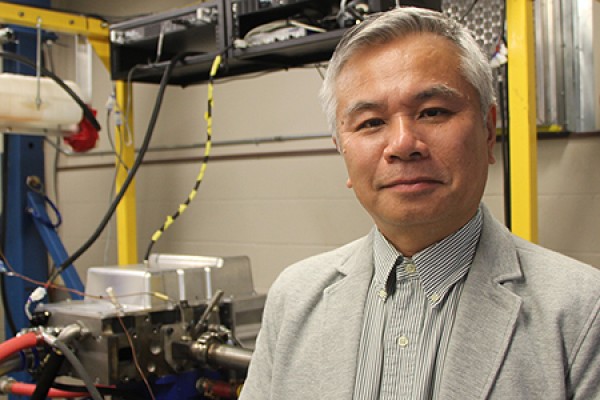
Ming Zheng is a Professor at the University of Windsor's Faculty of Engineering, specializing in automotive and combustion engineering. His research focuses on advanced ignition strategies, clean fuels (e.g., DME), emissions reduction, and engine efficiency improvements. He is recognized for contributions to combustion science and automotive innovation. Key achievements include his SAE Fellow designation (2015) and Engineering Medal of Excellence (2017). His work addresses decarbonization in road transportation and sustainable propulsion systems. Recent studies explore plasma-based ignition, oxygenated fuels, and catalytic NOx aftertreatment technologies. Research Highlights: DME combustion optimization, lean burn strategies, hydrogen-methane combustion, and renewable fuel applications. Awards: SAE Fellow, Medal of Excellence (UWindsor Engineering). Grants: Involved in NSERC-funded projects advancing automotive technologies.

Kevin Edgar is a Professor of Biomaterials and Bioprocessing and Director of the ICTAS Bio-Based Materials Center at Virginia Tech's College of Natural Resources and Environment, Department of Sustainable Biomaterials. With a Ph.D. in Organic Chemistry from Duke University (1979) and a B.S. in Chemistry from Bucknell University (1975), he has established himself as a leading researcher in polysaccharide chemistry and sustainable biomaterials. Dr. Edgar's research focuses on designing and creating derivatives of natural polysaccharides to address demanding performance requirements, exploring structure-property-performance relationships for applications including drug-delivery systems, tissue engineering, biodegradable plastics, polymer compatibilization, hydrogels, and block copolymers. His work specifically targets novel methods to control and utilize the nanostructure of polysaccharides, with emphasis on regioselective substitution reactions of complex polysaccharides. He investigates how to effectively utilize natural polysaccharides to address societal needs, leveraging their diverse natural functions from structural support to information storage. Analysis of his recent publications reveals a strong focus on hydrogel development, drug delivery systems, and polysaccharide modification techniques. His work spans fundamental chemistry of polysaccharides to applied pharmaceutical and medical applications, with particular emphasis on creating sustainable alternatives to fossil fuel-based materials. The research demonstrates consistent innovation in regioselective synthesis methods and structure-property relationships of polysaccharide derivatives. 2023 Appointed to Virginia Tech Academy of Faculty Leadership 2022 Virginia Tech College of Natural Resources and Environment Outstanding Graduate Student Mentor Award 2016 Anselme Payen Award for outstanding professional contributions to cellulose science 2010 Named Fellow of the ACS Division of Cellulose and Renewable Materials 2009 Named Fellow of ACS (inaugural class of ACS Fellows) Dr. Edgar has mentored numerous graduate students through their Ph.D. and Master's research, with many receiving prestigious awards including multiple Eastman Awards for outstanding graduate students. His research has been supported by significant grants from NSF, USDA NIFA, and other funding agencies. He leads the ICTAS Bio-Based Materials Center and co-directs the Infectious Disease Interdisciplinary Graduate Education Program, demonstrating strong leadership in interdisciplinary research. His lab actively develops sustainable biomaterials with applications in drug delivery, tissue engineering, and environmental health.
- Microfluidics
- Cavitation
- Needle-free drug delivery
- +۴ مورد دیگر
David Fernandez Rivas is Professor at the University of Twente , Faculty of Science and Technology, within the Mesoscale Chemical Systems Group . Since 2017 he is also a Research Affiliate at the MIT Department of Mechanical Engineering and a Visiting Professor in the Dermatology Department of Erasmus MC, Rotterdam. His work bridges physics, chemical engineering and biomedicine. Education BSc & MSc in Nuclear Engineering (2004, 2006) – Higher Institute of Science and Technology, Havana, Cuba PhD (2012) – University of Twente, Netherlands Research Interests David’s core expertise lies at the intersection of microfluidics and cavitation phenomena . He exploits controlled bubble collapse to achieve needle-free injection , process intensification , water treatment , and solar-to-fuel conversion . His ERC-funded BuBble Gun project aims for painless, cost-effective drug delivery, while spin-offs BuBclean and FlowBeams commercialize ultrasonic cleaning and ink-delivery technologies. Scientific Awards & Recognition European Research Council Starting Grant 2019 (€1.5 M) NWO VIDI Grant 2023 NWO Stairways to Impact Award 2021 KIVI Prince Friso Engineer of the Year 2021 KHMW Pieter Langerhuizen Fonds Prize 2016 Elected member, Global Young Academy (2020) & Young Academy of Europe Advising & Grants David has successfully transferred research into society via two start-ups and several European consortia. He co-chairs the COST Action Greenering and mentors numerous PhD and master students within the TechMed Centre and MESA+ Institute at Twente. Labs & Teams He leads the BuBble Gun research team and collaborates closely with the Mesoscale Chemical Systems laboratory, MIT Bioinstrumentation lab, and Erasmus MC Dermatology department.

- Plasma Physics
- Fusion Energy
- Tokamak Devices
- +۷ مورد دیگر
Anders Henry Nielsen is a Senior Scientist in the Department of Physics at the Technical University of Denmark (DTU), specializing in Plasma Physics and Fusion Energy. He is based at DTU’s Fysikvej campus in Kgs. Lyngby, Denmark, and maintains an active research profile with over 350 publications. His work is central to advancing understanding in magnetic confinement fusion, particularly through computational modeling and experimental collaboration with major tokamak facilities worldwide. His research interests lie at the intersection of plasma turbulence, edge physics, and fusion energy. He investigates phenomena such as zonal flows, coherent structures, and transport scaling in tokamak plasmas. His work often involves developing and applying advanced numerical models, including coupling Monte Carlo methods with 2D fluid models like HESEL, to simulate neutral particle behavior and turbulence in the plasma edge. He has contributed to major experimental campaigns on devices such as TCV, ASDEX Upgrade, and EAST, focusing on heating, fueling, and stability. His recent publications highlight trends in computational plasma physics, parametric instabilities, and cross-field transport. These works span disciplines including plasma turbulence, magnetic confinement, and fusion reactor engineering, with subfields like Monte Carlo simulations, electron cyclotron resonance heating, and synthetic diagnostics. His research consistently addresses key challenges for ITER and DEMO, such as power threshold scaling and heat flux management. Anders Henry Nielsen has supervised multiple PhD students, including R. Gerru Miguelañez, G. Avdeeva, J. M. B. Olsen, and J. Madsen, on projects related to zonal flow dynamics, neutral injection, and turbulence modeling. He has received research funding from various sources, including national and international fusion programs, and has been involved in projects funded by research councils and institutional grants. He is affiliated with the Plasma Physics and Fusion Energy section at DTU, where he collaborates closely with leading researchers such as V. Naulin, J. J. Rasmussen, and S. Kragh Nielsen. His team contributes to both theoretical and experimental aspects of fusion science, participating in international collaborations and presenting findings at major conferences. He has organized academic events, such as the Ninth Sino-Danish Autumn School on Fusion Plasma Physics and Technology.

Professor Vincent Wheatley is a Professor at the School of Mechanical and Mining Engineering, University of Queensland , and Co-Director of the Centre for Hypersonics . His research focuses on supersonic plasma flows , hypersonics , and computational fluid dynamics , with applications in inertial confinement fusion and scramjet engines for space propulsion. Education: PhD in Aeronautics (2005), California Institute of Technology MEngSc (Mechanical), University of Queensland BE (Mechanical and Space), University of Queensland His recent work (2025–2021) explores scramjet combustion dynamics (e.g., hydrogen/ethylene fuel injection), plasma instabilities in multi-fluid models, and hypersonic noise and shock wave interactions . These studies employ direct numerical simulation (DNS) , large eddy simulation (LES) , and reacting flow modeling . Scientific Awards: Australia's Research Field Leader in Aerospace and Aviation Engineering (2018) 2017 Australian Award for University Teaching – Award for Teaching Excellence Professor Wheatley supervises projects on plasma fuel engines and hypersonic propulsion , supported by grants from the Australian Research Council (ARC) and Commonwealth Defence Science and Technology Group . His team collaborates on multi-fluid plasma simulation and scramjet optimization .
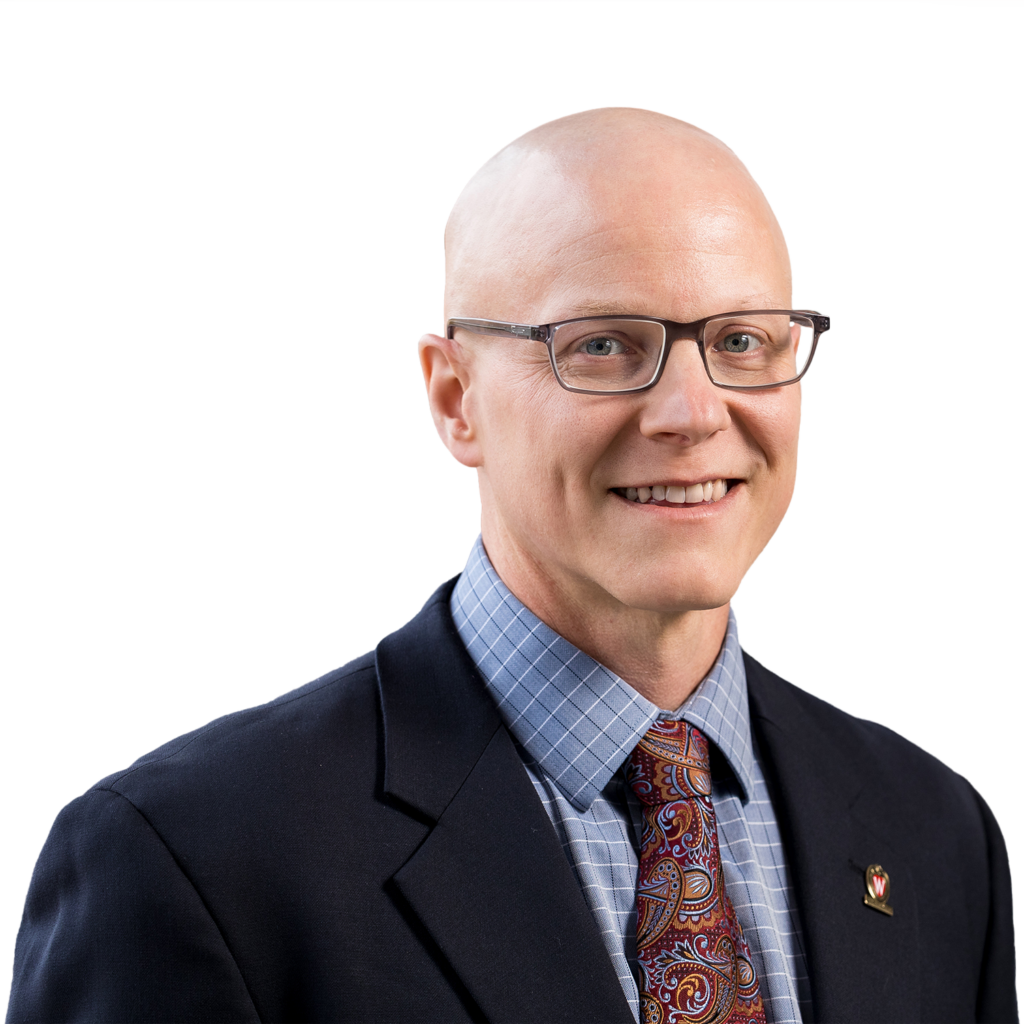
David Rothamer is the Robert Lorenz Professor and Director of the Engine Research Center in the Department of Mechanical Engineering at the University of Wisconsin-Madison. As Associate Dean for Research in the College of Engineering, he leads research strategy, core facility management, and faculty recruitment. His expertise spans combustion, internal combustion engines, renewable fuels, and optical diagnostics. He earned his PhD from Stanford University (2008) and has been at UW-Madison since 2008, receiving an NSF CAREER Award in 2011. Education PhD, Mechanical Engineering, Stanford University, 2008 MS & BS, Mechanical Engineering, University of Wisconsin-Madison, 2002 & 2000 Research Interests Rothamer’s work focuses on optimizing engine performance with renewable fuels using advanced optical diagnostics. His lab develops laser-based techniques to study combustion processes in IC engines, with recent emphasis on sustainable aviation fuels and aerosol filtration during the pandemic. Awards & Recognition ASHRAE Best Paper Award (2022) for aerosol transmission research Robert Lorenz Professorship (2020) SAE Ralph R. Teetor Educational Award (2013) Grants & Collaborations Recipient of $11.5M Army funding for hybrid-electric engine research (2020). Collaborates with industry partners on fuel blending, combustion diagnostics, and emission reduction technologies. Labs & Affiliations Leads the Engine Research Center and holds an affiliation with the Nuclear Engineering & Engineering Physics department. His team operates a state-of-the-art engine lab capable of simulating extreme environmental conditions.
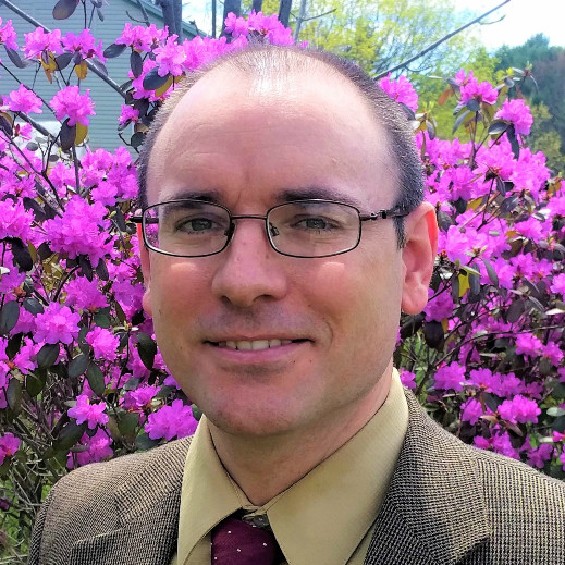
Scott J. Eatonمشاهده پروفایل
استادیار
Dr. Scott J. Eaton is an Assistant Professor of Mechanical Engineering at the University of Southern Maine (USM), affiliated with the Department of Engineering within the College of Science, Technology, & Health. His research focuses on improving energy and transportation systems through alternative fuels processing, clean combustion technologies, and catalytic exhaust treatment. He holds a PhD in Chemical Engineering (University of Maine, 2015), an MS in Mechanical Engineering (University of Tennessee, 2006), and a BS in Mechanical Engineering (University of Maine, 2004). Dr. Eaton’s work spans academic, industrial, and governmental sectors. He serves as Associate Faculty at the University of Maine’s Forest Bioproducts Research Institute and as Chief Technology Officer for two Maine-based alternative fuels startups. His research interests include multiphasic fuel injection dynamics, low-temperature catalytic emissions reduction, and alternative fuels development. His recent publications address biofuel processing, combustion dynamics in engines, and STEM education initiatives like CubeSat competitions. He has authored 19 peer-reviewed articles and holds six patents in alternative fuels technologies. Dr. Eaton has secured funding from NSF, DOE, and state agencies, and serves on the ASTM D37 standards committee.
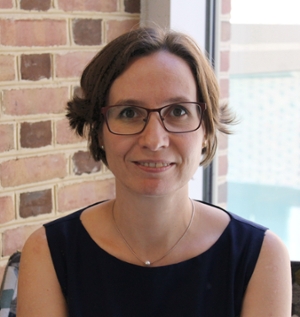
Prof. Saskia Mordijck is a Professor of Physics at the College of William & Mary, located in Williamsburg, Virginia, USA. Her research focuses on Plasma Physics and Fusion Energy Science, with expertise in experimental and computational studies of plasma confinement in tokamak devices. She leads the Plasma Physics and Fusion Science research group, which collaborates with major facilities like DIII-D, JET, and Alcator C-Mod. Her work addresses critical challenges in achieving controlled nuclear fusion, including particle transport dynamics, edge pedestal formation, and ELM suppression mechanisms. Prof. Mordijck holds a Ph.D. (2011) and M.S. (2010) from the University of California San Diego, and an MEng (2006) from Katholieke Universiteit Leuven. She transitioned from the Applied Science department in 2019 to the Physics department, reflecting her expanded role in cross-disciplinary fusion research. Her group actively engages in the ITER project, contributing to core-pedestal integration strategies and plasma edge modeling. Key research areas include: Resonant Magnetic Perturbations (RMPs) for ELM control, particle transport driven by turbulence and fueling dynamics, and boundary plasma interactions with material surfaces. She has pioneered studies on neutral particle dynamics and their impact on pedestal stability, leveraging advanced numerical models like SOLPS-ITER and Aurora. Her team collaborates internationally, with notable contributions to JET and DIII-D campaigns. Prof. Mordijck has advised numerous graduate and undergraduate students, many of whom pursue careers in fusion energy research, academia, and national laboratories. She currently seeks motivated students for projects in plasma modeling and experimental analysis.
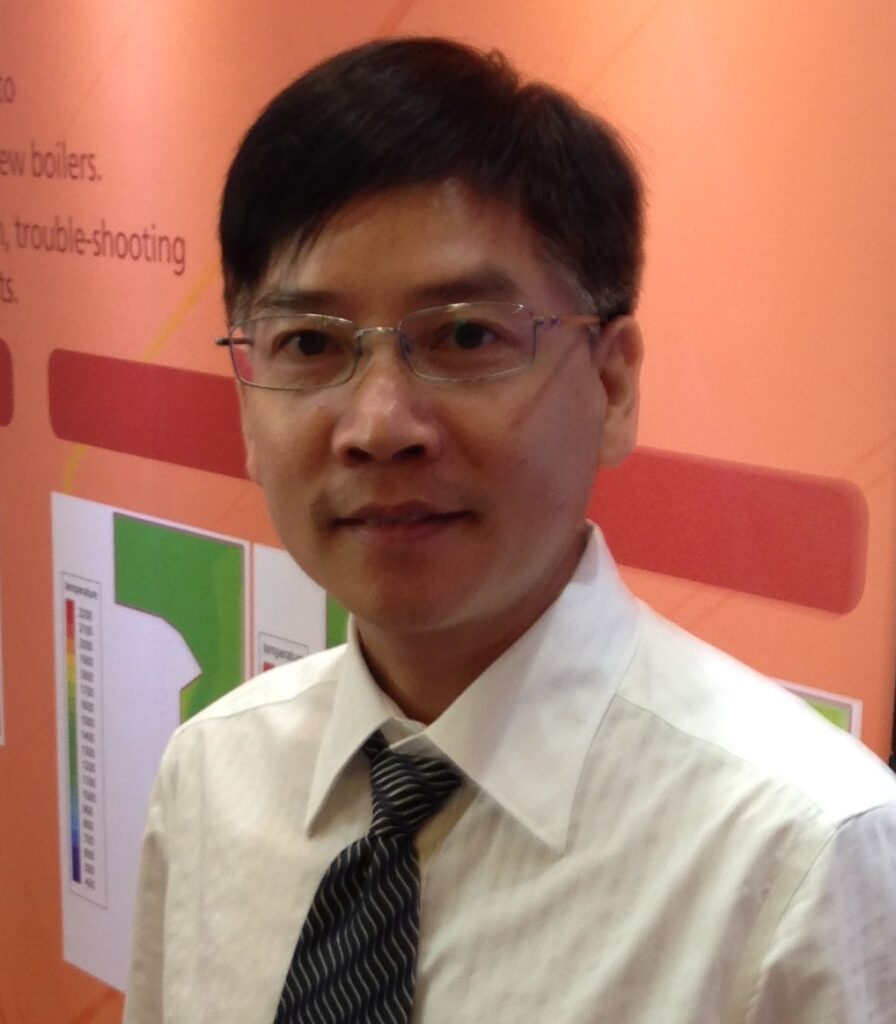
Wenming Yangمشاهده پروفایل
دانشیار
Dr. Wenming Yang is an Associate Professor at the Department of Mechanical Engineering, National University of Singapore (NUS). He has been with NUS since 2000, progressing from Research Fellow to Assistant Professor in 2011 and Associate Professor since 2017. His research focuses on combustion technologies across multiple scales and applications. Current research areas include internal combustion engines using biofuels, emulsion fuels, and natural gas Development of high-efficiency, low-emission boilers (grate biomass, pulverized coal, CFB, incinerators) Design of micro thermophotovoltaic power generators Active collaboration in computational modeling and experimental validation Dr. Yang's recent publications (2003-2015) primarily address combustion optimization, emissions control, and microscale energy systems. His work spans fundamental chemical kinetics to applied engine modeling, with a strong emphasis on sustainability and alternative fuels. Scientific Recognition Dean’s Chair Professor (2020) – NUS College of Engineering Academic Contributions Teaches Energy Conversion Process (ME3221), Internal Combustion Engine (ME4227), and Air-Conditioning and Building Automation (ME5204) Leads the GSTPG Lab, focusing on combustion innovation and energy systems Actively seeks Ph.D. candidates for research in IC engines, WTE plants, and biomass boiler technologies

Fred Schauerمشاهده پروفایل
دانشیار
Fred Schauer is an Associate Professor in the Department of Aeronautics and Astronautics at the Air Force Institute of Technology (AFIT), part of Air University at Wright-Patterson Air Force Base, Ohio. He is a leading researcher in propulsion systems, particularly in the development and analysis of detonation-based engines such as pulsed and rotating detonation engines. His work integrates experimental testing, thermodynamic modeling, and advanced diagnostics to advance aerospace propulsion technologies. His educational background includes: BS in Mechanical Engineering, University of Dayton, 1993 Ph.D. in Mechanical Engineering, University of Illinois at Urbana-Champaign, 1998 Air War College, 2008 Dr. Schauer's research focuses on energy, propulsion, and power, with special emphasis on novel thermodynamic cycles, detonation dynamics, laser diagnostics, and flame-turbulence interactions. His work has significantly contributed to understanding and optimizing rotating and pulsed detonation engines, including performance scaling, nozzle integration, and fuel injection strategies. He has explored both conventional and bio-derived fuels to enhance efficiency and sustainability in small-scale propulsion systems. The 15 most recent publications reflect a strong trend toward experimental validation of rotating detonation engines, thermodynamic modeling, and performance optimization. These works span high-speed propulsion, combustion stability, and integration with turbines and ejectors. Keywords across these articles include aerospace engineering, propulsion, combustion, and mechanical systems, with subfields such as rotating detonation, pulsed detonation, nozzle dynamics, fuel efficiency, and thermodynamic modeling. His scientific achievements have been widely recognized: AFRL Commander’s Cup and Innovation Award Two-time winner of the AFRL Science & Technology Achievement Award ASME Airbreathing Propulsion Award Finalist for the Collier Trophy Finalist for Aviation Laureate AFRL Fellow Air Force Scientist of the Year AIAA Engineer of the Year Dr. Schauer has served as a research advisor for numerous M.S. and Ph.D. students and maintains active collaborations with AFRL, NASA, DOE, and academic institutions. His research group has published extensively and led major projects, including the AFRL in-house detonation propulsion research program from 1997 to 2019. He previously led the Propulsion and Power Advanced Concepts Group, which operated the Detonation Engine Research Facility and the Small Engine Research Laboratory, driving innovation in next-generation propulsion systems. His research labs and teams include the Detonation Engine Research Facility and the Small Engine Research Laboratory, where experimental and computational studies on advanced propulsion concepts are conducted. These facilities support high-pressure, high-speed combustion research and enable the development of practical applications for military and aerospace platforms.
Dr. Chijin Xiao is a prominent researcher in plasma physics and controlled thermonuclear fusion at the University of Saskatchewan. His work focuses on plasma diagnostics, tokamak plasma transport, and compact torus injection technologies. He has contributed significantly to experiments on the STOR-M tokamak and the University of Saskatchewan Compact Torus Injector (USCTI). His research includes studies on H-mode confinement, plasma rotation control via resonant magnetic perturbations, and the development of diagnostic tools such as retarding field analyzers and eddy current probes. Notable collaborations include projects with institutions like the EAST tokamak (China), J-TEXT tokamak, and the Keda Torus eXperiment (KTX). His work spans applied plasma physics, including plasma synthesis of carbon-based materials and activation of medical isotopes using dense plasma focus devices. Dr. Xiao's experimental contributions include advancing alternating current tokamak operation and optimizing compact torus injection for fusion fueling. Key findings include the suppression of plasma transport through CT injection, correlations between geodesic acoustic modes and magnetic perturbations, and the design of critical fusion infrastructure like KTX's poloidal field system. His publications highlight expertise in plasma diagnostics, edge plasma dynamics, and fusion engineering challenges.