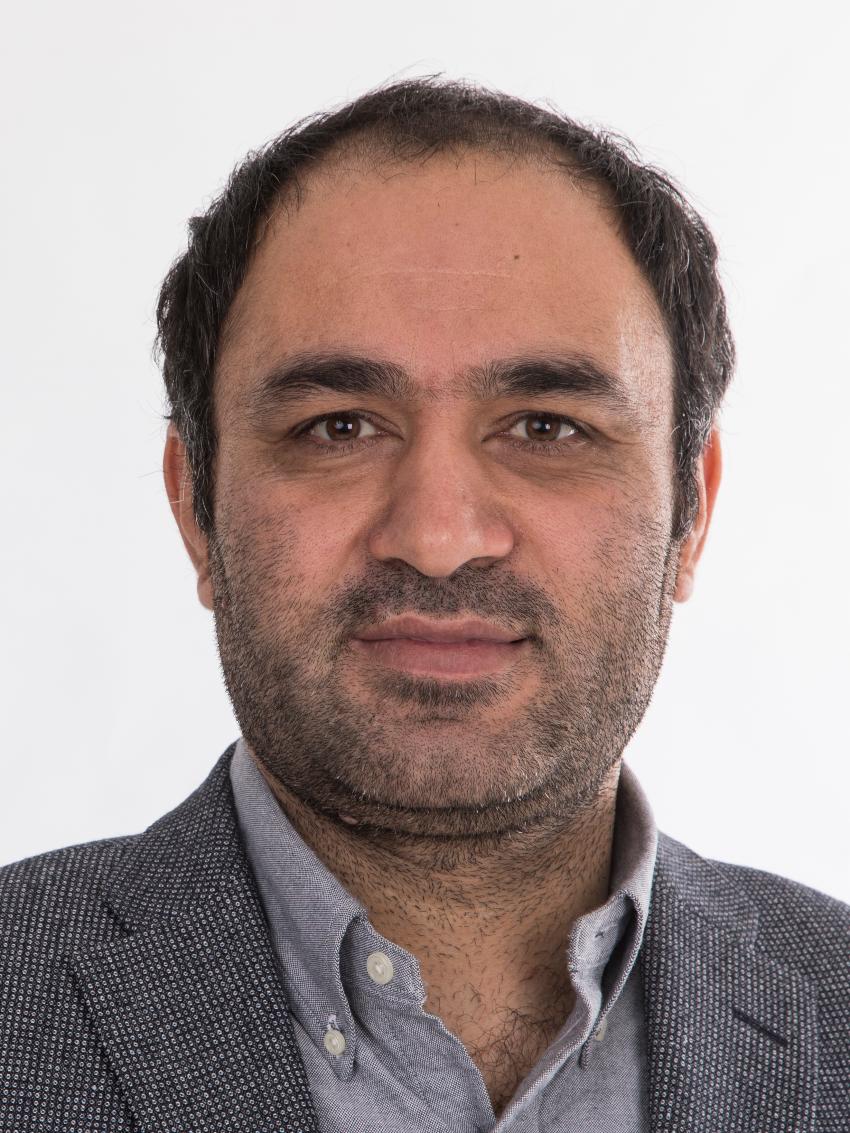
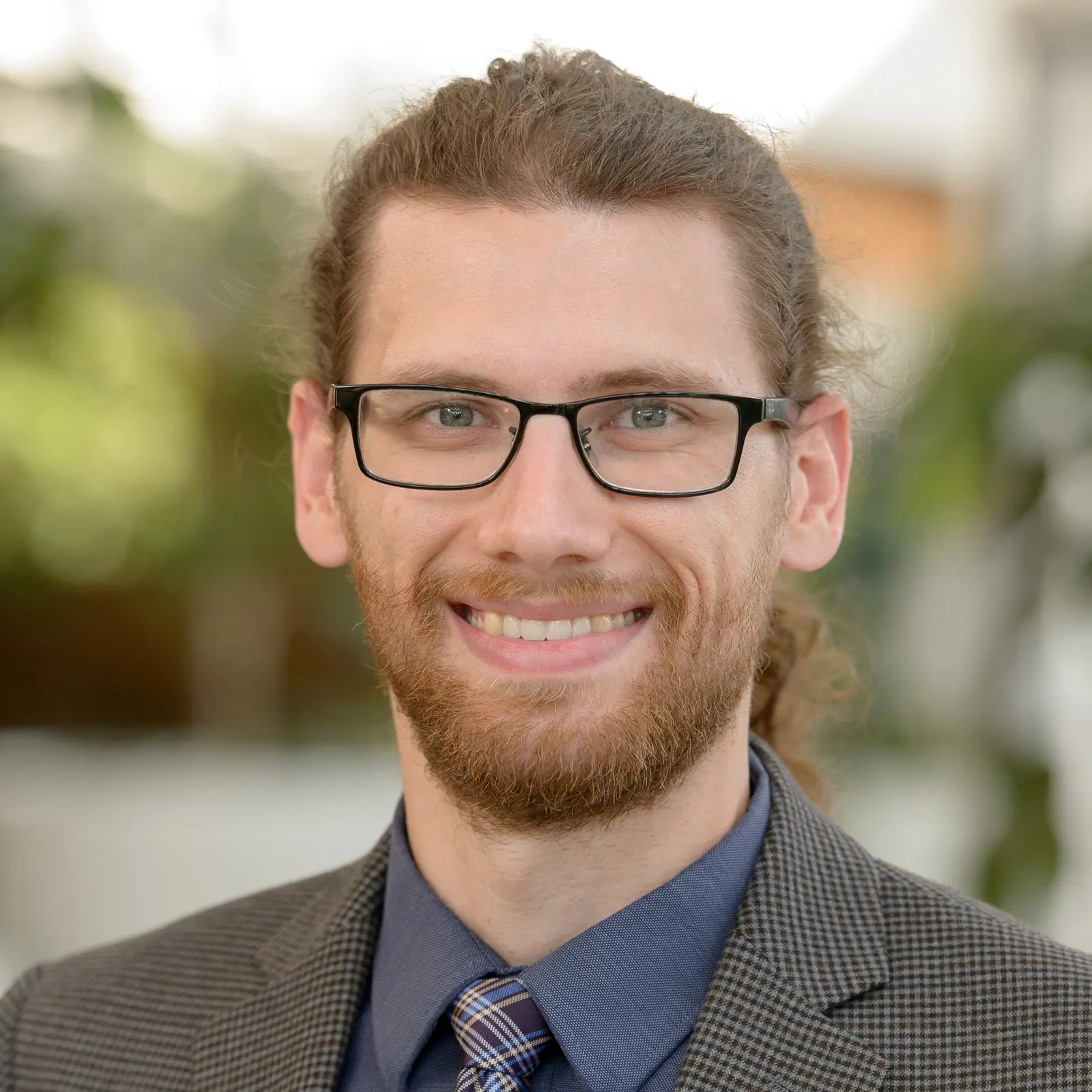
Veysi Bashan is an Assistant Professor at Istanbul Technical University , specializing in Marine Engineering . His research focuses on renewable energy hybrid systems , diesel engine optimization , and autonomous navigation reliability through advanced fuzzy logic and risk assessment methodologies. Key research areas include: Failure analysis in wind-solar hybrid marine energy systems Methanol injection timing for emission reduction Reliability frameworks for autonomous ships Fuzzy Bayesian networks for mooring safety and engine diagnostics Ballast water treatment evaluation using type-2 fuzzy ELECTRE His recent work (2022-2025) demonstrates growing emphasis on sustainable maritime technologies and intelligent risk mitigation in marine operations. Notable projects include Hibrit Yenilenebilir Enerji Sistemlerinde Arızaların Analizi (2024).
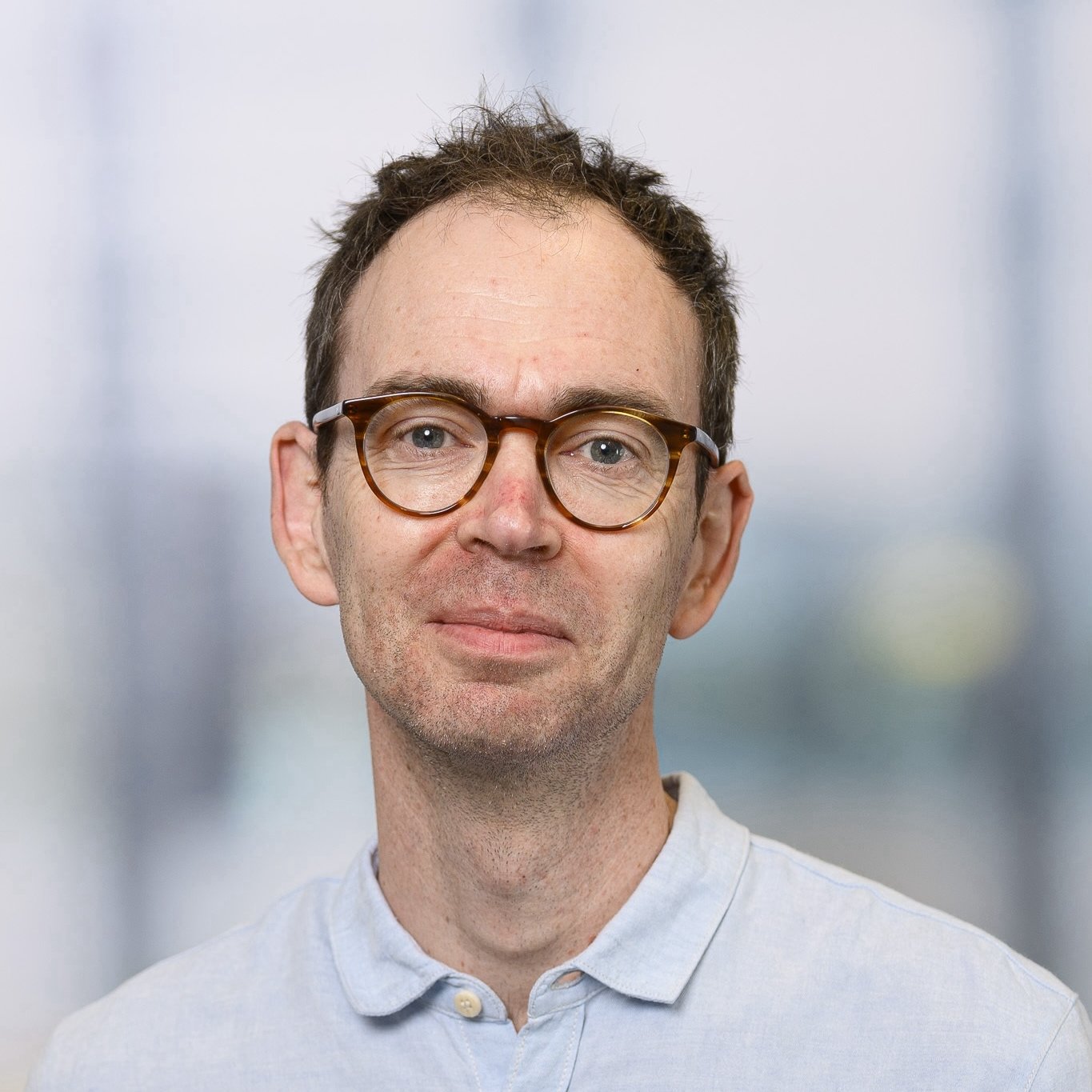
Hakan Demirel is an Associate Professor in the Department of Marine Engineering at Istanbul Technical University, College of Engineering. His research integrates advanced computational methods with marine systems engineering to improve safety, performance, and environmental compliance in maritime operations. Research Interests: Dr. Demirel specializes in risk assessment, fuzzy logic applications, decision-making models (such as BWM, MARCOS, ELECTRE, DEMATEL), and reliability analysis in marine and offshore systems. His work addresses critical challenges in ship engine performance, emission control, ballast water treatment, mooring operations, and hybrid energy systems. Publication Trends: His recent publications (2020–2025) demonstrate a consistent focus on applying fuzzy set theories and Bayesian networks to maritime safety and environmental engineering. These works often involve multi-criteria decision-making frameworks and are published in journals related to marine science, engineering, and environmental risk assessment. Scientific Awards: No awards are mentioned in the provided text. Advising and Grants: Dr. Demirel has served as Principal Investigator (PI) on multiple research projects funded by BAP (Scientific Research Projects Unit at ITU), including projects on exhaust emission analysis and risk assessment of hydrocarbon ship berthing operations. While no formal students are listed, his collaborative publication pattern suggests active mentorship and team-based research. Labs and Research Teams: Although specific lab names are not mentioned, his research activities suggest involvement in a marine systems and safety research group at Istanbul Technical University, focusing on computational modeling for maritime engineering challenges.
Abbas Barabadi is a Professor at the Department of Technology and Security, UiT The Arctic University of Norway. His research focuses on resilience engineering, risk analysis, and sustainable development in Arctic and industrial contexts. He actively collaborates on projects related to mining, renewable energy, and infrastructure safety. Affiliation: UiT The Arctic University of Norway Research Interests: Resilience engineering, Arctic operational challenges, sustainability in mining and energy systems, reliability analysis. Recent Article Trends: 2025 works address climate-related infrastructure risks and Arctic wind farm operations. 2024 publications emphasize mining sustainability, fuel system reliability, and CSR in complex systems. Labs/Teams: Sustainable Technology and Safety (STS) research group.
Rienk Eelkema is a Full Professor in the Department of Chemical Engineering at Delft University of Technology, Faculty of Applied Sciences. He leads the Eelkema Lab, which is part of the Delft Bioengineering Institute. His research group focuses on designing responsive organic and polymer materials for applications in aqueous and biological environments. Rienk Eelkema earned his M.Sc. in Chemistry from the University of Groningen in 2001, majoring in organic chemistry under Prof. Ben L. Feringa. He continued at Groningen for his PhD (2006, cum laude), studying supramolecular chemistry and nano- and microscale motion in liquid crystalline systems. After postdoctoral research at the University of Oxford with Prof. Harry L. Anderson FRS on nanoscale insulation of molecular wires, he joined TU Delft in 2008. He obtained tenure in 2013, was promoted to Associate Professor in 2017, and to Full Professor in 2025. His research interests span interactive soft materials, fuel-driven chemical reaction networks, responsive polymers, biomolecule labelling, and biomedical applications. The Eelkema Lab has pioneered catalysis-controlled formation of molecular gels and synthetic active polymers mimicking biological systems like microtubules. Current work integrates signal-responsive networks into polymer materials and explores applications in radiotherapy and protein sequencing. Collaborations include Prof. Jan van Esch (TU Delft) and Prof. Antonia Denkova (TU Delft). The 15 most recent publications reveal a strong focus on dynamic covalent chemistry, out-of-equilibrium systems, and biomedical materials. Key themes include chemical reaction networks, transient hydrogels, responsive nanocarriers, radiation-mediated polymer reactions, and catalytic control over self-assembly. The work bridges organic synthesis, materials science, and bioengineering, with applications in drug delivery, diagnostics, and smart materials. Rienk Eelkema has received numerous scientific awards and grants, including an ERC Consolidator Grant and multiple NWO grants (Veni, Vidi, Complexity, Echo). He was awarded the SEFI Francesco Maffioli Award and a TU Delft Education Team Award for his contributions to the Pre-University Chemistry MOOC. His research is supported by grants from NWO, ERC, STW, and the Delft Health Initiative. He mentors several PhD students and postdoctoral researchers, including Juncheng Liu, Benjamin Spitzbarth, Mark de Geus, Tessel Bouwens, and Dennis Dam. His lab develops new synthetic methodologies and applies them to create functional soft materials. The Eelkema Lab is actively involved in interdisciplinary projects combining chemistry, engineering, and medicine to develop next-generation responsive materials.
Professor Eva Gutheil is a distinguished academic at the Interdisciplinary Center for Scientific Computing (IWR) at the University of Heidelberg, where she leads a prominent research group focused on multiphase flows and combustion processes. Her work spans technical combustion systems, atmospheric processes, and biofluid mechanical applications, making significant contributions to both fundamental understanding and practical engineering solutions. Her research interests encompass multiphase flows , combustion processes , droplet vaporization , laminar spray flames , PDF methods , and flamelet modeling . Professor Gutheil's work addresses critical challenges in energy production efficiency, stability, safety, and pollutant emissions across various technical combustion systems including internal engine combustion, industrial furnaces, and gas turbine combustion. Her research extends to atmospheric processes like ozone depletion and biofluid mechanical applications such as particle dispersion in human airways and blood flow in cerebral aneurysms. Analysis of her recent publications reveals a strong focus on computational modeling of complex flow phenomena, with increasing attention to bioreactor hydrodynamics, atmospheric chemistry applications, and advanced nanoparticle synthesis techniques. Her work demonstrates a consistent trajectory toward more sophisticated modeling approaches that integrate multiple physical phenomena across different scales. Professor Gutheil has mentored numerous PhD students and research assistants, as evidenced by the extensive list of current and former group members. Her research group includes specialists in computational fluid dynamics, combustion modeling, and atmospheric chemistry applications. The research group operates within the Interdisciplinary Center for Scientific Computing at the University of Heidelberg, utilizing advanced computational resources for modeling and simulation of complex flow phenomena. Their work bridges fundamental fluid dynamics with practical applications across energy systems, environmental science, and biomedical engineering.
Samuel I. Stupp is a Board of Trustees Professor at Northwestern University with appointments in the Departments of Materials Science, Chemistry, Medicine, and Biomedical Engineering. He serves as Director of the Center for Regenerative Nanomedicine and leads a research group organized into three sub-teams: Self-Assembly, Energy Materials, and Biomaterials. B.S., University of California, Los Angeles (1972) Ph.D., Northwestern University (1977) His research integrates chemistry, materials science, and medicine to develop self-assembling organic materials for energy and biomedical applications. Key areas include: Energy Materials: Solar photovoltaics, catalytic solar fuels, supramolecular ferroelectrics, and artificial muscle systems. Biomaterials: Regenerative therapies for spinal cord, brain, bone, and cardiac tissue, alongside targeted cancer and cardiovascular drug delivery using nanostructures. Self-Assembly: Programming molecular systems to form functional nanostructures, including peptide amphiphiles and DNA-based hybrids. His publications reveal expertise in supramolecular chemistry , nanomedicine , and energy conversion , with recurring themes in interdisciplinary collaboration. Von Hippel Award (2022) Member, U.S. National Academy of Sciences (2020) Ronald Breslow Award for Biomimetic Chemistry (2012) Materials Research Society Medal (2000) Humboldt Award for Senior U.S. Scientists (1997) The Stupp Laboratory trains researchers across three subgroups and maintains partnerships with institutions in Singapore, Japan, and Europe. Their work has led to groundbreaking advances in paralysis reversal and Alzheimer’s treatment.
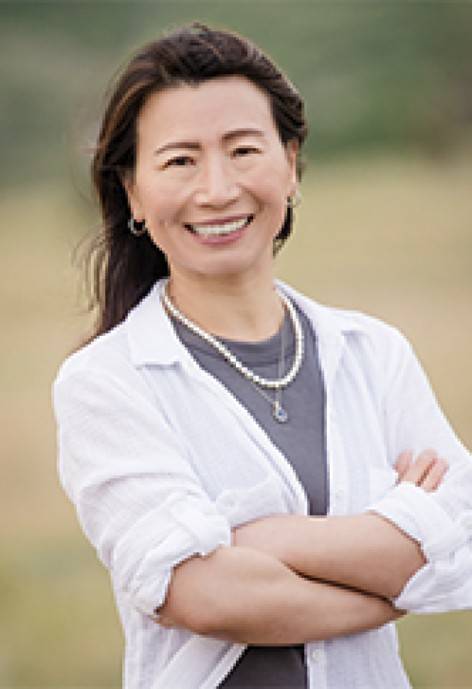
Katie Dongmei Li-Oakey is a Professor in the Department of Chemical and Biomedical Engineering at the University of Wyoming, where she serves as Undergraduate Coordinator. Her research focuses on catalytic membranes, functional thin films, and coatings for liquid filtration, gas processing, and biomedical sensors. She explores novel catalyst-surface interactions to address separation challenges like fouling and poisoning. Ph.D. in Chemical and Biological Engineering (University of Colorado at Boulder, 2003) Postdoctoral Fellow (University of Colorado at Boulder, 2003-2005) Adjunct Assistant Professor (University of Wyoming, 2010-2011) Industry experience: Intel Corporation, DRC Metrigraphics Her work spans fuel cell materials , COF-based membranes , and self-cleaning surfaces , with patents on ultra-low Pt catalysts and durable nanoparticle platforms. Publications emphasize covalent organic frameworks , oxygen-inhibited photopolymerization , and electrochemical performance of carbon electrodes. Current projects include microparticle fabrication , ionic liquid recycling , and environmental sensors . She collaborates on energy exploration filtration and biomedical devices , applying computational modeling to optimize membrane properties.
Robert-Zoltán Szász is a Researcher in the Department of Energy Sciences at Lund University, Faculty of Engineering, and a member of the LTH Profile Area: The Energy Transition. His work centers on numerical modeling of fluid flows. His research interests encompass: Numerical modeling of swirling reacting and non-reacting flows Computational aeroacoustics Wind turbine aerodynamics Ice accretion phenomena He employs Large Eddy Simulations and Computational Fluid Dynamics to address energy system challenges, with recent focus on hydrogen-enriched combustion dynamics and ice accretion modeling for renewable infrastructure. Szász has supervised 6 students and contributed to key projects: Numerical and experimental investigation of a gas turbine model combustor : Dissertation project examining swirling flows in combustion systems Computations of ice throw/fall : 2018-2019 research on ice formation/detachment modeling
Özgür Ertunç serves as an Associate Professor in the Mechanical Engineering Department at Özyeğin University's Faculty of Engineering since September 2013. Previously, he held research positions at Friedrich-Alexander University (FAU) Erlangen-Nuremberg where he earned his Dr.-Ing. in Fluid Mechanics in 2006 under Prof. Franz Durst. His academic journey includes BSc and MSc degrees in Aeronautical Engineering from Middle East Technical University (METU). Research Focus: Ertunç specializes in turbulent and transitional flows, multiphase systems, and applied fluid dynamics. His work bridges experimental and computational methods with applications spanning power generation, pharmaceuticals, automotive systems, and wind energy. Notable experimental achievements include turbulence measurements in the Bosporus Strait and diffusion studies during 90 parabolic flight maneuvers under microgravity conditions. His recent publications (2023-2025) demonstrate expertise in droplet dynamics, combustion modeling, wind turbine optimization, and advanced manufacturing processes. Key trends include computational fluid dynamics for industrial applications, precision fluid control systems, and sustainable energy solutions. Major funding sources include EU programs, DFG, DLR, TÜBİTAK, and industry partners like Siemens, BMW, and Roche. Scientific Recognition: 3 Patents 15+ refereed journal publications 40+ conference presentations Established 'Wind Energy Specialists' master's program at FAU-Busan (2013) Ertunç has supervised over 30 theses including 9 doctoral dissertations (6 ongoing). He leads research projects funded by German Aerospace Center (DLR), BMW, and TÜBİTAK, with recent work focusing on 3D concrete printing automation and microgravity fluid dynamics. His laboratory conducts extreme-environment testing including parabolic flight campaigns and marine turbulence measurements.
Prof. Dr.-Ing. Stefan Pischinger serves as Professor and Chairholder of Thermodynamics of Mobile Energy Conversion Systems at RWTH Aachen University's Institute of Thermodynamics. He holds key leadership roles as Spokesperson for the Fuel Science Center (FSC) Cluster of Excellence, Energy, Chemical & Process Engineering (ECPE) profile area, and Competence Center Power to Fuel. His research infrastructure includes laboratory facilities at Forckenbeckstraße 4, 52074 Aachen (z-Building [4153]), with direct contact via pischinger_s@tme.rwth-aachen.de and +49 241 80-48001. His research program centers on decarbonizing combustion systems through hydrogen/ammonia fuel adaptation, multi-fuel engine optimization, and advanced aftertreatment technologies. Key focus areas include charge motion design for carbon-neutral fuels , predictive knock modeling for alternative fuel blends, and emission footprint analysis of sustainable propulsion pathways. His work bridges fundamental thermodynamics with practical engineering solutions for heavy-duty transportation and marine applications. Analysis of his 2023-2025 publications reveals three dominant research trajectories: (1) Hydrogen combustion system optimization for both on- and off-highway applications, (2) Data-driven calibration methodologies for multi-fuel engines, and (3) Life-cycle assessment of renewable fuel pathways. His team employs combined optical diagnostics, numerical simulation, and cloud-based data science tools to address Euro 7 emission challenges and zero-impact propulsion targets. Scientific Awards No scientific awards were documented in the source materials Advising and grant activities remain unspecified in available documentation. His leadership positions suggest oversight of substantial research funding through the FSC Cluster of Excellence and Competence Center Power to Fuel initiatives, though specific grant details aren't provided. Laboratory operations are centered within the Chair of Thermodynamics of Mobile Energy Conversion Systems, with collaborative frameworks through the Fuel Science Center's interdisciplinary network. His team maintains specialized capabilities in hydrogen jet formation analysis, ammonia combustion testing, and non-exhaust particle emission simulation, supporting both fundamental research and industry partnerships in sustainable mobility.
Paolo Tamburrano serves as an Associate Professor in the Department of Mechanics, Mathematics and Management at Polytechnic University of Bari, Italy. His primary research focuses on fluid machinery and hydrogen engine combustion systems, with affiliations centered around advanced propulsion and sustainable energy technologies. His research interests span Fluid Machinery , Hydrogen Engine Combustion , and Computational Fluid Dynamics , with significant contributions to understanding lubricant-oil interactions in hydrogen engines, cryogenic heat exchanger design for aviation, and biomethane liquefaction processes. Recent work investigates cavitation phenomena in piezohydraulic systems and digital hydraulic valve technologies. Analysis of his 15 most recent publications reveals a strong emphasis on hydrogen propulsion systems (60% of works), advanced hydraulic technologies (25%), and sustainable energy conversion (15%). Key recurring themes include chemical kinetics modeling, combustion instability prevention, and system optimization for alternative fuels. No scientific awards or honors are documented in the available materials. Professor Tamburrano maintains active research collaborations in aircraft fuel systems and hydraulic actuation technologies, with significant focus on sustainable aviation applications. His work demonstrates consistent funding support for experimental validation and computational modeling projects. Current research activities include developing the HyLube mechanism for hydrogen engine pre-ignition prevention and designing cryogenic systems for liquid hydrogen aircraft integration, with several 2025-2026 publications indicating ongoing experimental programs.
Patrick Hendrick is an Associate Professor at the Department of Mechanical Engineering, Faculty of Engineering Science, KU Leuven. His work spans aerospace engineering, thermal systems, and sustainable energy technologies. Research Focus : Hendrick's research investigates propulsion systems (hybrid rocket motors, fuel additives), energy conversion (pump-as-turbine micro-storage), and thermal engineering challenges (gas turbine vanes, heat exchangers). He also explores wastewater thermal recovery for sustainable residential heating. Teaching : He teaches aircraft engines and turbomachinery courses at KU Leuven, translating complex fluid dynamics concepts into practical applications. Publications : His recent work (2017-2019) focuses on aerospace propulsion, thermal systems optimization, and sustainable energy integration, with contributions to Aerospace Science and Technology and Applied Energy .
Noah Van Dam is an Associate Professor in the Mechanical and Industrial Engineering Department at the Francis College of Engineering, University of Massachusetts Lowell. He joined UMass Lowell in Fall 2018 after completing his Ph.D. at the University of Wisconsin-Madison in 2015 and working as a postdoc at Argonne National Laboratory. His educational background includes: Ph.D. in Mechanical Engineering from University of Wisconsin-Madison (2015) B.S. in Mechanical Engineering from Iowa State University of Science and Technology Professor Van Dam's research focuses on high-fidelity modeling of multiphase and reacting flows, with particular emphasis on verification, validation and uncertainty quantification techniques for computational fluid dynamics models. His work spans multiple applications including internal combustion engines, gas turbines, aerospace propulsion systems, and energy generation processes. Key research areas include: Multi-phase/reacting flows Combustion modeling Computational Fluid Dynamics (CFD) Lagrangian-Eulerian methods Verification, validation, uncertainty quantification (VVUQ) Machine learning applications in combustion His recent publications demonstrate a strong focus on alternative fuels, particularly ammonia-hydrogen blends, and their application in internal combustion engines. His work also addresses critical challenges in marine propulsion systems, thermal energy storage, and advanced numerical methods for multiphase flows. Professor Van Dam's research has significant implications for developing cleaner, more efficient energy conversion technologies. Among his notable achievements are: Outstanding Teaching Assistant Award (2015) Robert G. Sachs Award for Outstanding Poster Presentation (Third Place) (2015) DAAD RISE Professional Scholarship (2010) University Fellowship & Vilas Welcome Award (2010) Professor Van Dam has advised numerous graduate and undergraduate students on research projects related to computational fluid dynamics, combustion, and alternative fuels. His students have gone on to positions at national laboratories, research institutions, and industry. He has also secured funding from organizations including the Office of Naval Research for his work on marine burners and ammonia combustion. His research group, the Multi-phase and Reacting Flows group, actively investigates high-fidelity computational fluid dynamics modeling of complex flows with applications to energy systems. Current research directions include ammonia-hydrogen combustion, low-pressure marine burners, advanced fuel spray modeling, machine learning applications in chemical kinetics, and thermal energy storage using CO2 clathrate hydrates.
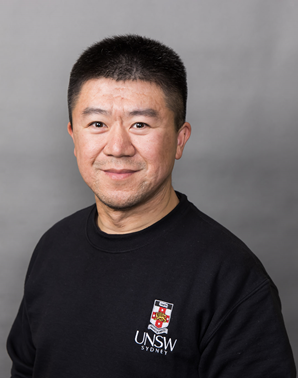
Professor Yansong Shen is a faculty member in the School of Materials Science and Engineering at the University of New South Wales (UNSW). His research spans chemical engineering, process control, and metallurgy, with a focus on sustainable technologies in ironmaking, hydrogen generation, and recycling. He leads the SCoPE research group and actively engages in industry collaborations. Research Focus : Reacting flow simulation, particle technology, pyrometallurgy, and circular economy applications Teaching : Advanced Transport Phenomena, Heat and Mass Transfer, Chemical Reaction Engineering Engagement : President of the Australasian Particle Technology Society (2019-present) His recent work involves hydrogen injection in blast furnaces , non-spherical particle dynamics , and electrolyser design for green hydrogen . This aligns with UNSW’s strengths in clean energy and advanced manufacturing .
Professor Avinash Kumar Agarwal is a distinguished faculty member in the Department of Mechanical Engineering at the Indian Institute of Technology Kanpur. With a PhD from IIT Delhi, he has established himself as a leading researcher in the field of alternative fuels and combustion engineering. His work bridges fundamental research with practical applications, particularly in sustainable energy solutions for transportation. Dr. Agarwal's research spans multiple critical areas in energy and combustion engineering. His work focuses on developing sustainable alternatives to conventional fossil fuels, with particular emphasis on biodiesel, hydrogen, and other gaseous fuels. He has pioneered research in laser-based ignition systems and diagnostic techniques for internal combustion engines, contributing significantly to cleaner and more efficient engine technologies. His work addresses critical challenges in emissions reduction and engine performance optimization. Professor Agarwal's publications demonstrate a strong focus on practical applications of alternative fuels research, with notable impact in both academic and industrial contexts. His work shows consistent progression from fundamental combustion studies toward practical implementation in real-world engine systems, with particular emphasis on technologies applicable to Indian conditions and constraints. Fellow of ASME (American Society of Mechanical Engineers), 2013 Fellow of SAE International, 2012 NASI-Reliance Industries Platinum Jubilee Award, 2012 INAE Silver Jubilee Young Engineer Award, 2012 Dr. C.V. Raman Young Teachers Award, 2011 Professor Agarwal has led significant research projects with practical applications, including the development of electronic fuel injection systems for Indian Railways locomotives, which achieved 4% fuel savings and reduced emissions. His work on utilizing waste heat for vegetable oil preconditioning represents innovative thinking in sustainable fuel technology. He has established strong industry connections through his work with organizations like SAE International and has contributed to national energy research initiatives through his position at IIT Kanpur.