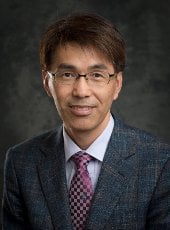
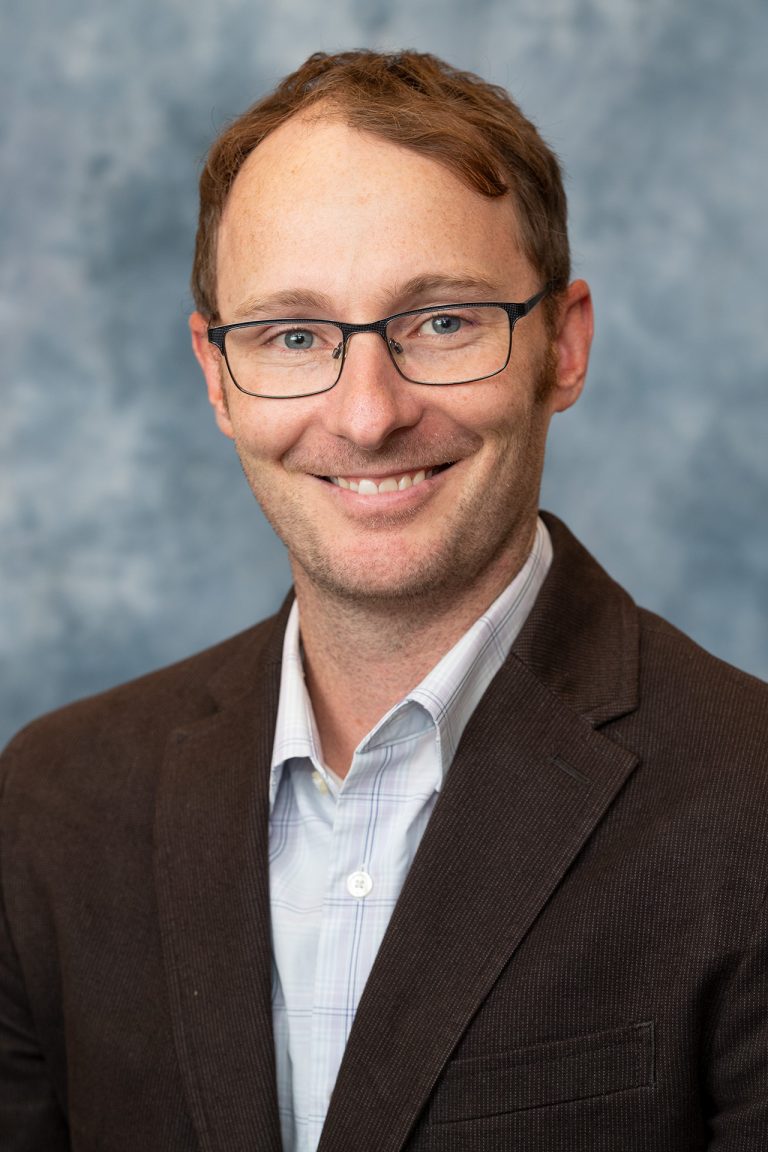
Professor Anna Korre is a leading academic in Environmental Engineering at Imperial College London's Faculty of Engineering. She serves as Associate Provost (Sustainability) and held the role of Co-Director of Energy Futures Lab (2018-2024). Her primary affiliation is with the Department of Earth Science & Engineering, where she leads the Minerals, Energy and Environmental Engineering Research Group. Her research focuses on risk modeling, environmental impact assessments, and engineering solutions for sustainable resource production and decarbonization. Key areas include carbon capture and storage (CCS), geothermal energy, and life cycle analysis of industrial systems. Affiliations: Energy Futures Lab, Institute for Molecular Science & Engineering, Minerals, Energy and Environmental Engineering Group Committee Roles: Chair of Earth Science & Engineering Sustainability Committee, member of University Sustainability Strategy Committee Her work integrates computational modeling, artificial intelligence, and multi-disciplinary collaboration to address global energy challenges. Over 150+ peer-reviewed publications and high-impact projects funded by UKRI, EU, and industry partners demonstrate her leadership in advancing sustainable technologies. She has appeared in media including BBC's The Life Scientific podcast discussing carbon capture innovations. Research highlights include optimizing CO2 storage networks, assessing geothermal reservoir risks, and evaluating lithium production sustainability. She champions industry-academia partnerships to translate research into real-world decarbonization solutions.
Matthias Ihme is a Professor in the Department of Mechanical Engineering and Photon Science Directorate at Stanford University. His research focuses on large-eddy simulation (LES) of turbulent reacting flows, aeroacoustics, combustion-generated noise, numerical methods, and high-order schemes. He holds a Ph.D. from Stanford University (2008), an M.Sc. in Computational Engineering from the University of Erlangen (Germany, 2002), and a Dipl.-Ing. in Mechanical Engineering from Munich University of Applied Sciences (Germany, 2000). His work bridges computational fluid dynamics, combustion science, and photon science, with notable contributions to supercritical fluid dynamics, machine learning integration in fluid simulations, and high-fidelity atmospheric transport modeling. Recent research emphasizes ultrafast cluster dynamics, shock-induced interface behavior, and stochastic ignition mechanisms in advanced fuel systems. Publications highlight interdisciplinary advancements, including physics-informed ML frameworks for reacting flows and experimental studies using X-ray photon correlation spectroscopy. His projects often involve high-performance computing and collaboration with national labs like SLAC.
Rongjia Tao is a Professor of Physics at Temple University's College of Science and Technology (CST). He specializes in experimental and theoretical condensed matter physics, with a focus on soft matter systems. His research explores electrorheological (ER) and magneto-rheological (MR) effects on complex fluids like blood, chocolate, and crude oil. Notable contributions include developing magnetic devices to reduce blood viscosity and turbulence for hypertension treatment, ER-based methods to improve chocolate healthiness, and ER/ MR technologies enhancing energy efficiency in oil transportation. Education Ph.D. Physics, Columbia University, 1982 M.Ph. & M.A. Physics, Columbia University, 1982-1980 B.S. Physics, University of Science and Technology of China, 1970 Research Interests Tao's work spans ER/MR fluid dynamics, biophysical applications (e.g., blood rheology and thrombosis treatment), superconductivity under electric fields, and quantum Hall effect physics. His innovations address real-world challenges in healthcare, energy, and environmental science. Recent focus includes magnetic field therapies for severe Covid-19 complications and tornado suppression via atmospheric electric field manipulation. Awards 2023 Lifetime Achievement Award (Electrorheological Fluids Conference) 2019 Marquis Who’s Who Lifetime Achievement Award 2004 APS Fellow (Condensed Matter Physics) 1987 Omni Magazine Prize for solving the 'vicious neighbor problem' Advancing Knowledge Tao holds patents on medical devices, fuel treatments, and sensor technologies. His lab collaborates across disciplines to translate fundamental physics into practical solutions, emphasizing industry partnerships for commercialization. Current projects explore terahertz spectroscopy for hazardous material detection and sustainable energy systems.
Dr. Sohrab Zendehboudi is an Equinor Chair Professor and research lead in the Department of Chemical and Process Engineering at Memorial University's Faculty of Engineering and Applied Science. His work focuses on energy and environmental challenges through experimental and modeling approaches. He has over 15 years of experience across academia and industry in Iran, Kuwait, the U.S., and Canada. He holds a PhD in Chemical Engineering (specializing in transport phenomena) from the University of Waterloo. Research interests include carbon capture, utilization, and sequestration (CCUS), renewable energy systems, process systems engineering, and advanced wastewater treatment. He leads a large research team addressing theoretical and practical challenges in energy sustainability and environmental protection. Key achievements include the 2023 Lectureship Award. His publications span topics like hydrogen production, CO2 storage, solar energy systems, and novel adsorbent materials. He actively seeks graduate students and researchers skilled in experimental work, numerical modeling, and machine learning for energy applications. Education: PhD in Chemical Engineering (University of Waterloo) Key Areas: CO2 Management, Bioenergy, Adsorption Technologies Labs/Teams: Large interdisciplinary research group Grants: Focus on renewable energy and sustainability projects
Carson Slabaugh is an Assistant Professor in the Department of Aeronautics and Astronautics and holds a courtesy appointment in the Department of Mechanical Engineering at Purdue University. His research focuses on advanced propulsion systems, particularly combustion dynamics in rotating detonation engines (RDEs), rocket combustors, and ramjet configurations. He leads studies on high-pressure flames, laser diagnostics, and fuel injection mechanisms. Key research areas include detonation wave propagation, pressure gain combustion, and the application of advanced optical diagnostics (e.g., CARS, PLIF) to study transient phenomena in extreme environments. His work addresses challenges in next-generation propulsion systems, including hydrogen-blend fuels, methane-oxygen rocket ignition, and solid-fuel ramjet performance. Recent studies emphasize geometric optimization of RDEs, fuel injection dynamics under detonation conditions, and the impact of flow parameters on combustion stability. Collaborations involve experimental validation with high-speed imaging and computational fluid dynamics (CFD) modeling to bridge theoretical predictions with real-world performance. Slabaugh’s laboratory develops novel diagnostic tools for megahertz-rate imaging of mixing and combustion processes, advancing understanding of transient flame structures and instability mechanisms. His contributions aim to improve efficiency and operability of propulsion systems for aerospace and terrestrial applications.
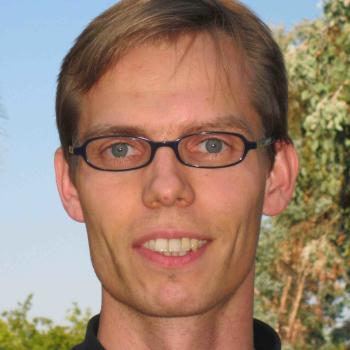
Prof. Aswin Gnanaskandan is an Assistant Professor in the Department of Mechanical & Materials Engineering at Worcester Polytechnic Institute (WPI), where he joined in August 2020. He directs the Computational Multiphase Transport Laboratory, focusing on developing high-fidelity models for multiphase flows with applications in engineering and biomedical fields. His research is funded by NSF, Office of Naval Research, NIH, and the Center for Advanced Research in Drying. Education: PhD, Aerospace Engineering & Mechanics, University of Minnesota (2015) MS, Aerospace Engineering & Mechanics, University of Minnesota (2012) BS, Aeronautical Engineering, Madras Institute of Technology (2006) Research Interests: Computational Fluid Dynamics (CFD), Multiphase Flow Modeling, Biomedical Acoustics, High-Performance Computing, and applications in underwater transportation, propulsion, and biomedical acoustics. His work bridges fundamental fluid mechanics with real-world challenges in energy, health, and environmental systems. Recent Research Trends: His articles focus on microbubble-enhanced ultrasound therapy, cavitation dynamics in propulsion systems, and multiphase flow modeling across scales. Key themes include improving thermal ablation precision in medical treatments and optimizing industrial processes like spray drying through advanced numerical techniques. Awards: Excellence in Research Award (WPI, 2024) NSF Engineering Research Initiation Award (2023) James Nichols Heald Research Award (WPI, 2022) Teaching & Advising: Teaches undergraduate/graduate courses in Fluid Mechanics, Thermodynamics, and Numerical Methods. Advises multiple Major Qualifying Projects and fosters interdisciplinary collaboration through lab activities. His lab actively engages with industry and academic partners on projects like HIFU therapy and sustainable energy solutions. Labs & Teams: Leads the Computational Multiphase Transport Lab, which collaborates on projects involving CFD solver development (MFC 5.0), exascale computing, and biomedical acoustics. Aligns research with UN Sustainable Development Goals (SDG 7, 9, 13).
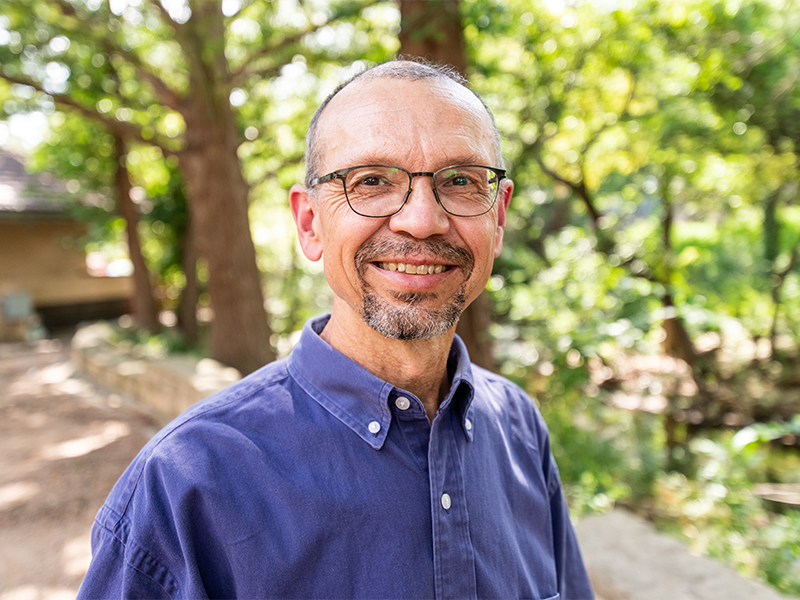
Matthew J. Hall is a Professor in the Department of Mechanical Engineering at the University of Texas at Austin , where he also holds the Louis T. Yule Fellowship in Engineering . He has been a faculty member since 1991 and is affiliated with the Cockrell School of Engineering . His research spans engine combustion processes , thermal fluids systems , engine controls , optical diagnostics , battery safety , and alternative fuels . He is particularly known for his work on cold-start emissions , spark ignition , engine friction reduction , and thermoelectric energy recovery . He teaches courses in Thermodynamics , including modeling of power cycles and HVAC systems , and has published over 150 technical articles. His recent work includes innovations in ammonia combustion , biomass gasification , and advanced engine diagnostics . Scientific Awards & Honors: Fellow of the Society of Automotive Engineers (SAE) Louis T. Yule Fellowship in Engineering Associate Editor, SAE International Journal of Engines Research Impact & Leadership: Prof. Hall leads multidisciplinary efforts in combustion science , energy systems , and sustainable propulsion . His lab has contributed to reducing engine friction by up to 40%, improving fuel efficiency at idle, and advancing the use of ammonia as a low-carbon fuel. He also explores thermoelectric generators for extending drone flight range and improving vehicle energy recovery systems.
Jingyi Chen is a Professor in the Department of Chemistry and Biochemistry at the University of Arkansas. She serves as Vice Chair in the College of Arts & Sciences and leads the Chen Research Group focused on rational design and synthesis of functional nanomaterials for energy conversion and human-health applications. PhD, Chemistry & Nanotechnology – University of Washington (2006) MA, Chemistry – State University of New York College at Buffalo (2002) BS, Chemistry – Sun Yat-sen University (1997) Her research spans three major projects: Project I: Developing cost-effective catalysts for fuel cell applications through precise synthesis of copper-based bimetallic nanocrystals. Project II: Surface modification of nanoparticles with polydopamine for bio-related applications like low-friction coatings. Project III: Creating nanoplatforms for targeted drug delivery against antibiotic-resistant infections and cancer. Recent publications focus on nickel phosphide nanoparticles (2024), perovskite oxide oxygen evolution catalysts (2023-2024), and silver nanoparticle antimicrobial mechanisms (2020-2023). Her group has produced 15+ recent publications in journals like ACS Nano , J. Phys. Chem. C , and ACS Infectious Diseases . Award highlights include: Thomson Reuters Top 1% Highly Cited Researcher (2015-2018) Arkansas Research Alliance Fellow (2018) Women’s Giving Circle Award (2014) Ralph E. Powe Junior Faculty Enhancement Award (2011) She has mentored over 20 graduate and undergraduate students , including Ryan Manso (PhD 2022), Isabelle Niyonshuti (PhD 2021), and David Thompson (DOE SCGSR awardee 2022). Her lab (CHBC 304/306/309) employs advanced tools like synthesis setups , electrochemical stations , and laser irradiation systems .
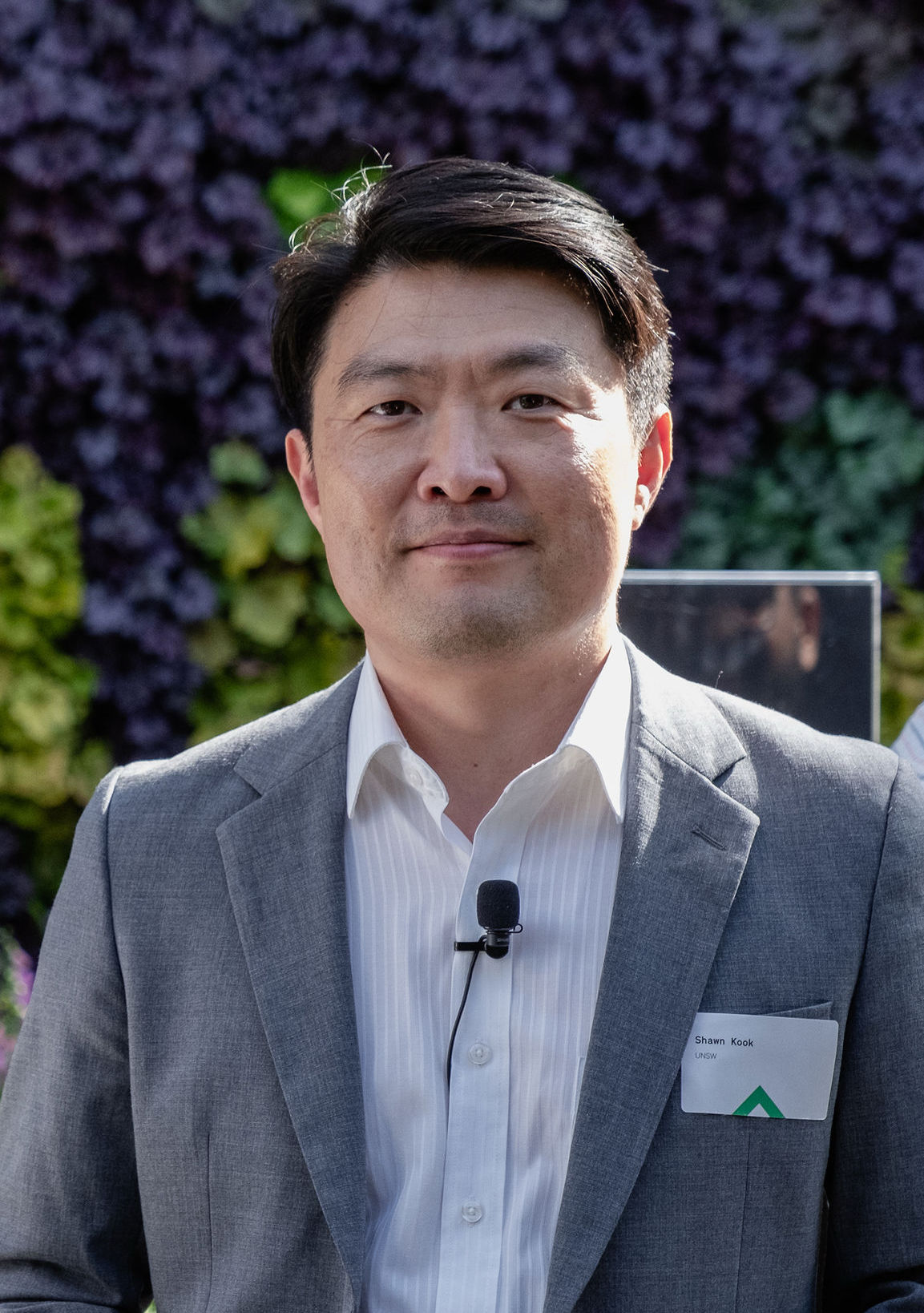
Professor Shawn Kook is a faculty member at the University of New South Wales (UNSW), where he directs the UNSW Engine Research Laboratory and conducts cutting-edge research in engine technologies and sustainable powertrain systems. His work focuses on developing new powertrain technologies for carbon neutral fuel combustion across various applications. His research expertise spans multiple critical areas: Internal Combustion Engines (Petrol/Gasoline, Diesel, Gasoline Compression Ignition, Dual-Fuel) Alternative Fuels (Hydrogen, Ethanol, Biodiesel, Natural Gas, Kerosene, Gas-To-Liquid) Optical Engines and Laser-based Imaging Diagnostics In-cylinder Flow Fields, Turbulence, and Combustion Processes Pollutants Formation (Soot, Particle Morphology, NOx, HC, CO, CO2) Professor Kook's research program investigates new diesel compression-ignition (CI) and petrol spark-ignition (SI) engines developed for high efficiency and low air-polluting emissions, including cooperation with other power generation methods such as gasoline-electric hybrids. His carbon neutral fuel research encompasses hydrogen, ethanol, methanol, jet fuel, biodiesel, and other renewable source fuels. The recent publications show a strong trend toward hydrogen combustion, optical diagnostics of in-cylinder processes, and alternative fuel research with emphasis on emissions reduction. He actively supervises research students focusing on internal combustion engines, CI engines, SI engines, energy & fuels, turbulence, and hydrogen technologies. Professor Kook has also founded DeCarice Pty Ltd, a UNSW spinout company where he serves as co-founder and chief technology officer, demonstrating his commitment to translating research into commercial applications.
Arash Nemati is an Assistant Professor at the Department of Energy Conversion and Storage, Technical University of Denmark (DTU). His research focuses on sustainable energy technologies, particularly solid oxide fuel cells, ammonia-fueled systems, and multiphysics modeling of energy conversion processes. He leads and participates in EU-funded projects such as RESCUE and X-SEED, aiming to advance renewable energy storage and green hydrogen production. His work addresses challenges in electrochemical systems, including durability, efficiency, and integration of renewable energy sources. He has received notable recognition, including a Highly-cited Paper award (Web of Science, 2022) and the DAAD Green Hydrogen Research Tour Scholarship (2024). Nemati actively supervises PhD students in areas like co-electrolysis and solid oxide electrolysis cell modeling. His expertise spans thermochemical processes, numerical simulations, and techno-economic evaluations of energy systems. Key projects include developing ammonia-driven reversible solid oxide cells for grid storage and optimizing pyrolysis-electrolysis systems for methanol and char production. His research aligns with UN Sustainable Development Goals, emphasizing clean energy and climate action.
Dr. Youngchul Ra is an Associate Professor in the Department of Mechanical and Aerospace Engineering at Michigan Technological University. He holds a PhD from MIT (1999) and degrees from Seoul National University. His expertise includes computational fluid dynamics (CFD), combustion modeling, chemical kinetics, and alternative fuel research. His work focuses on advanced combustion strategies like Gasoline Compression Ignition (GCI), engine CFD code development, and high-performance computing. Education: PhD in Mechanical Engineering, Massachusetts Institute of Technology (1999) Masters and Bachelors in Mechanical Engineering, Seoul National University Research Interests: Developing multi-component fuel models for real-world applications Optimizing six-stroke GCI engines with advanced valve technologies Reducing emissions via combustion control and injection strategies Parallel computing techniques for large-scale engine simulations Recent work emphasizes oxygenated fuels in GCI engines and parametric studies of combustion efficiency. His CFD models are validated against experimental data for accuracy. His research has led to advancements in low-temperature combustion and emission reduction without explicit awards listed. He collaborates on engine design optimization and fuel formulation projects.
Jay P. Gore is the Vincent P. Reilly Professor in Combustion Engineering at Purdue University's School of Mechanical Engineering, with courtesy appointments in Aeronautics & Astronautics and Chemical Engineering. He holds positions at the West Lafayette campus and leads the Gore Research Group, focusing on combustion, radiation heat transfer, and sustainable energy systems. Education: B.E. from University of Poona (1978), M.S. and Ph.D. from Penn State (1982, 1986), and a Postdoctoral Certificate from University of Michigan (1987). His research spans combustion fundamentals, CO2 recycling via char gasification, laser diagnostics, and propulsion systems. He pioneered the Summer Undergraduate Research Fellowship (SURF) program at Purdue. Research interests include turbulent reacting flows, biomedical heat transfer, and global energy policy. Key subfields are combustion diagnostics, flame structure analysis, and hydrogen storage. His work integrates experimental and computational methods, with applications in aerospace, energy, and environmental sectors. Awards: Purdue Innovator Hall of Fame (2014) Fellowships: AIAA (2009), ASME (2006) Reilly Chair Professor (2000) Presidential Young Investigator Award (1991) Grants & Collaborations: Supported by DoE, NASA, and industry partnerships. Leads interdisciplinary projects on CO2 utilization and renewable energy systems. Labs/Teams: Gore Research Group specializes in combustion diagnostics, laser-based measurements, and sustainable energy solutions. Collaborations include international conferences and policy initiatives.
Jens Honore Walther is a Professor in the Department of Civil and Mechanical Engineering at the Technical University of Denmark (DTU). His research focuses on fluid mechanics, coastal and maritime engineering, and computational fluid dynamics (CFD). He leads projects on wave energy converters, multiphase flow systems, and thermal energy applications. His work contributes to sustainable development goals related to clean energy and climate action. External Roles: Research associate at ETH Zurich (2003–present) Postdoctoral fellow at ETH Zurich (2000–2003) Project manager at Danish Maritime Institute (1996–1997) Research scientist at Danish Meteorological Institute (1994–1996) Research Interests: Walther’s expertise spans CFD modeling, granular flow dynamics, and nanofluidics. His recent projects include optimizing wave energy converters, analyzing gap resonances in marine structures, and developing multiphase ejector geometries for heat pumps. His work integrates high-performance computing and experimental validation to address challenges in marine engineering and energy systems. Advising & Projects: He supervises PhD students in areas such as elite sport aerodynamics, gas lubrication, and alternative fuel combustion. Notable projects include: Elite sport aerodynamics (2024–2026) Alternative fuel injection in marine engines (2023–2026) Multi-physical gas bearing modeling (2024–2027) Labs & Collaborations: Walther collaborates with institutions like ETH Zurich and engages in experimental facilities at DTU. His group focuses on advanced CFD simulations and fluid-structure interaction studies.
Bret Windom is Associate Professor of Mechanical Engineering at Colorado State University's Walter Scott, Jr. College of Engineering, specializing in combustion science and alternative fuels. He directs research on physiochemical fuel characterization, laser diagnostics, and energy conversion systems. Research investigates combustion dynamics of sustainable fuels, propulsion systems, and emission reduction strategies. Recent projects include oxymethylene ethers as low-sooting biofuels, hydrogen production systems, and hybrid SOFC-engine power generation. Funded by DOE, ONR, and Caterpillar, his work advances low-carbon energy technologies. Recipient of the SAE Teetor Educator Award (2018) and multiple research fellowships. Leads the Chemical Energy Conversion Laboratory, mentoring graduate students in combustion research. Current industrial collaborations focus on marine engine decarbonization and lubricant ignition behavior. Recent Publications demonstrate strong focus on sustainable fuels (hydrogen, LPG, OMEs), advanced diagnostics (laser spectroscopy, NMR), and energy system integration (SOFC hybrids, scramjets). Article keywords frequently include combustion optimization, emissions reduction, and alternative fuel characterization.
Professor Dinos Arcoumanis FREng is a distinguished academic at City, University of London, where he has served as Professor since 2000. He previously held academic positions at Imperial College London from 1988-2000, progressing from Lecturer to Reader and ultimately to Professor of Internal Combustion Engines. At City University, he has held significant leadership roles including Head of the Aeronautical, Civil and Mechanical Engineering Department, Dean of the School of Engineering & Mathematical Sciences, Pro-Vice-Chancellor for Research and International Links, and Deputy Vice-Chancellor (Research & International) until August 2014. He remains actively involved in research and academic leadership, currently serving as Director of the International Institute of Cavitation Research and Coordinator of the World Cities World Class (WC2) University Network. Professor Arcoumanis holds undergraduate and graduate degrees in Physics, Engineering and Mechanical Engineering from the Aristotelian University of Thessaloniki, Greece (1973), the University of California at Irvine, USA (1980), and the Imperial College of Science, Technology and Medicine, London (1984), respectively. His primary research focuses on internal combustion engines, with specific expertise in combustion, exhaust emissions, and engine lubrication. Professor Arcoumanis has pioneered the application of laser diagnostics and computational fluid dynamics to study internal combustion engines, with particular interest in automotive fuels including renewable and alternative fuels. His work bridges fundamental fluid mechanics with practical engine applications, addressing critical environmental engineering challenges in the transportation sector. His recent research has expanded into cavitation phenomena, fuel cell technology, and the development of sustainable propulsion systems for future transportation needs. Professor Arcoumanis's extensive publication record demonstrates a clear evolution in research focus, beginning with fundamental studies of diesel engine combustion and progressing toward advanced fuel injection systems, alternative fuels, and environmental sustainability. His work consistently bridges theoretical fluid mechanics with practical engine applications, with recent emphasis on cavitation phenomena in fuel systems and the integration of renewable energy technologies with traditional combustion systems. The interdisciplinary nature of his research connects mechanical engineering principles with environmental science, materials science, and energy systems engineering. Professor Arcoumanis has received numerous prestigious awards and honors throughout his career: 1991 Dugald Clerk Prize of IMechE 1995 and 1998 Arch T. Colwell Merit Award of the Society of Automotive Engineers Elected Fellow of the Royal Academy of Engineering (FREng) in 2001 Honorary doctorate from St. Petersburg State Polytechnic University of Russia (2009) Professor Arcoumanis has made significant contributions to academic leadership and professional service. He founded the International Journal of Engine Research (JER) in 1999 and serves as its Editor for Europe. He has coordinated the World Cities World Class (WC2) University Network since 2010, which brings together international institutions in major cities to address research challenges in transport, global health, business, and cultural industries. He has also served as a consultant to Brussels (DG17) and Bechtel Ltd. on the Auto-oil II European Programme (1998-2000), and was appointed Ambassador-at-Large of the Hellenic Republic for Energy Policy and New Technologies in September 2012. His research has been supported by various funding bodies including the Lloyd's Register Educational Trust, which funds the International Institute of Cavitation Research that he directs. Professor Arcoumanis leads the International Institute of Cavitation Research, a partnership between City University London, Loughborough University, and Delft University of the Netherlands. He has established collaborative research teams focused on engine combustion, fuel injection systems, and alternative propulsion technologies. His research group has developed advanced experimental facilities for studying fuel spray dynamics, combustion processes, and cavitation phenomena in engine systems. These teams regularly collaborate with automotive industry partners and international research institutions to address cutting-edge challenges in engine technology and sustainable transportation.