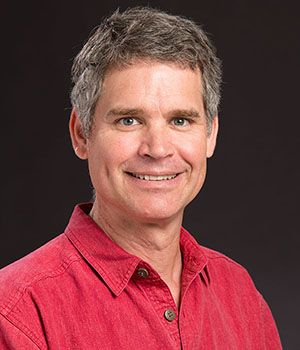
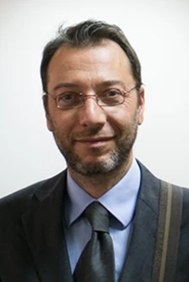
John Berges is Professor in Biological Sciences and Affiliate Professor at the School of Freshwater Sciences, University of Wisconsin-Milwaukee. His laboratory integrates physiological, genomic, and ecological approaches to study aquatic microorganisms across bacteria, phytoplankton, and fish. Research examines stress responses in phytoplankton, ecological consequences of invasive species, and biogeochemical cycling in freshwater ecosystems. Recent work develops digital twins of plankton systems and climate impacts on decomposition. Publications demonstrate consistent focus on Great Lakes ecology (40%), microbial physiology (30%), and methodological innovation (30%). Laboratory techniques span genomic analysis, biochemical assays, and field sampling. Collaborative projects investigate wastewater bioremediation and microbial fuel cells. No awards or specific student advisees are documented.
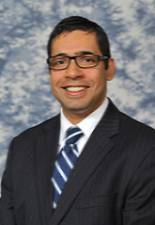
Dr. Raghav Khanna is the Leidich Family Endowed Professor of Power Systems in the Department of Electrical Engineering and Computer Science at the University of Toledo . His research focuses on wide bandgap semiconductor device modeling for advanced power electronics applications. Academic Rank: Associate Professor Research Themes: GaN devices, renewable energy integration, smart grid optimization Research Interests : Dr. Khanna's work addresses critical challenges in power electronics reliability , high-voltage device engineering , and dynamic energy system modeling . His investigations span from fundamental semiconductor physics to real-world grid integration of renewable energy sources. Publication Trends : Recent articles demonstrate expertise in III-N power devices , deep reinforcement learning applications for energy systems, and nuclear-renewable hybrid frameworks . His publications show increasing focus on 20 kV device scaling and hydrogen production systems since 2022. Contact Information : Email: Raghav.Khanna@utoledo.edu Office: NI 2056, University of Toledo
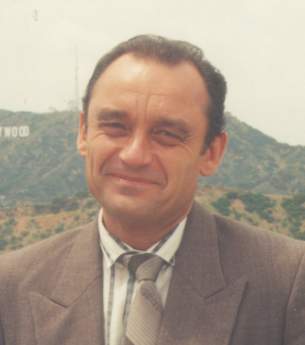
Liviu Goras is a Professor at the Faculty of Electrical Engineering of the Gh. Asashi Technical University of Iasi. His research focuses on nonlinear circuits, cellular neural networks (CNNs), and signal processing applications. He earned his PhD in 1978 under Prof. Gheorghe Savin, with a thesis on impedance converters and inverters. Goras has authored numerous publications, including seminal work on Turing patterns in CNNs and hysteresis systems. His contributions span theoretical and applied electronics, with a gold medal awarded at the 1997 Brussels International Salon for Technical Creation. Research interests include nonlinear circuit design, signal processing using hysteresis systems, and pattern formation in CNNs. He has published over 30 articles in international journals like IEEE Transactions and presented at conferences such as ECCTD and CNNA. His work on cellular neural networks explores boundary conditions and pattern dynamics, with applications in signal analysis and system modeling. Scientific awards include the prestigious gold medal for innovative technical creations. Goras has also contributed to educational advancements, discussing quality in higher education at workshops. His patents cover automotive fuel measurement, nonlinear circuit elements, and optical pollution detection systems.
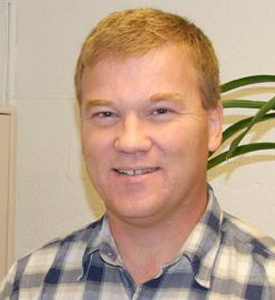
Shawn Swavey is a Professor of Chemistry at the University of Dayton, affiliated with the College of Arts and Sciences and the Bioengineering Graduate Program in the School of Engineering. He holds a Ph.D. in Bioinorganic Chemistry from Case Western Reserve University (1998), with postdoctoral research at Kent State University and Virginia Tech. His research focuses on bioinorganic chemistry, electrocatalysis, and coordination chemistry, particularly involving metalloporphyrins and their applications in photodynamic therapy, DNA interactions, and luminescent materials. Swavey has secured grants totaling over $660,000, including funding from the Research Corporation, Merck/AAAS, and the National Science Foundation. He serves on the editorial board of the Global Journal of Inorganic Chemistry and is an active member of the American Chemical Society and Sigma Xi. Education: Ph.D., Bioinorganic Chemistry, Case Western Reserve University, 1998 M.S., Inorganic Chemistry, Case Western Reserve University, 1995 B.S., Chemistry, Edinboro University, 1991 Research Highlights: Design of metalloporphyrins for photodynamic therapy targeting cancer cells Development of electrocatalysts for oxygen reduction in fuel cells Synthesis of lanthanide complexes with luminescent properties for sensing applications Grants & Funding: Mechanistic Studies of Oxygen Reduction (Research Corporation, $30,548) STTR Phase II for Temperature-Compensated Pressure-Sensitive Paint ($80,000) Merck/AAAS Program for Photodynamic Therapy Research ($60,000) Labs & Collaborations: Primary lab in the Chemistry Department focusing on synthetic inorganic chemistry Collaborations with local companies like ISSI on applied materials research Swavey's 20+ years of research have produced over 50 peer-reviewed publications, emphasizing interdisciplinary approaches to solving challenges in energy, medicine, and materials science.
Dr. Qianqian Shi is a Lecturer and ARC-DECRA Fellow in the Discipline of Chemistry at the University of Newcastle's School of Environmental and Life Sciences. She holds a PhD from Monash University (2018) and has extensive postdoctoral experience in chemical engineering, leading to her DECRA Fellowship (2020-2024). Her research focuses on self-assembled plasmonic nanocrystals for applications in photocatalysis, sensing, and flexible electronics. Key projects include flexible artificial leaves for solar energy conversion, plasmonic bio-sensors, and programmable nanoassemblies. Education: PhD in Chemical Engineering, Monash University (2018) Postdoctoral Research Fellow, Monash University (2018-2020) Research Interests: Dr. Shi's work integrates nanofabrication, plasmonics, and self-assembly to design functional nanomaterials. Her lab explores flexible plasmonic systems for energy (e.g., artificial leaves), sensing (e.g., SERS-based bio-detection), and wearable electronics. Recent breakthroughs include rootless duckweed-inspired artificial leaves and hierarchically resistive skin biosensors. Awards: ARC DECRA Fellowship (2020-2024) Advising/Grants: Supervision opportunities focus on flexible plasmonics and nanoassembly projects. Current grants include ARC DP-funded research on flexible plasmonic artificial leaves and collaborative work on binary nanoassemblies with Dr. Robert Chapman. Labs/Teams: Her group at the University of Newcastle collaborates with Monash University and industry partners on plasmonic materials for next-generation energy and biomedical applications.
Fernando Garzon serves as a Professor of Chemical and Biological Engineering at the University of New Mexico and holds a joint appointment as a Faculty Research Scientist at Sandia National Laboratory in the Advanced Materials Laboratory (1815 organization). He directs the Center for Micro-Engineered Materials at UNM and maintains a distinguished research career spanning several decades in materials science and electrochemistry. Garzon's research focuses on electrochemical energy conversion technologies , with particular expertise in fuel cells, batteries, chemical sensor development, heterogeneous catalysis, and ceramic thin film materials. His work bridges fundamental materials science with practical applications in energy systems and environmental monitoring. His laboratory develops advanced gas sensors for natural gas emissions monitoring, creates novel materials for energy storage in high-temperature environments, and investigates electrochemical synthesis pathways for fuels and chemicals. Analysis of Garzon's recent publications reveals a strong emphasis on materials for energy applications , with particular focus on gas sensors, fuel cell technologies, and electrochemical synthesis methods. His work increasingly incorporates computational approaches and advanced manufacturing techniques like additive manufacturing to develop next-generation materials. The research spans fundamental material properties to practical applications in environmental monitoring and space vehicle power systems. Los Alamos National Laboratory 2012 Fellow's Prize for Scientific Leadership DOE-EERE Hydrogen and Fuel Cell Program 2009 Award Fellow of the Electrochemical Society (2008) Scientific American's Top 50 Science and Technology Achievements (2003) R&D 100 Award for Sulfur Resistant Oxygen Sensor Technology (1999) Garzon has secured substantial research funding throughout his career, with extensive collaborations across national laboratories, industry partners including Ford Motor Company, DuPont, and General Motors, as well as numerous academic institutions worldwide. His leadership extends beyond research to significant service roles, having served as President of the Electrochemical Society (2012-2013), Vice President (2009-2012), and currently as a member of the ECS Technical Affairs committee. At Sandia National Laboratory, Garzon leads research in the Advanced Materials Laboratory, with particular focus on developing advanced explosives forensic technology for national security applications. His UNM research group maintains strong connections with Los Alamos National Laboratory where he previously worked for 26 years, creating a robust pipeline for student training and technology transfer between academic and national laboratory settings.
Gregory Stephanopoulos is a prominent academic in metabolic and biochemical engineering. His research focuses on biotechnology, bioinformatics, and sustainable biofuel production. He holds a Ph.D. from the University of Minnesota (1978), M.S. from the University of Florida (1975), and a B.S. from the National Technical University of Athens (1973). He has been recognized with over 30 major awards, including the AIChE Doing a World of Good Medal (2024) and election to the National Academy of Sciences (2023). His work includes groundbreaking contributions to microbial engineering for biofuel production, metabolic pathway optimization, and industrial biotechnology. Key research areas include metabolic engineering of microorganisms for high-value chemical production, systems biology approaches to cancer metabolism, and sustainable bioprocess design. He led the ARPA-E Grant (2021) to reduce carbon emissions in biorefining and pioneered the use of isotope tracing for metabolic analysis. His lab has engineered strains of Yarrowia lipolytica and Corynebacterium glutamicum for efficient production of biofuels and pharmaceuticals. Award highlights include the 2019 Gaden Award, 2017 Novozymes Award, and 2016 Eric and Sheila Samson Prize. He served as AIChE President (2015) and holds honorary doctorates from Technical Universities in Dortmund and Athens. His research bridges chemical engineering fundamentals with biological systems, emphasizing translational applications in energy and health.
Mahmoud F. Elmorshedy is a prominent researcher in power electronics and renewable energy systems, with affiliations spanning institutions through collaborative publications in IEEE journals and conferences like IECON and IAS Annual Meeting. His work focuses on optimizing energy conversion and control mechanisms for sustainable technologies. Research Interests: His research emphasizes power converters, model predictive control, and integration of photovoltaic/wind energy systems. Key contributions include advancements in voltage gain topologies, wireless power transfer for drones, and efficiency improvements in linear induction motors. Article Trends: Recent works highlight innovations in High-gain DC-DC converters Sliding mode control for motors Hybrid renewable energy systems Wireless charging technologies These align with trends in sustainable power engineering and smart energy management. Advising & Grants: No explicit student advising or grant information is provided in the scraped data. Labs & Teams: Collaborated extensively with teams led by researchers like Dhafer Al-Makhles, Mahajan Bhaskar, and Wei Xu, contributing to renewable energy projects.
Mubbashar Mehmood is an Assistant Professor at the School of Engineering & Physical Sciences, Heriot-Watt University. His research focuses on renewable energy technologies, thermal engineering, and acoustic wave applications. Key areas include green hydrogen production, solar photovoltaic systems, and medical applications of surface acoustic waves. He has contributed to over 13 peer-reviewed publications, emphasizing sustainable development and energy efficiency. Research interests span renewable energy systems, acoustic wave interactions with droplets, and compound parabolic concentrator design. His work aligns with UN Sustainable Development Goals, particularly in clean energy and environmental sustainability. Recent articles highlight advancements in green hydrogen pathways, solar water pumping systems, and thermal impacts of acoustic waves. Collaborations include international co-authors in energy and materials science. No awards or grants are explicitly mentioned, but his research is widely cited and accessed via open-access platforms.
Mehdi Nazarinia is a Professor and Director of Academic Quality at the School of Engineering & Physical Sciences, Heriot-Watt University. His research focuses on aerodynamics, solar energy systems, thermal engineering, and vehicle design. He has received multiple awards, including the Bill Melbourne Medal (2011) and the Guiding Hand Award (2014). He is actively involved in PhD supervision and contributes to UN Sustainable Development Goals through his work on urban climate and energy efficiency. Research Interests: Aerodynamic optimization of heavy vehicles and UAVs Thermal analysis of solar energy systems Urban heat island mitigation strategies Cavitation erosion in materials CFD-driven design for energy efficiency Key Contributions: Developed advanced cooling systems for solar-powered UAVs Optimized boat-tail designs for fuel efficiency in heavy vehicles Investigated thermal comfort in urban environments Awards: Bill Melbourne Medal (2011) Guiding Hand Award (2014) Mentor of the Year (2014) Refreshing Award (2013, 2018) Teaching Leadership: As Associate Director of Learning and Teaching, he drives pedagogical innovation and student mentorship initiatives.
Fausto Stella is a Fixed-term Tenured Assistant Professor at the Department of Energy (DENERG) of Politecnico di Torino. His research focuses on power electronics, electrical machines, and drives for applications in eMobility, renewable energy systems, and high-performance industrial drives. He leads the PEEMD research group and collaborates with industry on projects involving GaN/SiC semiconductor integration, traction inverters, and DC-link capacitor optimization. He teaches courses on power electronics, electrical drives for eMobility, and embedded systems at the BSc/MSc levels, including laboratory modules on power converters and drives. His work emphasizes practical implementations through high-fidelity hardware-in-loop (HIL) testing and 3D printed thermal solutions. Stella supervises four PhD students researching topics like WBG-based motor drives, multiphase machines, and fault-tolerant power electronics. He has co-authored over 50 publications and holds patents in junction temperature estimation, capacitor aging evaluation, and 3D-printed thermal management systems. His industry collaborations include projects with HBK Genesis and automotive companies, focusing on motor test rig design, SiC inverter validation, and advanced control strategies for electric vehicles. He actively participates in international conferences like SPEEDAM and ICEM, contributing to advancements in power electronics efficiency and reliability.
Joel Anstrom is an Associate Research Professor affiliated with the Larson Pennsylvania Transportation Institute at Pennsylvania State University. His research focuses on advanced vehicle systems, including hybrid electric and fuel cell vehicles, energy storage systems, and electric drive-based active safety technologies such as anti-lock braking and vehicle stability control. He holds a prominent role in integrating cutting-edge technologies into transportation solutions. His work emphasizes practical applications like route-based energy analysis for hybrid rail systems, lithium-ion battery diagnostics, and model development for vehicle stability systems. Anstrom collaborates on interdisciplinary projects, such as the GATE Penn State program aimed at advancing automotive technology education in energy storage. Key research themes include energy efficiency, hybrid powertrains, and sustainable transportation. While no specific awards are listed, his contributions to peer-reviewed journals highlight his technical expertise. He has advised multiple collaborative projects but no formal advisee名单 are explicitly mentioned. Anstrom’s research aligns with Penn State’s broader initiatives in integrated energy systems and automotive innovation, positioning him as a leader in next-generation vehicle technologies.
Anne Jones is a Professor at Arizona State University (ASU) within the School of Molecular Sciences under the College of Liberal Arts and Sciences. She also serves as Vice Provost for Undergraduate Education, leading university-wide curriculum initiatives and student success projects. Her academic career spans roles as Associate Director of the School of Molecular Sciences and co-leader of the first online biochemistry degree in the U.S. Doctorate: D. Phil. in Inorganic Chemistry (Rhodes Scholar/NSF Fellow) - University of Oxford, UK (2002) Undergraduate: B.Sc. in Chemistry and Mathematics (summa cum laude) - University of the South, TN (1998) Her research focuses on redox enzymes and their synthetic counterparts, primarily in electrocatalysis, biological electron transfer, and artificial photosynthesis. She explores: Redox enzyme catalytic mechanisms Re-engineering enzymes for fuel cells and biosensors Multifactorial redox cofactor interactions De novo redox enzyme design for electronic/biomedicine applications Her publications cover hydrogenase research, electron bifurcation, and bioelectrochemical systems. Techniques include molecular biology, protein electrochemistry, FTIR, CD, and computational modeling. Scientific honors include: Alexander von Humboldt Fellowship DOE Faculty Early Career Award (2012-2017) AFOSR Young Investigator Award (2007-2011) ASU Founder’s Day & Zebulon Pearce Teaching Awards NSF Graduate Fellowship She has secured funding from NSF, DOE, DoD, and private foundations for bioenergy research and educational innovation. Her laboratory develops systems for: Transparent gold spectroelectrochemistry Peptide-based hydrogenase models Electroactive protein platforms CO2 reduction catalysts Biophotovoltaic fuel cells Electron bifurcation studies
Professor Aijun Du is a leading academic at the Queensland University of Technology , affiliated with the School of Chemistry & Physics under the Faculty of Science . His research bridges Chemistry, Physics, and Engineering , focusing on innovative materials for clean energy, electronics, and environmental applications. Key research areas include: Hydrogen Storage (e.g., JACS 129, 2007) Nanoelectronics (e.g., Angewandte Chemie 128, 2016) Carbon Dioxide Capture (e.g., JACS 138, 2016) His work spans 2001-2025 with over 470 publications, including 43 in 2024 and 19 in 2025. Notable scientific awards include being a Clarivate Highly Cited Researcher (2020-2022) and recipient of ARC Fellowships . He has supervised 5 doctoral projects (2017-2020) and collaborates globally with institutions like Oak Ridge National Lab and Fudan University.
Dimitrios D. Piromalis is an Associate Professor at the University of West Attica , specifically within the Department of Industrial Design and Production Engineering . He leads the Research Lab of Electronic Automation, Telematics and Cyber-Physical Systems (EATCPS) , focusing on electronic embedded systems for applications in autonomous vehicles, IoT, and cyber-physical systems. With over 120 publications and extensive industry collaboration spanning 25 years, his work bridges academic research and practical engineering solutions. Education : BSc, MSc, and PhD in Electrical and Electronics Engineering. Research Focus : Electronic embedded systems, autonomous vehicles, IoT, cyber-physical systems, digital twins, 3D/4D printing, energy management, and smart agriculture. Recent publications highlight trends in TinyML for smart cities, predictive maintenance integration, hybrid energy storage for EVs, and digital twin applications across agriculture and automotive sectors. His work also extends to emergency communication systems, biomedical sensors, and blockchain-enabled energy gateways. Industry Collaboration : Field Application Engineer and Technical Consultant for multinational semiconductor companies. Teaching : Platforms for AI and Python programming, autonomous vehicles and drones.