Lilian Moumaneix is a researcher at Aalto University, specializing in electrochemistry and materials science. She focuses on developing advanced nanomaterials for energy conversion and storage applications, including CO 2 reduction, hydrogen evolution, and oxygen reduction reactions. Her work combines experimental approaches with computational modeling to optimize catalyst performance and stability. Recent research trends highlight her expertise in: Synthesis of metal-supported carbon materials Surface modification of electrocatalysts Size-dependent reactivity in nanoparticle systems Nitrogen-doped graphenic foam development Ozonation effects on carbon supports Deactivation mechanisms in oxide catalysts Her publications span high-impact journals like Advanced Energy and Sustainability Research , Advanced Materials , and ChemElectroChem , emphasizing scalable solutions for sustainable energy technologies.
Prof. Dr. Hristiyan A. Aleksandrov is an Associate Professor at the Faculty of Chemistry and Pharmacy, Sofia University St. Kl. Ohridski, Bulgaria. His academic career has been dedicated to quantum chemical modelling of catalytic systems and nanostructured materials. PhD in Organic Chemistry (2008), Sofia University B.Sc. in Chemistry (2002), Sofia University Research Focus: Quantum chemical modelling of microporous materials and oxide surfaces Transition metal surfaces and nanoparticles for catalysis Reaction mechanisms on catalytic systems Hydrogen purification and storage Drug delivery systems Scientific Achievements: 2014 National Award (Pythagoras) for junior scientists Leader of multiple NSF-funded research projects Extensive computational work on catalytic materials Academic Contributions: He actively referees for top journals including Journal of Catalysis and Surface Science , and has co-authored book chapters on nanoporous materials and transition metal systems.
Higher School of Aeronautical Techniques and Automotive ConstructionFrance
Jianwen MENG serves as an Assistant Professor at ESTACA, where he has been an Enseignant-chercheur (Teacher-Researcher) since 2020. He is affiliated with ESTACA'Lab, the institution's research laboratory focused on embedded energy systems and transportation technologies. His academic foundation includes a PhD in Electrical Engineering from Université Paris-Saclay (2020), a Master's degree in Electronic Systems and Electrical Engineering from the University of Nantes (2017), and a Bachelor's degree in Electrical Engineering and Automation from Jimei University, China (2015). Dr. MENG specializes in fault diagnosis, fault tolerant control, and energy management systems for electric vehicles and embedded applications. His research integrates advanced control theory with machine learning to address critical challenges in battery and fuel cell technologies, particularly focusing on state estimation, degradation prediction, and real-time monitoring under operational stress. Analysis of his recent publications (2024-2025) reveals a strong interdisciplinary trajectory blending electrical engineering with artificial intelligence. Key trends include AI-enhanced battery state estimation under fast-charging conditions, reinforcement learning for energy management in hybrid vehicles, and novel fault diagnosis frameworks for electrochemical systems. His work consistently targets practical implementation in automotive applications while advancing theoretical control methodologies. He received the Best Paper Award at the IEEE Prognostics and System Health Management Conference (PHM-Paris) in 2019 for his contributions to lithium-ion battery monitoring. At ESTACA, Dr. MENG teaches multivariable systems, real-time control, rapid prototyping, and advanced simulation tools across multiple engineering program levels. His pedagogical approach emphasizes hands-on implementation of theoretical concepts in embedded systems. As a core member of ESTACA'Lab, he contributes to cutting-edge research in automotive electrification, particularly through projects involving battery management systems, fuel cell degradation modeling, and fault-tolerant control architectures for next-generation electric vehicles.
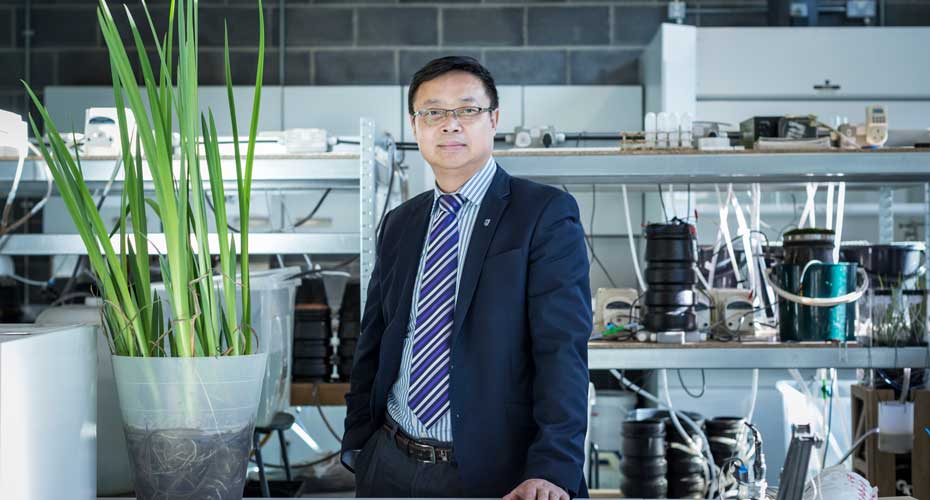
Professor Yaqian Zhao is a distinguished academic at University College Dublin's School of Civil Engineering, where he directs the Water and Effluent Laboratory. His innovative research integrates wastewater treatment with urban aesthetics, developing constructed wetlands that function as both environmental infrastructure and public recreational spaces. With over two decades of experience since joining UCD in 2004, he has established himself as a global leader in sustainable water treatment technologies. Dr. Zhao's research interests focus on creating environmentally integrated wastewater solutions. His pioneering work centers on using aluminum-rich 'cake' material from drinking water treatment as substrate for constructed wetlands, which simultaneously purify water and support biodiversity. He has expanded this research to develop wetlands that generate electricity through microbial activity, creating multifunctional systems that transform traditional wastewater infrastructure into community assets. His vision aims to make water treatment facilities aesthetically pleasing parks rather than isolated industrial sites. His publication record reveals a strong trajectory toward integrated water-energy solutions, with early work establishing the fundamentals of alum sludge-based wetlands and more recent research exploring the water-energy nexus through microbial fuel cells. The publications demonstrate consistent innovation in making wastewater treatment more sustainable, efficient, and community-oriented, with applications ranging from domestic wastewater to agricultural runoff. Fellow of the International Water Association Professor Zhao has hosted two major international conferences in Ireland and presented his work globally, including on Chinese CCTV. His research has practical applications across multiple sites, with more than 20 operational systems testing constructed wetland capacity, including installations at the UCD Lyons Research Farm. His current work focuses on integrating wetland systems directly into wastewater treatment tanks to create aesthetically pleasing, functional infrastructure that serves both environmental and community needs while generating small-scale electricity. Professor Zhao directs the Water and Effluent Laboratory at UCD, where his team develops technologies that transform wastewater treatment from purely functional infrastructure into community assets. His lab's current focus includes scaling up microbial fuel cell technology to generate practical electricity from wetland activity and implementing full-scale demonstrations of their integrated treatment systems.
Michael Vynnycky is an Affiliated Professor at KTH Royal Institute of Technology , specializing in mathematical modeling and numerical analysis of industrial metallurgical processes. His research focuses on continuous casting , electromagnetic stirring , and fluid-structure interactions in manufacturing systems. Key Research Areas: Continuous casting of metals, fluid dynamics, heat transfer, computational methods (FEM, CFD), inverse Stefan problems, and oscillation mark formation. Collaborations: Frequent collaboration with researchers like H. Fredriksson, B. Glaser, and A. Safavi Nick. Applications: Steel production, die casting, redox flow batteries, and polymer electrolyte fuel cells. Recent publications highlight work on blast furnace dynamics , muon radiography for structural analysis, and asymptotic modeling of gas-solid flows. His methodologies emphasize mathematical rigor and industrial relevance , as seen in studies on macrosegregation and electromagnetic flow control. Techniques: Leverages asymptotic analysis multiphysics simulation finite element methods computational fluid dynamics boundary reconstruction algorithms experimental validation to solve complex industrial problems. Email Contact: michaelv@kth.se
David Vera Candeas is a full-time Professor at the Departmento de Ingeniería Eléctrica of Universidad de Jaén . Holding a PhD since 2013, his research focuses on renewable energy systems, particularly biomass gasification and distributed generation technologies. His work addresses both technical implementation and sustainability aspects in energy systems, with a strong emphasis on industrial applications and waste valorization. His academic contributions include significant publications on: Biomass gasification and power generation systems Microgrid monitoring and control technologies Hybrid renewable energy integration Power electronics for energy efficiency Current research trends show increasing focus on: Decentralized energy systems and P2P control schemes AI-enhanced educational tools in electrical engineering Circular economy applications in the olive industry
Virginia Polytechnic Institute and State UniversityUnited States
David Dillard serves as the Adhesive and Sealant Science Professor in the Department of Mechanical Engineering within Virginia Tech's College of Engineering. His research bridges fundamental adhesion mechanics with practical applications in aerospace, automotive systems, and sustainable energy technologies. His educational background includes: Ph.D. in Engineering Mechanics, Virginia Tech (1981) M.S. in Engineering Mechanics, University of Missouri-Rolla (1978) B.S. in Engineering Mechanics, University of Missouri-Rolla (1976) Dr. Dillard's research centers on adhesion science and polymer mechanics , with pioneering work in fracture mechanics and viscoelasticity for predicting adhesive joint durability. Recent focus areas include sustainable energy systems (fuel cells, solar photovoltaics), biomaterials (vaginal tissue mechanics), and additive manufacturing. His methodology integrates experimental characterization with predictive modeling, particularly using cohesive zone models and digital image correlation for mixed-mode fracture analysis. Analysis of his publication record reveals three dominant trends: (1) Evolution of peel testing methodologies for adhesion quantification, (2) Application of adhesion principles to sustainable energy systems and biomaterials, and (3) Critical examination of standard test methods with proposals for modernization. His work consistently emphasizes practical implementation while advancing theoretical frameworks. Major recognitions include: ASME Fellow (2015) Wake Medal from Society for Adhesion and Adhesives (2013) Adhesion Society’s Award for Excellence in Adhesion Science (2010) Robert L. Patrick Fellowship (2004) Garth L. Wilkes Interdisciplinary Faculty Scholar (2019) Multiple Dean's Awards for Research Excellence Dr. Dillard has secured sustained research funding through industry partnerships, most notably the Adhesive and Sealant Science Professorship endowed by the Adhesive and Sealant Council. His educational leadership includes developing courses in adhesion science, polymer viscoelasticity, and sustainable energy solutions, with recent work on open-source textbooks and automated feedback systems for engineering mechanics education. His research group at Virginia Tech operates at the intersection of materials science and mechanical engineering, with equipment for advanced adhesion testing, fracture characterization, and sustainable energy materials development. Collaborations span aerospace manufacturers, adhesive suppliers, and biomedical research institutions.
Professor Laura Torrente Murciano leads the Process Integration and Catalysis Group at the University of Cambridge's Department of Chemical Engineering and Biotechnology. Her research focuses on sustainable chemical processes, particularly integrating reaction and separation steps for green technologies. Reaction engineering with 3D-printed microdevices Nanoparticle synthesis for catalytic applications Ammonia production as a hydrogen vector Low-temperature activation of methane and CO2 Her work spans multiphasic systems, metallic membranes, and nanostructured materials like ceria and titanate. Recent publications highlight techno-economic analyses of green ammonia, dynamic energy integration, and catalytic process innovations. Key themes across her research include: Process optimization for renewable energy storage Development of sustainable hydrogen production methods Design of tuneable nanoparticle catalysts Structure-property relationships in catalytic supports Life cycle analysis of green technologies Photocatalytic and electrochemical material applications
Tomas Grönstedt is a Professor in the Fluid Dynamics department at Chalmers University of Technology . His research focuses on Aerospace Engineering , particularly in propulsion systems and sustainable aviation technologies. Research Areas: Aero Engine Design and Optimization Hydrogen Fuel Cell Propulsion Thermal Management in Aircraft Systems Boundary Layer Ingestion Analysis Noise Reduction Techniques Sustainable Aviation Fuel Assessment Selected Publications (2024–2021) address topics in hydrogen propulsion, intercooled turbofan efficiency, aerodynamic optimization, and climate impact analysis. Key projects include ENABLEH2 (cryogenic hydrogen aviation), ULTIMATE (ultra-low emission engines), and IMOTHEP (hybrid electric propulsion). Collaborations span EU-funded initiatives, VINNOVA grants, and partnerships with Swedish Transport Administration (Trafikverket) and Energy Agency (Energimyndigheten).
David Sedarsky is an Associate Professor at Chalmers University of Technology, working within the Transport, Energy and Environment division of Mechanics and Maritime Sciences. His research focuses on applied optics and light-matter interaction for advanced imaging, with particular emphasis on characterization of dense sprays for diesel, aerospace, and automotive fuel injection systems. Dr. Sedarsky's research interests span laser-based diagnostics and imaging methods, optical measurements of turbulence, and novel analysis of optical signals for time-resolved dynamics. He specializes in the development of analytical and optical methods for visualization of fuel sprays and improvement of combustion in engines. His work combines experimental approaches with advanced data analysis techniques to understand complex fluid dynamics in spray formation and combustion processes. His publication record shows a strong focus on spray dynamics, fuel injection systems, and advanced optical measurement techniques. Recent work has expanded into electric vehicle powertrain efficiency, demonstrating the interdisciplinary nature of his research that bridges traditional combustion engineering with emerging sustainable transportation technologies. Dr. Sedarsky is actively involved in research projects including "Highly Efficient Electric Vehicle Part 2 (HEFE 2)" (2024-2026) and "HEFE - Energieffektivare elfordon" (2020-2024), both funded by the Swedish Energy Agency, focusing on energy conversion, propulsion systems, and combustion/spray technologies for more efficient vehicles.
Enrico Corti is an Associate Professor at the University of Bologna's Department of Industrial Engineering since 2014. His research focuses on energy systems and powertrain technologies including internal combustion engines, hybrids, and fuel cells, with emphasis on control systems and synthetic fuels. He collaborates with major automotive companies like Audi, BMW, Ducati, Ferrari, and Lamborghini. Degree in Mechanical Engineering (1999, University of Bologna, cum laude) PhD in Engineering of Machines and Energy Systems (2004, University of Bologna) Research interests span powertrain testing, control algorithms, malfunction diagnosis, and hydrogen-fueled hybrid systems. His work includes hardware/software tool development for powertrain measurement and model definition for physical systems. He participates in projects like PRIN 'H2ICE' and PNNR Spoke 2 'Sustainable Road Vehicles'. Teaching includes courses on machinery, engine control, and powertrain calibration at Bologna and Modena universities. He co-founded Alma Automotive srl (2002), a spin-off supplying automotive solutions to companies like Audi and Ferrari.
Frank Buysschaert is an Assistant Professor at the Department of Mechanical Engineering within the Faculty of Engineering Technology at KU Leuven, based at the Bruges Campus. He heads the Subdivision M-Group Aeronautics, Applied Mechanics and Energy Conversion and serves as contact person for the Applied Mechanics and Energy conversion (TME) unit. He also holds senior academic positions on the Faculty of Engineering Technology Council and Mechanical Engineering Department Council. His research spans renewable energy systems with emphasis on ocean energy conversion, hydrogen fuel cell technology, and unmanned aerial vehicles. Current projects integrate aerodynamics, fluid dynamics, and energy conversion to develop sustainable solutions for defense, offshore wind, and aerospace applications. Key focus areas include hybrid drone systems, PEM fuel cell optimization, and rim-driven thruster hydrodynamics. Recent publications reveal strong interdisciplinary trends connecting hydrogen-powered UAVs, marine propulsion systems, and military water treatment. His work bridges fundamental material science (e.g., proton exchange membrane degradation) with applied engineering (e.g., adjoint-based duct optimization), demonstrating consistent growth in energy conversion and drone technology research. Dr. Buysschaert actively secures major research funding as promotor or co-promotor, with current projects including: Development of a Hybrid Fixed-Wing and Hover Drone System for Long-Range Offshore Wind Inspection (2025-2029) Hydrogen technology for defense energy supply (2022-2026) Performance prediction of fuel cells in UAVs under variable weather (2024-2028) He operates within KU Leuven's M-Group specializing in aeronautics and energy conversion, utilizing advanced facilities like the tomographic Particle Image Velocimetry system. His team collaborates on drone inspection systems, hydrogen propulsion, and marine energy conversion with strong industry and defense sector partnerships.
University of Illinois Urbana-ChampaignUnited States
Jason M Merret is a Clinical Professor in the Department of Aerospace Engineering at the University of Illinois. His research focuses on advanced propulsion systems, with a particular emphasis on liquid hydrogen fuel-cell technology and its integration into aircraft configurations. Key research trends from his recent work include: Development of drag reduction techniques for electric vertical takeoff and landing (eVTOL) vehicles with shrouded rotors Assessment of liquid hydrogen propulsion systems for electrified aircraft configurations Thermal load management strategies for low-grade thermal energy utilization in electric aircraft His contributions span both experimental and theoretical analyses of hydrogen fuel technology, electric propulsion systems, and aerodynamic optimization in aviation applications.
David Tomás Sánchez Martínez is a Professor in the Department of Energy Engineering at the University of Seville, specializing in advanced energy systems with a focus on supercritical CO2 cycles, concentrated solar power (CSP), and hybrid renewable energy technologies. His work spans thermodynamic modeling, techno-economic analysis, and system optimization. University Professor at University of Seville Researcher in Thermal Machines and Engines group Coordinator of International ORC Power Systems seminars Research Interests include: Supercritical CO2 power cycles for solar and hydrogen applications Micro gas turbine hybridization with ORC and fuel cells Thermal energy storage and desalination integration Computational fluid dynamics for turbomachinery Techno-economic assessment of renewable systems Recent Publications demonstrate expertise in CO2-based power cycles, hybrid fuel cell-turbine systems, and off-grid energy solutions. Key trends include hydrogen integration, solar thermal optimization, and advanced compressor design. Advising includes PhD theses on solar micro gas turbines, energy storage roadmaps, and CO2 cycle commercialization. He collaborates on major EU projects like StreamSTEP, ASTERIx-CAESar, and REMIND.
Assistant Professor Radojica Pešić is affiliated with the Department of Chemical Engineering at the Faculty of Technology and Metallurgy, University of Belgrade. With expertise in chemical engineering and environmental applications, his work focuses on reactor design, mass transfer, and sustainable process optimization. Research spans environmental remediation , process design , and transport phenomena Active in bubble column reactors , CO2 capture , and industrial water treatment Supervised 10+ final theses in chemical engineering processes and environmental systems Recent publications highlight trends in electrochemical pollutant degradation , fluidized bed thermal dynamics , and sustainable material design . His teaching involvement includes Chemical Engineering Laboratory and Process Design courses. Advised research on distillation process optimization (2021), industrial water quality (2020), and PINCH methodology for mass integration (2018) Key methodologies: linear mass balance models , absorption column design , and quality control systems Contact: rpesic@tmf.bg.ac.rs | Office 37, TMF Building | Phone: +381 11/3303611