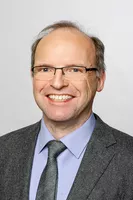
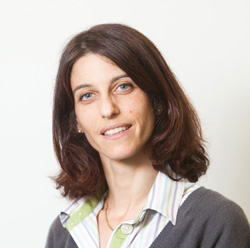
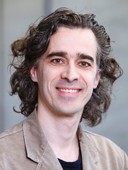
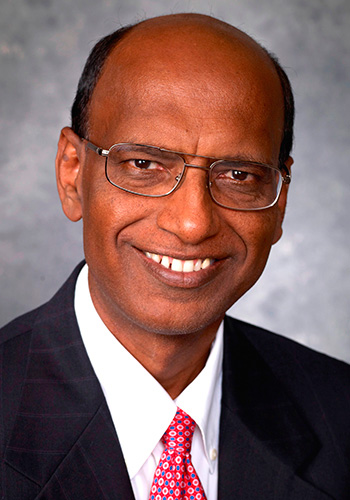
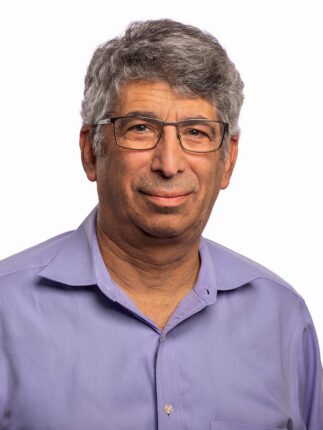
Zhenhong Li is a Lecturer in Robotics and Control at the University of Manchester, holding an EPSRC Fellowship in physical human-robot interaction. He earned his B.Eng. from Huazhong University of Science and Technology (2013), and M.Sc. and Ph.D. in Control Engineering from the University of Manchester (2014 and 2019). Before joining Manchester in 2023, he was a Research Fellow in Rehabilitation Robotics at the University of Leeds (2019–2023). His research focuses on control technologies for human-robot systems, with applications in healthcare and industry. Key areas include physical human-robot interaction for rehabilitation, brain-computer interfaces, and neuromusculoskeletal modeling. He leads the Neurorobotics Lab (NRL) at Manchester and collaborates with healthcare professionals, industries, and designers via EPSRC/STFC/Wellcome Trust funding. Notable achievements include the 2019 Best Paper Award for Unmanned Systems and the 2020 EPS International Academic Pump-priming Award. In 2025, he was elected as a Senior Member of the IEEE. He actively organizes conferences and special issues, including the 2025 IEEE UK Robotics Conference and a Frontiers special issue on intelligent rehabilitation technology. Dr. Li supervises PhD candidates in robotics and control, emphasizing interdisciplinary approaches to human-robot interaction. His lab develops cutting-edge technologies like assistive exoskeletons and adaptive control systems for healthcare and industrial applications.
Prof. Roland A. Fischer is a Full Professor at the Chair of Inorganic and Metal-Organic Chemistry at Technical University of Munich (TUM). Previously, he held a Full Professorship at Ruhr University Bochum (1997–2015). His research focuses on multifunctional metal-organic frameworks (MOFs), clusters, and composites for energy conversion, catalysis, gas storage, and environmental applications. He leads the Catalysis Research Center and has pioneered advancements in MOF-based catalytic systems and stimuli-responsive materials. Education: 1981–1986: Diplom in Chemistry (TUM) 1989: PhD, Dr. rer. nat. (TUM) 1995: Habilitation (TUM) Research Interests: His work integrates molecular and extended catalytic systems, including: - Design of MOFs for photocatalytic fuel production - Nanoparticle encapsulation in robust frameworks - Redox-switchable materials and photochromic systems - Cluster chemistry and superatom complexes - Applications in energy storage, environmental remediation, and biomedical technologies. Major Achievements: Over 680+ publications, h-index 101 (Scopus 2025) Coordinator of EU projects (SURMOF, ENHANCE, DEFNET) Recipient of Heinz-Maier-Leibnitz Award (1993) and Alfried Krupp Award (1996) Editorial roles: Angewandte Chemie , Chemical Vapour Deposition Grants & Teams: He has secured major grants including DFG Priority Programs (CVD-Materials, COORNETs) and led interdisciplinary teams in EU initiatives. His lab collaborates globally, including visiting professorships at Kyoto University and IIT Bombay. Labs & Facilities: His research uses advanced facilities like the Catalysis Research Center and contributes to platforms such as the Munich Catalysis Alliance. Key tools include atomic layer deposition, in situ characterization, and MOF-based device fabrication.
Caterina Ducati is a Professor of Nanomaterials at the Department of Materials Science & Metallurgy, University of Cambridge. Her research focuses on nanomaterials, their structure-property relationships, and applications in energy technologies, particularly photovoltaics, photocatalysis, and optoelectronics. Research Interests: In situ electron microscopy of nanomaterials under external stimuli (electrical, thermal, photonic), growth mechanisms of nanostructures (carbon nanotubes, semiconductor nanowires), and degradation processes in energy devices. Methodologies: Advanced characterization via HAADF STEM, TEM, and development of tools for real-time nanoscale observation. Recent publications highlight her work on perovskite solar cells, battery materials (Li, Zn, Na-ion), and ferroelectric thin films. She actively investigates degradation mechanisms in energy devices and develops novel fabrication techniques for nanocomposites. Scientific Recognition: A&B Post-doctoral Fellowship winners (institutional award) She supervises research groups utilizing the Wolfson Electron Microscopy Suite and contributes to interdisciplinary collaborations in materials for sustainability and healthcare applications.
Prof. Jeroen Anton van Bokhoven is a Full Professor at ETH Zurich's Department of Chemistry and Applied Biosciences and Head of the Laboratory for Catalysis and Sustainable Chemistry at Paul Scherrer Institute. His research focuses on establishing structure-performance relationships in heterogeneous catalysts to enable sustainable chemical processes through advanced catalyst design. Education: B.Sc. in Chemistry, Utrecht University (1995) Ph.D. in Inorganic Chemistry and Catalysis (with honours), Utrecht University (2000) Research Focus: Van Bokhoven's group pioneers operando characterization techniques, particularly X-ray absorption spectroscopy and scattering methods, to study catalysts under realistic reaction conditions. Key research thrusts include methane conversion to value-added products (methanol, methyl esters), zeolite catalysis for olefin production, and design of stable catalysts for high-temperature oxidation processes. His work bridges fundamental surface science with industrial applications in sustainable energy and chemical manufacturing. Scientific Recognition: Swiss Chemical Society Werner Prize (2008) Academic Leadership: Van Bokhoven leads a multidisciplinary research group spanning ETH Zurich and Paul Scherrer Institute, supervising doctoral candidates and postdoctoral researchers. His group maintains strategic partnerships with industrial catalyst manufacturers and operates specialized facilities for in situ spectroscopy at the Swiss Light Source synchrotron. Current projects address carbon dioxide utilization, biomass conversion, and fundamental mechanisms of catalyst deactivation. Research Infrastructure: The group leverages state-of-the-art capabilities at the Laboratory for Catalysis and Sustainable Chemistry (PSI), including custom operando cells for XAS, XPS, and electron microscopy under reactive gas environments, enabling atomic-scale observation of catalytic transformations.
Davide Di Blasio is a Research Associate in the Department of Mechanical Engineering at the University of Bath. His work focuses on hydrogen fuel cell systems, air path optimization, and control mechanisms for vehicle applications. He actively contributes to sustainability research aligned with UN Sustainable Development Goals. Research interests: Hydrogen fuel cell systems Variable-geometry turbocharger control Air loop optimization for vehicles Thermal management in powertrains Proton-exchange membrane fuel cells His recent publications explore advancements in hydrogen fuel cell efficiency and air path dynamics. Collaborative activities include participation in the CENEX Expo 2024 conference.
Georg Fantner is an Associate Professor at the Swiss Federal Institute of Technology Lausanne (EPFL) with dual appointments in the School of Engineering (STI) within the Institute of Bioengineering and the School of Life Sciences (SV) for teaching. He directs the Laboratory for Bio- and Nano-Instrumentation (LBNI) and holds leadership roles including President of the Open Science Strategic Committee and the Association des Professeurs de l'EPFL. Research Focus: Bioinstrumentation, Nanotechnology, Scanning Probe Microscopy, and Metrology Teaching: Structural Mechanics for Life Sciences, Metrology, and Metrology Practicals His research pioneers advanced instrumentation for nanoscale characterization, emphasizing data-driven approaches to enhance microscopy techniques. Recent work integrates deep learning with scanning probe microscopy for real-time biological imaging and develops novel MEMS devices for fluid-compatible nanoscale manipulation. Key innovations include hermetically sealed sample chambers for pathogen studies and deterministic nanotopography engineering. Professor Fantner actively mentors 7 current PhD students and has supervised 14 graduates. His laboratory fosters interdisciplinary collaboration across engineering, physics, and life sciences to advance nanoscale measurement technologies and instrumentation development.
David A. Muller serves as the Samuel B. Eckert Professor of Engineering in the School of Applied and Engineering Physics at Cornell University and co-directs the Kavli Institute at Cornell for Nanoscale Science. His research group focuses on developing quantitative electron microscopy methods to understand materials properties at the atomic scale, with particular emphasis on sustainable energy applications and quantum materials. Muller's laboratory utilizes some of the world's highest resolution electron microscopes housed in specially designed, environmentally isolated rooms. Muller received his undergraduate education at the University of Sydney and earned his Ph.D. in Physics from Cornell University in 1996. Between 1997 and 2003, he was a member of the technical staff at Bell Laboratories, where he applied his expertise in imaging single atoms and atomic-scale spectroscopy to determine the physical limits of transistor miniaturization. In 2003, he returned to Cornell as a faculty member, where he has since established himself as a leader in advanced electron microscopy techniques. Muller's research spans multiple frontiers in materials science, with particular focus on understanding how electronic-structure changes at the atomic scale control macroscopic behavior in diverse systems like turbine blades, fuel cells, and transistors. His current work emphasizes the physics of renewable energy materials, atomic-scale control of materials to create electronic phases that cannot exist in bulk, and developing hardware and algorithms for 'big data' acquisition from high-bandwidth pixelated electron microscope detectors. His group's work bridges theoretical physics and experimental techniques, requiring researchers who can think in both real and reciprocal space while considering both fundamental principles and practical applications. Analysis of Muller's recent publications reveals a strong trend toward advancing electron ptychography and 4D-STEM techniques for atomic-scale imaging. His group has pioneered methods for 3D atomic-scale metrology, strain mapping, and imaging of radiation-sensitive materials. The research spans applications from semiconductor technology to quantum materials and energy storage systems, demonstrating the versatility of his microscopy approaches across multiple scientific domains. Top 100 Young Innovator by Tech Review Magazine (2003) Burton Medal from Microscopy Society of America (2006) Ernst Ruska Prize of German Society for Electron Microscopy (2021) John Cowley Medal from International Federation of Societies for Microscopy (2023) Fellow of American Physical Society Fellow of American Association for the Advancement of Science Fellow of Microscopy Society of America Muller has mentored an extensive group of students and postdocs who have gone on to successful careers in academia and industry. His former students hold faculty positions at institutions including Rice University, University of Southern California, Seoul National University, Colorado School of Mines, and the University of Michigan, among others. His research has been supported by substantial grants, including a $22.5M NSF grant that accelerates materials discovery. The Muller lab maintains close collaborations with the Kavli Institute at Cornell and PARADIM (Platform for the Accelerated Realization, Analysis, and Discovery of Interface Materials). The Muller lab operates at the forefront of electron microscopy, housing specialized instrumentation including high-resolution transmission electron microscopes in environmentally isolated rooms. The group collaborates extensively with other research teams at Cornell and worldwide, focusing on understanding materials atom by atom. Current research directions include applying machine learning to electron microscopy data analysis, developing cryogenic techniques for studying low-melting-point materials, and exploring quantum phenomena in engineered materials systems.
Dr. Kaushik Rajashekara is a Distinguished Professor of Engineering at the University of Houston, affiliated with the Department of Electrical & Computer Engineering. He holds leadership roles in academic and industry research, including prior positions at the University of Texas at Dallas, Rolls-Royce, and Delphi Corporation. His expertise spans power electronics, transportation electrification, and renewable energy systems. Education: MBA, Indiana Wesleyan University, 1992 Ph.D., M.S., B.S. in Electrical Engineering, Indian Institute of Science, 1984, 1977, 1974 B.S. in Science & Maths, Bangalore University, 1971 Research Interests: Power electronics and drive systems, subsea electrical systems, electric/hybrid vehicles, aircraft electrification, renewable energy, and microgrids. His work emphasizes sustainable energy solutions and advanced propulsion technologies. Awards: 2022 Global Energy Prize (highest international energy award) Member of U.S. National Academy of Engineering (2012) IEEE Medal for Environmental and Safety Technologies (2021) Multiple fellowships from IEEE, NAI, and SAE Grants & Advising: Extensive industry collaborations, including roles as Chief Technologist at Rolls-Royce and Chief Scientist at Delphi. His research focuses on cutting-edge technologies like flying cars and subsea power systems. Labs/Teams: Active in the PEMSEC lab at UH, advancing power electronics and energy systems. Collaborates globally on projects like offshore renewable energy integration and aircraft electrification.
Bruno Klein is a Researcher at the National Renewable Energy Laboratory (NREL) working in the Economic Sustainability & Market Analysis group within the Catalytic Carbon Transformation and Scale-Up Center. His expertise lies in techno-economic analysis (TEA) and life cycle assessment (LCA) for biomass conversion pathways to biofuels and bioproducts. Bruno's educational background includes: PhD in Chemical Engineering from State University of Campinas Master's in Chemical Engineering from State University of Campinas Bachelor's in Chemical Engineering from Federal University of Rio Grande do Sul Bachelor's in Multidisciplinary Engineering from École centrale de Lille His research spans conceptual process design, process integration, and sustainability assessment of biomass conversion technologies. Bruno specializes in biochemical conversion pathways with particular focus on algal biomass production and conversion systems. His work integrates techno-economic analysis with environmental impact assessment to evaluate the viability of emerging bioenergy technologies. Recent projects examine microalgae cultivation systems, sustainable aviation fuels, and ethanol production pathways from biomass feedstocks. Bruno's publication record shows consistent output with 29 research contributions between 2020-2025, demonstrating increasing productivity over time. His work addresses critical challenges in environmental sustainability metrics including greenhouse gas emissions, water usage, and land impacts while maintaining economic viability considerations. As an active member of the American Institute of Chemical Engineers (AIChE), Bruno contributes to the professional community in chemical engineering and renewable energy research.
Andrew B. Bocarsly is a Professor of Chemistry at Princeton University, affiliated with the Department of Chemistry within the Faculty of Arts and Sciences. His research focuses on physical inorganic chemistry, catalysis, materials science, and CO₂ conversion. He leads the Bocarsly Lab, which explores electrochemical and photochemical methods to convert CO₂ into fuels and valuable chemicals, emphasizing heterogeneous catalysts and novel materials like cyanogels. His work intersects with sustainability and energy applications, supported by collaborations with institutions like the Andlinger Center for Energy and the Environment. Research Interests: - Development of catalysts for CO₂ reduction to multi-carbon species - Electrocatalytic and photocatalytic mechanisms using transition metal complexes - Low-temperature synthesis of alloys and semiconductors via cyanogel systems - Design of photoelectrochemical systems for solar energy conversion Recent trends in his publications highlight advancements in catalyst design (e.g., Ni-enhanced oxides, manganese complexes), CO₂-to-CO/1-butanol conversion, and semiconductor materials for hydrogen evolution. His lab actively mentors students, with notable graduates like Andersen Dimon and Rebecca Evans. Collaborations extend to Princeton’s Materials Institute and the Electrochemical Society. Labs/Teams: The Bocarsly Lab operates in Frick Chemistry Laboratory, emphasizing interdisciplinary approaches to energy sustainability. Recent activities include hosting the 19th International Conference on Carbon Dioxide Utilization (2022) and fostering undergraduate and graduate research programs.
Prof. Dr. Tunç ÇATAL is a Professor of Molecular Biology and Genetics at Üsküdar Üniversitesi. He holds a PhD from İstanbul Technical University (2008) and conducted postdoctoral research at Oregon State University and the National University of Ireland Galway. His expertise spans microbial biotechnology, molecular biology, and hydrogen production. Education: BSc in Biology, İstanbul University (2001) MSc in Biology, İstanbul University (2004) PhD in Molecular Biology-Genetics and Biotechnology, İstanbul Technical University (2008) Administrative Roles: Head of Molecular Biology and Genetics Department (English Program) Director of PROMER Research Center Bologna Coordinator and Erasmus Coordinator His research focuses on microbial electrochemical systems, bioremediation, and bioenergy. Notable contributions include optimizing hydrogen production using microbial electrolysis cells and studying the effects of pharmaceuticals on microbial fuel cell efficiency. He has supervised 3 graduate theses and holds TÜBİTAK awards for impactful publications. His work integrates environmental science and molecular biology, with applications in sustainable energy (e.g., hydrogen production) and wastewater treatment. Recent studies explore novel curcumin compounds for toxicity mitigation and marine mucilage-based bioelectrochemical systems.
Christopher Parlett is a **Lecturer** in the **CE - Academic & Research** division at the University of Manchester, concurrently serving as a **University of Manchester-Diamond Light Source Research Fellow in Catalysis**. He leads research at the **University of Manchester at Harwell group**, focusing on heterogeneous catalytic systems and operando X-ray spectroscopy to study catalytic active sites. His work emphasizes sustainable chemical conversions, including selective oxidations and biomass upgrading, alongside functional nanomaterials for applications in gas storage and healthcare. **Education**: PhD in Chemistry from Cardiff University (under Professors Adam F. Lee and Karen Wilson), MSc in Green Chemistry from the University of York, and BSc in Chemistry from Anglia Ruskin University. **Research Themes**: Catalyst design, metal-support interactions, porous oxide materials, and operando X-ray absorption spectroscopy. His projects aim to develop nano-engineered materials for industrial applications, replacing costly and environmentally harmful reagents. **Key Activities**: Organized the 25th Annual Green Chemistry & Engineering Conference (2021), co-edits the *Emergent Materials* journal, and chairs the SCI Early Careers Materials Committee. Active in professional organizations like the Institution of Chemical Engineers. **Grants & Projects**: Principal Investigator for the ongoing *UoMaH: The University of Manchester at Harwell* project (since 2018), exploring nanoparticles, catalytic reactions, and advanced materials. **Labs/Teams**: Part of the Manchester at Harwell research hub, collaborating on synchrotron-based studies and catalytic material development.
Hossein Nami is an Associate Professor at the Department of Green Technology (IGT) and SDU Life Cycle Engineering at the University of Southern Denmark . His research focuses on Power-to-X , Hydrogen production , E-fuel , and system modeling for sustainable energy solutions. PhD, University of Tabriz (2018) Postdoc, Technical University of Denmark (2020-2022) Assistant Professor, University of Southern Denmark (2022-2025) Nami's research output includes 15 articles (2024-2026) on topics like ammonia-fueled fuel cells , geothermal cycles , chemical looping combustion , and electrolysis optimization . His work emphasizes techno-economic analysis, exergy efficiency, and multi-objective optimization for low-carbon energy systems. He leads the FLEX-ENVIRONMENT project (2024-2027) on electrolyzer integration and contributes to CARMA-Green Fuels (2023-2026) and GRACE (2025) for carbon management and grid-aware investment. His teaching includes supervision of MSc theses on renewable hydrocarbons and power-to-X technologies at SDU.
Dr. Prasanth Venugopal is an Associate Professor specializing in Power Electronics with a focus on advanced energy transfer systems and battery technology. His research spans wireless power transfer, electric vehicle charging, and electrochemical impedance spectroscopy for battery diagnostics. Primary research areas: Wireless Power Transfer (100%), Harmonics (88%), Inductive Power Transfer (87%), Battery Engineering (48%) Recent publications demonstrate expertise in transformerless converter designs, multi-level architectures, and AI-driven battery capacity estimation. He has pioneered meander coil topologies for harmonic mitigation and developed computation-light models for battery aging analysis. His work includes collaborations on Li-ion battery degradation, onboard chargers for electric vehicles, and hybrid power systems for electric aircraft. Despite significant output in IEEE Transactions, no explicit awards or student mentoring data appears in the provided texts.
Thiago Batista Soeiro serves as a Full Professor with exceptional scholarly impact, evidenced by over 200 research publications and an h-index of 27. His work fundamentally advances power electronics applications in transportation and energy systems, particularly through innovations in electric vehicle infrastructure and sustainable power conversion technologies. Despite the absence of explicit institutional affiliation in source materials, his research permeates critical IEEE journals and conferences. Professor Soeiro's research portfolio centers on: Power converter design for electric vehicle charging systems AI-driven battery health estimation using electrochemical impedance spectroscopy Wireless power transfer optimization for automotive applications High-efficiency topologies for more electric aircraft Hydrogen energy system integration Advanced semiconductor utilization in grid-connected systems Analysis of his 2023-2025 publications reveals accelerating innovation in wide-voltage-range converters, predictive battery management, and fault-tolerant power systems. His work increasingly bridges machine learning with power electronics, notably through computation-light AI models for battery diagnostics, while maintaining strong focus on practical implementation challenges in EV charging and aircraft electrification. No scientific awards or honors were documented in the available materials. Similarly, information regarding student supervision, research grants, laboratory facilities, or collaborative teams was not provided in the source texts.