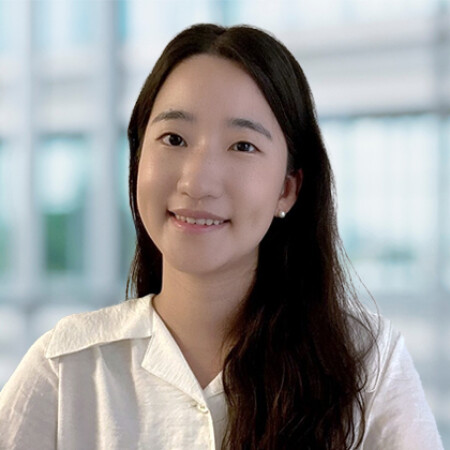
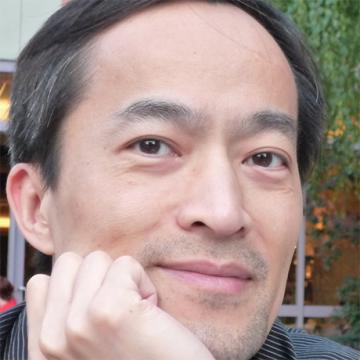
Leehyun Yoon is an Assistant Professor specializing in developmental social affective neuroscience. His research uses fMRI and behavioral methods to examine self-esteem development, social processing, and depression risk in adolescents. Studies investigate neural mechanisms underlying rumination, social rejection responses, and frontolimbic network abnormalities associated with depression. His work combines neuroimaging with psychological assessments to identify biomarkers of vulnerability.
Heather Richardson is a Professor and Graduate Program Director for the Neuroscience and Behavior Interdisciplinary Graduate Program at the University of Massachusetts Amherst, affiliated with the Department of Psychological and Brain Sciences. Based in Morrill Hall (N206), she leads the Richardson Laboratory, which investigates the neurobiological underpinnings of stress and addiction with a focus on sex differences and developmental vulnerability. Her research centers on how sex-based variations in brain structure, neurochemistry, and hormonal systems drive differential susceptibility to stress-related disorders including anxiety, depression, and addiction. Using rodent models, her lab examines critical developmental periods—particularly adolescence and perinatal stages—where stress or alcohol exposure disrupts neural remodeling and establishes sexually dimorphic behavioral patterns. Key mechanisms under investigation include microglial activation, myelination deficits, corticotropin-releasing factor signaling, and neuroimmune responses in frontolimbic circuits. Analysis of her recent publications reveals a cohesive trajectory exploring sex-specific alcohol consumption dynamics, with emphasis on adolescent neurodevelopmental consequences. Her work consistently identifies how early alcohol exposure alters prefrontal-amygdala connectivity, induces neuroinflammation, and impairs myelination, with females exhibiting heightened vulnerability to front-loading behavior. The research bridges molecular neurobiology with behavioral outcomes, highlighting translational pathways for sex-targeted addiction interventions. As Graduate Program Director, Richardson oversees mentorship and training for neuroscience graduate students. Her laboratory operates within the university's neuroscience infrastructure, utilizing advanced behavioral, molecular, and imaging techniques to dissect addiction mechanisms without specific grant details provided in source materials. The Richardson Laboratory maintains active investigation into how developmental stressors program lifelong addiction vulnerability, with current work focusing on hormonal modulation of neural plasticity and sex-specific therapeutic targets for alcohol use disorder.
Dylan Gee, Ph.D. is an Associate Professor in the Department of Psychology at Yale University, where she directs the Clinical Affective Neuroscience & Development Lab (CANDLab). Her work bridges developmental neuroscience and clinical psychology to understand how early-life experiences shape brain development and mental health trajectories in youth. Education: Ph.D. in Psychology, University of California, Los Angeles (2015) Research Focus: Dr. Gee’s research centers on the neurodevelopment of emotional behavior , with a particular emphasis on how early-life stress , trauma , and genetic factors influence frontolimbic circuitry and the emergence of anxiety and stress-related disorders in children and adolescents. Her lab uses neuroimaging , psychophysiology , and behavioral paradigms to study sensitive periods in brain development and to inform precision treatments for youth mental health. Recent Research Trends: Her recent work has increasingly focused on longitudinal developmental trajectories , racial and ethnic disparities in mental health, and COVID-19’s impact on children and adolescents. Studies include large-scale analyses using the Adolescent Brain Cognitive Development (ABCD) dataset and novel interventions targeting parent-assisted emotion regulation . Scientific Awards: NIH Director’s Early Independence Award (2015) Jacobs Foundation Early Career Fellowship (2018) APS Janet Taylor Spence Award (2020) APA Early Career Award (2020) Society for Research in Psychopathology Early Career Award (2022) Yale Graduate Mentor Award (2022) Grants & Funding: Dr. Gee has received major federal funding from the NIH , including NIMH grants supporting both basic research and clinical trials. She is also a recipient of the NARSAD Young Investigator Grant and the Flux Young Investigator Award . Labs & Teams: She leads the CANDLab , a multidisciplinary team of graduate students, postdoctoral fellows, and research assistants. The lab is affiliated with BrainWorks , the Wu Tsai Institute , and the Center for Brain & Mind Health at Yale.
Hong Pan is an Assistant Professor in the Department of Computer, Data, and Mathematical Sciences at Simmons University, where he focuses on full-time teaching in data science and statistics since 2023. His academic career spans over two decades, including faculty roles at Cornell University Medical College and Harvard Medical School, where he pioneered data science solutions for neuroimaging and biomarker discovery in brain disorders. He earned his PhD in Electrical and Computer Engineering from Purdue University (2011), preceded by BS and MS in Biomedical Engineering at Shanghai Jiao Tong University. PhD, Electrical and Computer Engineering, Purdue University MS, Biomedical Engineering, Shanghai Jiao Tong University BS, Biomedical Engineering, Shanghai Jiao Tong University Hong Pan specializes in computational biomedicine, integrating machine learning algorithms and advanced statistical models to analyze functional and molecular neuroimaging data. His work emphasizes developing diagnostic tools for brain disorders, optimizing data acquisition protocols, and automating informatics pipelines. Key applications include Alzheimer's disease, multiple sclerosis, schizophrenia, and PTSD, with a focus on microglial activation, emotion processing, and neurodegenerative biomarkers. His research spans over 60 journal publications and 4 patents, with recent articles focusing on PET and MRI-based diagnostics, neuroinflammation in MS, and fMRI in psychiatric conditions. These studies bridge computational methods, neuroimaging, and clinical applications. Scientific awards include: Mass General Brigham Excellence in Innovation Award (2017, 2018) Brigham and Women’s Hospital Pillar Award in Research & Innovation (2016) American Psychoanalytic Association Scientific Paper Prize (2011) He has trained multidisciplinary students, research fellows, and clinician scientists, and co-founded a spin-out startup with his patented neuroimaging technologies.