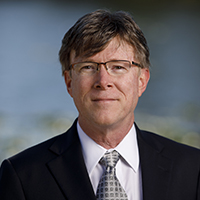
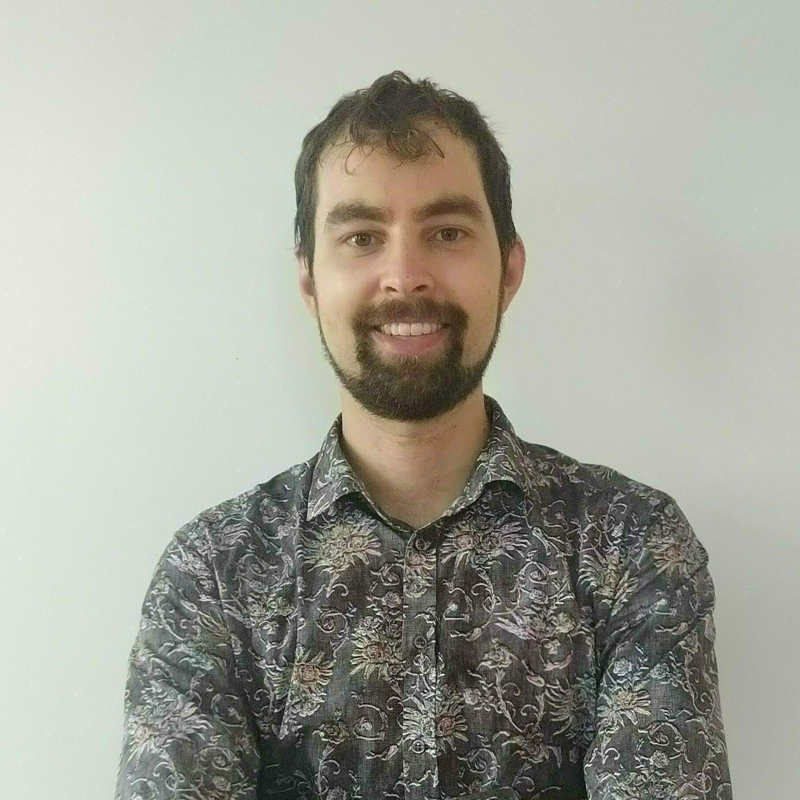
Greg Tolley is a Professor of Marine Science and Dean of The Water School at Florida Gulf Coast University (FGCU). He holds a Ph.D. in Marine Science from the University of South Florida and a B.S. in Zoology from Marshall University. Tolley specializes in estuarine ecology, biogeography, and the impact of freshwater inflow on coastal ecosystems. His research also focuses on innovative science education approaches and aquatic resource conservation. Leadership Roles: Chair of the Department of Marine and Ecological Sciences, Director of Graduate Studies, Director of the Coastal Watershed Institute. Grants & Partnerships: Principal Investigator/Project Manager for grants from the South Florida Water Management District, National Science Foundation, Florida Sea Grant, and others. Professional Service: Board member of the Florida Foundation for Responsible Angling, Friends of Rookery Bay, and past board member of the Sanibel Captiva Conservation Foundation. Teaching: Courses include Estuarine Ecology (OCB 6635) and Biogeography (BSC 3303). He has mentored numerous undergraduate and graduate students in marine science.
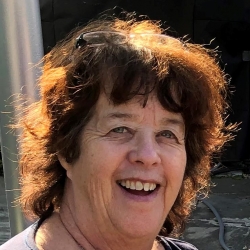
Frances Wilkerson is a Research Professor at the Estuary and Ocean Science Center (EOS), San Francisco State University, where she has been since 2000. Her research focuses on nutrient dynamics and phytoplankton interactions in marine ecosystems, particularly in estuaries and coastal regions. She leads the Wilkerson/Dugdale Laboratory, studying how nutrient inputs affect phytoplankton populations and their role in primary production and climate. Her work integrates field observations with hydrodynamic and ecosystem modeling, emphasizing the San Francisco Bay-Delta system. Key areas include anthropogenic nitrogen impacts, light regulation of phytoplankton growth, and ecosystem responses to environmental stressors like drought and human infrastructure changes. She teaches courses such as BIOL 863 and BIOL 502/702, contributing to graduate and undergraduate education in marine sciences. Research interests span nutrient cycling, phytoplankton community structure, and the ecological consequences of coastal upwelling. Her lab uses state-of-the-art tools like 3D sediment transport models and satellite remote sensing to explore ecosystem dynamics. Recent projects address climate change impacts, managed flow alterations, and the recovery of ecosystems post-nitrogen reduction measures. Publications highlight advancements in phytoplankton productivity modeling, the effects of urbanization on estuaries, and the interplay between hydrology and biogeochemistry. Collaborations with environmental agencies inform management strategies for coastal and estuarine systems.
Dr. Markus Janout is a senior researcher specialized in Physical Oceanography at the Alfred Wegener Institute (AWI) in Bremerhaven. His work focuses on high-latitude oceanographic processes, particularly in the Arctic and Southern Oceans. Key research interests include shelf-basin interactions, mesoscale dynamics, and the role of freshwater and stratification in polar regions. He leads observational campaigns using moored instruments and ship-based sampling to study ocean circulation patterns beneath ice shelves and along continental margins. Janout's expertise spans interdisciplinary projects such as the MOSAiC expedition, where he contributed to Arctic Ocean dynamics studies. His research addresses critical climate-related topics like ice shelf-ocean interaction, heat fluxes, and the impact of warming waters on Antarctic ice shelves. He has published extensively on Arctic boundary currents, Siberian shelf processes, and the influence of sea ice retreat on marine ecosystems. Notable contributions include discovering exceptionally warm water inflows toward the Filchner-Ronne Ice Shelf and elucidating mechanisms behind Arctic halocline weakening. His work integrates observational data with numerical models to improve understanding of polar ocean-climate linkages, with implications for global climate projections.
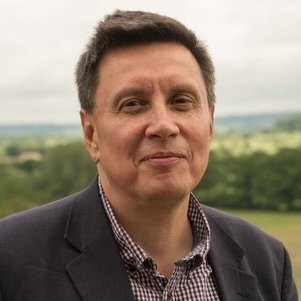
Alejandra Quintanilla Zurita is a Scientist in the Physical Oceanography Department at the Alfred Wegener Institute (AWI). Her research focuses on Arctic Oceanography, Sea Ice Physics, and Paleoclimatology. She contributes to understanding glacial-interglacial climate dynamics, sea ice variability, and ocean circulation changes using biomarker records and sedimentary data. Her work integrates geochemical, biological, and geological approaches to reconstruct past environmental conditions in polar regions. Key affiliations include the AWI's Physical Oceanography group in Bremerhaven, Germany. Her recent studies explore Arctic Ocean freshwater dynamics during glacial periods, Holocene sea ice variability in the Baffin Bay-Labrador Sea region, and the application of sedimentary ancient DNA for paleoenvironmental reconstructions. Publications highlight interdisciplinary approaches to climate science, including model-data comparisons (CMIP6/PMIP4), biomarker analyses, and proxy development for sea ice and climate reconstructions. Her research addresses critical questions about Arctic amplification, ocean circulation shifts, and the role of past climate extremes in shaping current environmental systems.
Prof. Paolo Morozzo della Rocca is a Full Professor at the University of Urbino Carlo Bo, Italy. His primary role involves research and teaching focused on environmental science and marine biology. He leads studies on coastal water quality, particularly monitoring parameters like salinity, temperature, nutrient levels, and microalgae biomass in the Adriatic coastal regions of Pesaro-Urbino. Research Interests: His work centers on understanding environmental dynamics in coastal ecosystems, including eutrophication processes, stratification phenomena, and the impact of freshwater inflows on marine ecosystems. His monthly bulletins provide critical data on water quality trends, including temperature, salinity, oxygen saturation, and algal bloom patterns. Recent Research Trends: Over the past year, his studies highlighted the influence of climatic events on nutrient distribution, the effects of stratification on oxygen levels, and the interplay between human activities and coastal ecosystem health. Key findings include correlations between rainfall patterns and microalgae proliferation, as well as the role of water column stratification in hypoxia formation. Lab/Teams: He collaborates with the University’s Department of Biomolecular Sciences and the 'Qualità delle Acque della Costa' research group, focusing on interdisciplinary environmental monitoring.
Xiangdong Zhang serves as a Research Professor at North Carolina State University, specializing in climate science with a focus on Arctic dynamics and global climate connections. His work addresses critical questions regarding polar-midlatitude interactions and climate change impacts through advanced modeling and observational analysis. Dr. Zhang's research centers on Arctic climate change mechanisms, particularly sea ice dynamics, atmospheric circulation patterns, and freshwater fluxes in polar oceans. He investigates how Arctic amplification influences mid-latitude extreme weather events, employing techniques ranging from in situ observations to deep learning reconstructions of climate variables. His studies frequently examine storm impacts on sea ice melt, water vapor transport over the Tibetan Plateau, and decadal changes in polar meteorology. Analysis of his recent publications (2020-2023) reveals a strong methodological emphasis on climate modeling and data reconstruction, with increasing focus on the societal implications of Arctic change. Key trends include quantifying the role of intense Arctic cyclones in sea ice decline, diagnosing freshwater budget changes in polar oceans, and resolving controversies around Arctic influences on extreme winter weather. His work consistently bridges observational data with theoretical climate dynamics. Dr. Zhang contributes to climate science through the Research group at NC State University, participating in collaborative projects focused on polar climate change and its global ramifications. His publications frequently appear in high-impact climate journals and special issues addressing Arctic-midlatitude linkages.
Professor Zoran Kapelan serves as Chair of Urban Water Infrastructure within the Department of Water Management at Delft University of Technology's Faculty of Civil Engineering and Geosciences. With over 30 years of experience in water engineering, he joined TU Delft in 2018 after leading the Water and Environment Group at the University of Exeter for 19 years, following a decade in international consultancy. His research spans smart water systems, hydroinformatics, and sustainable urban water infrastructure management. Key focus areas include AI-driven solutions for drinking water distribution (leakage detection, pressure management), sewer systems optimization (blockage prediction, sustainable drainage), asset management, and flood risk assessment. He pioneers methodologies integrating artificial intelligence, real-time control, and decision-making under uncertainty to address climate change adaptation and circular economy principles in water systems. Recent publications (2024-2025) reveal strong trends in deep learning applications for infrastructure monitoring (sewer crack detection, floating litter quantification), resource recovery assessment frameworks, and advanced modeling of non-Newtonian fluid dynamics in wastewater systems. His work increasingly emphasizes circular economy metrics, environmental risk assessment of novel materials, and co-developed sustainable solutions through serious gaming approaches. Editor, Journal of Water Resources Planning and Management (ASCE) Associate Editor, Water Resources Research Member, IWA Digital Water Steering Committee Member, External Scientific Advisory Council of KWR Prof. Kapelan has secured over €10 million in research funding across 50+ EU, RCUK, and industry grants. His supervision portfolio includes 40+ PhD students and 25+ postdocs, with significant industry impact through commercialized technologies like AI-based pipe burst detection systems deployed by United Utilities serving 7 million customers. He coordinates TU Delft's Urban Drainage and Water Management course while contributing to asset management and water transport curricula. The Urban Water Infrastructure group under his leadership maintains strong industry partnerships with water utilities globally, focusing on translating research into operational solutions for real-time monitoring, predictive maintenance, and climate-resilient infrastructure design.
Aleksi Nummelin serves as Senior Researcher at NORCE Norwegian Research Centre in Bergen, Norway, within the Division of Climate & Environment and Earth Systems Research Group. He is a principal contributor to the Norwegian Earth System Model (NorESM) development team, applying this framework to investigate climate dynamics across geological timescales. His institutional affiliation includes multiple funded projects examining polar ocean processes, Arctic climate transformation, and deep-time paleoclimate systems. Nummelin's research centers on Earth system modeling with specialization in Arctic climate dynamics, ocean circulation mechanics, and paleoclimate transitions. He investigates critical phenomena including Arctic amplification feedbacks, Southern Ocean convection shutdown mechanisms, and bathymetric influences on climate evolution. His methodological expertise spans high-resolution coupled modeling, mesoscale eddy parameterization development, and model-data integration for paleoclimate validation. Recent publication trends (2023-2025) reveal concentrated focus on Arctic system transformation, with significant contributions to understanding Atlantification divergence across models, winter amplification sensitivity, and sea-level rise impacts on global circulation. His paleoclimate work examines Eocene-Oligocene transitions and Dansgaard-Oeschger events through the lens of ocean gateway evolution and deep-ocean temperature reconstruction, demonstrating consistent integration of geological insights with modern modeling frameworks. Nummelin leads or contributes to multiple funded initiatives including MAPARC (Mechanism and prediction of the new Arctic climate system) and DOTpaleo (Deep Ocean Temperatures in the Paleogene Greenhouse), which support international collaborations and advanced model development. While student supervision details aren't specified, his projects provide substantial research opportunities in climate modeling and polar oceanography. As core member of NORCE's Earth Systems Research Group, Nummelin operates within the NorESM development team that contributes to international modeling efforts including CMIP6. This group maintains leadership in polar climate modeling, with particular expertise in Arctic ocean-sea ice interactions, paleoclimate applications, and high-resolution process studies that inform both contemporary climate understanding and future projections.
Dr. Tonya DelSontro is an Assistant Professor in the Department of Earth and Environmental Sciences at the University of Waterloo. Her research integrates limnology, biogeochemistry, and climate science to study greenhouse gas emissions from aquatic systems. Key affiliations include: Current: University of Waterloo (Assistant Professor) Past: PostDoc at University of Quebec in Montreal (2014) Lecturer at EU Cost Action Training School, Finland (2013) Research Assistant at ETH Zurich (2007–2011) Her work examines carbon cycling dynamics, with emphasis on methane ebullition in lakes, rivers, and reservoirs. Research interests span: Core themes : Aquatic greenhouse gases, climate interactions, anthropogenic impacts Methodologies : Field measurements, hydroacoustics, long-term monitoring Systems studied : Amazon rivers, Arctic lakes, tropical reservoirs Recent publications (2017–2025) highlight accelerated methane emissions under eutrophication, spatial-temporal ebullition variability, and climate feedbacks in boreal-Arctic waters. No awards or lab affiliations are documented.