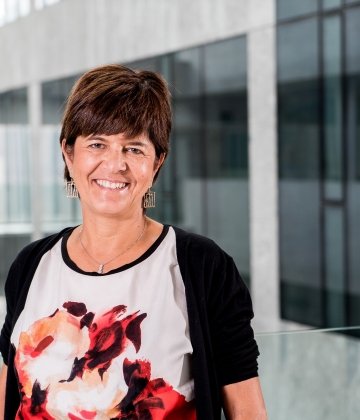
Nancy Margaret Reid is a University Professor of Statistical Sciences at the University of Toronto, holding the Canada Research Chair in Statistical Theory and Applications. She has served as Scientific Director of the Canadian Statistical Sciences Institute (2015–2019) and led the Department of Statistical Sciences as Chair (1997–2002). Her research focuses on theoretical statistics, particularly likelihood inference and foundational aspects of statistical methodology. Reid earned her PhD from Stanford University (1979) under Rupert G. Miller, with Brad Efron and Vernon Johns on her committee. Reid's accolades include Fellowships from the Royal Society, Royal Society of Canada, and National Academy of Sciences, as well as the Guy Medal in Gold (2022) and David R. Cox Award (2023). She has authored influential books like *Theory of the Design of Experiments* and contributed to courses on mathematical statistics and likelihood inference. Active in academic service, she teaches graduate-level courses and has advised numerous students and postdocs in theoretical and applied statistical research.
Ann B. Lee is a Professor and Co-Director of the PhD Program in Statistics at Carnegie Mellon University , with a joint appointment in the Department of Statistics & Data Science and the Machine Learning Department. Prior to joining CMU, she held positions as a J.W. Gibbs Assistant Professor at Yale University and a visiting research associate at Brown University. PhD in Physics, Brown University MSc/BSc in Engineering Physics, Chalmers University of Technology, Sweden Her research focuses on statistical methodology for complex data in the physical sciences , emphasizing trustworthy inference, uncertainty quantification, and integration of classical statistics with machine learning. Recent work includes likelihood-free inference, calibrated forecasting, and diagnostics for generative models. The STAMPS research group , which she co-founded in 2018, hosts weekly meetings and public webinars. In Fall 2024, STAMPS will transition into a CMU Research Center. Recent publications span likelihood-free inference , climate modeling , and astronomy . Notable collaborations include applications to hurricane intensity guidance , galaxy redshift estimation , and cosmological parameter biases . She mentors PhD students and has advised multiple award-winning researchers, including ASA Best Student Paper Award winners. Her teaching includes advanced courses on probability, regression, and AI for climate sciences.
Pan Xu is a tenure-track assistant professor with joint appointments in the Department of Biostatistics & Bioinformatics, Department of Computer Science, and Department of Electrical & Computer Engineering at Duke University. Previously, Xu was a Postdoctoral Scholar Research Associate at Caltech's Department of Computing and Mathematical Science and earned a Ph.D. in Computer Science from UCLA. Xu's research focuses on developing computationally- and data-efficient machine learning algorithms with strong empirical performance and theoretical guarantees. Xu's research interests center around Machine Learning with broad applications in Artificial Intelligence, Data Science, Optimization, Reinforcement Learning, and High Dimensional Statistics. The research specifically targets real-world problems in Bioinformatics and Healthcare, with recent work emphasizing distributionally robust decision making, efficient exploration strategies, and multi-agent systems. Xu has developed novel algorithms that address the challenges of exploration in sequential decision making and robustness to distributional shifts between training and deployment environments. Xu's recent publications demonstrate a strong trend toward developing theoretically grounded yet practical algorithms for reinforcement learning and bandit problems, with particular emphasis on distributionally robust methods, efficient exploration techniques, and applications to healthcare. The work spans both theoretical analysis (providing minimax optimal regret bounds) and practical implementations (validated on benchmarks like Atari games and real healthcare datasets). Whitehead Scholar award from Duke University School of Medicine (2023) Best Paper Award at ACM FAccT 2023 for Queer In AI paper PIMCO Postdoctoral Fellowship in Data Science (2022) TMLR Featured Certification (2023) NSF award on approximate sampling based exploration (2023) Xu actively mentors multiple Ph.D. students across Duke's Biostatistics & Bioinformatics, Computer Science, and Electrical & Computer Engineering programs, with several alumni now pursuing doctoral studies at top institutions. The research group has secured competitive funding including an NSF award for approximate sampling based exploration for sequential decision making. Xu serves as an action editor for TMLR and as an area chair for major conferences including ICML, NeurIPS, AAAI, ICLR, and AISTATS. Xu leads a dynamic research group focused on sequential decision making, with projects spanning theoretical algorithm development, implementation of practical systems, and applications to healthcare and bioinformatics. The group maintains active collaborations across Duke's medical and engineering schools, with recent work applying machine learning to epidemic forecasting during the pandemic.
Dr. Sonia Petrone is a Full Professor of Statistics at Bocconi University's Department of Decision Sciences. She earned her PhD in Statistics from Bocconi University and has held academic positions at the University of Pavia and University of Insubria before joining Bocconi. Her extensive international experience includes research visits across North America, Latin America, Europe, India, and Russia. Her research specializes in Bayesian statistics, with contributions to foundational theory, predictive modeling, Bayesian nonparametrics, and stochastic processes. She currently directs the Bocconi Summer School in Advanced Statistics and Probability and previously led the PhD program in Statistics (2011-2018). Her research portfolio demonstrates consistent focus on Bayesian nonparametric methods, predictive modeling, and applications to complex data structures. Recent work explores urn processes, time series analysis, and network modeling using innovative Bayesian approaches. Awards & Honors: IMS Medallion Lecture Award (2018) ISBA Foundational Lecture Award (2016) Fellow of International Society for Bayesian Analysis Fellow of Institute of Mathematical Statistics Fellow of European Laboratory for Intelligent Systems Fellow of Bocconi Institute of Data Science She has held editorial leadership positions as Editor of Statistical Science (2020-2022) and Bayesian Analysis (2010-2014), and served as President of the International Society for Bayesian Analysis (2014).
Professor Michael Evans is a faculty member at the University of Toronto , affiliated with the Department of Statistical Sciences (St. George campus) and the Department of Computer and Mathematical Sciences at the Scarborough Campus . His research focuses on statistical inference , Bayesian methods , and measuring statistical evidence through his work on the relative belief ratio . He has contributed to ROC analysis , linear models , and stochastic processes , with recent work addressing biases in statistical reasoning and connections to frequentist criteria. Research Themes : Defining and measuring statistical evidence Bayesian inference and prior-data conflict resolution Monte Carlo methods and stochastic process theory Recent Publications explore statistical evidence in scientific practice, medical diagnostics, and Bayesian frameworks. His 2024 Encyclopedia article critiques frequentist criteria, while the 2022 Entropy paper introduces relative belief in ROC analysis. Awards : ASA Fellow (American Statistical Association) Teaching : He teaches advanced courses like STAC62 (Probability and Stochastic Processes) and STAC63 (Probability and Stochastic Processes II), emphasizing theoretical rigor and applications in fields like mathematical finance and machine learning .
Krzysztof Burdzy is a Professor of Mathematics and Adjunct Professor of Statistics at the University of Washington, where he is affiliated with the Department of Mathematics in the College of Arts and Sciences. He maintains an active research and teaching profile, currently offering undergraduate courses in probability. His research interests span Probability Theory , Stochastic Processes , Neumann Eigenfunctions , Hot Spots Problem , and the Philosophy of Probability . He is particularly known for his work on Brownian motion, eigenfunction behavior, and spectral theory in geometric domains. His recent work includes contributions to the resolution of the hot spots conjecture for Euclidean triangles and the discovery of interior hot spots in convex sets. The most recent articles reflect a deep engagement with both theoretical mathematics and foundational philosophy. Topics include spectral geometry, probabilistic methods in PDEs, critiques of philosophical theories of probability, and interdisciplinary reflections on epistemology. The publication trend shows sustained contributions from the 1990s through 2024, with a dual focus on rigorous mathematical proofs and meta-scientific analysis. Euclidean triangles have no hot spots (Annals of Mathematics, 2020) Convex sets can have interior hot spots (preprint, 2024) Hypocrisy++: On Philosophy of Probability and Sociology of Ideologies (2023) Burdzy has advised students in mathematics and probability, though specific names are not listed. He has received recognition through publications in top-tier journals such as Annals of Mathematics and Journal of Functional Analysis , though formal awards are not explicitly mentioned. He has delivered numerous talks on the philosophy of probability and its relationship to statistics. He is actively involved in public scholarship, maintaining a personal website with essays on quantum probability, real estate, philosophy, and AI. His work on the limitations of mathematics, suicide prevention, and critiques of post-modern thought reflect a broad intellectual engagement beyond technical mathematics. He does not appear to lead a formal lab or research team, but collaborates with scholars such as R. Bañuelos, W. Werner, and others in probability and analysis.
Thomas C. M. Lee is a Distinguished Professor of Statistics and Associate Dean of the Faculty in Mathematical and Physical Sciences at the University of California, Davis, within the College of Letters and Science. He holds a prominent position in the Department of Statistics and serves as a key academic leader at UC Davis. Education: B.App.Sc. (Math) from University of Technology, Sydney, Australia (1992) B.Sc. (Hons) (Math) with University Medal from University of Technology, Sydney, Australia (1993) Ph.D. from Macquarie University and CSIRO Mathematical and Information Sciences, Sydney, Australia (1997) Professor Lee's research spans multiple areas of statistics with a focus on developing innovative methodologies. His work particularly emphasizes nonparametric and semiparametric modeling , statistical learning , and statistical image and signal processing . He has made significant contributions to applying statistical methods across various scientific disciplines, demonstrating the versatility and power of statistical approaches in solving complex real-world problems. His research often bridges theoretical developments with practical applications, creating methodologies that are both mathematically sound and practically useful. Scientific Awards and Honors: Elected Fellow of the American Association for the Advancement of Science (AAAS, 2019) Elected Fellow of the American Statistical Association (ASA) Elected Fellow of the Institute of Mathematical Statistics (IMS) Elected Senior Member of the IEEE Professor Lee has held significant editorial roles including serving as Editor-in-Chief for the Journal of Computational and Graphical Statistics (2013-2015) and currently as Review Editor for the Journal of the American Statistical Association. From 2015 to 2018, he chaired the Department of Statistics at UC Davis. He has taught numerous statistics courses including STA 13 (Elementary Statistics), STA 131C (Introduction to Mathematical Statistics), STA 243 (Computational Statistics), and STA 401 (Statistical Consulting). His leadership extends beyond research to academic administration, where he has shaped statistics education and departmental direction at UC Davis.
David W. Hogg is Professor of Physics and Data Science in the Center for Cosmology and Particle Physics in the Department of Physics at New York University. He serves as Senior Research Scientist in the Astronomical Data Group in the Center for Computational Astrophysics of the Flatiron Institute and maintains an affiliation with the Max-Planck-Institut für Astronomie in Heidelberg. His primary research focuses on observational cosmology, particularly approaches that use galaxies to infer physical properties of the Universe. He also conducts significant research on stellar kinematics in the Milky Way and the measurement and discovery of exoplanets. Across all domains, Hogg develops engineering systems and statistical methodologies that enable large-scale astrophysical projects for both his research group and the broader community. Recent work demonstrates expertise in robust statistical methods, particularly dimensionality reduction techniques like Robust-HMF. His research bridges theoretical statistics with practical applications in major astronomical surveys including Gaia, SDSS-V, and SPHEREx. He frequently explores connections between Bayesian and frequentist approaches to astronomical data analysis, with recent work on nuisance parameter integration, anomaly detection, and robust matrix factorization. Research supported by NYU, NASA, NSF, Moore Foundation, Sloan Foundation Additional support from Max Planck Society, Humboldt Foundation, ERC, Simons Foundation Hogg is actively involved in major astronomical projects including Astrometry.net, Gaia, and SDSS, with long-term comprehensive goals of analyzing all galaxies, stars, and astronomical images. His work emphasizes open science principles, reproducible research practices, and the development of publicly accessible tools for the astronomical community.
Robert L. Hicks is a Professor of Economics and Marine Science at The College of William and Mary, holding joint appointments in the Department of Economics and the School of Marine Science. He is affiliated with the Environmental Science and Policy Program and the Thomas Jefferson Program in Public Policy. With a Ph.D. from the University of Maryland and a B.A. from North Carolina State University, Hicks has been a visiting professor at institutions in Germany and Spain, including the University of Bonn and the University of Hannover. His research focuses on environmental and natural resource economics, welfare economics, and econometrics, with notable contributions to fisheries management, eco-labeling, and recreational resource valuation. He has served on the editorial board of Marine Resource Economics and received grants from the National Science Foundation, U.S. Department of Commerce, and philanthropic organizations like the Bill and Melinda Gates Foundation. His awards include the Alumni Fellowship Award and the Plumeri Award for Faculty Excellence. Education: B.A., North Carolina State University Ph.D., University of Maryland Research Interests: Environmental economics emphasizes sustainable resource management, while his work in econometrics advances quantitative methods for policy analysis. Key areas include recreational fishing valuation, eco-labeling impacts, and spatial modeling in fisheries. His research bridges theoretical frameworks with practical applications in coastal and marine environments. Grants & Awards: Recipient of grants from NSF, U.S. Department of Commerce, William and Flora Hewlett Foundation, and Bill and Melinda Gates Foundation Alumni Fellowship Award Plumeri Award for Faculty Excellence Labs & Affiliations: Active in interdisciplinary collaborations, Hicks contributes to policy boards such as NOAA’s Science Advisory Board and aids in shaping environmental and marine policy through academic partnerships.
Jon Wakefield is a Professor in the Department of Biostatistics at the University of Washington's School of Public Health, with additional appointments in the Department of Statistics. He maintains affiliations with the Fred Hutchinson Cancer Research Center, the Center for Statistics and the Social Sciences, and serves on technical advisory groups for the World Health Organization and United Nations on mortality assessment, child mortality estimation, stillbirths, and pre-term births. Wakefield's research focuses on spatial epidemiology, spatial demography, and small area estimation, with particular emphasis on estimating under-5 mortality in low and medium income countries. His work integrates hierarchical models for survey data, space-time models for infectious disease data, and ecological inference methods for both infectious and non-infectious disease contexts. He has made significant contributions to understanding the links between Bayesian and frequentist statistical procedures, developing innovative methods for spatial modeling and disease burden estimation. His publication record shows a strong focus on methodological development with practical applications in global health, particularly in mortality estimation, infectious disease modeling, and demographic analysis. Recent work has addressed critical issues in pandemic response, including excess mortality estimation during the COVID-19 pandemic and seroprevalence studies. His research increasingly incorporates advanced computational methods, including Template Model Builder and integrated nested Laplace approximations for spatial modeling. Fellow, American Statistical Association (2007) Guy Medal in Bronze, Royal Statistical Society (2000) Member of the National Academies of Sciences, Engineering and Medicine Wakefield leads significant research initiatives funded by NIH/NCI and NIH/NIAID, including projects on spatio-temporal epidemiology and statistical issues in AIDS research. He has developed influential software tools including SUMMER, surveyPrev, and SAE4Health, which enable sophisticated small area estimation and spatial analysis for public health applications. His work with WHO and UN technical advisory groups demonstrates the real-world impact of his methodological contributions to global health measurement.
Bertrand Clarke is a Professor in the Department of Statistics at the University of Nebraska-Lincoln, within the College of Agriculture & Natural Resources. He holds a PhD in Statistics from the University of Illinois (1989) and has held academic positions at Purdue University, the University of British Columbia, the University of Miami (Medical School), and served as Chair of the Department of Statistics at UNL. His research focuses on prediction, model uncertainty, and statistical methods for complex/high-dimensional data, including genomic data and machine learning applications. Education: PhD in Statistics from University of Illinois (1989), with early work recognized by the Browder J. Thompson Award. His career includes sabbaticals at University College London, Duke University (SAMSI), and the Newton Institute at Cambridge. He pioneered biostatistics programs at the University of Miami and authored a Springer textbook on data mining/machine learning. Research Interests: Prediction theory, model bias/uncertainty, ensemble methods, Bayesian approaches, and applications in genomics. He emphasizes statistical principles like variance-bias tradeoff and robustness in complex data analysis. Awards: ASA Fellow (2014), Browder J. Thompson Award (1989). Editorial roles in four journals and service on the Savage Award Committee.
Hwanhee Hong is an Associate Professor in the Department of Biostatistics and Bioinformatics at Duke University School of Medicine and a member of the Duke Clinical Research Institute. Affiliated with the Biostatistics, Epidemiology, and Research Design (BERD) Methods Core and the B&B Faculty, Dr. Hong maintains an active research program focused on statistical methodology development for clinical applications. Dr. Hong's educational background includes a Ph.D. in Biostatistics from the University of Minnesota (2013), an M.S. in Biostatistics from Harvard University (2010), and a B.S. in Statistics from Chung-Ang University, Korea (2008). Prior to joining Duke, they completed a postdoctoral fellowship at Johns Hopkins Bloomberg School of Public Health under Dr. Elizabeth A. Stuart. Research interests center on Bayesian statistical methods for comparative effectiveness research, network meta-analysis, causal inference, measurement error correction, and data integration across multiple sources. Their work emphasizes adaptive information borrowing to address clinical and public health questions, particularly in developing flexible Bayesian modeling frameworks that synthesize diverse data streams for evidence generation. Analysis of recent publications reveals consistent methodological focus on network meta-analysis techniques, causal inference with error-prone covariates, generalizability assessment, and time-to-event analysis. The research spans applications in pediatrics, cardiology, obesity treatment, and vaccine effectiveness, demonstrating strong translational impact across medical domains. Dr. Hong actively collaborates with biostatisticians, epidemiologists, clinicians, and health policymakers through multiple funded projects, though no formal awards or fellowships are documented in the provided materials. Participant, Faculty Success Program, National Center for Faculty Development & Diversity (2023) Participant, Faculty Curriculum on Anti-Racism, Duke Office of Faculty Advancement (2021) Teaching responsibilities include BIOSTAT 719: Generalized Linear Models. Current grant funding spans eight major projects totaling over $20 million, primarily from NIH and PCORI, addressing pediatric care coordination, mental health interventions, obesity treatment, diabetes management, and advanced biostatistical methodology development. Dr. Hong's laboratory work focuses on computational approaches for data integration, maintaining active collaborations with the Duke Clinical Research Institute and multiple external institutions including Johns Hopkins University and North Carolina State University.
Mathangi Gopalakrishnan, PhD, MPharm, is an Associate Professor in the Department of Practice, Science, and Health Outcomes Research at the University of Maryland School of Pharmacy. She is actively engaged in research, mentoring, and academic scholarship, with a focus on quantitative clinical pharmacology and data-driven therapeutic optimization. Education: PhD, Statistics, University of Maryland, Baltimore County MS, Statistics, University of Maryland, Baltimore County MPharm, Birla Institute of Technology & Science, Pilani, Rajasthan, India BPharmacy (Honors), Birla Institute of Technology & Science, Pilani, Rajasthan, India Her research interests center on pharmacometrics, precision therapeutics, predictive analytics, real-world data, and drug development . She integrates principles of clinical pharmacology, advanced frequentist and Bayesian statistical methods, and artificial intelligence/machine learning to enhance patient outcomes, particularly among vulnerable populations. Her lab's work includes designing prospective clinical pharmacokinetic trials for anti-epileptics and antimicrobials in patients on continuous renal replacement therapy, leveraging real-world data from electronic health records to optimize dosing in neonatal opioid withdrawal syndrome and pediatric anticoagulation, and developing models for disease progression in conditions like schizophrenia and binge-eating disorders. The trends in her recent publications reflect a consistent focus on model-informed precision dosing, real-world evidence generation, pharmacokinetic-pharmacodynamic (PK/PD) modeling in special populations, and methodological innovation in clinical trial design . Her work spans diverse therapeutic areas including critical care, neonatology, psychiatry, and maternal health, demonstrating a broad impact of quantitative pharmacology. Dr. Gopalakrishnan is accepting applications for postdoctoral positions in pharmacometrics at the Center for Translational Medicine, indicating active research funding and team leadership. Her collaborations extend to academic medical institutions nationwide, underscoring her role in multi-center research initiatives. She is involved in collaborative research with academic medical institutions across the country and has presented her work at major conferences including the Joint Statistical Meetings (JSM) and the American Conference on Pharmacometrics (ACoP).
Sameer Deshpande is an Assistant Professor in the Department of Statistics at the University of Wisconsin–Madison. His research bridges Bayesian methodology development with applications in public health and sports analytics. Prior to joining UW–Madison, he completed a postdoctoral fellowship with Professor Tamara Broderick at MIT and earned his Ph.D. in Statistics from the Wharton School under Professors Ed George and Veronika Rockova. His educational background includes undergraduate studies in mathematics at MIT and a year at Jesus College, Cambridge through the Cambridge-MIT Exchange program. His research focuses on advancing Bayesian hierarchical modeling, treed regression, and causal inference techniques, with particular emphasis on flexible tree-based methods like BART variants for complex data structures. Deshpande's recent publications reveal a strong trend toward developing scalable Bayesian methods for high-dimensional data while maintaining rigorous uncertainty quantification. His work frequently applies these techniques to sports analytics (particularly baseball and football) and public health studies examining long-term effects of adolescent sports participation. The consistent focus on methodological innovation paired with substantive applications demonstrates his dual commitment to statistical theory and real-world impact. He actively mentors graduate students at UW–Madison, requiring STAT 775 as preparation for research collaboration. His Deshpande Lab focuses on Bayesian computation and causal inference, though specific grant details are not publicly listed. Notable projects include the NFL Big Data Bowl submission analyzing quarterback decision-making using Expected Hypothetical Completion Probability. Outside academia, Deshpande maintains interests in cooking, cocktail making, and photography, while remaining a devoted fan of Dallas sports teams – often seen wearing a Texas belt buckle.
Milica Miočević is an Associate Professor in the Department of Psychology at McGill University. She previously held an Assistant Professor position at Utrecht University's Department of Methods and Statistics. Her research focuses on statistical mediation analysis and Bayesian methods applied to social, health, and behavioral sciences, with three main research lines: optimal methods for Bayesian mediation priors, synthesizing mediated effect findings across studies, and mediation analysis in Single Case Experimental Designs (SCEDs). Dr. Miočević earned her Ph.D. from Arizona State University under advisors Dave MacKinnon and Roy Levy. Her work emphasizes methodological innovation in small sample contexts and evidence synthesis. The Miocevic Lab at McGill explores quantitative psychology and modeling techniques. Her recent publications span Bayesian vs frequentist estimation comparisons, prior distribution development, and mediation analysis methodologies. She has contributed to edited volumes on small sample solutions and published extensively in Structural Equation Modeling journals. Dr. Miočević's research bridges statistical theory and applied practice, advancing tools for researchers working with complex data structures and limited sample sizes.