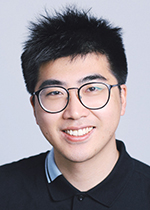
Chengying Bao is an Assistant Professor at Tsinghua University. He earned his PhD in Optics from Tsinghua University in 2016 and subsequently conducted postdoctoral research at Purdue University. His work focuses on optical frequency combs and their applications in environmental monitoring, particularly for methane leak detection in natural gas energy systems. Education: PhD in Optics, Tsinghua University (2016) Research Interests: Optical frequency comb generation Photonics for environmental monitoring Energy technology applications Spectroscopy-based sensor systems Scientific Awards: Resnick Postdoctoral Fellow (2017) His research may advance natural gas energy technologies through rapid and sensitive methane leak detection methods developed during his postdoctoral work at Caltech.
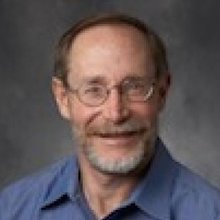
Jose Antonio Garcia Souto is an Associate Professor in the Electronic Technology Department at the School of Engineering, Carlos III University of Madrid (UC3M). He works in the Sensors and Instrumentation Techniques (SIT) research group and maintains an active research program in fiber optic sensing technologies. His office is located in room 1.2.B03 of the Agustin de Betancourt building in Leganés. Dr. Garcia Souto's research focuses on fiber optic sensor development for various applications including partial discharge monitoring in power transformers, acoustic emissions detection, and optical sensing systems. His work bridges electronics, optics, and telecommunications with practical applications in electrical engineering and environmental monitoring. His recent publications demonstrate a strong focus on advanced interrogation techniques for fiber Bragg grating sensors , including multiheterodyne dispersion interferometry, electro-optical dual optical frequency combs, and acousto-optic comb systems. These technologies enable high-precision, dynamic measurements for structural health monitoring and electrical system diagnostics. Dr. Garcia Souto has led significant research projects including ESCAPHIB (2018-2021) and has supervised multiple doctoral theses on fiber optic sensing systems for partial discharge monitoring. His work shows consistent publication activity through 2024 with recent papers on carbon dioxide optical sensing and advanced sensor interrogation techniques. His research has practical applications in power system monitoring, environmental sensing, and structural health monitoring, with numerous collaborations on industrial and European research projects.
Marta Ruiz Llata is a Full Professor and Director of the Postgraduate Program in Electrical, Electronic and Automatic Engineering at University Carlos III de Madrid. Her work focuses on advanced sensor technologies, optical engineering, and environmental monitoring. She leads the University Group of Identification Technologies (GUTI), specializing in innovative sensing solutions for infrastructure, environmental, and biomedical applications. Contact: marta.ruiz-llata@uc3m.es, located at 1.2.B04 - Agustin de Betancourt (Leganés). Research interests include sensor development for atmospheric carbon monitoring, pavement condition analysis, and biomedical diagnostics. Her sensor innovations span photoacoustic spectroscopy, dual-comb optics, and UHF signal processing. Recent projects address CO2 isotopic fingerprinting, road surface grip measurement, and plant water status analysis in holm oak ecosystems. Publications highlight sensor advancements in environmental, civil, and biomedical domains, emphasizing precision engineering and data-driven analysis. While no awards are explicitly noted, her contributions to optical instrumentation and sensor networks are widely recognized in academic circles. No advising or grant information is available in current records. Her team at GUTI collaborates on multi-disciplinary projects, integrating optics, signal processing, and machine learning for real-world applications like smart infrastructure and agricultural monitoring systems.
Markku Vainio serves as a Senior Research Fellow in the Department of Physics, specializing in advanced optical measurement technologies with over 38 research outputs documented between 2017-2025. His research expertise spans: Cantilever-enhanced photoacoustic spectroscopy (100% fingerprint relevance) Mid-infrared spectroscopy applications (96%) Frequency comb physics and optical frequency comb generation (90%/54%) Terahertz sensing and rotational Doppler effect analysis Vainio's recent work demonstrates significant innovation in precision measurement systems, particularly in developing calibration-free spectroscopic techniques and cantilever-enhanced detection methods. His publications in Optics Letters, AIP Advances, and Photoacoustics reveal a strong focus on environmental monitoring applications (particularly aerosol and black carbon measurement) and fundamental optical physics research. His publication trajectory shows consistent scholarly output with 7 papers in 2020, 6 in 2021, and continued productivity through 2025, indicating active research engagement. Collaborative work with researchers including Kuula, Rossi, Larnimaa, and Närhi demonstrates integration within international research networks focused on optical metrology and spectroscopy.
Professor Yuan Xiao-Cong is a Chair Professor and Director of the Nanophotonics Research Centre at Shenzhen University, China, leading an internationally recognized research group in nanophotonics. He holds adjunct roles at Zhejiang Lab and has held distinguished positions at Nankai University and Nanyang Technological University. His work spans optical singularities, plasmonics, and high-capacity optical communication systems. \n\n Research interests include orbital angular momentum (OAM) multiplexing, photonic skyrmions, and advanced optical communication technologies. Notable achievements include pioneering OAM-based free-space communication systems with Huawei, achieving 160 Tbit/s speeds, and developing plasmonic optical tweezers for nanoscale metrology. \n\n He has published over 500 papers in top journals like Nature Physics , Science Advances , and Physical Review Letters , and has received honors such as Fellowships from the Optical Society of America and Chinese Optical Society. His contributions include the design of metasurface-based multiplexers and spin-momentum frameworks for nanoscale dynamics. \n\n His lab, the Nanophotonics Research Centre, is central to Shenzhen’s research ecosystem, focusing on topological optics, chiral matter interactions, and integrated photonics. Current efforts explore applications in high-performance computing and subwavelength imaging.
Dr. Chris Perrella is a Research Fellow at the School of Biological Sciences, University of Adelaide. He holds a PhD from the University of Western Australia (2014) and previously served as a Research Associate at the University of Adelaide's Institute for Photonics and Advanced Sensing (IPAS). His work focuses on precision measurement technologies with applications in both fundamental science and industry/defense collaboration. Key projects include compact optical clocks, optical magnetometry, and low-light biological imaging systems. He pioneers techniques such as speckle metrology for laser parameter analysis and optical trapping for embryo biomechanics studies. Education: PhD (University of Western Australia, 2014) Research Groups: Optical Sensing & Quantum Technologies His research integrates physics and biology, applying optical methods to extract maximal information from biological systems. Notable achievements include developing a rubidium-based optical clock rivaling hydrogen masers in performance and creating high-bandwidth magnetometers tested in real-world environments. Current projects explore speckle-based laser characterization and quantum memories in hollow-core fibers.
Mohammad Hafezi is the Minta Martin Professor at the University of Maryland (UMD), affiliated with the Joint Quantum Institute (JQI) and Quantum Technology Center . His research focuses on theoretical and experimental investigations of quantum light-matter interactions, with applications in quantum information processing, sensing, and optoelectronics. He holds a PhD in Physics from Harvard University (2009) and a bachelor's degree from École Polytechnique (2003). Research interests include topological photonics , quantum optics meets correlated electrons , quantum simulation , and machine learning in quantum systems . His group explores topics like moiré excitons, many-body physics, and quantum control techniques. Awards : Sloan Research Fellowship (2015), ONR Young Investigator Award (2015), Humboldt Research Award (2025). Group Focus : Integrates quantum optics, condensed matter physics, and machine learning to advance quantum technologies. Recent work highlights include studies on chiral photonics, excitonic Mott insulators, and neural-network decoders for quantum phase transitions. Collaborations emphasize practical applications of quantum systems in computing and sensing.
Kartik Srinivasan is an Adjunct Professor affiliated with the Joint Quantum Institute (JQI) at the University of Maryland and the National Institute of Standards and Technology (NIST) in Gaithersburg, MD. His research focuses on nanophotonic devices for quantum information science, metrology, and sensing, leveraging advanced fabrication techniques to enhance light-matter interactions. Key research areas include quantum frequency conversion , single-photon generation , microresonator frequency combs , and cavity optomechanics . His work integrates computational modeling, nanofabrication, and optoelectronic characterization to develop controllable platforms for quantum technologies and next-generation sensors. Recent contributions include breakthroughs in all-optical noise quenching , parametric synchronization of soliton microcombs , and visible wavelength microcomb generation . His group’s innovations in nanoscale electro-optomechanical transducers and integrated quantum photonics are advancing applications like quantum communication and high-precision imaging. Though no awards are explicitly listed here, his research has attracted significant attention, including a notable method for improving single-photon collection via 3D-printed polymer waveguides. His labs at NIST and JQI collaborate closely on integrated photonics design, fabrication, and characterization tools.
Dr Ashby Hilton is a Grant-Funded Researcher (B) at the School of Physics, Chemistry and Earth Sciences, University of Adelaide. His primary research focuses on precision metrology and quantum optics, with a current emphasis on developing compact optical-atomic clocks using Ytterbium. His work integrates precision measurement, automation, quantum optics, and miniaturization techniques. He has contributed to projects involving laser cooling of rubidium atoms and waveguide-trapped cold-atom systems. Research Interests: Optical Clock Development Ultra-High Vacuum Experiments Frequency Comb Controls Portable Atomic Clock Systems Light-Atom Interaction Articles Overview: His publications span portable atomic clock design, frequency comb control, and precision laser systems. Recent work explores maritime applications of mobile optical clocks (2025) and SWaP optimization for portable systems (2024). Earlier research includes rubidium clock miniaturization (2024) and waveguide-trapped atom experiments (2018–2020). Grants & Team: Supported by grant funding, he leads a collaborative team exploring cutting-edge quantum-optics protocols. Current projects aim to advance compact optical clocks for real-world applications. Labs/Teams: Works within interdisciplinary teams at the University of Adelaide, focusing on precision measurement and quantum technologies.
Dr. Daniel McCarron is an Assistant Professor in the Department of Physics at the University of Connecticut. His research focuses on ultracold atomic and molecular gases, particularly the production and manipulation of ultracold polar molecules to explore quantum many-body systems, quantum technologies, and ultracold chemistry. He is affiliated with the UConn Atomic and Molecular Spectroscopy and Ultracold Atoms and Molecules groups. His work combines direct and indirect cooling techniques for molecules, leveraging laser cooling and trapping methods. Education: Ph.D. in Atomic, Molecular and Optical Physics, University of Durham, UK (2012) M.Sci. in Physics, University of Durham, UK (2007) Research Interests: Development of light-matter interactions for quantum control Production of cold molecular beams via laser cooling Applications of ultracold molecules in quantum computing and precision measurements Professional Activities: Member, American Physical Society Member, Institute of Physics (U.K.) Awards: CAREER Award (2019) Grants and Collaborations: His laboratory (McCarron Group) focuses on advancing laser cooling techniques for molecules like AlCl and CH radicals, with recent talks including a 2022 presentation on quantum control methods. His work bridges theoretical and experimental approaches to realize novel quantum systems.
Elizabeth Goldschmidt is an Assistant Professor of Physics at the University of Illinois, affiliated with the Illinois Quantum Information Science and Technology (IQUIST) as an Associate Director. She holds a B.S. in Physics from Harvard University (2006) and a Ph.D. in Physics from the University of Maryland (2014), where she was a Joint Quantum Institute fellow. Her postdoctoral work at NIST (2014–2016) focused on ultracold atoms and quantum simulation. Before joining UIUC in 2019, she was a staff scientist at the U.S. Army Research Laboratory studying solid-state quantum optics. Her research group investigates quantum light-matter interactions using rare-earth atom ensembles in solids, aiming to develop scalable quantum memory and single-photon sources. Key projects include enhancing material density for long-lived memory, coupling atoms to resonators for entanglement, and generating non-classical light for quantum applications. Her lab emphasizes nanophotonic platforms and thin-film lithium niobate for telecom-compatible systems. Recent courses taught include PHYS 101 (College Physics), PHYS 211/212 (University Physics), and PHYS 514 (Modern Atomic Physics). Her work is funded through grants and collaborations highlighted on her lab’s website. She actively recruits graduate, undergraduate, and postdoctoral researchers.
Zaijun Chen is a Researcher and Principal Investigator in the Laboratory of Intelligent and Quantum Photonics at the Viterbi School of Engineering, University of Southern California. He holds a PhD in Physics from the Max-Planck Institute of Quantum Optics and Ludwig Maximilian University of Munich (2019). His research focuses on optical computing architectures, neuromorphic photonic circuits, and precision sensing. He leads DARPA-funded projects NaPSAC and INSPIRED, developing next-generation AI processors and on-chip quantum sensing technologies. Key awards include the 2023 Optica Foundation Challenge Award and SPIE AI/ML Award. He advises PhD students and postdocs in photonic computing and sensing. Education: PhD, Physics, Max-Planck Institute of Quantum Optics & LMU Munich (2019); Postdoctoral research at MIT’s Quantum Photonics Group (2021-2022). Research Interests: Optical neural networks, photonic AI accelerators, integrated photonics, quantum sensing, dual-comb spectroscopy, and neuromorphic engineering. Notable Publications: Over 30 peer-reviewed articles in Nature Photonics , Science , and top optics journals, focusing on photonic computing and precision metrology.
Dr Meng Ding is a Research Fellow at the Optoelectronics Research Centre (ORC), within the Faculty of Engineering and Physical Sciences at the University of Southampton. He is actively involved in advanced photonics research, particularly in the development and optimization of hollow-core optical fibers and their applications in precision optical systems. His research focuses on enhancing the stability, performance, and integration of hollow-core fibers for applications in interferometry, telecommunications, and sensing. Key areas include thermal insensitivity, mode-field adaptation, higher-order mode suppression, and the development of stable propagation delay systems across extreme temperature ranges. The recent publications highlight a strong trend in optical engineering, with emphasis on fiber design, laser phase locking, and low-noise THz generation. These works demonstrate a consistent focus on achieving ultimate stability and precision in fiber-based optical systems, contributing to advancements in both fundamental science and applied technologies. Hollow-core fiber technology and design Laser phase and frequency stabilization Optical frequency combs THz generation Fiber splicing and interconnection Thermally robust optical systems Dr Ding has received no publicly listed scientific awards in the provided text. However, his active publication record in top-tier journals such as Science Advances , Optics Letters , and IEEE Journal of Lightwave Technology indicates significant recognition in the photonics community. He currently supervises several PhD students, including Win Adiyansyah Indra, Usue Irene Barbeito Edreira, and Karim Elglmady, all working within the ORC. There is no mention of external grants or funding sources in the text, but his research is likely supported through institutional and research council funding given the scope and collaboration network. Dr Ding is a member of key research groups at the ORC, including the Smart Lasers and Special Fibres group and the Advanced Fibre Applications group. These teams focus on next-generation fiber technologies, photonic materials, and their deployment in real-world systems, positioning Dr Ding at the forefront of innovative fiber optic research.
Leo Hollberg is a Research Professor of Physics and Geophysics at Stanford University, affiliated with the Hansen Experimental Physics Laboratory (HEPL) and the Stanford Center on Position Navigation and Time (SCPNT). His work bridges fundamental physics research with practical applications in precision measurement and quantum technologies. Education: B.S. in Physics (1976), Stanford University; Ph.D. in Physics (1984), University of Colorado, Boulder Research interests focus on high-resolution spectroscopy of laser-cooled atoms, optical frequency combs, atomic clocks, and trace gas detection. He explores quantum-limited optical detection and laser noise mitigation to advance experimental precision. Technologies such as frequency-stabilized lasers and chip-scale atomic devices are central to his work, with potential impacts on environmental monitoring, energy, and navigation systems. His program emphasizes collaborative, interdisciplinary approaches to solving real-world problems through deeper scientific understanding. For contact, email leoh@stanford.edu or call (650) 723-4227. Mail correspondence should reference Mail Code 4060.
Florian Mörz is a researcher specializing in advanced photonics and ultrafast laser technologies. His work focuses on developing innovative optical systems for spectroscopy, imaging, and material characterization. Key areas of expertise include mid-infrared plasmonics, tunable laser sources, and nanoscale sensing techniques. He leads a team dedicated to creating robust photonic devices with applications in biomedical imaging, materials science, and quantum optics. Research interests encompass optical parametric amplifiers, metasurface design, and surface-enhanced spectroscopy. His group has pioneered alignment-free mid-IR sources and developed ultrafast laser systems capable of attomolar detection of biomolecules. Recent efforts emphasize low-noise light sources for coherent Raman scattering microscopy and high-repetition-rate lasers for advanced spectroscopic imaging. Publications highlight contributions to plasmonic materials, GeSn heterostructures, and nanoantenna-based sensors. Despite prolific output, no formal awards or grants are explicitly mentioned in the provided texts. The team's work is characterized by interdisciplinary collaboration between photonics, materials science, and biomedical engineering.