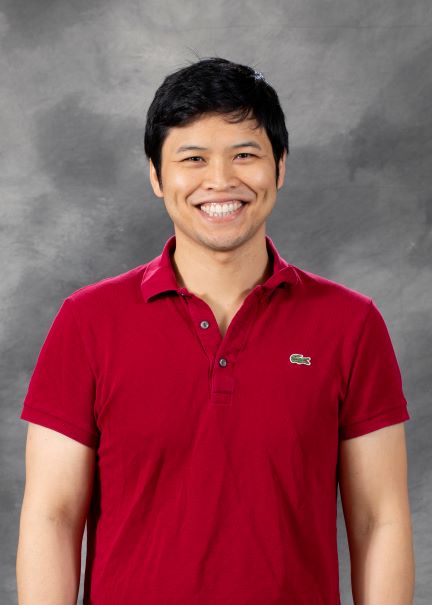
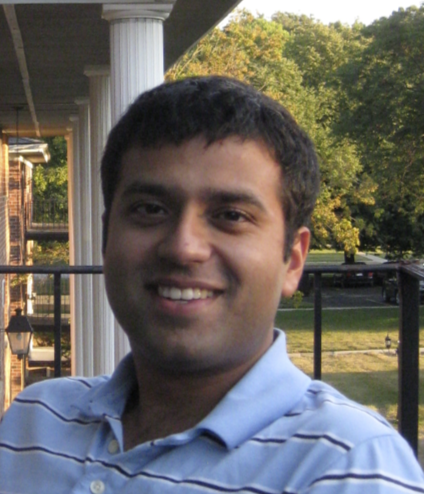
Shuangyou Zhang is a Senior Scientist at the Max Planck Institute for the Science of Light, specializing in optical frequency combs, integrated photonics, and quantum optics. His work focuses on chip-scale atomic clocks, two-photon transitions for optical frequency standards, and dispersion engineering in microresonators. Education Bachelors in Electronics, Jilin University PhD in Electronics, Peking University Research Trends Analysis of his publications reveals expertise in soliton microcombs, Kerr symmetry breaking, Brillouin scattering, and silicon nitride-based photonic devices. His work spans nonlinear optics, photonic integrated circuits (PICs), and applications in sensing and optical computing. Labs & Collaborations He is affiliated with the Max Planck Institute for the Science of Light, which explores quantum optics, nanophotonics, and light-matter interaction.
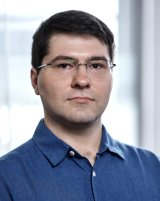
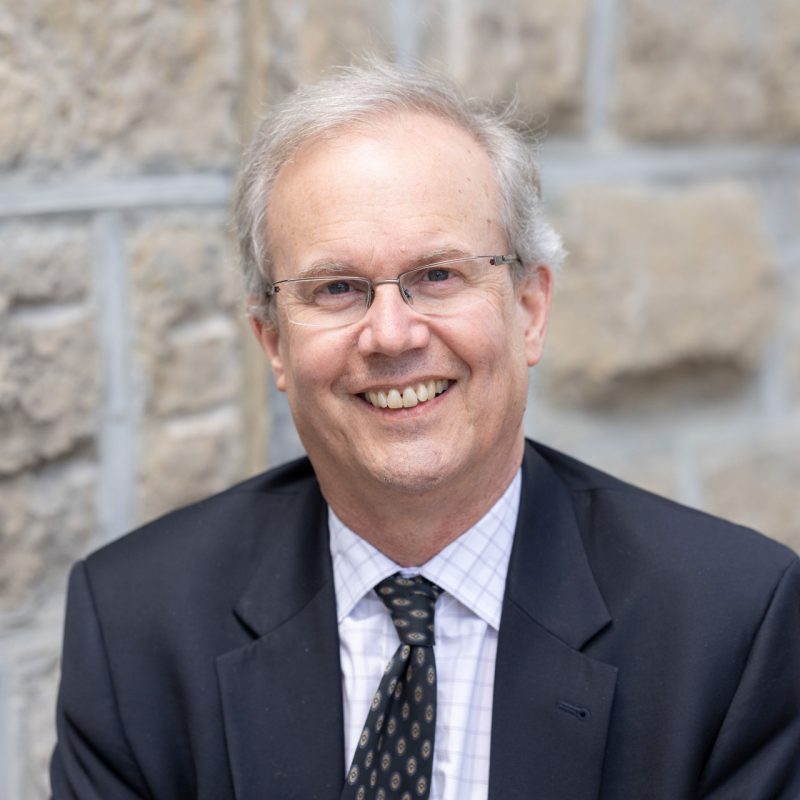
Dr. Daniel Le is an Assistant Professor in the Department of Mathematics at Purdue University, specializing in number theory, representation theory, and related areas such as automorphic forms and Lie groups. He holds a PhD from the University of Chicago and has held postdoctoral positions at the University of Toronto and the Institute for Advanced Study (IAS). His research also extends into optics and photonics, focusing on microcombs, quantum metrology, and integrated photonic systems. He has contributed to advancements in frequency comb technology, quantum information processing, and optical frequency division. Dr. Le teaches linear algebra courses and maintains an active research program with over 50 publications in high-impact journals. Education: PhD in Mathematics, University of Chicago; Postdoctoral Fellowships at University of Toronto and IAS. Research Interests: Number Theory (Galois representations, Langlands program), Representation Theory, Optics (microcombs, frequency division), Quantum Information (entanglement, Bell states), and Photonics (integrated systems, LiDAR applications). Recent Contributions: His work spans theoretical mathematics and applied photonics, including innovations in Vernier microcomb stabilization, quantum metrology techniques, and high-dimensional entanglement generation. Recent articles explore applications in optical atomic clocks, RF-to-optical signal conversion, and multi-band LiDAR systems.
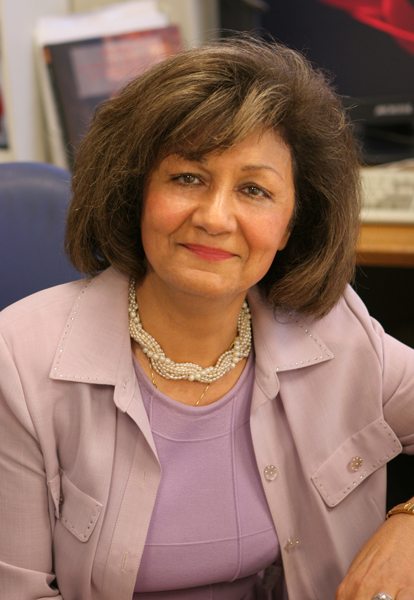
Prof. Svetlana Malinovskaya is a Professor in the Department of Physics at Stevens Institute of Technology, affiliated with the Charles V. Schaefer, Jr. School of Engineering and Science. She holds a PhD in Physics and Mathematics from Novosibirsk State University and the Institute of Chemical Kinetics and Combustion. Her research focuses on quantum science, ultrafast optics, and quantum control, with applications in quantum sensing, imaging, and coherent control of atomic and molecular systems. She has held prominent roles, including visiting positions at Harvard University’s ITAMP and the University of Michigan. Education: PhD (1993), Novosibirsk State University and Institute of Chemical Kinetics and Combustion, Russian Academy of Sciences (Physics and Mathematics) Research Interests: Quantum control and sensing with Rydberg atoms Coherent anti-Stokes Raman spectroscopy (CARS) and remote detection Ultrafast laser pulse shaping and adiabatic passage techniques Quantum many-body dynamics and entanglement Articles Trends: Recent work emphasizes quantum-enhanced sensing, entanglement engineering in Rydberg systems, and advanced Ramsey interferometry techniques. Key applications include charged particle detection, precision magnetometry, and mirrorless lasing phenomena. Awards: Alexander von Humboldt Research Fellowship (2023) Helmholtz Institute Mainz Visiting Program Scholarship (2022-2023) Teaching Faculty Award (2011) Grants & Advising: Leads federally funded projects (ONR, NSF, DARPA) on quantum sensing and remote detection. Mentors students in quantum technologies and interdisciplinary research. Serves on the American Physical Society’s DAMOP Executive Committee and organizes conferences like the APS Conference for Undergraduate Women in Physics. Labs & Teams: Heads the Cluster on Quantum Sensing and Imaging at Stevens, fostering interdisciplinary collaboration in quantum technologies.
Andrew Ellis is a Professor at Aston University, serving as Deputy Director of the Aston Institute of Photonic Technologies (AiPT). He holds adjunct professorships at University College Cork and Dublin City University. His research focuses on optical communications, photonics, and nonlinear optics, with emphasis on increasing capacity and functionality in optical networks. He has over 200 journal publications and numerous patents. Education: B.Sc. in Physics from the University of Sussex (1987), Ph.D. in Electronic and Electrical Engineering from the University of Aston in Birmingham (1997). Research Interests: Optical superchannels, passive optical networks, nonlinear effects mitigation, and free-space optical communication systems. He leads projects on terabit/s transponders and Tbit/s broadband delivery. Key Awards: Fellow of the Optical Society of America Royal Society Wolfson Research Merit Award (2013) Photonics Society Distinguished Lecturer (2012) Teaching: Courses on digital optical communication systems, measurement, automation, and data processing. Supervised over 12 PhD students, many of whom now work in academia and industry. Labs/Teams: Active in the Aston Institute of Photonic Technologies and collaborative projects with institutions like Tyndall National Institute and Corning Research Centre.
Vladimir Gordienko is a Research Fellow at Aston University's College of Engineering and Physical Sciences, specializing in fiber optical parametric amplifiers (FOPAs) and related nonlinear optical technologies. He holds a PhD from Aston University (2018), an MSc in Photonic Networks Engineering (Erasmus Mundus MAPNET, 2013), and a BSc in Optical Equipment and Technologies (Bauman Moscow State Technical University, 2010). His research focuses on FOPA applications in optical communication systems, phase-sensitive amplification, Raman amplifiers, and optical phase conjugation. Key interests include polarization-insensitive design, multi-band networks, and high-capacity transmission solutions. His work addresses challenges such as pump phase modulation effects, nonlinear crosstalk mitigation, and broadband gain optimization. Recent publications highlight advancements in polarization-insensitive FOPAs for bidirectional access networks, record bandwidth phase conjugation in fiber loop mirrors, and high-performance Mach-Zehnder amplifier configurations. His datasets and experimental contributions include evaluations of 38-channel transmission systems and WDM signal amplification. Vladimir has collaborated on projects involving extended-reach passive optical networks (PONs), demonstrating FOPA superiority over erbium-doped and Raman amplifiers for burst-mode traffic. His work bridges theoretical modeling and experimental validation, with a focus on practical applications in modern optical communication networks.
Auro Michele Perego is an Associate Professor and Royal Academy of Engineering Research Fellow at the Aston Institute of Photonic Technologies (AiPT), part of the College of Engineering and Physical Sciences at Aston University. His research focuses on nonlinear photonics, mode-locking in lasers, frequency comb generation, and optical sensing. He received his PhD in 2018 from AiPT, focusing on nonlinear optical systems. He is open to supervising PhD students in relevant fields. Education: PhD in Nonlinear Optical Systems, Aston Institute of Photonic Technologies, 2018. His research interests include modulation instability in fiber cavities, parametric amplification, and the application of solitons in optical communications. He has contributed significantly to the development of optical frequency combs and their applications in sensing and neuromorphic computing. Awards: Royal Academy of Engineering Research Fellowship He is affiliated with the Aston Research Explorer and has collaborated internationally on projects involving nonlinear optical systems. His work often explores the dynamics of coupled lasers and novel techniques for optical signal processing.
Sergey Sergeyev is an Associate Professorial Research Fellow at the Aston Institute of Photonic Technologies (AiPT) within the College of Engineering and Physical Sciences at Aston University, UK. His research focuses on fiber lasers, polarization dynamics, ultrafast optics, and nonlinear phenomena. He holds a PhD in Optics and Laser Physics from Belarusian State University (1991) and has extensive industrial and academic experience, including a Marie Curie Fellowship (2010). He is a Senior Member of the Optical Society of America and a UK HEA Fellow. Key research interests include dissipative solitons, vector solitons, polarization instabilities, and applications in optical communication and sensing. His work spans fiber Raman amplifiers, rogue wave dynamics, and coherent photonic systems. He has authored over 120 publications and supervised 4 PhD students. Current projects explore dual-comb lasers for spectroscopic applications and polarization-multiplexed fiber systems. Education: PhD and MSc in Optics/Spectroscopy (Belarusian State University) Awards: Marie Curie Fellowship, Senior OSA Membership, UK HEA Fellowship Teaching: Module leader for Optical Networks and Fiber Device Modelling at MSc level Grants: Active projects on ultrafast fiber laser systems and photonic radar Labs: AiPT’s fiber laser laboratories. Collaborations include Royal Institute of Technology (Sweden), Waterford Institute of Technology (Ireland), and industry partners like Ericsson and Acreo.
Aleksandar Rakic is a Professor in the School of Electrical Engineering and Computer Science at The University of Queensland. He serves as the Associate Dean (External Engagement) in the Faculty of Engineering, Architecture, and Information Technology. His research focuses on photonics and microwave engineering, with expertise in laser feedback interferometry, terahertz technology, and optoelectronic devices. Rakic leads the Photonics and Microwave Engineering group, pioneering advancements in sensing and imaging systems across the electromagnetic spectrum. His core research areas include developing terahertz sensing systems for applications in security, defense, and biomedical imaging, as well as designing surface-emitting optoelectronic devices like VCSELs. Notable contributions include world-first laser-feedback interferometric sensors using quantum cascade lasers and mid-infrared interband cascade lasers. Rakic has authored over 200 publications, including book chapters and journal articles in high-impact venues like Physical Review A , Optics Express , and Nature Communications . His work bridges fundamental photonics research with applied technologies, such as non-destructive material analysis and biomedical diagnostics. Current projects emphasize terahertz imaging for in vivo biomedical applications and precision agriculture. His group collaborates with industry and academia on cutting-edge technologies, including THz nanoscopy for quantum device characterization and laser-based imaging systems for cultural heritage preservation. Despite prolific output, Rakic holds no explicitly stated scientific awards but is recognized for transformative contributions to terahertz sensing and photonics.
Peter Andrekson is a Full Professor and Head of Division at the Department of Photonics, Microtechnology and Nanoscience, Chalmers University of Technology. He holds a Ph.D. from Chalmers (1988) and has worked at AT&T Bell Laboratories (1989–1992), Cenix Inc., and Lehigh University's Center for Optical Technologies. His research focuses on fiber communications, optical amplification, nonlinear optics, and high-capacity transmission systems. Andrekson has co-founded Picosolve Inc. (now part of EXFO) and served as Director of EXFO Sweden AB. He is a Fellow of the Optical Society of America and IEEE, and a member of the Royal Swedish Academy of Engineering Sciences (IVA). He has authored ~500 publications, including 100 invited papers and four OFC tutorials. Notable awards include the 2000 Telenor Nordic Research Award and a 1993 Swedish government award for young scientists. His technical leadership roles include Board Member of the IEEE Photonics Society, ECOC Chair (2017), and expert evaluator for the Nobel Prize in Physics. His work spans optical parametric amplifiers, microcombs, and free-space optical communication systems, with applications in high-speed data transmission and analog photonics.
Peter van der Slot is a researcher at the University of Twente's MESA+ Institute, specializing in Nonlinear Nanophotonics . His work focuses on Silicon Nitride photonics, hybrid integrated lasers, and photon-phonon interactions. Institution: University of Twente Research Group: Nonlinear Nanophotonics Group Research trends include: Development of chip-integrated mode-locked lasers for visible wavelengths Investigation of nonlinear processes in coupled waveguides Design of interference mitigation systems using photonic ring resonators Exploration of absorber-free mode-locking techniques Collaborations span multiple institutions, with emphasis on photonic integrated circuits and optical modeling.
Gaurav Bahl is a Professor in the Department of Mechanical Science and Engineering at the University of Illinois at Urbana-Champaign , with affiliations in Physics, Electrical & Computer Engineering, and the Illinois Quantum Information Science and Technology Center (IQUIST). He holds a PhD (2010) and MS (2008) in Electrical Engineering from Stanford University and a B.Eng (2005) from McMaster University. George B. Grim Professor (2023) Kritzer Faculty Scholar Fellow of Optica (2022) Research Interests focus on optomechanical systems , topological photonics , and non-reciprocal devices . His work explores light-matter interactions in photonic microsystems, leveraging radiation pressure, gradient forces, and photothermal effects for inertial sensors , biochemical detection , and quantum technologies . Recent projects include topological frequency combs , chiral cooling , and chip-scale optical isolators . Publications highlight advancements in non-Hermitian physics , microwave topological insulators , and Brillouin scattering . His group's work on electro-optic isolation set records for efficiency, while acoustic pumping enabled time-reversal symmetry breaking. Topological temporal pumping and fractional charge trapping demonstrate novel approaches to robust quantum systems. Awards & Honors include the Presidential Early Career Award (PECASE) , Dean's Excellence in Research Award , and ONR Early Career Grant . He has secured patents for non-reciprocal devices and optical sensing systems . Teaching: Developed course ME 498 PM4 "Photonic MEMS" and teaches ME 360 (Signal Processing), ME 370 (Mechanical Design), ME 487 (MEMS-NEMS), and ME 598 (Emergent Photonic Phenomena) Outreach: Created hands-on K-12 activities on optomechanical sensors, light-mills, and paper-based accelerometers through programs like G-BAM and I-STEM
Dr. Hidehiro Yonezawa is a Senior Lecturer in the School of Engineering and IT at the University of New South Wales Canberra (UNSW Canberra), where he has been appointed since September 2013. He is also a Chief Investigator at the ARC Centre of Excellence for Quantum Computation and Communication Technology since 2015. His academic career began at the University of Tokyo, where he completed his PhD in 2007 under Prof. Akira Furusawa, later serving as a Research Associate and then Lecturer from April 2009 until September 2013. Dr. Yonezawa's research spans experimental quantum optics, quantum information, and quantum control. His work focuses on generating non-classical quantum states of light (particularly squeezed states), continuous variable quantum teleportation, adaptive optical phase estimation, measurement-based quantum computation, coherent-control quantum computation, and quantum tomography. His research demonstrates strong interdisciplinary connections between quantum physics, optical engineering, and information theory, with applications in quantum computing and communication technologies. His recent publications reveal a strong trend toward quantum information processing with continuous variables, particularly in quantum tomography, quantum control systems, and measurement-based quantum computation. His work bridges theoretical quantum information science with experimental quantum optics, with a growing emphasis on practical implementations of quantum technologies. The research shows increasing collaboration with international teams working on quantum materials and quantum technology development. Dr. Yonezawa has received notable recognition for his contributions to quantum science, including The Young Scientists' Prize, the Commendation for Science and Technology by the Minister of Education, Culture, Sports, Science and Technology of Japan (2014) Incentive award from The Laser Society of Japan (2009) As a Senior Lecturer at UNSW Canberra, Dr. Yonezawa actively mentors PhD students, offering scholarships of $35,000 AUD for exceptional candidates with High Distinction undergraduate results or completed Masters by Research degrees. His position as Chief Investigator at the ARC Centre of Excellence for Quantum Computation and Communication Technology provides significant research funding and collaborative opportunities in quantum technology development. Dr. Yonezawa's laboratory work is centered around experimental quantum optics, with a focus on continuous-variable quantum information processing. His research group at UNSW Canberra collaborates extensively with the Furusawa laboratory at the University of Tokyo and other international quantum research centers, particularly in the development of time-domain multiplexed quantum systems and quantum measurement technologies.
Dr. Luke F. Lester is the Roanoke Electric Steel Research Professor in the Bradley Department of Electrical and Computer Engineering at Virginia Tech. His research focuses on optoelectronics, nanotechnology, and semiconductor lasers, including advancements in quantum dot lasers and photonic oscillators. An IEEE Fellow (2013) for contributions to quantum dot lasers, he also engages in engineering education reform, curriculum design, and interdisciplinary collaboration. Lester holds a Ph.D. (1992) and B.S. (1984) in Electrical Engineering from Cornell University. Education: Ph.D., Electrical Engineering, Cornell University, 1992 B.S., Electrical Engineering, Cornell University, 1984 Research Interests: Optoelectronics and semiconductor lasers Quantum dot and photonic technologies Material science in photovoltaics and transistors Curriculum design for engineering education Awards: IEEE Fellow (2013) Advising & Grants: Lester has contributed to interdisciplinary programs like the Calhoun Discovery Program and developed hybrid/online curricula for signals and systems courses. His work emphasizes collaborative, project-based learning and institutional partnerships. Labs/Teams: Active in Virginia Tech's ECE department, he collaborates on advancements in nanowire lasers, GaSb photovoltaics, and quantum-enabled workforce training initiatives.
Margaret Murnane is a Distinguished Professor of Physics at the University of Colorado, Boulder, and a fellow at JILA. Her research focuses on ultrafast laser science, attosecond physics, and the development of coherent x-ray sources. She leads efforts to apply these technologies to study electron dynamics in molecules and materials, nanoscale heat transport, and magnetic phenomena. Her group pioneers techniques like extreme ultraviolet scatterometry and vector ptychography for advanced nanoscale metrology. Her educational background includes a focus on physics and optics, though specific degree details are not provided. Research highlights include the creation of tabletop attosecond pulse sources and their application in observing ultrafast spin dynamics in materials. Her lab develops mid-infrared lasers and hollow-core fibers for high-harmonic generation. Key research themes include: High-harmonic generation for coherent x-ray production Ultrafast electron dynamics imaging Multimodal EUV reflectometry systems Topological magnetic structure visualization Quantum materials spectroscopy Recent work advances EUV-based nanoscale metrology for semiconductor manufacturing and explores light-matter interactions at attosecond timescales. Her instrumentation innovations include compact extreme ultraviolet reflectometers and advanced ptychography algorithms.
Manijeh Razeghi is the Walter P. Murphy Professor of Electrical and Computer Engineering and Director of the Center for Quantum Devices at Northwestern University. She also serves as an Adjunct Professor at the Optical Sciences Center, University of Arizona, and maintains significant professional connections with institutions in France and Switzerland. With a career spanning over three decades at Northwestern, Professor Razeghi has established herself as a world-leading authority in semiconductor physics and optoelectronic devices across the electromagnetic spectrum. Her educational background includes: 1980: Docteur d'etat es Sciences Physiques, Universite de Paris, France 1977: Docteur 3eme Cycle, Solid State Physics, Universite de Paris, France 1976: DEA, Science des Materiaux, Universite de Paris, France Professor Razeghi's research focuses on cutting-edge developments in semiconductor technology, particularly in the areas of quantum structures and devices spanning the electromagnetic spectrum from deep ultraviolet to terahertz frequencies. Her pioneering work in epitaxial manufacturing techniques has enabled significant advances in optoelectronic devices, particularly in infrared and terahertz technologies. She has made substantial contributions to condensed matter physics and engineering, with particular emphasis on nonlinear optics and semiconductor physics and technology. Her current research explores gallium oxide materials, quantum cascade lasers, and type-II superlattices for advanced photodetection applications, with a strong focus on practical implementations for telecommunications, imaging, and sensing. Analysis of Professor Razeghi's extensive publication record (over 1,000 papers) reveals a consistent trajectory of innovation in semiconductor photonics. Her recent work demonstrates a strategic progression toward developing high-power, efficient devices capable of room-temperature operation across challenging spectral regions. There is a clear emphasis on gallium oxide materials and type-II superlattices to overcome traditional limitations in infrared detection and terahertz generation. Her research increasingly bridges fundamental materials science with practical device engineering, resulting in technologies with significant commercial and scientific applications. Professor Razeghi has received numerous prestigious honors and awards throughout her distinguished career: Benjamin Franklin Medal in Electrical Engineering (2018) Elected Lifetime Fellow of IEEE (2017) Jan Czochralski Gold Medal (2016) IBM Faculty Award (2013) Elected Lifetime Fellow of Materials Research Society (2008) Multiple fellowships including APS, IOP, OSA, SPIE, and SWE Society of Women Engineers Achievement Award (1995) IBM Europe Science and Technology Prize (1987) As an academic mentor, Professor Razeghi has supervised 51 PhD dissertations and 20 MS theses at Northwestern University, and currently oversees approximately 15 PhD students, post-doctoral researchers, and visiting faculty. She created the Graduate and Undergraduate Programs in Solid State Engineering in the ECE Department at Northwestern, establishing a comprehensive 12-course curriculum. Her professional service includes chairing international conferences and serving on numerous editorial boards for leading journals in physics and engineering. She has also provided expertise to international organizations including the United Nations and the European Research Council, demonstrating her global impact on semiconductor science and technology. Professor Razeghi directs the Center for Quantum Devices (CQD) at Northwestern University, a world-class research facility focused on semiconductor materials and devices. Under her leadership, CQD has become a hub for innovation in infrared and terahertz technologies, with research spanning fundamental materials science to practical device applications. The center maintains strong connections with industry and government laboratories, facilitating the translation of basic research into real-world technologies. Current research directions at CQD include advanced quantum cascade lasers, novel infrared detectors, and next-generation semiconductor materials for optoelectronic applications.