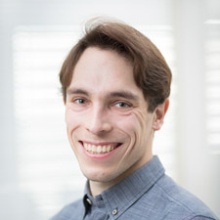
Prof. Dr. Tobias Jahnke is a faculty member at the Karlsruhe Institute of Technology (KIT) in the Faculty of Mathematics , affiliated with the Institute for Applied and Numerical Mathematics and Research Group 3: Scientific Computing . His office is located at Kollegiengebäude Mathematik (20.30), Room 3.042 , and he offers individual appointments via email at tobias.jahnke@kit.edu . His research focuses on Numerical Analysis and Scientific Computing , particularly for highly oscillatory differential equations , partial differential equations , and stochastic reaction systems . Recent work includes methods for nonlinear Dirac equations , Maxwell equations in heterogeneous media , and dispersion-managed optical systems . Courses taught cover Mathematical Finance , Splitting Methods , and Wavelet Applications . Recent publications emphasize error bounds , high-frequency wave propagation , and ADI schemes . Collaborations include projects on frequency combs and quantum dynamics . He leads seminars and lectures on Scientific Computing , Numerical Methods , and Wavelet Analysis .
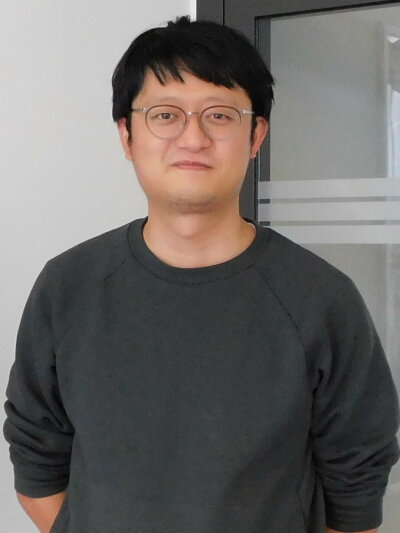
Dr Meng Ding is a Research Fellow at the Optoelectronics Research Centre (ORC), within the Faculty of Engineering and Physical Sciences at the University of Southampton. He is actively involved in advanced photonics research, particularly in the development and optimization of hollow-core optical fibers and their applications in precision optical systems. His research focuses on enhancing the stability, performance, and integration of hollow-core fibers for applications in interferometry, telecommunications, and sensing. Key areas include thermal insensitivity, mode-field adaptation, higher-order mode suppression, and the development of stable propagation delay systems across extreme temperature ranges. The recent publications highlight a strong trend in optical engineering, with emphasis on fiber design, laser phase locking, and low-noise THz generation. These works demonstrate a consistent focus on achieving ultimate stability and precision in fiber-based optical systems, contributing to advancements in both fundamental science and applied technologies. Hollow-core fiber technology and design Laser phase and frequency stabilization Optical frequency combs THz generation Fiber splicing and interconnection Thermally robust optical systems Dr Ding has received no publicly listed scientific awards in the provided text. However, his active publication record in top-tier journals such as Science Advances , Optics Letters , and IEEE Journal of Lightwave Technology indicates significant recognition in the photonics community. He currently supervises several PhD students, including Win Adiyansyah Indra, Usue Irene Barbeito Edreira, and Karim Elglmady, all working within the ORC. There is no mention of external grants or funding sources in the text, but his research is likely supported through institutional and research council funding given the scope and collaboration network. Dr Ding is a member of key research groups at the ORC, including the Smart Lasers and Special Fibres group and the Advanced Fibre Applications group. These teams focus on next-generation fiber technologies, photonic materials, and their deployment in real-world systems, positioning Dr Ding at the forefront of innovative fiber optic research.
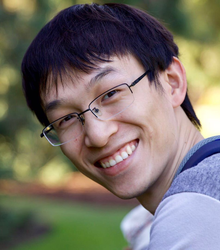
Dmitry Skryabin is a Professor in the Department of Physics at the University of Bath, where he leads research in the Centre for Photonics and Photonic Materials. His work focuses on nonlinear optical phenomena, particularly in microresonators, optical fibers, and waveguides. He is an OSA Fellow, IoP Fellow, and recipient of the Maxwell Medal and Prize. Professor Skryabin's research centers on ultrashort pulses, multi-mode complexity, and frequency conversion in nonlinear photonic devices. His primary interests include solitons in optics, supercontinuum generation, frequency combs, vortices, polaritons, resonators, and photonic crystals. His current active research topics focus on optical frequency combs, chi(2) photonics, solitons, and topological photonics, with applications contributing to UN Sustainable Development Goals. His recent publications demonstrate a strong focus on microresonator-based frequency combs and soliton dynamics, with particular emphasis on Kerr solitons, quadratic nonlinearities, and topological photonics. The research spans theoretical modeling and experimental work, often involving collaborations across multiple institutions and countries, reflecting the interdisciplinary nature of modern photonics research. Among his notable achievements are being named an OSA Fellow, IoP Fellow, and recipient of the Maxwell Medal and Prize. His research is supported by significant grants including EPSRC-SFI projects, Royal Society funding, and EU Horizon 2020 Marie Curie ITN programs. Professor Skryabin actively supervises doctoral students and postdoctoral researchers, with 8 supervised works documented. His research group benefits from substantial external funding through active projects such as 'Towards power efficient microresonator frequency combs' (2024-2028) and 'Frequency comb generation by second order nonlinearities and optical vortices' (2023-2026), reflecting his leadership in the photonics community. His work is conducted within the Department of Physics at the University of Bath, specifically through the Centre for Photonics and Photonic Materials. The research involves close collaboration with international partners and utilizes advanced experimental setups for studying nonlinear optical phenomena in microresonators and waveguide systems.
Thomas Taimre is a Senior Lecturer in Statistics at the School of Mathematics and Physics, University of Queensland. He teaches undergraduate courses in statistics and financial mathematics and leads research in applied mathematics, stochastic modeling, and optical engineering. His work bridges theoretical frameworks with practical applications in terahertz laser technology and optimization algorithms. Research Focus: Dr. Taimre's interdisciplinary research spans: Mathematical Statistics: Rare-event simulation, stochastic processes, and Monte Carlo methods. Optical Engineering: Terahertz quantum cascade lasers, laser feedback interferometry, and biomedical imaging. Operations Research: Resource optimization, queueing theory, and decision support systems for environmental and industrial challenges. Publication Trends: His recent articles (2022-2025) emphasize terahertz imaging advancements, laser dynamics, and optimization techniques. Dominant themes include quantum cascade laser applications, laser feedback interferometry for medical diagnostics, and stochastic methods for complex system modeling. Funding & Supervision: He contributes to major grants like the ARC Training Centre for Information Resilience (2021-2026) and supervises graduate research. No awards are listed.
Andriy Gorbach is a Senior Lecturer in the Department of Physics at the University of Bath, affiliated with the Centre for Photonics and Photonic Materials and Condensed Matter Physics CDT. His office is located in 8 WEST 3.54, and he actively supervises doctoral students in theoretical and computational photonics research. His research focuses on nonlinear wave phenomena , nonlinear optics , and photonics , with emphasis on controlling light in nano-photonic structures through geometric and material parameter manipulation. Key active areas include nonlinear optics of 2D materials and quantum optics in lithium niobate photonic nano-wires. His fingerprint reveals dominant expertise in Solitary Wave Physics (100%), Waveguide Physics (77%), Polariton Physics (19%), and Four-Wave Mixing (17%). Recent publications demonstrate strong trends in topological photonics and nonlinear frequency conversion, with recurring themes in lithium niobate waveguide arrays, soliton dynamics, and parametric processes. His work bridges classical electromagnetic theory and quantum photonics, showing increasing focus on topological edge states and frequency comb generation since 2023. Gorbach leads or collaborates on significant research grants including Frequency comb generation by second order nonlinearities (Royal Society, 2023-2026) and Nonlinear photonics with 2D materials (Royal Society, 2022-2024). His supervised work encompasses 5 doctoral projects, with datasets supporting 7 major publications. He maintains active collaborations through EU Horizon 2020 and Engineering and Physical Sciences Research Council projects. He operates within the Centre for Photonics and Photonic Materials, utilizing advanced computational resources for theoretical modeling of light-matter interactions in nanoscale structures. Current efforts focus on integrating 2D materials with photonic circuits and exploring quantum-classical analogies in nonlinear wave systems.
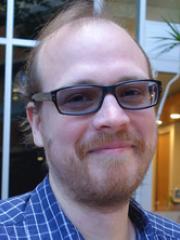
Saeid Asgarnezhadzorgabad is a Research Fellow in the Quantum Nanophotonics group at Trinity College Dublin, affiliated with the CRANN Institute. His research lies at the intersection of quantum optics, nanophotonics, and condensed matter physics, focusing on hybrid nanostructures for quantum technologies. Research Interests: Quantum Photonics Topology in hybrid nanostructures Nonlinear dynamics in nanostructures His work investigates quantum evolution in systems involving 2D materials, plasmonic resonators, and optical cavities, with applications in single-photon devices and ultrafast light control. The recent publications reflect a strong trend in manipulating surface plasmons and polaritons through nonlinear and coherent effects in metamaterials and graphene-based systems, aiming to enable next-generation quantum information processing components. Scientific Awards: No awards listed in the provided text. Advising and Grants: There is no mention of students or grant funding in the provided information. However, he is noted to be in deep collaboration with experimental groups working on quantum device design, indicating active research partnerships. Labs and Teams: Saeid is a core member of the Quantum Nanophotonics research group at Trinity College Dublin, housed within the School of Physics and associated with the CRANN Institute for nanoscience research. This group focuses on theoretical and computational modeling of quantum light-matter interactions in nanoscale systems.
Florian Mörz is a researcher specializing in advanced photonics and ultrafast laser technologies. His work focuses on developing innovative optical systems for spectroscopy, imaging, and material characterization. Key areas of expertise include mid-infrared plasmonics, tunable laser sources, and nanoscale sensing techniques. He leads a team dedicated to creating robust photonic devices with applications in biomedical imaging, materials science, and quantum optics. Research interests encompass optical parametric amplifiers, metasurface design, and surface-enhanced spectroscopy. His group has pioneered alignment-free mid-IR sources and developed ultrafast laser systems capable of attomolar detection of biomolecules. Recent efforts emphasize low-noise light sources for coherent Raman scattering microscopy and high-repetition-rate lasers for advanced spectroscopic imaging. Publications highlight contributions to plasmonic materials, GeSn heterostructures, and nanoantenna-based sensors. Despite prolific output, no formal awards or grants are explicitly mentioned in the provided texts. The team's work is characterized by interdisciplinary collaboration between photonics, materials science, and biomedical engineering.
Clivia M. Sotomayor-Torres is the Director General and Nanophononics Group Leader at the International Iberian Nanotechnology Laboratory (INL) in Braga, Portugal, since September 2023. Previously, she held roles such as ICREA Research Professor and Group Leader at the Catalan Institute of Nanoscience and Nanotechnology (ICN2) in Spain (2007–2023), Group Director at the Tyndall National Institute in Ireland (2004–2008), and C4 Professor for Material Science in Electronics at the University of Wuppertal (1996–2004). She earned her PhD in Physics from the University of Manchester (1983) and BSc in Physics from the University of Southampton (1979). Her research focuses on nanophotonics, phononics, and optomechanical systems, with contributions to thermal management, hypersound propagation, and low-dimensional materials. Over 600+ publications highlight her work on phononic crystals, optomechanical systems, and nanoscale thermal engineering. Current projects explore nanoscale phonon transport and advanced thermal rectification in 2D materials. Key technical expertise includes Brillouin light scattering, thermal boundary conductance measurement, and optomechanical magnetometry. Her teams collaborate internationally, advancing applications in radiative cooling, smart materials, and quantum sensing. Labs include the INL Nanophononics Group and former ICN2 Photonic and Phononic Nanostructures Group.
Aseema Mohanty is an Assistant Professor in the Department of Electrical and Computer Engineering at Tufts University, holding the Clare Boothe Luce Professorship. She earned her B.Sc. from MIT and Ph.D. from Cornell University, followed by postdoctoral research at Columbia University under Michal Lipson. Her research focuses on nanophotonics, optical beam shaping, and neuroengineering, with applications in quantum information systems, biomedical sensors, and chip-scale imaging. She leads the Mohanty Nanophotonics Lab, developing miniaturized optical circuits for neural interfaces, LiDAR, and quantum computing. Education: Bachelor of Science, Electrical Science & Engineering, MIT (2011) Ph.D., Electrical and Computer Engineering, Cornell University (2017) Research Interests: Chip-scale optical systems for neuroscience and quantum applications 3D optical beam shaping and sensing Biomedical optical interfaces and implantable devices Her work bridges nanophotonics and biomedicine, with recent breakthroughs including reconfigurable neural stimulation probes and chip-scale lasers spanning ultraviolet to near-infrared wavelengths. Over 30 peer-reviewed articles highlight her contributions to optical phased arrays, quantum photonics, and miniaturized imaging systems. Awards: Clare Boothe Luce Professorship (2020-present) Lab Activities: Mentoring 10+ students across ECE and Physics, advancing projects in quantum communication, biomedical optics, and LiDAR systems.
Dr. Yicheng Wang is a researcher affiliated with the Faculty of Electrical Engineering at Ruhr-University Bochum (RUB), part of the Puls research group. His work focuses on advanced laser systems, including high-power ultrafast lasers, terahertz generation, and nonlinear optics. He contributes to the development of thin-disk laser technologies, particularly in the 2-micron wavelength range, with applications in material processing and high-rate systems. Research interests center on laser-driven THz sources, high-average power systems, and frequency upconversion techniques using materials like lithium niobate and GaP. His publications highlight breakthroughs in Kerr-lens mode-locked oscillators, SESAM technologies, and nonlinear pulse compression methods. Dr. Wang actively presents at conferences such as CLEO Europe and UFO XIII, sharing innovations in single-cycle THz generation and high-power laser designs. As part of the High Energy Laser Lab, he collaborates on experimental setups involving femtosecond amplifiers and intracavity THz sources. His work bridges fundamental research and applied technologies, aiming to enhance laser efficiency and scalability for industrial and scientific applications.
Michael Haider is an Associate Professor at the Technical University of Munich within the TUM School of Computation, Information and Technology , specifically affiliated with the Chair of Computational Photonics (Prof. Christian Jirauschek). His work bridges quantum device modeling, stochastic electromagnetic field analysis, and advanced optoelectronic simulations. Research interests include: Quantum Cascade Lasers and Detectors Josephson Traveling-Wave Parametric Amplifiers Stochastic and Cyclostationary Electromagnetic Field Propagation Terahertz Technology and Frequency Comb Generation Computational Photonics and Microwave Modeling Principal Component Analysis for Electromagnetic Systems His recent publications focus on quantum amplification mechanisms, THz laser dynamics, and stochastic field modeling using Maxwell-Bloch frameworks. Collaborations with Prof. Jirauschek, Prof. Russer, and researchers at ETH Zürich and SPIE conferences highlight his interdisciplinary approach.
Ryan Behunin is an Associate Professor in the Department of Applied Physics and Materials Science at Northern Arizona University. His research focuses on fluctuation-induced phenomena, optomechanics, and quantum systems, with a particular emphasis on Brillouin physics—investigating light-sound interactions to develop high-performance chip-scale lasers, precision sensors, and laser cooling techniques. He leads the ¡MIRA! research group and contributes to the ¡MIRA! Center, which promotes interdisciplinary STEM innovation. Postdoctoral Research Associate, Yale University Postdoctoral Research Associate, Los Alamos National Laboratory PhD in Physics, University of Maryland BS in Physics, University of Utah Behunin’s work explores fundamental questions in quantum friction, laser noise, and energy dissipation through fluctuation-induced phenomena. His optomechanics research leverages Brillouin scattering to advance integrated photonics, including ultra-low-linewidth lasers and coherent microwave-photonic systems. Recent projects address quantum state preservation, phonon-electron coupling, and scalable quantum information solutions. Behunin’s publications from 2023-2025 focus on quantum optomechanics, Brillouin-based transduction, and multi-phonon state engineering. Collaborations span photonics, acoustics, and quantum information science, with applications in quantum computing, sensing, and communication protocols. Scientific honors include: NSF EAPSI Fellowship (2009) Ralph D. Myers Award for Excellence in Teaching (2007/2008 Honorable Mention) Ryan Behunin actively mentors K-12 students through Tynkertopia and science fairs, emphasizing STEM diversity. His ¡MIRA! group emphasizes interdisciplinary collaboration, partnering with institutions like the University of Maryland, Yale, and Los Alamos National Laboratory.
Gwangho Choi is a Research Fellow at the Wyant College of Optical Sciences , The University of Arizona , focusing on advanced optical technologies. Contact: choig@arizona.edu . His research explores quantum optics , photonics , and nonlinear optical phenomena , particularly through optical frequency combs , microresonators , and visible-to-near-IR wavelength applications . Work includes programmable processors for quantum computing and challenges in biological/aqueous environments. The 2022-2024 publications reveal trends in quantum networking , soliton generation , and miniaturized resonator devices , emphasizing nonlinear effects like Raman scattering and whispering-gallery-mode systems. Research spans quantum computing , biophotonics , and integrated optical engineering .
Toms Salgals is an Associate Professor at Riga Technical University, with a focus on high-speed optical communication systems, integrated photonics, and emerging 6G technologies. His research spans optomechanics, nanophotonics, and radar technologies, leveraging advanced photonic components for next-generation networks. Current affiliation: Riga Technical University Research areas: High-speed fiber optics, optical frequency combs, metamaterials, 5G/6G, nanophotonics Email: Toms.Salgals@rtu.lv His recent publications emphasize silicon photonics modulators , analog fronthaul solutions , and optical amplification-free transmission systems . These works explore the integration of nanophotonics and machine learning for improving signal processing in high-baudrate environments. The 24 listed articles (2020–2025) reflect a strong trend toward short-reach optical interconnects , hybrid photonic architectures , and mid-IR free-space optics , particularly for 6G and beyond. He also investigates quantum cascade lasers, whispering gallery mode resonators, and novel data compression methods.
Xu Yi is an Assistant Professor in the Department of Electrical and Computer Engineering at the University of Virginia School of Engineering and Applied Science. His research focuses on experimental atomic, molecular, and optical physics with applications in photonics and quantum technologies. Academic Rank: Assistant Professor Department: Electrical and Computer Engineering Research Focus: Microcombs, Soliton Physics, mmWave Generation Professor Yi's work explores the intersection of integrated photonics and quantum optics, particularly through silicon nitride (SiN) and lithium niobate microcavities. His recent research emphasizes the development of photonic chip-based systems for optical frequency division, low-noise microwave generation, and quantum state engineering. His publications reveal a strong trend toward advancing soliton microcomb technologies for practical applications in mmWave generation, spectroscopy, and quantum information processing. Key innovations include heterogeneous integration of photodiodes with soliton microcavities and the creation of squeezed quantum microcombs on chip-scale platforms. Contact: xy3m@virginia.edu



/prod01/channel_3/media/tcd/physics/images/Saeid-Asgarnezhadzorgabad.jpg)