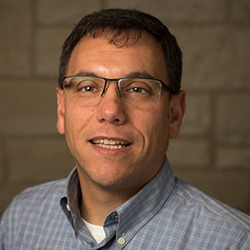
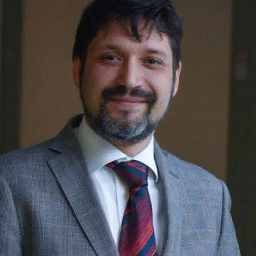
Hadi Meidani is a Clinical Associate Professor at the Carle Illinois College of Medicine , specifically within the Department of Biomedical and Translational Sciences at the University of Illinois at Urbana-Champaign . He teaches courses in Civil and Environmental Engineering, including topics like Systems Engineering & Economics , Machine Learning in CEE , and Uncertainty Quantification . Ph.D., Civil Engineering, University of Southern California (2012) M.S., Electrical Engineering, University of Southern California (2012) M.S., Structural Engineering, Sharif University of Technology (2005) B.S., Civil Engineering, K.N. Toosi University of Technology (2002) Dr. Meidani's research focuses on uncertainty quantification , scientific machine learning , and optimization under uncertainty for engineering systems. His work spans stochastic multiscale analysis , physics-informed machine learning , and model reduction techniques. His recent publications emphasize machine learning for infrastructure systems , graph neural networks , physics-informed models , and traffic assignment . Key trends include deep learning , multi-fidelity modeling , and neural operator transformers applied to metamaterial design , seismic reliability , and autonomous freight delivery .
Dr. Tarek Sayed is a Professor at the University of British Columbia's Department of Civil Engineering within the Faculty of Applied Science. He specializes in Transportation Engineering, focusing on road safety analysis, traffic operations, and Intelligent Transportation Systems (ITS). He serves as the Director of the Bureau of Intelligent Transportation Systems and Freight Security (BITSAFS-Engineering) and Editor of the Canadian Journal of Civil Engineering . His research addresses three core areas: improving road safety evaluation techniques, enhancing safety through traffic operations and highway design analysis, and advancing ITS technologies. Notable contributions include frameworks for safety-audits of infrastructure projects like the Sea to Sky Highway and methodologies for evaluating transit signal priority systems in Vancouver. He has authored/co-authored over 250 publications and supervised 60 graduate students. Key Roles: Professor, BITSAFS Director, Journal Editor Awards: Tier 1 Canada Research Chair, Wilbur Smith Award, Sandford Fleming Award, Prince Michael International Road Safety Award Consulting: Global projects in traffic safety and ITS for agencies like ICBC, FHWA, and Ashghal His research integrates Bayesian statistical methods, extreme value theory, and machine learning to model traffic conflicts, pedestrian behavior, and safety interventions. Current projects include real-time safety optimization using autonomous vehicle data and analyzing shared space interactions between cyclists and pedestrians. Dr. Sayed chairs national/international committees, including the U.S. Transportation Research Board’s safety data committee. His work bridges academia and practice, influencing policy and infrastructure investment decisions worldwide.
Roles and Affiliations: Professor David Levinson is a Professor of Transport in the School of Civil Engineering at the University of Sydney since 2017. He holds adjunct faculty status at the University of Minnesota's Department of Civil, Environmental, and Geo-Engineering (since 1999–2016). He previously directed the Accessibility Observatory and the Networks, Economics, and Urban Systems (NEXUS) research group. He is a member of The Net Zero Institute and leads the TransportLab research group. Education: PhD 1998 in Urban and Regional Planning from the University of California, Berkeley. Research Interests: Focuses on transportation networks, urban systems, accessibility analysis, and policy. Key themes include spatial equity, transport economics, and the co-evolution of land use and transport infrastructure. His work emphasizes data-driven approaches to urban mobility challenges, including modeling transport networks and evaluating infrastructure impacts on accessibility and equity. Grants and Projects: Recent grants include Design of micro-decisions in automated transport (2022, ARC) and Reducing pedestrian crashes through better intersection design (2021, Australian Road Safety Innovation). Collaborates internationally on projects like the Accessibility Observatory. Labs and Teams: Leads the TransportLab and collaborates with the NEXUS group. Active in interdisciplinary research, including urban analytics and transport policy.
Moshe E. Ben-Akiva is the Edmund K Turner Professor at the Massachusetts Institute of Technology (MIT), affiliated with the School of Engineering and the Department of Civil and Environmental Engineering. He holds a B.S. from Technion-Israel Institute of Technology (1968), and M.S. and Ph.D. degrees in transportation systems from MIT (1971, 1973). His research focuses on transportation systems analysis, intelligent transportation systems, demand modeling, econometrics, and infrastructure management. He has been recognized with prestigious awards, including election to the National Academy of Engineering (2025) for contributions to transportation systems modeling and demand analysis. His work spans theoretical and applied domains, including agent-based microsimulation for freight logistics, tradable credit schemes for congestion management, and behavioral dimensions of transport decarbonization. Ben-Akiva collaborates with industry and policymakers to design sustainable mobility solutions. His notable publications include foundational texts on discrete choice analysis and stated preference elicitation. He advises on transportation policy, urban planning, and emerging mobility technologies such as automated vehicles and urban air mobility. Current research explores impacts of automated mobility-on-demand systems, real-time tolling strategies, and e-commerce delivery demand modeling. His team develops tools like SimMobility Freight, an agent-based urban freight simulator. He remains active in teaching, focusing on demand modeling and econometrics courses at MIT.
Scott Moura is a Professor in Civil and Environmental Engineering at the University of California, Berkeley, holding the Clare and Hsieh Wen Shen Distinguished Professorship. He serves as the Acting Director of the Institute of Transportation Studies (ITS) and directs the Energy, Controls, and Applications Lab (eCAL). Previously, he was Faculty Director of the California Program for Advanced Transportation Technology (PATH) starting January 2022, with recent news (June 2025) confirming new leadership roles at both ITS and PATH. Education: B.S. in Mechanical Engineering, University of California, Berkeley, 2006 M.S.E. in Mechanical Engineering, University of Michigan, Ann Arbor, 2008 Ph.D. in Mechanical Engineering, University of Michigan, Ann Arbor, 2011 Postdoctoral Fellow, University of California, San Diego, Cymer Center for Control Systems and Dynamics, 2013 Visiting Researcher, MINES ParisTech, Centre Automatique et Systèmes, Paris, 2013 Moura's research spans multi-scale energy systems: battery modeling and control at component level, electrified/connected vehicles at system level, and distributed energy resources/smart grid integration at grid scale. His work pioneers real-time battery health estimation, fast-charging algorithms, and vehicle-grid integration to enhance capacity, safety, and efficiency while minimizing degradation. Key methodological contributions include PDE control theory, adaptive control frameworks, and machine learning applications for energy storage systems. Scientific Awards: ASME Division of Control Systems Outstanding Young Investigator Award National Science Foundation CAREER Award NSF Graduate Research Fellowship UC Presidential Postdoctoral Fellowship University of Michigan Distinguished ProQuest Dissertation Honorable Mention University of Michigan Rackham Merit Fellowship College of Engineering Distinguished Leadership Award ITS Faculty of the Year Award (2020) As eCAL Lab Director, Moura mentors undergraduate/graduate students, postdocs, and visiting scholars in developing battery monitoring software and control systems. His research attracts significant funding including a $10M USDOT grant for rural autonomous vehicle freight (2025) and the I-40 Corridor SMART Grant (2024), with industry partnerships focused on practical deployment of energy management solutions. Current projects address EV longevity, HOV lane optimization via AI traffic signals, and climate impact assessments for California infrastructure. eCAL Lab operates at the forefront of energy systems research, combining theoretical control frameworks with experimental validation. The lab's work on battery degradation models directly informs industry practices, while its vehicle-grid integration research supports California's clean energy transition. Recent initiatives include KTH Royal Institute of Technology student exchanges and Bay Area climate impact assessments.
Shashi Shekhar is a Professor at the University of Minnesota, holding the distinguished titles of McKnight Distinguished University Professor and Distinguished University Teaching Professor. He serves as the ADC/CSE Chair and Director of the AI-LEAF Institute within the Department of Computer Science at the College of Science and Engineering. His research interests span multiple areas of spatial computing including spatial data science, spatial data mining, spatial databases, Geo-AI, and Geographic Information Systems (GIS). His work has focused on developing scalable algorithms for eco-routing, evacuation route planning, and spatial pattern mining. He has made significant contributions to the field through his Spatial Databases textbook, the Encyclopedia of GIS which has seen over 192,918 downloads in 2017, and a spatial computing book for professionals. His research group has produced numerous PhD graduates dating back to 1993 through 2023. Analysis of his recent publications reveals a strong focus on applying spatial computing to critical societal challenges including climate change mitigation through the AI-LEAF Institute, pandemic response through mobility data analysis, and sustainable transportation through eco-routing algorithms. His work bridges theoretical advances in spatial data science with practical applications in urban planning, emergency management, and environmental sustainability. Distinguished McKnight University Professor Distinguished University Teaching Professor UCGIS Education Award (2015) Graduate Education Award (2015) President of University Consortium for GIS (2017-2018) Computing Research Association Board Member (2016-2019) Professor Shekhar has advised over 30 PhD students since 1993, with his most recent graduate in 2023. He has secured significant research funding including a $20 million AI Institute grant focused on climate-smart agriculture and forestry. His Spatial Computing Research Group maintains active collaborations with government agencies and industry partners. The group has developed practical applications featured in media outlets including FoxTV coverage of evacuation route planning algorithms. Current research directions include applying AI techniques to address climate challenges through the AI-LEAF Institute and advancing spatial data science for polar regions through NSF-funded initiatives.
David Burton is a Senior Lecturer in the Department of Mechanical & Aerospace Engineering at Monash University, Faculty of Engineering. He leads the Monash Wind Tunnel Research Platform (MWTRP), a major research facility supporting experimental and applied aerodynamics research across multiple industries. Research Interests: His expertise lies in experimental fluid dynamics, with a focus on wind engineering, industrial aerodynamics, and aero-acoustics. Key areas include building, vehicle, and sports aerodynamics, flow control, and the impact of wind storms and cyclones. He integrates experimental testing with numerical simulation, particularly in complex bluff body flows and sustainable engineering design. The recent publication trends reflect a strong emphasis on postcritical flow over rough and multiple cylinders, aerodynamic modeling in sports (especially cycling), and real-world applications such as freight train aerodynamics and cyclone resilience. His work combines rigorous experimentation with practical engineering solutions. Scientific Awards: No specific awards mentioned in the provided text. Advising and Grants: David Burton is accepting PhD students and actively supervises research projects. He has served as Primary Chief Investigator on significant research grants, including 'Wind and Water Loading of Flags in Cyclones' (2021–2022) and 'Wind Comfort Simulation and New Engineering Design Process' (2022–2023), demonstrating sustained external funding and project leadership. Labs and Teams: He manages the Monash Wind Tunnel Research Platform (MWTRP), an ISO9001-accredited facility featuring the largest wind tunnel of its type in the Southern Hemisphere. The platform includes CNC machining, rapid prototyping, and a multidisciplinary team of postgraduate students, designers, technical officers, and postdoctoral researchers, supporting collaborations across automotive, defense, construction, UAVs, wind energy, and sports sectors.
Federico Miretti is an Assistant Professor at the Polytechnic University of Turin, affiliated with the Department of Energy and the interdepartmental center Cars@PoliTo. His research focuses on hybrid and electric vehicles, with emphasis on energy management strategies, battery state estimation, and sustainable transport solutions. PhD in Energetics from Polytechnic University of Turin Research areas include: Optimization-based Energy Management Strategies for hybrid propulsion systems Simulation and digital twinning of hybrid systems Thermal management for electrified vehicles Techno-economic assessment of mobility solutions Recent publications highlight advancements in battery temperature anomaly detection, wireless power transfer feasibility, and control algorithms for energy efficiency. His work aligns with SDGs 7 (Clean Energy) and 9 (Innovation). Teaching roles include: Fluid Machinery (2019-2025) Energy Management in Hybrid/Electric Vehicles (2021-2025) Projects: PRoSIT (2025): Predictive thermal management demonstrator Consulting contract with MIDAC SpA (2025): Battery Digital Twin development EBOAT project (2025-2026): Technical support for Vulkan
Jonas Eliasson is a Visiting Professor at Linköping University's Department of Science and Technology (ITN), focusing on Communications and Transport Systems. He concurrently serves as Director of Transport Access at the Swedish National Transport Administration and chairs the Planning & Construction committee of the Royal Academy of Engineering Sciences. Previously, he was Director of the Stockholm City Transportation Administration (2016–2019) and a professor at the Royal Institute of Technology (KTH) from 2007 to 2016. His research emphasizes transport policy design and evaluation, including cost-benefit analysis, transport pricing, railway capacity allocation, and public acceptability of policies. He advises governments on sustainable transport planning, congestion pricing, and socio-economic appraisals. His work bridges theoretical frameworks and practical implementation, with a focus on accessibility, equity, and climate targets. Key research themes include infrastructure cost overruns, traffic demand reduction strategies, and the integration of passenger and freight transport systems. Recent publications analyze policy impacts, forecasting methods, and carbon-neutral transportation systems. His interdisciplinary approach addresses both technical and socio-political dimensions of transport challenges. Eliasson collaborates with research groups like Railway and Public Transport and contributes to initiatives like the 'Next Generation Smart Transportation Systems' project. Despite extensive professional roles, no formal student advisees are listed. His work is disseminated through journals like Transportation Research Part A and policy reports for national and regional governments.
Pablo Durango-Cohen is an Associate Professor of Civil and Environmental Engineering at Northwestern University, located in Evanston, IL. He holds a Ph.D. in Industrial Engineering and Operations Research from UC Berkeley, following an M.S. from the same program and a B.S. in Industrial and Systems Engineering from the University of Southern California. His research focuses on developing and analyzing optimization and econometric models for transportation infrastructure systems, integrating environmental design, life-cycle assessment, and policy analysis to address decarbonization challenges in freight systems. He also explores dynamic segmentation models for nonprofit fundraising strategies. Education: Ph.D. Industrial Engineering and Operations Research, University of California, Berkeley (2006) M.S. Industrial Engineering and Operations Research, University of California, Berkeley B.S. Industrial and Systems Engineering, University of Southern California Research Interests: Prof. Durango-Cohen’s work bridges transportation engineering, environmental science, and operations research. He emphasizes infrastructure management through data-driven frameworks, including statistical process control for condition monitoring and predictive maintenance. His recent projects address decarbonization of freight rail systems, electric vehicle impacts on road infrastructure, and optimal auction designs for road concessions. He also applies mathematical models to analyze donor behavior and fundraising efficiency in universities, aiming to improve nonprofit resource allocation strategies. Awards: NSF Faculty Early CAREER Development Award (2006) Young Author Prize, 2007 World Congress on Transport Research Matthew G. Karlaftis Best Paper Awards (2020–2025) Advising & Grants: He advises current PhD candidates including Jing Yu, Adrian Hernandez, and Callahan Skiles, while mentoring former students across sustainability, infrastructure, and fundraising analytics. His research is supported by agencies like the National Science Foundation, Department of Energy (through ARPA-E), and Department of Transportation. He co-leads the LOCOMOTIVES project with ANL researchers, focusing on decarbonizing rail networks, and founded the Virtual Inter-university Symposium on Infrastructure Management (VISIM) to foster academic collaboration. Labs & Teams: As Principal Investigator (PI) on major initiatives like LOCOMOTIVES and VISIM, he collaborates with multidisciplinary teams at Northwestern and Argonne National Laboratory. His group develops tools such as the Locomotives interactive dashboard and a computational framework for input-output lifecycle assessments, accessible via repositories like CivEnv304 .
Sibel Alumur Alev is an Associate Professor and Associate Chair of Graduate Studies at the University of Waterloo. Her research focuses on logistics network design, hub location optimization, and sustainable transportation systems. She actively contributes to the fields of operations research and supply chain management, with a strong emphasis on addressing uncertainty in network design and strategic infrastructure planning. Her work spans applications in autonomous mobility systems, electric vehicle charging infrastructure, healthcare logistics, and pandemic response. She has published extensively on hub-and-spoke network models, reverse logistics for environmental sustainability, and multi-period resource allocation strategies. Notable areas of interest include the integration of stochastic and robust optimization methodologies into real-world logistics challenges. Dr. Alev’s research also bridges academic and industrial needs, addressing practical problems such as optimal testing center locations during pandemics and strategic freight hub expansions. Her contributions have been featured in peer-reviewed journals and conference proceedings, reflecting her commitment to advancing both theoretical and applied aspects of logistics and operations research.
Jeremy J. Michalek is a Professor of Mechanical Engineering and Engineering and Public Policy at Carnegie Mellon University. He serves as Director of the Design Decisions Laboratory and co-Director of the Vehicle Electrification Group, with affiliations in multiple sustainability-focused institutes including the Center for Climate and Energy Decision-Making. Education: Ph.D. in Mechanical Engineering (University of Michigan, 2005) Research spans vehicle electrification , life cycle analysis , consumer behavior , and green design . His recent publications focus on battery economics, charging infrastructure impacts, and equity considerations in transportation technologies. Key awards include the NSF CAREER Award , ASME Best Paper Award , and George Tallman Ladd Research Award . Michalek's work has been featured in major media outlets including The New York Times , The Atlantic , and BBC , with policy briefings presented on Capitol Hill. Current research explores EV supply chains, climate resilience, and transportation equity.
Mark Burris is the Herbert D. Kelleher Professor in the Department of Civil & Environmental Engineering at Texas A&M University's College of Engineering, where he also serves as Division Head of Transportation & Materials Engineering. He is additionally a Research Engineer with the Texas A&M Transportation Institute, demonstrating his dual commitment to academic research and practical transportation solutions. With a career spanning over two decades since joining Texas A&M in 2001, Burris has established himself as a leading expert in transportation economics and traveler behavior. Burris's research focuses on the intersection of transportation economics, behavioral psychology, and infrastructure management. His work primarily investigates traveler responses to pricing mechanisms, particularly value pricing and high-occupancy toll (HOT) lanes. He has pioneered research combining traditional transportation engineering with behavioral economics to understand seemingly irrational traveler choices, such as paying to use express lanes that are sometimes slower than toll-free alternatives. His research has significantly advanced the understanding of travel time value, reliability valuation, and how psychological factors influence transportation decisions. Analysis of Burris's recent publications reveals a strong trend toward integrating behavioral economics with transportation engineering, with increasing attention to equity considerations in road pricing, the impacts of emerging technologies like autonomous and connected vehicles, and innovative methods for measuring traveler responses. His work consistently addresses practical transportation challenges while advancing theoretical understanding of travel behavior. Burris has served in prominent leadership roles, including a six-year term as chair of TRB's transportation economics committee. He has advised numerous federal agencies, serving on NCHRP panels and participating in FHWA expert forums on road pricing. His expertise is widely recognized in both academic and professional transportation circles. As an educator, Burris has advised over 60 graduate students and numerous undergraduates, teaching core courses including CVEN 307 (Introduction to Transportation Engineering), CVEN 454 (Urban Planning for Engineers), and CVEN 632 (Transportation Engineering: Economics). His research portfolio includes substantial funding from FHWA, NCHRP, and various state transportation agencies, with recent projects focusing on behavioral economics applications to managed lanes, vehicle miles traveled fee equity, and the impact of emerging mobility technologies.
Guido Perboli is a Full Professor in the Department of Management and Production Engineering (DIGEP) at the Polytechnic University of Turin, where he also serves as Logistics Coordinator and Project Coordinator for activities supporting relationships with government bodies. He is a member of the Interdepartmental Center CARS@PoliTO (Center for Automotive Research and Sustainable Mobility) and serves as Director of the ICT for City Logistics and Enterprises (ICElab@Polito) research center, which he founded in 2016. His research interests span a broad range of topics including Operations Research, Logistics, Last-mile Delivery, Sustainable Logistics, Combinatorial Optimization, Stochastic Programming, Business Development, and Lean Business methodologies. His work particularly focuses on City Logistics, Green Logistics, and the application of emerging technologies like Blockchain and AI in supply chain management. He has developed GUEST, a Lean Business methodology for innovation processes from early idea definition to implementation. Professor Perboli's recent publications demonstrate a strong focus on urban logistics, last-mile delivery optimization, blockchain applications in supply chains, and the integration of AI techniques in transportation systems. His work shows an increasing trend toward interdisciplinary research that combines optimization methods with emerging technologies to address sustainable urban mobility challenges. Professional Recognition: CASE Best Paper award from IEEE Conference on Automation Science and Engineering (2011) Effective member of INFORMS (2019-present) Effective member of EURO (1995-present) Effective member of AIRO (1995-present) Associate Editor for Journal of Applied Research and Technology (2020-present) Associate Editor for Sustainability (2018-present) Professor Perboli actively advises PhD students and has supervised numerous research projects, including EU-funded initiatives like SINFONICA, HESTER, and 5G-LOGINNOV. He serves as Scientific Director for multiple commercial research projects focused on blockchain, IoT, and AI applications in logistics. Beyond academia, he is Chief Scientific Officer of Arisk S.p.A., a fintech company specializing in business crisis prediction using AI and machine learning. His research group, ICElab@Polito, focuses on two main areas supporting urban growth: logistics and enterprises. The center collaborates with numerous companies including Amazon, DHL, and FCA, addressing real-world challenges in urban logistics and supply chain management through innovative research approaches.
Yu Nie is a Professor in the Department of Civil and Environmental Engineering at Northwestern University, affiliated with the NU-TREND research group within the McCormick School of Engineering. His work focuses on optimizing transportation networks, integrating human behavior, infrastructure design, and network topology to enhance mobility, reliability, and sustainability. He holds a Ph.D. from the University of California, Davis, an M.S. from the National University of Singapore, and a B.S. (cum laude) from Tsinghua University. His research interests span interdisciplinary approaches combining optimization, network science, traffic flow theory, economics, and statistics. Key areas include congestion pricing strategies, ride-hailing market dynamics, autonomous vehicle integration, and transit system design. He has contributed to studies on dockless bike-sharing systems, ethics-aware transit design, and traffic management in autonomous vehicle zones. Nie’s recent publications (2024–2025) highlight advancements in modular autonomous vehicle systems, co-modal freight solutions, and policy frameworks for sustainable urban mobility. His work often bridges theoretical insights with practical applications, addressing challenges like EV charging chaos and ride-pooling impacts. He received the 2021 Transportation Science Meritorious Service Award for his editorial contributions. His research also explores freight exchange platforms, taxi market resilience during pandemics, and the role of route choice models in transit design. Labs/Teams: Yu Nie is associated with the NU-TREND research group, specializing in innovative transportation solutions through interdisciplinary collaboration.