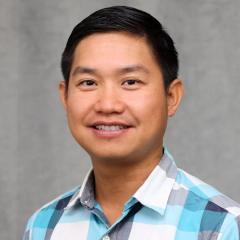
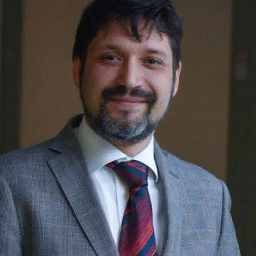
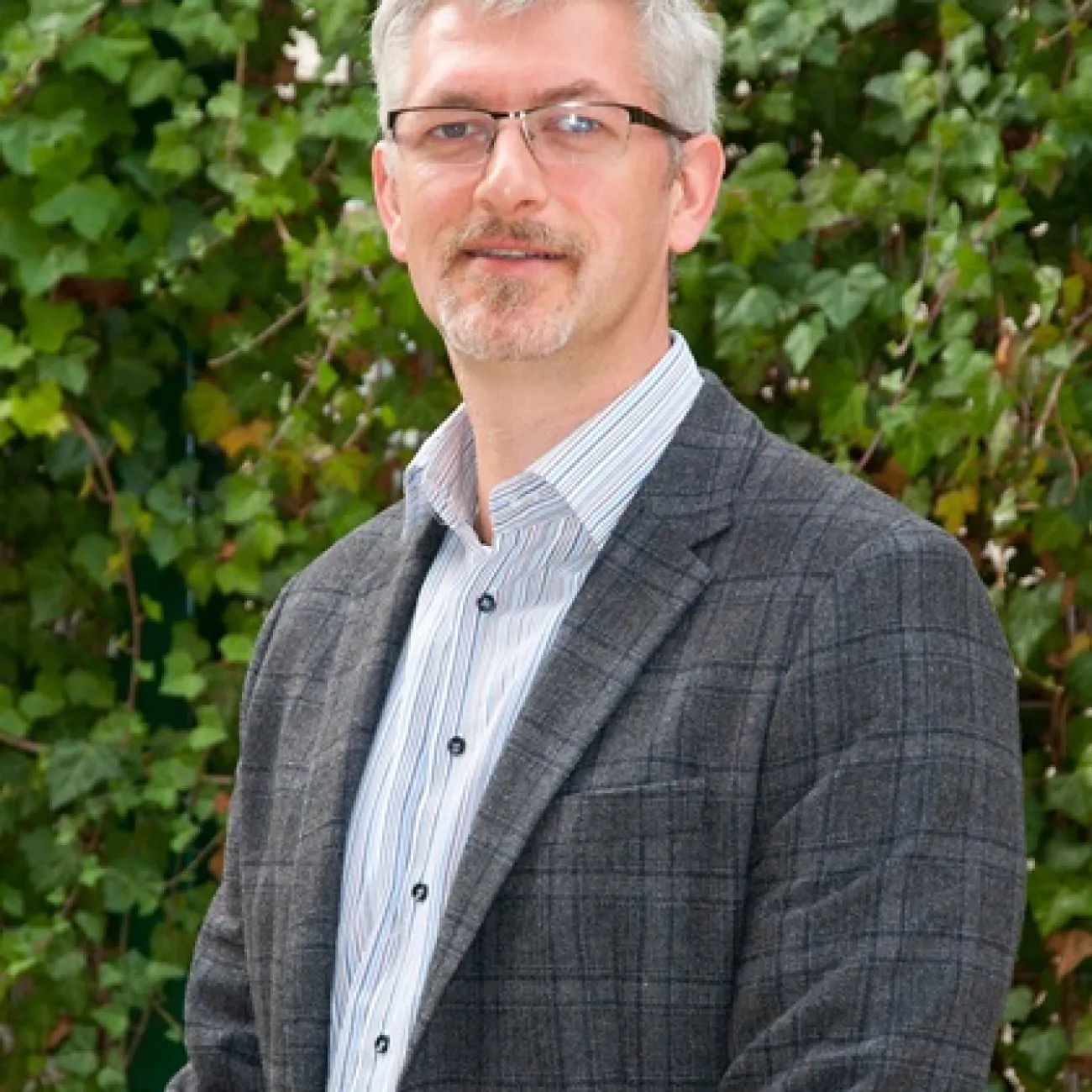
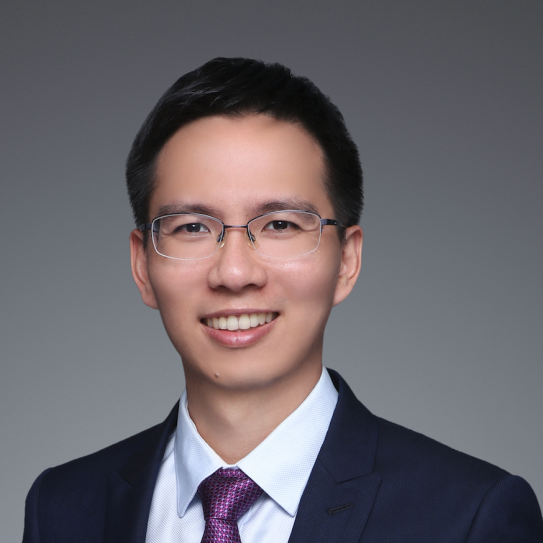
Sibel Alumur Alev is an Associate Professor and Associate Chair of Graduate Studies at the University of Waterloo. Her research focuses on logistics network design, hub location optimization, and sustainable transportation systems. She actively contributes to the fields of operations research and supply chain management, with a strong emphasis on addressing uncertainty in network design and strategic infrastructure planning. Her work spans applications in autonomous mobility systems, electric vehicle charging infrastructure, healthcare logistics, and pandemic response. She has published extensively on hub-and-spoke network models, reverse logistics for environmental sustainability, and multi-period resource allocation strategies. Notable areas of interest include the integration of stochastic and robust optimization methodologies into real-world logistics challenges. Dr. Alev’s research also bridges academic and industrial needs, addressing practical problems such as optimal testing center locations during pandemics and strategic freight hub expansions. Her contributions have been featured in peer-reviewed journals and conference proceedings, reflecting her commitment to advancing both theoretical and applied aspects of logistics and operations research.
Nora MAREÏ, CNRS Researcher at PRODIG (UMR 8586), specializes in transport geography, territorial development, and urban dynamics across European, Mediterranean, and West African contexts. Her work bridges macroregional geoeconomic analysis with local territorial realities, focusing on infrastructure, logistics, and regional integration processes. Doctorate from University of Nantes (2012 thesis: Le détroit de Gibraltar, Porte du Monde, Frontière de l’Europe ) 2022-2026: Coordinator of ANR Trans-Log project on logistics cities 2021-2025: Member of LMI Movida II international lab Research interests include: Comparative analysis of institutional vs. private territorial production Metropolitanization and circulation patterns in Global South cities Eurafrican connectivity through ports like Tanger-Med Maritime chokepoints (Gibraltar, Suez) as development catalysts Recent publications examine: 2024: Morocco's role in Mediterranean-African transport hubs 2022: Tanger-Med's networked territorial challenges 2021: Dualization in Global South city logistics 2020: Regional integration models Scientific recognition: 2013 CNU Mappemonde thesis prize finalist 2023 'The Waters of Discord' award Teaching contributions: Master's courses on fieldwork methodology (since 2019) International transport geopolitics instruction (since 2013)
Tho Le is a tenure-track Assistant Professor of Industrial Engineering Technology at Purdue University’s School of Engineering Technology. He leads the Smart Logistics (SmartLogs) Systems Research Lab and is affiliated with the Institute for Control, Optimization, and Network (ICON), Realizing the Digital Enterprise (RDE) initiative, Integrative Data Science Initiative (IDSI), and Semiconductors @ Purdue. His research focuses on system-scale transportation modeling using optimization, AI/ML, and econometrics to guide industry and policy decisions. Education: Ph.D. in Transportation Systems, Purdue University MSc in Industrial Engineering (Operations Research), Purdue University M.Eng. in Transportation Engineering (Best Thesis Award), Hiroshima University Research Interests: Emerging technologies: sidewalk delivery robots, indoor service robots, drones Semiconductor supply chain resilience and Lean Six Sigma applications Digital twins for logistics systems and fleet management Freight transport, connected/autonomous vehicles, travel behavior modeling Awards & Recognition: Recipient of National Science Foundation grant for energy efficiency modeling (2024) Polytechnic Research Awards (July 2024) Lab & Collaboration: SmartLogs Lab: develops data-driven solutions for urban logistics and asset management Leadership in Purdue’s semiconductor initiatives aligned with the CHIPS Act
Guido Perboli is a Full Professor in the Department of Management and Production Engineering (DIGEP) at the Polytechnic University of Turin, where he also serves as Logistics Coordinator and Project Coordinator for activities supporting relationships with government bodies. He is a member of the Interdepartmental Center CARS@PoliTO (Center for Automotive Research and Sustainable Mobility) and serves as Director of the ICT for City Logistics and Enterprises (ICElab@Polito) research center, which he founded in 2016. His research interests span a broad range of topics including Operations Research, Logistics, Last-mile Delivery, Sustainable Logistics, Combinatorial Optimization, Stochastic Programming, Business Development, and Lean Business methodologies. His work particularly focuses on City Logistics, Green Logistics, and the application of emerging technologies like Blockchain and AI in supply chain management. He has developed GUEST, a Lean Business methodology for innovation processes from early idea definition to implementation. Professor Perboli's recent publications demonstrate a strong focus on urban logistics, last-mile delivery optimization, blockchain applications in supply chains, and the integration of AI techniques in transportation systems. His work shows an increasing trend toward interdisciplinary research that combines optimization methods with emerging technologies to address sustainable urban mobility challenges. Professional Recognition: CASE Best Paper award from IEEE Conference on Automation Science and Engineering (2011) Effective member of INFORMS (2019-present) Effective member of EURO (1995-present) Effective member of AIRO (1995-present) Associate Editor for Journal of Applied Research and Technology (2020-present) Associate Editor for Sustainability (2018-present) Professor Perboli actively advises PhD students and has supervised numerous research projects, including EU-funded initiatives like SINFONICA, HESTER, and 5G-LOGINNOV. He serves as Scientific Director for multiple commercial research projects focused on blockchain, IoT, and AI applications in logistics. Beyond academia, he is Chief Scientific Officer of Arisk S.p.A., a fintech company specializing in business crisis prediction using AI and machine learning. His research group, ICElab@Polito, focuses on two main areas supporting urban growth: logistics and enterprises. The center collaborates with numerous companies including Amazon, DHL, and FCA, addressing real-world challenges in urban logistics and supply chain management through innovative research approaches.
Professor Min An is a Professor of Construction and Risk Management at the University of Salford, leading the Infrastructure Research Group within the School of Science, Engineering & Environment. He holds an honorary professorship at two overseas universities (China and Portugal) and serves on the editorial boards of 12 international journals. With over 40 years of experience, his career spans academic roles at Heriot-Watt University, Coventry University, and the University of Birmingham, alongside industry roles as a civil engineer and researcher. His research focuses on safety and risk management in construction, transportation systems, and energy sectors, with over 200 publications. Key areas include railway and highway safety, offshore oil & gas risk assessment, and nuclear reliability management. He has secured funding from EPSRC, EU, DfT, and industry partners, leading 20+ projects. Notable achievements include developing methodologies for infrastructure safety and maintaining collaborations with 30+ industrial partners. Professor An has supervised 30 PhD students and over 280 postgraduate projects, contributing to industry workshops and best practices. Awards include multiple science technology prizes and conference best paper/keynote recognitions. His teaching spans risk management, construction safety, and project management across MSc programs.
Jorge Gil is an Associate Professor in Urban Analytics and Informatics at Chalmers University of Technology's Department of Architecture and Civil Engineering. His research focuses on integrated urban models, Smart Cities, City Information Modelling (CIM), and Urban Digital Twins, with applications in sustainable mobility, social inclusion, energy transition, and circular economy. He develops GIS solutions and open science methodologies. Teaching includes GIS, sustainable mobility, and spatial data science courses. He supervises Bachelor, Master's, and PhD students. Current projects include LogiNets (logistics network flows analysis), ComCy (cycling safety), and FlowSense (traffic flow data). Key research outputs span agent-based modeling of waste sorting behavior, mobility equity analysis, and multimodal urban network frameworks. He co-authored over 50 publications and actively contributes to interdisciplinary urban planning initiatives.
Tara M. Sinclair is Professor of Economics and International Affairs and Chair of the Department of Economics at the George Washington University. She is also affiliated with the Elliott School of International Affairs through the Institute for International Economic Policy and the Institute for European, Russian, and Eurasian Studies. Additional affiliations include the GW Institute of Public Policy Research, the Regulatory Studies Center, and GW-CIBER. Sinclair has held influential public sector roles, including Deputy Assistant Secretary for Macroeconomics at the U.S. Department of the Treasury (2022–2024) and founding Chief Economist at Indeed Hiring Lab. PhD in Economics, Washington University in St. Louis (2005) AM in Economics, Washington University in St. Louis (2001) BA in Foreign Languages, Wheaton College (1996) Her research centers on macroeconomic fluctuations, labor market dynamics, forecasting, and the application of big data to economic analysis. She employs econometric and time series methods to model business cycles, evaluate forecast accuracy, and assess policy impacts. Her work connects academic research with real-world decision-making, particularly in labor markets and monetary policy. Sinclair frequently uses online job posting data to generate timely insights into employment trends. Her recent publications focus on post-pandemic labor market transformations, remote work persistence, forecast evaluation, and regulatory economics. She has published in top journals such as Labour Economics , Journal of Applied Econometrics , Oxford Bulletin of Economics and Statistics , and International Journal of Forecasting . Her research leverages real-time data to analyze topics like unemployment insurance claims, job mismatch, and global hiring trends. Scientific recognition includes membership in the Conference on Research in Income and Wealth (CRIW), the Federal Forecasters Consortium Governing Board, and authorship at VoxEU. She has served as a Special Government Employee on the Bureau of Labor Statistics Technical Advisory Committee. She advises and collaborates with numerous researchers and institutions. Her leadership roles include directing the GW Center for Economic Research (former) and leading research initiatives at Indeed Hiring Lab. She teaches graduate and undergraduate courses in macroeconomics and econometrics, and is frequently cited in major media outlets including the New York Times , Wall Street Journal , and Financial Times , and appears on networks such as CNN, NPR, and Bloomberg. Her research team includes collaborators from Federal Reserve Banks, international organizations, and academic institutions. She leads projects funded by GW-CIBER and contributes to policy reports for the U.S. Treasury and Indeed Hiring Lab.
Sarah Hernandez is an Associate Professor in the Civil Engineering Department at the University of Arkansas , specializing in transportation systems engineering. Her research focuses on advanced data collection and analysis for freight planning, and she teaches graduate courses in transportation planning and data analysis. Ph.D. in Civil and Environmental Engineering, University of California, Irvine M.S. in Civil Engineering, University of California, Irvine B.S. in Civil Engineering, University of Florida Her research integrates Intelligent Transportation Systems (ITS) technologies to address freight data gaps, including: Development of tools for freight performance measures Fusion of GPS, WIM, and lock performance data Weather impact on freight traffic Lidar-based truck classification Key trends in her publications include: Advancing sensor technologies for freight analytics Improving long-range infrastructure planning Addressing data gaps in commercial vehicle operations Enhancing freight network efficiency through modeling Scientific awards: Private Sector Applicability Award, TRB Intermodal Freight Committee (2018) As founder of the Freight Transportation Data Research Lab , she leads initiatives on unbiased freight planning and workforce diversity. Her outreach includes mentoring middle and elementary school STEM programs.
Dr. Patrick Beullens is an Associate Professor in Operational Research and Management Science at the University of Southampton's Southampton Business School. He specializes in applied research across ocean shipping, retail supply chains, logistics, and inventory control. His work integrates mathematical techniques such as stochastic processes, optimization algorithms, and game theory to address real-world challenges like environmental performance in shipping and food waste reduction. Key roles include Principal Investigator on EC-funded projects (e.g., SEABILLA, LOGMAN) and supervision of PhD students like Fangsheng Ge. Current projects focus on maritime emission abatement and economic ship speed models. He teaches Supply Chain Management, Risk Management, and Optimization courses. Research Groups: CORMSIS, Southampton Marine and Maritime Institute, Supply Chain Excellence Centre. Grants: Over £200k from Shell and SMMI for PhD scholarships, MoD-funded inventory projects, and EU initiatives. His research spans maritime economics, reverse logistics, and decision-making under risk. Collaborations include BAE Systems, EDF Energy, and international institutions like the Joint Research Centre.
Prof. Tina Wakolbinger is a Professor at Vienna University of Economics and Business (WU) , where she serves as Deputy Head of the Institute for Transport Economics and Logistics and Head of the Supply Chain Management Research Institute. She also chairs the Senate and has led numerous research projects in supply chain management, humanitarian logistics, and the circular economy. PhD in Business Administration, Isenberg School of Management, UMASS Amherst (2007) Mag. in International Economics, University of Innsbruck (2002) Her research focuses on Supply Chain Management , with an emphasis on Humanitarian Logistics and the Circular Economy . She investigates how operational settings and disaster characteristics affect supply chain resilience, explores sustainable urban mobility solutions like electric scooters, and develops frameworks for resource allocation in disaster relief. She has published extensively on topics including disaster preparedness, outsourcing in humanitarian logistics, and the impact of digitalization on sustainable supply chains. Recent publications highlight trends in 2025 with strategic dependencies in supply chains, 2023 contributions to circular economy models and humanitarian logistics assessments, and 2022 analyses of pandemic-era supply chain disruptions. Earlier work includes studies on sustainable freight transport, e-waste management, and risk-sharing contracts. Scientific Awards Literati Award 2020 (Journal of Humanitarian Logistics) WU Cooperation Officer of the Year 2018 Talent promotion bonus of Upper Austria 2011 Best Paper Award 2008 (Fogelman College of Business) Graduate School Fellowship 2006 (UMASS Amherst) She has been involved in external positions such as Member of the Post Control Commission (2022–2027) and advisory roles for Caritas Österreich and Finland’s Strategic Research Council. Current projects include developing circular business models for timber supply chains and optimizing e-scooter fleet management in Vienna.
R. Jayakrishnan , a Professor in the Department of Civil and Environmental Engineering at the Samueli School of Engineering , University of California, Irvine, is a leading researcher in transportation systems engineering. Ph.D., University of Texas, Austin, Civil Engineering, 1992 M.S., University of Texas, Austin, Civil Engineering, 1987 B.S., Indian Institute of Technology, Madras, India, 1985 His research focuses on dynamic traffic assignment , urban traffic simulation , and real-time information systems to improve congested traffic corridors. He is developing advanced dynamic simulation-assignment models for urban traffic networks. Recent publications highlight his contributions to: Crowdsourced delivery optimization using decomposition heuristics Eco-driving algorithms with V2I communication Multi-furniture placement applications via augmented reality Subscription mobility services cost-benefit analysis Agent-based lane-changing coordination systems These works demonstrate his interdisciplinary approach combining transportation engineering, optimization algorithms, and emerging technologies like AR and connected vehicles.
Zhibin Chen is an Assistant Professor of Engineering at NYU Shanghai and concurrently a Global Network Assistant Professor within the broader New York University system. Since January 2019 he has led research and teaching activities at the Division of Engineering and Computer Science in Shanghai, while maintaining university-wide collaborations through his Global Network appointment. Education Ph.D. in Transportation Engineering, University of Florida (2017) Research Interests Dr. Chen’s scholarship centres on Transportation Network Modeling and Optimization , Intelligent Transportation Systems , and Discrete Optimization . He integrates operations research, data science, and engineering to address emerging challenges in electric mobility, autonomous vehicles, and large-scale urban networks. Recent thrusts include: Data-driven analytics of electric-vehicle charging behaviour under usage heterogeneity. Optimization of charging and swapping infrastructure for electric buses and trucks. Network-level deployment and control strategies for connected and automated vehicles. Day-to-day traffic dynamics and equilibrium models with elastic demand. Pricing, policy, and incentive design for sustainable transportation systems. Scientific Awards Stella Dafermos Best Paper Award – awarded at the 95th Transportation Research Board Annual Meeting. Ryuichi Kitamura Paper Award – also conferred at the 95th TRB Annual Meeting. Editorial & Professional Service Dr. Chen currently serves on the Editorial Advisory Board of Transportation Research Part C: Emerging Technologies , shaping the editorial direction of the leading journal in his field. Grants & Collaborations While specific grant identifiers are not disclosed in the provided text, Dr. Chen’s extensive publication record in top-tier journals ( Transportation Science , Transportation Research Parts B, C, D , IEEE ITS , Applied Energy ) and his editorial role indicate sustained research funding and active collaboration with international partners across North America and China. Laboratories & Teams Operating within the Division of Engineering and Computer Science at NYU Shanghai , Dr. Chen leads a research group focused on next-generation mobility analytics, leveraging the university’s interdisciplinary ecosystem and NYU’s Global Network resources to advance smart and sustainable transportation.
Lianne Lefsrud serves as Associate Professor and Risk, Innovation, and Sustainability Chair (RISC) in the Department of Chemical and Materials Engineering at the University of Alberta's Faculty of Engineering. Her interdisciplinary research bridges engineering, social sciences, and policy to transform risk management practices across energy, mining, construction, and railroading industries, directly influencing regulations, building codes, and industry operations for sustainable development. Her academic credentials include: BSc in Civil Engineering (Cooperative Program), University of Alberta (1994) MSc in Interdisciplinary Civil & Environmental Engineering and Sociology, University of Alberta (1996) PhD in Strategic Management and Organization, Alberta School of Business (2014) Dr. Lefsrud's research centers on risk management frameworks for sustainability challenges. She examines hazard identification, social license to operate, and technology adoption drivers in high-hazard industries, with emphasis on prospective risk assessment (e.g., hydrogen infrastructure design) and retrospective analysis (e.g., microplastic pollution impacts). Her work integrates circular economy principles into energy systems while addressing unintended consequences across UN Sustainable Development Goals. Recent publications (2024-2025) demonstrate heavy focus on machine learning applications for rail and construction safety, hydrogen infrastructure risk analysis, and science denial mitigation. Key patterns show cross-industry adaptation of AI for incident prediction, regulatory gap analysis for emerging energy systems, and socio-technical approaches to reconcile sustainability goals with operational realities. Scientific recognition includes: Erb Post-Doctoral Fellowship (University of Michigan) Dow Sustainability Research Fellowship (Ross School of Business) Dr. Lefsrud mentors graduate students through industry-integrated projects like her Sustainable Design course where teams generated patents and city solutions. Her research secures Alberta Innovates funding with 1:4 industrial-to-federal matching, collaborating with Suncor, Transport Canada, and Canadian Standards Association. Grants target practical implementations including railcar inspection systems and hydrogen safety protocols. She co-founded Insight Risk Systems and leads the Lefsrud Lab, prioritizing inclusive teams with under-represented groups (women, Indigenous, LGBTQ2S+, neurodiverse) to tackle 'wicked problems' in sustainability. The lab leverages interdisciplinary partnerships across engineering, computer science, psychology, and environmental sociology for real-world risk management solutions.
Yu Nie is a Professor in the Department of Civil and Environmental Engineering at Northwestern University, affiliated with the NU-TREND research group within the McCormick School of Engineering. His work focuses on optimizing transportation networks, integrating human behavior, infrastructure design, and network topology to enhance mobility, reliability, and sustainability. He holds a Ph.D. from the University of California, Davis, an M.S. from the National University of Singapore, and a B.S. (cum laude) from Tsinghua University. His research interests span interdisciplinary approaches combining optimization, network science, traffic flow theory, economics, and statistics. Key areas include congestion pricing strategies, ride-hailing market dynamics, autonomous vehicle integration, and transit system design. He has contributed to studies on dockless bike-sharing systems, ethics-aware transit design, and traffic management in autonomous vehicle zones. Nie’s recent publications (2024–2025) highlight advancements in modular autonomous vehicle systems, co-modal freight solutions, and policy frameworks for sustainable urban mobility. His work often bridges theoretical insights with practical applications, addressing challenges like EV charging chaos and ride-pooling impacts. He received the 2021 Transportation Science Meritorious Service Award for his editorial contributions. His research also explores freight exchange platforms, taxi market resilience during pandemics, and the role of route choice models in transit design. Labs/Teams: Yu Nie is associated with the NU-TREND research group, specializing in innovative transportation solutions through interdisciplinary collaboration.
Professor Washington Ochieng, currently Head of the Department of Civil and Environmental Engineering at Imperial College London, is a globally recognized expert in positioning and navigation systems. He holds the Chair Professor role and serves as Director of the Centre for Active Resilience and Security (CARS), with affiliations spanning the Centre for Systems Engineering and Innovation, Centre for Transport Engineering and Modelling, Institute for Molecular Science and Engineering, and Space Lab. Educated with a First Class BSc in Engineering (University of Nairobi), MSc (Distinction) in Civil Engineering (University of Nottingham), and PhD in Civil Engineering (University of Nottingham) 2024 Commander of the Order of the British Empire (CBE) for services to global positioning systems 2023 DSc honoris causa from Technical University of Kenya and Kenya’s Elder of the Order of the Burning Spear 2019 Harold Spencer-Jones Gold Medal (Royal Institute of Navigation) Ochieng’s research spans critical infrastructure resilience , user-centric mobility , and safety-critical positioning, navigation, and timing (PNT) systems . His work includes designing satellite navigation systems like Europe's EGNOS and GALILEO, and contributions to Air Traffic Management (ATM) and Intelligent Transport Systems (ITS). He has advised UK Government bodies (RAEng, Government Office for Science, POST) and international entities (European Parliament, FCDO, UK-Kenya Technology Challenge Board). Key affiliations include: Board of Trustees, Science Museum Group (UK) President of the Royal Institute of Navigation Chair of the Africa Engineers Steering Committee (Royal Academy of Engineering) Member of the UK Department for Transport’s Scientific Advisory Group Member of the National Physical Laboratory’s Science and Technology Council