

R. Jayakrishnan , a Professor in the Department of Civil and Environmental Engineering at the Samueli School of Engineering , University of California, Irvine, is a leading researcher in transportation systems engineering. Ph.D., University of Texas, Austin, Civil Engineering, 1992 M.S., University of Texas, Austin, Civil Engineering, 1987 B.S., Indian Institute of Technology, Madras, India, 1985 His research focuses on dynamic traffic assignment , urban traffic simulation , and real-time information systems to improve congested traffic corridors. He is developing advanced dynamic simulation-assignment models for urban traffic networks. Recent publications highlight his contributions to: Crowdsourced delivery optimization using decomposition heuristics Eco-driving algorithms with V2I communication Multi-furniture placement applications via augmented reality Subscription mobility services cost-benefit analysis Agent-based lane-changing coordination systems These works demonstrate his interdisciplinary approach combining transportation engineering, optimization algorithms, and emerging technologies like AR and connected vehicles.
جستجوی استاد راهنمای دانشگاهی
برای مسیر پژوهشیتان، استاد راهنما، استاد دانشگاه و پژوهشگر مناسب را پیدا کنید و با آنها ارتباط بگیرید.
نمایش ۱۶-۳۰ از ۱۷۰ استاد راهنما
اطلاعات پروفایلها از صفحات عمومی دانشگاهها گرفته شده و ممکن است بهروز نباشد.
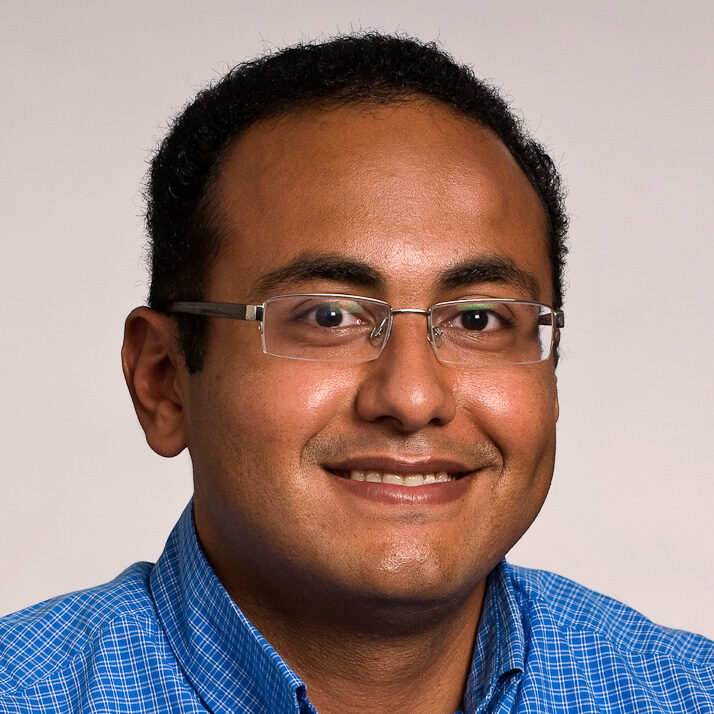
Karim Ismail is a Professor at the Department of Civil and Environmental Engineering, Carleton University. His research focuses on sustainable transportation modeling, road safety analysis, intelligent transportation systems, and computer vision applications for traffic data collection. Specializes in non-motorized transportation , including pedestrian and cyclist behavior. Develops probabilistic highway design standards using reliability and risk analysis. Pioneers vision-based safety evaluation techniques and traffic conflict modeling. His recent publications explore automated analysis tools for roundabout traffic, deep learning applications for proximity detection, and wireless sensor frameworks for collision avoidance. Notable accolades include the Michel Van Aerde Award (2025) and multiple Transportation Research Board honors. Supervised graduate students: Al-Haideri, Rulla (Ph.D. 2025) Mohammadi, Shahriar (Ph.D. 2022) Kassim, Ali (Ph.D. 2014)
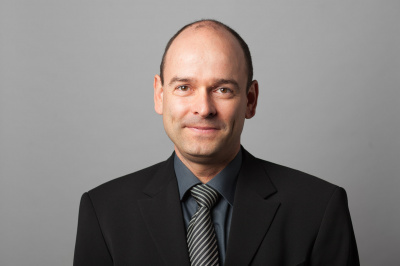
Nicolas Zufferey is a Full Professor of Operations Management at the University of Geneva, Switzerland, where he has served since 2008. He leads research in optimization methods for complex systems, focusing on applications in supply chain management, production planning, inventory control, and transportation logistics. His affiliations include the Research Institute of Management and collaborations with CIRRELT (Transportation & Logistics) and GERAD (Decision Analysis). Education: PhD in Operations Research (EPFL, 2002), MSc/BSc in Mathematics (EPFL) Prior Experience: Postdoc at University of Calgary (2003–2004), Assistant Professor at Université Laval (2004–2007) Research Interests: His work emphasizes developing advanced metaheuristics (e.g., VNS, Tabu Search, PSO) for challenging optimization problems. Key domains include: Multi-objective scheduling with resource constraints Inventory deployment under uncertainty Network design for supply chains and transportation systems Publications: Over 150 peer-reviewed articles across journals like European Journal of Operational Research , Transportation Research , and INFORMS Journal on Computing . Recent work addresses electric vehicle routing, drone integration in delivery systems, and robust decision-making under uncertainty. Collaborations: Engaged with 35+ universities and 27 private companies globally. Active in applying operations research to industrial problems (e.g., Swiss railways, luxury watch production, pharmaceutical networks).
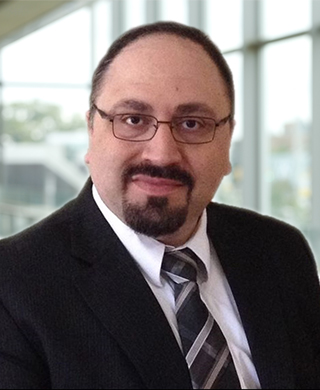
Dr. Hanna Maoh is a Professor in the Department of Civil and Environmental Engineering at the University of Windsor. She holds a BSc from Bethlehem University (1996), MSc from McMaster University (1999), and PhD from McMaster (2005). Her research focuses on integrating transportation and land use models, freight transportation analysis, sustainable transportation strategies, and big data applications in GIS. She leads the Traffic Lab, exploring innovative solutions for cross-border logistics, electrification of fleets, and environmental impact mitigation. Key professional affiliations include the Transportation Association of Canada, Professional Engineers Ontario, and the Transportation Research Board. Her work emphasizes policy-relevant research, such as modeling Canada-US border crossing efficiency, optimizing electric vehicle charging networks, and assessing freight infrastructure resilience. Recent publications highlight advancements in truck stop location optimization using GPS data, fleet electrification demand analysis, and border crossing behavior studies. Her research consistently bridges academic insights with practical applications, informing sustainable urban planning and environmental policy.
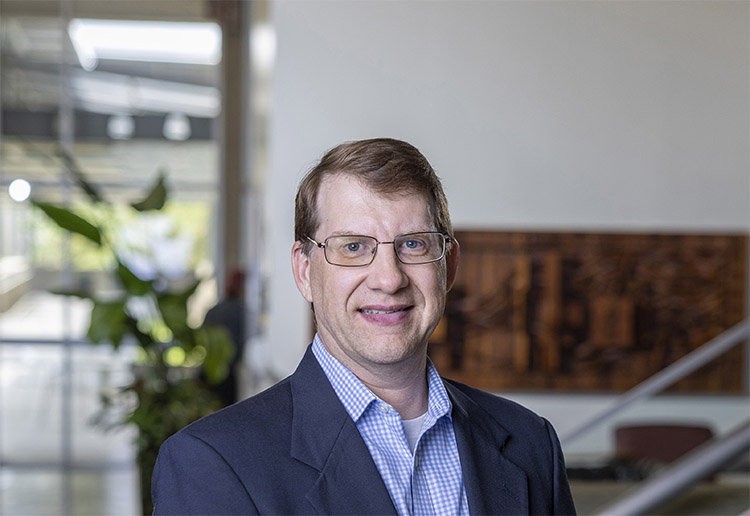
William Eiseleمشاهده پروفایل
پژوهشگر
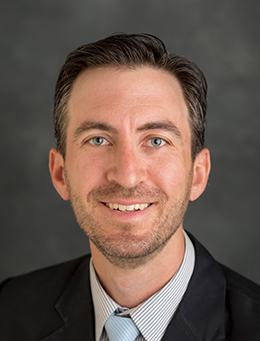
William (Bill) Eisele serves as a Senior Research Engineer and Program Manager at Texas A&M University's Department of Landscape Architecture & Urban Planning. His work focuses on transportation systems, freight mobility, and urban development impacts. Eisele holds a Ph.D. (Civil Engineering, Texas A&M, 2001), M.S. (Civil Engineering, Michigan State, 1994), and B.S. (Civil Engineering, Michigan State, 1993). Research Interests: Dr. Eisele’s expertise spans Transportation planning and access management, Freight mobility optimization, Congestion monitoring, Transportation system performance measurement, Urban land development impacts, Sustainable infrastructure design. Recent Work Trends: His publications emphasize data-driven solutions for freight challenges, including truck parking behavior, cargo consolidation, and port fluidity. Recent studies apply machine learning to predict driver route choices and evaluate real-time mobility tools. He also explores historical trends in urban freight logistics to guide future innovations. Grants & Advising: While no specific grants or advisees are listed, his extensive publications reflect collaborative work with institutions like the Texas A&M Transportation Institute. He has contributed to statewide programs like Oregon’s operations performance measures and Maryland’s freight fluidity initiatives. Labs/Teams: His affiliations suggest involvement with interdisciplinary teams focusing on transportation systems, though specific lab names are not mentioned in the source text.
- Sustainable Transportation
- Non-Motorized Transportation Safety
- Travel Behavior and Demand
- +۱۴ مورد دیگر
Christopher Cherry is a Professor and Associate Department Head of Undergraduate Studies in the Department of Civil and Environmental Engineering at the University of Tennessee, Knoxville. His research focuses on sustainable transportation, micromobility (e-bikes, e-scooters), pedestrian and bicycle safety, and the impacts of emerging technologies on urban mobility systems. PhD, Civil and Environmental Engineering–Transportation, University of California, Berkeley (2007) MS, Civil Engineering–Transportation, University of Arizona (2003) BS, Civil Engineering, University of Arizona (2000) Dr. Cherry’s research interests lie at the intersection of transportation engineering, behavioral science, and sustainability. He investigates travel behavior, transportation economics, and the safety implications of shared and electric micromobility systems. His work emphasizes non-motorized transportation and the integration of new technologies into urban planning. He leads the Light Electric Vehicle Education and Research (LEVER) Initiative and is an Associate Director of the Center for Pedestrian and Bicyclist Safety (CPBS), a multi-institutional UTC led by the University of New Mexico. His recent publications span topics such as e-bike adoption, micromobility safety, transit integration, and urban delivery systems. Collectively, these works reflect a strong emphasis on data-driven policy, behavioral modeling, and the environmental and public health impacts of transportation choices. NSF CAREER Award TCE Ferris Faculty Award (2015) TCE Professional Promise in Research Award (2014) CEE Research Recognition Award (2009, 2012) Member, Transportation Research Board Chair, SAE Micromobility Committee Dr. Cherry has supervised numerous PhD and MS students in transportation research and has led multiple federally and state-funded projects on micromobility, transit, and safety. He is actively involved in professional service and collaborates with institutions across the U.S. and internationally, including UC Berkeley, Tsinghua University, and the Asian Development Bank. His work bridges engineering, policy, and public health to advance sustainable and equitable urban mobility. He leads research initiatives on e-bike and e-scooter safety, urban logistics, and the integration of big data into transportation planning. His team utilizes smartphone-based data collection, video analysis, and simulation models to understand real-world behavior and improve system design.
CHENG Shih-Fenمشاهده پروفایل
دانشیار
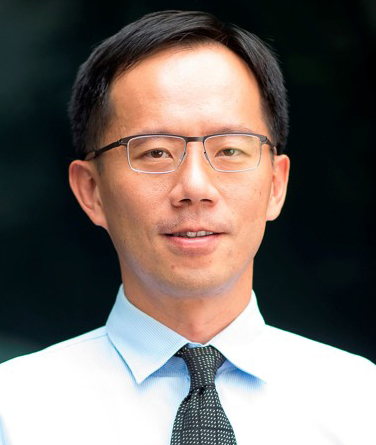
CHENG Shih-Fen is an Associate Professor of Computer Science at Singapore Management University (SMU) and a Principal Research Scientist at Amazon. He holds a PhD in Industrial and Operations Engineering from the University of Michigan and a BSE in Mechanical Engineering from National Taiwan University. His research focuses on modeling and optimization of complex systems in urban computing, decision-making, and transportation, with notable contributions to taxi fleet management, ride-hailing systems, and sustainable logistics. Research interests include Artificial Intelligence , Decision Optimization , Machine Learning , and Urban Sustainability . Notable achievements include prestigious awards from CIKM, AAMAS, and INFORMS. He has advised students such as Qian Shao and Pang Jin Tan, who received SMU Presidential Doctoral Fellowships. Key contributions include the Driver Guidance System (DGS) for taxis and patented taxi demand prediction models. Publications span top venues like IJCAI, AAAI, and Transportation Science. He is a Senior Editor of Electronic Commerce Research and Applications and actively contributes to professional communities like INFORMS and AAAI.

- Freight Transport
- Logistics
- Operations Research
- +۵ مورد دیگر
Tom van Woensel is a Full Professor of Freight Transport and Logistics at Eindhoven University of Technology (Netherlands), affiliated with the School of Industrial Engineering and Innovation Sciences and the Department of Operations Planning Accounting & Control. He also holds roles as Academic Director of the Global Supply Chain Management program at Antwerp Management School and Director of the European Supply Chain Forum. His research focuses on freight transport, logistics systems, and operations research methodologies, with contributions to over 150 peer-reviewed publications in journals like Transportation Science and European Journal of Operational Research . Education: BSc/MSc in Applied Economic Sciences (Econometrics), University of Antwerp (Belgium) PhD: Queueing Theoretical Approaches for Traffic Flow Networks, University of Antwerp Research Interests: Optimization of transport and logistics networks using integer programming, metaheuristics, and reinforcement learning Urban freight systems, last-mile delivery, and sustainable logistics Supply chain resilience, collaboration in logistics networks, and industry-academia partnerships Applications of AI in solving stochastic transportation problems Awards and Recognition: Outstanding Professor in Supply Chain & Logistics (2021) European Journal of Operational Research Best Review Paper (2016) INFORMS Senior Member (2024) Collaborations and Projects: Leads initiatives like SYNERCIZE (zero-emission construction logistics) and Circulaire stromen (circular logistics) Editorial roles at Transportation Science , OR Spectrum , and Urban Science Active in industry partnerships through the European Supply Chain Forum (75+ multinationals) Labs/Teams: EAISI Mobility (Eindhoven AI Systems Institute) CIRRELT (Montreal, Canada) collaborating member
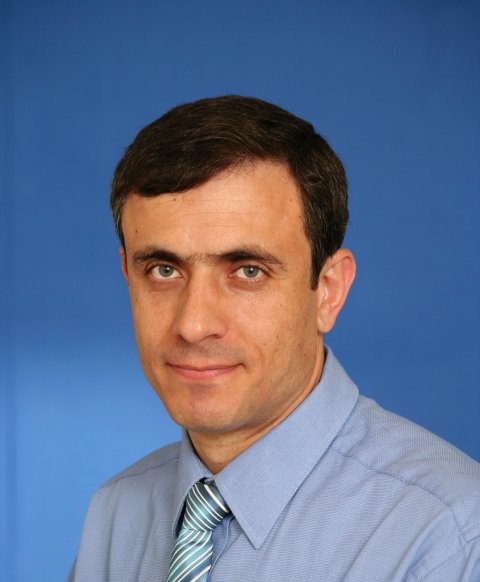
Dr. Mecit Cetin is a Professor at Old Dominion University (ODU) and Director of the Transportation Research Institute (TRI). He specializes in Intelligent Transportation Systems (ITS), connected/automated vehicles, traffic flow theory, and infrastructure resilience. His academic background includes a Ph.D. in Transportation Engineering from Rensselaer Polytechnic Institute (2002), an M.S. in Civil Engineering (1999), and a B.S. from Boğaziçi University (1995). Research focuses on big data analytics for traffic prediction, congestion pricing, and floodwater detection using LIDAR and computer vision. He has secured over $3M in grants including Federal funding for SMARTc systems and state projects on truck turnaround reduction. Notable awards include the 2011 Best Paper Award at the World Congress on Intelligent Transport Systems and multiple Shining Star Awards from ODU. Key projects include developing auction-based tolling systems for connected vehicles, enhancing traffic signal control with probe data, and modeling secondary incident impacts. His work bridges transportation engineering with emerging technologies like IoT and AI. Dr. Cetin collaborates with state agencies (VDOT) and institutions like EVMS. His lab develops tools for urban flood monitoring, eco-routing algorithms, and safety service patrol optimization using discrete-event simulation.
Jiabin Luoمشاهده پروفایل
مدرس ارشد
- Transportation and Logistics
- Maritime Shipping and Port Operations
- Production Planning and Inventory Management
- +۵ مورد دیگر
Dr. Jiabin Luo is a Senior Lecturer in Business Analytics at Aston University's Aston Business School, within the College of Business and Social Sciences. She holds a PhD in Management Science from the University of Southampton and has held academic and research roles at institutions including Coventry University and De Montfort University. Her research focuses on optimization and decision-making in logistics, supply chain management, maritime shipping, and production planning. She is Programme Co-Director of the MSc Degree Apprenticeship in Digital & Technology Solutions Specialist. Education: PhD in Management Science, University of Southampton, UK MSc in Risk and Stochastics, London School of Economics and Political Science, UK MSc in Statistics, University of Nottingham, UK BSc in Mathematics, Zhongshan University, China PGCert in Learning and Teaching in Higher Education Research Interests: Transportation and logistics optimization Maritime shipping and port operations Production planning and inventory management Supply chain management and sustainability Fuzzy optimization and scenario-based modeling Recent Research Trends: Her work emphasizes optimization techniques in logistics systems, including automated container terminals, intermodal transport, and risk management. Recent articles explore machine learning for credit risk prediction and geospatial analysis of traffic datasets. Awards and Memberships: Fellow of The Higher Education Academy Member of The Operational Research Society Member of British Academy of Management Grants and Collaborations: Newton Researcher Links: Strategy & Policy Innovation in Supply Chain Management (2018) Newton Researcher Links: Emission Control in Green Port Development (2017) EPSRC Grant: Resilience of Manufacturing Supply Networks (2013–2016)

Diana G. Ramirez-Rios is an Assistant Professor at the State University of New York at Buffalo, specializing in Industrial and Systems Engineering within the School of Engineering and Applied Sciences. She holds a Ph.D. in Transportation Engineering from Rensselaer Polytechnic Institute and a B.S./M.S. in Industrial Engineering. Her research focuses on disaster response logistics, urban freight transportation, and supply chain optimization, with an emphasis on policy-driven and empirical approaches. Education: Ph.D. in Transportation Engineering (Rensselaer Polytechnic Institute), B.S./M.S. in Industrial Engineering. Research interests include disaster logistics (e.g., post-disaster healthcare access, facility location models), urban freight systems (e.g., parking policies, emission reduction strategies), and game-theoretic models for supply chain collaboration. She has secured grants such as the NSF RAPID grant (2024) for studying interdependent infrastructure impacts in Puerto Rico and a Natural Hazards Center grant (2021) on healthcare accessibility in disaster zones. Scientific awards include the Karen and Lester Gerhardt Prize (2021), Thomas Archibald Price (2021), and scholarships from WTS International and INFORMS. Her work bridges theoretical models with practical policy solutions, addressing challenges like freight externalities and socially vulnerable communities' recovery needs. Her grants and advising contributions involve interdisciplinary collaborations, with a focus on sustainable urban logistics and humanitarian aid systems. She actively participates in professional councils, such as the INFORMS Sub-Divisions Council and POMS Regional Vice Presidency in the Americas.
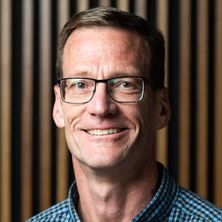
Professor Mark Hickman is the TAP Chair and Professor of Transport Engineering at the University of Queensland's School of Civil Engineering. He holds roles as Deputy Head of the School and Affiliate of the Dow Centre for Sustainable Engineering Innovation. His research focuses on public transit planning, sustainable transport innovations, urban transportation modelling, and traffic engineering. He has a PhD from MIT and has authored over 140 publications. Current research includes MaaS trials, electric vehicle infrastructure, and traffic incident prediction using AI. Education: BSc, MSc, and PhD from MIT. Grants include projects on MaaS impact trials, low/zero emission transport strategies, and real-time traffic analytics. Supervised 20+ PhD/Master’s students in areas like autonomous vehicles, transit operations, and sustainable transport policies. Leads grants from Queensland Transport, iMove CRC, and Brisbane City Council. Active in transport policy advising and media commentary on public transport, traffic engineering, and urban planning. Recent work emphasizes decarbonizing road freight, EV charging networks, and integrating MaaS systems. Lab affiliations include the Transport Academic Partnership (TAP) and the Australian Transport Research Cloud (ATRC). Collaborates on projects like the Odin Pass MaaS trial at UQ and Brisbane’s EV readiness assessments.
Marco Schuttenمشاهده پروفایل
دانشیار
Marco Schutten is an Associate Professor at the Digital Society Institute of the University of Twente, affiliated with the Industrial Engineering & Business Information Systems department. His work bridges Artificial Intelligence , Transportation , and Operations Research , focusing on optimizing complex systems. Expert in Urban Logistics and Freight Transport Specializes in Mathematical Programming and Optimization Research interests include Vehicle Routing , Machine Scheduling , and Agent-Based Simulation . Key trends in his 15 most recent articles (2015–2025) involve: Dynamic scheduling under time constraints Urban logistics and smart city applications Heuristics for combinatorial optimization Integration of MILP and Simulation models No scientific awards, formal supervisory roles, or part-time appointments are explicitly mentioned.
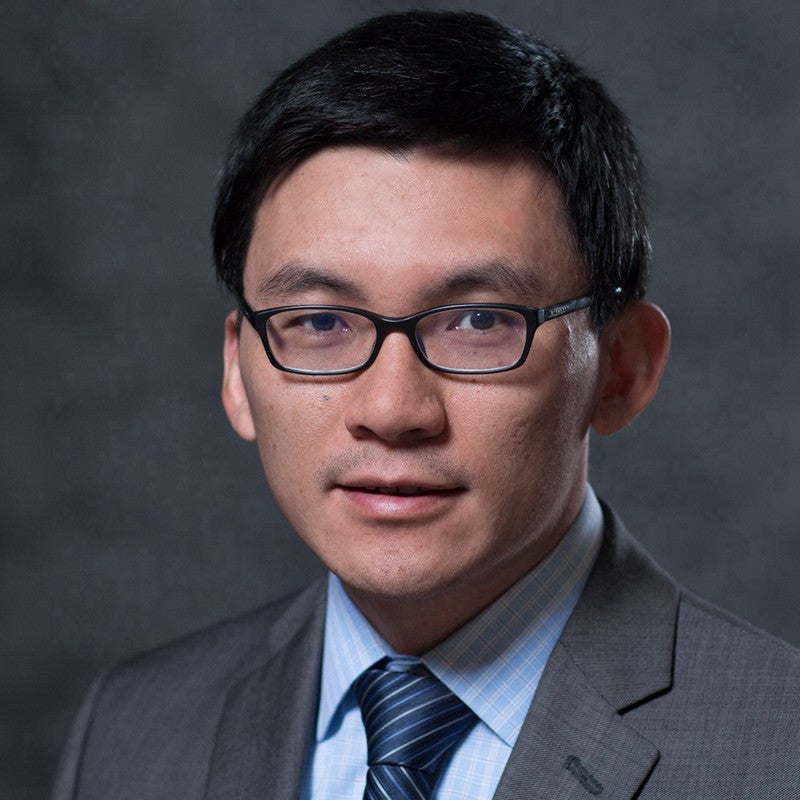
Sean X. Heمشاهده پروفایل
دانشیار
Sean X. He is an Associate Professor in the Civil and Environmental Engineering department at Rensselaer Polytechnic Institute , joining in 2017. His research focuses on modeling and simulating transportation systems, particularly the impacts of emerging technologies and network disruptions. Ph.D. and M.S. in Transportation Engineering from University of Minnesota, Twin Cities B.S. and M.S. in Computational Mathematics His expertise spans interdependent infrastructure resilience, connected autonomous vehicles (CAVs), and electric vehicles. He serves on the Network Modeling Standing Committee of the Transportation Research Board (TRB), and holds editorial roles for Transportation Research Part B , Frontiers in Future Transportation , and as guest editor for multiple journals. His work on CAVs and transportation resilience has earned recognition, including the Best Paper Award at the 18th International IEEE Conference on Intelligent Transportation Systems and the NSF CAREER Award 2021 . Recent publications highlight his work in dynamic traffic equilibrium, vehicle re-identification algorithms, and energy-efficient transportation systems. Collaborative research trends integrate AI, optimization techniques, and environmental impact analysis to address challenges in urban mobility and network disruptions. NSF CAREER Award 2021 Best Paper Award - 18th International IEEE Conference on Intelligent Transportation Systems
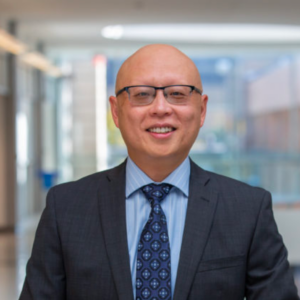
Yafeng Yin is Professor of Civil and Environmental Engineering and Professor of Industrial and Operations Engineering at the University of Michigan, College of Engineering, where he serves as Donald Malloure Department Chair of Civil and Environmental Engineering and holds the Donald Cleveland Collegiate Professorship in Engineering. His educational background includes: PhD in Civil Engineering from University of Tokyo (2002) ME in Civil Engineering from Tsinghua University (1996) BE in Environmental Engineering from Tsinghua University (1994) BE in Structural Engineering from Tsinghua University (1994) Dr. Yin's research centers on developing sustainable and economically efficient transportation systems through analysis, modeling, design, and optimization. He investigates how emerging technologies—including connected/automated vehicles, electric vehicles, drones, and mobile sensing—impact transportation demand and supply. His work extends to interdependencies between transportation, power, and communications networks in urban infrastructure systems. Key focus areas include mobility services, ride-sourcing markets, traffic management, and integration of artificial intelligence in transportation. His recent publications (2023-2025) demonstrate a pronounced shift toward leveraging large language models and agent-based frameworks for transportation analysis, with significant emphasis on on-demand mobility services (ride-sourcing, food delivery), traffic control with connected vehicles, and economic implications of emerging technologies. The research spans theoretical foundations in game theory and optimization to practical applications in urban settings. As director of the Lab for Innovative Mobility Systems, Dr. Yin leads interdisciplinary research developing solutions that enhance transportation efficiency, reliability, safety, and service diversity through technological integration. His work bridges theoretical modeling with real-world implementation challenges in evolving transportation ecosystems.