- Control Systems
- Optimization
- Data Science
- +۷ مورد دیگر
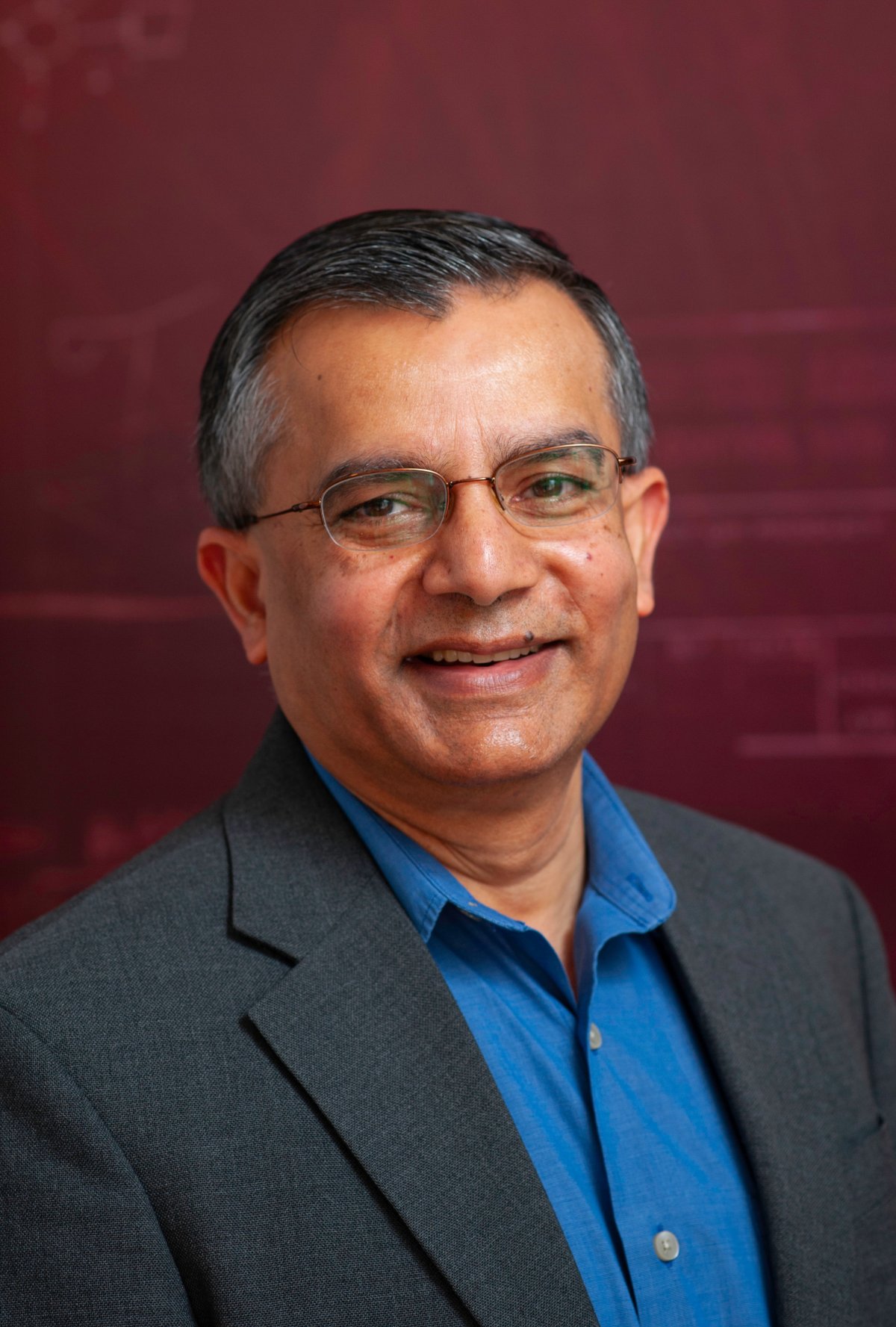
Scott Moura is a Professor in Civil and Environmental Engineering at the University of California, Berkeley, holding the Clare and Hsieh Wen Shen Distinguished Professorship. He serves as the Acting Director of the Institute of Transportation Studies (ITS) and directs the Energy, Controls, and Applications Lab (eCAL). Previously, he was Faculty Director of the California Program for Advanced Transportation Technology (PATH) starting January 2022, with recent news (June 2025) confirming new leadership roles at both ITS and PATH. Education: B.S. in Mechanical Engineering, University of California, Berkeley, 2006 M.S.E. in Mechanical Engineering, University of Michigan, Ann Arbor, 2008 Ph.D. in Mechanical Engineering, University of Michigan, Ann Arbor, 2011 Postdoctoral Fellow, University of California, San Diego, Cymer Center for Control Systems and Dynamics, 2013 Visiting Researcher, MINES ParisTech, Centre Automatique et Systèmes, Paris, 2013 Moura's research spans multi-scale energy systems: battery modeling and control at component level, electrified/connected vehicles at system level, and distributed energy resources/smart grid integration at grid scale. His work pioneers real-time battery health estimation, fast-charging algorithms, and vehicle-grid integration to enhance capacity, safety, and efficiency while minimizing degradation. Key methodological contributions include PDE control theory, adaptive control frameworks, and machine learning applications for energy storage systems. Scientific Awards: ASME Division of Control Systems Outstanding Young Investigator Award National Science Foundation CAREER Award NSF Graduate Research Fellowship UC Presidential Postdoctoral Fellowship University of Michigan Distinguished ProQuest Dissertation Honorable Mention University of Michigan Rackham Merit Fellowship College of Engineering Distinguished Leadership Award ITS Faculty of the Year Award (2020) As eCAL Lab Director, Moura mentors undergraduate/graduate students, postdocs, and visiting scholars in developing battery monitoring software and control systems. His research attracts significant funding including a $10M USDOT grant for rural autonomous vehicle freight (2025) and the I-40 Corridor SMART Grant (2024), with industry partnerships focused on practical deployment of energy management solutions. Current projects address EV longevity, HOV lane optimization via AI traffic signals, and climate impact assessments for California infrastructure. eCAL Lab operates at the forefront of energy systems research, combining theoretical control frameworks with experimental validation. The lab's work on battery degradation models directly informs industry practices, while its vehicle-grid integration research supports California's clean energy transition. Recent initiatives include KTH Royal Institute of Technology student exchanges and Bay Area climate impact assessments.