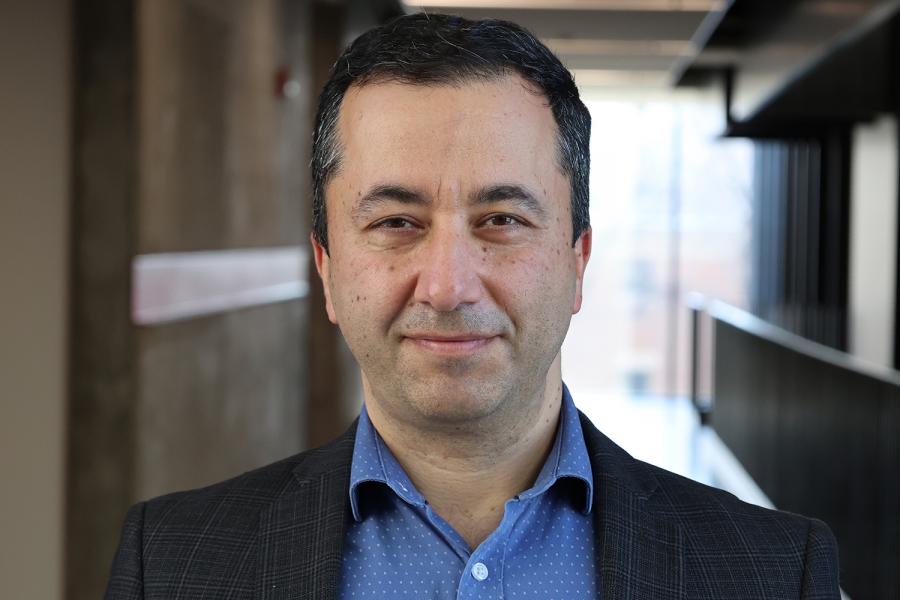
Karim Ismail is a Professor at the Department of Civil and Environmental Engineering, Carleton University. His research focuses on sustainable transportation modeling, road safety analysis, intelligent transportation systems, and computer vision applications for traffic data collection. Specializes in non-motorized transportation , including pedestrian and cyclist behavior. Develops probabilistic highway design standards using reliability and risk analysis. Pioneers vision-based safety evaluation techniques and traffic conflict modeling. His recent publications explore automated analysis tools for roundabout traffic, deep learning applications for proximity detection, and wireless sensor frameworks for collision avoidance. Notable accolades include the Michel Van Aerde Award (2025) and multiple Transportation Research Board honors. Supervised graduate students: Al-Haideri, Rulla (Ph.D. 2025) Mohammadi, Shahriar (Ph.D. 2022) Kassim, Ali (Ph.D. 2014)
Martijn Mes is a full professor of Transportation and Logistics Management and chair of the Industrial Engineering & Business Information Systems section at the University of Twente, Netherlands. He leads research and education initiatives that integrate AI, simulation and optimisation into logistics and supply-chain innovation. Education: Ph.D. in Operations Research, University of Twente – 2008 M.Sc. in Applied Mathematics, University of Twente – 2002 Post-doctoral researcher, Princeton University, Dept. of Operations Research & Financial Engineering Research focus: Mes develops quantitative models and AI techniques for strategic, tactical and operational logistics challenges. His work spans three application pillars: Emergency & humanitarian logistics – rapid relief distribution with trucks and UAVs Urban logistics – city distribution, self-organising systems and last-mile innovations Sustainable logistics – synchromodal transport, green ports and electric/autonomous fleets Methodologically he combines approximate dynamic programming, reinforcement learning, multi-agent simulation, discrete-event simulation and stochastic optimisation to create decision-support tools for industry and government. Publications trend: Recent articles (2025-2022) exhibit a strong emphasis on integrating reinforcement learning and stochastic optimisation into dynamic vehicle routing, drone-assisted delivery and post-disaster inventory allocation, signalling a shift towards data-driven, real-time logistic systems. Grants & projects: Mes has coordinated and participated in numerous national and European projects on sustainable logistics, urban distribution, port optimisation and healthcare logistics, frequently collaborating with industry partners and public bodies. Teaching & supervision: He coordinates and lectures in the BSc and MSc programmes Industrial Engineering & Management, offering courses on simulation, queueing theory, dynamic programming, Markov chains, transportation management and technology management. He has authored a widely used Plant Simulation tutorial and supervises PhD candidates working on AI-driven logistics, autonomous vehicles and digital twins.
Jeppe Rich is a Professor at the Department of Technology, Management and Economics at the Technical University of Denmark (DTU). His primary research focuses on statistical and mathematical modeling applied to transport-related challenges, including transport demand modeling, discrete choice models, freight transport, cost-benefit assessments, and strategic long-term demand models. Rich holds a Mathematical Planning qualification from the University of Aarhus (1989–1995). He has held external positions as a Senior Consultant at Atkins A/S (2001–2002) and as a Researcher at the National Environmental Research Institute (1995–1998). His work aligns with UN Sustainable Development Goals related to sustainable cities and communities (SDG 11) and climate action (SDG 13). His research interests span transport policy, transportation science, and the application of advanced modeling techniques to address urban mobility challenges. Notable areas include EV infrastructure planning, bicycle network optimization, and cost-benefit analysis of transport projects. He supervises several PhD students in topics like electric freight transport, micromobility safety, and urban charging infrastructure. Rich has published extensively on transport policy, demand modeling, and sustainable mobility solutions. His work emphasizes interdisciplinary approaches to solving complex transport challenges, combining engineering, economics, and data science methodologies.
Maha Ben Ali is an Associate Professor at the Department of Mathematical and Industrial Engineering at Polytechnique Montréal. She is also an Adjunct Professor at Université Laval and a member of the Interuniversity Research Centre on Enterprise Networks, Logistics and Transportation (CIRRELT) and the Laboratoire Poly-Industries 4.0 . Education: Bachelor’s in Industrial Engineering, École Nationale des Ingénieurs de Tunis M.Sc. in Industrial Systems Engineering, École Nationale des Ingénieurs de Tunis M.Sc./Ph.D. in Mechanical Engineering (Industrial concentration), Université Laval Research Interests focus on Industrial Engineering , with emphasis on Demand Management , Supply Chain Optimization , Simulation Modeling , Industry 4.0 , and Data Valorization . Her work combines Operations Research with Machine Learning to solve complex production and logistics challenges, particularly in softwood lumber and bioethanol supply chains . Publications (34 total) include studies on reinforcement learning for demand-driven systems, hybrid recommendation systems in B2B contexts, and symbiotic bioethanol network design . She has presented at conferences like the Winter Simulation Conference and IISE Annual Conference . Scientific Awards: Best paper – CIGI-QUALITA-MOSIM 2023 David Martell Student Paper Prize in Forestry – CORS 2018 NSERC Alexander Graham Bell Canada Graduate Scholarship FRQNT Doctoral scholarship Fast-tracking scholarship Teaching includes courses like Production and Inventory Planning , Simulation of Production Systems , and Logistic Networks . She has supervised 9 completed Master’s theses on topics ranging from multi-project scheduling to CO₂ emission reduction in freight transportation .
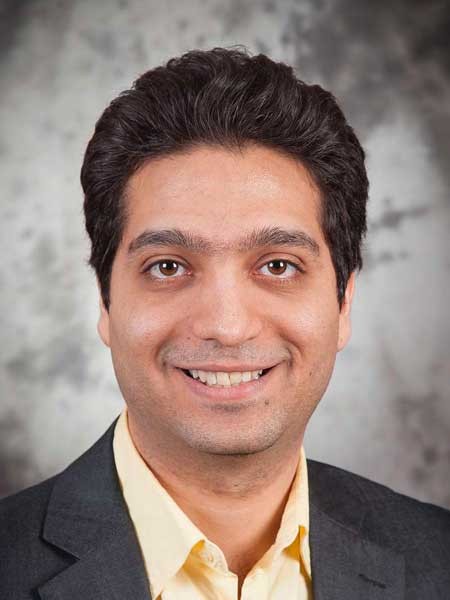
Dr. Hossein Zolfagharinia is an Associate Professor in the Department of Global Management Studies at the Ted Rogers School of Management, Toronto Metropolitan University. He holds a PhD in Operations and Supply Chain Management from Wilfrid Laurier University and has a strong academic and professional background in Industrial Engineering and logistics. BSc in Industrial Engineering MSc in Industrial Engineering PhD in Operations and Supply Chain Management, Wilfrid Laurier University His research focuses on Supply Chain Management, Sustainable Operations, Collaborative Transportation, and Green Product Development . He applies advanced operations research and optimization techniques to real-world logistics and sustainability challenges across industries such as trucking, maritime, healthcare, and reverse logistics. His work emphasizes environmental performance, regulatory impacts, and operational resilience. The recent publications reveal a strong trend in integrating sustainability into transportation and supply chain systems, with a focus on green trucking, carbon reduction, healthcare logistics, and reverse supply chains. His methodological expertise lies in robust optimization, scenario-based modeling, and handling uncertainty in dynamic environments. Dean's Scholarly, Research, and Creative Activity Award (2017) TRSM Research Recognition Awards (2018, 2020) Best Paper Award at ASAC (2019) Best Paper Award at RAMS Conference (2020) TRSM Outstanding Research Recognition Funding Awards (seven times) Nominated for CAGS/ProQuest-UMI Distinguished Dissertation (2016) OCE Research Award (2015) Dr. Zolfagharinia has successfully secured over $500,000 in research funding from major agencies including NSERC, SSHRC, FedDev Ontario, and Ontario Centres of Excellence . His grants support innovative work in sustainable logistics, healthcare operations, and supply chain resilience. He has supervised research projects involving PhD students and postdoctoral researchers and has collaborated extensively with industry partners in trucking, logistics, and maritime sectors. He is actively involved in academic and professional communities, presenting at conferences such as INFORMS, DSI, CORS, and ASAC. He also contributes to scholarly discourse through editorial roles, including co-editing a book and authoring a book chapter on facilities location.
Alan C. McKinnon is a Professor of Logistics at Kühne Logistics University (KLU) in Hamburg, Germany. He holds an MA in Geography from the University of Aberdeen, an MSc in Transportation Studies from the University of British Columbia, and a PhD from University College London. His career includes roles as Emeritus Professor at Heriot-Watt University (2014), Head of Logistics at KLU (2012–2016), and Dean of Programs at KLU (2012–2014). His research focuses on logistics sustainability, decarbonization, and the environmental impact of freight transport. Notable contributions include seminal works on low-carbon logistics and the role of freight deceleration in reducing emissions. He chairs global initiatives like the World Economic Forum’s Logistics Council and advises the EU on transport policy. McKinnon’s awards include the European Logistics Association Fellowship (2015) and the Sir Robert Lawrence Award (2003). His teaching emphasizes sustainable logistics and has been recognized with the KLU Best Teacher Award (2015).
Narendra Malalgoda is an Assistant Professor in Supply Chain Management at the Asper School of Business, University of Manitoba, and Associate Director of the Transport Institute. He completed his Ph.D. in Transportation and Logistics at North Dakota State University (2020) and received the 2022 Associates Teaching Award. Research examines: Public transit efficiency and productivity Impact of e-commerce on transportation systems Geospatial analysis for supply chain optimization Rural transportation challenges Emergency logistics for weather-related disruptions Recent publications (2019-2024) analyze fare-free transit equity, online shopping's impact on ridership, and air cargo volatility during the COVID-19 pandemic. Methodologies incorporate GIS, consumer surveys, and econometric modeling. Dr. Malalgoda teaches logistics management and project management while developing research infrastructure for geospatial supply chain analysis in Canada.
Andrea Genovese is a Professor of Logistics and Supply Chain Management and holds the Chair in Logistics and Supply Chain Management at Sheffield University Management School (SUMS). He is currently Head of the Operations Management and Decision Sciences Subject Group. Since joining SUMS in February 2010, he has held roles including Research Associate, Lecturer, and Senior Lecturer. Education: PhD in Operational Research – University of Naples "Federico II" (Italy) MSc and BSc in Industrial Engineering – University of Naples "Federico II" (Italy) MBA – Whittemore School of Business and Economics, University of New Hampshire (USA) Research Interests: Andrea's research is centered on the development and application of decision support methodologies to address complex challenges in supply chain management. His work particularly emphasizes the environmental and social sustainability of logistics and production systems. He explores multi-criteria decision-making techniques, circular economy transitions, and sustainable supply chain design. His research spans both qualitative and quantitative paradigms and is applied across industries including construction, urban logistics, and energy systems. Research Projects: He currently leads as Principal Investigator on two major EU-funded projects: ProSFeT (Promoting Sustainable Freight Transport in Urban Contexts): A H2020 MSCA-RISE project focused on knowledge transfer for sustainable urban logistics. ReTraCE (Realising the Transition towards a Circular Economy): A H2020 MSCA-ITN project developing a doctoral training network for circular economy implementation across Europe. Scientific Awards and Recognition: Fellow of the Higher Education Academy (HEA) Best-practice teaching methodologies featured in HEA toolkit for early career lecturers Teaching and Supervision: Andrea is actively involved in teaching and curriculum development for the MSc in Logistics and Supply Chain Management. He leads modules such as Logistics Systems , Global Supply Chain Leadership , and Supply Networks Management . He has supervised numerous PhD students, including recent graduates working on circular economy transitions and supply chain modeling. Labs and Research Groups: He is affiliated with the Supply Chain, Operations and Logistics Applied Research Centre at the University of Sheffield, where he contributes to training and consultancy in logistics and supply chain management.
Professor Tom Rye is a faculty member at Edinburgh Napier University within the School of Engineering and The Built Environment . His work focuses on Transport Policy , Sustainable Transport , and Public Transport Governance , with specific expertise in institutional dynamics, policy implementation, and urban mobility. Research Themes Transport economics and social equity Smart cities and mobility innovation Freight policy and collaborative governance Institutional analysis in transport planning Notable Contributions Hybrid policy implementation theory EU-funded projects on sustainable mobility (PROSPERITY, DYNAMO, CIVITAS CAPITAL) Analysis of formal/informal governance structures Supervision Director for Clare McTigue's bus policy research Second supervisor for Shelly-Ann Julien's port efficiency study Grants £187,417 (EU Park4SUMP) £254,160 (EU PROSPERITY) £62,823 (EU CIVITAS CAPITAL)
Michael Hyland is an Associate Professor in the Department of Civil and Environmental Engineering at the Samueli School of Engineering, University of California, Irvine. His research focuses on the modeling, analysis, and optimization of smart urban transportation systems, with particular emphasis on shared autonomous vehicles, microtransit integration with fixed-route transit, and sustainable mobility solutions. He employs methodologies from operations research (optimization, Markov decision processes), statistical modeling (discrete choice, regression), and economic analysis to address challenges in urban mobility. Education: Ph.D., Civil and Environmental Engineering (Transportation), Northwestern University, 2018 M.Eng., Civil and Environmental Engineering (Transportation), Cornell University, 2013 B.S. Civil and Environmental Engineering, Cornell University, Magna Cum Laude, 2013 His recent research explores emerging mobility paradigms through topics such as dynamic fleet management, vehicle miles traveled (VMT) impacts, equity in job accessibility, electricity demand implications of e-bikes, and human-machine collaborative planning frameworks. The work often combines large-scale simulation with interpretable modeling techniques. Hyland leads the Hyland Lab , which develops computational tools for evaluating integrated transportation systems. The lab's work spans theoretical modeling (e.g., state-space representations, decomposition heuristics) and applied policy analysis (e.g., assessing Senate Bill 1 infrastructure projects, AV-era parking reforms, and micromobility deployment strategies).
Diana G. Ramirez-Rios is an Assistant Professor at the State University of New York at Buffalo, specializing in Industrial and Systems Engineering within the School of Engineering and Applied Sciences. She holds a Ph.D. in Transportation Engineering from Rensselaer Polytechnic Institute and a B.S./M.S. in Industrial Engineering. Her research focuses on disaster response logistics, urban freight transportation, and supply chain optimization, with an emphasis on policy-driven and empirical approaches. Education: Ph.D. in Transportation Engineering (Rensselaer Polytechnic Institute), B.S./M.S. in Industrial Engineering. Research interests include disaster logistics (e.g., post-disaster healthcare access, facility location models), urban freight systems (e.g., parking policies, emission reduction strategies), and game-theoretic models for supply chain collaboration. She has secured grants such as the NSF RAPID grant (2024) for studying interdependent infrastructure impacts in Puerto Rico and a Natural Hazards Center grant (2021) on healthcare accessibility in disaster zones. Scientific awards include the Karen and Lester Gerhardt Prize (2021), Thomas Archibald Price (2021), and scholarships from WTS International and INFORMS. Her work bridges theoretical models with practical policy solutions, addressing challenges like freight externalities and socially vulnerable communities' recovery needs. Her grants and advising contributions involve interdisciplinary collaborations, with a focus on sustainable urban logistics and humanitarian aid systems. She actively participates in professional councils, such as the INFORMS Sub-Divisions Council and POMS Regional Vice Presidency in the Americas.
Tom Rye is a Professor in Sustainable Urban Transport Policy and Planning at Molde University College , focusing on transport governance, smart urban mobility, and accessibility. He has extensive experience working across Europe, including roles in Sweden and the UK, and contributed to EU Sustainable Urban Mobility Plan (SUMP) guidelines. Research Areas : Parking management, sustainable mobility, accessibility, international policy comparison, concessionary fares, staff development. Projects : TRANSPOL (politician-citizen dynamics in sustainable transport), JiM (social/environmental justice in 15-minute city contexts). Research Groups : Sustainable Urban Development and Mobility , Transport Research Group (TRG) . His recent articles analyze public participation in transport planning, equity in urban mobility, and the implementation of sustainable practices across diverse governance structures. Key themes include social justice, policy uncertainty, and cross-border mobility planning. Collaborations : European Commission, World Bank, UK/Scottish/Swedish governments, private sector. Labs/Teams : Regular contributor to Transport Research Group (TRG) and Sustainable Urban Development and Mobility at Molde University College.
Lisa Hansson is a Professor of Community Planning at Molde University College, specializing in urban governance and transport policy. She is affiliated with the Logistics Department and actively contributes to sustainable mobility, socio-technical change, and multi-level governance research. PhD in Science and Technology Studies (2011), Linköping University MSc in Political Science/Public Administration (2005), Gothenburg University BA in Human Geography/Urban Planning (2003), Karlstad and Gothenburg Universities Her research focuses on sustainable transport systems, visual representation in planning, and policy adaptation. She leads externally funded projects like LEAD (Digital Twins for logistics) and SNAPSHOT (e-commerce transport), with partners including SINTEF and K2 Sweden. Her work bridges political science and transport governance, challenging economic-technical discourses. Recent articles analyze equity in 15-minute city planning, social justice in transport protests, and regulatory governance for autonomous vehicles. She chairs the WCTRS SIG G1 Transport Governance group and serves on the Thredbo Conference Committee. 2023: Co-authored Public Participation in Transport in Times of Change (Emerald) 2021: Chapter on Transport Policy and Governance (Elsevier) 2020: Editorial in Transportation Research Part A Lisa teaches MA/BA courses like Smart Mobility, European Transport Policy, and Future Cities. She supports Master’s and PhD research in sustainable urban development and transport policy.
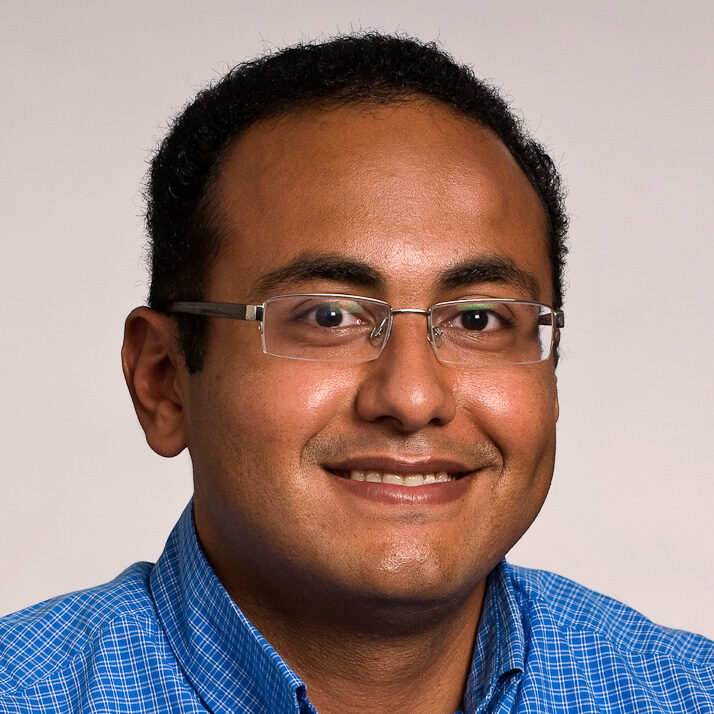
Babak Mehran is an Associate Professor in the Department of Civil Engineering at the University of Manitoba (Price Faculty of Engineering). He holds a PhD in Civil Engineering from Nagoya University (2009). His research focuses on transportation network resilience, big data analytics, and AI-driven solutions for traffic management. He leads the Urban Mobility and Transportation Informatics Group (UMTIG), collaborating with government and industry on applied transportation research. Key research areas include autonomous vehicle integration, cold-region traffic vulnerability, and optimization of public transit systems. Dr. Mehran has advised graduate students on topics like traffic safety, sensor placement, and semi-flexible transit design. His work bridges theoretical models (e.g., reinforcement learning algorithms) with real-world applications such as winter road maintenance strategies and transit demand analysis. Recent publications emphasize AI-driven traffic prediction, climate adaptation for infrastructure resilience, and safety metrics for truck operations in harsh environments. He collaborates internationally on transportation policy and has contributed to methodologies for evaluating congestion relief strategies using travel time reliability analysis. Lab: Urban Mobility and Transportation Informatics Group (UMTIG) Key Partners: Government agencies, transportation industries, academic collaborators Current Focus: Autonomous shared mobility, cold-climate traffic systems, data fusion for traffic monitoring
Dr. Laura Minet is an Assistant Professor in the Department of Civil Engineering at the University of Victoria. She leads the Clean Air (CLAIR) lab, focusing on improving urban air quality and reducing health impacts from air pollution through advanced modeling and policy analysis. Her expertise spans air quality, transportation engineering, and population health. Education: BEng/MEng (Ecole Centrale de Nantes), MASc (McGill University), PhD (University of Toronto). Postdoctoral work at the Diamond Environmental Research Group (2020-2021). Research Interests: Urban air quality modeling, vehicle emissions, dispersion modeling, and the intersection of transportation policies with public health. The CLAIR lab develops empirical and physical models to evaluate urban planning impacts and climate-driven changes. Recent research emphasizes machine learning applications in air quality prediction, health co-benefits of zero-emission vehicles, and disparities in pollution exposure. Over 40 publications span environmental engineering, public health, and transportation systems. Recruitment: Actively seeking graduate students/postdocs in environmental engineering, atmospheric science, and related fields. Contact via email with subject 'CLAIR lab opportunities'. Labs/Teams: Director of the CLAIR lab focusing on urban air quality solutions. Engaged in interdisciplinary collaborations involving urban planning, public health, and environmental policy.










.jpg)