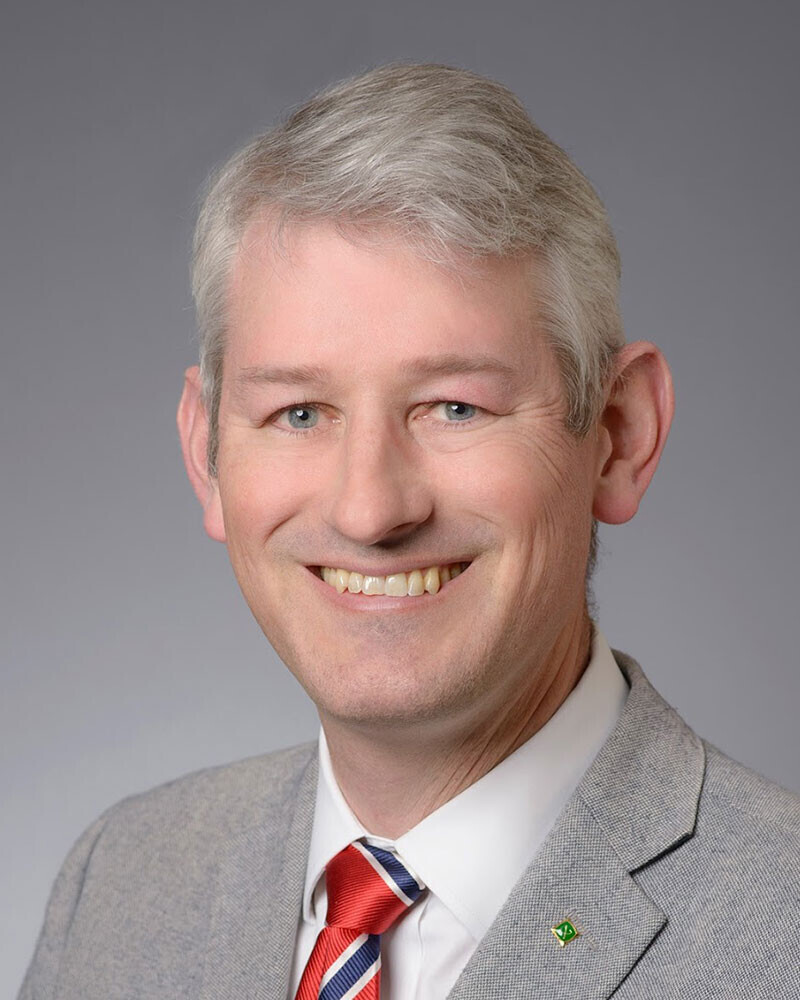
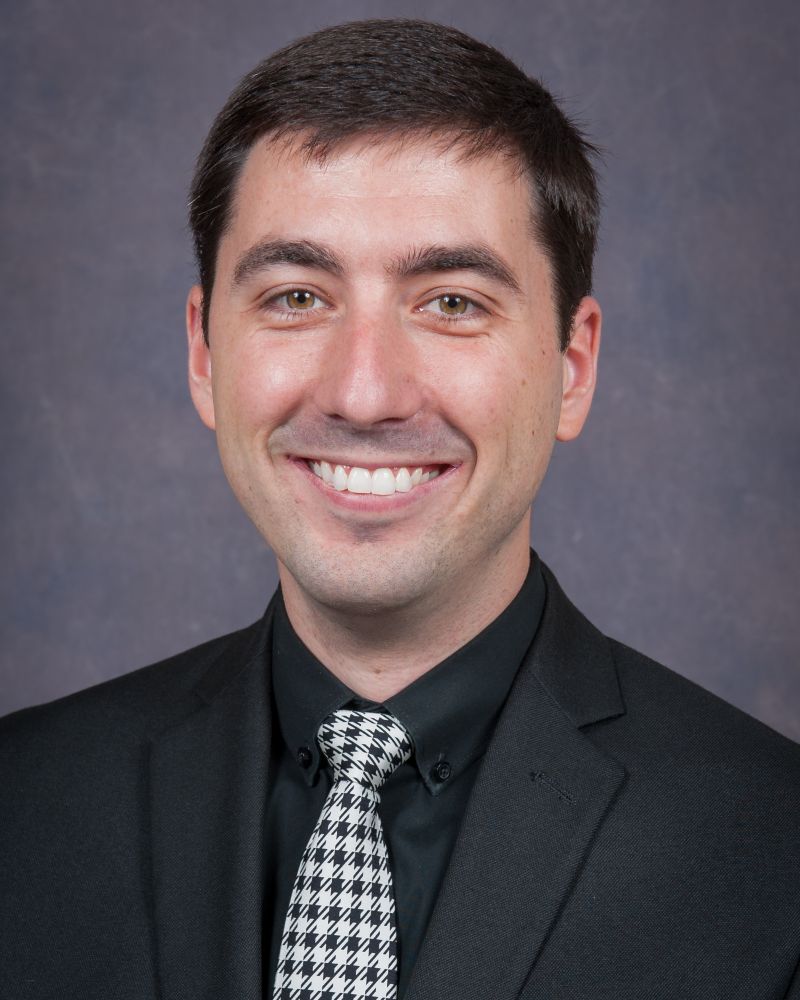
Jonathan Sprinkle is Chair and Professor of Computer Science at Vanderbilt University's School of Engineering, with additional roles as Professor in Civil and Environmental Engineering and Electrical and Computer Engineering. Previously, he was Litton Industries John M. Leonis Distinguished Associate Professor at the University of Arizona and Interim Director of the Transportation Research Institute. His research focuses on model-based cyber-physical systems, autonomous systems, and traffic control, emphasizing industry impact. He holds a Ph.D., M.S., and B.S. in Electrical Engineering from Vanderbilt University and Tennessee Technological University. Key awards include the NSF CAREER Award (2013), UA Distinguished Scholar (2020), and NSF I-Corps Best Team (2012). His work spans traffic wave dissipation, autonomous vehicle safety, and large-scale field experiments like the CIRCLES consortium's 100-AV test. He leads initiatives in data-driven control systems and smart infrastructure through collaborations with NSF and industry. Research highlights include developing control barrier functions for automated vehicles, integrating LLMs for traffic analysis, and deploying ROS-based frameworks for vehicle communication. His contributions aim to bridge theoretical models with real-world applications, addressing challenges in energy efficiency, safety, and scalability.
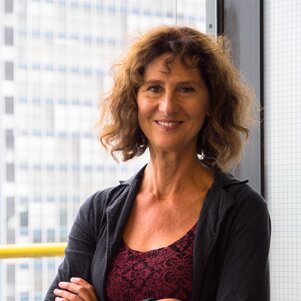
Dr. Ir. Wouter Schakel is a full-time O&O researcher at Delft University of Technology's Faculty of Civil Engineering and Geosciences, specializing in Transport & Planning. His research focuses on microscopic simulation of driver behavior, particularly lane change modeling and traffic flow optimization. He has developed the LMRS lane change model and contributes to OpenTrafficSim. His academic roles include teaching programming courses for transport engineering students and supervising BSc/MSc projects. Education: Civil Engineering (BSc & MSc) from TU Delft, followed by a PhD on freeway driving advice systems. Research highlights include the Greenshields prize-winning LMRS model and work on in-car advisory systems. He teaches courses like 'Programming and MATLAB' and 'Intelligent Vehicles Design and Assessment'. Current projects involve urban traffic simulation validity improvements and lane change strategy extensions.
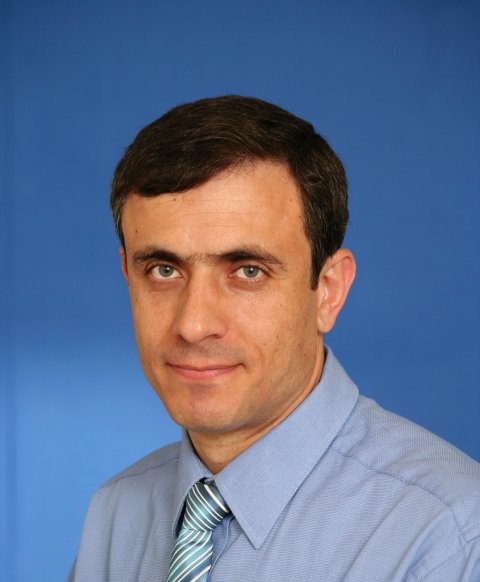
Bryce Chao serves as a Researcher in the Department of Civil and Environmental Engineering at Universitat Politecnica de Catalunya (UPC), operating under the Barcelona School of Civil Engineering and affiliated with the BIT - Barcelona Innovative Transportation research group. His work focuses on advancing intelligent transportation systems and sustainable mobility solutions within European frameworks. Research interests center on connected and autonomous vehicles, traffic flow dynamics, and sustainable infrastructure optimization. He investigates platooning strategies for automated vehicles and lane management techniques to enhance highway capacity through simulation modeling, addressing critical challenges in urban mobility and environmental sustainability. His 2024-2025 publications reveal consistent focus on vehicle automation and traffic management, utilizing advanced simulation to evaluate platooning efficiency and lane strategies. This work bridges theoretical modeling with practical applications, directly supporting UN Sustainable Development Goals 9 (Industry/Innovation), 11 (Sustainable Cities), and 13 (Climate Action). No scientific awards are documented in available information. Chao actively participates in competitive research funding, notably the MED-EUROPA project—a European transnational initiative testing novel solutions for public transport's transition toward energy and resource efficiency in the Mediterranean region. Within the research ecosystem, Chao collaborates through the BIT group while extending networks via CARNET and CER-AMA. These partnerships foster interdisciplinary research on future mobility, leveraging expertise from multiple European institutions to develop innovative transportation solutions for the Euro-Med area.
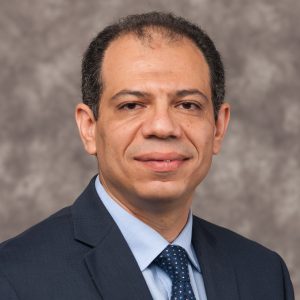
Dr. Mecit Cetin is a Professor at Old Dominion University (ODU) and Director of the Transportation Research Institute (TRI). He specializes in Intelligent Transportation Systems (ITS), connected/automated vehicles, traffic flow theory, and infrastructure resilience. His academic background includes a Ph.D. in Transportation Engineering from Rensselaer Polytechnic Institute (2002), an M.S. in Civil Engineering (1999), and a B.S. from Boğaziçi University (1995). Research focuses on big data analytics for traffic prediction, congestion pricing, and floodwater detection using LIDAR and computer vision. He has secured over $3M in grants including Federal funding for SMARTc systems and state projects on truck turnaround reduction. Notable awards include the 2011 Best Paper Award at the World Congress on Intelligent Transport Systems and multiple Shining Star Awards from ODU. Key projects include developing auction-based tolling systems for connected vehicles, enhancing traffic signal control with probe data, and modeling secondary incident impacts. His work bridges transportation engineering with emerging technologies like IoT and AI. Dr. Cetin collaborates with state agencies (VDOT) and institutions like EVMS. His lab develops tools for urban flood monitoring, eco-routing algorithms, and safety service patrol optimization using discrete-event simulation.
Wallied Orabi, Ph.D., is an Associate Professor and Undergraduate Program Director at Florida International University (FIU), specializing in Civil Engineering. His research focuses on optimizing sustainable and resilient infrastructure systems, automation in construction, and sustainable building practices. He holds a Ph.D. in Civil Engineering, contributing to advancements in infrastructure resilience and decision-support frameworks for construction projects. Dr. Orabi's work emphasizes integrating environmental, economic, and safety considerations into infrastructure development. His research interests include sustainable infrastructure design, cost estimation methodologies for bridge construction, and the application of technology (e.g., eye-tracking) to enhance construction safety. His articles highlight interdisciplinary approaches to transportation systems optimization, disaster recovery planning, and cost-benefit analyses of construction techniques like Accelerated Bridge Construction (ABC). Dr. Orabi’s publications span over two decades, demonstrating a consistent focus on infrastructure sustainability, resilience, and cost efficiency. His work addresses real-world challenges such as work zone safety, post-disaster reconstruction, and environmental impact mitigation. While no scientific awards are explicitly mentioned, his contributions to infrastructure optimization are widely recognized in academic circles. His advising and grant activities are not detailed in the provided texts. Dr. Orabi is affiliated with FIU’s Department of Civil Engineering, contributing to academic and industry partnerships through his research and teaching roles.
Professor Zuduo Zheng is a faculty member at the University of Queensland, holding the position of Professor & Deputy TMR TAP Chair in the School of Civil Engineering. His research focuses on traffic flow theory, modeling, simulation, and optimization, particularly in the context of connected and automated vehicles (CAVs), traffic safety, and sustainable infrastructure systems for smart cities and major events like the 2032 Olympic and Paralympic Games. He earned his Doctor of Philosophy from Arizona State University and has served as a DECRA Research Fellow. Currently, he is a member of the Australian Research Council's College of Experts and ranks among the Top 2% of Scientists in Logistics and Transportation (Scopus & Stanford University). His work has led to prestigious awards and editorial roles in journals like Transportation Research Part B and IEEE Transactions on Intelligent Transportation Systems . Research interests include traffic flow dynamics, emerging mobility technologies, strategic transport planning, advanced data analysis techniques, and meta-research methodologies. His lab, the Connected and Automated Vehicle Driving Simulation Lab, utilizes cutting-edge tools like VR simulators and SUMO integration to explore mixed traffic scenarios and safety challenges. Key grants include projects on eco-driving strategies for CAVs, real-time traffic signal systems, and infrastructure design for future mobility. He has supervised numerous PhD and Master’s students, contributing to studies on CAV integration, traffic simulation, and policy analysis. His publications address topics such as road user charging theories, reinforcement learning for eco-driving, and paratransit system improvements. The lab’s facilities, including a mixed reality mobility testbed, support research into transitioning to CAVs and enhancing urban resilience.
Kevin Heaslip is a Professor and Director of the Center for Transportation Research in the Department of Civil and Environmental Engineering at the University of Tennessee, Knoxville. He joined the university in 2022, bringing extensive experience from his prior role as Professor and CACI Faculty Fellow at Virginia Tech. Education: PhD in Civil and Environmental Engineering, University of Massachusetts Amherst, 2007 MS in Civil and Environmental Engineering, Virginia Tech, 2003 BS in Civil and Environmental Engineering, Virginia Tech, 2002 Dr. Heaslip's research focuses on the intersection of transportation engineering, intelligent systems, and cybersecurity. His work spans future transportation concepts such as electrified and automated vehicles, transportation operations including freeway and transit management, and cybersecurity for transportation and critical infrastructure. He applies advanced data analytics, machine learning, and cyber-physical systems modeling to real-world challenges in mobility and national security. The recent articles highlight a strong trend in leveraging big data and artificial intelligence for transportation mode detection, traffic event identification, and security risk assessment. His work increasingly integrates cybersecurity into transportation systems, particularly in autonomous and connected vehicles, reflecting the evolving technological landscape and national priorities in infrastructure protection. Scientific Awards and Recognitions: Virginia Tech G.V. Loganathan Faculty Achievement Award for Excellence in Civil Engineering Education (2019) Virginia Tech Favorite Faculty Award (2017) Outstanding Alumni, University of Massachusetts Institute of Transportation Engineers Student Chapter (2015) Outstanding Young Alumni, Virginia Tech Department of Civil & Environmental Engineering (2013-2014) USU Civil & Environmental Engineering Teacher of the Year (2014) USU Civil & Environmental Engineering Undergraduate Research Mentor of the Year (2013) USU Civil & Environmental Engineering Outstanding Researcher (2011, 2012) USU College of Engineering Undergraduate Research Mentor of the Year (2011) Dr. Heaslip has secured over $25 million in research grants and contracts from federal and state governments as well as industry partners. He has advised numerous students and mentored undergraduate researchers, receiving multiple awards for teaching and mentorship. His professional service includes membership in the American Society of Civil Engineers (ASCE), Institute of Transportation Engineers (ITE), and Transportation Research Board (TRB), as well as serving as an Appointed Member of the Resilient America Roundtable of the National Academy of Sciences from 2014 to 2020. He leads the Center for Transportation Research at UT Knoxville, a multidisciplinary lab focused on advancing transportation technologies and policies. The lab's research is organized around three thrusts: future transportation systems (electrified, connected, and automated vehicles), transportation operations (freeway, transit, and corridor management), and cybersecurity of transportation and critical infrastructure.
Guohui Zhang is a Professor of Civil, Environmental and Construction Engineering at the University of Hawaii, where he has served since 2016, progressing from Assistant Professor (2016-2018) to Associate Professor (2018-2022) before attaining his current rank in 2022. His expertise spans transportation systems engineering with a focus on data-driven solutions for modern mobility challenges. His educational foundation includes: Ph.D. in Civil Engineering, University of Washington, Seattle (2008) M.S. in Systems Engineering, Tsinghua University, China (2003) B.S. in Control Engineering, Harbin Institute of Technology, China (2000) Professor Zhang's research integrates advanced computational methods with transportation theory across six core domains: Large-Scale Transportation Systems Modeling, Traffic Control and Operations, Sensor Data Analysis, Cyber-Transportation Security, Congestion Pricing, and Safety/Security systems. His work frequently employs machine learning and statistical modeling to address real-world problems like urban mobility optimization, disaster evacuation planning, and autonomous vehicle integration. Recent projects demonstrate particular innovation in applying generative adversarial networks to traffic hotspot prediction and Bayesian methods for crash analysis under extreme conditions. Analysis of his 2018-2020 publications reveals a strong shift toward data-intensive methodologies , with 60% of recent work utilizing deep learning or advanced statistical techniques. Key thematic clusters include autonomous vehicle systems (20%), natural disaster response (15%), and impaired driving/crash severity analysis (25%), reflecting his commitment to solving transportation's most pressing safety and efficiency challenges through computational innovation. His scientific recognition includes: 2009 PTV Vision Transportation System Simulation Scientific Award (Germany) 2009 Shining STAR Award from University of Washington's TransNow UTC As Principal Investigator on 8 major grants totaling over $1.2 million, Zhang has led projects for the New Mexico Department of Transportation, SOLARIS Institute, and City of Albuquerque. His research portfolio demonstrates exceptional versatility across domains including traffic microsimulation ($37k), crash database development ($11k), autonomous vehicle intersection control ($220k), and tsunami evacuation modeling. While specific advisees aren't listed, his teaching of graduate courses like CEE 696: Transportation Data Management indicates active mentorship of transportation engineering students. Professional leadership includes Guest Editor roles for IEEE Intelligent Transportation Systems Magazine and Transportation Research Part C , plus active committee service with the Transportation Research Board.
Anshu Bamney, Ph.D., is a Human Behavior/Factors Researcher at the Connecticut Transportation Safety Research Center (CTSRC) within the Connecticut Transportation Institute (CTI) at the University of Connecticut. He joined in 2022 after completing his Ph.D. at Michigan State University, focusing on traffic safety. His expertise spans highway safety, multimodal transportation, context-sensitive design, naturalistic driving analysis, and field data collection. Bamney has led projects for agencies like the Michigan Department of Transportation (MDOT), Federal Highway Administration (FHWA), National Cooperative Highway Research Program (NCHRP), and National Safety Council. His research interests include driver distraction, pandemic impacts on transportation, road safety for vulnerable road users (motorcyclists, pedestrians, bicyclists), and non-motorized transportation. He currently analyzes real-time data from Wejo to study harsh decelerations and crash relationships in Connecticut. He has co-authored articles in journals like Accident Analysis and Prevention and serves as a reviewer. His work addresses critical areas such as dynamic speed feedback signage efficacy, post-pandemic travel behavior, and infrastructure design for safety and accessibility.
Gary A. Davis is Professor and Richard P. Braun/CTS Chair in Transportation Engineering at the University of Minnesota’s Department of Civil, Environmental, and Geo-Engineering, College of Science and Engineering. His work integrates statistical modeling with traffic-safety engineering to improve roadway design, policy, and automated-vehicle deployment. Education: Specific degrees are not detailed in the provided text. Research Interests: Davis focuses on causal inference in traffic safety, application of accident-reconstruction techniques to engineering questions, Bayesian statistical methods for transportation data, and optimization approaches to traffic and planning problems. His recent studies address crash-modification factors, freeway rear-end collision risk under automated vehicles, and uncertainty quantification in pedestrian-impact severity models. Projects & Grants: Principal Investigator on “Tool to estimate the safety impact of vehicle levels of automation on Minnesota roads” (2021-2025, MnDOT) Principal Investigator on “Impact of speed limit changes on urban streets” (2020-2023, MnDOT) Principal Investigator on “Driver Comprehension of Flashing Yellow Arrows” (2020-2023, MnDOT) Co-Investigator on “Remaining Service Life Asset Measure, Phase 2” (2019-2022, MnDOT) Principal Investigator on “Criteria and Guidelines for Three-Lane Road Design and Operation” (2018-2023, MnDOT) Over 21 funded projects in total since 2006. Laboratory & Teams: Davis collaborates extensively with colleagues at the Center for Transportation Studies (CTS) and maintains an active network with MnDOT engineers, post-docs, and graduate researchers, although individual student names are not listed in the provided text.
Dr. Alex Hainen serves as an Associate Professor in the Department of Civil, Construction, and Environmental Engineering within the College of Engineering at The University of Alabama. He directs the Center for Transportation Operations, Planning, and Safety (CTOPS) and maintains affiliations with the Alabama Transportation Institute (ATI), Center for Advanced Vehicle Technology (CAVT), and Center for Advanced Public Safety (CAPS). BSCE from Michigan Technological University MSCE and PhD from Purdue University Dr. Hainen's research focuses on traffic engineering, intelligent transportation systems (ITS), transportation systems management and operation (TSMO), and connected and automated vehicles (CAVs). His work integrates advanced data analytics with field implementation to optimize traffic flow, enhance safety, and develop next-generation transportation systems. He has pioneered approaches for traffic signal optimization using connected vehicle data and developed innovative methods for crash prediction and work zone safety. His recent publications reveal a strong trend toward machine learning applications in transportation, real-time traffic management using connected vehicle data, and safety analysis through advanced data analytics. The research spans theoretical modeling, field implementation, and practical applications with significant emphasis on data-driven decision making. Donald H. McLean Civil Engineering Professor of the Year, 2023 Institute of Transportation Engineers' Transportation Safety Award, 2022 Educator of the Year Award, Engineering Council of Birmingham, 2020 Faculty Excellence in Research & Innovation Emerging Scholar Award, 2019 Donald H. McLean Civil Engineering Professor of the Year, 2019 Dr. Hainen has secured nearly $45 million in research funding from diverse sources including USDOT, FHWA, NSF, USDOE, FTA, DOD, and AAA Foundation. His current projects include a $3 million FTA/USDOT initiative for autonomous bus safety and a $16.8 million smart transportation network transformation in the Tuscaloosa area. He collaborates extensively with ALDOT and leads multidisciplinary teams addressing critical transportation challenges in West Alabama.
Dr. Anargyros (Argiris) Delis is a Professor of Computational Mathematics at the School of Production Engineering & Management, Technical University of Crete. He holds a B.Sc. in Mathematics (1993, University of Crete), M.Sc. in Numerical Analysis and Computing (1994, University of Manchester/UMIST), and a Ph.D. in Applied and Computational Mathematics (1998, University of the West of England). His academic career includes roles as Lecturer (2003–2008), Assistant Professor (2008–2013), and Associate Professor (2013–2022) at Technical University of Crete, before becoming Full Professor in 2022. He has directed the MSc in Applied Mathematics program (2019–2023) and leads research in numerical methods for fluid dynamics, traffic flow modeling, and computational mathematics. Research Interests: Development of high-resolution finite volume schemes for shallow water equations, traffic flow dynamics, and fluid-structure interactions. Key domains include coastal engineering, tsunami modeling, and ACC/CACC vehicle systems. Active in labs like Turbomachines & Fluid Dynamics Laboratory and the Numerical Analysis Group at IACM-FORTH. Notable Projects: TRAMAN21 (traffic management), C-NORA (transport systems control), and contributions to flood simulation (e.g., Malpasset Dam Failure modeling). Publications focus on numerical methods, wave propagation, and traffic flow control, with over 50 peer-reviewed articles. Grants: Involved in EU-funded projects and Greek national initiatives. Collaborations with institutions like INRIA, ERCIM, and Global Power and Propulsion Society. Labs/Teams: Member of Applied Mathematics and Computers Laboratory (AMCL), Turbomachines Lab, and Coastal Information Research Unit (CIRUM).
Anna Grana is an Associate Professor in the Department of Roads Railways Airports at the University of Palermo's College of Engineering. She specializes in road infrastructure engineering with a focus on road safety, traffic operations, and sustainable transportation systems. Her educational background includes a Classical high school diploma from Umberto I classical high school in Palermo (1991), a Degree in Civil Engineering with honors (1995/1996), a PhD in Road Infrastructure Engineering (2002), and a Specialization diploma in Public Management (1999). Dr. Grana's research focuses on the analysis of risk associated with road traffic, functional design of road geometry (particularly non-signalized intersections and roundabouts), and environmental sustainability of transport infrastructures. Her work covers preventive analysis of road safety, safety and reliability of transport infrastructure, and crash analysis and modeling. Over the past decade, her research has evolved toward smart mobility solutions, with increasing focus on cooperative driving systems and the integration of connected and automated vehicles into existing infrastructure. Her recent publications demonstrate strong engagement with intersection design, traffic simulation, and resilience assessment in urban environments. Editor-in-chief for the Journal of Sustainable Development (since 2011) Associate editor for the International Journal of Statistics and Probability (since 2011) Member of SIIV (Italian Society of Road Railway and Airport Infrastructures) since 2003 Elected member of SIIV Board since 2010, serving as treasurer since 2013 Dr. Grana has been actively involved in teaching, serving as a member of PhD committees for Road Railway and Airport Engineering, Architecture of Systems for Mobility, and Civil and Environmental Engineering programs. She has supervised numerous final year students and has been instrumental in developing postgraduate courses focused on sustainable transport infrastructure. Her research has been supported by multiple National Relevant Research Programs (PRIN) and collaborations with the Municipality of Palermo, focusing on urban road safety and traffic management solutions. She has led research projects on non-standard roundabouts and urban road intersections, contributing significantly to the field of transportation engineering.
Assoc. Prof. Dr. Murat Ergün currently serves at Istanbul Technical University's Faculty of Civil Engineering, Department of Civil Engineering, specializing in transportation planning, traffic engineering, and sustainable infrastructure. He holds a PhD in Transportation Engineering and has contributed extensively to urban mobility, pavement engineering, and risk assessment in transportation systems. PhD (1993): Transportation Engineering, Istanbul Technical University MSc (1985): Transportation Engineering (Mixed), Istanbul Technical University BSc (1981): Civil Engineering, Uludağ University His research focuses on GIS integration for spatial transport analysis, centroid optimization in planning, and sustainable asphalt materials. Recent projects include risk assessment for urban roadside assets and dynamic creep analysis of polymer-modified asphalt. Collaborations with İ. Adalıoğlu dominate his 2025 publications. Key projects span from 2005 BAP initiatives to 2025 studies on autonomous vehicles in public transport. Though no specific scientific awards are listed, his Scopus h-index of 8 reflects significant scholarly impact.
Marjan Hagenzieker is a Professor at Delft University of Technology (TU Delft) in the Department of Transport & Planning under the Faculty of Civil Engineering and Geosciences. She holds a PhD from Leiden University and specializes in traffic safety, particularly focusing on road user behavior, distraction, vulnerable road users (e.g., cyclists, elderly), and interactions between road users and automated vehicles. Her research integrates psychological and engineering perspectives to improve road safety. **Education**: PhD in Experimental Psychology (Leiden University), MSc in related fields (not explicitly stated). **Research Interests**: Road safety effects of transport systems, driver/road user behavior, automated vehicles, road infrastructure design, and cyclist/pedestrian safety. She leads the Traffic and Transportation Safety Lab and supervises numerous PhD students, including recent works on automated vehicle HMIs, cyclist interactions, and freeway curve safety. **Teaching**: Courses include Traffic Safety and contributions to the online Delft Road Safety Course. She also teaches modules in the Master of Transport, Infrastructure, and Logistics (TIL) program. **Recent Projects**: Co-investigator in SAMEN (mixed traffic automation), AfroSAFE (road safety in Africa), and MEDIATOR (driver-automation mediation). She is an editorial board member of Transportation Research Part F and IATSS Research . **Grants & Labs**: Involved in EU-funded projects and part of TU Delft’s DAIMoND Lab and Automated Driving & Simulation Lab. Ancillary roles include membership in the CBR Supervisory Board (2024–2026).