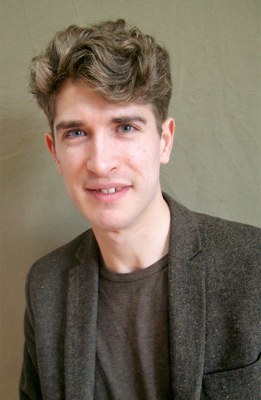
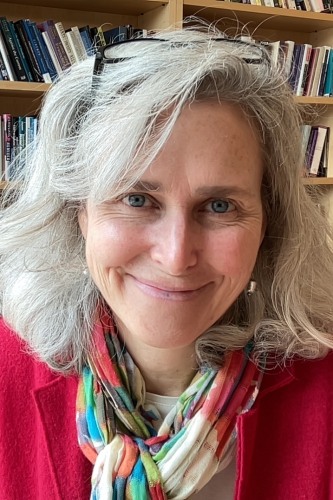
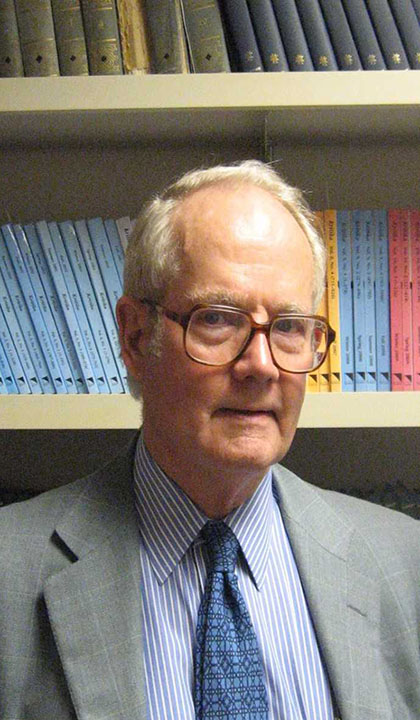
Dr. Victor Kempf is a postdoctoral researcher at the Institut für Philosophie , Humboldt-Universität zu Berlin, since March 2025. He completed his PhD at Goethe-Universität Frankfurt in 2017 and focuses on social and political philosophy from a critical theory perspective.
Steven Klein is a Senior Lecturer in Political Theory at King’s College London’s Department of Political Economy. He holds a PhD from the University of Chicago and previously taught at the University of Florida. His research focuses on democratic theory, political economy, welfare state institutions, and European integration. He has received an ERC Starting Grant for his project on systemic risk and democracy, and fellowships from the European University Institute and the American Academy in Berlin. Education: BA (Honours) in Political Science from the University of British Columbia (2008), MA (2012) and PhD (2016) in Political Science from the University of Chicago. His work examines democratic potential in welfare struggles, Karl Polanyi’s theories, and contemporary finance/debt politics. He leads research groups on political theory, PPE, and global inequality. Key awards include the Berlin Prize Fellowship and ERC funding. His book The Work of Politics: Making a Democratic Welfare State (2020) explores democratic welfare institutions. Current projects include a global history of trade unions and a study of systemic risk’s impact on democracy. Advising: No listed students. Active in research groups like the Political Theory Research Group and the Global South Research Group. He also contributes to public discourse through articles in Foreign Policy and The Berlin Journal .
Steven Kelts is a Lecturer at Princeton University, affiliated with the School of Public and International Affairs (SPIA) and the Department of Computer Science . He leads the Integrated Ethics in CS program and has served as Director of the non-profit All Tech Is Human. Research Focus: Kelts examines ethical frameworks in technology innovation, historical political economies, and the intersection of democratic theory with corporate responsibility. His work spans Measuring ethics education in computing Evolving corporate structures for ethical action Locke's economic justice theories Machiavelli's republican ideals Madison's institutional designs Publications reveal trends in: Utilitarian logic in Agile teams Roman censorship models 17th-century English economic debates Mill's social value legislation Scientific Recognition: Recipient of Princeton's Council on Science and Technology grants for Agile Ethics program Google seed grant for corporate ethics frameworks University-wide award for GradFutures AI ethics leadership Advisory Roles: Includes ethics advisor to the Responsible A.I. Institute and institutional design mentor for political theory projects.
Amber M. Neal-Stanley serves as Assistant Professor of Curriculum Studies in Purdue University's College of Education, where her scholarship interrogates Black educational experiences through critical qualitative frameworks and faith-based liberation traditions. Her work centers on structural inequity, historical resistance, and humanizing pedagogical approaches grounded in Black radical thought. Education: Ph.D. in Educational Theory and Practice, University of Georgia M.S.W. in Social Work, University of Georgia B.S. in Human Development and Family Studies, Bowling Green State University Research Focus: Dr. Neal-Stanley's research synthesizes Black education studies, critical qualitative inquiry, and faith as transformative praxis. She examines historical Black women teachers' abolitionist traditions, the Black Church's role in early childhood education, and digital humanities for recovering marginalized educational histories. Her scholarship consistently centers re membering Black radical traditions while confronting anti-Blackness in educational systems through humanizing frameworks. Publication Trends: Recent publications (2021-2025) reveal three dominant trajectories: (1) Historical analyses of Black women educators' spiritual resistance, (2) Conceptual models for leveraging religio-spiritual capital against anti-Blackness, and (3) Digital methodologies for reconstructing Black educational history. Her work increasingly integrates Black feminist thought with critical race theory to address contemporary educational struggles. Scientific Recognition: Purdue University College of Education Outstanding Faculty Teaching Award (2023-2024) Research Fellow, The Crossroads Project at Princeton University's Center for Culture, Society, and Religion (2024-2025) Academic Leadership: Teaching graduate courses in critical theory, qualitative methods, and Black educational history, Dr. Neal-Stanley prepares educators to dismantle structural inequity. Her Detroit Public Schools background and social work experience inform community-engaged scholarship that bridges historical analysis with contemporary activism, particularly through faith-based resistance frameworks.
Thomas Jaeger is a Professor of European Law at the University of Vienna’s Faculty of Law, specializing in the Internal Market and Competition within European Commercial Law. He leads the Institute for European, International and Comparative Law and serves as President of the Austrian Society for European Law (ÖGER), a member of FIDE, advocating for Austrian perspectives in EU legal developments. His research spans European Commercial Law, State Aid Law, Media Regulation , and Intellectual Property , with notable publications addressing EU legal frameworks for transport, digital markets, and gambling concessions. Recent lectures focus on state aid challenges, constitutional identity conflicts , and merger control . Jaeger supervises dissertations requiring significant scientific contribution and has organized events like the European Law Roundtable with CJEU and State Aid Law Day . He has held visiting roles at Hannover and Munich universities and previously worked at the Max Planck Institute and UNHCHR .
Elissa Helms is an Associate Professor and Doctoral Program Director in the Department of Gender Studies at Central European University (CEU), based in Vienna. She is a leading scholar in gender, nationalism, and post-conflict ethnography, with a regional focus on the Balkans, particularly Bosnia-Herzegovina and the former Yugoslavia. Her work critically engages with migration, racialization, borders, and feminist activism in contemporary Europe. Ph.D., Cultural Anthropology, University of Pittsburgh, 2003 MA, Cultural Anthropology, University of Pittsburgh, 1998 BA, International Relations, Bucknell University, 1991 Her research centers on gendered dynamics in post-socialist and post-conflict societies, especially how gender, race, and nationalism intersect in migration and border contexts. She has conducted long-term ethnographic fieldwork in Bosnia-Herzegovina, including in Bihać, focusing on the Balkan Route and local responses to migration. Her work also explores feminist memory, transitional justice, and the politics of victimhood, notably through her influential book Innocence and Victimhood (2013). She co-edited Borders of Desire (2023), examining gender and sexuality at Europe’s eastern edges. Her recent publications reveal a sustained focus on the gendered dimensions of refugee crises, EU border policies, and the racialization of migrants. She critiques dominant narratives that associate victimhood solely with women and children, highlighting how men are also deeply vulnerable in war and displacement. Her scholarship bridges feminist theory, cultural anthropology, and critical migration studies. While no specific scientific awards are mentioned in the provided texts, her work is widely recognized through publications in top journals and participation in major academic projects such as GRACE (Gender and Cultures of Equality). She actively mentors graduate students and welcomes inquiries from prospective MA and PhD candidates in her research areas. Elissa Helms has advised on and contributed to numerous academic events, public lectures, and policy discussions on gender, migration, and human rights. Her current research includes ethnographic work on the Balkan Route and a project on the Women’s Court, a feminist initiative for transitional justice in the post-Yugoslav region. She is deeply engaged in public scholarship, contributing to platforms like Eurozine and FocaalBlog.
Juan Carlos De Martin is a Full Professor of Computer Engineering at the Polytechnic of Turin, where he is also co-founder and co-director of the Nexa Center for Internet & Society. He holds a Faculty Associate position at the Berkman Klein Center for Internet & Society at Harvard University and is a member of the Scientific Council of the Treccani Institute and the Steering Committee of Biennale Democracy. He previously served as Vice Rector for Culture and Communication at the Polytechnic of Turin (2018–2023) and as president of its libraries (2007–2015). His research centers on the societal implications of digital technologies, with a strong emphasis on algorithmic and data justice, digital power, and the democratic challenges posed by modern technology. He advocates for a more democratic and ethical technological future, particularly critiquing the dominance of smartphones and promoting digital sovereignty. His recent publications reflect a clear trend toward ethical AI, data protection, and the social impact of algorithms. He has published on gender bias in language models, GDPR compliance tools, and non-discrimination audits in software, demonstrating a sustained commitment to fairness, transparency, and accountability in digital systems. Best Student Paper Award IEEE ISCC 2011 Best Student Paper Award IEEE ICME 2005 Fellow at Harvard University (Berkman Klein Center) (2011–2015, 2016–2024) Faculty Associate at Collège d'études mondos, France (2016) De Martin has advised PhD students like Marco Rondina on Responsible AI and has led numerous EU-funded research projects such as COMMUNIA and DECODE. He has also played a key role in public policy, serving on ministerial working groups on AI and online hate. He is the founder of the Biennale Tecnologia and has authored influential books on the future of universities and technology, all published under Creative Commons licenses. He leads the Nexa Center for Internet & Society, a multidisciplinary research group focused on the legal, economic, and social aspects of the Internet. The center fosters collaboration between computer scientists, legal scholars, and social scientists to address pressing digital challenges.
Milan Bernard is a Lecturer and PhD candidate in the Department of Political Science at the University of Montreal's Faculty of Arts and Sciences. His academic work focuses on contemporary political philosophy with special emphasis on Hannah Arendt's theoretical framework. As a doctoral researcher, he actively contributes to the department's teaching mission while pursuing his dissertation on conflict in politics and solidarity mechanisms. His educational background includes: Master's in Political Theory (2016), University of Toronto Bachelor's in International Studies (2015), University of Montreal Bernard's research explores the presence of conflict at the heart of politics and the potential for balancing its destructive potential through solidarity. His work with Hannah Arendt's intellectual legacy examines contemporary ideological landscapes, social movements, and the diffusion of ideas in international relations. His scholarship demonstrates a consistent focus on how political theory can address current democratic challenges and ecological crises. His publications from 2022-2025 reveal a strong concentration on democratic theory, political conflict, and solidarity concepts, with increasing attention to environmental politics and climate governance. The trajectory shows deepening engagement with Hannah Arendt's work while expanding into contemporary political challenges. His scientific recognition includes: Merit Scholarship for Graduate Studies (ESP), University of Montreal (2023) GRIPP Research Fellowship (2023-2024) Support Scholarship for Graduate Studies (ESP), University of Montreal (2024) SSHRC Doctoral Fellowship (2024-2025) Bernard has been actively involved in academic mentorship through the Department of Political Science's mentoring program and has participated in organizing major academic events including the ACfas Congress and the Quebec Society of Political Science Congress. His professional engagement extends to the National Council of the Unemployed (CNC) where he serves as co-spokesperson, connecting his academic work with social activism. He has also contributed to the Feminist Perspectives Network (RPF) as a research assistant, demonstrating commitment to both theoretical and applied political work.
Sharon Krause is the William R. Kenan, Jr. University Professor of Political Science at Brown University, affiliated with the Watson Institute of International and Public Affairs. She holds a B.A. from Wellesley College, an M.T.S. from Harvard Divinity School, and a Ph.D. in Political Theory from Harvard University. Her research focuses on political theory, particularly environmental politics, freedom, social inequality, and democratic theory. She has authored influential books such as Eco-Emancipation: An Earthly Politics of Freedom (2023), Freedom Beyond Sovereignty (2015), and Civil Passions (2008), which explore themes of justice, ecological sustainability, and non-sovereign agency. Her work bridges classical and contemporary political thought, engaging with thinkers like Montesquieu, Hume, and Arendt. She has been honored with awards including the Clay Morgan Award (2024) and Spitz Prize (2010). Krause teaches courses on political theory, environmental humanities, and ancient/modern political thought, emphasizing interdisciplinary approaches to understanding power, justice, and ecological responsibility. Education: B.A. Wellesley College (1988), M.T.S. Harvard Divinity School (1993), Ph.D. Harvard University (1998) Key Research Areas: Eco-politics, non-sovereign freedom, democratic deliberation, gender studies Recent Trends: Increasing focus on environmental sustainability and intersectional domination theories Her articles analyze topics ranging from Montesquieu’s legal philosophy to contemporary feminist theory, demonstrating a commitment to integrating historical insights with urgent modern challenges.
Lazar Radic Boskovic is an Assistant Professor of Law at IE University (Spain), specializing in administrative law, economic regulation, and competition law. He previously served as Adjunct Professor at IE University (2022–2024) and Universidad CEU San Pablo (2023). His research focuses on competition law, digital competition regulation, and the intersection of law with political philosophy. He is affiliated with the International Center for Law & Economics as a Senior Scholar for Competition Policy. Education includes a PhD in Law from the European University Institute, an LL.M. in International and Comparative Law (EUI), an LL.M. in EU and International Law (Cum Laude, University of Amsterdam), and a double degree in Law and Political Science from Universidad Autónoma de Madrid. He blogs at Truth on the Market and is active on X (@Laz_Radic). His research interests emphasize digital markets, consumer welfare standards, and the philosophical underpinnings of competition law. Recent articles analyze EU antitrust guidelines, digital regulation strategies, and critiques of antitrust consensus. He frequently engages in policy discussions through media outlets like Euractiv and The Telegraph. Professionally, he practiced competition law in top-tier firms in Spain and Serbia (BDK Advokati, Martinez-Lage, Allendesalazar & Brockelmann). His work bridges academic research, legal practice, and policy advocacy.
Circe Sturm is Professor of Anthropology at the University of Texas at Austin's College of Liberal Arts and affiliate faculty in Native American and Indigenous Studies. With 25 years of teaching experience spanning the University of Oklahoma and UT Austin, her scholarship examines race-sovereignty-citizenship intersections in Native and African American communities through settler colonial frameworks. Education: Ph.D., University of California, Davis Her research critically analyzes racial formation , tribal sovereignty , and indigenous identity politics across Native North America, Central America, and Europe. Fieldwork with Cherokee and Freedmen communities informs her exploration of dominance-resistance dynamics and subjectivity within colonial structures, consistently bridging academic theory and social justice praxis. Recent publications (2016-2023) demonstrate evolving engagement with ontological anthropology, Black-Indigenous relations, and demographic politics of race. Key themes include sovereignty recognition struggles, racial classification systems, and the material consequences of settler colonial logics across legal, demographic, and cultural domains. Author of award-winning books Blood Politics (2002) and Becoming Indian (2011), her work is widely cited by scholars, tribal citizens, legal professionals, and journalists. Public intellectual contributions include New York Times features and NPR interviews. Sturm has mentored generations of students through courses including Cultural Anthropology, Mapping Indigenous Austin, and Oral History of Native Texas. Her public lectures for entities like the US Forest Service and New York Public Library demonstrate deep commitment to community-engaged scholarship beyond academia.
Daniel L. Schlafly is a Professor in the Department of History at Saint Louis University 's College of Arts and Sciences . His career spans decades of research in Russian and East European history, with a focus on cross-cultural exchanges between Russia and Western Europe. Education : Ph.D. (Columbia University, 1972), M.A. in Russian Studies (Columbia, 1965), Certificate from the Russian Institute (Columbia, 1965), A.B. (Georgetown University, 1961), and M.B.A. (Saint Louis University, 1998). Research interests include cross-cultural history, Jesuit educational institutions in Russia and America, religious minorities in post-Soviet Russia, and East-West encounters during the Enlightenment. His work emphasizes primary source analysis in original languages like Russian, French, and Italian. Publication trends highlight comparative studies of Jesuit schools, diplomatic records, and religious identity formation. His articles span 1970-2008 , with a focus on Russia's engagement with Catholicism and Western institutions. Scientific awards and grants include: Mellon grants for international research (1991-1996) Adenauer Scholarship for German studies (1961-62) Conference funding from 2002-2014 Grants for translating Marek Inglot's Jesuit history (2008-2013) He has taught courses on the origins of the modern world , history of Eastern Europe , Russian history , and nationalism studies .
Kristen Lucken serves as Lecturer in International and Global Studies, Religious Studies, and Sociology at Brandeis University, where she chairs the Interdepartmental Program in Religious Studies and directs the Master's in Global Studies program. Her appointments span the Department of Sociology and two interdepartmental programs, reflecting her interdisciplinary focus. Her educational foundation includes: Ph.D. from Boston University M.A. from University of Denver B.S. from The University of Montana Dr. Lucken's research centers on immigration , ethnic/religious pluralism , and nationalism , with particular emphasis on how religious and ethnic identities transform through migration. Having witnessed the dissolution of multi-cultural states in the former Yugoslavia (1990-1998), she examines Bosnian refugee experiences and transnational religious lives of immigrant communities, especially regarding identity maintenance through religious institutions. Analysis of her 2009-2021 publications reveals three dominant trends: sustained focus on Bosnian refugee communities in New England; expansion into comparative studies of religion in public institutions across the U.S., U.K., and Europe; and growing attention to contemplative practices as stress responses within religious frameworks. Her work consistently bridges sociology, religious studies, and migration theory. Her scholarly recognition includes: Earhart Fellowship, Institute on Culture, Religion and World Affairs, Boston University (2005-2006) Religion Fellowship, School of Theology, Boston University (2011-2013) While directing the Master's in Global Studies program, Dr. Lucken leads a collaborative cross-national project on religion in public institutions. Though specific student advising and grant details aren't documented, her leadership roles indicate significant programmatic responsibilities. Current research extends into spirituality's role within secular public frameworks through comparative international analysis.
Dr Jared Holley is a Lecturer in Political Theory at the University of Edinburgh's School of Social and Political Science. He specializes in the history of political thought, focusing on modern concepts of freedom, domination, and their global intellectual histories. As Co-Director of the Centre for Ethics and Critical Thought (CRITIQUE), he explores how historical ideas inform contemporary resistance movements. His current research examines anticolonial solidarity, grounded in the global history of anticolonial political thought and debates across the global North and South. He teaches courses including 'Political Thinkers and Histories' and 'Theories of Solidarity,' and supervises PhD students in political thought history. His 2024 book, Rousseau’s Politics of Taste , analyzes Enlightenment political aesthetics. Holley’s work bridges Western/European traditions and non-Western world philosophies, emphasizing decolonial thought and racial equality. Research interests include global intellectual histories, anticolonial solidarity, and the intersection of political theory with decolonial frameworks. He regularly teaches 'Anticolonial Political Thought' and contributes to interdisciplinary dialogues on ethics and critical theory through CRITIQUE. His publications explore themes like metropolitan domination, solidarity practices, and the legacy of thinkers like Anténor Firmin. Holley’s scholarship aims to connect historical ideas with contemporary struggles for justice and equality.
Matthias Lievens is an Associate Professor at the Institute of Philosophy at KU Leuven , Belgium. He is a member of the Research in Political Philosophy and Ethics Leuven (RIPPLE) and Ethics @ KU Leuven . His work focuses on political philosophy, ethics, environmental politics, and critical theory, with particular attention to the works of Sartre, Gramsci, and Schmitt. Lievens critiques modern political frameworks, exploring themes like democracy, resistance, and the interplay between time, power, and institutional inertia. Research Interests : His research spans existentialist political theory, environmental ethics, democratic legitimacy, and the philosophy of resistance. Notable contributions include analyses of Sartre’s theories on temporal pluralities, critiques of the Green Economy, and explorations of Gramsci’s and Schmitt’s political concepts. He emphasizes the re-politicization of environmental issues and the limits of representative democracy. Recent Trends : His articles highlight tensions between democracy and capitalism, the role of time in political conflicts, and the ethical dimensions of environmental governance. Recent work critiques 'green capitalism' and advocates for a return to radical democratic praxis. Labs/Teams : Active in RIPPLE, Lievens collaborates on projects addressing global governance, climate justice, and the political implications of environmental crises.