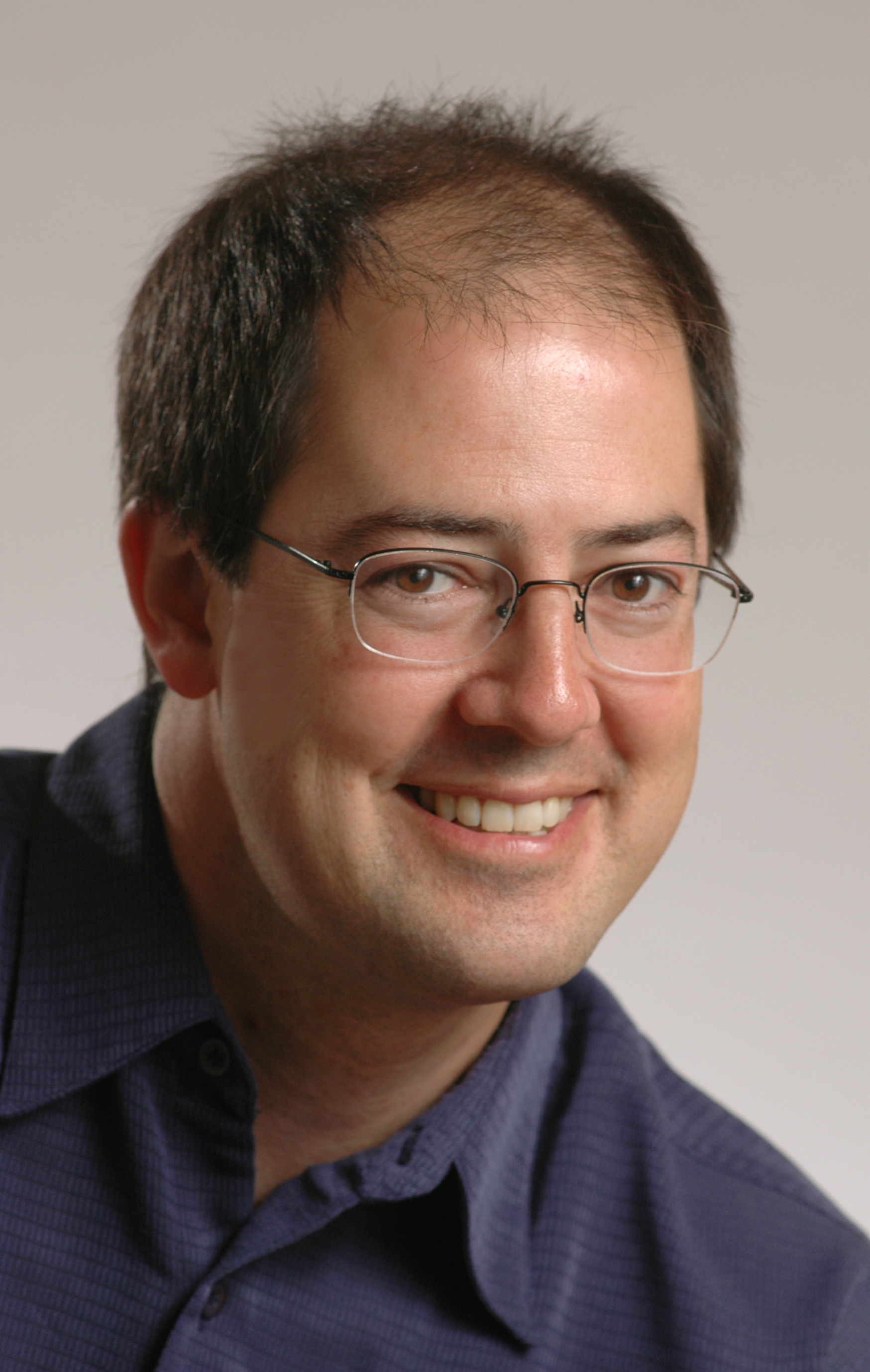
Kristofer Pister is a Professor in the Department of Electrical Engineering and Computer Sciences at the University of California, Berkeley. He co-directs the Berkeley Sensor and Actuator Center (BSAC) and the Ubiquitous Swarm Lab. His career spans groundbreaking innovations in Micro/Nano Electro Mechanical Systems (MEMS), Control Systems, and Low-Power Circuits, with a focus on Smart Dust and synthetic insects. Education: Ph.D. and M.S. in EECS from UC Berkeley (1992, 1989); B.A. in Applied Physics from UC San Diego (1986). His research areas include MEMS , Control Systems , Robotics , and Integrated Circuits , with recent work on self-powered micro-sensors, crystal-free radios, and interplanetary swarm networks. Key awards include the ISA Albert F. Sperry Founder Award (2009) , Alexander Schwarzkopf Prize (2006) , and the NSF CAREER Award (1996) . He has authored numerous influential publications in wireless sensor networks and microrobotics. His lab, Ubiquitous Swarm Lab , explores distributed robotics and swarm intelligence. Pister emphasizes open collaboration in research, ethical conduct in academia, and efficient resource utilization for graduate students.
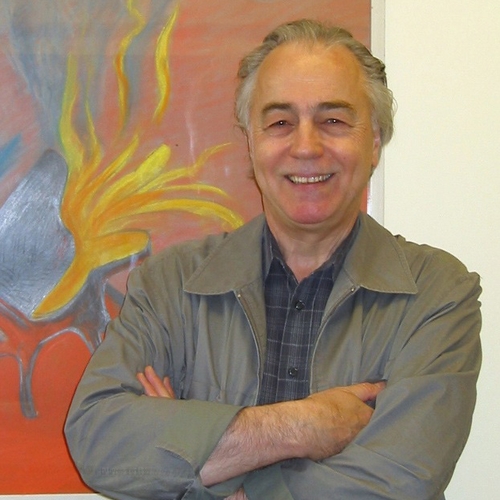
François Guimbretière is a Professor in the Department of Information Science at Cornell University, with affiliations to the Department of Design & Technology. He holds a PhD in Computer Science from Stanford University and previously served on the faculty at the University of Maryland before joining Cornell in 2009. His research centers on human-computer interaction, human-robot interaction, and interface design, with a strong emphasis on hardware/software co-design to create seamless, sustainable, and innovative interactive systems. His work spans multiple domains including interactive fabrication, remote collaboration, and low-power interfaces. Guimbretière's recent research explores novel fabrication methods such as interactive printing and yarn-based electronics, as well as immersive remote embodiment systems that reduce reliance on physical travel. These efforts reflect a broader trend toward sustainable and accessible interaction technologies. His publications demonstrate consistent contributions to top-tier venues in HCI and ubiquitous computing, focusing on tangible, wearable, and environmentally conscious interfaces. Scientific Recognition: He advises graduate and undergraduate researchers in the development of next-generation interactive systems. His lab supports projects in digital fabrication, remote presence, and sustainable design, often involving interdisciplinary collaboration. While specific grants are not listed, his research trajectory suggests sustained funding in human-centered technology innovation. He leads a research group focused on building practical, user-centered systems that bridge the digital and physical worlds through creative engineering and design. The lab emphasizes hands-on prototyping, real-world deployment, and the integration of traditional craft with advanced technologies.
Jan Borchers is a full professor of computer science and head of the Media Computing Group, an endowed Chair in the Computer Science Department at RWTH Aachen University. He serves as deputy member of the Faculty Council for Mathematics, Computer Science and Natural Sciences (2024-2026) and previously headed the Computer Science Department's Examination Board from 2015 until February 2025. Borchers established his research group in 2003, pioneering modern HCI academic research and teaching in Germany, and opened Germany's first Fab Lab in 2009. Borchers received his PhD 'summa cum laude' in computer science from Darmstadt University of Technology in 2000. Before joining RWTH Aachen, he held faculty positions at Stanford University and ETH Zurich. His PhD thesis, 'A Pattern Approach to Interaction Design,' became the first book to bring design patterns to HCI. His research focuses on Human-Computer Interaction with particular interest in new user interfaces for soft robotics, textile user interfaces, 3D printing and personal fabrication, augmented reality, wearable and tangible computing, interfaces for software development, deceptive patterns, and interactive guides and exhibits. He is a member of ACM, SIGCHI, SIGCHI Germany, and GI, and introduced the Interactivity format to the CHI conference in 2005. Recent publications reveal a strong emphasis on deceptive patterns/dark patterns in UI design, textile interfaces, and the impact of generative AI on creative teamwork. His work spans from fundamental research in interaction techniques to practical applications in smart homes, accessibility, and children's interfaces, with a consistent focus on usability and user-centered design. IDC 2025 Best Work in Progress: 'If They Have No Choice, They'll Accept!' CHI'25 Student Games Competition Winner: 'The Deceptive Dungeon' RWTH-Wissenschaftsnacht 2024 Best Science Slam: 'Usability: 4 Prinzipien guter User Interfaces' Multiple CHI/UIST Honorable Mentions and Best Paper awards spanning two decades Author of influential books including 'A Pattern Approach to Interaction Design' and 'Arduino In A Nutshell' Borchers has provided extensive consulting, training, and user interface design services to major clients including AirBus, Apple, ARD, Bayer, Children's Museum Boston, Daimler, Handelsblatt, OTIS, Scout24, TEDx, and Deutsche Telekom. He actively organizes the Computer Science Department's weekly Faculty Lunch since 2003 and coordinates the department's public relations and web presence since 2010. He leads the Media Computing Group, which has become a leading German lab in terms of archival publications at CHI, the top international conference in HCI. Since March 2025, he serves as faculty patron for TechLabs Aachen, a student initiative providing practical digital skills training.
Renate Sachse is a Researcher and Responsible Investigator at the Chair of Structural Analysis, Technical University of Munich (TUM), under Prof. Kai-Uwe Bletzinger. She holds a Dr.-Ing. from the University of Stuttgart and has held postdoctoral positions at Harvard University (Bertoldi Lab) and TU Munich's Institute for Computational Mechanics. Her research focuses on biomimetic adaptive structures, biomechanics, and smart materials. Education M.Sc. in Civil Engineering (University of Stuttgart, 2014) – Thesis: "Isogeometric Contact Analysis of Thin-Walled Structures" B.Sc. in Civil Engineering (University of Stuttgart, 2011) – Thesis: "Elementary School Pavilion Structural Analysis" Study Abroad: École Spéciale des Travaux Publics (ESTP, France, 2012) Research Interests Her work integrates principles from biology and mechanics to design adaptive structures, including motion design, soft robotics, and active metamaterials. Notable projects include studying snapping mechanisms in plants (e.g., Venus flytrap) and developing bio-inspired systems like Flectofold shading devices. She also explores isogeometric analysis and structural optimization for thin-walled and slender structures. Grants & Awards Bertha Benz Prize 2022 (Daimler and Benz Foundation) Klaus Tschira Boost Fund Fellowship (€80,000 interdisciplinary grant) 3rd Place AVK-Prize for Innovations (2017, Flectofold Shading System) GAMM Juniors Fellowship (2020–2022) Teaching & Grants She teaches advanced finite element methods and nonlinear mechanics at TUM and has supervised projects in computational mechanics. Her grants include CareerDesign@TUM funding and the Klaus Tschira Fellowship for high-risk, interdisciplinary research. Labs & Teams Associated with the Chair of Structural Analysis at TUM, collaborating on projects like livMatS (Living Materials Systems) and the Harvard SEAS Bertoldi Lab. Involved in software development (e.g., Carat++, Kiwi!3d) and third-party initiatives (CoDA, FlexWing).
Andreas Peter Burg is a Tenured Associate Professor at the École Polytechnique Fédérale de Lausanne (EPFL), where he leads the Telecommunications Circuits Laboratory (TCL) within the School of Engineering. He holds multiple academic and administrative roles at EPFL including Associate Professor in Teaching (SEL, EDMI, EDEE), Director of SEL Management, and Member of the Doctoral Program Committee for Electrical Engineering. Dr. Burg received his Dipl.-Ing. degree in 2000 and Dr. sc. techn. degree in 2006 from ETH Zurich. His academic career includes positions as SNF Assistant Professor at ETH Zurich (2009-2011) before joining EPFL in January 2011 as a Tenure Track Assistant Professor, where he was promoted to Tenured Associate Professor in June 2018. His research focuses on circuits and systems for telecommunications , with particular expertise in silicon implementation of communication technologies, communication algorithms optimization for hardware, low-power VLSI signal processing, and digital integrated circuits. His work bridges theoretical communication concepts with practical circuit implementations, addressing challenges in wireless and wired communication systems. His recent publications (2024-2025) demonstrate a strong focus on next-generation communication technologies including 6G systems, advanced error correction coding, wireless sensing applications, and ultra-low power circuit design. These works span multiple subfields from LDPC and polar code decoding to RF signal processing and machine learning applications in wireless systems. Willi Studer Award (2000) ETH Medal for diploma thesis (2000) ETH Medal for Ph.D. dissertation (2006) Swiss National Science Foundation Assistant Professorship grant (2008) Dr. Burg has been involved in the development of more than 25 ASICs throughout his career and co-founded Celestrius, an ETH spinoff in MIMO wireless communication. His laboratory work focuses on practical implementations of communication algorithms with emphasis on power efficiency and hardware optimization. Current research directions include 6G technologies, wireless sensing applications, and novel error correction techniques for next-generation communication systems.
Lars Bo Jeppesen serves as Professor of Innovation Management at Copenhagen Business School's Department of Strategy and Innovation, focusing on digital economy innovation through crowd-based mechanisms, crowdfunding, user communities, and platform ecosystems. His work bridges academic research with practical applications for industry and policy. Education: Master's degree from University of Copenhagen PhD from Copenhagen Business School Professor Jeppesen's research examines how digital platforms transform innovation processes, emphasizing user-driven ecosystems and strategic implications for firms. He investigates crowdfunding dynamics, entrepreneurial financing mechanisms, and the interplay between intrinsic motivation and monetary incentives in crowd innovation, with findings applicable to both startups and established corporations. His recent publications (2020-2025) reveal consistent exploration of platform economics, digital business models, and innovation policy. Key trends include strategic responses to piracy, AI platform competition, freemium model optimization, and the role of social movements in non-commercial innovation, primarily published in top-tier journals like Research Policy and Strategic Management Journal. Scientific Awards: No awards documented in source material Professor Jeppesen advises European and Asian governments on innovation policy while collaborating with leading corporations through projects like the Danish User-Centered Innovation Lab (co-founded with MIT's Eric von Hippel). His current research initiatives include 'Crowdfunding for Youth Entrepreneurship in Tanzania' and 'The Co-Existence of Prosocial Intrinsic Motivation and Monetary Incentives,' supported by field experiments and ecosystem analyses. He directs the Danish User-Centered Innovation Lab, which integrates academic researchers and industry partners to develop practical innovation tools for capturing distributed knowledge, with applications in technology strategy and open innovation frameworks.
Guerino Mazzola is a Professor of Creativity, Improvisation, and Mathematical Music Theory at the School of Music, University of Minnesota. His academic career includes a PhD in Mathematics from Zurich University and postdoctoral work at Paris-Sud and Rome. He has been a key figure in developing mathematical music theory since 1980, authoring influential books such as The Topos of Music (2002) and Cool Math for Hot Music (2016). Education: PhD in Mathematics (Zurich University), Habilitation in Algebraic Geometry (1980), and Computational Sciences (1993). Research Interests: Mathematical foundations of music, gesture theory, performance analysis, computational musicology, and interdisciplinary creativity. Notable contributions include the Rubato software for performance analysis and the development of gesture theory applied to free jazz. He has received awards such as the Mexican Mathematical Society Medal (2000) and has been a visiting professor at prestigious institutions like the École Normale Supérieure in Paris. Teaching spans advanced courses on gesture theory, performance science, and music informatics, with a focus on bridging mathematical rigor and artistic creativity.
Pablo Aragón is a Research Scientist at the Wikimedia Foundation and an Adjunct Professor at Universitat Pompeu Fabra. His work bridges computational social science, civic technology, and technopolitics, with a focus on Wikipedia's governance, digital democracy tools, and participatory systems. He co-founded the Democratic Innovation Lab in Barcelona and the DatAnalysis15M research network. Key research interests include analyzing knowledge integrity in Wikipedia, configuring digital participatory budgeting systems, and studying platform effects in civic technologies. He has led projects like DECODE (decentralized citizen engagement) and contributed to platforms like Decidim, which empower participatory democracy in cities like Barcelona. Recent conference engagements include KDD 2024 (data mining), ICWSM 2024 (social media analysis), and Wikimedia CEE Meeting 2024. His work emphasizes cross-cultural collaboration, with studies published in ACM Transactions on Computer-Human Interaction and peer-reviewed conferences like CIKM and ACM SIGKDD. Professional affiliations include the Decidim association, Amnistía Internacional España, and the open knowledge advocacy group Civio. His research often intersects with open science, free culture movements, and gender equity in urban mobility.
Yang Liu is an incoming Assistant Professor at Florida State University (Fall 2025) and currently a Senior Research Associate and Affiliated Lecturer in the Department of Computer Science and Technology at the University of Cambridge. She holds a B.E. in Software Engineering from Xi’an Jiaotong University (2016) and a Ph.D. in Computer Science from City University of Hong Kong (2020), advised by Prof. Zhenjiang Li. Her research focuses on intelligent mobile/wearable sensing technologies, combining AI and signal processing to advance applications in human-computer interaction (HCI), smart health, and IoT. She has received notable awards such as the 2024 N2Women Rising Star Award and the 2021 ACM SIGBED Doctoral Thesis Award. Research interests span mobile systems, AI-driven wearable sensing, privacy in human interactions, and healthcare monitoring. Key projects include RespEar (earable-based respiratory monitoring), SmarTeeth (toothbrushing tracking), and WearIoT (privacy-aware wearable systems). She mentors students in areas like biomedical signal processing and secure wearable systems. Teaching includes Mobile/Wearable Systems courses at Cambridge and previously at City University of Hong Kong. Education: B.E. Software Engineering, Xi’an Jiaotong University (2016) Ph.D. Computer Science, City University of Hong Kong (2020) Grants & Services: Organizing roles in ACM SIGCOMM, IEEE ICPADS, and multiple conference TPCs. Invited talks at Columbia University, Purdue University, and others. Her work bridges mobile computing with health applications, addressing both technological innovation and societal impacts through over 30 peer-reviewed publications and industry collaborations.
Dr Michael Boemo is an Assistant Professor at the University of Cambridge, holding dual appointments in the Department of Pathology and Department of Genetics. He leads research at the intersection of computational biology, DNA replication, and cancer genomics, developing machine learning tools to analyze replication stress and genomic instability. Academic Background: BA in Mathematics (Rutgers University), PhD in Physics (University of Oxford) Research Focus: Genomic instability in cancer, DNA replication/repair defects, computational modeling using machine learning and high-performance simulations Teaching: Lectures in Natural Sciences Tripos (mathematical biology, genetics, systems biology), module organizer for cancer biology and biological modeling His research group leverages nanopore sequencing and AI to map replication fork dynamics, revealing how stalled forks generate mutations in cancer cells and pathogens. Recent work examines extrachromosomal DNA replication vulnerabilities and transcription-replication conflicts. Dr Boemo collaborates across computational biology and cancer research domains, with publications spanning journals like Nature Methods, Cell, and PLoS Computational Biology. His lab develops tools such as DNAscent for replication fork analysis and explores therapeutic targeting of replication stress.
Marco Ghislieri is an Assistant Professor at the Department of Electronics and Telecommunications (DET) of Politecnico di Torino, Italy. He is a member of the Interdepartmental Center PolitoBIOMed Lab and teaches in the Biomedical Engineering program, including courses like Neuroengineering and Design of Programmable Biomedical Devices . His research spans Artificial Intelligence, Biomedical Signal Processing, Neuroscience, and Rehabilitation Engineering . PhD in Bioengineering and Medical-Surgical Sciences (2017-2021) at Politecnico di Torino Thesis: Muscle Synergy Assessment during Cyclic and Non-Cyclic Movements His research focuses on muscle synergy analysis in Parkinson’s Disease (PD) patients post- Deep Brain Stimulation (DBS) , AI-driven gait analysis for fall prevention, and wearable sensor applications for stress-cognitive decline monitoring. He leads the S-CoDe and OMNIA-PARK projects, and contributes to PRIN as a team member. Recent publications highlight advancements in machine learning for intraoperative DBS targeting , statistical gait analysis , and neurorehabilitation tools . He serves as Associate Editor for Scientific Reports and Applied Bionics and Biomechanics , and Guest Editor for Frontiers in Neural Circuits . Awards include the Carlo J. De Luca Award (2022) , GNB Doctoral Award (2022) , and the Best Poster Award at M. Grattarola Summer School (2022) . He supervises Fabrizio Sciscenti (PhD candidate) and collaborates on neuroengineering and biomedical device design courses. His work addresses Goal 3 (Good Health) and Goal 4 (Quality Education) of the UN SDGs.
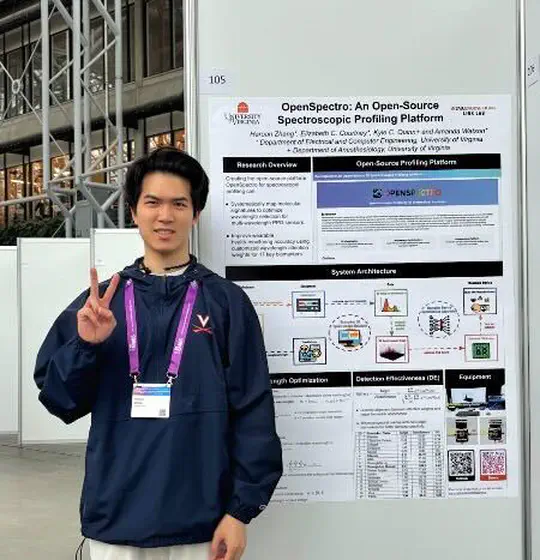
Amanda Watson is an Assistant Professor in Electrical and Computer Engineering at the University of Virginia, with joint appointments in Computer Science. She leads the Watson Research Lab within the UVA Link Lab, a multidisciplinary center for Cyber-Physical Systems (CPS) and Internet of Medical Things (IoMT) research. Her work bridges wearable technology with healthcare and athletic performance applications, focusing on noninvasive monitoring, physiological signal analysis, and safety-critical medical devices. She is also the cofounder and CEO of Luminosity Wearables, commercializing a noninvasive continuous glucose monitor. Education: PhD in Computer Science (2020) - College of William & Mary MSc in Computer Science (2016) - College of William & Mary Bachelors in Computer Science and Mathematics (2014) - Drury University Her research spans multiple domains including: Wearable spectroscopy for nutrition and skin health Machine learning for drug overdose and fall risk detection Biomechanical monitoring in sports medicine Wearable support for visual and neurological impairments IoMT device integration and analytics Recent publications (2024-2025) show strong emphasis on calibration-free physiological monitoring systems, with technical contributions in spectral analysis , multi-wavelength sensing , and rapid prototyping for healthcare wearables. Applications range from maternal health to gerontological social isolation detection. Lab and Team: The Watson Research Lab at UVA develops wearable solutions for clinical and athletic contexts, with ongoing collaborations in the PRECISE Center at University of Pennsylvania and LENS lab at William & Mary alumni network. She works with multidisciplinary teams including engineers, clinicians, and data scientists.
Dr. Alexander Plopski is an Assistant Professor at the Institute of Visual Computing, Technische Universität Graz. His research focuses on advancing augmented reality (AR) technologies, human-computer interaction (HCI), and optical display systems. He holds a PhD, M.Sc., and BSc in relevant fields. His work emphasizes perceptual optimization in AR displays, eye tracking integration, and accessibility solutions for color vision deficiencies. Key research areas include gaze-contingent AR interfaces, light field manipulation for extended reality, and multimodal interaction techniques. Notable contributions include the development of the 'guitARhero' interactive AR guitar tutorial system and studies on focal distance effects in optical see-through displays. His publications span topics from AR display calibration to gesture recognition using radar sensing. He has explored applications in industrial training, medical AR, and robotic telemanipulation. His work often bridges theoretical perceptual studies with practical system implementations, aiming to enhance user experience and accessibility in AR/VR environments.
Paul Nuyujukian serves as an Assistant Professor of Bioengineering and Neurosurgery, with courtesy appointment in Electrical Engineering at Stanford University. He is a Faculty Scholar of the Wu Tsai Neurosciences Institute, directing the Brain Interfacing Laboratory where his team develops neural interface technologies for clinical applications in stroke and epilepsy. Education: MD, Stanford University (2014) PhD in Bioengineering, Stanford University (2012) BS, UCLA (2006) Dr. Nuyujukian's research integrates motor systems neuroscience with neuroengineering to decode brain activity during movement and recovery from injury. His laboratory pioneers brain-machine interface (BMI) platforms that translate neural signals into communication and control systems, with particular emphasis on intracranial EEG recording and real-time neural decoding. Current work focuses on developing clinically viable BMI solutions for neurological conditions through both preclinical models and human trials, advancing our understanding of neural population dynamics in health and disease. Recent publications reveal strong trends in intracranial EEG acquisition systems, seizure detection algorithms using information theory, and closed-loop BMI applications for ambulatory neuroscience. His work bridges fundamental neuroscience with clinical translation, particularly in epilepsy monitoring, chronic pain management, and neural prosthetics for paralysis. A notable emphasis exists on creating scalable, minimally invasive recording platforms that reduce clinical burden while maintaining high-fidelity neural data. Scientific Awards: No specific awards listed in provided materials As director of the Brain Interfacing Laboratory, Dr. Nuyujukian mentors students and collaborators in neural engineering research while securing grant funding for BMI development. His group maintains active collaborations with Stanford's Department of Neurosurgery and Neurology for clinical translation, with current projects including real-time decision-state decoding and personalized network mapping for pain management. The laboratory operates advanced facilities for both animal and human neural recording, emphasizing seamless integration of engineering innovation with clinical neuroscience. The Brain Interfacing Laboratory comprises multidisciplinary scientists and engineers developing next-generation neural interfaces. Current initiatives include the LiCoRICE platform for ambulatory neuroscience, seizure detection systems using compression-enabled entropy estimation, and ketamine's effects on hippocampal connectivity. The team actively participates in clinical trials for BMI applications in stroke rehabilitation and epilepsy, with strong partnerships across Stanford's medical and engineering schools to accelerate technology translation.
Dr. Shabnam Sadeghi Esfahlani is an Associate Professor in Robotics at the School of Engineering and the Built Environment, Anglia Ruskin University , where she serves as Deputy Leader of the BORI research group and leads the Automation & Robotics MSc program. Her interdisciplinary expertise spans mechatronics, artificial intelligence, virtual reality, and serious games , with a focus on applications for rehabilitation, medical training, and autonomous systems . As a Chartered Engineer and Senior Fellow of the Higher Education Academy , she has secured significant funding from Innovate UK, Horizon 2020, and GCRF , with grants exceeding £3 million. Education PhD in Mechanical Engineering, Anglia Ruskin University BSc (First Class) in Statistics & Mathematical Science, Shahid Beheshty University Her research integrates AI with robotics for societal impact, exemplified by the open-source SROBO ground robot and projects like Rehabgame and the Assistive Feeding Robot . She has published over 45 peer-reviewed articles and contributes to academic communities as a journal guest editor and conference organizer . Key collaborations include IET, IMechE, and the Nuffield Foundation as a mentor for young students. Scientific Awards & Recognitions: Chartered Engineer (CEng), Engineering Council UK Senior Fellow (SFHEA), Higher Education Academy Student-Voted 'Made a Difference Award' (2018) Post-Graduate Certificate in Higher Education