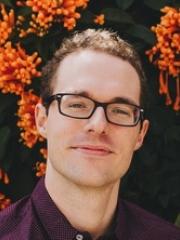
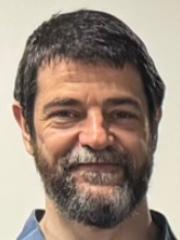
Dr. Sam Stennett is an Adjunct Research Fellow at the School of Mechanical and Mining Engineering , The University of Queensland , specializing in Hypersonics and advanced shock tunnel technology. His research focuses on developing and optimizing experimental facilities like the X3R Free-Piston Reflected Shock Tunnel for long-duration hypersonic testing. University: The University of Queensland School: School of Mechanical and Mining Engineering Rank: Research Fellow Email: s.stennett@uq.edu.au Stennett's work bridges Mechanical Engineering and Aerospace Engineering , emphasizing Computational Fluid Dynamics (CFD) validation, 3D Flow Analysis , and Experimental Fluid Dynamics . He contributes to shock tunnel design and hypersonic flow modeling , collaborating with experts like Prof. Peter Jacobs and Dr. David Gildfind. His publications highlight advancements in free-piston driver optimization , piston trajectory measurement , and CFD solver development , with a 2024 study in Experiments in Fluids demonstrating multi-mode shock expansion tunnel capabilities.
Joe Steer is a DPhil student and researcher at the University of Oxford , affiliated with the College of Engineering and working within the Oxford Thermofluids Institute . His academic journey includes an honours degree in Mechanical and Aerospace Engineering from the University of Adelaide (2019) and ongoing doctoral research under the supervision of Professor Matthew McGilvray and Dr. Tamara Sopek. Education : BEng (Hons) in Mechanical and Aerospace Engineering, University of Adelaide (2019) College : Lincoln College, University of Oxford Research Interests focus on critical aerospace challenges: gas giant entry physics, shock layer radiation, nonequilibrium hypersonic flows, and boundary layer transition. His work leverages advanced facilities like the T6 Stalker hypersonic wind tunnel and PWK1 arcjet to simulate planetary entry conditions. Publications span experimental hypersonics, shock tube dynamics, and satellite demise modeling. Recent studies examine methane effects in ice giant entry simulations and reverse time integration methods for LASTA 2.0, reflecting his expertise in thermofluid experiments and planetary probe design. Labs : Oxford Thermofluids Institute, T6 Stalker Wind Tunnel Group.
Dr David Gildfind is a Senior Lecturer at the School of Mechanical and Mining Engineering, The University of Queensland, and an affiliate of the Centre for Hypersonics. He holds a PhD in Hypersonics from UQ and graduated with a B.A. in Aerospace Engineering from RMIT University (2001). Research Interests: Experimental hypersonics and scramjet propulsion Magnetohydrodynamic (MHD) aerobraking for planetary entry Expansion tube facility development Aerothermodynamics of spacecraft atmospheric entry Prominent Article Trends: His recent work focuses on MHD aerobraking for Mars and Venus entry missions, radiation mitigation in hypersonic flows, and expansion tube facility optimization. Publications highlight shock stand-off measurements, heat flux analysis, and turbulence-chemistry interactions. Scientific Awards: ARC DECRA Fellowship (2017-2020) ARC Discovery Projects (2023-2025, 2025-2027) Commonwealth Defence Science and Technology Group grants Queensland Bavaria Collaborative Research Program Supervision & Grants: Leads major ARC-funded projects on MHD heat shielding and aerobraking. Supervises PhD candidates in hypersonic flow control, spacecraft thermal protection, and atmospheric entry optimization, collaborating with experts like Professor Vincent Wheatley and Dr. Christopher James. Labs & Teams: Works at UQ's Centre for Hypersonics and contributed to the T6 Stalker Tunnel commissioning. Collaborates internationally with institutions in Australia, Singapore, and the Netherlands.
Dr Matthew McGilvray serves as an Honorary Professor in the School of Mechanical and Mining Engineering at The University of Queensland, Australia, specializing in experimental hypersonics and scramjet propulsion research. His expertise centers on the design, operation, and optimization of high-enthalpy testing facilities including UQ's X2/X3 expansion tubes and Oxford University's T6 Stalker Tunnel, which simulate critical Mach 10+ flow conditions for aerospace applications. McGilvray completed his PhD at The University of Queensland in 2008 with the dissertation "Scramjet testing at high enthalpies in expansion tube facilities," establishing his foundational work in hypersonic testing methodologies. His academic journey reflects deep integration with leading international hypersonics research groups through extensive collaborations. His research interests encompass hypersonic flow physics, shock wave/boundary layer interactions, scramjet performance analysis, expansion tube facility design, and high-Mach-number flow simulation techniques. McGilvray's work addresses fundamental challenges in replicating atmospheric re-entry conditions and advancing scramjet propulsion systems through precise experimental validation and diagnostic modeling. Analysis of his publication trajectory reveals consistent focus on facility innovation (particularly the T6 Stalker Tunnel development), optimization of free-piston drivers for expansion tubes, and experimental investigation of complex hypersonic phenomena like shock-induced combustion and boundary layer transition. His contributions bridge theoretical fluid dynamics with practical aerospace engineering requirements for next-generation hypersonic vehicles. No information regarding scientific awards was found in the source material. The provided text contains no details about student supervision activities or research grant funding. McGilvray has been instrumental in major international hypersonic facilities including The University of Queensland's X2/X3 expansion tubes and Oxford University's T6 Stalker Tunnel. These facilities enable critical research on scramjet operation, shock wave physics, and atmospheric re-entry phenomena through precise simulation of Mach 8-14 flow conditions, supporting both academic research and spacecraft development programs like Hayabusa re-entry analysis.