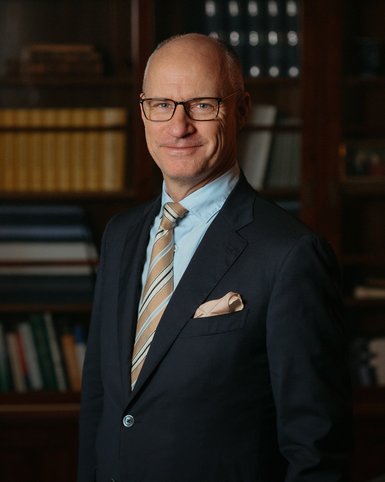
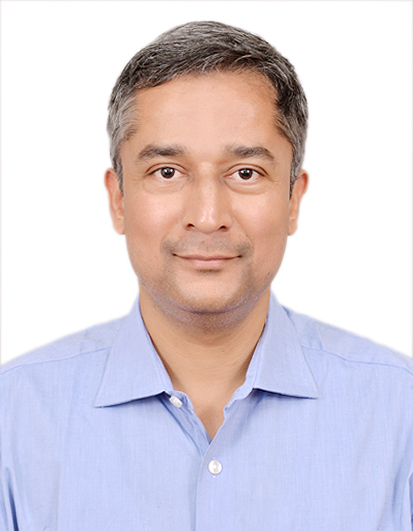
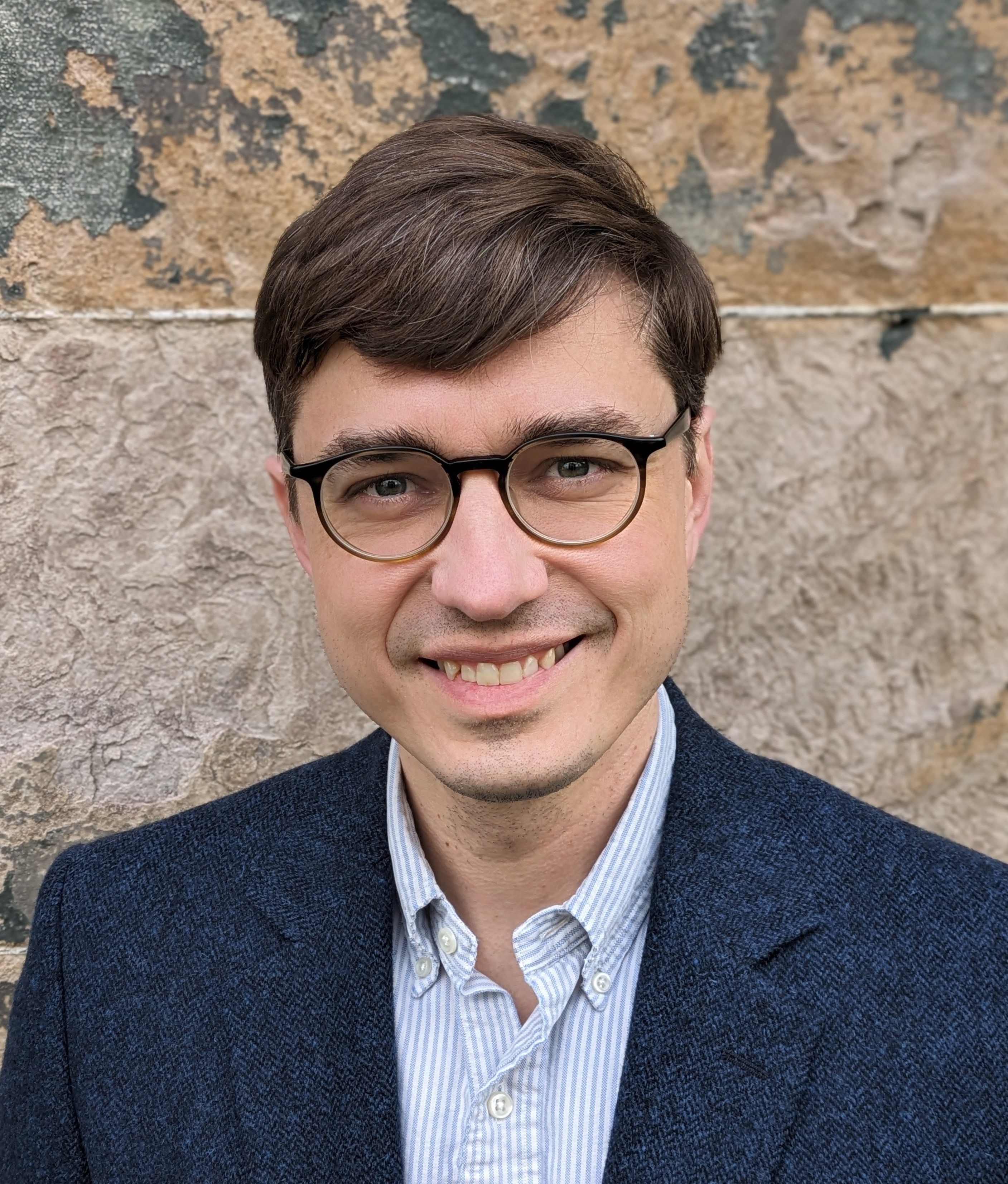
Charles K. Whitehead is the Myron C. Taylor Alumni Professor of Business Law at Cornell Law School, Cornell University. He specializes in corporate law, securities regulation, financial regulation, and mergers and acquisitions. His research explores intersections between law and finance, including analyses of systemic risks like the 2007–2009 mortgage crisis. He is affiliated with the Clarke Program on Law, Finance, and Transactions, focusing on transactional and regulatory frameworks. His work bridges academic research with industry insights from his prior roles in global financial institutions such as Citigroup and Nomura Securities. Professor Whitehead’s scholarship emphasizes legal dimensions of financial markets, with notable contributions on nonprime mortgage lending crises and corporate governance. His expertise is frequently cited in high-profile legal debates, including securities fraud cases and cryptocurrency regulatory issues.
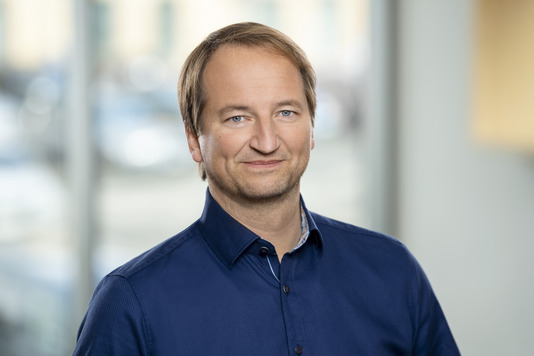
Michael Nietsch is the Dean of EBS Law School and holds the Chair for Civil Law, Company Law, and Securities Markets Regulation at EBS Universität für Wirtschaft und Recht in Wiesbaden, Germany. He joined the faculty full-time in 2011, previously serving as an associate professor at Johannes Gutenberg-University Mainz and other institutions. His research focuses on corporate governance, securities regulation, compliance, and sustainable business practices. He directs the Centre for Corporate Compliance and frequently advises regulators and law enforcement bodies, including European Securities and Markets Authority committees. His academic work emphasizes director liability, corporate sustainability, and compliance failures in banking. Notable contributions include Internationales Insiderrecht (2004) and Freigabeverfahren (2013). He regularly lectures internationally and chairs law school events like the Wiesbadener Compliance-Tag. Nietsch's professional roles include vice dean for research (2018–2023) before becoming dean in 2024. He contributes to legal reforms through editorships such as the Handbuch CSR-Compliance (2021) and has authored over 100 publications on corporate law, compliance frameworks, and ESG integration. His work bridges legal theory with practical regulatory challenges in financial markets and corporate accountability. Research interests span insider trading, corporate transparency, and the intersection of environmental policies with corporate governance structures. He advises on transnational legal frameworks for sustainability reporting and supply chain due diligence under EU directives.
Kimberly Riley is an Assistant Professor of Instruction in the School of Accountancy at Ohio University’s College of Business. She also serves as System Coordinator for the Bachelor of Science in Applied Management program and Campus Coordinator for Business Management Technology at Ohio University Southern. Her professional experience includes over 20 years as a Certified Public Accountant (CPA) and ownership of Kimberly G. Riley Accounting firm. Education: Doctor of Business Administration (D.B.A.) in Accounting, Walden University Masters of Business Administration (M.B.A.), Morehead State University Bachelor of Business Administration (B.B.A.) in Management, Ohio University Her research focuses on engagement strategies for multigenerational workforces, forensic accounting’s role in fraud prevention, and optimizing internal controls. Recent publications emphasize linking internal controls to operational efficiency improvements. Awards: Ohio University Southern Outstanding Research Award Ohio Magazine Excellence in Education Ohio University Southern Outstanding Service Award Professional roles include Facilitator for Community Advisory Panels with industries like Dow Chemical and Rumpke, alongside her CPA practice. She has served in leadership roles at AlliedSignal Inc. and actively contributes to regional business education initiatives.
Flora Huang is a Professor in Law at the College of Business, Law and Social Sciences, University of Derby. Her research specializes in international financial systems, capital market development, and cross-border regulatory frameworks, with a focus on Asian and Islamic financial contexts. She investigates institutional design in emerging financial centers, shareholder protection mechanisms, and legal aspects of financial integration initiatives like the Stock Connect program. Her research interests span: Comparative financial regulation and legal adaptations in Islamic finance zones Enforcement efficacy in emerging capital markets Transnational corporate governance structures Sino-global economic interdependencies Publications demonstrate sustained focus on legal architectures facilitating financial globalization. Recent works analyze regulatory innovations in Kazakhstan's Astana International Financial Centre and Hong Kong-Shenzhen technological divergence. Historical analyses of Chinese corporate oversight reveal evolving enforcement strategies. No awards or advising relationships are documented in source materials. Research outputs show consistent methodological approaches combining legal analysis with empirical examination of market behaviors and regulatory outcomes across jurisdictions.
Mohsen Farid is a Senior Lecturer in Data Science at the College of Science and Engineering. His research spans interdisciplinary areas including artificial intelligence, machine learning, neurotechnology, and healthcare analytics. He has contributed to advancements in genomics data management, video authentication, and neurotechnological solutions for mental health conditions like PTSD. His work frequently integrates computational methods with real-world applications in healthcare and cybersecurity. Key research outputs include studies on storage-optimized genomics systems (2024), neurotechnological interventions for PTSD (2023), and deep learning analyses of histopathology images (2021). His earlier contributions include gait recognition systems (2018) and semantic mapping of legal arguments (2015). Farid’s publications reflect a strong focus on applied data science and its societal impact, particularly in healthcare, security, and biomedical engineering. While no specific awards or grants are explicitly mentioned, his extensive publication record highlights sustained contributions to interdisciplinary data-driven research. His articles often address challenges in data management, pattern recognition, and ethical applications of AI.
Prof. Dr. Peter Seppelfricke is a Professor of Financial Economics and Financial Services at Osnabrück University of Applied Sciences, affiliated with the Faculty of Economics and Social Sciences. He holds a PhD from Kiel University (1996) and has over 30 years of capital market experience, including roles as an equity analyst at MM Warburg & Co. and board member of an asset management company. His expertise spans financial markets, corporate valuation, and investment analysis. Phone: 0541 969-2179 Email: p.seppelfricke@hs-osnabrueck.de Office: CN0212 Office Hours: Thursdays 3:00–4:00 PM (Zoom available) Research focuses on company valuation methodologies, stock analysis, and financial market dynamics. He has authored influential works like Unternehmensbewertungen and Handbuch Aktien-und Unternehmensbewertung . His advisory roles include part-time consulting for an equity fund in Munich. He regularly trains executives in valuation and analysis through platforms like www.vi-research.com. Teaching and advisory work includes courses on financial management, valuation, and capital market law. His contributions bridge academic research with practical finance applications.
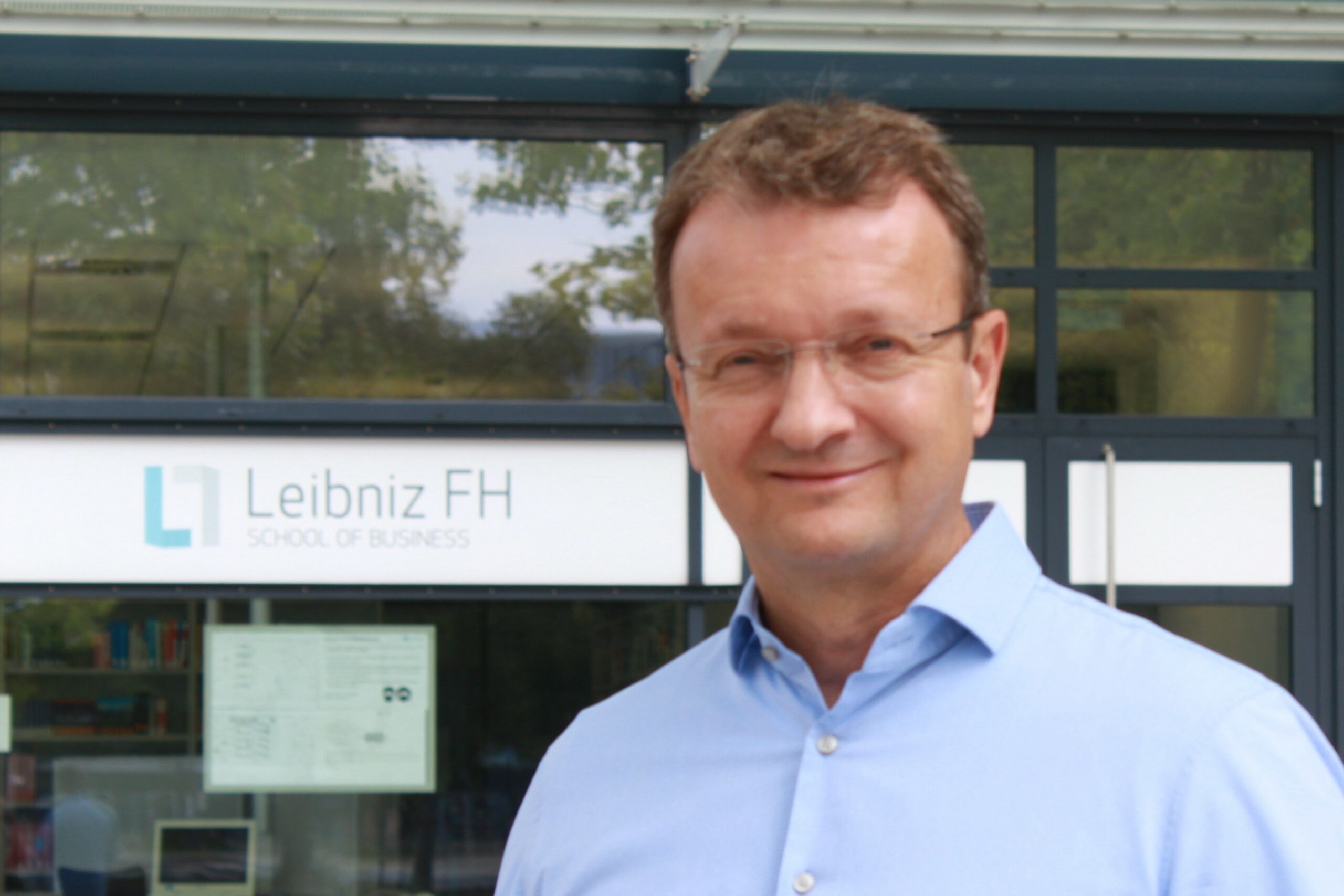
Mark Broere is Professor of General Business Administration with specialization in Investment and Finance at Leibniz University of Applied Sciences. He serves as Head of the Business Analytics & Data Engineering program and part-time Program Manager for Business Administration. Additional roles include Senate membership, Alumni Representation, course planning/instruction, student support, and participation in university committees. His research focuses on investment strategy, financial modeling, and business analytics, with recent publications exploring data science applications in finance. Articles demonstrate expertise in cash flow analysis, corporate governance, and risk management methodologies. Broere maintains active industry engagement through knowledge transfer activities and corporate partnerships.
Sam L. Tiras is an Associate Professor of Accounting at Indiana University's Kelley School of Business and serves as Chairperson of Graduate Accounting Programs. With prior roles including endowed professorships at KPMG and departmental leadership at Louisiana State University, his research focuses on auditing effectiveness, financial reporting quality, and corporate governance mechanisms. His key research domains include: Audit committee functionality and fraud detection Economic impacts on earnings management Information asymmetry in financial markets Honors include dual MBA Teaching Excellence Awards and research grants supporting investigations into accounting transparency.
Dr. Sanjay Bapna is an Interim Associate Dean and Professor in the Graves School of Business at Morgan State University, leading the Department of Information Science & Systems. He holds a B.Tech. in Chemical Engineering from IIT Kanpur (1981), an MBA from the University of Iowa (1987), and a Ph.D. in Management Information Systems from the same institution (1992). His research focuses on Business Intelligence, Data Mining, Analytics, Computer Security, and Economic Modeling. He has secured grants from the Department of Transportation and pioneered work in freight industry economic analysis, cybersecurity deterrence, and insider threat modeling. Awards include the 2011 Best Paper Award and multiple recognition from National Decision Sciences Institute and International Association of Computer Information Systems. Recent publications span predictive modeling in healthcare, freight economics, and cybersecurity strategies. He has developed frameworks for CRM analytics, GIS-based crash analysis, and privacy-preserving data mining techniques. Prof. Bapna’s work emphasizes practical applications of technology in transportation safety, STEM diversity initiatives, and organizational trust dynamics. His contributions bridge academia and industry through impactful research in logistics, data systems, and policy-driven solutions.
Dr. Adrian Valencia is a Professor of Accounting at Florida Gulf Coast University's Lutgert College of Business. He holds a Ph.D. in Accounting from Florida State University (2011) and is a Certified Public Accountant (CPA), having achieved the 6th highest CPA exam score in Florida. His professional experience includes auditing at Arthur Andersen and financial accounting roles. Dr. Valencia specializes in audit practices, financial accounting reporting, and fraud examinations. His research focuses on auditing standards, fair value measurements, tax service regulations, and emerging technologies like AI in accounting. Dr. Valencia has published extensively in top accounting journals including Contemporary Accounting Research , Accounting Horizons , and International Journal of Auditing . His work explores topics such as PCAOB policies, audit quality impacts, and managerial opportunism in fair value estimates. Recent studies address AI adoption in accounting professions and the implications of noisy fair value measures on bank capital adequacy. Education: Ph.D. in Accounting, Florida State University (2011) His research awards include recognition for his exceptional CPA exam performance. Dr. Valencia teaches courses on financial accounting and fraud detection, emphasizing practical applications of theoretical concepts. His work bridges academic research with industry practice, contributing to both professional standards and educational methodologies. Key research trends show a focus on regulatory compliance, auditor independence challenges, and the evolving role of technology in accounting. He has collaborated on studies about audit partner accountability mandates and the economic implications of convertible bond accounting practices.
Prof. Gebhard Hafer is a Professor of Logistics and Supply Chain Management at bbw Hochschule - University of Applied Sciences in Berlin. From 2012 to 2024, he served as Rector of the institution. His professional background includes roles such as Director of Central and Eastern Europe/GUS at Deutsche Bahn AG (2007–2012) and Division Manager at DE-Consult GmbH (1999–2006). He holds a Dipl.-Ing. in Engineering Management from TU Berlin (1993) and a Dr.-Ing. from BTU Cottbus (1999). His research focuses on logistics systems, intermodal transportation, and sustainable supply chains. Research interests include advanced logistics informatics, intermodal connectivity, and crisis-driven infrastructure investment strategies. He has contributed to projects such as the PRILESIE Multimodal Logistics Terminal and studies on textile recycling logistics. His work bridges academic research with practical applications in public transport and industrial engineering. Prof. Hafer has advised on regional projects in Brandenburg and participated in international initiatives like the Mobility Initiative in Berlin-Brandenburg. His publications span topics from fraud management in e-commerce logistics to the role of railways in Euro-Asian corridors.
Associate Professor Ayon Chakraborty holds a position in Engineering Project Management at Federation University Australia’s Institute of Innovation, Science and Sustainability (IISS). Previously, he served as Associate Professor at Indian Institute of Management Tiruchirappalli and held a Post-Doctoral Research Fellowship at Queensland University of Technology. His expertise spans Quality Management methodologies (Lean, Six Sigma), Sustainable Supply Chains, Circular Economy practices, and Healthcare Operations. He leads international collaborations like the Erasmus+ and GCRF-funded projects on SME sustainability and wellbeing with Aston University (UK). Education: Ph.D. in Industrial & Systems Engineering (National University of Singapore, 2010); M.Eng. (Birla Institute of Technology, 2000); B.Eng. (University of Rajasthan, 1998). He coordinates Engineering Project Management programs and serves on editorial boards for journals such as International Journal of Lean Six Sigma and International Journal of Supply Chain Management . Research focuses on enhancing SME competitiveness through sustainability, circular economy adoption, and healthcare process optimization. Notable projects include cost optimization studies for Kauvery Hospital and OEM-driven sustainability frameworks for SMEs. His publications span over 30 refereed journal articles and conference papers, addressing topics like Lean in healthcare, cross-cultural service management, and Six Sigma frameworks. Teaching includes courses on Operations Management, Quality Analytics, and Circular Economy. He designs Management Development Programs for executives in Singapore, Australia, and India, emphasizing practical implementation of quality tools and sustainable practices. Current research priorities include advancing MSME sustainability through circular economy principles and technology adoption in healthcare operations. He actively seeks collaborators for projects on SMEs’ social wellbeing and OEM roles in sustainable manufacturing.
Professor Manoj Dora holds the position of Professor in Sustainable Production and Consumption at Anglia Ruskin University (ARU), leading the Centre for Intelligent Supply Chains. His work bridges operations management, environmental science, and economics to drive sustainable practices in supply chains and circular economies. Specializing in food systems, Industry 4.0 technologies, and participatory research methods, his research emphasizes reducing waste and enhancing resource efficiency through interdisciplinary collaboration. Background: Manoj earned a PhD from Ghent University (2014) and a Master’s in Economics from Vanderbilt University (2009). As a researcher, he prioritizes multi-stakeholder partnerships, addressing global challenges in the UK, Asia, Latin America, and Africa. He has been recognized for excellence in teaching and student mentorship, including student-led awards for lecturing and supervision. Research focuses on circular economy frameworks, lean management in agriculture, and leveraging data science for sustainable supply chains. Notable projects include the Wohl Clean Growth Alliance (2023–2024) and CGIAR’s Transforming Agri-Food Systems initiative (2022–2024). His publications span journals like IEEE Transactions on Engineering Management and Transportation Research Part C, emphasizing topics such as food loss reduction, blockchain in supply chains, and AI adoption challenges. Grants & Collaborations: Over £5 million in funding secured, including UKRI-BBSRC’s Food Systems CDT and Newton Fund grants for humanitarian logistics and food fraud solutions. Current projects include a circular food economy pathway for Israel/UK and blockchain applications in Brazil. Labs/Teams: Directs the Centre for Intelligent Supply Chains, focusing on innovation in food systems, Industry 4.0 integration, and policy-relevant research. Collaborates with global partners to translate findings into actionable strategies for businesses and policymakers.
Alexander Yuriev is an Assistant Professor in the Department of Human Resources Management at HEC Montréal. His research focuses on green human resource management, organizational citizenship behaviors, and sustainable development. He holds a PhD in Management from Université Laval, an MA in Standardization, Social Regulation and Sustainable Development from the University of Geneva, and a BSc in Economics from G.V. Plekhanov Russian University of Economics. His current research explores how human resource practices can drive environmental and social responsibility, particularly through voluntary employee behaviors and cross-cultural management comparisons. Recent projects include analyzing organizational carbon neutrality strategies, climate risk management in insurance firms, and sustainability governance in boardrooms. Key publications include studies on employee-driven pro-environmental innovation in public organizations, systematic reviews of green workplace behaviors, and analyses of sustainability scandals like Dieselgate. He teaches courses such as 'Gestion des ressources humaines' and 'Pratiques de gestion des ressources humaines et mobilisation' at HEC Montréal. His work emphasizes practical applications of sustainability in organizational settings, with a focus on systemic change and ethical leadership. No specific scientific awards are listed, though his contributions highlight emerging trends in sustainable HR practices and ESG integration.
Dr. Sean Vanatta is a Senior Lecturer in Financial History and Policy at the University of Glasgow's Department of Political & International Studies. His research focuses on the intersection of democracy, finance, and regulatory frameworks in modern America. Key works include Plastic Capitalism (2024), analyzing credit card-driven financialization, and Private Finance, Public Power (2025), co-authored with Peter Conti-Brown, which traces bank supervision history. He has held prestigious fellowships, including at Princeton’s Julis-Robinowitz Center. Vanatta’s education includes a PhD from Princeton (2018) and degrees from the University of Georgia. Before Glasgow, he taught at NYU’s Gallatin School and Princeton’s Writing Program. His research projects include the role of pensions in reshaping financial markets and global interwar banking networks. He also contributes to policy discussions through grants like the 'Political Economy Futures Forum' (2024-2027). His awards include the National Endowment for the Humanities Hagley Fellowship and the John E. Rovensky Fellowship. He advises on topics in modern U.S. history, financial history, and capitalism. Teaching includes modules like 'Globalization of International Banking and Finance' and 'Money and Finance in U.S. Society.'