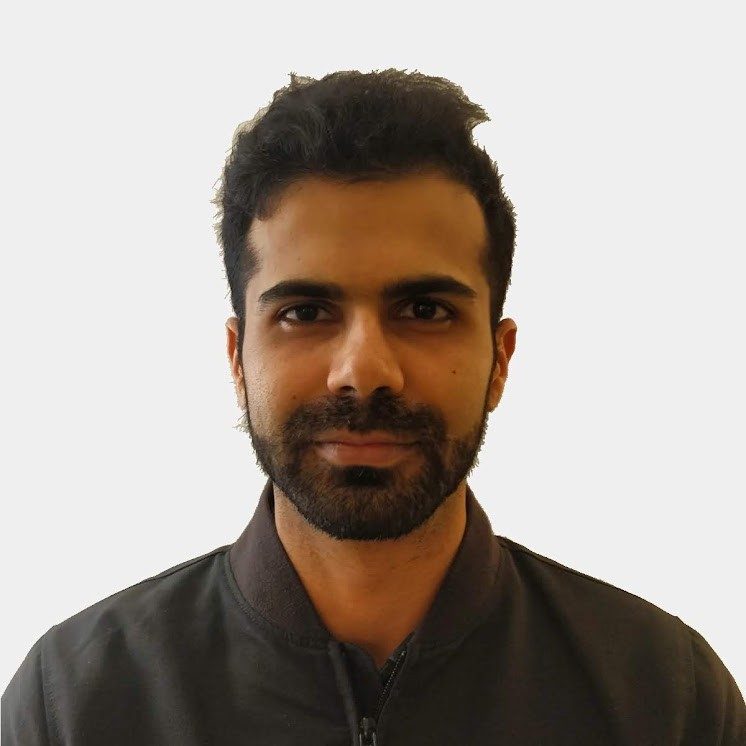
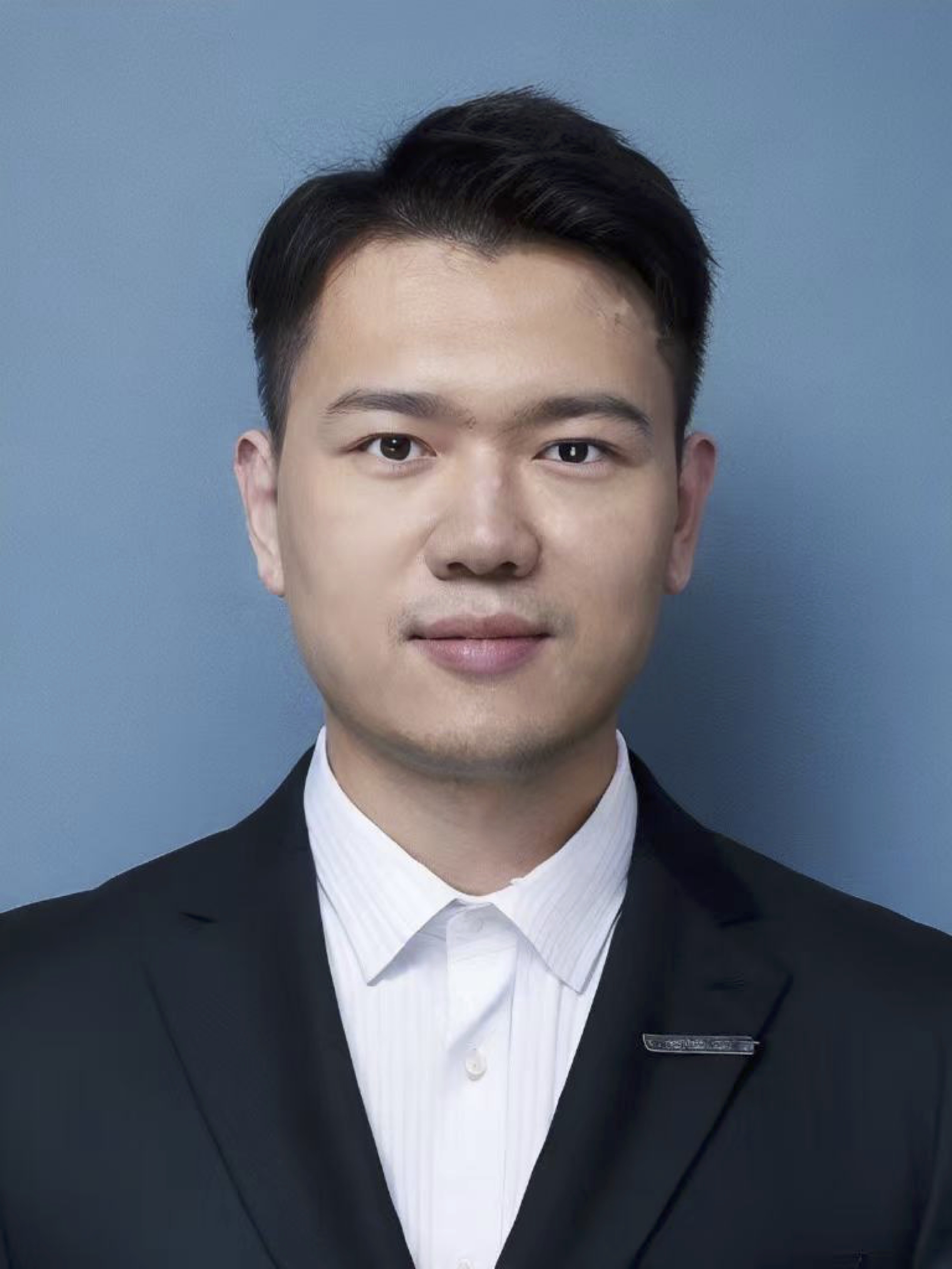
Dr. Arpit Dua is an Assistant Professor in the Department of Physics at Virginia Tech. Previously, he held positions including a joint Simons-IQIM postdoc at Caltech under Xie Chen and a PhD at Yale University under Meng Cheng and Liang Jiang. His research focuses on theoretical quantum information systems, with emphasis on quantum error correction, topological order, and integrating machine learning principles into physics frameworks. Education: PhD in Physics from Yale University, Postdoctoral research at Caltech. Research Interests: Quantum error correction (developing novel codes using conventional and machine learning methods), thermalization in topological systems, self-correcting models, and applying physics-based insights to AI architecture design. His current projects explore fault-tolerant protocols, fracton orders, and Floquet codes. Publications reflect contributions to topological codes, subsystem symmetries, and fracton physics. His work bridges quantum information theory with condensed matter physics.
Shiyu Su is an Assistant Professor in the Department of Electrical and Computer Engineering at the University of Waterloo. His research focuses on high-speed data converters, wireless transceivers, digital phase-locked loops (PLL), and AI-assisted analog/mixed-signal design automation. He holds a Ph.D. from the University of Southern California (2019) and teaches courses such as ECE 340 (Electronic Circuits 2) and ECE 432 (Radio Frequency Integrated Devices and Circuits). Education: B.S. from Beijing University of Post and Telecommunication (China) and Queen Mary, University of London (UK), 2011; M.S. and Ph.D. from USC, 2013 and 2019, all in electrical engineering. Research Interests: High-speed ADCs/DACs RF/mm-wave transceivers Time-approximation filters (TAF) Analog/mixed-signal design automation Memristor-based computing Biomedical interfaces Key Awards: IEEE SSCS Predoctoral Achievement Award (2017–2018) Best Student Paper Award at IEEE RFIC (2022) Ming Hsieh Institute Scholar (2019–2020) Lab Focus: The Shiyu Su Lab develops integrated circuits for communications, sensing, and computing, with a focus on AI-driven methodologies and digital-analog co-design. Collaborations include work with Prof. Wei Wu (USC) on memristor-based systems.
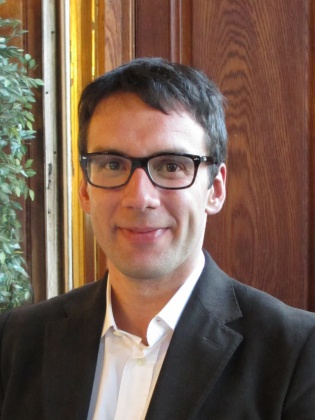
Alexei Kitaev is the Ronald and Maxine Linde Professor of Theoretical Physics and Mathematics at the California Institute of Technology (Caltech). His research focuses on quantum computation, topological quantum phases, anyons, topological insulators and superconductors, and the black hole information paradox. He has pioneered the concept of topological quantum computation, where quantum information is protected through topological properties of many-body systems. His recent publications explore quantum error correction, scrambling dynamics, and holographic principles in SYK-like models, reflecting his interdisciplinary impact on quantum physics, computer science, and condensed matter. His work on the Sachdev-Ye-Kitaev model has advanced understanding of quantum chaos and gravitational phenomena. Kitaev has received numerous accolades, including the MacArthur Award (2008), Breakthrough Prize in Fundamental Physics (2012), Dirac Medal (2015), and Oliver Buckley Condensed Matter Prize (2017). He has taught advanced courses such as 'Quantum Computation' and 'Advanced Condensed-Matter Physics' at Caltech. Scientific Awards: MacArthur Award (2008) Breakthrough Prize in Fundamental Physics (2012) Dirac Medal (2015) Oliver Buckley Condensed Matter Prize (2017)
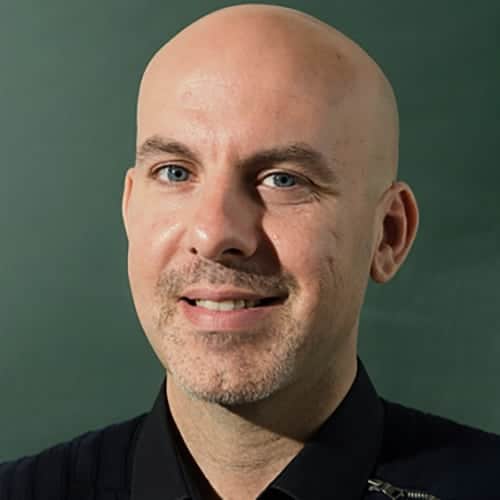
Yuan Cao is an Assistant Professor of Electrical Engineering and Computer Science at the University of California, Berkeley, since July 2024. He completed his BSc in Applied Physics at the University of Science and Technology of China (2014), followed by an MS (2016) and PhD (2020) in Electrical Engineering at MIT. Before joining Berkeley, he was a Junior Fellow at Harvard University (2021–2024). His research focuses on the electrical properties of low-dimensional materials and their applications via nanotechnology, including MEMS. Notable achievements include pioneering work on twisted graphene superconductivity, recognized as a Nature’s 10 highlight (2018) and Physics Breakthrough of the Year . He has received awards such as the Sackler Prize in Physics (2020), McMillan Award (2021), and NSF CAREER Award (2025). His research integrates experimental physics, nanofabrication, and low-temperature transport to explore novel quantum phenomena in 2D materials. Recent breakthroughs include the MEGA2D platform, an on-chip MEMS system enabling precise manipulation of 2D materials. Collaborations with Prof. Nguyen secured a $1M DARPA NIMBUS contract, and his NSF CAREER award funds studies on reconfigurable graphene superlattices. Education: PhD, Electrical Engineering, MIT (2020) MS, Electrical Engineering, MIT (2016) BSc, Applied Physics, USTC (2014) Awards: NSF CAREER Award (2025) Sackler Prize in Physics (2020) McMillan Award (2021) TIME 100 Next (2019) Grants & Funding: $1M DARPA NIMBUS Program Contract (2023) $810K NSF CAREER Award (2025) Prof. Cao’s lab actively recruits motivated graduate students and postdocs with expertise in 2D materials, MEMS, nanofabrication, or low-temperature physics. The lab is part of UC Berkeley’s College of Engineering, fostering interdisciplinary research at the forefront of quantum and nanoscale systems.
Assoc Prof Ng Teng Yong is an Associate Professor at the School of Mechanical & Aerospace Engineering (NTU), specializing in numerical modeling and simulation. With a background as Research Manager at A*STAR Institute of High Performance Computing, his work spans materials science, nanotechnology, and aerospace engineering. Current focus on graphene-based desalination membranes Expertise in molecular dynamics simulations Investigates nanoscale fluid mechanics and structural dynamics Recent publications highlight advancements in energy-efficient electrodialysis, smart robotics, and nonlinear vibration analysis. His interdisciplinary approach integrates computational methods with experimental validation in additive manufacturing and soft material mechanics.
David Goldhaber-Gordon is a Professor in the Department of Physics at Stanford University, specializing in nanoscale electron behavior and quantum effects. His research spans nanofabrication, materials growth, low-temperature measurements, and scanning probe techniques, focusing on materials like graphene, carbon nanotubes, and topological insulators. Harvard AB in Physics (1994) Harvard AM in History of Science (1994) MIT PhD in Physics (1999) His work explores electron organization and flow in nanoscale systems, emphasizing quantum effects and interactions. Research areas include twisted bilayer graphene, helical trilayer platforms, and topological insulator applications for quantum devices and energy technologies. Recent publications focus on strain effects in twisted graphene, moiré superlattice engineering, and quantum anomalous Hall integration. Themes include topological phases, correlated insulators, and metrology advancements. Co-founder and Director, Center for Probing the Nanoscale (NSF Center) Junior Fellow, Harvard Society of Fellows He teaches advanced physics labs, independent research, and dissertation courses at Stanford. His group collaborates with materials scientists, engineers, and chemists to develop novel electronic applications.
Jin Ma is a Professor in the Department of Mathematics at the University of Southern California (USC), where he has served since 2007. He previously held professorships at Purdue University (1994–2008). His research focuses on stochastic analysis, stochastic differential equations, mathematical finance, and control theory. He directs USC's Mathematical Finance Program and serves on editorial boards for journals like Probability, Uncertainty and Quantitative Risk and SIAM Journal on Control and Optimization . Ma received his Ph.D. in Mathematics from the University of Minnesota (1992) and M.S./B.S. in Applied Mathematics from Fudan University (1985/1982). His work bridges theoretical stochastic analysis and applied domains like finance and insurance, with notable contributions to forward-backward SDEs and mean-field games. Research Highlights: Developed frameworks for stochastic control and backward SDEs in financial and insurance contexts. Advanced mean-field game models for limit order book dynamics and equilibrium analysis. Explored set-valued stochastic differential equations and their applications in risk management. Grants & Advising: Advised numerous graduate students in stochastic processes and mathematical finance. Research supported by NSF grants and industry collaborations.
Dr. Majid Pahlevani is an Assistant Professor at the Department of Electrical and Computer Engineering, Queen's University, affiliated with the Smith School of Engineering. He holds a Ph.D. from Queen's University (2012) and has prior roles as an Assistant Professor at the University of Calgary (2016–2019) and Chief R&D Engineer/VP of Technology at SPARQ Systems, Inc. (2011–2016). His research focuses on power electronics, renewable energy systems, smart grids, and energy storage, with a lab environment emphasizing interdisciplinary collaboration. He has authored over 130 publications, holds 50 U.S. patents, and serves as an Associate Editor for the IEEE Journal of Emerging and Selected Topics in Power Electronics. Education: Ph.D. (2012) – Queen's University; B.Sc./M.Sc. (2002) – Isfahan University of Technology. Research Interests: Power Electronics Technology, Renewable Energy Systems, Micro-Grids, Smart-Grids, Electric Vehicles, Energy Storage Systems, Solar Technology, LED Technology. His lab, ePOWER Lab, engages in industrial projects across these domains, fostering teamwork and cross-disciplinary innovation. Scientific Awards: Includes the Early Research Excellence Award (Alberta), Research Achievement Award (University of Calgary), Teaching Achievement Award, and IEEE Canada's Research Excellence Award. Current Supervision: Postdoctoral Fellows Laleh Saleh Ghadimi, Sergey Dayneko, and Pavel Linkov (2022). He leads the ePOWER Lab, collaborating with industry partners like Freescale Semiconductor and SPARQ Systems. Affiliations: Member of the IEEE Power Electronics Society and the Queen's Centre for Energy and Power Electronics Research.
Anne Berit C. Samuelsen serves as Associate Professor at the Department of Pharmacy, University of Oslo, where she also holds the position of Head of Education. Her academic foundation includes a Cand.pharm. degree and Dr.scient. doctorate, establishing her expertise in pharmaceutical sciences. Her research centers on polysaccharides from natural sources—particularly higher plants, cereals, and fungi (Basidiomycota)—with specialized focus on β-glucans. Key interests include carbohydrate chemistry, pharmacognosy, and the development of biopolymer-based pharmaceutical applications. Her work bridges fundamental structural characterization with practical drug delivery solutions, notably through liposome coating technologies and immunomodulatory compound development. Recent publications reveal a strong trajectory in fungal polysaccharide research, particularly with Pleurotus eryngii and Albatrellus ovinus species. Her team employs advanced techniques like diffusion-ordered NMR spectroscopy to analyze polysaccharide structures while investigating biological activities related to immune receptor binding (Dectin-1, Toll-like receptors) and therapeutic applications. This work demonstrates consistent output in high-impact journals including Carbohydrate Polymers and ACS Applied Bio Materials . She actively contributes to academic instruction through courses such as FARM1150 (Pharmaceutically Oriented Biochemistry), FARM3100 (Pharmacognosy), and FARM5200 (Use of Biopolymers in Pharmaceuticals). Her leadership extends to the Bioactive Natural Substances and Health Effects (BioNatH) research group and the Glyconor Consortium, where she investigates natural product applications for health improvement.
Neelakantan R. Krishnaswami is a Professor of Computer Science at the University of Cambridge's Computer Laboratory , and a Fellow of Trinity College . His research focuses on the intersection of program verification, programming language design, and foundational topics like type theory and semantics. His work spans areas such as refinement types, parser design, separation logic for systems software, and the semantics of reactive programming. Notable contributions include the Datafun language for higher-order Datalog and the λert type theory for explicit refinement types. He has also developed foundational frameworks for verifying imperative programs using advanced type systems and logical relations. Key publications include 'Explicit Refinement Types' (ICFP 2023), 'flap: A Deterministic Parser with Fused Lexing' (PLDI 2023), and 'CN: Verifying Systems C Code' (POPL 2023). His work frequently addresses challenges in efficiency, correctness, and modularity for both functional and imperative systems. His awards include Distinguished Paper Awards at PLDI 2019 and POPL 2020. His research integrates theoretical rigor with practical tooling, exemplified by contributions to languages like Coq, Lean, and Haskell.
Daniele Venturi is a Professor of Applied Mathematics at the University of California, Santa Cruz, where he has been faculty since 2015, rising from Assistant Professor to full Professor by 2021. Previously, he was a Research Assistant Professor at Brown University from 2010-2015. His academic journey began at the University of Bologna, where he earned both his combined B.S./Sc.M. in Mechanical Engineering (2002) and Ph.D. in Applied Physics with a focus on thermo-fluid dynamics (2006). University of Bologna: B.S./Sc.M. Mechanical Engineering (2002), Ph.D. Applied Physics (2006) Brown University: Research Assistant Professor (2010-2015) UC Santa Cruz: Assistant to Associate to Full Professor (2015-present) Professor Venturi's research spans multiple cutting-edge areas in computational mathematics. His primary interests include stochastic modeling and uncertainty quantification, numerical tensor methods for high-dimensional PDEs, data-driven modeling approaches, approximation of functional-differential equations, and theoretical/computational fluid dynamics. His work bridges theoretical mathematical frameworks with practical computational implementations, particularly focusing on overcoming the curse of dimensionality in complex systems. His recent research has been heavily focused on hierarchical tensor methods for solving high-dimensional partial differential equations. The analysis of his publication record reveals a strong emphasis on developing computational frameworks that address high-dimensional challenges in uncertainty quantification and model reduction. His work frequently intersects machine learning techniques with traditional numerical methods, particularly in developing physics-informed neural networks and multifidelity modeling approaches. A consistent theme across his publications is the development of mathematical frameworks that maintain computational tractability while preserving physical fidelity in complex systems. Professor Venturi has secured substantial research funding from major agencies including the Air Force Office of Scientific Research (AFOSR), Department of Energy (DoE), National Science Foundation (NSF), Army Research Office (ARO), and Defense Advanced Research Projects Agency (DARPA). His most significant current grant is a 2024-2029 AFOSR MURI award totaling $7.5M as co-PI for 'Tensor Network for simulating kinetic systems.' 2024-2029: AFOSR MURI, $7.5M (co-PI) 2023-2027: DoE, $3.8M (co-PI) 2023-2026: AFOSR, $2.5M (co-PI) 2020-2025: NSF TRIPODS, $2.3M (co-PI) At UC Santa Cruz, Venturi teaches a range of courses including Fundamentals of Uncertainty Quantification, Applied Dynamical Systems, Nonlinear Dynamical Systems, and Numerical Methods for Differential Equations. His teaching spans both undergraduate and graduate levels, reflecting his expertise across theoretical and computational mathematics. His lecture notes for these courses are publicly available and demonstrate his commitment to pedagogical excellence in complex mathematical subjects.
Alex Arenas is a Full Professor in the Department of Computer Engineering and Mathematics at Universitat Rovira i Virgili (URV), Tarragona, Spain. He is also an External Faculty member at the Complexity Science Hub in Vienna and Chief of Complex Systems Science at the Pacific Northwest National Laboratory, USA. His research spans complex systems, network science, computational epidemiology, and multilayer dynamics, with applications in public health, neuroscience, and social systems. Research Interests: His work focuses on the physics of multilayer networked systems, particularly the interplay between structure and function in complex networks. Key areas include synchronization, epidemic modeling, network medicine, the physics of the microbiome, and higher-order interactions in spreading processes. He investigates dynamic transitions using functional multilayer frameworks and develops models for real-world systems like urban mobility and misinformation diffusion. The recent articles highlight a strong trend in computational epidemiology, especially post-COVID modeling of vaccination strategies, rebound dynamics, and wastewater surveillance. There is also significant work on synchronization in oscillator networks, chimera states, and higher-order network effects, reflecting a deep engagement with nonlinear dynamics and theoretical network science. Applications span medicine, urban planning, and social systems. Scientific Awards: Fellow, American Physical Society (2018) Fellow, Network Science Society (2020) ICREA Academia (2011, 2017, 2022) Narcís Monturiol Medal (2022) Web Science Trust Test of Time Award (2024) Complex Systems Society Senior Award (2024) Advising and Grants: Arenas has supervised numerous PhD students and postdoctoral researchers, though specific names are not listed. He has been Principal Investigator on 47 research projects, including EU FP7 projects, a James S. McDonnell Foundation grant, and Horizon Europe's CREXDATA project. He has served as an editor for Physical Review E , Journal of Complex Networks , and Network Neuroscience , and has reviewed for major funding agencies including ERC, MINECO, and international bodies. Labs and Teams: He leads the Alephsys Lab at URV, which develops tools like Radatools for network analysis and community detection. His team focuses on interdisciplinary modeling of real-world complex systems using data-driven and theoretical approaches.
Dr. Gary Glover is a Professor of Radiology (Radiological Sciences Lab) at Stanford University , with courtesy appointments in Psychology and Electrical Engineering. His work focuses on the physics and mathematics of MRI, particularly rapid scanning methods using spiral k-space trajectories for functional brain imaging and multimodal neuroimaging (fMRI/EEG/fPET/fNIRS) combined with neuromodulation techniques like TMS and transcranial ultrasound. Academic Appointments: Radiology, Psychology, Electrical Engineering Professional Affiliations: Bio-X, Stanford Cancer Institute, Wu Tsai Neurosciences Institute Research Interests include: Development of blood oxygen level-dependent (BOLD) and viscoelastic contrast in MRI Functional MR Elastography for brain activation mapping Optimization of MR-ARFI for transcranial ultrasound guidance Automated spinal cord segmentation (EPISeg) using machine learning Scientific Awards : National Academy of Engineering (2013) Gold Medal, ISMRM (2000) Steinmetz Award, General Electric (1985) Lauterbur Lecture, ISMRM (2018) Recent Publications analyze: Fast fMRI sampling and spurious signal correction Dissociated patterns in default mode network anti-correlations Neural correlates of collaborative behavior in triadic fMRI Salience network contributions to depression pathophysiology
Kamal Al Haddad is a Lecturer in the Department of Electrical Engineering at École de technologie supérieure (ÉTS). He holds a Doctorate from INTP, Toulouse, and advanced degrees from UQTR. His research focuses on power electronics, renewable energy integration, and smart grid technologies. He leads the GREPCI research group, specializing in Power Electronics and Industrial Control. Education: B.Eng., M.Sc.A. (UQTR), Doctorate (INTP, Toulouse). Research interests span energy conversion, industrial electronics, power quality, and electromagnetic interference. He emphasizes sustainable energy solutions, electric traction systems, and high-efficiency power sources. His work includes developing advanced power electronic converters and grid stability solutions. Recent articles highlight advancements in modular converters for STATCOM, AI-driven fault detection in hydrogenerators, and renewable energy policy frameworks. He has received notable awards, including the 2014 IEEE Eugene Mittelmann Prize and Fellowships from IEEE and other institutions. Supervised over 60 students, including doctoral theses on topics like hydrogenerator diagnostics, EV charging systems, and renewable energy integration. His research also involves real-time simulation of power systems and FPGA-based implementations. Labs/Teams: GREPCI – Power Electronics and Industrial Control Research Group, leading projects on smart grids and energy efficiency.
Peng Zhou is an Assistant Professor at the School of Advanced Engineering, The Great Bay University , and the Principal Investigator of the Embodied Manipulation Intelligence (EMAIL) Robotics Lab . His research integrates robotics, machine learning, and computer vision, with a strong focus on deformable object manipulation, robot perception, and task-motion planning. Education: Ph.D. in Robotics, The Hong Kong Polytechnic University (Supervised by Dr. David Navarro-Alarcon) Postdoctoral Research Fellow, The University of Hong Kong (Advised by Dr. Pan Jia) Exchange Ph.D. Student, KTH Royal Institute of Technology (Supervised by Prof. Danica Kragic) Research Interests: Dr. Zhou's work spans robotics , machine learning , and computer vision , with specialized expertise in deformable object manipulation , robot perception and learning , and task and motion planning . His lab, EMAIL, pioneers solutions for robotic manipulation of soft and deformable materials. Scientific Awards & Honors: 2024 : Track 3 Champion, Zhuhai International Dexterous Manipulation Challenge 2023 : IEEE R10 Outstanding Volunteer Award 2022 : Outstanding Young Researcher Award, National Engineering Research Center 2022 : Best AI Implementation Award, Hong Kong AI Open Competition 2022 : IEEE MGA Young Professional Achievement Award Editorial & Leadership Roles: Dr. Zhou serves as an Associate Editor for IEEE Robotics and Automation Letters and has organized key workshops like the IROS 2025 Workshop on Contact and Impact-aware Manipulation . He is also a Guest Editor for special issues in Electronics and Frontiers in Robotics and AI .