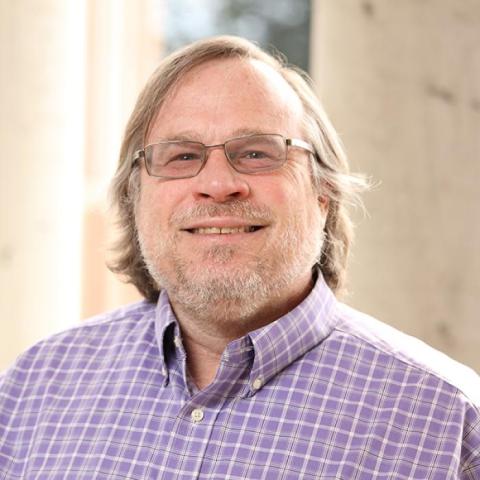
Professor Anders C. Hansen is a mathematician at the University of Cambridge and University of Oslo, leading the Applied Functional and Harmonic Analysis group. His work bridges functional analysis, artificial intelligence, and computational mathematics, focusing on the Solvability Complexity Index (SCI) hierarchy and stability issues in deep learning. He has held prestigious fellowships, including a Royal Society University Research Fellowship and Peterhouse Bye-Fellowship. Educated at the University of Cambridge, UC Berkeley, and the Norwegian University of Science and Technology Developed groundbreaking theories in compressed sensing and deep learning, revealing algorithmic instability paradoxes Organized workshops on computational mathematics and AI interpretability His research explores the SCI hierarchy , exposing computational barriers in AI, quantum mechanics, and inverse problems. Key projects include Smale’s 18th problem and analyzing neural network stability. His work has transformed understanding of compressed sensing, particularly in medical imaging. Recent scientific awards include the Whitehead Prize (2019), IMA Prize (2018), and Leverhulme Prize (2017). Collaborations span institutions like Caltech, MIT, and the University of Vienna. As an educator, he teaches NST Part IA Mathematical Methods , Part II Numerical Analysis , and a Part III course on Compressed Sensing . His group has mentored 17 PhD and postdoctoral researchers since 2012.
Du Changwen is a Researcher (Professor) at the Nanjing Institute of Soil Science, Chinese Academy of Sciences, serving as Deputy Director of the National Engineering Laboratory for Soil Nutrient Management. He supervises doctoral and master's students in soil science and agricultural technology development. His academic journey includes: Bachelor's degree from Huazhong Agricultural University's College of Resources and Environmental Science (1997) Master's degree from Huazhong Agricultural University's Trace Element Laboratory (2000) PhD from Nanjing Institute of Soil Science, Chinese Academy of Sciences (joint program with Technion - Israel Institute of Technology) (2003) Dr. Du's pioneering research focuses on precision fertilization technologies, particularly polymer-coated controlled-release fertilizers developed through model membrane and water-based reaction film-forming techniques. His work integrates Fourier Transform Infrared spectroscopy (ATR and PAS modes) with engineering mathematics to monitor nutrient release dynamics, soil chemistry processes, and plant nutrition in real-time. This interdisciplinary approach bridges agricultural chemistry, materials science, and environmental engineering to optimize fertilizer efficiency while minimizing ecological impact. Analysis of his 2015-2017 publications reveals a consistent emphasis on spectroscopic methods for soil-plant system analysis, with dominant themes in controlled-release fertilizer development, soil organic matter characterization, and in-situ nutrient monitoring. His work demonstrates strong cross-disciplinary integration between agricultural technology, analytical chemistry, and environmental science. His scientific recognition includes: Special Award of the First China Agricultural Science and Technology Innovation and Entrepreneurship Competition First Prize of Jiangsu Science and Technology Award First Jiangsu Youth Entrepreneurship Award Second Prize of Chinese Academy of Sciences Science and Technology Contribution Award First Prize of China Agricultural Science and Technology Award Dr. Du has secured major research funding including National Natural Science Foundation projects (key, general, youth), National '973' Basic Research Program, '13th Five-Year' R&D Plan sub-projects, '863' High-tech Program sub-projects, and Jiangsu Provincial Science and Technology Support Plan initiatives. His leadership in the National Engineering Laboratory for Soil Nutrient Management drives innovation in fertilizer technology, with significant outputs including 198 academic papers (89 SCI, 35 EI), 6 monographs, 1 international patent, 8 national patents, and 2 software copyrights. His laboratory specializes in advanced spectral analysis of soil-plant systems, utilizing FTIR-ATR and FTIR-PAS technologies for real-time monitoring of nutrient dynamics and polymer membrane reactions. Current research focuses on next-generation controlled-release fertilizers, machine learning-enhanced spectral analysis, and precision nutrient management systems for sustainable agriculture.
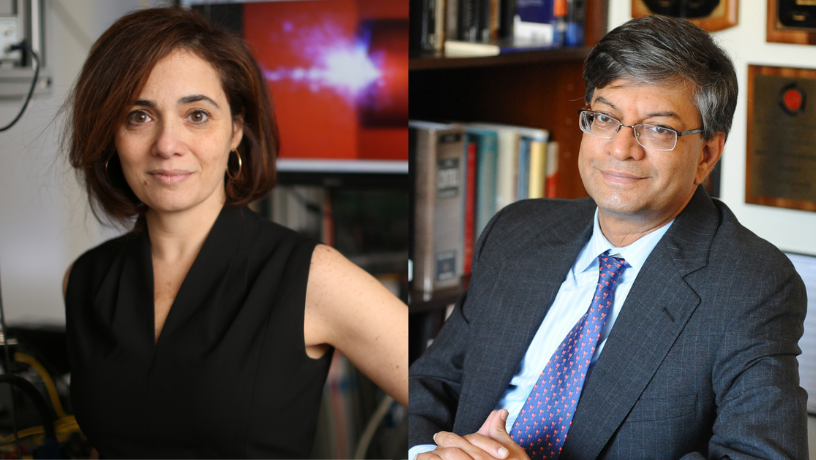
Michal Lipson serves as the Eugene Higgins Professor of Electrical Engineering and Professor of Applied Physics at Columbia University's Fu Foundation School of Engineering and Applied Science. Elected to both the National Academy of Engineering and National Academy of Sciences, she pioneered critical building blocks in silicon photonics that have transformed the field, with over 50,000 related publications annually. Her research has generated more than 250 scientific publications and 45 issued patents. Lipson's research focuses on nanophotonics and silicon photonics, where she demonstrated the ability to tailor electro-optic properties of silicon in landmark 2004 and 2005 Nature papers. Her work has enabled the development of photonic devices and circuits that now form the foundation of over 1,000 papers published yearly. She investigates novel optical phenomena while developing practical applications that address major bottlenecks in microelectronics. Her research spans fundamental physics to practical device implementation, with particular emphasis on integrated photonic systems. Analysis of her recent publications reveals a strategic expansion from foundational silicon photonics into emerging applications including quantum information processing, machine learning acceleration, biomedical sensing, and topological photonics. While maintaining core expertise in silicon-based devices, her work increasingly incorporates 2D materials, heterogeneous integration, and novel optical phenomena to push performance boundaries. The research demonstrates consistent progression from fundamental device physics to system-level implementations with practical applications. National Academy of Engineering (2025) National Academy of Sciences MacArthur Fellowship Blavatnik Award Optica's R.W. Wood Prize IEEE Photonics Award John Tyndall Award NAS Comstock Prize in Physics Thomson Reuters Top 1% Highly Cited Researcher (annually since 2014) Professor Lipson has mentored an exceptional research group, graduating 40 PhD students and 2 MS students, with numerous postdocs and visiting researchers. Her alumni occupy prominent positions including professorships at major universities (Rochester, Ottawa, UNICAMP, Johns Hopkins), leadership roles at Intel, Bell Labs, and startups she co-founded (HyperLight, Voyant Photonics). Her laboratory has received substantial research funding supporting cutting-edge work in nanofabrication, optical characterization, and device development. Current research directions include quantum photonics, AI-accelerated optical systems, and novel materials integration. The Lipson Research Group operates state-of-the-art facilities for nanophotonic device design, fabrication, and characterization. The team comprises principal investigators, postdoctoral researchers, PhD students, and administrative staff working collaboratively across disciplines including electrical engineering, materials science, physics, and applied physics. The group maintains strong industry partnerships while pursuing fundamental scientific advances in light-matter interactions at the nanoscale.
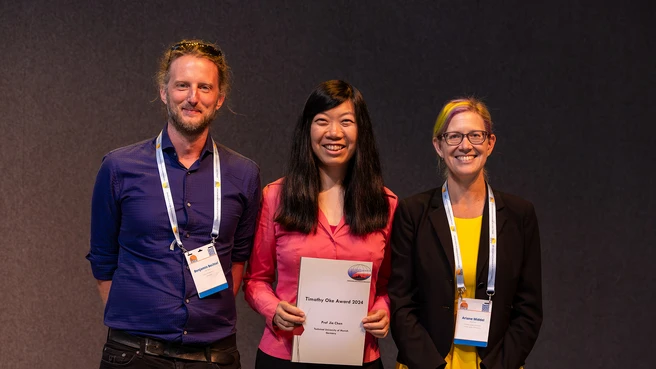
Professor Jia Chen is a Professor of Environmental Sensing and Modeling at the Technical University of Munich (TUM), holding positions in both the TUM School of Computation, Information and Technology (CIT) and the Department of Electrical and Computer Engineering, as well as the Department of Civil, Geo and Environmental Engineering. She also maintains an affiliation as an Associate at Harvard University. Her pioneering work focuses on developing novel optical sensors and atmospheric models to monitor and quantify greenhouse gas emissions in urban environments. Professor Chen's most significant contribution is the development of the differential column measurement method and the establishment of MUCCnet, the world's first permanent urban column sensor network. This groundbreaking work enables continuous, city-wide monitoring of greenhouse gases. Her research team has made notable discoveries, including quantifying methane emissions from events like the Munich Oktoberfest and identifying previously underestimated urban emission sources. Her research spans atmospheric science, environmental engineering, and climate change mitigation, with particular emphasis on: Urban greenhouse gas monitoring systems Advanced atmospheric modeling techniques Sensor network development for environmental monitoring Integration of machine learning with emission quantification Urban air quality assessment methodologies Professor Chen has received numerous prestigious awards including: Timothy Oke Award (2024) for original research in urban climatology ERC Consolidator Grant (2022) Arnold Sommerfeld-Award (2021) Germany's "Top 40 under 40" recognition by Capital Magazine (2020) Membership in the Global Young Academy (2021) She leads an extensive research group with numerous PhD students and postdoctoral researchers, and her work is supported by major funding from ERC, EU Horizon 2020, United Nations Environment Programme, NASA, ESA, German Federal Ministry of Education and Research, and German Research Foundation. Professor Chen has authored over 180 publications and 12 patents, with an h-index of 35.
João F. Mano is a Full Professor at the Department of Chemistry, University of Aveiro, and Director of the Doctoral Program on Biotechnology. He leads the COMPASS Research Group and serves as Vice-Director at CICECO - Aveiro Institute of Materials. His academic appointments include Invited Professor at University of Lorraine (France), Visiting Professor at KAIST (South Korea), and Adjunct Professor at Ajou University (South Korea). Education: PhD in Chemistry (1996, Technical University of Lisbon); D.Sc. in Tissue Engineering, Regenerative Medicine and Stem Cells (2012, University of Minho) Research Interests focus on Biomaterials for Regenerative Medicine , integrating Nanotechnology , Microtechnology , and Biofabrication . His group develops Bioinspired Materials using polymer chemistry, Decellularized Extracellular Matrix , and 3D Bioprinting to engineer Cell Microenvironments for therapeutic applications. Recent Publications highlight advancements in Human-Derived Hydrogels , Photopolymerizable Scaffolds , Magneto-Responsive Biomaterials , and Programmable Bioinks . Trends show emphasis on Organ-on-a-Chip integration, Smart Living Materials , and Green Bioprinting methodologies. Scientific Awards include: European Research Council Advanced Grants (2015, 2020) Fellow at IUPAC, European Academy of Sciences, and American Institute of Medical and Biological Engineering ERC Proof of Concept Grants Doctor Honoris Causa from University of Lorraine and Utrecht UNESCO Chair on Biomaterials George Winter Award (European Society for Biomaterials) Supervisions & Collaborations encompass 74+ MSc, 26+ PhD students, and 40+ postdocs. He co-founded METATISSUE and CELLULARIS Biomodels , and serves as Editor-in-Chief of Materials Today Bio .
Brian Møller Andersen is a Professor in Solid State Physics at the Niels Bohr Institute, University of Copenhagen, where he has maintained continuous academic appointments since completing his PhD. His research spans multiple frontiers of condensed matter physics with significant contributions to superconductivity and magnetism. PhD in Theoretical Physics, University of Copenhagen (2001-2003) PhD studies at Stanford University (2000-2001) MSc in Theoretical Physics, University of Copenhagen (1998-2000) International Exchange at UC Berkeley (1997-1998) BSc in Mathematics and Physics, University of Copenhagen (1994-1997) Andersen's primary research focuses on Superconductivity , particularly high-temperature superconductors where magnetism and superconductivity coexist, and Magnetism in novel quantum materials. His work extends to Quantum Transport phenomena, Ultracold Atoms in optical lattices, Topological Insulators , and Strongly Correlated Systems . Recent publications reveal a growing emphasis on altermagnetism, kagome lattice physics, and topological superconductivity, indicating significant evolution in his research trajectory toward emergent quantum phenomena. Analysis of his 15 most recent publications (2024-2025) shows a clear progression into cutting-edge areas: 60% focus on altermagnetism and novel magnetic states, 40% on unconventional superconductivity in topological materials, and 30% examining quantum confinement effects. His work demonstrates increasing interdisciplinary connections between condensed matter theory, materials science, and quantum information science, with frequent collaborations across Europe and the US. Andersen has received significant research support through prestigious fellowships including the Lundbeck Foundation fellowship (Associate Professor level, 2012-2017) and FNU Steno Stipend (Assistant Professor level, 2009-2013), alongside early career support from the Villum Kann Rasmussen Post. Doc. Stipend. His research group at the Niels Bohr Institute focuses on theoretical modeling of quantum materials, particularly computational approaches to understanding competing orders in correlated electron systems. The group maintains strong connections with experimental teams conducting neutron scattering, STM, and ARPES measurements to validate theoretical predictions.
Brooks H. Pate is the William R. Kenan, Jr. Professor of Chemistry at the University of Virginia, Department of Chemistry, within the College of Arts and Sciences. He leads an innovative research laboratory focused on developing and applying broadband rotational spectroscopy for advanced chemical analysis. B.S., University of Virginia, 1987 Ph.D., Princeton University, 1992 NRC Postdoctoral Fellow, National Institute of Standards and Technology (NIST), Gaithersburg, 1992–1993 Dr. Pate’s research centers on molecular rotational spectroscopy , particularly the development of chirped-pulse Fourier transform rotational spectroscopy . His work enables ultra-high-resolution analysis of molecular structure, dynamics, and stereochemistry. Key areas include intramolecular dynamics , molecular clusters (especially water hexamers), and quantitative chiral analysis with applications in pharmaceutical chemistry. His lab’s instruments operate across microwave to mm-wave frequencies, allowing analysis of both small (astrochemical) and large (biomolecular) species. The recent publications demonstrate a strong trend toward real-time, in situ chemical analysis and stereochemical monitoring in synthesis. The research combines experimental spectroscopy with quantum chemical modeling to extract structural and dynamical information. Applications span from fundamental quantum tunneling phenomena in water clusters to industrial process optimization in drug synthesis. Notable scientific awards include: 2016 William F. Meggers Award, The Optical Society UVa Innovator of the Year Multiple publications in Science recognized for groundbreaking impact Dr. Pate actively mentors graduate students and postdoctoral researchers, many of whom are co-authors on high-impact publications. His lab has secured significant research funding, leading to technological innovations that have spun out into a startup company focused on faster molecular analysis. The research is supported by instrumentation development, computational modeling, and strong interdisciplinary collaborations. The Pate Lab is a hub of innovation in physical chemistry, combining cutting-edge spectroscopic techniques with practical applications in pharmaceuticals and astrochemistry. The group operates advanced rotational spectrometers, including cavity-enhanced systems for real-time sampling from reaction flasks, and maintains strong ties with national labs and industry partners.
Michelle Foster is an Associate Professor in the Department of Chemistry at the University of Massachusetts Boston. She joined UMass Boston in 1999 and specializes in experimental physical chemistry with a focus on surface science and nanotechnology. Her research integrates advanced analytical techniques to study chemical processes at complex interfaces. PhD in Chemical Physics, University of Texas at Austin BS in Chemistry (ACS certified), University of Texas at Austin Research Interests: Green/Environmental Chemistry: Surface reactions on metal oxide nanoparticles for heterogeneous catalysis and environmental remediation Materials Science: Design and characterization of core-shell nanomaterials Smart Nanoparticles: Biodegradable liquid metal nanocarriers for cancer therapy Key Techniques: Diffuse Reflectance Infrared Fourier Transform Spectroscopy (DRIFTS), Atomic Force Microscopy (AFM), Raman Spectroscopy Recent Publication Trends: Her work increasingly explores biomedical applications of nanoparticles, particularly in photodynamic cancer therapy, alongside continued environmental chemistry research involving metal oxides. Lab Team: The Foster group employs optical and scanning probe microscopies to investigate interfacial chemical reactions, with student collaborators contributing to studies on nanocatalysts, liquid metal systems, and amyloid fibril dynamics.
Brian D. Gerardot is a Professor at the School of Engineering & Physical Sciences , Heriot-Watt University , where he leads the Quantum Photonics Laboratory within the Institute of Photonics and Quantum Sciences. His research focuses on creating ultra-coherent quantum photonic devices that bridge quantum optics, condensed-matter physics, materials science, and nano-optics. BSc in Materials Science from Purdue University (1998) PhD from UC Santa Barbara (2004) His work explores semiconductor quantum dots and defect centers in diamond, utilizing advanced nano-fabrication techniques to design and characterize photonic structures. Research outputs highlight quantum technologies, entangled imaging, exciton dynamics in 2D materials, and coherence in photon emission systems. Scientific Awards include: Chair in Emerging Technologies (Royal Academy of Engineering, 2018) Wolfson Merit Award (Royal Society, 2018) ERC Consolidator Grant (2018) ERC Starting Grant (2013) Personal Research Fellowship (Royal Society of Edinburgh, 2006-2009) University Research Fellowship (Royal Society, 2009-2017) Challenging Engineering award (2011) He manages the NanoFab Disco Saw facility and has secured significant grants for quantum technologies and nanophotonic research, with collaborations spanning international institutions and datasets supporting breakthroughs in exciton-polarons, quantum imaging, and photonic coherence.
Prof. Dr. Georg Garnweitner is a full Professor of Nanomaterials at the Institute for Particle Technology , Faculty of Mechanical Engineering, Technische Universität Braunschweig. He has served as Dean of Studies since 2023, DFG Liaison Lecturer since 2021, and head of the Laboratory for Emerging Nanometrology (LENA) board since 2013. University Professorship in Nanomaterials (2013–present) Junior Professorship in Nanoparticles/Nanocomposites (2007–2013) Research at Max Planck Institute (2005–2006) His research focuses on nanomaterial synthesis , non-aqueous nanoparticle formation , and energy storage materials , particularly for lithium-sulfur batteries. He also explores drug delivery systems using silica aerogels and optofluidic particle analysis . His work combines materials science , surface chemistry , and advanced characterization techniques . Recent publications highlight breakthroughs in solid-state electrolyte design (2023), solvent-free drug loading (2022), and nanoparticle migration dynamics (2020). He contributes to crystal engineering (2021) and population balance modeling (2017) for nanoparticle formation.
Kevin K. Lehmann is the William R. Kenan, Jr., Professor of Chemistry at the University of Virginia, within the Department of Chemistry in the College of Arts & Sciences. He is a leading researcher in molecular spectroscopy, with a focus on ultrasensitive detection methods such as cavity ring-down spectroscopy (CRDS) and double-resonance techniques. His educational background includes a B.S. from Cook College, Rutgers University (1977), a Ph.D. from Harvard University (1983), and a Junior Fellowship at the Harvard Society of Fellows. Lehmann's research is centered on advancing trace gas sensing using optical methods, particularly CRDS with high-reflectivity cavities and telecom-grade lasers. His group has pioneered Doppler-free two-photon CRDS and sub-Doppler double-resonance spectroscopy using frequency combs, enabling high-precision measurement of molecular transitions in gases like methane and nitrous oxide. These methods have applications in atmospheric science, planetary exploration (e.g., Mars missions), and combustion diagnostics. He also investigates meta-science questions around the reproducibility of spectroscopic data. The recent publications highlight a strong trend in high-resolution, quantum-limited spectroscopic techniques applied to small polyatomic molecules. There is a clear focus on enhancing selectivity and sensitivity through nonlinear optical effects, cavity enhancement, and advanced detection schemes. Applications span environmental monitoring, astrochemistry, and fundamental molecular physics. Fellow of the Optical Society, 2011 W.R. Kenan Professor of Chemistry, 2009 Earle K. Plyler Award in Molecular Spectroscopy, 2003 Thomas A. Edison Patent Award, 2002 Fellow of the American Physical Society, 1995 Lehmann has advised numerous graduate students and postdoctoral researchers, and his lab has been supported by grants from agencies involved in space exploration, environmental science, and fundamental physics. His work has led to commercial instrumentation through Tiger Optics, Inc. He maintains strong international collaborations, particularly with researchers in Sweden on methane spectroscopy. While specific grant details are not listed, the scope and impact of his research suggest sustained funding from NSF, NASA, and DOE. His laboratory focuses on optical cavity-based sensors and high-resolution spectroscopy setups, integrating frequency combs, narrow-linewidth lasers, and cryogenic pre-concentration systems for trace analysis. The team combines experimental innovation with theoretical modeling to interpret complex spectra and improve measurement fidelity.
Dipankar Roy is Professor and Chair of the Physics Department at Clarkson University’s Coulter School of Engineering & Applied Sciences. Since joining Clarkson in 1989 he has progressed from Assistant to full Professor and has directed the Center for Advanced Materials Processing (CAMP). Education Ph.D. in Physics (Condensed Matter – Experimental), Rensselaer Polytechnic Institute, 1986 M.Sc. & B.Sc. in Physics, Calcutta University, India Research Interests Roy’s research integrates electrochemistry, surface science, and materials engineering to address challenges in energy storage, semiconductor fabrication, and nanotechnology. Core themes include: Energy Storage & Conversion: lithium-ion batteries, redox supercapacitors, direct alcohol fuel cells, and electrode/electrolyte design. Chemical Mechanical Planarization (CMP): tribo-electrochemical mechanisms, slurry formulation, post-CMP cleaning, and corrosion inhibition for Cu, Co, Ta, Ru, and stainless-steel films. Optical & Electro-Analytical Techniques: surface-enhanced Raman scattering (SERS), second harmonic generation (SHG), surface plasmon resonance (SPR), Fourier-transform electrochemical impedance spectroscopy (FT-EIS), and infrared ellipsometry to probe solid–liquid interfaces, thin films, and nanostructures. Publication Trends Recent work (2019-2025) demonstrates an intensified focus on tribo-electroanalytical methodologies for CMP, emphasizing cobalt and copper systems, alkaline slurry chemistries, and brush-assisted cleaning. Simultaneously, his group explores advanced ionic-liquid-based electrolytes and nanocomposite electrodes for next-generation energy storage devices, highlighting a dual thrust in microelectronics processing and sustainable energy. Advising & Funding While individual student names are not listed, Roy has sustained an active research group at Clarkson for over three decades, supported by federal and industry grants centered on electrochemical materials and surface engineering. Laboratory & Facilities Roy leads experimental efforts housed in the Physics Department and CAMP, utilizing state-of-the-art electrochemical, optical, and surface-analysis instrumentation for both fundamental and applied investigations.
Dr. Bastian Pfau serves as Department Head of the “Imaging and Coherent X-rays” (B2) division and Project Coordinator for “Transient Structures and Imaging with X-rays” at the Max Born Institute in Berlin, where he has conducted postdoctoral research since 2016. His work pioneers nanoscale magnetic imaging using coherent X-ray techniques, with significant contributions to ultrafast magnetization dynamics and topological spin structures. His academic foundation includes a Dr. rer. nat. (PhD) in Physics from Technical University Berlin (2013) with thesis “Imaging magnetic nanostructures using soft x-ray Fourier transform holography,” and a Diplom (MSc) in Physics from Technical University Dresden (2006) focused on “Combining photon correlation spectroscopy and fluctuation analysis for investigating diffusion dynamics.” Additional research experience spans Lund University (2014-2015), Technical University Berlin (2010-2013), and Helmholtz Center Berlin (2006-2010). Dr. Pfau’s research centers on developing and applying X-ray holography and coherent diffraction imaging to visualize magnetic nanostructures at nanometer-femtosecond scales. His group specializes in ultrafast magnetization dynamics , skyrmion imaging , and element-specific magnetic probing using soft X-rays. Key innovations include achieving 5 nm resolution magnetic imaging and demonstrating all-optical helicity-independent switching via plasmonic nanostructures, with applications in next-generation spintronic devices and magnetic storage technologies. Analysis of his 15 most recent publications reveals dominant themes in nanoscale magnetic imaging (particularly skyrmions and topological textures), ultrafast opto-magnetic effects using extreme ultraviolet radiation, and advanced X-ray methodologies for capturing transient magnetic states. His work consistently bridges fundamental physics with practical instrumentation development, as evidenced by contributions to laser-driven plasma sources and tabletop X-ray setups. As Department Head of B2, Dr. Pfau leads a multidisciplinary team operating cutting-edge X-ray microscopy facilities at MBI. The group maintains strong collaborations with international synchrotron facilities (including BESSY II) and free-electron laser centers, focusing on developing MHz-repetition-rate pump-probe capabilities and high-resolution magnetic imaging techniques. Current projects emphasize real-time visualization of light-induced phase transitions and magnetic switching phenomena in functional materials.
Aleksandar R. Popović is a Full Professor at the University of Belgrade's Faculty of Chemistry, Department of Applied Chemistry. He holds a PhD from the same institution and has held academic positions since 1997, progressing from Teaching Assistant to Full Professor by 2013. His research focuses on environmental pollutants, waste material reuse, and atmospheric deposition, leveraging biomonitoring techniques. He has led or participated in multiple national and international research projects, including studies on soil contamination, airborne pollutants, and environmental risk assessment. Beyond academia, he served as Serbia's Minister of Science and Environmental Protection (2004–2007) and Minister of Mining and Energy (2007–2008). Education: Bachelor's in Chemistry, Faculty of Chemistry, University of Belgrade (1988–1993) Master's in Chemistry, Florida State University (1994–1996) PhD in Chemistry, Faculty of Chemistry, University of Belgrade (1996–2002) Research Projects: Active: International Cooperation - COST Actions project (2022–2026) Completed: National Fundamental Research Projects on pollutant dynamics and soil contamination Committee Roles: Chairman of the Committee for Recognition of Foreign Higher Education Documents (2021–2024) Member of the Committee for Education Strategy His research interests emphasize chemical transformations of pollutants, waste material repurposing, and environmental chemistry. Notable work includes studies on PAHs in food products, trace metal speciation in sediments, and bioindicator applications using moss. His recent publications (2021–2025) address environmental pollution impacts on ecosystems, human health risks, and innovative remediation techniques. Grants and collaborations include funding from the European Commission and Serbian and Slovak governmental bodies. His interdisciplinary approach bridges analytical chemistry, environmental science, and policy, reflecting his dual academic and governmental experience.
Mengjie Yu is an Assistant Professor in the Department of Electrical Engineering and Computer Sciences at the University of California, Berkeley. She previously held positions as a Gabilan Assistant Professor at the University of Southern California, a postdoctoral fellow at Harvard University, and a research staff associate at Columbia University. Ph.D., Electrical and Computer Engineering, Cornell University (2018) B.A., Optical Engineering, Zhejiang University (2012) Her research focuses on nonlinear and ultrafast optics , microwave-to-optical transduction , optical computing , and quantum optics/sensing . She pioneers integrated photonic technologies on thin-film lithium niobate for applications in quantum communication, ultrafast pulse generation, and low-energy computing. Recent publications highlight advancements in photonic memory , integrated tensor optical processors , and ultra-broadband frequency combs . Her group develops on-chip time-lens systems for femtosecond pulse generation and optomechanical sensors with high sensitivity. DARPA Young Investigator Award (2023) Powell Faculty Research Award (2022) Maiman and Emil Wolf Awards (2016) Optica Ambassador (2020) Caltech Young Investigator Lecturer (2019) Rising Star Women in Engineering (2019) She leads the Yu Group at UC Berkeley, advising PhD students in quantum photonics, nonlinear optics, and optical computing, supported by postdoctoral scholars and collaborative projects. Her work is funded by DARPA and the Chan Zuckerberg Initiative .