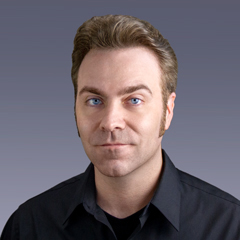
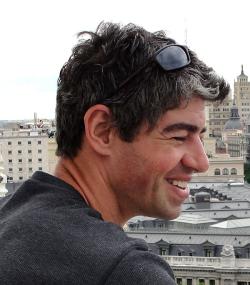
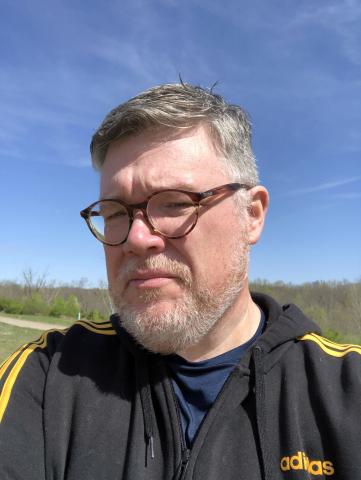
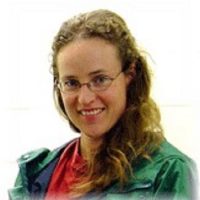
Hélène Morlon is a Professor at the Biology Department of École normale supérieure (ENS) - PSL Research University Paris. She leads the Biodiversity Modeling team within the Center for Computational Biology, focusing on integrating ecological and evolutionary processes to explain biodiversity patterns through mathematical and bioinformatics approaches. Specializes in molecular phylogenies, speciation, extinction, and dispersal mechanisms Collaborates with mathematicians, phylogeneticists, and field ecologists Her research reveals non-equilibrium dynamics in biodiversity, challenging classical models by demonstrating speciation rate declines and climate-driven phenotypic evolution. She has developed probabilistic models applied to amphibians, mammals, birds, plants, and microorganisms. Scientific Awards: ERC Consolidator Grant (2013) Chaire d'Excellence en biologie/santé (France Innovation Santé 2030) ERC Advanced Grant (2024) for project PlankDiv Her work bridges macroecology, macroevolution, and conservation biology, with notable contributions to understanding tropical biodiversity gradients and climate impacts on evolutionary rates.
Emily Grubert serves as Associate Professor of Sustainable Energy Policy at the Keough School of Global Affairs and Concurrent Associate Professor in Civil and Environmental Engineering and Earth Sciences at the University of Notre Dame. Her interdisciplinary work integrates civil engineering and environmental sociology to advance justice-centered decarbonization of the US energy system through life cycle socioenvironmental impact assessment and multicriteria decision support. Education Ph.D. in Environment and Resources, Stanford University (2017) M.S. in Environmental and Water Resources Engineering, University of Texas at Austin (2011) M.A. in Energy and Earth Resources, University of Texas at Austin (2010) B.S. in Mathematics and Atmosphere/Energy Engineering, Stanford University (2009) Research Focus Professor Grubert's research centers on decarbonization, just transition, life cycle assessment, and macro-energy systems. She employs scenario analysis, life cycle assessment, survey and interview research, and text mining to evaluate socioenvironmental impacts of energy infrastructure decisions. Her work emphasizes incorporating community and societal priorities into policy and project decisions, particularly during the mid-transition phase of energy system transformation where embodied impacts dominate and design-oriented decision support becomes critical. Publication Trends Her recent publications reveal concentrated efforts on medium-term US decarbonization challenges, including fossil electricity retirement deadlines, emissions projections through 2050, and paradigm shifts in environmental assessment. A dominant theme addresses the emerging dominance of embodied impacts in decarbonizing systems, coupled with development of justice-centered decision support tools that integrate socioenvironmental considerations across energy-water-carbon domains. Professional Engagement Grubert is a core faculty affiliate of the Keough School's Pulte Institute for Global Development. Prior to Notre Dame, she served as assistant professor at Georgia Tech and deputy assistant secretary for carbon management at the US Department of Energy. Her research has received extensive media coverage in major outlets including The New York Times, MIT Technology Review, and Bloomberg, demonstrating significant policy impact and societal relevance.
Peter Wilf is a Professor in the Department of Geosciences at Pennsylvania State University's College of Earth & Mineral Sciences. His research focuses on fossil plants as indicators of past climates, biodiversity, and environmental disturbances from the latest Cretaceous through middle Eocene (~67-45 million years ago). Wilf leads significant research projects including the Origins of Southeast Asian Rainforests from Paleobotany and Machine Learning and the Patagonia Paleofloras Project. His research interests span paleobotany, paleoclimatology, plant-insect interactions, and biogeography, with emphasis on how deep-time data illuminate modern ecosystems and their responses to anthropogenic change. Wilf's work primarily focuses on the latest Cretaceous through middle Eocene, examining global disturbances including warming and cooling events, the end-Cretaceous mass extinction, and recovery periods. His research has significant implications for understanding climate change, biodiversity conservation, and ecosystem dynamics. Wilf's extensive publication record demonstrates consistent high-impact research across paleobotany, with recent work focusing on Southeast Asian rainforests, Patagonian paleofloras, and the connections between Gondwanan landmasses. His research integrates fieldwork in Patagonia and Southeast Asia with advanced analytical techniques, including machine learning applications for fossil leaf identification. Fellow, American Association for the Advancement of Science (AAAS) 2022 Wilson Award for Excellence in Research, Penn State College of Earth & Mineral Sciences 2022 Fellow, Paleontological Society 2017 Fellow, Geological Society of America 2016 Paul F. Robertson Research Breakthrough of the Year Award, Penn State College of Earth & Mineral Sciences 2016 George W. Atherton Award for Excellence in Teaching, Pennsylvania State University 2013 Wilf maintains an active research program with numerous NSF-funded projects and international collaborations. He leads a productive lab group conducting extensive fieldwork in Patagonia, Argentina, and Southeast Asia. His research has transformed understanding of Southern Hemisphere floras, the role of Patagonia in plant evolution, and connections between ancient and modern ecosystems across continents. Wilf's laboratory serves as a hub for paleobotanical research, bringing together students, postdocs, and international collaborators to study fossil plant collections from around the world. The lab integrates traditional paleobotanical methods with cutting-edge technologies including machine learning for fossil identification and advanced imaging techniques for detailed morphological analysis.
Dr. Ryan Carney is an Associate Professor of Digital Science at the University of South Florida's Department of Integrative Biology (College of Arts and Sciences). His research bridges paleontology and epidemiology, using cutting-edge technologies like 3D imaging, AI, and VR/AR. He studies dinosaur biomechanics (e.g., Archaeopteryx flight mechanics) and mosquito-borne diseases (e.g., malaria, Zika) through NSF/NIH-funded collaborations with agencies like NASA and the CDC. His work integrates citizen science platforms (iNaturalist, Mosquito Alert) for disease surveillance and develops AI tools for mosquito classification. Education: PhD (Brown), MPH/MBA (Yale), B.A.'s in Biology & Art (UC Berkeley) Lab: SCA 107 (focuses on digital paleontology and disease modeling) Research interests span dinosaur functional morphology, epidemiological modeling using GIS/remote sensing, and translating science through immersive technologies. He received awards like the National Geographic Emerging Explorer and multiple USF teaching/research accolades. Awards: CAS Liberal Arts Teaching Award, Outstanding Research Achievement, etc. Grants include NSF funding for AI-driven mosquito surveillance and NIH support for disease control. His lab's innovations include the Global Mosquito Observations Dashboard (GMOD) and VR reconstructions of prehistoric species.
Seth Finnegan is a Professor in the Department of Integrative Biology at the University of California, Berkeley, and affiliated with the University of California Museum of Paleontology. His research focuses on understanding the processes shaping marine ecosystems and biota from the late Neoproterozoic to the present, with a particular emphasis on the Ordovician Period and mass extinctions. He integrates field observations, laboratory data, and literature databases to study extinction selectivity, environmental proxies (e.g., stable isotopes, biomarkers), and ecosystem reconstructions. His lab, the Finnegan Lab, explores themes such as organism-environment interactions and the drivers of biodiversity changes. Finnegan’s work has been widely published in journals like Proceedings of the National Academy of Sciences and Geology , and he collaborates with institutions globally. Despite no listed awards here, his contributions to paleontology are significant.
Dr. John Warren Huntley is an Associate Professor in the Department of Geological Sciences at the University of Missouri. His research examines the fossil record of biotic interactions including parasitism, predation, and competition, with additional focus on conservation paleobiology and morphological disparity evolution. Dr. Huntley investigates host-parasite dynamics in marine bivalves, human impacts on mollusk populations, and Phanerozoic predation patterns. His work integrates stratigraphic paleobiology with ecological and evolutionary analyses to reconstruct historical ecosystem dynamics. His recent publications demonstrate expertise in paleoparasitology, taphonomy, and conservation paleobiology, applying novel analytical methods to questions about parasite-host coevolution, preservation biases, and extinction events. This research provides critical insights into long-term ecological patterns and biological responses to environmental change. Dr. Huntley has received significant recognition including an NSF CAREER Award and Humboldt Research Fellowship, and he co-edited the comprehensive volumes 'The Evolution and Fossil Record of Parasitism'.
Alessandra Arcuri is Full Professor of International Economic Law at the Department of Law and Markets, Erasmus School of Law, Erasmus University Rotterdam, and a member of the Erasmus Initiative on Inclusive Prosperity. Her academic leadership spans critical intersections of law, sustainability, and democratic governance within global economic frameworks. Her research interrogates the tensions between international economic law and planetary boundaries, focusing on how investment treaties constrain climate action through cases like Rockhopper v. Italy . She exposes how fossil fuel interests exploit legal mechanisms like the Energy Charter Treaty while analyzing glyphosate regulation failures and corporate influence on EU Green Deal implementation. Her work consistently challenges technocratic governance models that marginalize democratic participation in environmental decision-making. Recent scholarship reveals an intensified focus on supply-side climate policies, where investment law clashes with state efforts to phase out fossil fuels. She documents how tribunals prioritize investor protections over ecological imperatives, using Dutch river pollution cases to demonstrate states' international obligations to prevent toxic emissions. Her analysis of boundary-work in investment law reveals systemic exclusions of public interest perspectives. Scientific Awards: Jean Monnet Fellow (2011-12) Fernand Braudel Fellow (2021-22) Hauser Global Research Fellow (2003-04) Marie Curie Fellow (2001) Professor Arcuri supervises PhD candidates including Abdurrahman Erol, with whom she co-authored pivotal research on Dutch river degassing that directly influenced national policy banning toxic emissions from inland vessels. Her policy impact extends through commissioned reports for the Dutch Parliament, Ministry of Foreign Affairs, European Commission, and NGOs, translating academic rigor into tangible regulatory change. She actively bridges scholarly critique with public advocacy, as seen in open letters correcting ministerial misinterpretations of environmental law. As a core contributor to the Erasmus Initiative on Inclusive Prosperity, she collaborates across disciplines to reconfigure economic governance toward ecological sustainability and democratic accountability, challenging the fossil fuel economy through legal innovation and grassroots empowerment.
Niklas Salmose is a Professor at the Department of Languages , Linnaeus University , Sweden. His research integrates Nostalgia , Intermediality , and Ecocriticism , focusing on Environmental Humanities and Modernist Literature . PhD in English from the University of Edinburgh (2012) Visiting Professor at UCLA (Autumn 2018) Vice-Chair of Department of Languages (Linnaeus University) Co-coordinator of the graduate school MIDWorld (Swedish Research Council-funded) His recent work explores the intersection of Climate Crisis and Intermediality through monographs like Mediations of Nostalgia: Aesthetics, Intermediality, Ecology (Edinburgh UP, 2024). He co-edits special issues on Ecological Emergencies and Blue-Eco Stories with journals Humanities and Textus . Salmose supervises four PhD projects on topics ranging from Intermedial Ecocriticism to Western Imperialism and Nostalgic Aesthetics . He is a member of the Linnaeus University Centre for Intermedial and Multimodal Studies and leads projects like Future Food Cultures in the Anthropocene and IMS Green . His publications span Climate Crisis , Anthropocene , Nordic Noir , and Sensorial Aesthetics , with notable works in The Palgrave Handbook of Intermediality , The Routledge Handbook of Nostalgia , and Contemporary Ecocritical Methods . Salmose is actively involved in editorial boards for Humanities and Text Matters , and serves on the executive board of the F. Scott Fitzgerald Society .
Natalia Rybczynski is an Adjunct Research Professor in the Department of Biology at Carleton University, affiliated with the Faculty of Science. Her primary research focuses on Paleobiology and Paleoenvironments of the Cenozoic High Arctic and functional morphology of vertebrate feeding and locomotion systems. She holds offices at the Canadian Museum of Nature in Gatineau and coordinates interdisciplinary projects on Arctic paleoenvironments, pinniped evolution, and vertebrate herbivore feeding mechanisms. Education: B.Sc. in Biology, Carleton University M.Sc. in Zoology, University of Toronto Ph.D. in Evolutionary Anthropology, Duke University Research Interests: Reconstructing Arctic paleoenvironments during the Neogene Evolutionary transitions in marine mammals (e.g., pinnipeds) Feeding kinematics in herbivorous vertebrates like hadrosaurs Integration of field-based paleontology with biomechanical and anatomical analyses Her publications span paleoclimatology, fossil analysis, and evolutionary studies, emphasizing Arctic ecosystems and vertebrate adaptations. Collaborative work includes geoscientists to reconstruct ancient Arctic climates and anatomists to model feeding systems in extinct species. Active in field expeditions and lab-based experimental studies. Labs/Teams: Collaborates with Canadian Museum of Nature researchers and international teams in Arctic paleontology projects. Engages in interdisciplinary initiatives like the PoLAR-FIT project studying Pliocene Arctic ecosystems.
Michael Smith is the McCosh Professor of Philosophy at Princeton University. He holds a DPhil from Oxford University (1989) and has been a faculty member since 2004, previously at the Australian National University. His research focuses on ethics, moral psychology, philosophy of mind, political philosophy, and philosophy of law. Smith’s work integrates constitutivist theories of practical reason with analyses of moral agency. He has contributed to debates on moral rationalism, the nature of reasons for action, and the relationship between rationality and normativity. Education: MA, Monash University (1980); BPhil (1983), DPhil (1989), University of Oxford Smith’s scholarship emphasizes the interplay between ethical theory and psychological explanations of agency. Recent publications explore topics like carbon capture technologies, cultural clashes in moral reasoning, and probabilistic forecasting in oceanography. His philosophical contributions address foundational questions in meta-ethics, including the ‘moral problem’ and the implications of constitutivism for normative frameworks. He advises on interdisciplinary projects at the intersection of philosophy and emerging technologies. Notable research trends include applying philosophical analysis to environmental ethics and developing frameworks for resolving moral dilemmas through rational agency models. His work often bridges analytic philosophy with empirical inquiries in psychology and social science.
Dr. Alain Bonneville is a Lab Fellow and Geophysicist at Pacific Northwest National Laboratory (PNNL) and holds a Courtesy Professor appointment at Oregon State University's College of Earth, Ocean, and Atmospheric Sciences. With extensive experience in geological storage of CO2, geothermal energy, and geophysical monitoring techniques, Dr. Bonneville leads diverse research projects that bridge fundamental science and practical applications for energy and environmental challenges. Dr. Bonneville's educational background includes: PhD in Geophysics from the University of Montpellier, France MS in Petroleum Geophysics from IFP-School, Paris, France BS in Geology from the University of Lyon, France Dr. Bonneville's research spans several critical areas in Earth sciences and energy systems. His work on geothermal energy focuses on super-hot enhanced geothermal systems (EGS), site characterization, monitoring, and stimulation fluids. In geological CO2 storage, he investigates project management, site characterization, numerical modeling, and monitoring methods using potential fields and remote sensing. His expertise in geophysical methods includes heat flow measurements, gravity surveys, muon tomography development for borehole deployment, and remote sensing applications. Additional research areas encompass marine heat flow instrumentation development, thermal monitoring of active volcanoes, and intraplate volcanism studies in the Indian and Pacific Oceans. Dr. Bonneville has received significant recognition for his contributions to science, including: Membership in the Washington State Academy of Sciences Lab Fellow position at Pacific Northwest National Laboratory Executive Committee membership on the U.S. National Risk Assessment Partnership Scientific Committee membership at IFP-Energies Nouvelles, France He also holds two U.S. patents related to electrophilic acid gas-reactive fluids for enhanced fracturing and recovery of energy producing materials. Throughout his career, Dr. Bonneville has led significant research initiatives, including the PNNL Carbon Sequestration Initiative (2009-2013) and the European Marie Curie Research Training Network on Greenhouse Gas Removal (GRASP), which involved 14 academic and industrial institutions across 7 countries and supported 35 PhD students and post-docs. His work on the FutureGen 2.0 project demonstrates his leadership in large-scale carbon storage site characterization and monitoring program design. Dr. Bonneville maintains active collaborations with research teams at PNNL's Environmental Molecular Sciences Laboratory and works closely with Oregon State University's geoscience researchers. His laboratory work focuses on developing novel instrumentation for geophysical monitoring, particularly in the areas of muon tomography for subsurface characterization and thermal monitoring systems for geothermal and carbon storage applications.
Nick Abel is an Honorary Associate Professor at the Fenner School of Environment & Society, Australian National University. With a distinguished international career spanning Africa and Australia, he has worked in Zimbabwe, Kenya, Ethiopia, Botswana, Somalia, Swaziland, Zambia, and Australia. His academic credentials include a Ph.D., M.Sc., and B.Sc.(Hons.), reflecting a strong foundation in environmental sciences and complex systems thinking. Abel's research program centers on the critical challenge of human adaptation to climate change, with particular focus on why adaptation efforts are insufficient to prevent environmental and social tipping points. He critically examines Australia's role as the world's third largest exporter of fossil fuels while facing escalating climate impacts, investigating how fossil fuel companies have maintained influence over public policy. His work integrates social-ecological systems theory, resilience thinking, and practical governance frameworks to address climate adaptation challenges. His publication record demonstrates a clear evolution from foundational work in rangeland management and complex adaptive systems toward urgent climate policy interventions. Early research established theoretical frameworks for understanding resilience in dryland ecosystems, while recent work focuses on transformation pathways, Indigenous engagement, and community-based adaptation strategies. A consistent thread throughout his career is the integration of diverse knowledge systems and the development of practical approaches for environmental governance in rapidly changing conditions. Abel has registered to supervise research students at ANU and participates in significant collaborative projects, including the current 'Partnering with local communities in regional Australia to increase resilience to flood events' (2022-2025). His high-impact publications, including the highly cited 'Resilience management in social-ecological systems' (1,120 Scopus citations) and 'From Metaphor to Measurement: Resilience of What to What?' (2,596 Scopus citations), demonstrate his foundational contributions to the field. Through his work with various research groups and projects, Abel has helped establish frameworks for understanding social-ecological systems and climate adaptation. His contributions to the Fenner School include advancing methodologies for integrating scientific and Indigenous knowledge systems, developing practical approaches to environmental governance, and critically examining the political economy of climate policy in Australia.
Chaoliu Li is a Research Scientist in Professor Noah Planavsky’s lab at Yale University, focusing on geochemistry and atmospheric processes. His work examines the transport and deposition of carbonaceous particles, particularly black carbon, in remote regions like the Himalayas and Tibetan Plateau. He investigates how these particles influence glacier melting, carbon cycling, and climate dynamics. Li’s research also explores the impact of local and transboundary emissions on environmental systems. His studies emphasize the interplay between atmospheric chemistry, glaciology, and climate change. Key areas of interest include the role of dust and anthropogenic pollutants in glacier darkening, isotopic tracing of carbon sources, and the implications of light-absorbing particles for regional climate feedback mechanisms. Awarded no specific prizes mentioned, Li’s publications span over a decade, addressing topics such as black carbon deposition trends, measurement biases in atmospheric monitoring, and the influence of fossil fuel emissions on remote ecosystems. His work bridges field observations, laboratory analysis, and modeling to address pressing environmental challenges in high-altitude regions.
Shira Pinhas is a Postdoctoral Research Associate and Lecturer at Princeton University’s Institute for the Transregional Study of the Contemporary Middle East, North Africa, and Central Asia. Her research bridges social and material history, examining how infrastructures like oil pipelines, refineries, and road networks shaped political and social dynamics in twentieth-century Palestine/Israel and the Levant. She holds a PhD from Tel Aviv University and previously served as a Polonsky Postdoctoral Fellow at the Van Leer Jerusalem Institute. Before academia, she spent a decade organizing in Palestinian-Jewish NGOs focused on social justice. Her primary research interests include Middle Eastern Studies, particularly the intersection of colonialism, gender, and infrastructure. She investigates how transnational flows of energy and technology reinforced settler-colonial hierarchies and spatial segregation, as seen in her work on oil infrastructures and partition policies. Pinhas’s publications analyze the political implications of infrastructure, such as road networks and energy systems, in the Mandate period. Her 2025 article "The Gender of Fossil Fuels" highlights gendered impacts of kerosene adoption, while her 2022 works trace British imperial legacies in partition strategies. A 2020 paper in Journal of Levantine Studies explores transnational dimensions of Palestinian partition debates. Award : Best Dissertation Award (MEISAI, 2020) Her academic contributions extend beyond traditional research, including community organizing and policy-focused writing. She collaborates with transregional scholars and contributes to public discourse through media outlets like +972 Magazine .
Matthew Wills is Professor of Evolutionary Palaeobiology in the Department of Life Sciences at the University of Bath. He is affiliated with the Milner Centre for Evolution and the Centre for Mathematical Biology, where he leads research into macroevolutionary processes using fossil and molecular data. His work integrates phylogenetics, morphological disparity, and stratigraphic congruence to understand large-scale evolutionary patterns. His research interests focus on the role of fossils in building phylogenies, the evolution of morphological complexity, and the testing of macroevolutionary trends such as early high disparity and increasing complexity. He investigates how developmental shifts underpin major evolutionary transitions and how fossilization biases affect our understanding of the Tree of Life. His lab conducts projects on arthropod supertrees, molluscan ontogeny, and the phylogeny of Eumalacostraca using molecules, morphology, and fossils. His recent publications reveal a strong focus on quantifying morphological complexity, vertebral evolution in mammals, species richness in birds, and the impact of boundaries on trait evolution. These works frequently appear in high-impact journals like Nature Communications and Nature Ecology & Evolution , indicating a trend toward integrative, data-rich evolutionary analyses combining paleontological, morphological, and phylogenomic approaches. Principal Investigator, Biodiversity and The Sixth Mass Extinction (Royal Commission for the Exhibition of 1851) Principal Investigator, Susceptibility to Mass Extinctions: Ammonites as a Case Study (NERC) Principal Investigator, PLUTO Project (BBSRC) Principal Investigator, Arthropod Supertree of Life (BBSRC) He has supervised 17 research students and contributes to public discourse through platforms like The Conversation . His work supports UN Sustainable Development Goals related to life on land and climate action through deep-time biodiversity research.