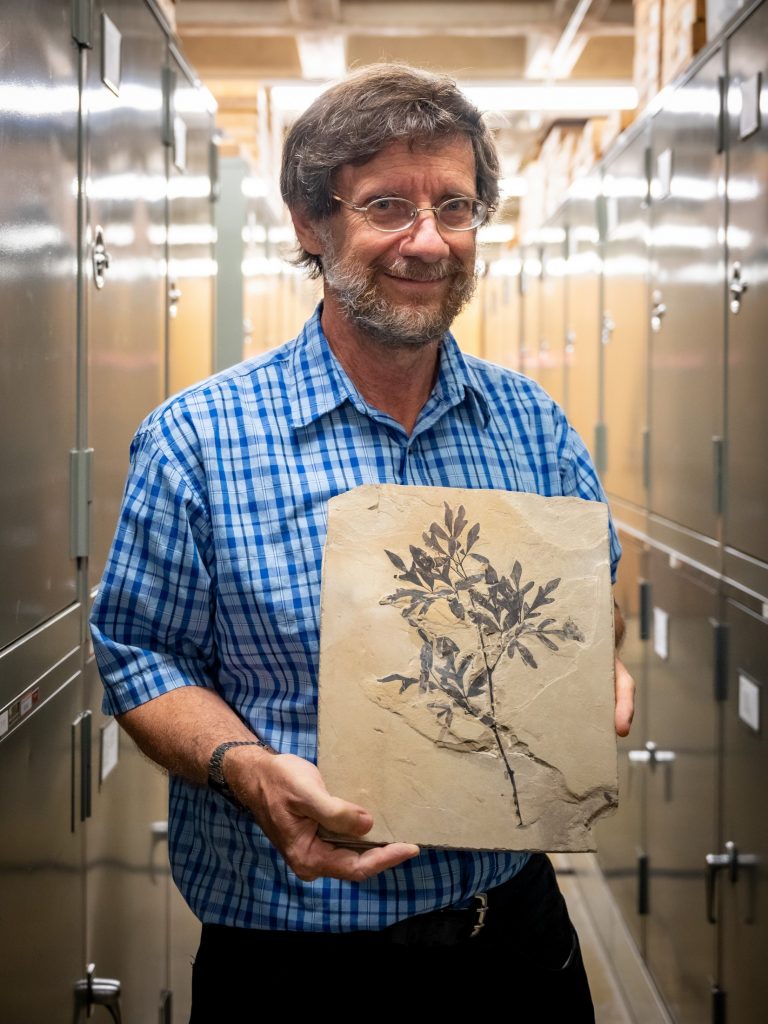
Steven R. Manchester is the Curator of Paleobotany at the Florida Museum of Natural History, University of Florida, and an Adjunct Professor in the Department of Biology. He holds a Ph.D. in Paleobotany from Indiana University (1981), with additional degrees from Oregon State University. His research focuses on angiosperm evolution, particularly Northern Hemisphere families, integrating fossil evidence with modern phylogenetics. He has authored over 200 publications, including studies on Eocene floras, Cretaceous-Paleogene transitions, and collaborative projects across North America, Europe, and Asia. Notable work includes discoveries of extinct plant families and Arctic fossil walnuts. Manchester’s research emphasizes multi-organ paleobotanical analyses, linking flowers, fruits, leaves, and wood to modern phylogenies. He has described new genera like Remberella and Pogonokardion , and his fieldwork spans regions from the High Arctic to the Tibetan Plateau. His educational contributions include courses in Paleobotany, Palynology, and Plant Geography. Publications highlight studies on fossil floras from India, Peru, and the U.S., with recent focus on Cretaceous angiosperm origins and Eocene dispersal patterns. His work bridges paleobotanical data with modern biogeography, illuminating plant evolution across major geological epochs.
Dr. Yin-Long Qiu is an Associate Professor in the Department of Ecology and Evolutionary Biology at the University of Michigan, where he also serves as Associate Curator of the U-M Herbarium. His research focuses on understanding the evolution of land plants through molecular approaches. Dr. Qiu received his Ph.D. from the University of North Carolina, Chapel Hill in 1993, followed by an NIH postdoctoral fellowship at Indiana University in 1997. His academic journey has positioned him as a leading researcher in plant evolutionary biology. Dr. Qiu's research spans three primary areas: reconstructing plant phylogeny using molecular approaches, investigating evolution of mitochondrial and nuclear genomes in early land plants, and examining the effects of environmental changes on plant evolution. His work has particularly focused on group II introns in mitochondrial genomes, early land plant diversification patterns, and the genetic basis of plant-environment interactions. His lab continues to advance knowledge in these areas while developing new projects on nuclear genome evolution, particularly the roles of introns and transposons. Analysis of Dr. Qiu's publication record reveals a consistent focus on plant evolutionary genomics, with particular emphasis on mitochondrial genome evolution across land plants. His research spans from molecular dating of plant divergences to detailed genomic structural analyses, with significant contributions to understanding bryophytes, lycophytes, and early vascular plants. NIH postdoctoral fellowship Dr. Qiu teaches Plant Evolution (EEB 420), an advanced course that covers plant phylogeny, evolutionary genomics, evolutionary developmental biology, and evolutionary ecology of plants. His graduate student Alexander Taylor continues his research tradition in plant evolutionary studies. Dr. Qiu's work has been supported by various research grants that have enabled extensive genomic analyses across diverse plant lineages. As Associate Curator of the U-M Herbarium, Dr. Qiu integrates traditional botanical resources with modern genomic approaches to advance plant evolutionary research.
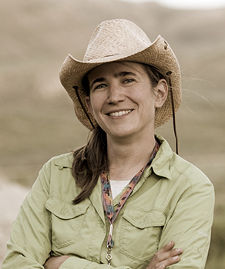
Ellen Currano is Professor of Paleobotany in the Department of Geology and Geophysics at the University of Wyoming. Her research integrates fossil plants, insect herbivory, and paleoenvironmental proxies to understand how ancient forest ecosystems responded to climate perturbations, with field projects spanning Wyoming’s Paleogene strata and East Africa’s Miocene basins. She teaches courses in paleobotany, paleoecology, and paleoclimatology and is co-founder of The Bearded Lady Project , a science-outreach documentary initiative. Education Ph.D., Pennsylvania State University, 2008 B.S., University of Chicago, 2003 Research Interests Currano’s work centers on reconstructing ancient forest ecosystems using fossil plants and their insect-mediated damage. She investigates how taxonomic diversity, ecosystem structure, plant–insect interactions, and biogeographic patterns shifted during past global warming events. Her current projects include: Biotic responses to Paleogene hothouse climates across the Western US, especially Wyoming. Evolution of East African terrestrial ecosystems over the last 30 million years. Fossil-plant proxies for paleoclimate and paleoenvironmental reconstruction. Scientific Awards Paleontological Society Medal, 2021 Teaching & Mentoring Currano emphasizes active, process-based learning and critical thinking in her courses on paleobotany, paleoecology, and paleoclimatology. Leveraging Wyoming’s world-class fossil exposures, she mentors both undergraduate and graduate students in independent research. Outreach & Leadership She co-founded The Bearded Lady Project: Challenging the Face of Science , a documentary film and photography campaign that confronts stereotypes surrounding women in field sciences.
Renee Love is a Clinical Assistant Professor in the Department of Earth and Spatial Sciences at the University of Idaho, affiliated with the College of Science. She holds a Ph.D. in Geological Sciences (2011) and B.S. in Geology (2005) from the University of Idaho and Washington State University, respectively. Her teaching portfolio includes courses on Historical Geology, Paleontology, GIS Foundations, Petroleum Geology, and Virtual Field Methods. Notably, she pioneered a Minecraft-based virtual geology field camp during the pandemic, emphasizing innovative education. Her research focuses on paleontology, stratigraphy, and paleoclimatology, with specializations in Miocene flora, mammoth/bison fossil analysis, and geologic mapping. Key projects include studies on hybrid mammoths in Western North America, Miocene Lake Clarkia flora, and hydrocarbon reservoir correlations in Idaho. She also addresses geoscience workforce challenges, including mental health in academia and faculty roles in industry partnerships. Recent work emphasizes interdisciplinary collaborations, such as autoethnographic studies of research team dynamics and geothermal potential assessments in Southeast Idaho. While currently not accepting new graduate students, she actively engages in undergraduate mentoring and professional development initiatives. Her geologic mapping contributions span Idaho’s Payette Basin and Snake River Plain regions, integrating field data with subsurface well logs to explore energy systems. She frequently employs stable isotopes, U-Pb dating, and paleobotanical proxies to reconstruct ancient environments and faunal behavior.
Victor A. Albert is the Empire Innovation Professor of Biological Sciences at the University at Buffalo’s College of Arts and Sciences. His research focuses on plant evolutionary biology using genomic, developmental, and genetic approaches. Albert leads projects in tropical Southeast Asian flora genomics, carnivorous plant evolution, and the genomic basis of plant form diversification. Notable work includes sequencing the Amborella, avocado, and coffee genomes to elucidate ancestral angiosperm traits and agricultural adaptations. Education: AB/ScM (Brown University), PhD (UNC Chapel Hill), postdoctoral research at Uppsala University. Research interests emphasize genome sequencing of economically and evolutionarily significant plants, including coffee, avocado, and carnivorous species like Nepenthes and Utricularia. He investigates mechanisms of adaptive evolution such as gene co-option, polyploidization, and environmental adaptation. Key contributions include revealing the genomic basis of caffeine biosynthesis in coffee, understanding carnivorous plant digestive system evolution, and analyzing polyploid speciation in Hawaiian mints. Current projects explore rapid speciation mechanisms in Syzygium (myrtaceae) and climate change impacts on coffee cultivars. Awards: Not explicitly mentioned in available texts. Active in major collaborations like the Amborella Genome Project and GenBank submissions. Office hours by appointment.
Dr. Richard Lupia holds the Frank and Henrietta Schultz Chair as an Associate Professor at the University of Oklahoma. He serves as Associate Director and Head Curator of the Sam Noble Museum of Natural History, with affiliations in the School of Geosciences. Ph.D., University of Chicago (1997) M.S., University of Chicago (1994) B.A., University of Pennsylvania (1991) His research spans three major areas: (1) Vegetational changes during the Late Paleozoic Ice Age (310-275 million years ago) in Oklahoma and Kansas through palynological analysis; (2) Diversification patterns of heterosporous ferns during the Cretaceous flowering plant expansion; and (3) Taxonomic studies of Morrison Formation petrified wood floras. Utilizing scanning electron microscopy and database compilations, his work reveals evolutionary and climatic transitions across geological periods. Recent publications focus on Jurassic fossil wood distribution, Cretaceous megaspore diversity, and Permian vegetation shifts. This aligns with his teaching of courses like Paleobotany, History of Earth and Life, and The Dynamic Earth.
John Conran is a Senior Lecturer in the School of Biological Sciences at the University of Adelaide's Faculty of Sciences, Engineering and Technology. His research integrates molecular and morphological approaches to study the evolution, palaeobotany, and biogeography of Australasian plants, particularly monocots, conifers, carnivorous plants, and weeds. He investigates how climate change has influenced diversification in ancient plant groups, especially in nutrient-poor environments. His work emphasizes character evolution in response to historical climate shifts, with major projects including collaborations with the University of Otago on Miocene fossil floras in New Zealand and with China's Xishuangbanna Tropical Botanic Gardens on tropical plant families. Research interests span palaeobotany, evolutionary biology, and ecology.
Selena Smith is an Associate Professor in the Department of Earth and Environmental Sciences at the University of Michigan (Ann Arbor), affiliated with the College of Literature, Science, and the Arts (LSA). Her research focuses on plant evolution, paleobotany, and the role of plants in ancient environments, particularly using modern and fossil specimens. She leads the PEPPR Lab, which employs advanced techniques like synchrotron imaging and 3D tomography to study monocot evolution and environmental interactions. Educated at the University of Alberta, she holds a B.Sc. (2002) in Evolutionary Biology and a Ph.D. (2007) in Plant Systematics. Her work integrates anatomical, morphological, and geochemical methods to address questions about plant-environment relationships across geological timescales. Recent projects include studies of Cretaceous Antarctic mosses, Archaean microbialites, and CO2 sensitivity in fossilized stomata. Her lab actively seeks graduate students to study Cretaceous plant anatomy and mentors undergraduates in field and lab research. Collaborative projects with institutions like the Deccan Intertrappean Beds research group highlight her global reach. Current research emphasizes linking paleobotanical data with environmental reconstructions, including studies of ancient climate patterns and plant functional traits.
Brian Enquist is a Professor in the Department of Ecology and Evolutionary Biology at the University of Arizona. He has held academic ranks from Assistant (2001-2005) to Associate (2005-2009) before becoming full Professor in 2009. He earned his Ph.D. in Biology from the University of New Mexico (1998), preceded by an M.S. (1995) and B.A. (1991) in Biology. His research focuses on integrating plant physiology, biophysics, and ecology to understand how individual-level traits influence ecosystem processes. Notable honors include the NSF CAREER Award, ESA Mercer Award, and a Fulbright Fellowship in Costa Rica (1995-1996). Research interests include scaling laws in biology, plant allometry, community ecology, and tropical forest dynamics. His lab studies functional diversity, biomass allocation patterns, and climate-vegetation interactions, with long-term fieldwork in Costa Rica’s Guanacaste Conservation Area. Recent work addresses global drought patterns, biodiversity threats from mining, and the impacts of warming on mountain ecosystems. Key contributions include foundational theories on metabolic scaling, plant vascular architecture, and ecosystem gas flux modeling. He collaborates on large-scale projects like the National Ecological Observatory Network (NEON) and the Global Future Droughts Initiative. His work bridges theoretical frameworks with applied conservation, emphasizing data integration across scales. Awards: NSF CAREER Award, ESA Mercer Award, Fulbright Fellowship. Active in interdisciplinary research initiatives such as the Biodiversity Forecasting Initiative (BioFI) and the East River Watershed study. His research outputs span >200 peer-reviewed articles, including landmark papers in Science , Nature , and Proceedings of the National Academy of Sciences .
William L Crepet is a Professor at the School of Integrative Plant Science, Cornell University, specializing in Plant Biology. His work focuses on integrating fossil evidence with molecular and ecological approaches to address fundamental questions in plant evolution. Education: PhD from Yale University (1973), Master of Philosophy (1971), BA (1969) Research Interests: Primarily centered on establishing a reliable fossil record for flowering plants, emphasizing phylogenetic significance, adaptive traits, and implications for climate change, molecular evolution, and angiosperm dominance in modern ecosystems. Publication Trends: Focus on Cretaceous fossil analysis, phylogenetic methodologies, and interdisciplinary approaches to angiosperm evolution and diversification. Scientific Awards: Joseph F. Cullman Fellowship Top 25 contributors to American Journal of Botany (2014) SUNY Chancellor's Award for Excellence (2016) Outstanding Service to CALS Community Award (2015) Ermine Cowles Case Memorial Lecture (2012) Botanical Society of America Merit Award (2007) Teaching: PLSCI 6560 - Topics in Plant Evolution PLSCI 2480 - Vascular Plant Systematics PLSCI 1150 - CSI: Forensic Botany
Matthew G. Johnson is an Assistant Professor in Biological Sciences at Texas Tech University and Director of the E.L. Reed Herbarium. He holds a B.S. and Ph.D. from Duke University, focusing on plant phylogenomics and the evolution of mosses like Sphagnum. His research integrates fieldwork, bioinformatics (e.g., HybPiper tool development), and computational analysis to study genome evolution, polyploidy, and ecological genetics. His lab bridges field biology and computational methods, emphasizing herbarium specimen use. Johnson collaborates on projects like the Sphagnome Project and contributes to open-source phylogenetic tools. His work spans moss systematics, plant mating systems, and phylogenomic method development, with outreach in STEM education through digitized collections. Education: B.S. and Ph.D. in Biology from Duke University Postdoc: Chicago Botanic Garden (bioinformatics for moss phylogenetics) Labs/Teams: Mossmatters Lab at Texas Tech, E.L. Reed Herbarium Research Themes: Plant phylogenomics, genomic evolution in mosses, bioinformatics tool development, and ecological genetics of peat mosses. His lab focuses on hybridization, polyploidy, and phylogenetic methods using targeted sequencing (Hyb-Seq). Publications: Over 50 peer-reviewed articles on phylogenomics, moss evolution, and bioinformatics tools. Recent work includes studies on allopolyploidy in Physcomitrium and Entosthodon, and the Angiosperms353 universal probe set for flowering plant phylogenomics.
Professor Rachel Warnock leads the Systems Paleobiology research group at the GeoZentrum Nordbayern , part of Friedrich-Alexander University Erlangen-Nuremberg (FAU). Her work bridges paleontological and molecular data through advanced phylogenetic methodologies. Develops Bayesian phylodynamic frameworks Specializes in fossil data integration Focus on speciation/extinction processes Recent publications emphasize Bayesian phylogenetic inference , fossilized birth-death modeling , and macroevolutionary analysis across biological and cultural systems. She co-authored the FossilSim and FossilSimShiny packages for fossil occurrence simulation. Her research team includes collaborators from computational biology, paleontology, and evolutionary ecology domains, operating within FAU's Paleontology Department .
Professor Dame Jane Francis is the Director of the British Antarctic Survey and a Professor of Palaeoclimatology at the University of Leeds’ School of Earth & Environment. Her research focuses on palaeoclimatology and palaeobotany , particularly the use of fossil plants to understand past climate change and biodiversity in polar regions. She has led numerous expeditions to Antarctica and the Arctic, including projects funded by NERC and NSF, and has held leadership roles in international polar science initiatives. Education: PhD from University of Southampton (1982), NERC Postdoctoral Research Fellow (1982-1984), Royal Society Leverhulme Trust Senior Research Fellow (2003-2004) Her research spans greenhouse and icehouse periods , with emphasis on Antarctic and Arctic climates . Recent publications explore Cretaceous stratigraphy , Eocene-Oligocene climate transitions , and Paleocene leaf flora , highlighting interdisciplinary work in geochemistry , sedimentology , and climate modeling . She has contributed to policy and climate science through roles like Chair of the Antarctic Treaty Consultative Meeting’s Working Group on Science & Operations. Scientific Awards: Dame DCMG (2017), Polar Medal (2002), Coke Medal (2014), Sorby Medal (2010), Royal Society Leverhulme Fellowship (2003-2004), and multiple honorary doctorates. Collaborations: NERC, NSF, Geological Survey of Canada, University of Svalbard, and international polar research networks. Jane Francis leads the BAS-Arctic Working Group and has been instrumental in advancing UK polar science. Her work underscores the sensitivity of polar regions to climate change and informs modern climate policy and environmental conservation efforts.
Dr. Daniela E. Winkler is a Postdoc (Assistant) at Kiel University's Zoological Institute and Museum, working within the Böhmer Group focused on Zoology and Functional Morphology of Vertebrates. She conducts research on dental microwear texture analysis across various vertebrate species, both extant and fossil, to reconstruct dietary patterns and ecological adaptations. Her position includes teaching responsibilities and she is currently working on her habilitation. Dr. Winkler earned her doctorate from the University of Hamburg on the functional morphology of ungulate dentition (magna cum laude). Her academic journey includes postdoctoral research at the University of Mainz (2016-2020) in the ERC project 'Vertebrate Herbivory' with Prof. Thomas Tütken, followed by a JSPS Postdoctoral Fellowship at the University of Tokyo (2020-2022) with Dr. Mugino O. Kubo. Since December 2022, she has been working at Kiel University on her habilitation while serving as an elected member of the CAU Postdocs' Interest Group (2023-2025). Her research primarily focuses on functional morphology and dental wear analyses across diverse vertebrate groups including mammals, lepidosaurs, and archosaurs. Through dental microwear texture analysis, she investigates how wear patterns can reveal information about diet, habitat, and paleoecology. Her experimental approach combines feeding experiments with analysis of collection material, examining both microscopic and macroscopic wear patterns. She is particularly interested in how internal (phytoliths) and external (mineral dust) abrasives affect dental wear formation, and how these patterns can be used for dietary reconstruction in both extant and extinct species. Dr. Winkler has expressed interest in expanding her research to include invertebrate mouthparts, recognizing that all feeding structures show signs of wear. Analysis of Dr. Winkler's recent publications (2023-2025) reveals a strong methodological focus on dental microwear texture analysis (DMTA), with particular attention to instrument comparability and standardization across different optical profilometers. Her work spans diverse taxa including sauropod dinosaurs, crocodyliforms, small mammals, and even invertebrates like crickets, demonstrating the broad applicability of DMTA across vertebrate systems. A significant portion of her research involves controlled feeding experiments with model organisms like guinea pigs and rats to establish baseline relationships between diet composition and resulting microwear patterns, with applications in paleontology, ecology, and evolutionary biology. CAU DenkRaum Fellowship (2024-2026) for interdisciplinary work on 'Energy in the Changing Times and the World' Dr. Winkler serves as an active member of the CAU Postdocs' Interest Group and has been involved in several collaborative research projects. Her teaching responsibilities include practical exercises and lectures in fundamental zoology (biol102), biodiversity identification (biol104), and vertebrate evolution courses (biol-261/biol-261b), including outdoor excursions to locations like the Wadden Sea. She has supervised student research projects within the Böhmer Group and collaborates extensively with researchers across multiple institutions in Germany, Japan, and Switzerland. As part of the Böhmer Group at Kiel University, Dr. Winkler works within a multidisciplinary team that includes Prof. Christine Böhmer, Dr. Ghislaine Cárdenas Posada, and other researchers. Her laboratory work involves advanced imaging techniques and dental microwear texture analysis using optical profilometers, with applications spanning paleontology, ecology, and evolutionary biology. Her research has received media attention including coverage in Spiegel online (October 6, 2024), DER SPIEGEL 41/2024, and Kieler Nachrichten (October 24, 2024).
Béatrice Albert serves as a Lecturer at Université Paris-Saclay within the Laboratoire Écologie, Société et Évolution (IDEEV), specifically in the “Plant diversity and evolution” research team. She has maintained continuous academic employment since 1998 as an Assistant Professor at Paris XI University (now part of Université Paris-Saclay), teaching genetics, molecular biology, and statistics across multiple institutions including Paris VII, Paris XIII, and the University of Sussex. Her educational foundation includes a PhD in Genetics and Evolution (1993-1996) and a Master in Biodiversity, Genetics and Evolution (1992-1993), both completed at Paris XI University. These qualifications established her trajectory in evolutionary biology and molecular genetics. Albert’s research centers on evolutionary developmental biology (Evo-Devo), with particular emphasis on pollen morphology and aperture pattern formation in angiosperms. She investigates how developmental mechanisms determine aperture patterns while examining the interplay between selective pressures and developmental constraints. Her methodology integrates experimental approaches with theoretical modeling to understand morphological evolution at cellular and organismal levels, bridging molecular genetics with macroevolutionary patterns. Publication analysis reveals a distinct research evolution: early work (1996-2002) focused on mitochondrial genome dynamics in plants and fungi, transitioning to pollen development studies (2003-2013) where she established expertise in microsporogenesis and aperture pattern ontogeny. Her recent publications demonstrate sophisticated integration of comparative phylogenetics with cellular developmental biology, particularly in monocots and eudicots. PhD student: Mohamed DIALLO (2018-2021) on “Interdisciplinary assessment of plant species translocations for conservation purpose” (co-supervised with Bruno Colas) Master’s student: Juliette BARON (2019) on “Cost assessment of exotic invasive species” (co-supervised with Christophe Diagne) She actively collaborates with researchers across France (A. Ressayre, P.-H. Gouyon), the UK (C. Furness), and USA (M. Yang), contributing to international projects while maintaining her core research program within the IDEEV laboratory’s plant evolution team.