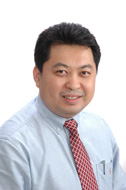
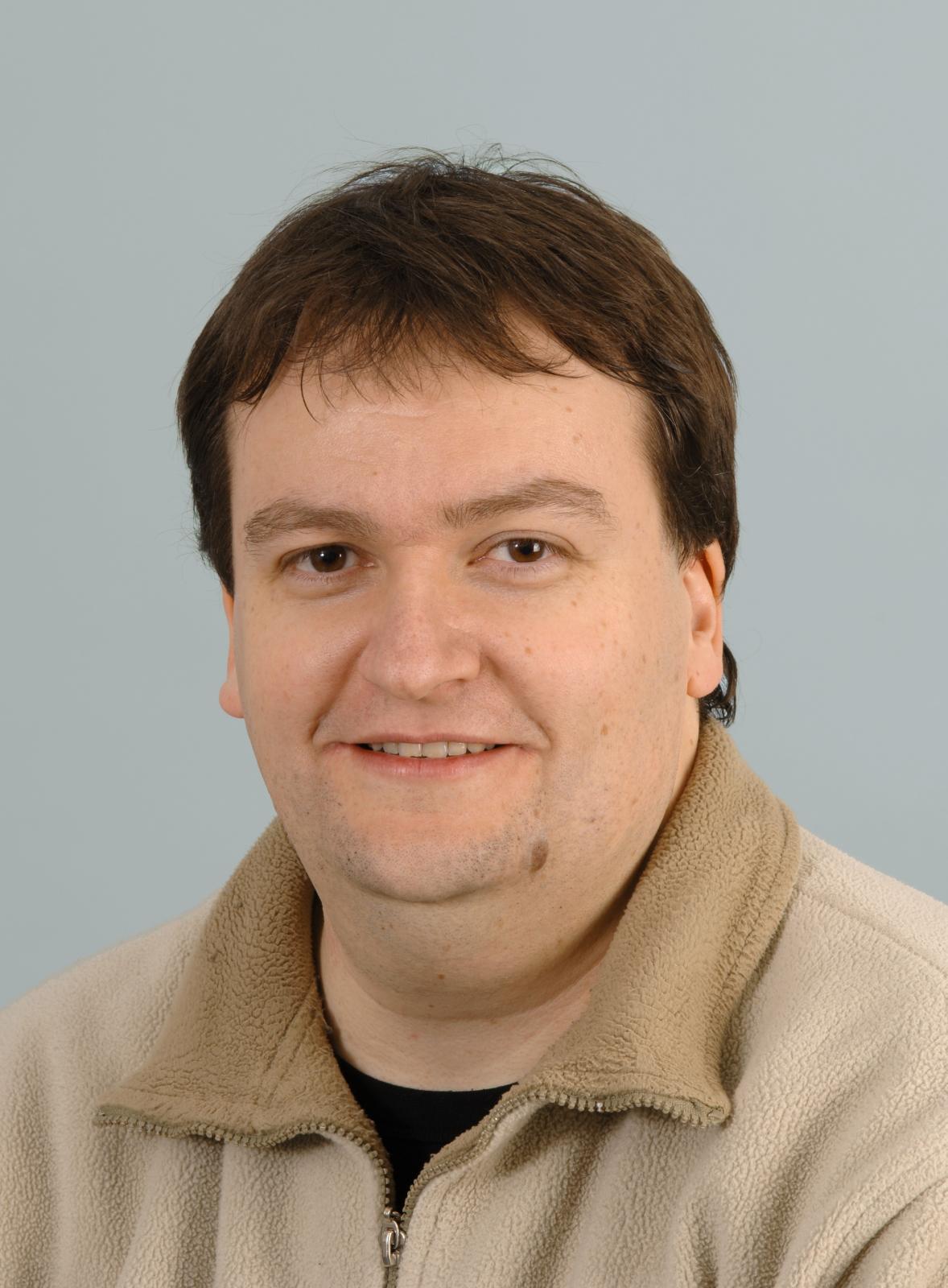
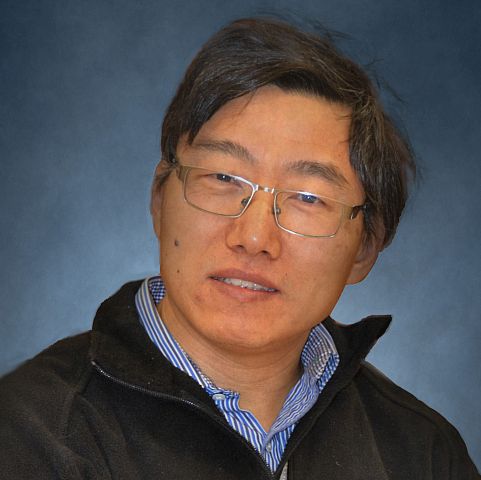
Dr. Ng How Yong is an Assistant Professor at the Department of Civil and Environmental Engineering, National University of Singapore (NUS). He specializes in membrane science and wastewater treatment technologies, with a focus on membrane fouling mitigation and bioelectrochemical systems. His research integrates membrane bioreactors, anaerobic/aerobic processes, and microbial sensors for sustainable water reclamation and industrial wastewater management. Education: BEng/MEng (Civil Engineering, NUS, 1997/2000), Ph.D. (Environmental Engineering, UC Berkeley, 2002) Research interests include membrane separation processes, microbial fuel cell-based sensors for heavy metal detection, and energy recovery from wastewater. He has pioneered advancements in anaerobic ceramic membrane bioreactors and forward osmosis technologies. Key contributions span over 50 peer-reviewed publications, focusing on optimizing biological treatment systems, understanding fouling mechanisms, and developing novel desalination processes. His work bridges fundamental science and engineering applications, addressing global water scarcity challenges. Awards: IWA Fellow (2012), NUS Young Researcher Award (2009), Singapore Youth Award (2008) Dr. Ng has led multiple international conferences, including the 8th IWA Specialist Conference on Membrane Technology (2017) and the 3rd Asia-Pacific Young Water Professional Conference (2010). He serves on editorial boards of Water Research , Journal of Water Reuse and Desalination , and the International Water Association committees.
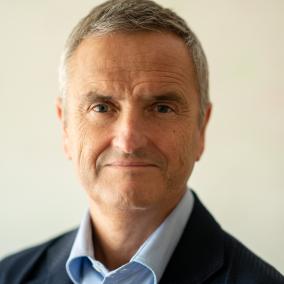
Ricardo Caballero is the Ford International Professor of Economics at the Massachusetts Institute of Technology's School of Humanities, Arts, and Social Sciences, where he previously served as Chairman of the Economics Department from 2008 to 2011. A leading scholar in macroeconomics and financial economics, his research focuses on safe assets, monetary policy, financial crises, and international economics. His research interests center on the macroeconomic implications of financial frictions, with particular emphasis on safe asset shortages, risk premium dynamics, and monetary policy transmission mechanisms. Caballero's work has pioneered the risk-centric approach to macroeconomics, explaining phenomena such as the Wall Street/Main Street disconnect, global imbalances, and the collapse of interest rates through the lens of safe asset scarcity and risk intolerance. His research bridges theoretical modeling with empirical analysis of financial crises and policy interventions. Caballero's recent publications demonstrate a consistent focus on financial conditions indexing, monetary policy frameworks, and the interaction between financial markets and the real economy. His work increasingly examines how central banks can target financial conditions directly and how risk premia evolve during crises, with applications to pandemic-era economic policy and zero lower bound environments. 2002 Frisch Medal of the Econometric Society Smith Breeden Prize by the American Finance Association Journal of Finance 2014 Brattle Group Prize 2022 Banque de France-TSE Senior Prize in Monetary Economics and Finance Elected Fellow of the Econometric Society (1998) Elected Fellow of the American Academy of Arts and Sciences (2010) As an NBER Research Associate and frequent policy advisor, Caballero has influenced central bank thinking globally through his work on financial stability, monetary policy frameworks, and global imbalances. His research has informed policy discussions at the Federal Reserve, IMF, and multiple central banks regarding crisis management, safe asset creation, and the appropriate monetary response to financial shocks. Caballero maintains active collaborations with major financial institutions and central banks worldwide, translating theoretical insights into practical policy frameworks.
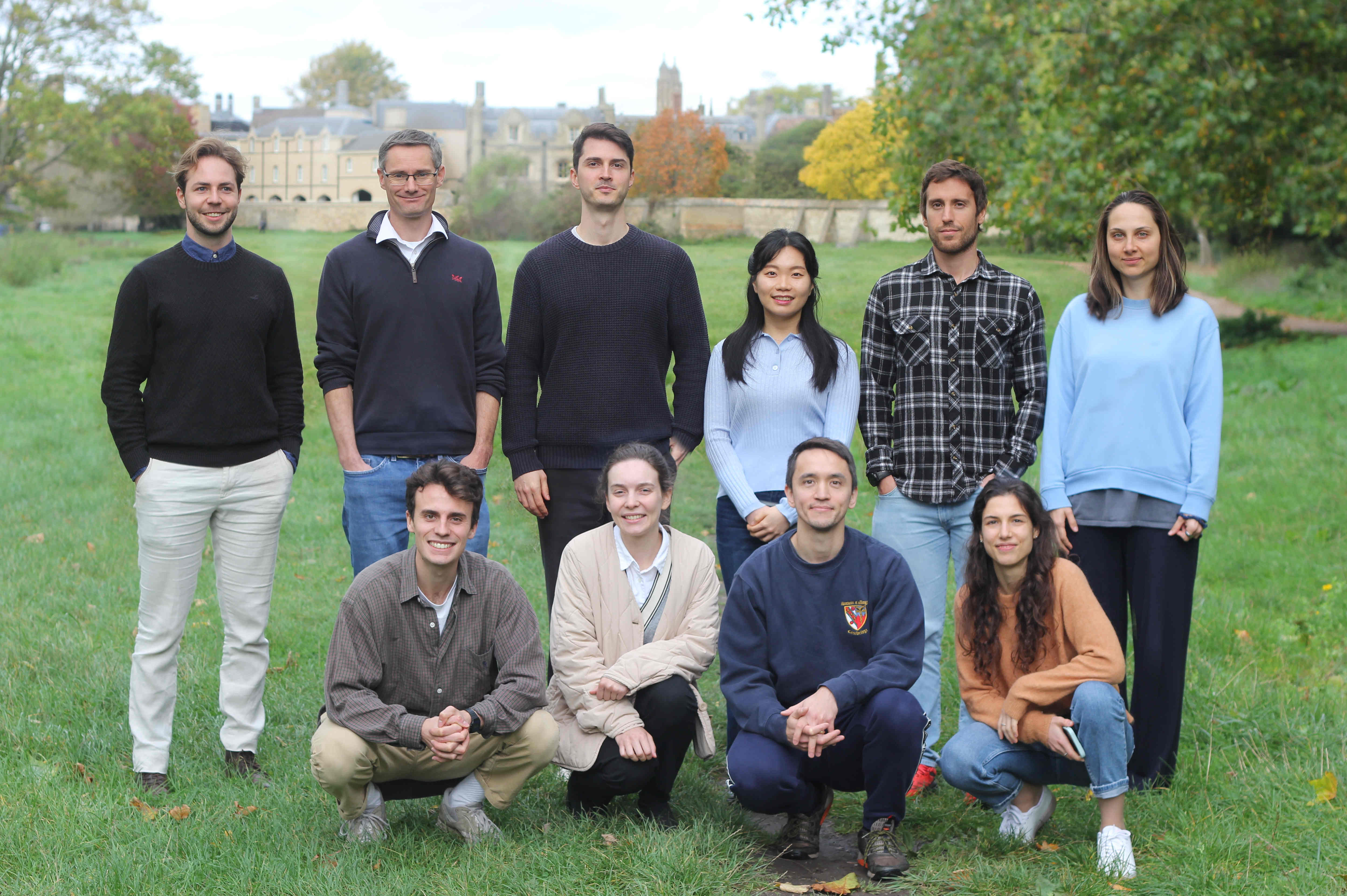
Richard E. Turner is a Professor of Machine Learning at the University of Cambridge's Department of Engineering and Research Lead for AI for Weather Prediction at the Alan Turing Institute. He serves as Cambridge Lead for the EPSRC Probabilistic AI Hub and previously held roles including Visiting Researcher at Microsoft Research, Co-Director of the AI4ER CDT, and Course Director for the Machine Learning and Machine Intelligence MPhil program. Current research focuses on probabilistic machine learning fundamentals, environmental prediction (weather/climate), and spatio-temporal modeling combining deep learning with Bayesian methods Supervised 26 PhD students (13 graduated) and 7 research assistants/associates Secured over £30M in research funding from EPSRC, Microsoft, Toyota, Google, DeepMind, Amazon, and Improbable Featured in BBC Radio 5 Live's The Naked Scientist, BBC World Service's Click, and Wired Magazine His recent publications demonstrate expertise in diffusion models for PDE simulations, Gaussian Processes for environmental applications, and Bayesian methods for spatio-temporal forecasting. Key trends include climate modeling using ML, neural PDE solvers, and scalable probabilistic inference. Awards : Cambridge Students' Union Teaching Award for Lecturing; supervised Qualcomm Innovation Fellowship winner Collaborations : Microsoft Research (AI4Science), Alan Turing Institute, EPSRC Probabilistic AI Hub Turner leads the Turner Group within Cambridge's Machine Learning Group, focusing on uncertainty-aware ML for scientific applications. Current research assistants work on topics like meta-learning, Bayesian inference, and climate science applications.
Jordi Galí is a Professor at the Department of Economics and Business at Universitat Pompeu Fabra (UPF), a Senior Researcher at the Center for Research in International Economics (CREI), and a Research Professor at the Barcelona School of Economics (BSE). He holds a PhD from MIT and has played a central role in shaping modern macroeconomic theory, particularly the New Keynesian framework used by central banks worldwide. Education: PhD in Economics, Massachusetts Institute of Technology (MIT), 1989 Master in International Management, ESADE, 1985 Bachelor in Economics, Universitat Pompeu Fabra, 1994 His research focuses on macroeconomic theory, monetary economics, and macroeconometrics. He is best known for his work on the New Keynesian Phillips Curve, optimal monetary policy rules, and the role of technology and expectations in business cycles. His influential book, Monetary Policy, Inflation and the Business Cycle , is a standard reference in graduate programs globally. The most recent articles highlight a continued focus on critical issues in modern macroeconomics: the implications of a low natural rate of interest (r*), the effectiveness of monetary policy at the zero lower bound, the role of wage and price flexibility, and the interaction between fiscal and monetary policy. His work increasingly integrates heterogeneity, financial frictions, and experimental methods, reflecting the evolving frontiers of the field. Scientific Awards: BBVA Foundation Frontiers of Knowledge Award (2025) Yrjo Jahnsson Award (2005) Premi Rei Jaume I d'Economia (2004) Premio Nacional de Investigación “Pascual Madoz” (2022) Three ERC Advanced Grants Foreign Honorary Member, American Economic Association (2020) Galí has advised numerous central banks, including the ECB, Federal Reserve, and Banque de France. He has held leadership roles as President of the European Economic Association (2012), co-editor of the Journal of the European Economic Association , and co-director of the CEPR International Macroeconomics Programme. He is a Research Fellow at CEPR, a Research Associate at NBER, and a Fellow of the Econometric Society. He has also been actively involved in public policy debates in Spain and Europe, particularly on issues of productivity, labor market reform, and fiscal policy. His research program continues to explore the design of stabilization policies in open and currency union economies.
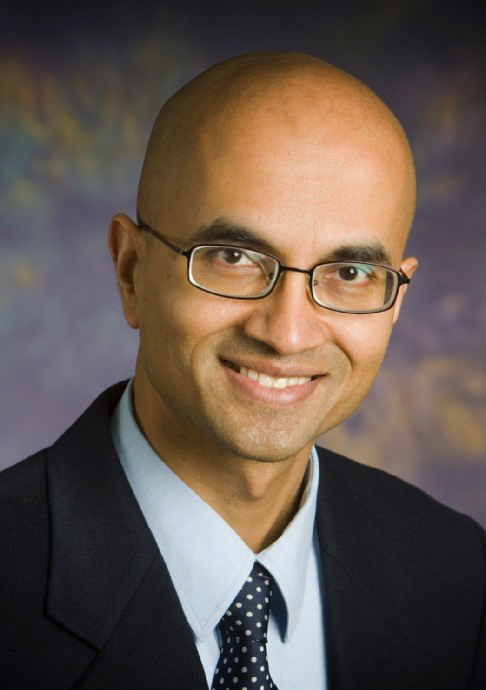
Naresh R. Shanbhag is the Jack Kilby Professor in the Department of Electrical and Computer Engineering and the Coordinated Science Laboratory at the University of Illinois at Urbana-Champaign. He serves as Director of the Systems on Nanoscale Information fabriCs (SONIC) Center and held the D.J. Gandhi Distinguished Visiting Professorship at IIT Mumbai from 2015-2020. Previously, he was a visiting faculty member at National Taiwan University (2007) and Stanford University (2014). Dr. Shanbhag received his doctorate from the University of Minnesota (1993) in Electrical Engineering. From 1993 to 1995, he worked at AT&T Bell Laboratories as the lead chip architect for AT&T's 51.84 Mb/s transceiver chips over twisted-pair wiring for Asynchronous Transfer Mode (ATM)-LAN and very high-speed digital subscriber line (VDSL) chip-sets. His research focuses on the design of energy-efficient machine learning, communications, and signal processing systems on resource-constrained embedded platforms. He explores fundamental trade-offs between energy efficiency, latency and accuracy of decision-making systems implemented in nanoscale technologies, with applications to computer vision, biomedicine, automatic target recognition, and imaging. His work spans four primary focus areas: Resource-efficient Machine Learning for the Edge, In-memory Computing (IMC), Energy-efficient High Data Rate Communications, and Shannon-inspired Statistical Error Compensation (SEC). Analysis of his recent publications reveals a strong emphasis on in-memory computing architectures (SRAM, MRAM, RRAM) for machine learning acceleration. His work consistently addresses energy-accuracy trade-offs, with increasing attention to security aspects of hardware implementations and applications to MIMO signal processing and edge AI systems. His research demonstrates a progression from theoretical foundations to practical silicon implementations. 2024 Semiconductor Research Corporation Innovation Award 2018 Semiconductor Industry Association/Semiconductor Research Corporation University Researcher Award 2018 IEEE International Symposium on Circuits and Systems Best Paper Award 2006 IEEE Fellow 1996 National Science Foundation CAREER Award Professor Shanbhag has mentored over 50 graduate students who now work at leading technology companies including Qualcomm, Amazon, Nvidia, Intel, and Apple. His research has been generously supported by the National Science Foundation, DARPA, AFRL, Semiconductor Research Corporation, Texas Instruments, Sandia National Laboratories, and industry partners including IBM, GlobalFoundries, and Intel Corporation. He led the Alternative Computational Models research theme (2006-2012) and was the founding Director of the SONIC Center (2013-2017), a 5-year multi-university center funded by DARPA and SRC. Currently, he leads research themes in the SRC and DARPA funded JUMP 2.0 Program's Center for Co-Design of Cognitive Systems and the Center for Ubiquitous Connectivity, and in the NSF IUCRC Center for Advanced Semiconductor Chips with Accelerated Performance (ASAP). As Director of the Systems on Nanoscale Information fabriCs (SONIC) Center, Professor Shanbhag leads a multidisciplinary team exploring novel computing paradigms for the nanoscale era. His group has benchmarked an extensive collection of in-memory computing and digital accelerator IC designs, maintaining a publicly available IMC benchmarking repository of metrics extracted from published IC prototypes. His research philosophy integrates concepts from information theory, statistical signal processing, detection and estimation, VLSI architectures, and digital and analog integrated circuits to develop energy-efficient systems from algorithms to silicon implementations.
Philippe Mueller is a Professor of Finance at Warwick Business School (University of Warwick) and a leading researcher in macro-finance, international finance, and asset pricing. He previously held positions at the London School of Economics (2008–2017) and earned his PhD from Columbia University. His research focuses on factors driving asset prices, foreign exchange markets, corporate credit, and central bank policies. Mueller has published in top journals such as the Journal of Finance and Journal of Financial Economics , and his work on corporate bond pricing won the Fama-DFA Prize (2023). Education: PhD in Finance and Economics, Columbia University, 2008 MBF, Master of Science in Banking and Finance, Université de Lausanne, 2002 lic. rer. pol., Universität Bern, 1999 Research Interests: His primary research areas include asset pricing, financial econometrics, and international finance with a focus on fixed income markets, corporate credit provision, and monetary policy impacts. Recent work examines intraday foreign exchange patterns, central bank swap lines, and volatility dynamics in fixed income and currency markets. Teaching & Grants: Mueller teaches advanced courses in asset pricing and fixed income at Warwick. He has secured grants from the BA/Leverhulme Trust, BIS Research Fellowship, and INQUIRE Europe. His work is supported by collaborations with institutions like the Swiss National Bank and ECB. Awards & Recognition: Fama-DFA Prize for best asset pricing paper (2023) BIS Research Fellowship (2025–2027) Walter Wasserfallen Prize (2000) Professional Activities: He serves on programme committees for major finance conferences (EFA, WFA) and referees for top journals including Journal of Political Economy and Econometrica .
John B. Taylor is the Mary and Robert Raymond Professor of Economics at Stanford University and the George P. Shultz Senior Fellow in Economics at the Hoover Institution. He directs the Stanford Introductory Economics Center and has held leadership roles at the Stanford Institute for Economic Policy Research (SIEPR). His academic expertise spans macroeconomics, monetary economics, and international economics, with a focus on policy frameworks and central banking. **Education**: Taylor earned a B.A. in Economics from Princeton University (1968) and a Ph.D. in Economics from Stanford University (1973). He previously taught at Princeton, Columbia, and Yale Universities. **Research Interests**: Taylor’s work emphasizes the foundations of monetary policy, including the Taylor Rule and its global applications. He examines policy responses to crises, inflation targeting, and the role of rules in stabilizing economies. His research integrates theoretical models with real-world policy analysis, addressing topics like financial regulation, fiscal activism, and international coordination. **Awards**: Taylor has received prestigious honors such as the Bradley Prize, Adam Smith Award, and Guggenheim Fellowship. Notable awards include the Alexander Hamilton Award for leadership in international finance and the Hoagland Prize for teaching excellence. **Advising & Grants**: Taylor has advised governments and institutions globally, including the U.S. Treasury, the Federal Reserve, and the OECD. His advisory roles include membership in the President’s Council of Economic Advisers and California’s Governor’s Council. His work often focuses on policy design and crisis management. **Labs/Teams**: Taylor leads initiatives at SIEPR and the Hoover Institution, fostering collaborations on economic policy and global finance. His research frequently engages with central banks and policymakers to translate academic insights into actionable frameworks.
Paul Lu is a Professor in the Department of Computing Science at the University of Alberta, Faculty of Science. His research focuses on high-performance computing, parallel and distributed systems, cloud computing, and bioinformatics. He holds a B.Sc. (1991), M.Sc. (1993) in Computing Science from the University of Alberta, and a Ph.D. in Computer Science from the University of Toronto (2000). His research explores software systems, including operating systems, virtual machines, and parallel programming. Recent work emphasizes high-performance data transfers and IaaS cloud computing. He teaches courses such as MINT 706: Internet Application and Programming, covering internet protocols and client-server programming. Publications highlight contributions to network optimization, machine learning-driven protocol selection, and distributed systems. His work bridges theoretical advancements with practical applications in cloud infrastructure and wide-area networks.
Prof. Marc Stamminger is a Professor of Visual Computing at FAU since 2002, leading the Chair of Computer Science 9 (Computer Graphics). His work focuses on algorithms for synthesizing and analyzing images through 3D modeling, LiDAR/Radar capture, and light simulation. He co-leads FAU Solar, applying 3D modeling for environmental lighting analysis under varying conditions. Stamminger has published over 250 papers, winning prestigious awards like the Siggraph Test-of-Time Award. He holds executive roles in Eurographics and is Vice Dean of FAU's Technical Faculty. Research interests span neural rendering , 3D reconstruction , radar imaging , and medical visualization . Recent work emphasizes radiance field rendering (e.g., VR-Splatting, INPC) and radar-based human motion tracking. His lab's FAU Solar project integrates large-scale 3D models with environmental lighting simulations. Publications trends highlight neural rendering optimizations , radar-MIMO systems , and agricultural digital twins . Key collaborations involve medical imaging (e.g., vocal fold reconstruction) and autonomous driving data generation. Awards: Siggraph Test-of-Time (2023?), 2× Siggraph Best-Of-Show Grants/Teams: FAU Solar Lab, Eurographics leadership, FAU Vice Dean Labs: Chair of Computer Science 9, FAU Solar Initiative
Amy R. Wu serves as Associate Professor in Mechanical and Materials Engineering at Queen's University and holds the Mitchell Professorship in Bio-inspired Robotics. She leads the Biomechanics x Robotics Laboratory (BxRL) and contributes to the Ingenuity Labs Research Institute. Her academic credentials include: Ph.D. in Mechanical Engineering, University of Michigan Postdoctoral Research, Biorobotics Laboratory, EPFL, Switzerland Dr. Wu's research bridges biomechanics and robotics to enhance legged mobility through innovations in human-robot interaction , exoskeleton design , and gait assistance . Her work focuses on developing robotic systems that adapt to human movement patterns, particularly for spinal cord injury rehabilitation and stability augmentation during walking. Analysis of her 2019-2023 publications reveals consistent advancement in exoskeleton control algorithms, gait stability metrics, and human adaptation studies. Key trends include modular exoskeleton systems (Symbitron), neuromuscular controllers for ankle assistance, and haptic feedback integration for motor learning enhancement. No scientific awards are documented in the provided materials. Dr. Wu mentors graduate students through BxRL, where her team conducts human subject testing and robotic development. Research is supported by institutional resources at Ingenuity Labs, though specific grant details remain unspecified. The Biomechanics x Robotics Laboratory operates within Queen's Ingenuity Labs Research Institute, facilitating interdisciplinary collaboration on projects like outdoor stability assessment, winter walking adaptations, and teleoperation interfaces for drone control.
Dr. Farha Sattar is a Lecturer in Education (Mathematics) at the Faculty of Arts and Society, Charles Darwin University. With over thirty years of teaching experience in Mathematics, Science education, GIS, Remote Sensing, and e-Learning technologies at undergraduate and postgraduate levels, Dr. Sattar brings extensive expertise to her academic role. She holds a PhD in Geospatial Science from Charles Darwin University, focusing on Spatial Mathematical Modelling for 3D Gully Mapping and Erosion Quantification. Her educational background includes: PhD in Geospatial Science (Three Dimensional Gully Mapping and Erosion Quantification within a Geoinformatics Framework), Charles Darwin University (2012) Prior academic experience at several Asian and European universities Dr. Sattar's research spans multiple interdisciplinary fields with a strong focus on the intersection of education and technology. Her primary research interests include Mathematics Education, STEM Education, Geoscience Education, Spatial Mathematical Modelling, Drone Technology, Remote Sensing, Geographic Information Systems, and Innovative Pedagogies such as experiential learning and inquiry-based approaches. She has developed expertise in cognitive development, particularly in fostering critical and creative thinking skills through iSTEM approaches. An analysis of Dr. Sattar's recent publications reveals a consistent trajectory toward integrating emerging technologies like drones, augmented reality, and geospatial artificial intelligence into educational contexts. Her work demonstrates a progression from foundational geospatial research on erosion mapping to innovative applications in STEM education. Recent publications increasingly focus on drone technology for educational purposes, spatial data infrastructure for policy development, and computational thinking development through technology-enhanced learning. Dr. Sattar has received numerous accolades for her contributions to education and research: NT Science Week Awards – Inspired NT STEM Hero of the Year award (2021) Long Service Recognition Award (2023) Finalist, CDU Alumni Award (2023) Multiple Best Presentation Awards (2008, 2010, 2017) Australian College of Educators - 2021 College Medal Nominee As a supervisor, Dr. Sattar mentors postgraduate research students including Ayesha Farhan, who is working on "A Framework for Cognitive Development: Fostering Critical and Creative Thinking Skills, Using iSTEM Approach." She actively secures research funding through various projects such as "DBELaSTEM: Drone-Based Experiential Learning and STEM Education," "STEM_D & VR: Youth STEM Learning and Empowerment with Drones and VR," and "CodProg Drone Lab." Her research is supported by grants from NT Government projects and other external funding sources. Dr. Sattar leads the CodProg Drone Lab, an innovative research space exploring drone technology applications in education. She is a certified drone pilot and aeronautical radio operator, which enables her to bridge theoretical knowledge with practical applications. Her work with the "Flying Forward: Drones, STEM Equity, and Indigenous Empowerment" initiative demonstrates her commitment to community engagement and addressing educational disparities through technology.
Dylan Campbell is a Lecturer in Computing at the Australian National University (ANU), affiliated with the ANU College of Systems & Society. His research focuses on computer vision, optimization, and robotics, particularly in 3D vision and deep learning applications. He has held prior roles as a Research Fellow at the University of Oxford’s Visual Geometry Group and ANU’s Australian Centre for Robotic Vision. Campbell holds a PhD from ANU (2018) and a BE in Mechatronic Engineering from UNSW (2012). Research interests include geometric sensor alignment, neural radiance fields, and differentiable optimization layers. He actively supervises students (7 PhD/DPhil, 3 MEng, 9 honours) and teaches advanced courses in computer vision and robotics. Notable awards include the Marr Prize Honourable Mention (2017) and the IEEE Australia Council Postgraduate Student Paper Competition (2018). He has organized workshops at ECCV and CVPR, served as a reviewer for top conferences like CVPR/ICCV/ECCV, and contributed to datasets like SEED4D and RefRef. His work emphasizes efficient training of neural networks and leveraging symmetries in data for long-range connections.
Prof. Dr. André Rubbia is a Full Professor of Experimental Physics at ETH Zurich's Department of Physics, holding this position since December 2003 after serving as Associate Professor from 1998. His research spans neutrino physics, astro-particle physics, and dark matter detection through major international collaborations including CERN, Gran Sasso National Laboratory, and Fermilab. He currently serves as Co-Spokesperson for the billion-dollar DUNE neutrino project at Fermilab, managing over 900 scientists. His educational background includes: Diploma in Physics from the University of Geneva (1990), with thesis work on the L3 experiment at CERN's LEP accelerator Ph.D. in Physics from MIT (1993) under Nobel Laureate S.C.C. Ting, focusing on high-energy electron-positron collisions Rubbia's research centers on fundamental particle interactions, particularly neutrino oscillations and physics beyond the Standard Model. He pioneered liquid Argon Time Projection Chamber (LAr TPC) technology and dual-phase detection systems, enabling breakthroughs in neutrino mass measurements and dark matter searches. His work spans underground laboratories (Gran Sasso, Canfranc), the LHC's CMS detector, and neutrino beam experiments like T2K. Recent explorations include antimatter gravity tests, electron-positron bound states, and dark hidden sector searches. His 2025 publications reveal intense focus on neutrino oscillation parameter precision (T2K, Hyper-Kamiokande), FASER's LHC neutrino program, and DarkSide-20k dark matter detector development. Key themes include cross-section measurements, advanced detector technologies (SiPMs, emulsion tracking), and statistical methods for oscillation analysis, reflecting integration of theoretical modeling with cutting-edge instrumentation. Scientific recognition includes: Breakthrough Prize for Fundamental Physics (2016) awarded to the international team for discovering matter-anti-matter asymmetry in neutrino oscillations APS Viewpoint selection for editing the paper announcing first electron neutrino appearance at accelerators Rubbia has supervised over fifty PhD and Master's theses while securing substantial research funding as Principal Investigator for 20+ Swiss National Science Foundation projects and Coordinator of two EU FP7 Design Studies. His DUNE leadership involves complex international grant management across 30+ countries. He leads ETH Zurich's experimental particle physics group across multiple facilities: the ICARUS neutrino detector at Gran Sasso, CMS at CERN, DUNE at Fermilab, and DarkSide-20k for direct dark matter detection. His team developed the first underground ton-scale liquid argon detector and maintains collaborations with Japanese (Super-Kamiokande) and American (Fermilab) institutions.
Oscar P. Bruno is a Professor of Applied and Computational Mathematics at the California Institute of Technology (Caltech). He holds a Licenciado from the University of Buenos Aires (1982) and a Ph.D. in Mathematics from New York University's Courant Institute (1989). Since 1998, he has been a Professor at Caltech, previously serving as Associate Professor (1995–98) and Executive Officer for Applied Mathematics (1998–2000). His research focuses on developing high-performance numerical methods for solving partial differential equations (PDEs), addressing challenges in complex geometries, singularities, and high-frequency phenomena. Key contributions include the Fourier Continuation (FC) method and integral-equation techniques, enabling solutions to previously intractable PDE problems in science and engineering. Prof. Bruno's expertise spans computational electromagnetics, computational fluid dynamics (CFD), solid mechanics, and mathematical physics. His work integrates numerical analysis, multiphysics modeling, and computational science to solve real-world problems in geophysics, optics, and fluid dynamics. He has received numerous awards, including membership in the National Academy of Sciences of Argentina (2020), the Vannevar Bush National Security Science and Engineering Fellowship (2016), and SIAM Fellow (2013). Bruno serves on editorial boards for journals like SIAM Journal on Scientific Computing and SIAM Journal on Applied Mathematics, and participates in national science advisory roles. His teaching includes advanced courses on applied mathematics methods (ACM/IDS 101 ab), emphasizing theoretical foundations and numerical techniques for PDEs. His research group develops cutting-edge solvers with applications in shock dynamics, optical tomography, and geophysical fluid dynamics.
Qingguo Li is a Professor and Associate Head at the Department of Mechanical and Materials Engineering , Queen's University , and a member of the Ingenuity Labs Research Institute . He specializes in biomechanical system design, energy harvesting, wearable sensors, gait analysis, and load carriage systems. His research integrates robotics, biomedical engineering, and sensor technology to develop human-centric devices and mobility aids. Current Roles : Professor, Associate Head, Queen's University Research Institute : Ingenuity Labs Research Institute Lab : Bio-Mechatronics and Robotics Laboratory His work focuses on biomechanical energy harvesting , IMU-based motion analysis , and assistive device development . Key applications include stroke rehabilitation, gait monitoring, and wearable power generation systems. Articles span cable-driven robots , smart walkers , and 3D printing mechanisms , emphasizing human-robot interaction and dynamic modeling . The lab explores sensor calibration , adaptive control algorithms , and human movement optimization . Areas of impact include rehabilitation engineering , load carriage stability , wearable sensor accuracy , and assistive robotics . His team develops solutions for gait asymmetry detection , post-stroke mobility , and low-cost energy systems , leveraging machine learning and kinetic modeling .