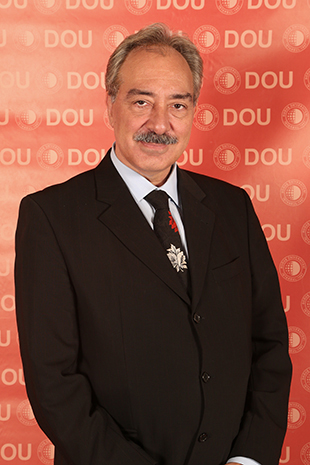
Dr. Amr Abdelnasser is Associate Professor at Istanbul Technical University's Geological Engineering Department. His research examines ore-forming processes in skarn and hydrothermal systems, with focus areas in Turkey and Egypt. He received the 2023 Academic Performance Award. Research investigates geochemical signatures of mineralization, tectonic controls on ore deposits, and remote sensing applications. Recent publications analyze Egyptian ophiolites, Eocene granitoids in NW Turkey, and gold mobility during serpentinization. He leads projects on 'Machine Learning-Based Remote Sensing for Gold Mineralizations' and 'Sarımustafalar Fe-Cu Skarn Mineralization'. His work integrates field studies, mineral chemistry, and isotopic analysis to understand metallogenic processes.
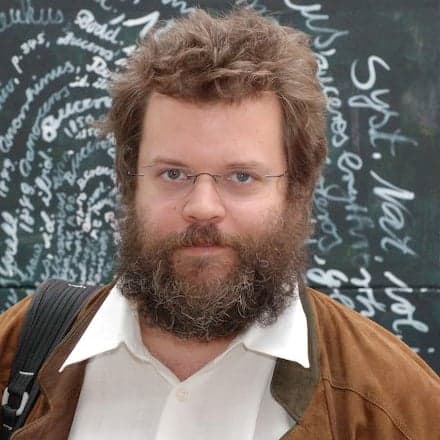
Andrew Osborn is an Associate Professor of English at the University of Dallas, serving as Director of the IPS-Literature Doctoral Program and Editor of The Wallace Stevens Journal . He holds a PhD from the University of Texas at Austin and an M.F.A. from the Iowa Writers' Workshop. His research focuses on poetic difficulty, lyric theory, formalism, and modernist/postmodernist studies. Osborn teaches courses ranging from literary traditions to creative writing, emphasizing close reading and interdisciplinary approaches. His scholarly work spans articles in journals like The Wallace Stevens Journal , Philological Review , and Contemporary Literature , exploring themes such as Stevens’s poetics, Keats/Shelley’s legacy, and Wittgenstein’s influence on literary analysis. He has authored poetry, including Plato’s Aviary , and contributed reviews to Chicago Review , Boston Review , and others, engaging with contemporary poets like Jorie Graham and Ann Lauterbach. Osborn’s keynotes, such as “Likings, Likenings, and the Push of Reading” (2014), emphasize the interplay between textual ambiguity and reader engagement. His academic leadership and editorial roles reflect his commitment to advancing interdisciplinary literary studies.
Prof. Dr. Ahmet Zafer ŞENALP is a Professor at the Department of Mechanical Engineering (English Program) at Doğuş Üniversitesi. He holds a PhD in Mechanical Engineering from ODTÜ (1998) and has extensive experience in CAD/CAM Robotics and metal forming processes. His academic career includes roles at Gebze Yüksek Teknoloji Enstitüsü (1999–2012 as Assistant Professor, promoted to Associate Professor by 2012) and Gebze Teknik Üniversitesi (until his retirement as an Associate Professor in 2019). His research focuses on finite element analysis, metal forming, plasticity theory, and ergonomic design. Education: BSc (1989), MSc (1991), and PhD (1998) in Mechanical Engineering from ODTÜ. He worked at ODTÜ CAD/CAM Robotics Center (1989–1998) and served in the military on the Panter Obüs project (1998–1999). Research Interests: Finite Element Analysis (FEA) applied to biomechanics, pressure vessels, prosthetics, and manufacturing processes. He also explores metal forming techniques, CAD/CAM integration, and material deformation mechanics. Publications span FEA-based studies on human joint forces, pressure vessel buckling, prosthetic design, and manufacturing optimization. His work often bridges computational methods with practical engineering challenges. Teaching includes courses on FEA fundamentals, mechanical vibrations, and design methodologies in both Turkish and English.
Frank Wijen is an Associate Professor in the Department of Strategic Management and Entrepreneurship at Rotterdam School of Management, Erasmus University Rotterdam. He earned his PhD in Management from Tilburg University, where he previously served as a Senior Researcher. His academic work focuses on institutional dynamics, globalization, sustainability, and organizational behavior, with a particular interest in Chinese management and environmental governance. His research interests include institutional processes, power and influence, organizational learning, corporate and national environmental management, and the interplay between globalization and sustainability. These themes are reflected in his publications across leading journals such as Academy of Management Review , Strategic Management Journal , Journal of Management , and Regulation & Governance . His recent work explores the effectiveness of sustainability standards, ownership identity in Chinese business groups, and the societal impact of foreign direct investment. The trajectory of his research output shows a strong focus on institutional theory, sustainability governance, and strategic responses to environmental and societal challenges. He has contributed significantly to understanding how organizations navigate complex regulatory environments and how national contexts—especially China—influence corporate practices. His editorial roles in top journals such as Organization Studies , Academy of Management Review , and Strategic Organization reflect his standing in the academic community. Editorial Board, Organization Studies (2008–Present) Editorial Board, Strategic Organization (2016–Present) Editorial Board, Academy of Management Review (2009–2017) Frank Wijen has also been involved in academic public engagement, notably co-developing an online course titled Driving Business Towards The SDGs , which reflects his commitment to translating research into practical impact. He has supervised four academic works, indicating active mentorship. There is no mention of awards or grants in the provided text, but his extensive publication record and editorial contributions underscore his scholarly influence. He is affiliated with research networks focusing on Chinese social sciences, environmental policy, corporate social responsibility, and sustainable development, as evidenced by his collaborative work and citation patterns.
Nancy Reagin is a Professor in the Department of Women's and Gender Studies at Pace University’s Dyson College of Arts and Sciences. She holds a PhD from Johns Hopkins University and has established herself as a leading scholar in European history, particularly in German gender history, consumer culture, and the cultural politics of fandom. Her interdisciplinary work bridges history, gender studies, and popular culture. PhD, Johns Hopkins University, 1990 MA, Johns Hopkins University, 1985 BA, University of California at Berkeley, 1983 Her research focuses on the intersections of gender, national identity, and domestic life in modern Germany, with significant contributions to understanding how consumer culture and household practices shaped national ideologies from the 19th century through the Nazi era. She has also pioneered scholarly exploration of fan communities, historical reenactment, and the use of science fiction and fantasy literature as sites of historical imagination and political analogy. Her work often examines how popular media reinterprets and refracts historical narratives. Her recent publications reveal a strong trend toward analyzing fandom as a form of historical engagement, particularly in transatlantic contexts. She investigates how Western reenactment, Star Wars , and Harry Potter serve as vehicles for processing historical trauma, constructing identity, and negotiating political ideologies. These works span cultural history, media studies, and reception theory, demonstrating her interdisciplinary reach. LGBTQ Educator of the Year Award, Pace University, 2015 Kenan Award for Teaching Excellence, Pace University, 2014 Undergraduate Research Initiative Award, Pace University, 2011 Distinguished Faculty Research Award, Dyson College, 2010 Special Service Award, Pace Student Government Association, 2001 Nancy Reagin has been deeply involved in academic leadership and mentoring, having chaired the Department of Women's and Gender Studies, the Faculty Council, and served as interim Academic Associate Provost. She has secured significant research funding from the National Endowment for the Humanities, Fulbright, and Verizon, supporting projects on educational resources and historical research. While specific advisees are not listed, her leadership in undergraduate research and teaching excellence underscores her commitment to student mentorship. Her work on educational initiatives, including the 'Reacting to the Past' pedagogical model, reflects her engagement with innovative teaching methods that immerse students in historical role-playing. She has also contributed to public-facing scholarship through edited companions to fantasy and science fiction literature, expanding the reach of historical analysis beyond academia.
Manfred Laubichler is President’s Professor of Theoretical Biology and History of Biology at Arizona State University (ASU), where he serves as Director of the School of Complex Adaptive Systems and the Global Biosocial Complexity Initiative. He is also an External Professor at the Santa Fe Institute (SFI) and co-director of the ASU-SFI Center for Biosocial Complex Systems. His academic affiliations include the Center for Social Dynamics and Complexity, the Center for Biology and Society, the Center for Evolution and Medicine, and the Water Institute at ASU. His educational background spans zoology, philosophy, and mathematics from the University of Vienna; biology from Yale University; and history/history of science from Princeton University. Laubichler's research centers on evolutionary novelties across scales—from genomes to knowledge systems—alongside the structure of evolutionary theory and the evolution of scientific knowledge. His work bridges theoretical biology, philosophy of science, and complex systems, with a strong emphasis on biosocial complexity and sustainability. He has contributed extensively to understanding the conceptual foundations of evolutionary developmental biology (Evo-Devo) and the historical and philosophical dimensions of biological theory. His recent publications reflect an interdisciplinary trend, integrating epidemiology, public health, and social behavior during crises such as the COVID-19 pandemic, while maintaining a core focus on theoretical biology, history of science, and complex systems. Themes include trust, scientific responsibility, epistemology of science, and modeling biosocial dynamics. Elected Fellow of the American Association for the Advancement of Science Fellow at the Wissenschaftskolleg zu Berlin Vice Chair of the Global Climate Forum Laubichler has led multiple NSF-funded research initiatives in digital humanities, history and philosophy of science, and complex adaptive systems. He has advised numerous doctoral projects and co-led training programs such as the Embryo Project. He is actively involved in interdisciplinary labs and centers, including the Information and Competition Lab, Complexity Economics Lab, and the Social Insect Research Group. His leadership extends to editorial roles in journals like Biological Theory , Journal of Experimental Zoology Part B , and the Archimedes series.
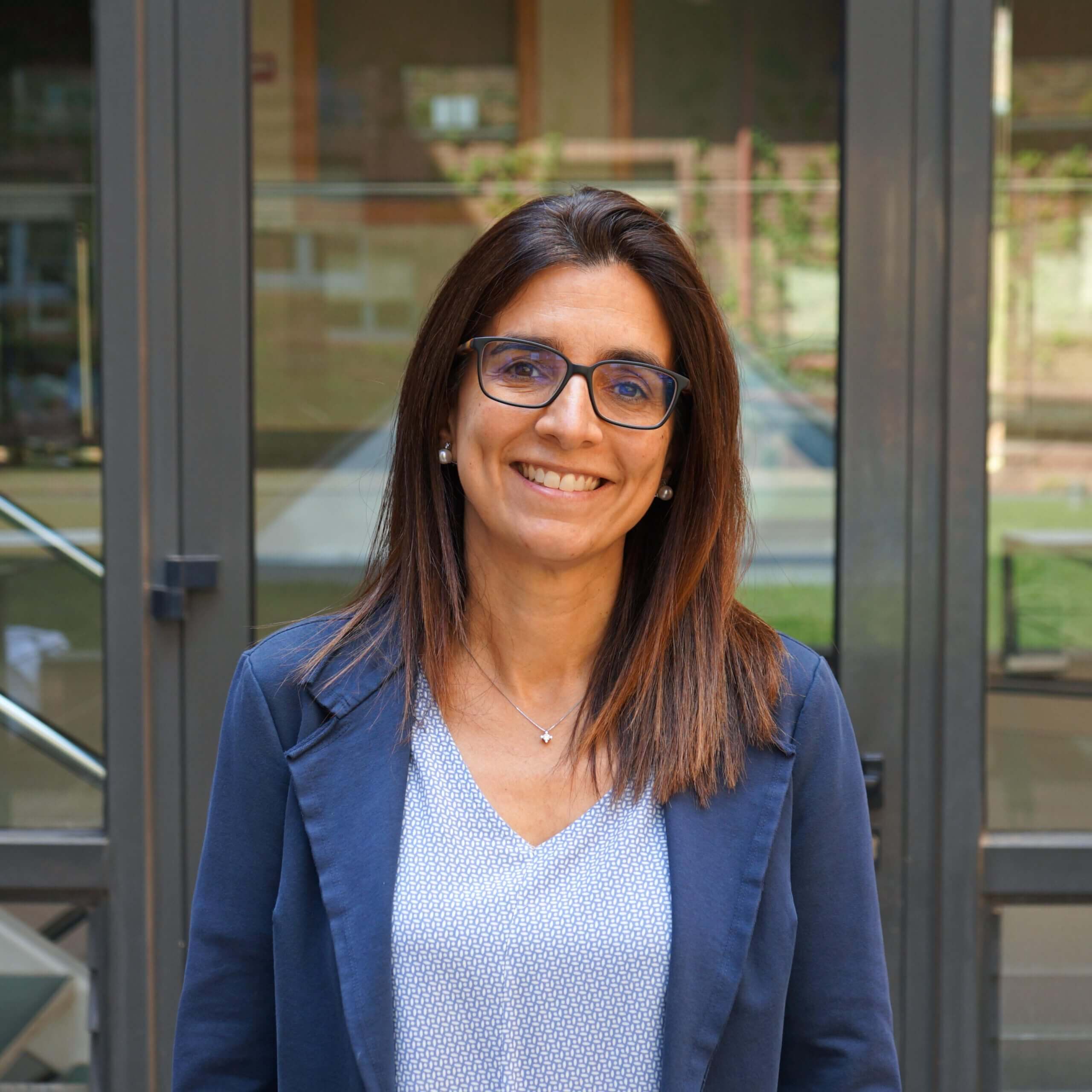
Judith Báguena Polo is an Assistant Professor in the Department of Analytical and Applied Chemistry at IQS School of Engineering, Universitat Ramon Llull. She has been a key figure in academic quality management since 2000 and currently serves as Coordinator of the Bachelor’s Degree in Chemistry. Her work bridges analytical chemistry and educational innovation through data analytics. Ph.D. in Chemistry, Universitat Ramon Llull (2008) MSc in Environmental Studies, IQS (2000) Bachelor of Chemical Engineering, IQS (1999) Degree in Chemistry, Universitat Ramon Llull (1997) Her research centers on quality assurance in chemical laboratories, including validation of analytical methods and metrological equipment confirmation, as well as quality in higher education. She is a member of the ADAMIQS research group, which applies data analytics and modeling across biosciences, engineering, and education. Her recent work explores the integration of data-driven methods in STEM pedagogy and environmental monitoring. The most recent publications reflect a dual focus: environmental analytical chemistry, particularly pharmaceutical pollution in Catalan rivers using advanced chromatographic techniques, and innovations in university education, especially through Study and Research Paths and peer assessment models. These works highlight her interdisciplinary approach, combining rigorous analytical science with educational development. She has contributed to several research projects, including 4BSERLA (STEM education with remote labs), EDUParadigms-HE (educational transitions), and ADAMIQS (data analytics modeling). These projects emphasize collaborative, interdisciplinary research aimed at improving science education and analytical methodologies. Judith Báguena Polo supervises academic programs such as the Bachelor’s in Chemistry and contributes to the Master’s in Materials Science and Engineering. She is actively involved in curriculum development and quality assurance at the institutional level, ensuring alignment with academic standards and industry needs.
Rodrigo Lopes De Barros Oliveira is an active Lecturer at the University of the Balearic Islands (UIB), specializing in Spanish Language Education within the Department of Spanish Philology and Language Education. He teaches courses including Teaching Spanish in Primary Education, Language in the Early Childhood Classroom, and Spanish Language Communication Strategies for both Bachelor's and Double Degree programs in Education. His academic career spans teaching activities through the 2025-26 academic year, demonstrating ongoing institutional engagement. His research interests center on Brazilian literature, creative writing, and experimental film production with particular focus on urban cultural studies and representations of social marginalization. Oliveira's creative output reveals a distinctive voice exploring São Paulo's urban landscape, often employing dark social commentary and experimental narrative forms that challenge conventional literary boundaries. His work frequently examines the intersection of Brazilian identity, political resistance, and bodily experience within contemporary society. Oliveira's creative works demonstrate consistent thematic evolution toward increasingly complex explorations of surveillance, urban decay, and cultural resistance. His film projects often blend documentary and experimental techniques while his literary works maintain a strong connection to Brazilian social realities. The academic analysis of his work, such as Milton Francisco's semiotic study of 'A Carne do Metrô,' confirms his significance within contemporary Brazilian literary discourse. Scientific Recognition: Cultural Contest Caderno 2 in the 450 Years of São Paulo (2004) for 'A Carne do Metrô' As an educator, Oliveira guides students through foundational language education courses and supervises Bachelor's Thesis projects in Early Childhood Education. His creative practice informs his pedagogical approach, bringing real-world artistic experience into the classroom. While specific research grants aren't documented in the provided materials, his sustained creative output across multiple media suggests ongoing scholarly engagement. Oliveira is affiliated with the Art and Education - Music and Art Laboratory (GRAiE - Mus&Art Lab), a consolidated experimental R&D&I group at UIB, indicating active participation in interdisciplinary artistic research. His work bridges academic scholarship with creative practice, positioning him at the intersection of education, literature, and visual arts within the university setting.
Diego Golombek is a full professor at the University of San Andrés and a professor at the National University of Quilmes, Argentina. He is also a senior researcher at CONICET, specializing in chronobiology—the study of biological rhythms and circadian clocks. His work bridges rigorous scientific research with extensive public science communication. His research interests center on chronobiology , circadian rhythms , and biological clocks , with implications in neuroscience and physiology. He has published approximately 180 scientific papers and has been a visiting professor at numerous universities nationally and internationally, contributing significantly to the understanding of time-related biological processes. The trends in his scholarly output reflect a strong focus on the molecular and behavioral aspects of circadian regulation, often integrating experimental models with translational applications. His work spans disciplines including biology, neuroscience, and sleep science. Scientific Awards: Konex Prize IgNobel Prize Kalinga-UNESCO Prize for Scientific Dissemination Guggenheim Fellowship Bernardo Houssay National Science Prize Diego Golombek has supervised various students and mentored researchers in chronobiology, though specific names are not listed. He has received major grants from national and international funding bodies, including support from CONICET and the Guggenheim Foundation, enabling both his research and science outreach initiatives. He directs the Ciencia que Ladra collection and is actively involved in science communication through books, media appearances, and public lectures, forming part of interdisciplinary teams dedicated to making science accessible to broad audiences.
Tess Dorothy McNulty is an Assistant Professor in the Department of English at the University of Illinois, with a joint appointment at the National Center for Supercomputing Applications (NCSA). Her work sits at the intersection of literary studies, digital humanities, and ethical theory, exploring how new media forms reshape cultural and literary practices. Her key research areas include Digital Humanities , Literary Ethics , New Media , and Popular Arts . McNulty investigates the social functions of lyric poetry, the ethical implications of digital content, and the role of anecdotes in contemporary literature. Her approach combines analytic philosophy with media theory to understand the reading process and literary form in the digital age. Recent publications reveal a focus on content forms and ethics in the digital era, with trends indicating growing interest in computational analysis of literary phenomena. McNulty's affiliation with NCSA enables her to leverage high-performance computing for innovative humanities research. At the National Center for Supercomputing Applications, McNulty collaborates with computational researchers to develop new methodologies for analyzing large textual corpora, contributing to interdisciplinary projects that bridge humanities and technology.
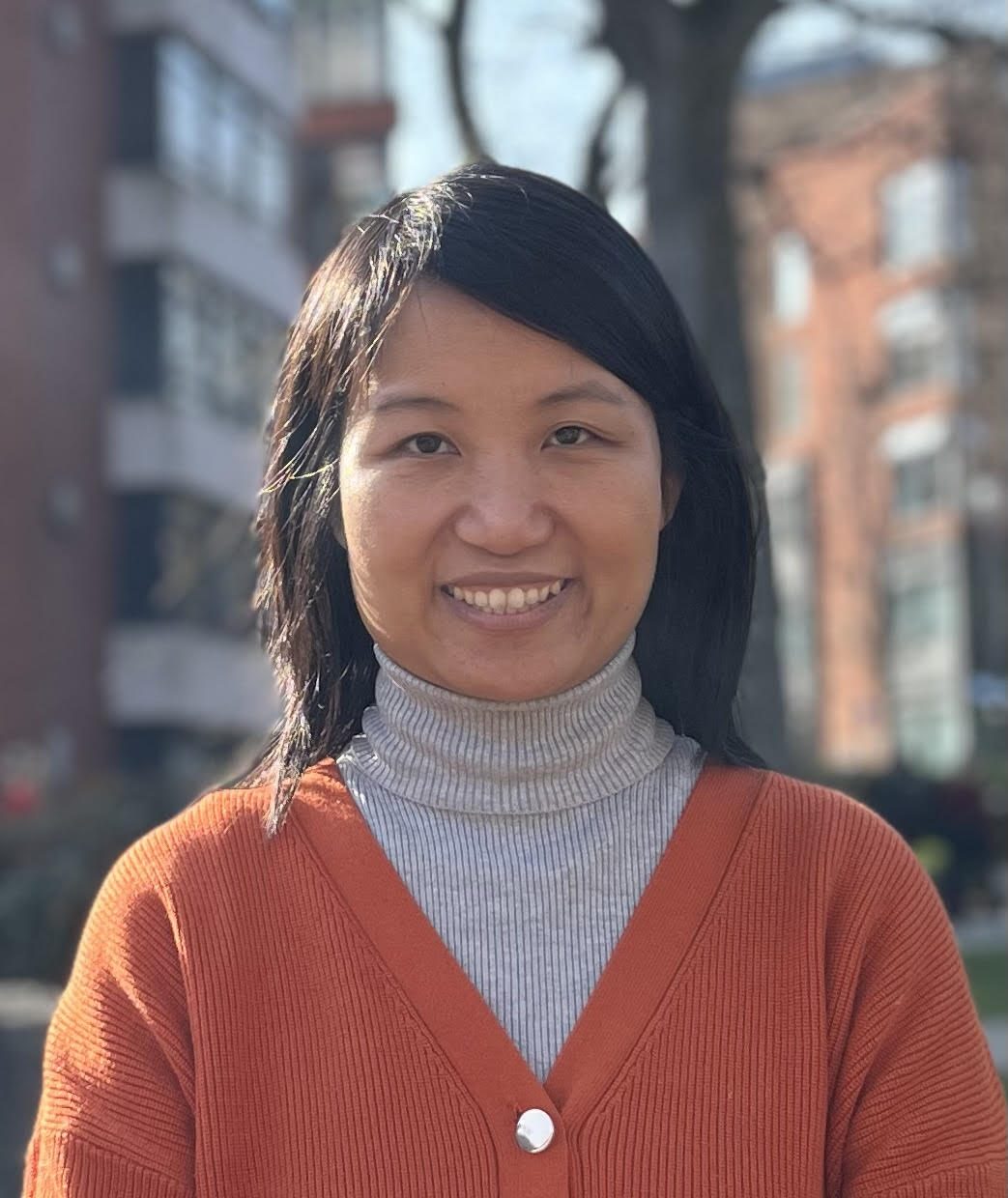
Jane Qian Liu is Associate Professor of Translation and Chinese Studies at the University of Warwick, where she also serves as Head of Translation and Transcultural Studies and Director of Research for Translation and Transcultural Studies (both since 2024). She earned her DPhil in Oriental Studies from the University of Oxford in 2014, following an MA in Comparative Literature and World Literature from Beijing Normal University (2010) and dual BA degrees in Chinese Language and Literature and English Language and Literature from the same institution (2007). Dr. Liu's research centers on cross-cultural literary exchanges between China and the West, particularly examining translation practices, intertextuality, and reader reception in early twentieth-century China. Her work investigates how Chinese translators creatively adapted Western literary works through processes like pseudotranslation, and how these adaptations shaped modern Chinese literary forms. She has made significant contributions to understanding the role of emotion, lyricism, and transcultural dynamics in literary transmission. Dr. Liu's scholarly output reveals a consistent trajectory toward examining the complex interplay between translated texts and reader experiences. Her research shows increasing sophistication in conceptual frameworks, moving from textual analysis to incorporate reader response theory and metaphysical considerations of literary reception. Key themes across her publications include the adaptation of European literature in China, the creation of alternative romantic spaces through translation, and the cultural significance of reading practices. Among her accolades, Dr. Liu received the 'Good Book Review of the Year' award from China Book Review in 2021. She serves as associate editor of Comparative Literature & World Literature and has conducted interviews with prominent scholars including Henrietta Harrison, Douglas Robinson, and Rebecca L. Walkowitz, which have been published in the same journal. Dr. Liu actively supervises PhD students working on East-West cultural and literary exchanges, with current advisees including Shaoyu Yang, Yuqing Zhang, Xinyao Zhang, Ambra Minoli, and Yaqi Xi. She convenes several postgraduate courses including 'Translation and Transcultural Encounters between China and the West' and 'Dissertation in Translation Studies,' reflecting her commitment to training the next generation of translation scholars. As a practicing translator, Dr. Liu has translated Bob Eckstein's Footnotes from the World's Greatest Bookstores into Chinese (Commercial Press, 2021), which received an 8.0 rating on Douban, as well as scholarly works by Stephen Owen and Andrew Jones for Theories of World Literature, a Reader (Peking University Press, 2013).
Dr. Alex Mäkiharju is a Researcher at Åbo Akademi University's Faculty of Education and Welfare Studies, Department of Education. Their work bridges cultural-historical activity theory with contemporary educational governance challenges. Key research areas: Curriculum Leadership, Cross-curricular Teaching, Cultural-historical Activity Theory Active in Nordic educational policy analysis and leadership studies Collaborates with researchers across Finland, Sweden, and Norway Research Focus: Examines how educational leadership navigates policy expectations while implementing cross-curricular reforms, particularly in Finland's trust-based governance system. Publications: Recent works analyze principals' autonomy tensions, transnational policy influences, and epistemological shifts in curriculum development. Articles show specialization in Nordic educational systems (66% of output) and leadership dynamics (50% of publications). Activities: Regularly presents at Nordic educational conferences, including NERA (Nordic Educational Research Association) and contributes to editorial work for academic journals.
Alex Borgella is an Associate Professor of Psychology at Fort Lewis College in Durango, Colorado, where he also leads the Social Perception Experimentation (SPEx) Lab. He holds a Ph.D. in Social Psychology from Tufts University (2017), an M.A. from James Madison University, and a B.A. from the University of West Florida. Prior to joining Fort Lewis College in 2019, he served as a Visiting Assistant Professor at Bates College. Ph.D., Social Psychology, Tufts University, 2017 M.A., Psychological Sciences, James Madison University, 2012 B.A., Psychology, University of West Florida, 2010 Dr. Borgella's research centers on social psychological mechanisms of stereotyping, prejudice, and discrimination. His work explores intergroup interactions, implicit bias, within-group racial bias, and stereotype threat, particularly in understudied populations such as Indigenous communities, people with multiple stigmatized identities, and in contexts like combat sports and social media. He investigates how identity-related humor can reduce intergroup anxiety and how generative AI representations affect psychosocial well-being. His research has been published in journals including the Journal of Experimental Social Psychology , Psychology of Sport and Exercise , and Humor: International Journal of Humor Research , and has been featured in NPR, Psychology Today, VICE, and Gizmodo. His most recent publications show a strong trend in examining subtle forms of bias in dynamic settings—such as UFC refereeing and social media—and in exploring how stereotype threat manifests across diverse identities, including White individuals in rhythmic performance. His 2024 Mamie Phipps Clark Faculty Research Award supports groundbreaking work on text-to-image AI and racial representation. 2024 Mamie Phipps Clark Faculty Research Award (APA and Psi Chi) Featured Scholar, Fort Lewis College Alice Admire Outstanding Teaching Award Ginny Hutchins Teaching Award for New Faculty Best Educator in Durango FLC Achievement Award Dr. Borgella is a dedicated mentor, supervising numerous undergraduate research projects through the SPEx Lab. Many of his students have presented at national conferences and pursued graduate studies. He teaches core courses such as Research Methods, Social Psychology, and the Senior Research Capstone. He is currently securing funding and mentoring students on projects related to AI, social media bias, and intergroup dynamics. His lab, originally founded at Bates College, is now based at Fort Lewis College and actively recruits undergraduates.
Freda B. Lynn is Professor of Sociology at the University of Iowa, affiliated with the College of Liberal Arts and Sciences. Her research focuses on status, stratification, and social networks, employing quantitative and computational methods. She teaches courses in quantitative methods, social stratification, and network analysis. Research Interests: Her work centers on how status hierarchies are formed and maintained, especially through educational background, occupational valuation, and early socialization. She investigates the mechanisms of cumulative advantage and how group perceptions shape social inequality. Using experimental, survey, and network-based approaches, she contributes to analytical sociology and the sociology of organizations. Publication Trends: Her recent publications (2017–2024) reveal a consistent focus on the social construction of occupational value, intersectional agreement in status judgments, and the structural architecture of status systems. These works appear in leading journals such as American Sociological Review , Social Forces , and Social Psychology Quarterly , reflecting her influence in social psychology and stratification research. Scientific Awards: Collegiate Teaching Award, College of Liberal Arts and Sciences (2018) Hubbard-Walder Award for Excellence in Teaching, University of Iowa (2022) Advising and Grants: Professor Lynn has secured research funding from the National Science Foundation. While specific advisees are not listed, she is actively involved in graduate education and supervises research in sociology. She contributes to academic service through editorial boards and participation in research centers. Labs and Teams: She is associated with the Center for the Study of Group Processes, a key research hub for social psychological sociology at the University of Iowa. This center supports collaborative research on group dynamics, status, and social influence.
Maurizio Marco Bocconcino is an Associate Professor in the Department of Structural, Building and Geotechnical Engineering (DISEG) at Politecnico di Torino. He is a member of the Interdepartmental Center R3C (Responsible Risk Resilience Center) and serves as Coordinator of basic subjects for the 2nd year of Engineering. His academic work bridges civil engineering and architectural design, with a strong focus on representation and digital modeling. His research interests include engineering drawing, territorial and urban surveying, geographic information systems (GIS), Building Information Modeling (BIM), data representation, and tools for urban and social regeneration. He investigates methods for surveying historic buildings, urban resilience, and the integration of digital technologies in heritage and urban planning. His work is aligned with UN Sustainable Development Goals 11 and 17, emphasizing sustainable cities and collaborative research. Bocconcino's recent publications explore digital archives for academic heritage, analog artifacts in engineering education, urban form, LEAN-BIM integration, and the visualization of social impact. His research outputs span journals such as DISEGNO , International Archives of the Photogrammetry, Remote Sensing and Spatial Information Sciences , and AGATHÓN , as well as conference proceedings in representation and urban planning disciplines. He is actively involved in research projects, including the EU-funded MAINCODE project on urban climate shelters and multiple commercial consulting contracts as Scientific Manager, focusing on urban and social regeneration. His teaching responsibilities include courses in engineering drawing, digital modeling, and graphic language across Civil, Environmental, and Building Engineering programs. Bocconcino collaborates with researchers such as Mariapaola Vozzola, Giorgio Garzino, Martino Pavignano, and Fabio Manzone. His affiliations with ERC sectors highlight expertise in civil engineering, computational modeling in culture, computer graphics, design, and information systems.