Florian Funke is a Researcher at the School of Computer Science , University of Leipzig, and Coordinator of the MIT School Network since September 2023. He previously served as a Lecturer for Special Tasks (LfbA) at the Chair of Didactics of Computer Science from March 2020 to August 2023. Education: Studied Higher Teaching Qualification for Gymnasium in Physics and Computer Science at University of Leipzig, completed with State Examination (2013–2019). Research Interests: Focuses on E-Assessment and Digital Learning , including digitization of assessment systems, design of interactive digital teaching environments, and implementation of systematic feedback mechanisms in educational contexts. His work spans technical and pedagogical aspects of digital tools in schools, with particular emphasis on structured domain content analysis and error detection in digital assessments. Scientific Leadership: Coordinates the MIT School Network and contributes to research projects like PraxisdigitaliS (BMBF-funded) and the evaluation of MIT Schools in Saxony. Serves on committees for the German Informatics Society, promoting computer science education in Saxony and Thuringia.
Anton Vasyunin is a Researcher at the Max Planck Institute for Astronomy (MPIA) in Heidelberg, Germany, where he leads the Planet and Star Formation research group. His work focuses on the physical and chemical processes governing stellar and planetary system evolution. Research interests include: Thermochemical modeling of protoplanetary disks Non-LTE radiative transfer in star-forming regions Chemical evolution during planet formation Interstellar ice chemistry Dust grain growth mechanisms Dr. Vasyunin employs advanced computational methods to simulate molecular cloud collapse and disk chemistry, contributing to observational interpretation from facilities like ALMA. His research bridges theoretical astrophysics with observational constraints to unravel planetary system origins.
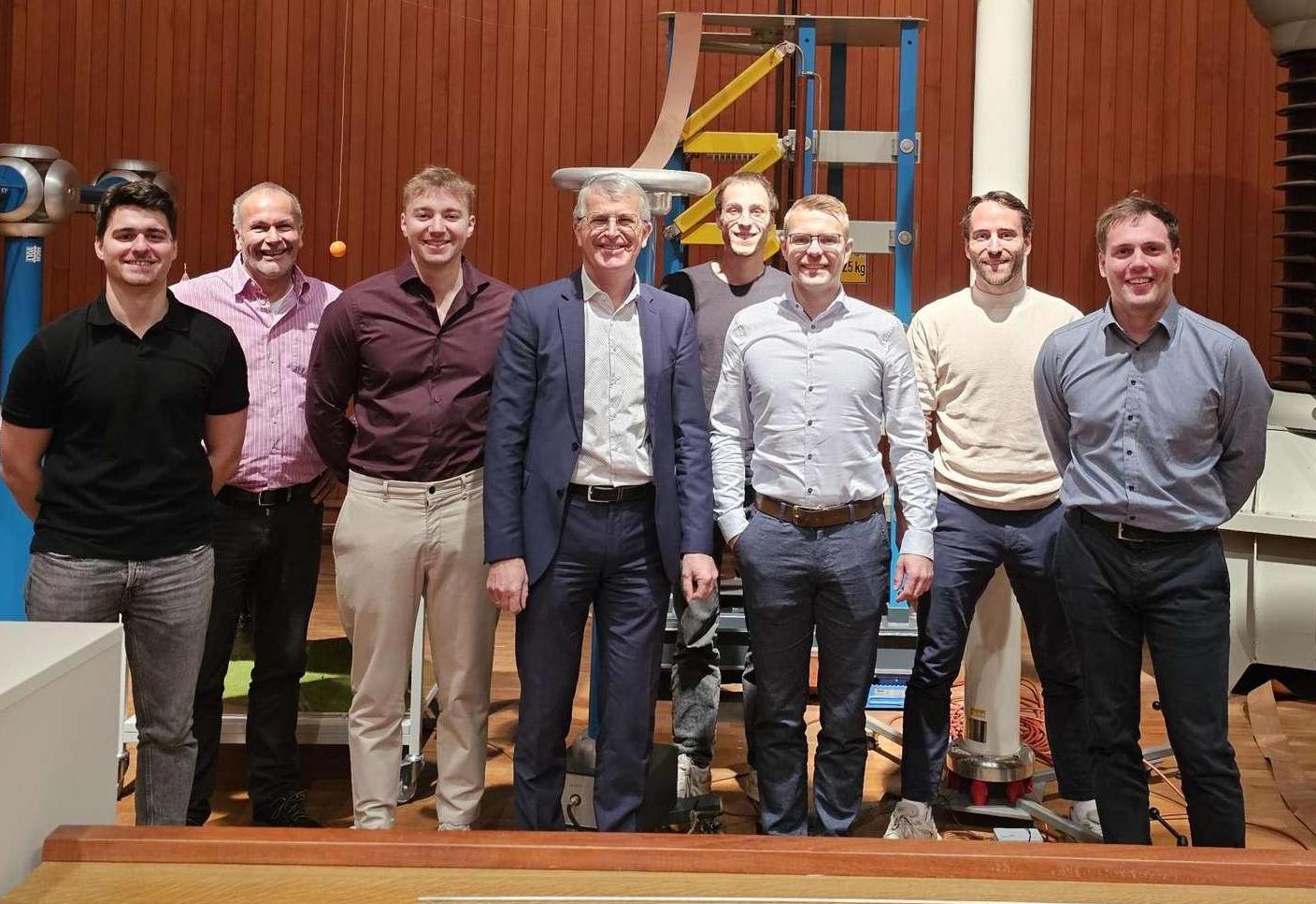
Prof. Dr.-Ing. Michael Finkel is a full Professor at Augsburg University of Applied Sciences in the Faculty of Electrical Engineering, where he serves as Academic Advisor for International Industrial Engineering, Member of the Faculty Council, and Chair of the Examination Board. His professional affiliations include memberships in CIGRE, IEEE, VDE, and the EMC Project Group of FNN. He received the Bavarian Certificate of Higher Education Teaching in 2009 and multiple research awards including ETG Literature Prizes and Young Author Awards. Professor Finkel's research focuses on High-Voltage Engineering, Power Systems, and Smart Grid technologies. His work addresses critical challenges in renewable energy integration, grid stability, and distributed energy resources. Key research areas include: Island grid operation and emergency power systems Smart grid digitalization and control strategies Electric vehicle integration in urban networks Power system stability and frequency control Renewable energy forecasting and grid integration His recent publications demonstrate strong focus on converter-dominated grids, renewable integration, and smart grid solutions. Research trends show increasing emphasis on real-time grid monitoring, AI applications in power systems, and hybrid energy solutions. Collaborative projects frequently involve industry partnerships and international research networks. Significant scientific recognitions include: ETG Literature Prize 2024 for heat pump load modeling Young Author Award 2025 for hydropower island grid research HSA_transfer Award 2022 for technology transfer Multiple best paper awards at international conferences Professor Finkel actively supervises doctoral candidates in power systems research and leads projects funded by industry and public grants. Current initiatives include developing emergency power solutions for critical infrastructure and advanced monitoring systems for distribution networks. His research group collaborates extensively with the Technology Transfer Centers of Augsburg University and industry partners in the energy sector.
Prof. Dr.-Ing. habil. Kai Willner is a distinguished Professor at the Chair of Engineering Mechanics within the Department of Mechanical Engineering at Friedrich-Alexander-Universität Erlangen-Nürnberg (FAU). His research spans multiple domains of computational mechanics with significant contributions to structural dynamics, uncertainty quantification, and biomechanics. His current work focuses on innovative applications of fuzzy arithmetic in engineering systems and the mechanics of brain tissue. Principal Investigator for SFB 1540 EBM (Erforschung der Mechanik des Gehirns) Lead researcher on multiple DFG-funded projects including polymorphic uncertainty modeling Active participant in international collaborations on structural dynamics Member of the research group FOR 2271 on process-oriented tolerance management Willner's research interests center on computational mechanics with emphasis on uncertainty quantification , fuzzy-stochastic finite element methods , contact mechanics , and brain biomechanics . His work addresses fundamental challenges in modeling systems with uncertain parameters, particularly in heterogeneous materials and biological systems. His research group develops advanced computational frameworks that integrate fuzzy arithmetic with traditional finite element methods to handle epistemic and aleatoric uncertainties simultaneously, with applications ranging from microstructural analysis to brain mechanics. Analysis of his recent publications reveals a strong trend toward interdisciplinary research, particularly at the intersection of computational mechanics and neuroscience. His work on brain mechanics within the SFB 1540 EBM project represents a significant shift toward biomedical applications of traditional mechanical engineering methods. His publications consistently demonstrate expertise in vibration analysis, structural dynamics, and uncertainty quantification, with increasing focus on applying these methods to biological systems and complex material behaviors. Prof. Willner has secured substantial third-party funding from the German Research Foundation (DFG), including multiple collaborative research center (SFB/TRR) projects, research units (FOR), and individual grants. His current major projects include the SFB 1540 EBM (2023-2026) investigating brain mechanics, and continuing work on polymorphic uncertainty modeling in heterogeneous materials. Within the SFB 1540 EBM consortium, Willner leads research on model-based matching of ex vivo and in vivo test data (project X01), focusing on resolving contradictions in mechanical properties of ultraweak brain tissue materials across different testing modalities. His team develops continuum-based simulation models to unify various experimental observations into a coherent mechanical framework for brain tissue.
Hayley Bunn is a Research Fellow at the Center for Astrochemical Studies, Max Planck Institute for extraterrestrial Physics in Garching, Germany, where she conducts advanced research in cosmic chemical processes. Her position as a postdoctoral scientist places her within a premier institution dedicated to astrophysical research. Her work focuses on the interdisciplinary field of astrochemistry, examining molecular formation and reactions in space environments. Key research areas include: Chemical kinetics in the interstellar medium Observational astrochemistry using telescope data Molecular evolution in star-forming regions Laboratory simulations of space chemistry Spectral analysis of cosmic molecules Thermochemical modeling of astrophysical environments As part of the Center for Astrochemical Studies, Dr. Bunn collaborates with international teams to integrate observational, experimental, and computational approaches for understanding universal chemical complexity. The center leverages cutting-edge facilities including radio telescopes and molecular spectroscopy labs. No scientific awards or honors were documented in the available materials. Information regarding student supervision, grant funding, or laboratory leadership roles was not provided in the source text.
Pavol Jusko is a Researcher at the Center for Astrochemical Studies within the Max Planck Institute for extraterrestrial Physics, located in Garching, Bavaria, Germany. His institutional affiliation encompasses the institute's address at Gießenbachstraße 1, 85748 Garching. Dr. Jusko's research centers on astrochemistry, investigating chemical processes in interstellar and circumstellar environments. His work integrates astrophysics and molecular physics to analyze molecular formation, evolution, and reactions in space, contributing to broader understanding of cosmic chemical ecosystems. This research employs observational, experimental, and theoretical methodologies to decode spectral signatures and reaction pathways in astrochemical contexts. As a core member of the Center for Astrochemical Studies team, he participates in collaborative projects examining molecular clouds, star-forming regions, and planetary system chemistry. The center maintains specialized laboratory facilities and observational partnerships for simulating space conditions and analyzing astronomical data.