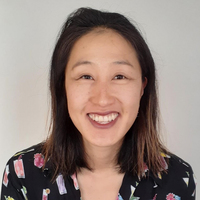
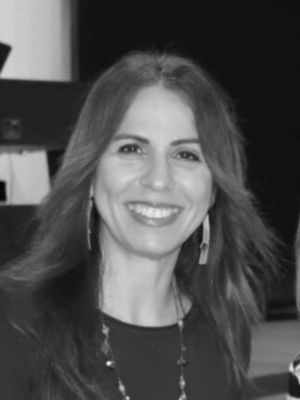
Ms. Eileen Espinoza is an Adjunct Professor of English at Shepherd University, teaching in the Department of English and Modern Languages since Fall 2023. She holds an M.F.A. in Nonfiction from the University of California, Riverside, and also teaches poetry in the M.F.A. program at Maharishi International University. Her academic roles include composition instruction in Shepherd's first-year writing program. Education: B.A. from Shepherd University (2015), M.F.A. in Nonfiction (UC Riverside) Research Interests: Creative writing (poetry/nonfiction), death studies, LGBTQ+ studies, spirituality, and publishing. Her work explores grief rituals, nature, and pop culture through lyrical nonfiction and poetry. Notable publications include works in the Los Angeles Review of Books , Bellvue Literary Review , and Joyland Magazine . She co-founded Boshemia , a feminist arts magazine, in 2016. Her 2024 book Carrying the Bones examines grief rituals in Western societies. Key Awards: 2021 McQuern Award in Nonfiction, finalist for Annie Dillard Award (2021), finalist for Marica and Jan Vilcek Poetry Prize (2020). Lives in Shepherdstown with her wife, poet Joshua Jennifer Espinoza, and frequently resides in the Mojave Desert. Active in interdisciplinary projects bridging literature and environmental/cultural studies.
Johan Alfredsson is a Senior Lecturer in the Department of Literature, History of Ideas, and Religion at the University of Gothenburg. He maintains an active research profile with numerous publications spanning from 2008 to the present, including several works scheduled for 2025 publication. His work demonstrates interdisciplinary engagement across literary studies, cultural analysis, and educational theory. Alfredsson's research focuses primarily on Nordic poetry, with particular emphasis on contemporary Swedish and Scandinavian poetic traditions. His scholarly interests include the political dimensions of poetic language, children's literature and poetry, gender studies in literature, multilingual poetry, and the relationship between poetry and environmental concerns. He frequently explores how poetic language functions in educational contexts, particularly in relation to children's development and literacy. His recent publications (2021-2025) reveal a trajectory toward increasingly interdisciplinary work that connects poetry with broader social, political, and environmental concerns. Alfredsson demonstrates particular interest in ecopoetry, the role of poetry in addressing contemporary social polarization, and the performative potential of poetic language in children's literature. His scholarship often examines specific poets including Kristina Lugn, Ursula Andkjær Olsen, Ida Börjel, and Cia Rinne. Alfredsson frequently collaborates with other scholars, as evidenced by co-authored publications including "Poesins platser" with Julia Pennlert and "Kjønnskrift/Kønskrift/Könskrift" with Hadle Oftedal Andersen and Susanne Kemp. His work appears in both Swedish and international academic venues, reflecting his engagement with both national and global scholarly conversations.
Kirsty Kitto is an Associate Professor at the University of Technology Sydney in the Learning Design and Technology Unit. With a background in theoretical physics and computer science, her research focuses on developing quantum-inspired models of contextuality to understand complex human behavior in educational systems. She explores the intersection of Artificial Intelligence (AI) , Learning Analytics , and Educational Theory , seeking to bridge the divide between big data and pedagogical frameworks. Current Appointments : Associate Professor (2020-present), Senior Lecturer (2017-2020) Past Academic Roles : Senior Research Fellow (QUT), Senior Lecturer (QUT), Associate Lecturer (Flinders University) Her funded research includes projects on: Quantum models in cognitive systems (ARC Fellowship DP1094974) AI literacy in digital workplaces (IEEE Transactions study) Contextual learning analytics (DVC Education and Students Division) Skills passports for lifelong learning (UMAP 2024 paper) Kitto's recent work examines human-AI interaction in writing assessment, data storytelling for teacher-centered analytics, and causal modeling to strengthen educational theory-data connections. She actively supervises Masters and PhD students and contributes to policy debates through government submissions on generative AI in education. Her methodology combines mathematical formalism with sociotechnical analysis to address educational complexity.
Zabitgil Gülseren, Özlem is an academic at Istanbul Sabahattin Zaim University specializing in English Language Teaching (ELT) and Second Language Acquisition . Her work focuses on integrating technology into language instruction, analyzing learner anxiety, and evaluating pedagogical methods. Research Themes : Technology-enhanced learning, vocabulary acquisition, formative assessment. Key Collaborations : Co-authored studies with Sıla Selver Akar, Enes Atay, and others. Article Trends : Recent works (2024) examine authentic video-based vocabulary instruction, while 2022–2020 studies explore online collaborative writing, digital storytelling, and formative assessment practices. Earlier works (2015–2019) analyze anxiety, gender factors in strategy use, and classical teaching methods. Advising and Grants : Supervised research on topics like digital tools in ELT and L1 usage in classrooms. No specific grant details provided in the text.
Min Kyu Kim is an Associate Professor in the Department of Learning Sciences at Georgia State University's College of Education & Human Development, where he founded the AI² Research Laboratory. His work focuses on transformative learning experiences in technology-rich environments. Education: Ph.D. in Learning, Design, and Technology from University of Georgia (2012) M.A. from Yonsei University, Seoul, Korea (2001) B.S. from Yonsei University, Seoul, Korea (1997) Kim's research explores two core questions: (1) How to personalize learning through AI and augmented reality? (2) How to create accessible learner experiences using immersive technologies. His work emphasizes adaptability, engagement, equity, and effectiveness in education. Recent publications demonstrate expertise in AI integration (34% of articles), educational assessment (29%), and writing instruction (37%). Key themes include interactive learning systems, digital literacy development, and cognitive engagement metrics.
Karen Schramm serves as Professor in the Department of English at Delaware Valley University, where she has taught 23 distinct courses since joining this teaching-focused institution. Her academic journey spans appointments at Rutgers University, the University of Delaware, Rowan University, and community colleges, with her current role emphasizing innovative pedagogy and environmental advocacy. As a Partner in Conservation with the World Wildlife Fund, she actively supports global wilderness protection initiatives across the Amazon and American Prairie. Education: Ph.D. in English (American Literature), University of Delaware M.A. in English, Rutgers University B.A. in English, Rutgers University Dr. Schramm's research centers on environmental literature's role in American cultural identity, particularly examining wilderness narratives from the American Renaissance period. Her scholarship bridges literary analysis with conservation ethics through courses like Environmental Literature and Introduction to Literature: Creature Comforts, which explores animal representations in fiction and creative non-fiction. This interdisciplinary approach extends to her personal commitment to nature, demonstrated by her lifelong documentation of cicada emergences since childhood. Her 30+ publications reveal consistent thematic evolution from early pedagogical innovations to current environmental scholarship, featuring definitive contributions in Oxford and Cambridge University Press volumes. While haiku poetry reflects her nature-focused aesthetic, her academic work demonstrates sophisticated analysis of wilderness discourse in American literature and practical applications in educational technology. The publications collectively showcase her dual commitment to advancing literary scholarship and transforming classroom practice through creative methodology. Scientific Awards: $300 award for best article in Teaching for Success (1997) Dr. Schramm has mentored student writers through 15 consecutive years (1998-2013) as advisor and copy-editor for The Gleaner , the university's literary magazine, while developing innovative teaching methodologies like the 'Angered Porcupine' approach. Her scholarly productivity includes six biographical entries for the American National Biography and multiple book chapters addressing technology integration in education, though specific research grants aren't documented in available materials. Her conservation partnership with WWF represents significant professional engagement beyond traditional academic boundaries. No dedicated research laboratories or formal research teams are referenced in her professional documentation, with scholarly activities primarily conducted through individual publication and institutional teaching roles.
Sheldon George is Professor of Africana Studies at the University of Massachusetts Boston, where he joined the faculty in 2024. He holds a Ph.D. in English from Boston College and previously served in academic leadership roles including Director of Graduate English, Department Chair of Literature & Writing, and Director of General Education at prior institutions. His research focuses on African American literature, Lacanian psychoanalytic theory, race studies, diasporic Black women writers, and narrative theory. George examines how racial identity intersects with trauma, subjectivity, and social structures through literary and theoretical frameworks. His work bridges psychoanalytic theory with critical race studies, exploring themes of racial violence, identity formation, and cultural representation. George has published extensively on racial trauma and psychoanalytic approaches to race, with recent works exploring Christian nationalism, whiteness studies, and narrative innovations in global Black women's writing. His scholarship demonstrates consistent engagement with Toni Morrison's oeuvre, Lacanian theory applications to race, and contemporary racial discourse. He serves as Associate Editor of Psychoanalysis, Culture and Society and recently chaired the MLA Executive Committee for Psychology, Psychoanalysis and Literature. George has received teaching awards at both graduate and undergraduate levels for his academic instruction.
Kevin Casper serves as Professor of English within the School of Humanities at the University of West Georgia's College of Humanities, Arts, and Social Sciences. His teaching portfolio spans foundational composition courses to advanced creative writing seminars, with specialized offerings in African-American literary traditions and professional communication. Education: B.A., California State University Northridge (2005) M.A., California State University Northridge (2008) Ph.D., Louisiana State University (2013) Dr. Casper's research fuses creative practice with critical theory , prominently featuring American humor studies through analyses of stand-up comedy and literary satire. His work intersects digital rhetoric and posthuman ethics while maintaining deep engagement with African-American literary traditions from Blues to Hip Hop. The pedagogical application of comedic performance in writing instruction forms a distinctive thread throughout his scholarship. Publication trends from 2014-2021 reveal consistent exploration of performance boundaries—examining digital vocality, simulacra in comedy, and the asignifying power of transgressive humor. His work bridges creative nonfiction with theoretical frameworks from Baudrillard to posthumanism, often using Lenny Bruce and contemporary comedians as critical lenses. Scientific Awards: No scientific awards documented in current profile Advising and Grants: While the profile details extensive course instruction across undergraduate and graduate levels, specific information regarding thesis advising, dissertation committees, or external research funding remains unreported. His teaching innovations in humor-based pedagogy suggest potential grant activity not explicitly listed. Labs and Teams: No dedicated research laboratories or formal collaborative teams are referenced, though his BluesPeople and Hip Hop curriculum implies ongoing engagement with cultural performance communities.
Robert Morris Gray Jr. is an Associate Professor in the Department of Pedagogy at the University of Bergen, Norway. He is affiliated with the UiB Learning Lab and the Research Group for Teaching and Learning in Higher Education (TeLEd). His work spans the Scholarship of Teaching and Learning (SoTL), digital and blended learning, and the philosophical dimensions of teaching as a 'writerly' act. His educational background and professional development are rooted in pedagogy and higher education, with a focus on how digital tools can transform teaching and assessment. His research interests include: Online and blended learning Digital assessment and feedback Formative assessment strategies Philosophy of teaching and learning Critical discourse in digital competence Race, privilege, and social justice in education Gray's recent publications reflect a strong thematic focus on the 'writerly' framework in teaching, drawing from Roland Barthes to reconceptualize learning as interpretation and rewriting. His work explores how digital tools, especially Canvas, have reshaped assessment and interaction in higher education, particularly during and after the pandemic. He investigates how transparency in teaching design fosters deeper engagement and critical thinking among students. His scientific contributions include numerous peer-reviewed articles and presentations at international conferences such as ISSOTL and EuroSoTL. While no formal awards are listed, his leadership in educational development projects underscores his impact. Gray advises several graduate students and has led key projects such as HyComm (Erasmus+) and CABUTE (NORHED II), focusing on AI-enriched hyflex communities and capacity building in Uganda. He has also contributed to textbook development and teacher training resources, including Tools for the Development of Teaching at University (2016). He is actively involved in labs and research groups centered on SoTL, digital pedagogy, and educational innovation at UiB, fostering both local and international scholarly communities.
Lív Maria Róadóttir Jæger serves as a Lecturer in Creative Writing at the Faculty of Faroese Language and Literature, University of the Faroe Islands. Holding a Master of Arts in Philosophy from the University of Copenhagen, she is an influential contemporary poet whose experimental works bridge academic philosophy and artistic practice through innovative multimedia formats and public interventions. Her academic background includes: Master of Arts (mag.art.) in Philosophy, University of Copenhagen (awarded March 5, 2012) Jæger's creative practice centers on poetry and phenomenology, manifested through radical experimentation with form and medium. She pioneers techniques including xerographic poetry, pergament manuscripts, lithographic texts, and multimedia installations that transform philosophical concepts into tangible artistic experiences. Her work consistently engages with urgent contemporary issues—from Gaza conflict commentary to social media critique—while celebrating the expressive potential of the Faroese language through fragmented syntax, multilingual elements, and material innovation. Analysis of her 2022-2025 publications reveals a cohesive trajectory toward interdisciplinary collaboration and expanded poetic forms. Through the SUPERVISJÓN collective, she has systematically dismantled poetry's traditional boundaries, producing street interventions, textile art, sound installations, and digital works that challenge conventional distinctions between literature, visual art, and public space. This body of work demonstrates remarkable thematic consistency in addressing political power structures, psychological states, and environmental concerns while maintaining deep roots in Faroese linguistic and cultural identity. No scientific awards or fellowships were documented in the available information. In her academic capacity, Jæger teaches creative writing within the Bachelor of Arts in Creative Arts program and has co-edited student anthologies like RITLIST II: Antologi (2023). She has contributed to institutional development through consultancy work on sustainability recommendations for the University of the Faroe Islands (2021), demonstrating engagement beyond traditional academic boundaries. While formal graduate students aren't listed, her editorial work indicates active mentorship of emerging Faroese writers. Jæger's primary creative ecosystem is the SUPERVISJÓN collaboration, which functions as both artistic laboratory and cultural platform. This collective enables her poetry to transcend the page through annual Ólavsøkuframsýningin exhibitions, transforming public spaces with wall poems, textile installations, and multimedia performances that engage the Faroese community in contemporary artistic discourse.
Dr Joanne Yoo is a Senior Lecturer in the School of Education within the Faculty of Arts and Social Sciences at the University of Technology Sydney (UTS). She specializes in teacher education with expertise in writing pedagogy, academic literacy, and qualitative research methodologies. Her academic profile demonstrates extensive engagement with pre-service teacher education across primary and secondary programs at UTS, where she has worked intensively in quality teacher education development. Joanne began her career teaching English and ESL to secondary students in South Korea, where she first explored autoethnography and narrative inquiry methodologies. Her educational background in teaching English and ESL formed the foundation for her current research trajectory focused on writing as inquiry and embodied practices in academic contexts. Her research centers on writing as inquiry and embodied practices in academic work, investigating how creative, poetic, and sensory-rich writing approaches can transform research and teaching. She challenges conventional academic writing norms by advocating for methodologies that bridge personal and professional knowledge through lived experience. Her book Evocative Qualitative Inquiry Writing and Research Through Embodiment and the Poetic (2022) provides a comprehensive framework for understanding writing as an aesthetic and embodied practice in academic research. Analysis of her publication record reveals consistent exploration of feminist research methodologies , time and temporality in academia , and the relationship between embodiment and knowledge production . Her work often examines the tensions between institutional demands and authentic academic practice, particularly how writing can serve as a transformative tool for both teachers and researchers navigating contemporary academic pressures. Joanne actively supervises Masters Research and PhD students and has secured significant research funding including 'A day in a life' of a child in Australia and Korea (2019-2026), the Claremont PBL project (2016-2017), and research on the Implementation of the New English K-10 Syllabus (2015-2017). Her collaborative work extends through the UTS Hub School partnership with Sydney primary schools, demonstrating her commitment to bridging theory and practice in teacher education with attention to how creative writing approaches enhance both teacher development and student learning outcomes.
Robert Woore is an Associate Professor in Applied Linguistics and Course Director of the MSc in Applied Linguistics and Second Language Acquisition (ALSLA) at the University of Oxford's Department of Education. He holds multiple advanced degrees from Oxford, including a DPhil in Applied Linguistics, and previously taught secondary school languages and outdoor education before joining academia in 2007. His research focuses on instructed foreign language learning, particularly in school settings, with emphases on reading strategies, phonological decoding, phonics teaching, and teacher professional development. He actively investigates the teaching of Languages Other Than English (LOTE), including Chinese and Arabic, alongside European languages like French and German. Woore teaches on the PGCE, MSc ALSLA, and doctoral programs. He leads funded projects such as the Qatar Foundation-supported studies on Arabic as an additional language and the Nuffield Foundation’s FLEUR project on L2 reading. His work bridges research and classroom practice, emphasizing evidence-based pedagogy and curriculum reform. Key grants include leadership roles in the Nuffield Foundation’s FLEUR initiative (2016–2018) and Qatar Foundation’s Arabic as Additional Language review (2022–2025). He collaborates widely, co-authoring influential books like Debates in Second Language Education and contributing to policy-relevant studies on language education outcomes.
Professor Maria Economidou Kogetsidis is a Professor of English and Applied Linguistics at the University of Nicosia, serving as Coordinator of the MA TESOL Programme in the Department of Languages and Literature. She has been affiliated with the University of Nicosia since 2002. Her expertise spans interlanguage pragmatics, cross-cultural communication, and e-politeness in digital contexts. Education: PhD in Cross-cultural Pragmatics (University of Nottingham) MA in TESOL and Applied Linguistics (University of Leicester) BA in Humanities (University of Bedfordshire) Her research focuses on pragmatic performance of Greek/Greek Cypriot learners of English, e-requests, and methodological comparisons of request data. She has published extensively in journals like Journal of Pragmatics , Intercultural Pragmatics , and ELT Journal , and co-edited the 2012 volume Interlanguage Request Modification . She serves as a reviewer for multiple prestigious journals and is an Editorial Board member of Intercultural Communication Education . Her work emphasizes the intersection of theory and practice, bridging pragmatic research with classroom application. Her studies explore how learners navigate pragmatic challenges in academic and digital communication, particularly in cross-cultural contexts. Recent research highlights longitudinal studies of Japanese learners in UK study abroad contexts and the role of pedagogical intervention in enhancing pragmatic awareness. Despite no formal awards listed, her impactful contributions to the field are evident through her prolific publications and editorial roles. She actively engages in curriculum development, mentoring, and academic administration, contributing to the MA TESOL Programme’s structure and pedagogical innovation.
Christina L. Kunz is a faculty member at Mitchell Hamline School of Law in St. Paul, Minnesota. She has been actively publishing in the field of contract law, electronic commerce, and fiduciary responsibilities since at least 1984. Her scholarly work appears in leading law journals, including the Business Lawyer , University of Miami Law Review , and William Mitchell Law Review . She has contributed significantly to legal discourse on digital assets, consumer contracts, and electronic agreements. Her research interests include: Contract Law and the Uniform Commercial Code (UCC) Electronic Commerce and Digital Agreements (browse-wrap, click-through) Digital Assets and Fiduciary Management Legal Education and Pedagogy (IRAC, contract clause analysis) Ethics in Contract Drafting Title Registration and Motor Vehicle Ownership Her publications show a consistent trend toward modernizing legal frameworks to address technological changes, particularly in the areas of digital consent, online transactions, and estate planning for digital property. She has collaborated with legal scholars and practitioners across institutions, contributing to interdisciplinary legal scholarship. Notable scientific contributions and collaborations include: Co-authoring work on digital death and fiduciary access to digital assets Contributing to critiques of the Draft Restatement of Consumer Contracts Authoring foundational analyses of electronic assent in browse-wrap and click-through agreements Exploring the intersection of ethics and contract clause validity Kunz has advised on legal education practices, particularly in teaching first-year law students how to analyze and edit contracts. While no formal list of advisees is provided, her educational writings suggest mentorship and curriculum development roles. She has not been noted to lead a lab or research team, but her work is frequently cited in discussions on e-commerce and digital law. There is no indication of part-time status or retirement, and she remains affiliated with Mitchell Hamline School of Law.
Chantal Dompmartin is a Lecturer in Linguistics and Language Teaching at the University of Toulouse Jean Jaurès (UT2J), where she works in the Department of French as a Foreign Language Studies (Defle). She is a permanent member of the CLLE-ERSS laboratory (Cognition, Languages, Language, Ergonomics) and an associate member of the LIDILEM Laboratory. Her academic career spans over two decades, with publications dating from 2003 to the present, demonstrating sustained scholarly activity. In 2023, she successfully completed her HDR (Habilitation à diriger des recherches), a significant academic qualification in the French system that enables her to supervise doctoral candidates. Dr. Dompmartin's research focuses on sociolinguistics, language awareness, and teaching French as a Foreign and Second Language, with particular emphasis on multilingual language practices, representations, and writing workshops in FLE contexts. Her work explores how creative writing can serve as a tool for linguistic and cultural appropriation, especially for students navigating new linguistic environments. She investigates how translinguistic bridges, stylistic progression, and experiential writing can support learners in developing security between their 'here' and 'elsewhere' linguistically and culturally. Her research often addresses the experiences of multilingual students, including those who are exiled or displaced, examining how writing workshops can facilitate their linguistic and cultural adaptation. An analysis of her recent publications reveals a consistent trajectory focused on plurilingualism and creative pedagogical approaches. Her work increasingly emphasizes sensitive and experiential approaches to language teaching, with writing workshops serving as central methodology. She explores how multilingual resources can be mobilized in educational settings to support language learning and cultural adaptation, particularly for students in displacement situations. Her research demonstrates a movement from theoretical considerations of multilingual practices toward practical applications in classroom settings, with growing attention to teacher training and implementation of plurilingual approaches in diverse educational contexts. Dr. Dompmartin actively collaborates with researchers across institutions, including notable collaborations with Nathalie Thamin, Charlotte Lamy de La Chapelle, and members of the CLLE and LIDILEM laboratories. Her work bridges theoretical sociolinguistics with practical language teaching applications, contributing significantly to the field of plurilingual education. She participates in national and international conferences, presenting her research on sensitive approaches in plurilingualism teaching and multilingual writing workshops, demonstrating her active engagement with the scholarly community.