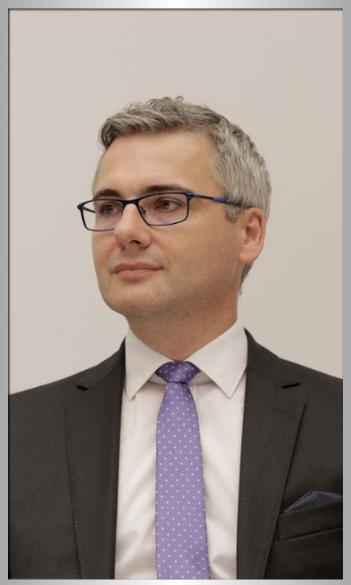
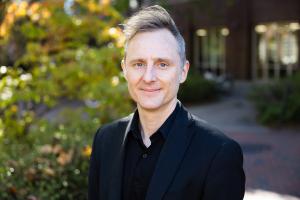
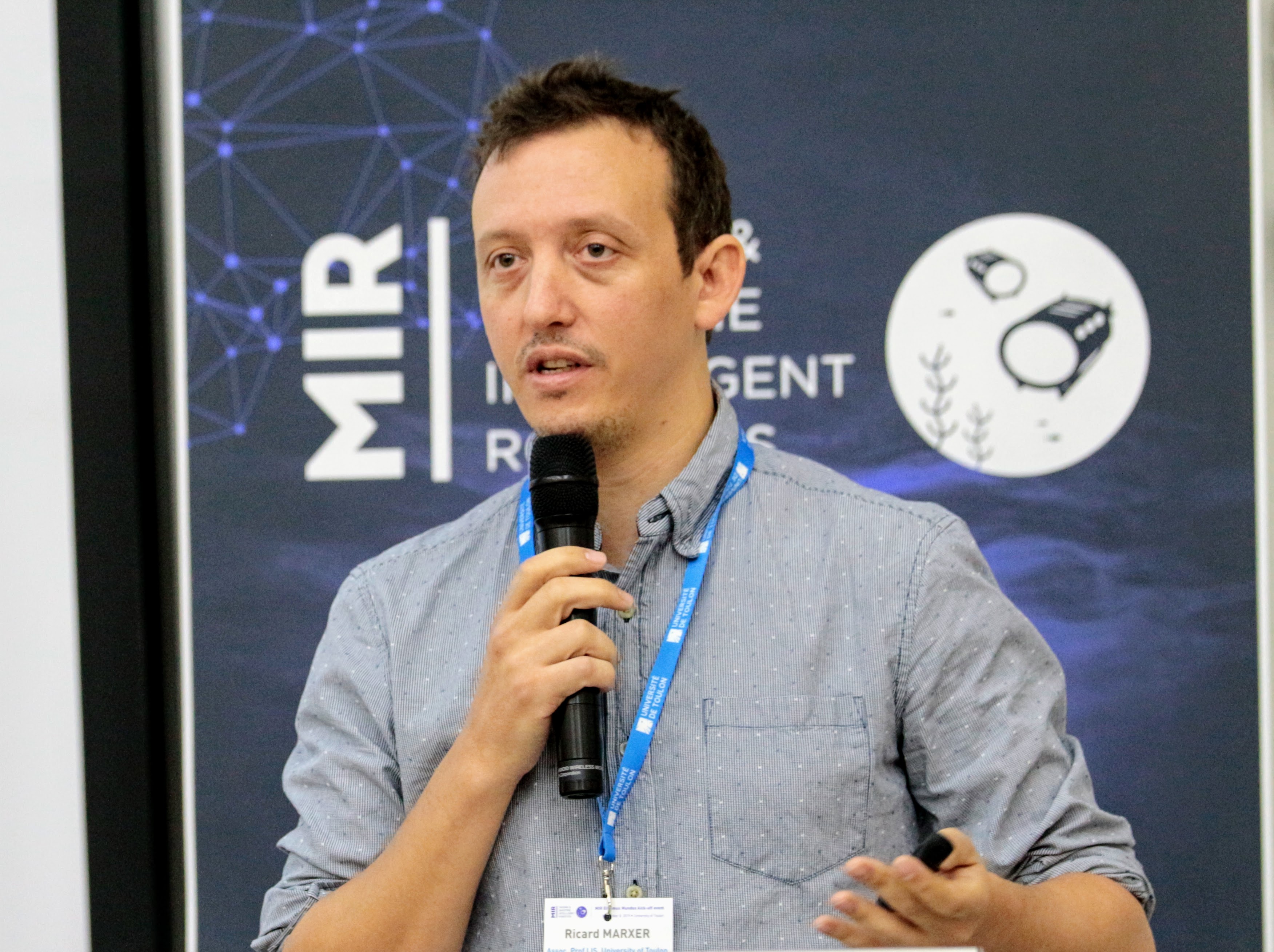
Péter Kiszl is a Hungarian librarian , economist , and university professor at the Institute of Library and Information Science , Faculty of Humanities, Eötvös Loránd University. He serves as Institute Director , Head of Department of Information Science and Library Science , and Doctoral Program Director . His work spans information/knowledge management , financial literacy , digital humanities , and library training programs. Education: MA in Library Science (ELTE, 2001), BSc in Economics (Szolnok College, 2002), PhD summa cum laude (ELTE, 2004), Habilitation (ELTE, 2010) Research focuses on interdisciplinary approaches to information disorders , financial literacy programs in libraries, and digital humanities integration. He has published 200+ works in journals like The Journal of Academic Librarianship and Reference Services Review , with recent studies analyzing AI implementation in academic libraries and global LIS trends . His 15 most recent publications (2022–2025) reveal a conceptual framework for librarian identity in infodemics, innovation strategies in Kenyan libraries, and digital preservation of circus arts. Articles frequently address information ethics , community financial education , and library transformation in crises. Scientific Awards: ELTE BTK Kariné Díj (2020, 2021, 2022) MTA Bolyai János Kutatási Ösztöndíj (2020–2023) ÚNKP Bolyai+ (2020/21, 2021/22, 2022/23) As founding director of ELTE’s Digital Humanities Center (2017–2019) and organizer of the Real Library–Library Reality conference series, he drives international LIS collaborations through COST Action and Ceepus networks. He supervises Stipendium Hungaricum doctoral students and chairs multiple academic committees.
Chung-Wei Lin is an Associate Professor and Deputy Director at the Department of Computer Science and Information Engineering and the Graduate Institute of Networking and Multimedia at National Taiwan University. His research focuses on cyber-physical systems, particularly in the domains of connected and autonomous vehicles, system security, and design methodologies. He maintains active collaborations with industry partners including Toyota and has established himself as a leading researcher in intelligent transportation systems in Taiwan. Education: Ph.D. (2015) from Department of Electrical Engineering and Computer Sciences, University of California, Berkeley (Advisor: Alberto L. Sangiovanni-Vincentelli) M.S. (2007) from Graduate Institute of Electronics Engineering, National Taiwan University (Advisor: Yao-Wen Chang) B.S. (2005) from Department of Computer Science and Information Engineering, National Taiwan University Dr. Lin's research interests center on cyber-physical systems with specific focus on connected and autonomous vehicles, security mechanisms, and system design methodology. Before returning to NTU in 2018, he worked at Toyota InfoTechnology Center, USA, Inc. His recent projects cover diverse topics including systems engineering, formal verification for robustness and compatibility, runtime monitoring, and intelligent intersection management. His work bridges theoretical foundations with practical applications, addressing real-world challenges in transportation systems through innovative technical solutions. Analysis of Dr. Lin's recent publications (2023-2025) reveals a strong emphasis on intelligent transportation systems with particular focus on security challenges for connected vehicles, formal verification techniques for safety-critical systems, and novel control algorithms for vehicle coordination. His research demonstrates increasing integration of machine learning approaches, especially reinforcement learning, to address complex decision-making problems in transportation. The work spans multiple technical domains including control theory, networking, cybersecurity, and formal methods, reflecting the inherently interdisciplinary nature of cyber-physical transportation systems research. Selected Awards: 2016 Best Paper Award, ACM Transactions on Design Automation of Electronic Systems 2015 Most Accessed ESL Paper Best Paper Award, IEEE ISSREW 2016 workshop Best Paper Award, ICCD 2010 Best Paper Nominee, ASP-DAC 2015 Dr. Lin currently advises multiple Ph.D. and M.S. students, with research focusing on various aspects of cyber-physical systems for transportation. His group includes Ph.D. students Pintusorn Suttiponpisarn and I-Ching Tseng, as well as several M.S. students. His extensive publication record and numerous patents (over 20 granted) indicate significant research impact and likely substantial research funding from both government and industry sources. His research program demonstrates strong translational potential, with many concepts moving from theoretical foundations to practical implementations. Dr. Lin leads the Cyber-Physical Systems Laboratory at NTU, which focuses on research related to intelligent transportation systems. The lab conducts research in areas including vehicle control, intersection management, security mechanisms, and formal verification for cyber-physical systems. His team collaborates with researchers from various institutions globally, as evidenced by his extensive publication record with international co-authors from universities and research institutions in the United States, Japan, and Europe.
Connie Roser-Renouf is a Research Professor at George Mason University's Department of Communication, affiliated with the Center for Climate Change Communication since its 2007 founding. She holds a PhD in Communication Research from Stanford University (1986). Her work focuses on applying information processing theories to design climate change communication strategies that increase public awareness of climate threats and solutions. She has studied diverse social issues, including Third World development and health risks from environmental contamination, but now prioritizes depolarizing climate change discourse to build public support for action. Education: PhD in Communication Research, Stanford University, 1986 Research Interests: Environmental communication, informal science education, and science communication. She investigates audience segmentation (e.g., Global Warming’s Six Americas framework), emotional responses to climate messaging, and strategies to engage polarized audiences. Her work emphasizes actionable insights for depolarizing climate discourse through tailored messaging and institutional collaboration. Article Trends: Recent publications (2020–2025) highlight longitudinal studies on climate belief shifts, emotional drivers of policy support, and the efficacy of targeted messaging strategies. Her research increasingly incorporates digital platforms (e.g., NASA climate website analysis) and youth engagement. Key themes include depolarization, behavioral activation, and institutional communication models. Awards & Grants: No specific awards mentioned. Her work is supported through institutional and collaborative research funding streams at George Mason University. Advising & Grants: No formal advisees listed. Collaborates on large-scale projects like the Six Americas segmentation framework, funded by organizations such as the National Science Foundation and private foundations. Labs & Teams: Leads climate communication initiatives at the Center for Climate Change Communication, collaborating with interdisciplinary teams across environmental science, public health, and political science.
Taylan G. Topcu is an Assistant Professor of Systems Engineering & Analysis at Virginia Tech's Grado Department of Industrial and Systems Engineering. He holds a Ph.D. from Virginia Tech (2020), an M.Sc. from the University of Alabama in Huntsville (2015), and a B.Sc. in Aerospace Engineering from Middle East Technical University (2009). His roles include Director of the Systems Engineering Master’s Degree and Coordinator of the Mission Engineering Certificate Program at Virginia Tech. His research focuses on systems engineering, microeconomics, and data-science integration to address socio-technical measurement challenges in complex systems design, emphasizing architecture theory and safety-critical systems management. Key research themes include modularization's impact on system complexity, digital twins for healthcare sustainability, and leveraging AI tools like Large Language Models for systems engineering tasks. He collaborates with NASA, INFRABEL, and MITRE to ground theoretical insights in real-world contexts. Professional affiliations include INCOSE, ASME, INFORMS, and the Design Society. Recent courses taught include ISE 5834 (Decision Analysis for Engineers) and ISE 5204 (Systems Engineering Capstone Project). His work bridges academia and industry, addressing both foundational theory and practical applications in complex system design and management.
Prof. Estefanía Serral Asensio is an Associate Professor at the Faculty of Economics and Business (FEB) at KU Leuven , with a primary affiliation to the Information Systems Engineering Research Group (LIRIS) in Brussels. She holds a highly international and interdisciplinary academic profile, having previously served as an Assistant Professor at Eindhoven University of Technology (2018), led the Semantic Knowledge Representation and Integration research group at the Technical University of Vienna (2012–2014), and contributed to the ProS Research Center at the Technical University of Valencia (until 2012). PhD in Computer Science (2011) Master in Software Engineering, Formal Methods, and Information Systems (2008) 5-year Bachelor in Computer Science (2006) Her research focuses on Internet of Things (IoT) , Business Process Management , and context-adaptive systems , with methodological expertise in Model-Driven Development , Conceptual Modeling , and ubiquitous systems . Key projects include Novel Process Mining Techniques for Discovering IoT-enhanced Business Processes (2022–2025), Novel Sustainability-Driven IoT Prescriptive Analytics for Improving Irrigation Practices in Fruit Trees (2021–2024), and foundational work on Runtime Evolution of IoT Processes (2018–2020). Her publications span top-tier venues like CAiSE , ER , SOSYM , and Internet of Things Journal . She teaches courses in ICT Strategy and Architecture , ICT Management , and Research Methodologies in Business Information Systems Engineering , contributing to academic programs at KU Leuven.
Akshayaram Srinivasan is an Assistant Professor in the Department of Computer Science at the University of Toronto and the Department of Mathematical and Computational Sciences at the University of Toronto Mississauga. He is a member of the Theory Group, with a focus on foundational cryptography. Previously, he was at the Tata Institute of Fundamental Research (TIFR) and earned his Ph.D. from UC Berkeley under Prof. Sanjam Garg. His research emphasizes Secure Multiparty Computation, Zero-Knowledge Proofs, and Post-Quantum Cryptography. He has received awards such as the Eurocrypt 2018 Best Paper Award and the Google India Research Award (2022). He teaches courses like Cryptography from Lattices and has advised students including Ziyang Jin and Siddharth Agarwal. He serves on program committees for major cryptography conferences and contributes to cryptographic inference systems like Delphi and Muse.
János Győri is a Professor at the Institute of Intercultural Psychology and Education at Eötvös Loránd University in Budapest. His roles include serving as a lecturer in the Relation between Shadow and Public Education Research Group and as an Alternate Member of the Credit Transfer Committee. He specializes in intercultural education systems, shadow education dynamics, and international comparative studies in teacher education and language learning motivation. His research spans multiple countries including Japan, Singapore, the Czech Republic, and Myanmar, with a focus on educational policies and student motivation across different cultural contexts. Dr. Győri’s work emphasizes cross-cultural pedagogical comparisons, particularly analyzing how informal educational structures (shadow education) influence formal schooling systems. He has conducted extensive studies on international students' language learning motivations, teacher identity formation, and gifted education programs across global contexts. His research bridges educational theory and practice, often employing both quantitative and qualitative methods to explore complex educational phenomena. Notable themes in his publications include examining motivational frameworks for language acquisition among international populations, analyzing systemic differences in teacher education between nations, and evaluating the societal impacts of supplementary educational systems. His recent work highlights emerging trends in global talent development strategies and the evolving role of non-formal educational interventions. While no specific awards are listed, his prolific publication record indicates sustained academic contribution to educational sciences. His advisory activities and committee roles reflect engagement with institutional educational reforms and cross-border educational collaborations.
Dr. Ruchit Agrawal is an Assistant Professor of Computer Science and Head of Computer Science Outreach at the University of Birmingham Dubai. Previously, he served as a Postdoctoral Researcher in AI for Healthcare at the University of Oxford’s Computational Health Informatics Lab, and as a Marie Curie AI Researcher in the transnational MIP-Frontiers project at Queen Mary University of London. His work focuses on optimizing healthcare systems using Machine Learning, alongside contributions to Natural Language Processing, Audio Signal Processing, and Multimodal Deep Learning. He holds a PhD in Computer Science from Queen Mary University of London and an MS by Research from IIIT Hyderabad. Education: PhD in Computer Science (Queen Mary University of London, 2021) MS by Research in Machine Translation (IIIT Hyderabad, 2017) Research Interests: Clinical Machine Learning for healthcare system optimization Natural Language Processing with a focus on Indian languages and context-aware models Audio Signal Processing for music performance analysis and stuttering detection Development of multimodal deep learning frameworks for diverse applications Adaptive AI systems leveraging contextual and positional encoding techniques Publications highlight trends in healthcare AI, multilingual NLP, and audio-visual alignment. Recent work includes Arabic sentiment analysis, stuttering detection via MMSD-Net, and stock price prediction using FB-GAN. Earlier contributions address structure-aware synchronization in music performance data and transformer-based post-editing for low-resource languages. His research bridges theoretical advancements with practical implementations in clinical, financial, and cross-modal domains. Scientific awards include the prestigious Marie Skłodowska-Curie scholarship (2017–2020) supporting his deep learning research in audio signal processing. Advising and grants: While no formal advisees are listed, his roles involve leading outreach initiatives and guiding collaborative projects at the Computational Health Informatics Lab during his postdoctoral tenure. Labs/Teams: Active member of the Computational Health Informatics Lab (Oxford) and Machine Translation group at FBK (Italy). His work also intersects with the MIP-Frontiers transnational research project.
Matthew Bolton is an Associate Professor in the Department of Systems and Information Engineering at the University of Virginia. His research focuses on human-centered systems engineering, particularly addressing how human behavior and cognition contribute to system failures. He has held prior roles as a Senior Researcher at NASA Ames Research Center and faculty positions at the University of Illinois at Chicago and the University at Buffalo. Bolton specializes in formal methods to enhance system safety in domains like aerospace, healthcare, and cybersecurity. Dr. Bolton holds B.S., M.S., and Ph.D. degrees in Computer Science and Systems Engineering from the University of Virginia (2003, 2006, 2010). His work has been funded by organizations including the European Space Agency, NSF, NASA, AHRQ, and the Department of Defense. His research interests span system safety, human performance modeling, formal methods, cybersecurity, and engineering ethics. Notable contributions include developing the SAFPH formal human reliability analysis framework and advancing medical alarm audibility standards. Recent publications emphasize trust in AI systems, tactile navigation for the visually impaired, and human-agent teaming dynamics. His work has earned prestigious awards, including the Jerome H. Ely Human Factors Article Award (2021) and the William C. Howell Young Investigator Award (2018). Bolton’s research integrates formal verification techniques with human factors engineering to prevent errors in safety-critical systems. He leads the Formal Human Systems Laboratory, exploring inclusive design principles and ethical engineering practices.
Professor Anil Bharath holds the role of Professor of Biologically-Inspired Computation & Inference in the Department of Bioengineering at Imperial College London. He serves as Academic Director of Imperial Global: Singapore and co-leads the IN-CYPHER research program on AI-driven healthcare security. His research focuses on machine learning, deep networks, and biomedical applications. He earned his BEng from UCL and PhD from Imperial College, followed by roles including President of the City and Guilds College Association (2022-2024). Research Interests: Machine learning, neural networks, medical imaging, and biologically-inspired computation. Notable contributions include 2D steerable filters for shape detection (1998), Bayesian marginalisation in early computer vision, and deep learning for cardiac MRI analysis. He co-founded Cortexica Vision Systems (acquired by Zebra Technologies in 2019), applying biological neuron models to visual search technology. Labs & Affiliations: Director of the BICI Lab, affiliated with the Data Science Institute, Centre for Neurotechnology, and multiple healthcare networks. His work spans interdisciplinary projects in AI for healthcare, cardiovascular engineering, and medical device innovation. Publications: Recent work emphasizes AI in cardiology (e.g., MRI analysis for mitral regurgitation, aortic stenosis detection) and synthetic data privacy. His research bridges computational models with clinical interpretability, addressing challenges in medical imaging efficiency and diagnostic accuracy.
Kevin Dorst is an Assistant Professor at the Massachusetts Institute of Technology (MIT), where he joined the faculty in 2022. He holds a PhD from MIT (2019) and previously taught at the University of Pittsburgh. His research focuses on epistemology and cognitive science, particularly questions about the nature of rationality, its importance, and whether human cognition aligns with rational standards. His work addresses topics such as higher-order evidence, cognitive biases (e.g., conjunction fallacy, hindsight bias), decision theory, and social epistemology. Education: PhD in Philosophy from MIT (2019). Earlier academic background includes teaching roles at the University of Pittsburgh. Research interests emphasize understanding rationality through lenses of epistemology and cognitive science, exploring how people process evidence, handle uncertainty, and navigate conflicts between beliefs and external information. His recent work critiques common cognitive biases and proposes frameworks for evaluating rational judgment in contexts like political polarization and Bayesian reasoning. Publications span theoretical and applied topics in epistemology, with a focus on formal models of belief revision, decision-making under uncertainty, and the implications of higher-order evidence for doxastic norms. Notable themes include the gambler’s fallacy, modesty in belief adjustment, and the role of epistemic consequentialism in shaping rational practices. No academic awards are listed in the provided materials. No grants or advising roles are explicitly mentioned, though his work suggests involvement in interdisciplinary research teams.
Dr. Michiel Renger is a researcher at the Department of Mathematics, Technische Universität München (TUM), within the School of Computation, Information and Technology. His research focuses on variational calculus, partial differential equations, large deviations theory, non-equilibrium thermodynamics, and chemical reaction networks. He has contributed to advancing the understanding of macroscopic fluctuation theory, gradient flows, and their applications in stochastic systems. Teaching responsibilities include courses on higher mathematics for engineering students at TUM and specialized lectures on large deviations and convex analysis at TU Berlin. His work bridges theoretical mathematics with applications in physics and engineering, emphasizing interdisciplinary approaches. Renger’s publications span peer-reviewed journals in mathematics and physics, with a focus on rigorous probabilistic and analytical methods. He holds a PhD in Mathematics from Technische Universiteit Eindhoven (2013) and has collaborated on projects in collaboration engineering, addressing challenges in collaborative modeling and organizational design. His research also extends to applied problems like node counting in wireless networks and statistical consulting for industry.
Mark Leather is an Associate Professor of Education at Plymouth Marjon University's School of Education, specializing in Adventure Education and Outdoor Learning. He leads the MRes in Outdoor Education program and has extensive experience in diverse education sectors, including secondary education, outdoor centers, and international programs. His research focuses on experiential pedagogies, nature-based learning, and the intersection of play and education. Leather holds an EdD from the University of Exeter, an MSc in Outdoor Education from the University of Edinburgh, and is a Senior Fellow of the Higher Education Academy. He is actively involved in professional bodies like the British Educational Research Association (co-convenor of the Nature, Outdoor Learning, and Play SIG) and the European Institute for Outdoor Adventure Education. His research highlights include studies on place-based education, Forest School critiques, and the role of technology in outdoor learning. Key contributions include the PLaTO-Net framework for outdoor pedagogy terminology and the exploration of hyperreal nature through social media. He regularly presents at international conferences and serves as an external examiner for multiple universities. Leather’s work emphasizes fostering connections between students, educators, and the natural environment, advocating for pedagogical approaches that integrate play, place-responsive teaching, and global environmental challenges.
Ricard Marxer is a Full Professor at the Université de Toulon and a researcher at LIS UMR CNRS 7020. He serves as the founding director of the Erasmus Mundus Joint Master’s Degree in Marine and Maritime Intelligent Robotics (MIR) and leads the DYNamics of Information (DYNI) research team. His work bridges machine learning, artificial intelligence, and bioacoustics with applications in marine robotics, biodiversity analysis, and responsible AI. Key research interests include unsupervised learning, speech and language processing, music technology, and AI safety. Recent work focuses on bioacoustic signal analysis, deep-sea imaging, and scaling speech models. He co-organized the EUSIPCO’24 special session on signal analysis for biodiversity and published a landmark survey on machine learning in bioacoustics. No formal student advisees are listed in the provided texts. His current research infrastructure includes the DYNI team and the MIR program, emphasizing interdisciplinary collaboration between computer science and ecological applications.
Dr. Mohamed Abouzahra is an Assistant Professor at California State University, Monterey Bay with 17 years of professional experience in information technology, specializing in evidence-based management and healthcare IT consulting. He holds an M.Sc. in Computer Engineering from Alexandria University, an M.Sc. in Engineering Management from the University of Missouri-Rolla, and a Ph.D. in Management Information Systems from McMaster University. His research focuses on healthcare technology adoption, wearable devices for seniors, clinical decision support systems, and blockchain applications in health records. Key areas include psychological barriers to technology use among older adults, physician peer networks influencing medical innovation, and leveraging AI to transform higher education. Dr. Abouzahra’s work bridges healthcare and information systems through mixed-methods studies, emphasizing real-world implementation challenges. His recent publications (2020–2025) highlight trends in wearable device efficacy, clinical decision-making tools, and AI-driven educational systems. No scientific awards are explicitly mentioned in the provided materials. His professional experience includes advising C-suite executives in healthcare, business, and security sectors, though no formal grants or advising roles are detailed here.