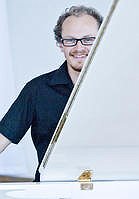
Guillaume Allais is Lecturer in Computer Science at the University of Strathclyde, specializing in type-safe programming abstractions and formal verification. His research develops mathematically structured programming paradigms. Core research themes: Type-and-scope safe metaprogramming techniques Verified compiler pipelines for functional languages Dependently-typed algebraic simplification Recent publications advance staged compilation techniques and generic programming for serialized data. He contributes to the Idris 2 compiler and serves on ICFP program committees. Open-source projects include Agda libraries for syntax representation and verified core language implementations.
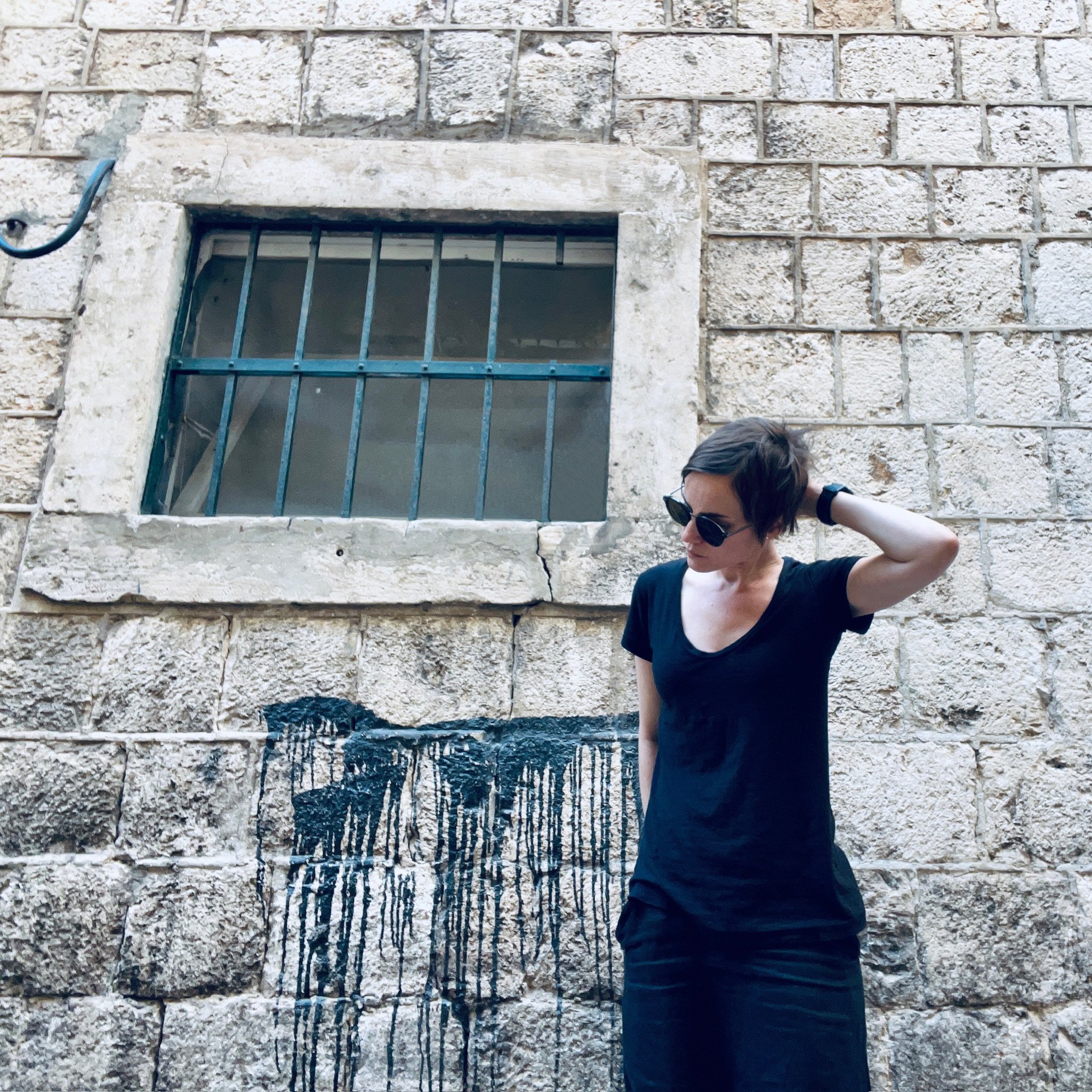
Michael Färber is a researcher at Universität Innsbruck, Austria, specializing in programming languages and formal methods. He actively contributes to the Certified Programs and Proofs (CPP) community, with recent work presented at POPL 2022 and POPL 2023. His research focuses on foundational aspects of proof systems, particularly in the areas of efficient and safe proof checking, parsing, and concurrency in the lambda-Pi calculus modulo rewriting. His work bridges theoretical type systems and practical implementation challenges in formal verification tools. The recent publications indicate a strong focus on optimizing proof checking processes, ensuring correctness, and enabling concurrent execution within logical frameworks. This suggests a trajectory toward high-performance, trustworthy proof assistants and logical systems. He is affiliated with the computational logic group at Universität Innsbruck, as indicated by his website domain, and maintains an active presence in the research community through conference participation and open-source development via GitHub.
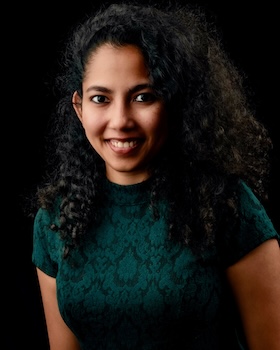
Anne Dahl is a Professor at the Norwegian University of Science and Technology (NTNU), holding roles in the Department of Language and Literature and the Faculty of Humanities. She serves as Program Director for the Associate Professorship in Language Studies (grades 8–13) and chairs the National Professional Body for English. Her academic affiliations include the Center for Language, Brain and Learning (C-LaBL) at UiT The Arctic University of Norway as a Professor II. Her research focuses on second and third language acquisition, multilingualism, and age-related language learning. Key areas include cross-linguistic influence in multilingual contexts, multilingual education, and the role of explicit vs. implicit learning. She leads research groups such as ForMAAL (Formal, Mental, and Acquisitional Approaches to Language) and FANT (Forskergruppe for andre- og tredjespråk). Her recent articles explore topics like genericity in Norwegian syntax, third language verb placement, and L2 English reading skills. She has coordinated projects such as CLIMA (Cross-linguistic Influence in Multilingual Acquisition) and ADIM (Across-domain investigations in multilingualism). Her work bridges theoretical linguistics with applied educational contexts. She edits the journal ELLA Research and contributes to projects like the Great Norwegian Lexicon. Her teaching emphasizes language acquisition theories and multilingual pedagogy at both undergraduate and PhD levels.
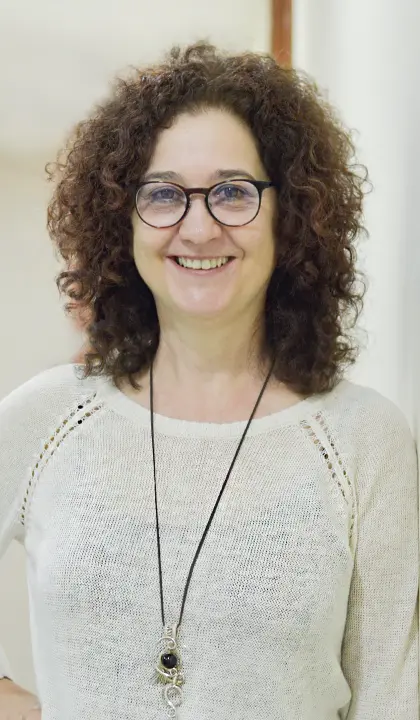
Alexis Wellwood is a Professor in the School of Philosophy at the University of Southern California (USC), holding courtesy appointments in the Department of Linguistics and the Department of Psychology. Since 2022, they serve as Deputy Director of Philosophy and since 2023 as a Leadership Fellow to the USC Dornsife Divisional Dean of Humanities. Their research focuses on semantics, language acquisition, and event cognition, leading the Meaning Lab since 2017 and directing the North American Summer School for Logic, Language, and Information in 2022. They received the 2019 Albert S. Raubenheimer award for Outstanding Junior Faculty and hold an NSF grant in cognitive sciences. Education: PhD in Linguistics (2014) from the University of Maryland, advised by Valentine Hacquard. Mentored by Paul Pietroski, Alexander Williams, Jeffrey Lidz, and Colin Phillips. Supported by SSHRC and the Maryland Language Science Center. Research interests include semantics, syntax-semantics interfaces, event perception, and comparative structures. They investigate how linguistic meanings interact with cognitive processes, particularly in children's language development, through experimental and formal methods. Key contributions include work on gradable adjectives, event ontology, and superlative acquisition. Leadership roles: Steering committee member of USC's Cognitive Science Program, co-director of Mind and Language in LA (since 2018), and Associate Editor for Journal of Semantics (2021–present). They established the Meaning Lab and previously led the Child Language Development Laboratory at Northwestern University (2012–2017). Awards and grants: NSF Brain and Cognitive Sciences grant (2017), Raubenheimer award (2019), and multiple collaborative projects across linguistics, philosophy, and psychology. Their work bridges formal semantics with empirical studies of language use and cognitive mechanisms.
Diti Bhadra is a Professor and semanticist at the University of Minnesota’s Institute of Linguistics, with affiliations in the Center for Cognitive Sciences. Her research focuses on formal semantics, typology, and fieldwork on endangered languages in South Asia, including Khasi, Ao, Adi, Lepcha, and others. Funded by NSF grants, her work bridges theoretical models with empirical diversity in linguistic systems. She runs the Fieldwork Integrates Theory & Typology (FITT) lab, mentoring students in semantic fieldwork. Her recent grants include an NSF CAREER award (2022-2027) for studying underrepresented linguistic systems and an OVPR grant for investigating clickbait linguistics with Educational Psychology. Her education includes a Ph.D. in Linguistics from Rutgers University (2017) and prior roles as a Lecturer at Harvard University (2018-2019). Key research areas include modality, evidentiality, question structures, and the semantics of verb roots. She actively addresses misinformation through linguistic analysis, collaborating across disciplines. Recent publications explore Cantonese particles, verb root semantics, and South Asian linguistic typology. She has organized major conferences like FASAL-11 (2021) and frequently presents at top venues such as UCLA, University of Chicago, and international workshops. Teaching spans semantics, syntax, field methods, and introductory linguistics courses designed under her NSF CAREER grant.
Araceli San Martín is a faculty member in the Spanish Department at Saint Louis University-Madrid. She holds degrees in Classical Philology, Italian Philology, German Language and Culture, and a Master's in Literature and Linguistics. She specializes in Spanish as a Foreign Language (ELE) and Spanish for Specific Purposes (EFE), and serves as Coordinator and Head of SIELE exams at SLU-Madrid. Graduate in Classical Philology, Complutense University of Madrid, 1987 Diploma in Italian Philology, Complutense University of Madrid, 1990 Grundstudien in German Language and Culture, University of Heidelberg, Germany, 1996 Master's in Literature and Linguistics, Andrés Bello Seminar, Caro y Cuervo Institute, Bogotá, 1997 Her research interests include Spanish linguistics, syntax, language teaching methodology, cultural representation in literature, and language contact. She has contributed extensively to pedagogical materials and academic discourse on Spanish language education. Her work bridges theoretical linguistics with practical classroom applications, especially in the areas of grammar instruction and cultural integration in language learning. The analysis of her publications reveals a strong focus on the structural and pedagogical dimensions of the Spanish language. Her work spans historical syntax, modern language teaching, and sociolinguistic variation, particularly in Hispanic and transnational contexts. A recurring theme is the interplay between linguistic structure and cultural expression, evident in her studies on Havana’s literary representation and language use in digital environments. She has not been listed with any formal scientific awards in the provided text. She has contributed to national-level research projects funded by Spain’s Ministry of Education and Science, including studies on syntactic evolution in classical Spanish and language contact around the Strait of Gibraltar. She is affiliated with the Bernardo Aldrete Research Group at the University of Cádiz. While no students are listed, her development of official syllabi for secondary education suggests a significant role in curriculum design and academic leadership. She is affiliated with the Bernardo Aldrete Research Group (HUM-195) at the University of Cádiz and has collaborated on large-scale linguistic research projects, indicating active participation in academic networks beyond her primary institution.
Man Ki Theodora Lee is a Researcher at the Department of English Language and Communication within the School of Creative Arts at the University of Hertfordshire. Her academic journey includes a PhD in Linguistics from the University of York (2015), an MA in Psycholinguistics from the same institution (2010), and a BA in Linguistics and Language Technology from City University of Hong Kong (2008). Education: PhD (Linguistics, York, 2015), MA (Psycholinguistics, York, 2010), BA (City University Hong Kong, 2008) Her research focuses on syntax-semantics interface in Cantonese, second language acquisition, bilingualism, and phonetic perception. Her work explores topics like neg-wh quantifiers, comparative grammar of Chinese dialects, and multilingualism in early childhood. She has published extensively on Cantonese syntax, L2 acquisition barriers, and cross-linguistic interference effects. Her articles analyze morphological structures in Hakka and Cantonese, investigate OPC sensitivity in Spanish learners, and examine multilingual vocabulary development. Despite no explicitly listed awards, her prolific output since 2011 demonstrates significant academic contribution to formal linguistics and applied language studies. She has advised no listed students but has conducted research on adult interlanguage in Cantonese-English bilinguals and Korean-Spanish learners. Her work intersects with language policy through studies on multicultural education's impact on multilingualism.
Joe Pater is a Professor in the Department of Linguistics at the University of Massachusetts Amherst and Co-Director of the Computational Phonology Laboratory. He holds a Ph.D. in Linguistics from McGill University (1997), with postdoctoral training at the University of British Columbia and the University of Alberta. His research focuses on phonology, language acquisition, and computational modeling, emphasizing weighted constraints and their role in phonological learning. Pater’s work is supported by ongoing National Science Foundation (NSF) grants, including a current collaboration on stress representation and neural networks. Key research interests include phonological typology, experimental phonology, and the integration of cognitive science with formal linguistic theory. He co-founded the Annual Meeting on Phonology and the Society for Computation in Linguistics, serving as managing editor for their open-access proceedings. Pater teaches courses such as ‘Sounds of Englishes’ and supervises research on phonological acquisition and computational methods. His contributions span over 50 publications, with recent work addressing neural network models of phonology, gradient learning, and ERP evidence for phonological abstraction. Pater also collaborates on agent-based modeling of linguistic typology and has pioneered methodologies linking formal grammatical frameworks to empirical learning experiments.
Julian Grove is an Assistant Professor in the Department of Linguistics at the University of Florida. Previously, he was a post-doctoral researcher in the FACTS.lab (Formal Approaches to Cognition, Thought, and Semantics laboratory) at the University of Rochester under Aaron Steven White. Prior to that, he was affiliated with the Centre for Linguistic Theory and Studies in Probability at the University of Gothenburg. He completed his PhD in Linguistics at the University of Chicago, where he was also associated with the Language Processing Lab directed by Ming Xiang. Dr. Grove's research program centers on developing type-theoretic approaches to natural language semantics that integrate with Bayesian computational models of human behavior. His work aims to preserve traditional semantic tools like λ-calculus while bridging formal linguistics with experimental approaches. This integrative methodology represents a significant contribution to connecting Montagovian semantics with contemporary computational frameworks. His research interests include: Type-theoretic approaches to natural language semantics Bridging Montagovian approaches with computational models Semantics of presupposition and anaphora Experimental work on ellipsis Probabilistic compositional semantics Rational Speech Act modeling Analysis of his recent publications reveals a consistent trajectory toward integrating formal semantic theory with probabilistic modeling. His work demonstrates particular expertise in reinterpreting presupposition phenomena through scope mechanisms and developing computational implementations of semantic theories. The progression from his 2020 work on algebraic effects in Montague semantics to his 2024 presentations shows increasing sophistication in connecting theoretical frameworks with experimental data. Dr. Grove has collaborated with researchers including Aaron Steven White (University of Rochester), Jean-Philippe Bernardy, and Christine Howes. His work has been presented at major linguistics venues including LEAP, EMG, ELM 3, and SemDial conferences, as well as seminars at institutions like Cornell University and Institut Jean-Nicod. His GitHub activity (juliangrove) shows consistent contributions to projects related to probabilistic dynamic semantics, with repositories like semprag-ppsp containing implementations of his theoretical work. This demonstrates his commitment to making his research computationally explicit and reproducible, reflecting the growing importance of code-sharing in formal linguistics.
Asia Pietraszko is an Assistant Professor in the Department of Linguistics at the University of Rochester, where she directs the Field Syntax Lab. She holds a PhD from the University of Chicago's Linguistics Department. Her research focuses on syntax and morphology, particularly verbal morphosyntax in Bantu languages like Ndebele and Swahili. She investigates clausal architecture, selection processes, and head movement, with notable work on periphrasis, A-movement, and the syntax-phonology interface. Her recent NSF award (BCS 2214933) supports her research. She has taught courses at the University of Rochester, University of Connecticut, and the University of Chicago, including advanced syntax, field methods, and syntactic theory. Her work has been published in top journals like Linguistic Inquiry , Natural Language and Linguistic Theory , and Glossa . Pietraszko frequently presents at conferences such as NELS, WCCFL, and the Linguistic Society of America meetings. Her research explores topics like backward control, cyclic selection, and the relationship between head displacement and periphrasis. She collaborates extensively with Karlos Arregi on projects involving morphosyntactic phenomena in Bantu and other languages.
Laura Catharine Smith is a Professor in the Department of German and Russian at Brigham Young University, part of the College of Humanities. She is actively engaged in teaching and research, with her office located in 3109 JFSB, Provo, Utah. Her contact email is laurasmith@byu.edu, and she holds regular office hours on Mondays and Wednesdays from 1:00–2:00 p.m. and Thursdays from 10:00–10:50 a.m. Education: BA (Hons), Queen’s University at Kingston, Language and Linguistics, 1994 BEducation, Queen’s University at Kingston, French and History/Social Sciences, 1995 MA, University of Calgary, Historical Linguistics, 1997 MA, University of Wisconsin-Madison, Linguistics, 2000 Joint PhD, University of Wisconsin-Madison, Germanic Linguistics and Theoretical Linguistics, 2004 Her research spans theoretical and historical phonology, with a focus on prosodic templates and their role in shaping Germanic languages. She investigates second language perception and pronunciation, particularly how dialect influences L2 acquisition, and explores grammatical, phonetic, and lexical development during study abroad experiences. Her work also examines the interfaces between phonology, morphology, syntax, and phonetics. While no full list of recent publications is provided in the text, her scholarly engagement is evident through presentations and collaborations. She has contributed to research in Germanic linguistics and second language acquisition, often in collaboration with other scholars such as Cherice Michelle Montgomery, Michael C. Putnam, and Adam Ussishkin. Scientific Awards: Best German Paper at UFLA (Utah Foreign Language Association), 2011 Laura Catharine Smith is actively involved in professional service, including serving as a Board Member of the Society for Germanic Linguistics since 2013 and as an ad hoc reviewer for several prestigious journals such as the Journal of Germanic Linguistics, Language Learning, and Second Language Research Forum. She has taught a range of courses including German 215 (Linguistics Research and Writing), German 344 (Phonetics and Pronunciation), German 450 (History of the German Language), and German 460 (Structure of Modern German). She is a member of the Linguistics Society of America (since 2003) and the Society for Germanic Linguistics (since 1998), reflecting her sustained commitment to the field. Though no formal list of advisees is given, her collaborative work with colleagues and students suggests strong mentorship and academic leadership.
Sadaf Munshi is a Professor in the Department of Linguistics at the University of North Texas. Her research focuses on language documentation, historical linguistics, and language contact, particularly in South Asian languages like Burushaski and Indo-Aryan languages. Education: PhD in Linguistics from University of Texas at Austin (2006), MPhil and MA in Linguistics from University of Delhi, India (2001/1999), BS in Biosciences from University of Kashmir, India (1996). Research Interests: Language documentation of endangered languages (Burushaski), comparative linguistic analysis, language contact phenomena, and grammatical theory development. Ongoing projects include the Burushaski Language Corpus and Kashmir Oral History Project. Teaching: Courses in Historical Linguistics, Phonology, Field Methods, and World Englishes. Her work bridges theoretical linguistics with applied documentation efforts. Key Projects: Burushaski Language Documentation Project Kashmir Oral History Project
Paolino Nappi is a permanent faculty member at the Universitat de València , affiliated with the Department of French and Italian Philology within the Faculty of Philology, Translation and Communication . His academic work centers on Italian cultural studies, with a focus on cinema, literature, and graphic narratives. He is a member of the CIAO Italianistic Consortium of Analysis & Study of Literature Plays , contributing to collaborative research in Italian philology. Education: PhD in Italian Philology, Universitat de València (2014) Thesis: La camorra immaginata. La criminalità napoletana tra letteratura, teatro e cinema dall'Unità agli anni Ottanta del Novecento , supervised by Dr. Juan Carlos de Miguel Canuto His research interests include Italian cinema (especially Vittorio De Seta, Gillo Pontecorvo, and Mario Monicelli), the representation of the Camorra and Neapolitan identity in literature and film, Holocaust memory in Italian comics, linguistic experimentation in media, and female migration narratives in European graphic novels. He explores how cultural memory is constructed through artistic mediums, often analyzing the intersection of history, myth, and representation. The publication trends in his recent articles reveal a consistent focus on 20th-century Italian cultural production, particularly the interplay between literature and film, the evolution of national myths, and the role of visual narratives in shaping historical consciousness. His work spans film analysis, literary criticism, and cultural studies, often with a comparative or interdisciplinary approach. Scientific Contributions: Author of the book L'avventura del reale. Il cinema di Vittorio De Seta (2015) Contributor to the edited volume Las Violencias y la Historia (2016) Published in journals such as Journal of Modern Jewish Studies , Cuadernos de Filología Italiana , and Journal of Graphic Novels and Comics He has collaborated with scholars including Juan Carlos de Miguel Canuto and Ewa Stanczyk . While no formal advising list is provided, his role as thesis supervisor indicates mentorship responsibilities. He has not received any publicly listed scientific awards. He is involved in research projects related to violence, memory, and cultural representation, and his work contributes to broader discussions on Italian identity and historical consciousness. Laboratory and Research Groups: Member, CIAO Italianistic Consortium of Analysis & Study of Literature Plays
Milagros Aleza Izquierdo is a Professor in the Department of Spanish Philology at the Universitat de València, affiliated with the Faculty of Philology, Translation and Communication. She has been a researcher and professor since 1980, specializing in Spanish language and linguistics. She is a member of the ELEAM research group, focusing on Spanish language studies in Latin America. University: Universitat de València School: Faculty of Philology, Translation and Communication Department: Department of Spanish Philology Research Group: ELEAM (Spanish Language Studies in Latin America) Her research interests include Hispanic linguistics, sociolinguistics, Spanish dialectology, Caribbean Spanish (especially Cuban, Puerto Rican, and Dominican varieties), corpus linguistics, morphology, syntax, and orthographic norms. She has conducted in-depth analyses of grammatical variation, pronominal usage, verb constructions, and diminutive formation in spoken Caribbean Spanish. Her work often involves corpus-based methodologies to examine syntactic change and language use across generations. The recent publications highlight her focus on syntactic and morphological variation in Caribbean Spanish dialects. Key themes include the pluralization of impersonal 'haber' in Puerto Rican Spanish, clitic pronoun usage in Cuban Spanish, diminutive suffixes in Dominican Spanish, and orthographic standards in Spanish writing. Her work bridges descriptive linguistics with practical applications in language teaching and publishing. Scientific Awards: No scientific awards mentioned in the provided text. Advising and Grants: No information available regarding students, advising, or grant funding. Labs and Teams: She is actively involved in the ELEAM (Spanish Language Studies in Latin America) research group, which supports collaborative linguistic research on Latin American Spanish varieties.
Maria Estellés Arguedas is a Professor in the Department of Spanish Philology at the Faculty of Philology, Translation and Communication, University of Valencia. She is an active researcher specializing in Spanish linguistics, with a strong focus on discourse analysis, grammaticalization, evidentiality, and prosody. She is a member of the Val.Es.Co. (Valencia Colloquial Spanish) research group, contributing to corpus-based studies of spoken Spanish. PhD in Spanish Linguistics, University of Valencia, 2009 Thesis: Gramaticalización y gramaticalizaciones. El caso de los marcadores del discurso de digresión en español Supervised by Dr. Salvador Pons Bordería Her research interests lie at the intersection of pragmatics, historical linguistics, and phonetics. She investigates how discourse markers evolve and function in spoken interaction, particularly in political and academic contexts. Her work examines the role of prosody in expressing evidentiality, politeness, and attenuation, using corpora such as parliamentary debates and academic defense tribunals. She has made significant contributions to understanding the pragmatic specialization of markers like al parecer and por lo visto over time. Her recent publications reveal a consistent trend toward diachronic and corpus-driven analysis of Spanish discourse, with a special emphasis on the interplay between syntax, semantics, and prosody. She frequently explores how contextual and genre-specific factors shape the use and evolution of linguistic markers. She has no listed scientific awards in the provided materials. Maria Estellés Arguedas supervises academic work and contributes to research projects, though specific advisees are not named. She is involved in major research initiatives such as the Val.Es.Co. corpus and the PRESEEA project, focusing on variation and change in spoken Spanish. Her collaborative work spans institutions and disciplines, reflecting a broad academic network. She is affiliated with the Val.Es.Co. research group, which studies colloquial Spanish through corpus linguistics, and has contributed to projects analyzing spoken interaction in formal and informal settings.